Celebrating Governor Bala Mohammed at 63
By Mujahid Ameen Lilo
When in 2015, the then incumbent president of Nigeria, Goodluck Jonathan, called to congratulate his opponent ahead of the announcement of the election winner, it was hailed as a heroic act. The act further cemented the country’s democratic maturation and avoided the imminent disintegration of the country had the president not accepted defeat. Moreover, it ensured a stable and successful government transition in a country on the brink of war.
The former president of the Niger Republic got the Mo Ibrahim Prize for Achievement in African Leadership because he respected term limits. Yet, nobody was found worthy of the award for eight years, which points to African leaders’ disgraceful culture of disregard for term limits and bastardising of democracy. What’s more annoying, though, is the culture of celebrating the few ones that respect the term limits.
When we understand that it’s the moral imperative of our leaders to bow to the people’s will, to respect the constitutional authority that put them there and dictate their term limits. Until then, we wouldn’t rush to make a big deal of it and lionise them, present them with awards, among other things. We tend to forget and forgive their misrule. The great disenchantment with the previous administration’s sadistic leadership style made Nigerians ready to go to any lengths to vote out that party. People were prepared for war if the election got twisted. So it’s the morally and politically correct thing to do, that is, handover. Most of these leaders leave behind enormous debts, worsening insecurity, cases of corruption and so on.
The recent coups in Guinea and Chad and the foiled one in Niger indicate the frightening facts that the West African countries are far from political stability. Military intervention hardly change matters. It shouldn’t be the response to a faulty democracy. The West African subregion should thoroughly shake itself off the yoke of any military powers. The democratisation of the whole subregion would go a long way in stabilising it. Not that democracy is perfect per se (what with her so-called upholders violating one of the fundamentals: periodic election), but that we can and should practice it most purely, quite distinct from the military system. There should be an atmosphere that’ll facilitate proper reforms of democracy. A stable system of government will guarantee peace and also bring about the desired developments.
It’s on this premise that I’d now address another factor that is damaging to our democracy, threatening what little peace and stability is left in the region: electoral processes. In my country Nigeria, once it’s time for elections, people who live away from their states of origin start rushing back to their hometowns because elections have been synonymous with violence leading to the death of many people. There should be peace for people to exercise their fundamental right of voting. Instead, thugs are paid to violate the process. Many people believe in the quote that ‘our votes do not count; otherwise, they wouldn’t let us vote’. However, that is not where the problem lies. I believe that we’re capable of holding free and fair elections as we’ve done in the past. We can cite many examples with Nigeria as a case study. The fourth republic election in Nigeria that put Chief Obasanjo into power was relatively free and fair. The two elections that put Buhari into power were also pretty free and fair. We cannot forget the annulled election of June 12, 1993.
I was born in the early 2000s. My generation is called the ‘golden generation’ because the Nigeria we’re born in is democratic, free from colonial and military powers. But my generation suffers from a collapsing education system (most have to attend private schools because the government ones are total craps), from frequent strikes in universities to insecurity devouring our lands like an inferno. This semester, I was looking forward to fieldwork we are supposed to go on in a literature course but have to resort to what our lecturer calls ‘mental research’ because nowhere is safe. This generation is so angry – a wave of anger manifested in the Endsars protests.
On days like this, independence day, I sit and reflect on the happenings in my nation while my fellow teenagers are out having fun, draping their bodies in the country’s colours and posting things like ‘happy independence’ on social media. Yet, the ghost of Achebe and Gimba surrounds me as I struggle to intellectualise my thoughts, building it on Achebe’s dictum (the trouble with Nigeria is simply and squarely a failure of leadership) and the Gimba’s theory that differs from Achebe’s.
I am a lover of columns. As a child, I was very socially and culturally conscious, reading my dad’s dailies. On my shelf, I have a collection of columns: Gimba’s Why am I Doing This, Tundes’s Nigeria: A Thousand Cries, A Thousand Laughs, Nda Isiah’s Nigeria: Full Disclosure, and Victor’s Excuse Me. The writings there span Nigeria from Obasanjo’s first tenure to the eventful short tenure of Yar’adua and Goodluck’s tenure. Presently, I read Kakanda, Bulama and Abubakar, whose columns are about the present administration. All through, there is rage. There is a disappointment. These essays echo in my conscience, making it hard for me to celebrate not only Nigeria’s birthday but those supposed champions of democracy, that after much damage, step aside and respect term limits. Like Jonathan. Like Niger’s Muhammdou, winner of Ibrahim Prize for Achievement in African Leadership.
Mujahid Ameen Lilo is a winner of the Wole Soyinka Essay Competition and a student at the Department of English, Ahmadu Bello University, Zaria.
By Mallam Musbahu Magayaki
The political calculation of the All Progressives Congress (APC) may likely lead the party to oversight if they fail to set their house to order. There is a rumour that the party is romancing former President Goodluck Ebele Jonathan. APC reportedly declared that they will allow him to recontest for the presidential race in the 2023 general elections if he joins the party.
Lo and behold! Despite this rumour, one Jonathan supporter joined the party after spending many years criticising the party on social media fiercely. Thus, Jonathan’s supporters are defecting to the APC. Will this signal his presidential ambition?
Let’s assume the presidential ticket goes to the south-south; what is the fate of the Southwest that has been promised the presidential ticket in a zoning agreement? Even though the zoning policy is not democratically based on the constitution in the country that is practising democracy.
Meanwhile, a candidate for president and his running mate from the same region sounds too odd. That is, you can not pick a president from the southeast and a vice president from the southwest. In addition, the recent party local government congress elections hindered the party, leading to factions in some states. However, this may cause the party to lose its members if decisive actions are not taken promptly while confronting the party’s national convention elections.
Any political party that gives a glimpse into the Party’s instability will eventually experience its entire tendency to fail. A few weeks ago, in the opposition PDP, the leading crisis crumbled. Many political analysts argued that the party lost its spirit as a real opposition party since there would be no political party prospering in the conflicts.
Nevertheless, when the ticket goes to the South-south, the Southwest may not vote for the party because the national leader of the party’s presidential ambitions would not realise his ambition. As a result, even though he has not declared his interest in the race yet, the APC may lose Lagos, Kano, and many other northern states.
Mallam Musbahu Magayaki writes from Sabon Fegi, Azare. He can be reached via musbahumuhammad258@gmail.com.
By Ahmadu Shehu, PhD
Since The Daily Reality has become the darling medium through which northern elites are called to task, I would instruct them to extend a short message to President Muhammad Buhari this weekend. Although Nigerians are used to the deafening silence of this administration to most of our perils and concerns, the president needs to be reminded of a few disturbing, foreseeable facts.
Let me first state that the people of this country, especially his brothers and sisters in the north, can’t wait to see the end of his rule. His ethnic group, the Hausa-Fulani, have carried his cross for too long. For over a decade, they gave their lives, wealth and resources for his candidature, and for seven years, they bore the blames, stereotypes and animosities for his presidency. What is their gain? An avoidable but seemingly inevitable genocide. If the president does not know, I will tell him that the people of this region are tired! They are no longer looking for what he can do for or to them. They are only anxious to survive the remaining days.
I want the president to observe a few things. First, all Nigerian leaders lucky to have left the Villa alive went back to their hometowns after their tenures. For instance, Shehu Shagari, who was overthrown by then General Muhammadu Buhari, moved permanently to Shagari, securing a serene, fruitful life after that. While in retirement, Shagari remained relevant and served in various traditional positions within the Sokoto Caliphate. His love for his people, his engagements with his roots throughout his career, his pride in his people and culture and constant, persistent and proud leaning to his region endeared people to him even after his tenure. That love held him physically and psychologically intact, made him relevant and happy all through his old age.
General Ibrahim Badamasi Babangida, who succeeded Gen. Buhari, retired to Minna, his birthplace from where he and his wife established great organizations that engendered socio-economic development. As a result, Babangida’s home became a centre of excellence in Minna metropolis, and people trooped to his doors for all kinds of support and favours.
General Abdussalami Abubakar became the Head of State after the death in office of Gen. Sani Abacha. Abdussalam followed the footsteps of his predecessors and retired in Minna, his hometown. This was possible for the two Generals only because of their good to their people and region. To date, Niger and indeed the North-Central are thankful for their service as Heads of State. They gained relevance and recorded developmental strides hitherto impossible without the emergence of their worthy sons.
Then came Olusegun Obasanjo, who returned to power for the second time. After eight years in office, Obasanjo moved to Otta – not even Akure – to start a new life as a statesman. While Yar’adua died in office, his successor, President Goodluck Ebele Jonathan, immediately vacated Asorock for Otuoke, his birth village and assumed his gentle duty as the breadwinner of his people and region. Jonathan has was devilishly maligned as the enemy of the north, the clueless president of the country. But he ensured that the Niger Delta amnesty program succeeded, for he was conscious of life after office in the creeks. He, therefore, begot for himself and his people a place to live in peace.
Here at home, the breadwinner of Adamawa state, former vice president, Alhaji Atiku Abubakar, ensured that the state’s economic strength is sustained. He established institutions, provided hundreds of thousands of employments, empowered businesses and established banks for entrepreneurs and start-ups. Atiku Abubakar built his retirement home in Jada and moved his business headquarters to the state. He ensured that human development services, such as education, healthcare, media and IT industries only obtainable in the cultural West are brought home to the doorsteps of his compatriots. Thus, he was able to stay at home and proceed with his political career gracefully.
But with all the situations in the northwest, especially Katsina – his home state – and Kaduna – his preferred haven, where does President Buhari intend to retire and spend the rest of his life? For one, at 80, Buhari will be the oldest Nigerian president to leave office and probably the sickest at that weak point of human life. That is the moment he needs people the most and will undoubtedly go through the most painful retrospections of his administration’s actions and inactions. Then, he would face realities – poverty, inhumanity, misery, deprivation, etc. – that have become the norm on Nigerian streets. At that point, Buhari would need Nigerians, and Nigerians would not need him for anything.
The excoriating economic disaster in Buhari’s northwestern region today has not been seen in a long time. Thousands of people are homeless, hopeless and desperate for food and shelter. In Daura, for instance, hundreds of thousands of youth are unemployed. At the same time, his close relatives and families have bought over most farms and grazing lands around the emirate, extending the wicked hands of poverty to more people than ever. As it stands, hundreds of thousands of people are fleeing this region for safety, as kidnapping and banditry have overtaken citizens’ daily lives. Worse still, the president’s disposition and sheer lack of concern on anything “north” make it impossible for him to enjoy his cult-like mob that kept his military retirement years afloat.
Sadly, there is no going to be Buhari the messiah, Buhari Maigaskiya or Buhari jagoran talakawa. There will be only one Buhari in the world: the one who became president and failed to help his people. The one that has disappointed his most loyal supporters; the messiah that couldn’t save his people from hunger, deprivation and poverty. The Buhari who oversaw the worst economic period of his country. That Maigaskiya supervised the most criminal and cruellest regimes of corruption. The one that promised heaven but gave hell. How life looks for someone at that age in this condition will be very interesting to see.
Dr Ahmadu Shehu is a nomad cum herdsman, an Assistant Professor at the American University of Nigeria, Yola, and is passionate about the Nigerian project. You can reach him at ahmadsheehu@yahoo.com.
By Salisu Yusuf
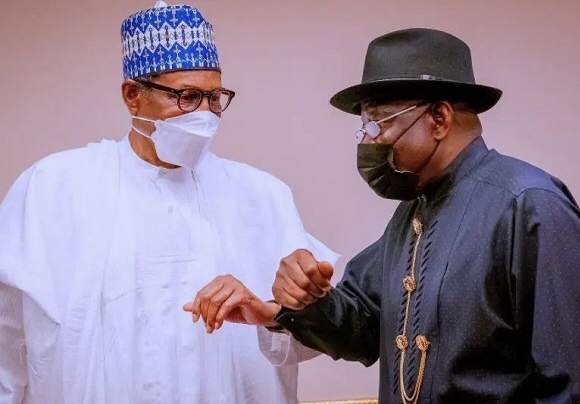
Saturday, the 21st of August, 2021, marks a black day in our march towards achieving social equilibrium among Nigeria’s two social classes: the poor and the elites. The picture on social and conventional media of President Buhari, former President Jonathan, Atiku Abubakar, Femi Fani-Kayode, etc., dining, laughing, exchanging banter, posing for the camera at Bichi speaks volumes on the future of the masses in Nigeria.
On the one hand, these men would quarrel, argue and set their followers against each other just to win elections. But, on the other hand, they shower elitist solidarity to one another when anyone in the circle is celebrating or mourning. Alas, it’s the poor who’s socially excluded even though it’s through him they rode to power.
While the glitz and glamour were going on at Bichi and Aso Villa, in Batsari, Danmusa and many palaces, people are running for their lives; some are bereaving the dead ones. Moreover, many are abducted by bandits. For example, over 150 Islamiyya students from Attagina (Tegina) in Niger State were, for months, in captivity. Six died, including a three-year-old boy. What do you think if these children belong to the upper class? It’s high time our politicians show class, empathy and maturity.
Today, Nigeria represents every aspect of George Orwell’s Animal Farm. “All animals are equal, but some animals are more equal than others,” says the satiric work! Clover, one of the most loyal and hardworking characters, symbolises the Nigerian poor. For the poor is the only symbol of loyalty and toil to the Nigerian state like Clover. Clover’s realisation toward the end of the novel of betrayal of the so-called revolution depicts the current sad reality:” if she herself had any picture of the future, it had been a society of animals set free from hunger and the whips, all equal, each working according to his capacity, the strong protecting the weak.”
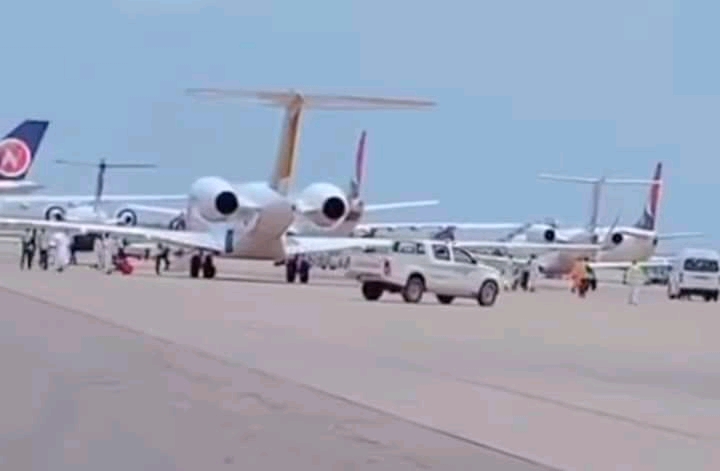
Photos of the number of jets grounded at Aminu Kano International Airport on social media depicts the sad reality. On the one hand, it reveals the massive gap between the elites and the poor. But, on the other hand, it reveals the security situation in the country and why our elites are reluctant to address it; they travel on planes, we travel by road, where kidnappers set up roadblocks.
From the wedding scene, receptions, the phones distributed, to Abuja where the bride is conveyed, the glamour exhibited reflects how far we’ve regressed to the version of 18th-century capitalist Britain and its attendant ‘Enclosure System’. Oliver Goldsmith sums up our predicament in his famous ‘The Deserted Village’ when he says, ” to see profusion one cannot share, to see ten thousand baneful arts combined.. to pamper luxury and thin mankind.”
Today, there are designated federal parastatals and ministries such as Petroleum, Finance, CBN, Federal Inland Revenue, etc., where the children of the poor can’t work; for them, these covetous places are uncharted territories. They’re meant for the rich.
Today, our leaders are attributed with everything elitist and why elitism represents. One salient legacy our man will be remembered is his earnest response to elites’ birthdays. They’re the hallmarks of elitism because they’re the only group who celebrate it. However, a poor isn’t after birthdays; he contends with his security and daily bread in a hostile socio-economic environment. Thus, he neither gets the bread nor feels secured; he’s barred from farming by a group that catches him and demands a ransom from his low-income family members who are too hungry to pay.
Sadly, the so-called ardent supporters couldn’t differentiate between sad reality and fantasy. Those who sometimes cried in the past, when we were in the new normal, can’t cry now when the new not normal sets in. We’re besieged from every angle of our home. The attack on the Nigerian Defence Academy (NDA) this week is the last straw…the definition of Nigeria and what it symbolises: chaos.
The government has so far mastered the art of rhetoric. They can rhetorically speak in the language the criminals understand; but can’t speak in the language the Talakawa understand: that provides the basic social services.
Never in the history of politics in Nigeria has a political figure garnered so much goodwill and solidarity from the poor like President Buhari. But, alas, the goodwill and the solidarity aren’t reciprocated. A conscientious man can’t sleep soundly when his subjects are daily hunted like dogs. Those poor masses who toil and sweat…
As for now, the hope of the poor is so slim, for hunger, bandits, and elites besiege him.
Salisu Yusuf writes from Katsina. He can be reached via salisuyusuf111@gmail.com.