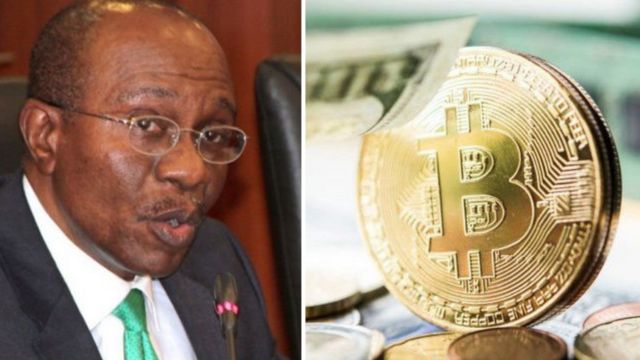
Godwin Emefiele

CBN warns Nigerians to take their old notes to banks

By Uzair Adam Imam

The Central Bank of Nigeria (CBN) has required citizens to take their current naira notes to the banks as quickly as possible.

The CBN governor, Godwin Emefiele, made this disclosure while fielding questions from State House reporters on Thursday.

He said that the banks had already started dispensing the new cash, which reached their various offices on Wednesday to their customers.

The redesigned notes presented to the public are the N1000, N500 and N200, respectively.

The governor added, “I can only assure you that it will go around. Let us just be calm. Luckily, the old currency continued to be legal tender till January 31, 2023. 

“So, I want to crack a joke, both the painted (new notes) and unpainted (old notes) will operate concurrently as legal tender. 

“But by January 31, the unpainted one will not be useful to you again, so please take it to your bank as quickly as possible,” he said.

Naira redesign: CBN orders banks to work on Saturdays

By Muhammadu Sabiu

In order to allow customers to return old naira notes, the Central Bank of Nigeria has ordered commercial banks around the nation to open on Saturdays through January 31, 2023.

The N200, N500, and N1,000 banknotes will be redesigned by the Central Bank of Nigeria (CBN) and released by December 15, 2022.

The present notes will continue to be legal money until January 31, 2023, when they will no longer be, according to CBN Director of Corporate Communications Osita Nwasinobi, who was speaking at the CBN exhibition on Thursday in Ilorin, the capital of Kwara State.

Represented by the acting Director of Corporate Communications, CBN, Akpama Uket, the director said, “They [the banks] have also been instructed to receive the existing banknotes beyond the threshold stipulated by the Cashless Policy without charges to customers.

“Consequently, you must return all the current N200, N500, and N1,000 banknotes to your bank before the expiration of the deadline.”

Questions on Naira redesign

By Abdulhalim Ishaq Ringim

Yes, there’s about N2.73 trillion outside bank vaults. This figure represents 85% of the N3.23 trillion in circulation. However, it only represents 6.5% of more than N49 trillion that is in circulation.

Now, let’s consider Nigeria’s unbanked population which stands at 64 million according to World Bank’s “The Global Findex Database 2021: Financial Inclusion, Digital Payments, and Resilience in the Age of COVID-19” report.

What financial intelligence, as a matter of specificity, does the CBN have regarding the magnitude of the money circulating within this highly populous unbanked system. If we were to assume all the N2.73 trillion is in the hands of these unbanked population, then the amount of money on a per capita basis would be about N42,000. Is that too much?

But we all know this assumption is far from reality because the banked population also hold cash for transactionary and precautionary purposes(as in the case of emergencies). So let’s extend our assumption by adding 50% of the banked population to the unbanked population and let the final figure be the number of people who hold cash either because they are unbanked or because of other purposes as transactions and precautions. The per capita cash amount would reduce to N28,000. Is that also too much?

For the hoarding claims, economically speaking, what is the incentive of hoarding cash in Naira considering the continuous devaluation and inflationary trend that has been wiping the value of the Naira against the dollar when there are various hedging options available? Does the CBN have any tentative intelligence that suggest massive hoarding or is this just another trial and error policy?

But let’s also assume there’s indeed hoarding and some people are holding suspicious money. Have the CBN thought of the possibility that the hoarders might now be forced to consider hedging options by flooding the market with money in exchange for hedging-compatible commodities? Have they considered the inflationary tendencies of such an eventuality? Check Dr. Adamu Tilde’s most recent post to appreciate the happening in real world markets. Is the recent sharp rise of the dollar value also a consequence of such tendencies?

The risk of counterfeiting has always been present. The CBN confiscated N64.7 million and N56.8 million in 2019 and 2022 respectively. Compared to the money in circulation, are these figures significant enough to evoke the need for a currency redesign?

If it is for the purpose of managing inflation and ensuring the CBN contractionary monetary policies become more effective, then let’s assume they succeed in mopping up most of the cash outside banking vaults. Is it increased money circulation that actually causes inflation or increased money supply? Isn’t the CBN culpable in the expansion of money supply through their unhealthy tendencies of printing money for government spending via ways and means? What are they doing about the money supply? What is the government also doing about deficit spending and the projected budgetary deficit for the coming year?

Is our inflation strictly a consequence of the Demand-pull Effect(caused by an increase in money supply or credit with commensurate increase in demand for goods and services and resultant price increases) or is it a consequence of a combination with the Cost-push Effect as a result of increase in Oil prices and other commodities(mostly as a result of global events plus local events e.g insecurity, oil theft, floods etc) that is gradually rippling and causing increase in the prices of production process inputs? Does the CBN also not think that the hike in the prices of commodities as a result of the consequence of hedging(possibility of which has been painted by Adamu Tilde in his recent post) would also contribute in aggravating the Cost-push as a result of hikes in production process inputs?

What is the CBN tackling exactly?

Abdulhaleem Ishaq Ringim writes from Zaria.

Naira Redesign: Rumour on removing Ajami is false – Sunusi

By Uzair Adam Imam

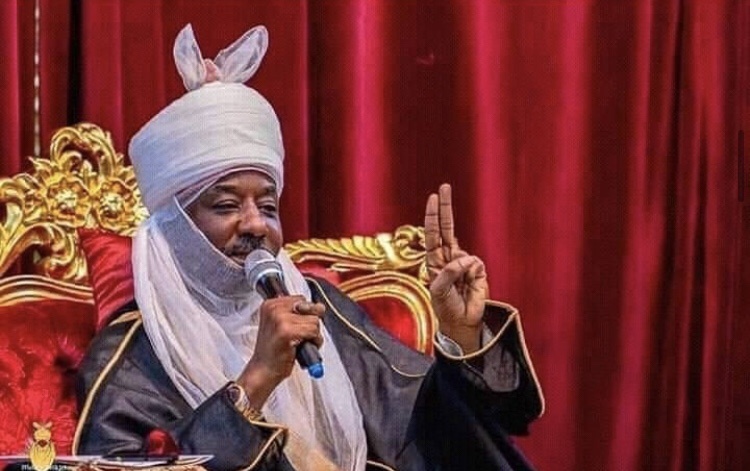
The 14th Emir of Kano State, Muhammadu Sunusi II, urged the general public to reject the rumour that the Central Bank of Nigeria (CBN) would redesign the naira notes to remove the Arabic text (“Ajami”) on them. 

Sunusi, a former governor of CBN, added that the rumour was false and baseless and meant to mislead the masses. 

Recalls that the CBN Governor, Godwin Emefiele, announced the CBN’s intention to redesign, produce, release and circulate new series of N200, N500, and N1,000 banknotes.

Sunusi disclosed this on Monday in a short video he made, which immediately went viral on social media platforms. 

The former Emir said he noticed the rumour circulating among people and said he spoke to the CBN governor about the development. 

“I heard some people, including clerics, engaged in a heated argument over redesigning the naira note, claiming that the Arabic text would be removed if the naira is redesigned. 

“I contacted the CBN governor about the development, and he clarified that the rumour in circulation was false.

Sunusi also urged the general public to disregard the rumour.

Will President Buhari, Emefiele sacrifice CBN for the 2023 Presidency? 

By Ibraheem Abdullateef

Ahead of the 2023 presidential elections in Nigeria, the race for the ticket of the All Progressives Congress (APC) has never been so terribly chaotic and funny. Pegged at an outrageous N100 million naira, no less than 25 aspirants have obtained the nomination and expression of interest forms as of Friday 6, May 2022 to contest in the primaries later in the month. As Nigerians, including the media and the CSOs, were still debating the moral rectitude and leadership capacity of the long list of contenders, the news hit the airwaves on Thursday that the Central Bank Governor of Nigeria (CBN) Godwin Emefiele has also obtained the form by proxy. 

There is no word fit to describe this action, not even anomaly. CBN Governor Godwin Emefiele is taking Nigerians and Nigeria for a ride with his presidential bid. By the extant Central Bank of Nigeria Act 2007, the Bank is an independent, apolitical body and whoever is the Governor is not allowed to be partisan. The series of political-related activities, consultative meetings, and branding in his name would vitiate the law and ethics of professionalism, and it makes a mockery of the public image of the nation’s apex financial and monetary authority in the international community. 

As if to forestall quackery, the section 8 (1) which is on Appointment, Qualification, and Remuneration of Governor and Deputy Governor of the CBN says both of them “shall be persons of recognised financial experience and shall be appointed by the president subject to confirmation by the Senate on such terms and conditions as may be set out in their respective letters of appointment.” 

While corroborating it, the next section in the Act, Section 9, on full devotion to the service of the bank, says “Governor and Deputy Governors shall devote the whole of their time to the service of the Bank and while holding office shall not engage in any full or part-time employment or vocation whether remunerated or not except such personal or charitable causes as may be determined by the Board and which do not conflict with or detract from their full-time duties.” 

Yet, the CBN Governor, Godwin Emefiele, has continued to pursue a presidential bid under the APC. What started a few months back recently reached a crescendo when pictures of about 50 well-branded campaign vehicles hit social media. It also followed the hosting of banners, including rallies across the nation. Despite denying the ambition in April, the eventual purchase of the nomination and expression of interest forms less than two weeks to party primaries show that Emefiele is partisan and has been involved in activities, not in tandem with his office. This impunity is unprecedented. It is not unexpected the outrage of Nigerians, condemning what is perceived as immoral and unethical behaviour. 

As a Nigerian, the 1999 constitution allows Godwin Emefiele the right to pursue any political ambition. But to pursue a presidential bid without resigning, may erode the confidence of investors, international partners, business magnates, and other stakeholders in the financial sectors in the Bank, thereby affecting the economy. Many Nigerians have begun to wonder if the weakening Naira values, including the introduction of policies like E-Naira and banning cryptocurrencies, were not informed by decisions influenced by partisan interests. Regardless of the intentions, the moment Emefiele submits his nomination and expressions of interest form, he must not spend a minute longer as the CBN Governor, unless it becomes a sad precedent to other officeholders, further bastarding the national institutions. 

While spelling out conditions for disqualification and cessation of appointment, section 11 (2) (f) of the CBN act empowers the president to remove the governor. The CBN governor may also be relieved of his appointment if he is “guilty of a serious misconduct about his duty under this Act.” By being openly partisan, it is enough ground for the Board or the National Assembly to summon and question the professionalism and ethics of Godwin Emefiele, in relation to this stewardship. 

The only way Emefiele stays in office is to dissociate himself from this development. If truly he has an ambition and would rather face it squarely, he should vacate the office immediately (provided that he has given at least three months’ notice in writing to the president of his intention to do so). It is not the time to keep mute and be evasive. It is rather a moment to prove a test of character and integrity. President Muhammadu Buhari must address the issue and take positive action to salvage the sanctity of the nation’s foremost financial and economic authority now. 

Ibraheem Abdullateef is a Nigerian youth leader and freelance journalist. He tweets at @_ibraheemlateef.
2023 presidency: Resign and stop embarrassing Nigeria since you want to contest, Ezekwesili tells CBN governor

By Muhammad Sabiu

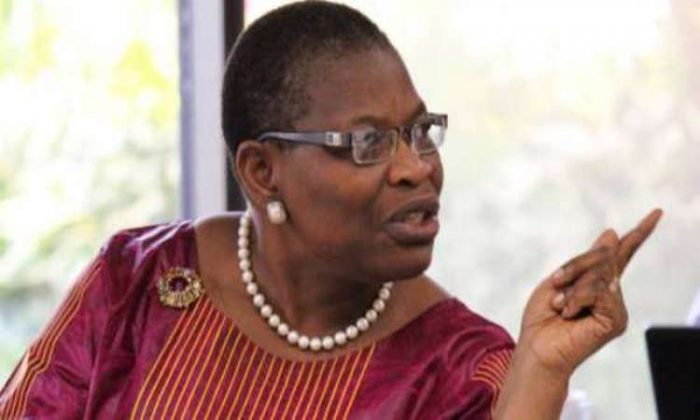
Oby Ezekwesili, Nigeria’s former Minister of Education, has called on the Governor of the Central Bank of Nigeria, Godwin Emefiele, to resign and stop embarrassing the country.

Mrs Ezekwesili’s remark came after reports that Mr Emefiele had acquired the All Progressives Congress presidential nomination and expression of interest form for N100 million on Friday in Abuja, the Federal Capital Territory.

“I just read your waffling neither-here-nor-there tweet reacting to news of your payment of N100M for the APC Nomination form for 2023 Presidential election,” Mrs Ezekwesili tweeted.

“Seems you did not read what the APC Spokesperson said to @Bloomberg. Resign. Stop embarrassing the country. Stop.”

Mr Emefiele, according to the former minister, has turned over the leadership of the apex bank to the president since assuming office.

She went on to say that the bank’s “ill-advised monetary actions” during the last seven years were “political.”

She added that Mr Emefiele’s CBN’s bad monetary policies after Buhari took office in 2015 were proof that the bank had turned over its independence to the president.

2023: Will Emefiele Declare?

By Zayyad I. Muhammad

Godwin Emefiele, 60-year-old Governor of the Central Bank of Nigeria, is one of the presidential hopefuls whose ‘aspiration’ has become a surprise to some people, and admiration to some other people.

Some people were surprised when Emefiele’s name popped up among the presidential hopefuls. This class of people thought that as an experienced economist heading Nigeria’s apex bank, Emefiele should concentrate on his job of formulating monetary policies, controlling inflation, and managing other economic fluctuations, while championing innovation to ensure the nation’s economic and financial stability.

On the other hand, the people who see Emefiele as a strong candidate believe that with the remarkable successes of the programs and schemes initiated or being implemented by Emefiele; if as president of Nigeria he will not only expand them but will also apply his wealth of experience as a development finance expert to stimulate the economy via other economic programs that will reflect on local needs in line with global trends. This group of people always cite schemes like the anchor borrower program- which has successfully created economic linkages between smallholder farmers and reputable companies involved in the production and processing of key agricultural commodities and the COVID-19 intervention that has cushioned the adverse effects of COVID-19 on households and MSMEs.

In the last five years, the CBN under Emefiele has disbursed over N114.09 billion to support the fertilizer industry- Nigeria had seven Fertilizer blending plants in 2016, and only four were operational. As of today, there were 62 functioning blending plants. These and many economic policies and progress are the ladders these people stand on to cheer Emefiele on, as a strong aspirant. There are reports that many farmers in the north, especially rice farmers have termed their successes as ‘Emefiele’.

Furthermore, political pundits are of the view that Emefiele’s candidature can be a very important political balancer for the APC ahead of the 2023 presidency game. Firstly, no camp in the Southwest will feel cheated with the Emefiele candidature since he directly doesn’t belong to any of them; but can be incorporated into any camp seamlessly.

Secondly, Emefiele from Ika South, Agbor region of Delta State, SouthSouth Nigeria, can also be linked to the cousins of the Igbos in the Southeast. This will to some extent calm the nerves of the advocates of the Igbo presidency and achieve geopolitical equity. For example. Goodluck Jonathan’s presidency was a stabilizing force in the southeast’s politics and social order.  Some political pundits believe that Emefiele, as president can also play that role, now that the Southeast is in agitation for the presidential seat. 

The time has come for Emefiele to officially declare whether he will contest or not. This is very important to clear the air- politics or CBN Governor.  If Emefiele will not contest- let him continue with his task as the driver of Nigeria’s monetary policies and other important roles of the CBN. However, if he decides to contest – this will be a big one in the field of the 2023 presidency game in the APC- already groups like the Emefiele Support Group and Arewa Alliance for the Presidency of Godwin Emefiele (AAPGE) have reached out to many quarters in the country campaigning for Emefiele.

So, what remains for Emefiele is political alliances, negotiation, and courting- this will be easy for him because of his privileged position. However, he also needs to understand that politics is not Development Finance. It is a game where a primary school dropout can teach or even ‘scold’ a Central Bank Governor!

Zayyad I. Muhammad writes from Abuja via zaymohd@yahoo.com.

CBN fines 3 banks ₦800 million over cryptocurrency transactions

By Farid Suleiman

Bloomberg reports that the Central Bank of Nigeria (CBN) has penalized three banks over non-compliance with its cryptocurrency directive. The affected banks are Stanbic IBTC Bank, Access Bank Plc and United Bank for Africa.

In a circular dated January 5, 2021, the apex bank had issued a directive to Deposit Money Banks (DMBs), Non-Bank Financial Institutions (NBFIs), and other financial institutions (OFIs) to identify and suspend all accounts of individuals and entities used for cryptocurrency transaction on their system.

“Further to earlier regulatory directives on the subject, the bank hereby wishes to remind regulated institutions that dealing in cryptocurrencies or facilitating payments for cryptocurrency exchanges is prohibited,” the circular reads.

“Accordingly, all DMBs, NBFIs and OFIs are directed to identify persons and/or entities transacting in or operating cryptocurrency exchanges within their systems and ensure that such accounts are closed immediately.”

The affected banks were fined a combined sum of ₦800million. Stanbic IBTC Bank, United Bank of Africa and Access Bank were fined 200million, 100million, and N500million, respectively.

CBN vows to punish banks over deposit of mutilated naira notes

By Ahmad Deedat Zakari

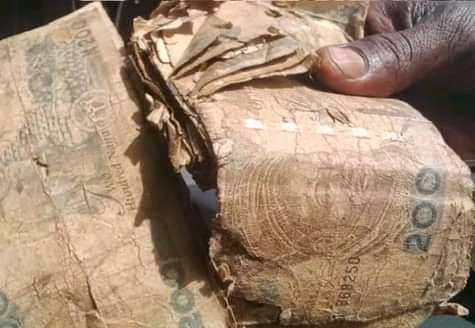
The Central Bank of Nigeria, CBN, has announced a plan to punish banks for depositing mutilated naira notes. 

This was made known to the public in Abuja through a circular signed by CBN’s Director of Currency Operations, Mr Ahmed Umar, over the weekend.

According to Mr Umar, the warning to the banks to stop depositing mutilated and composed banknotes will take effect from Friday, April 1, 2022.

“The management of the CBN observed with concern the increase in the number of composed banknotes deposited by DMBs and request for replacement of such banknotes by members of the public.

“The existence of composed banknotes in the economy falsifies the true value of currency in circulation, and can also be avenue for fraudulent activities.

Consequently, any composed banknote discovered in the deposit of DMBs shall attract penalty of 400 per cent of the value,” The circular reads.

Composed banknotes or mutilated Naira notes usually comprise several parts of different banknotes of the same denomination.

CBN set to enlighten Kano business owners about its policies and programmes

By Muhammad Sabiu

The Kano branch of the Central Bank of Nigeria (CBN) has set to educate business owners in December on its policies and how they can venture into various programmes initiated by the apex bank.

This is contained in a letter dated November 25, 2021, and signed by H.S. Mohammed on behalf of the Branch Controller, CBN Kano.

The letter was addressed to the Students’ Union Government president of Bayero University Kano, requesting the student leader to mobilise 50 of his union members at the sensitisation event.

The letter partly reads: “The Central Bank of Nigeria intends to sensitise manufacturers, traders, farmers, banks, artisans, cooperatives and the general public on the various policies and programmes of the Bank which they can key into.

“Consequently, the Bank is cordially inviting you and your members to in-depth presentations from 9:00 a.m daily on Wednesday, 1” and Thursday, 24 December 2021 at Afficent Event Centre, No. 4 Magajin Rumfa Road, Opposite DTSV Office Nassarawa, Kano.”

Explaining what the event is all about, the Bank wrote, “The ‘CBN Fair’ is a harmonised sensitisation program on all the Central Bank of Nigeria’s initiatives (Real Sector Financing and Interventions, Payment Systems Initiatives, Consumer Protection, Clean Naira Note Policy, Financial Inclusion and Consumer Rights) with a focus on the recent e-Naira initiative.”