Genocide

Slovenia to Air Palestinian Documentaries in Place of Eurovision Broadcast

By Maryam Ahmad

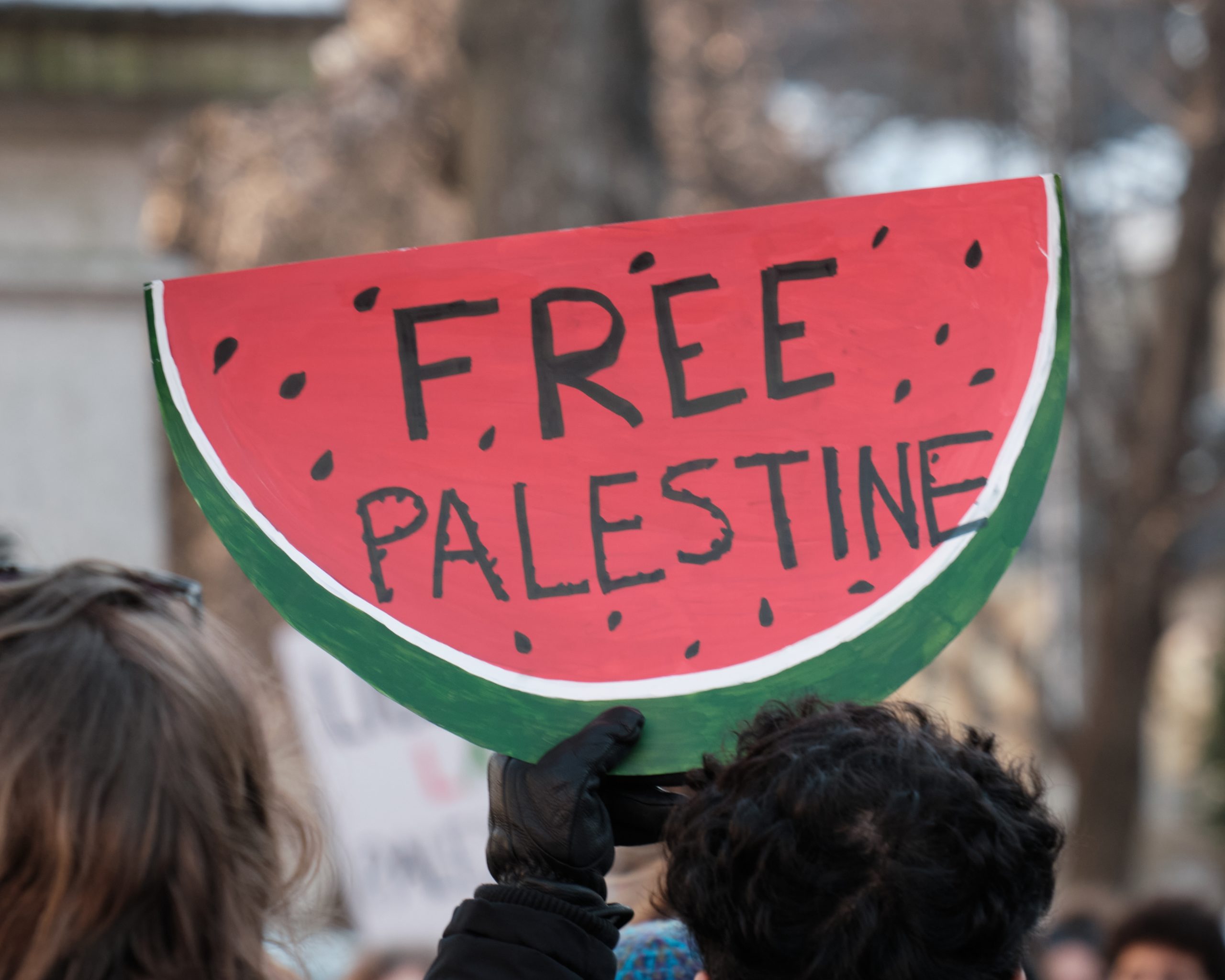
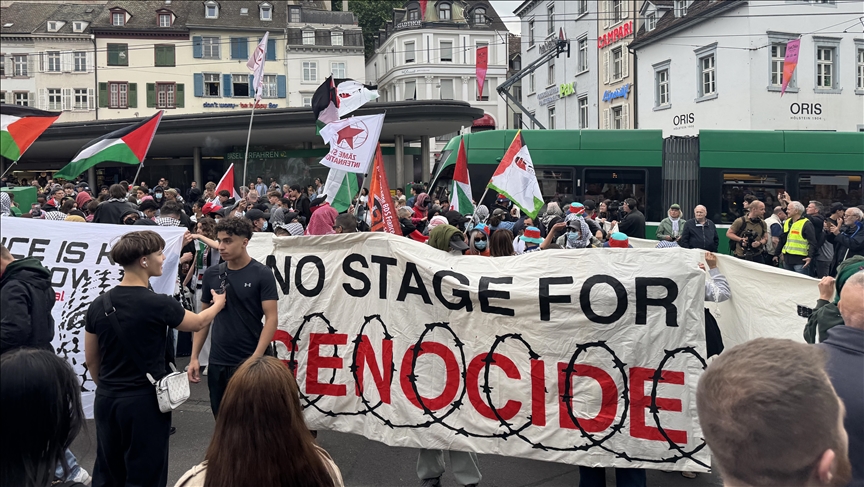
Slovenia has announced that it will broadcast a series of Palestinian documentaries instead of airing the 2026 Eurovision Song Contest 2026, marking a significant cultural and political statement amid growing tensions surrounding the annual music competition.

According to reports, Slovenia is among the five countries that have withdrawn from this year’s contest. While most participating nations will continue with scheduled broadcasts, only Iceland and the Netherlands are expected to air the competition despite their withdrawal. The contest is set to take place next month in Vienna.

Slovenian officials indicated that the decision to replace Eurovision programming with Palestinian documentary content is intended to provide alternative perspectives and highlight ongoing humanitarian concerns. The move reflects a broader debate across Europe about the role of cultural events during geopolitical conflict, particularly regarding the Israel–Palestine issue.

The European Broadcasting Union (EBU), which organises Eurovision, has not yet issued a detailed response to Slovenia’s programming change but has previously maintained that the contest is a non-political event aimed at fostering unity through music.

Slovenia’s decision adds to mounting tensions surrounding this year’s competition, with critics arguing that Eurovision cannot be entirely separated from political realities, while supporters insist it should remain an apolitical platform for artistic expression.

The development is likely to intensify discussions about the intersection of culture, media, and politics in Europe, as audiences across the continent prepare for one of the world’s most-watched entertainment events.

Kwankwaso, America, and the Risks of External Political Labelling

By Abdulhamid Abdullahi Aliyu

Recent signals from Washington suggest a growing impatience with Nigeria’s internal complexities, especially as they relate to religion, security, and political leadership. At the centre of this emerging posture is a troubling tendency to compress Nigeria’s layered crises into externally convenient labels—labels that risk doing more harm than good.

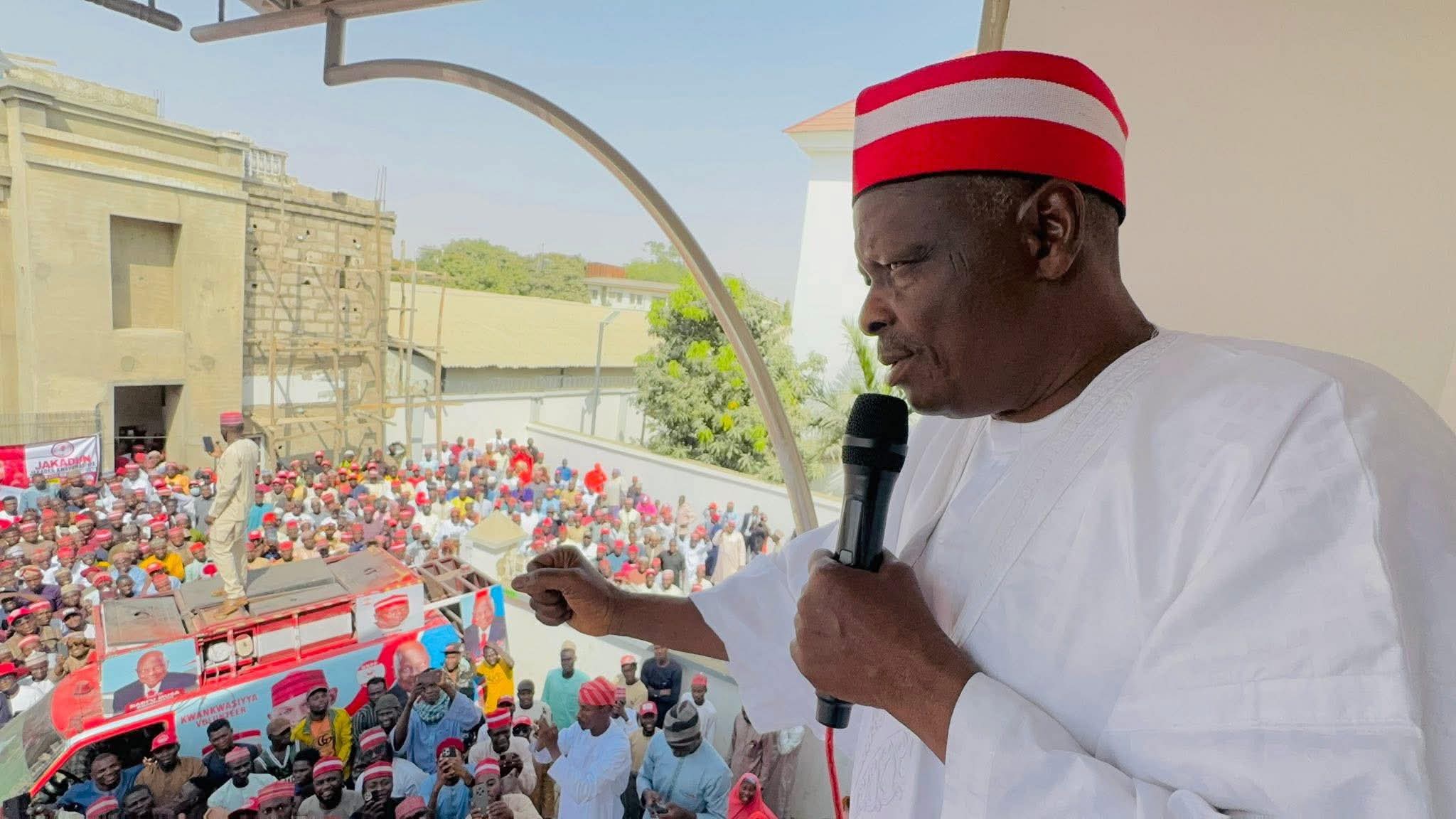
One of the clearest flashpoints in this evolving narrative is the renewed attention to former Kano State governor Rabiu Musa Kwankwaso. His name, along with those of Fulani-affiliated organisations and, by implication, Nigeria’s Muslim political class, has begun to feature in American policy conversations framed around religious freedom and accountability. What appears, at first glance, as principled concern deserves closer scrutiny.

Nigeria’s security breakdown is undeniable. Insurgency, banditry, farmer–herder violence, and organised criminal networks have torn through communities across the country. But these tragedies have never respected religious boundaries. Muslims and Christians, northerners and southerners, rural farmers and urban traders have all paid the price. To reframe this national trauma primarily as a story of religious persecution is to flatten reality into something politically useful but analytically false.

This framing did not emerge organically. It has been cultivated through persistent lobbying, selective reporting, and advocacy-driven briefs circulated within Western policy and faith-based circles. Many of these narratives rely on contested data sets and ideologically motivated interpretations that have been challenged by journalists and security analysts familiar with Nigeria’s terrain. Yet repetition has given them traction.

Under Donald Trump, the United States has shown a greater willingness to convert these narratives into policy instruments. Nigeria’s earlier designation as a “Country of Particular Concern” over alleged religious persecution, and the signals accompanying its reconsideration, reinforced the impression that Washington had settled on a moral script that leaves little room for nuance.

What is especially alarming is how this posture now intersects with Nigeria’s domestic political timeline. The proposal of punitive measures against figures like Kwankwaso—who has no public record of religious extremism—raises uncomfortable questions about motive and timing. Sanctions, visa restrictions, or terror designations do not occur in a vacuum; they shape reputations, constrain political options, and influence electoral perceptions.

Even more dangerous is the elastic use of terms such as “Fulani militia.” The Fulani are not a monolith, nor are they a security organisation. They are a vast, diverse population spread across West and Central Africa, encompassing professionals, farmers, scholars, politicians, and pastoralists. To collapse this diversity into a security label is not accountability—it is ethnic profiling with far-reaching consequences.

Those who defend this approach often argue that allowing clerics or religiously identified politicians into democratic space risks sanctifying power. That concern is not without merit. In plural societies, when political authority borrows the language of divine legitimacy, dissent can be recast as moral deviance. But that argument cuts both ways. External actors who cloak geopolitical interests in moral absolutism risk exporting the very instability they claim to oppose.

Nigeria’s democracy, imperfect as it is, rests on pluralism, negotiation, and the acceptance of politics as a human—rather than sacred—enterprise. When foreign policy instruments treat Nigerian political actors as symbols in a global religious drama, they undermine this fragile equilibrium. Worse still, they embolden local extremists who thrive on polarisation and grievance.

None of this is to argue against international engagement or concern for human rights. On the contrary, Nigeria benefits from cooperation with partners such as the United States in intelligence sharing, capacity building, and counterterrorism. But partnership must be grounded in evidence, context, and restraint—not in sweeping classifications shaped by advocacy pressure or domestic American politics.

If Washington’s objective is stability in West Africa, then the path forward lies in engagement rather than labelling, dialogue rather than designation. Nigeria’s challenges are internal, complex, and deeply rooted. They cannot be solved by reducing political figures to caricatures or entire communities to security threats.

Kwankwaso’s politics, like that of any public figure, should be judged by Nigerians through debate, scrutiny, and the ballot. External political labelling, however well-intentioned, risks distorting that process and deepening divisions within an already strained federation.

In the end, what Nigeria requires from its partners is not moral theatre but sober cooperation. Fairness, evidence, and respect for internal democratic processes remain the only sustainable foundations for international engagement.


Abdulhamid Abdullahi Aliyu is a journalist and syndicate writer based in Abuja.

2025: Genocide, missile and other issues

By Usman Abdullahi Koli

“Tempora mutantur, nos et mutamur in illis.” Times change, and we change with them. Some years arrive with spectacle, with upheaval that demands attention. Others arrive quietly, insistently, reshaping life before their weight is fully understood. 2025 in Nigeria was of the latter. It did not collapse. It did not triumph. It compelled the nation to confront itself.

On a Tuesday morning in early January, before any official pronouncement or statistical briefing, the country was already aware of the season’s challenge. At the motor parks, drivers adjusted fares in silence, anticipating rising fuel costs. From Idumota Market in Lagos to Monday Market in Maiduguri and Sabo Gari Market in Kano, traders shifted prices mid-morning, recalibrating their margins as households silently reshuffled meals and transport plans.

Some Nigerians recounted how they had begun rationing electricity at home and combining trips to reduce petrol expenses. Survival, not aspiration, became the framework of daily life. Everyone began to adjust to the sharp inflationary impact of the new economic regime.

President Bola Ahmed Tinubu had warned that national renewal would be neither fast nor painless. He described it as a painful surgery necessary to recalibrate the economy for future gains. By midyear, the warning had manifested. Inflation, driven by food and energy prices, persisted relentlessly. The naira existed in a state of limbo, neither collapsing completely nor regaining dignity. Salary-dependent citizens faced daily compromise, while speculators adjusted and profited. Official statistics merely confirmed what citizens already knew: adjustment had become endurance.

Yet governance did not stand still. Revenue mobilisation improved. Leakages narrowed. Subnational governments were compelled to confront fiscal realities rather than maintain dependence on the centre. By April, a comprehensive tax reform framework was unveiled, aiming to redefine who pays, how, and to what effect. Properly implemented, it could stabilise finances for decades. Miscommunicated, it risks deepening mistrust. In public policy, substance alone is never sufficient; legitimacy also requires understanding, transparency, and civic consent.

Security offered evidence of the state’s potential when coordinated and intelligence-driven. Operations across Zamfara, Katsina, and Kaduna disrupted entrenched bandit networks. Camps once considered permanent were dismantled and feared commanders neutralised. The significance was less in propaganda and more in the quiet lesson that impunity is not inevitable. Yet highways remained perilous, rural communities exposed, and kidnappings continued. Fear, while less permanent, had not fully dissipated. Structural justice, inclusion, and local legitimacy remain essential for lasting security.

International and regional developments added further complexity to an already strained year. Statements by the current United States President, Donald Trump, asserting that Christians were being targeted in Nigeria and describing the situation as a Christian genocide, drew strong domestic and international reactions, reopening debates about sovereignty, narrative framing, and the external politicisation of Nigeria’s internal security challenges. Almost simultaneously, a reported missile strike in Sokoto, justified as an operation against the so-called Lakurawa terror group, raised serious questions about intelligence credibility, civilian safety, and the expanding theatre of counterterrorism. Within the subregion, Nigeria’s foreign and security policy faced its own test when Nigerian soldiers en route to Portugal were detained in Burkina Faso, a development that followed closely on the heels of an attempted coup plot in the Benin Republic and Nigeria’s military support for the Cotonou government. Together, these events underscored the fragility of regional trust and the growing cost of instability beyond Nigeria’s borders.

The health sector revealed fragility in stark terms. Nationwide strikes by resident doctors, followed by allied health workers, paralysed tertiary hospitals. Emergency rooms were stretched. Laboratories and pharmacies operated at skeletal capacity. Citizens faced delays, avoidable loss, and mounting uncertainty. Professional sacrifice, not institutional strength, sustained the system. No nation aspiring to seriousness can indefinitely rely on individual endurance while postponing structural repair.

Midyear brought a moment of national reflection with the death of former President Muhammadu Buhari. Flags flew at half-mast. Tributes poured from private citizens, politicians, and international observers alike. Yet beneath the ceremonial mourning lay unresolved questions: the legacy of decisions, the costs of policy, and the gaps left in leadership. History rarely closes neatly. It lingers, asking questions long after the ceremonies end.

Politically, the year matured with quiet intensity. Alliances shifted, ambitions hardened. Northern cities, Kano in particular, became symbolic mirrors of broader anxieties. Silence, rather than violence, became the language of anticipation. Even without a formal declaration, Nigerians understood that political calculation was underway, shaping the landscape for future contests.

Amid pressure, civic life persisted. Humour flourished in the streets, on social media, and in private gatherings. Satire became a language of participation, reminding those in authority that power is both observed and interpreted. In a constrained civic space, laughter and critique became inseparable.

By the year’s close, one conclusion is unavoidable. 2025 was not a season of miracles. It was a season of exposure. Governance demonstrated competence and direction in some areas, while revealing gaps in empathy and communication in others. Citizens displayed resilience, but also impatience and a refusal to be sustained by rhetoric alone. Reform is underway. Its success depends on trust, empathy, and the leaders’ capacity to carry the public along honestly.

Nigeria did not fall. But we keep hope alive that the giant will rise. It confronted itself, and comfort proved in short supply. This confrontation, uncomfortable as it was, may yet lay the foundation for a more serious engagement with the demands of nationhood. Nations rarely change because they are persuaded; they change because they are compelled to see themselves clearly.

In this, 2025 may yet prove instructive.

Usman Abdullahi Koli wrote via mernoukoli@gmail.com. 
Christmas: Pope Leo urges Israel to honour ceasefire commitments

By Maryam Ahmad

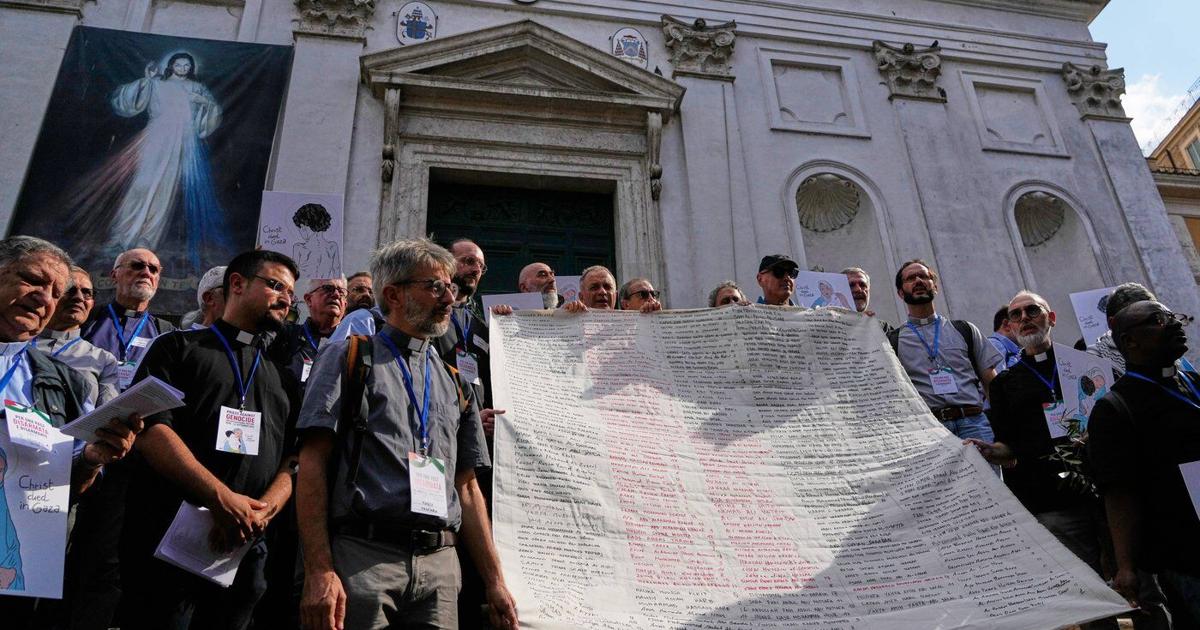
In his Christmas address, Pope Leo appealed for an immediate end to violence and renewed efforts toward peace in the Gaza Strip. Speaking to worshippers during the traditional Christmas message, he expressed deep concern over the humanitarian suffering caused by the ongoing conflict.

The Pope called on world leaders and all parties involved to choose dialogue over confrontation, stressing the need to protect civilians, especially children and other vulnerable groups. He urged the international community to work tirelessly for a just and lasting peace in the Gaza Strip and across the broader Middle East.

He also lamented reports of continued killings of Palestinians in the Gaza Strip, noting that violence has persisted despite announcements of a ceasefire. The Pope described the situation as deeply troubling.

He called on Israel and all parties to respect international humanitarian law, honour ceasefire commitments, and take concrete steps to end the suffering of civilians caught in the conflict.

Concluding his message, Pope Leo emphasised that the spirit of Christmas is rooted in compassion, reconciliation, and hope, values he said must guide global responses to conflict and human suffering.

Shari’ah in Nigeria: A response to Ebenezer Obadare’s U.S. congressional testimony

Dr Ebenezer Obadare, a Senior Fellow for Africa Studies at the Council on Foreign Relations (CFR), recently testified before a joint briefing of the United States Congress on the security crisis in Nigeria. Given CFR’s extraordinary influence on U.S. foreign policy, as its analysts brief the Congress, the State Department, and the White House, the accuracy and balance of Dr Obadare’s testimony matter significantly.

At the briefing, U.S. lawmakers and witnesses made one demand that every responsible Nigerian, Muslim or Christian, would be happy with: that Nigeria must disarm armed militias and prosecute attackers. The renewed commitment we are now seeing from the Nigerian government, including airstrikes against armed militias, the planned police and military recruitment, and the declaration of a national security emergency are all a response to the mounting U.S. pressure. On this point, American engagement has been productive.

However, Dr Obadare went far beyond the reasonable. After acknowledging the recent steps taken by President Tinubu, he nevertheless insisted that “Washington must keep up the pressure.” To him, U.S. leverage should not only be used to combat Boko Haram but to pressure the Nigerian president to abolish Sharia criminal law in twelve northern states and disband Hisbah commissions across the northern region. This framing is problematic on several counts.

First, it portrays Nigeria not as a sovereign state but as a dependent client whose legal and cultural system must be restructured via external coercion. This is not only intellectually careless; it is politically reckless. Nigeria’s constitutional debates, including the place of Sharia within a federal arrangement, cannot be resolved through directives from Washington. These are matters rooted in decades of negotiation, legal precedent, historical realities, and democratic choice. Such complexity cannot be wished away by foreign pressure or reduced to simplistic talking points about religious persecution. Sharia was introduced between 1999 and 2001 through public consultation and mass popular demand by the local citizens in northern Nigeria, who are Muslims. Subsequently, it was formalised and enacted into law by the various State Houses of Assembly.

Second, Obadare’s argument misdiagnoses the root causes of violence in the north. Boko Haram and ISWAP do not derive their ideology from the Sharia systems implemented by northern states since 1999. In fact, Boko Haram explicitly rejects these systems as insufficient, impure, and corrupted by democracy. They consider northern governors apostates precisely because they operate within a secular constitution. The group’s origins lie in violent extremism, socio-economic marginalisation, and the 2009 extrajudicial killing of the group’s founder, Mohammed Yusuf. It has nothing to do with the Sharia framework implemented by the twelve northern states. In fact, Boko Haram rejects and condemns these state Sharia systems as illegitimate, and this is why the majority of their victims are Muslims themselves. 

It is therefore analytically false to imply that Sharia criminal law fuels this insurgency. This narrative does not withstand even a basic historical timeline. The Maitatsine insurgency of the 1970s, whose ideology and violence closely resemble Boko Haram, predated the introduction of Sharia in the early 2000s by decades. To frame Sharia as the catalyst of terrorism is therefore a misreading of history and to locate causality where it does not exist.

Third, the call to disband Hisbah groups ignores their actual function and constitution. Hisbah institutions are state-established moral enforcement agencies regulated by local laws. They are not terrorist actors, militias, or insurgent organisations. They are contrary to Dr Obadare’s claims that they “impose extremist ideology, enforce forced conversions, and operate with near-total impunity.” These assertions either misrepresent the facts to unfairly tarnish their reputation or reflect intellectual laziness that risks misleading American policymakers. In doing so, they also demonise millions of peaceful Nigerian Muslims who regard Sharia as a legitimate component of their cultural and moral identity.

Finally, Dr Obadare’s testimony, intentionally or not, reinforces a narrative in Washington that sees Nigeria’s crisis primarily through the lens of religious conflict rather than the multi-dimensional reality it is, that is, a mixture of terrorism, banditry, state failure, local grievances, arms proliferation, and climate-driven resource conflicts in the form of farmer-herder crisis. Oversimplification of this serious problem does not aid victims. It distorts U.S. policy and encourages punitive measures that could destabilise fragile communities further and restrict the fundamental rights of millions of Muslims to exercise their faith and adhere to the guidance of Shari’a in their personal and communal lives. 

Nigeria faces serious security challenges amid years of leadership neglect. We genuinely need pressure to put the leaders on their toes, but not the kind rooted in calculated distortion. There is a need for leadership accountability, but not at the expense of Nigeria’s sovereignty. And we need a partnership with the United States in the areas of intelligence gathering, military capabilities and a mutually beneficial partnership. 

The United States should not base its engagement on flawed analyses made by experts such as Dr Ebenezer Obadare, which risk misrepresenting Nigeria’s realities, undermining local institutions, and prescribing solutions that could exacerbate rather than resolve the country’s complex security challenges. Partnering with the Nigerian government enables a tailor-made approach to effectively address these challenges, rather than relying on experts who have long been out of touch with Nigerian realities beyond what they read in media reports.

The Nigerian state must do more, no doubt. But analysts like Dr Obadare must also do better. Nigeria deserves policy analysis grounded in accuracy, proportionality, and respect for the complexities of a plural society; not sweeping prescriptions that collapse constitutional debate into counterterrorism and treat millions of northern Muslims as collateral in the process.

Ibrahiym A. El-Caleel writes from Nigeria and can be reached at caleel2009@gmail.com.

Still on America’s grievances with Nigeria

By Lawal Dahiru Mamman

History has shown, time and again, that empires rise and fall. The Roman Empire, one of the most powerful the world has ever known, once ran its affairs through the “cursus publicus”, a state-run courier service that carried official messages, documents, and goods across vast territories. At its peak, that system was the lifeblood of Rome’s political and economic power.

It was through the “cursus publicus” that Rome sustained control over trade, tax collection, commercial regulation, and responses to economic challenges. It kept the wheels of commerce turning, ensured that official supplies — from grains and olive oil to textiles and metals — moved swiftly, and maintained the empire’s hold over its provinces.

But as Rome began to lose its grip on that system, communication faltered. Trade weakened. Taxes dwindled. Economic integration collapsed. What followed was a slow, sprawling decline that signalled the empire’s loss of power and the gradual rise of others.

Today, empires no longer look like Rome. They are defined by global influence, control of international systems, and the ability to shape the world order. The West — especially the United States — has long enjoyed that advantage. But emerging power blocs are redrawing the world map, and anyone can see the global balance is shifting.

It is against this backdrop that the recent noise around an alleged “Christian Genocide” in Nigeria must be understood. Following that allegation, US President Donald Trump redesignated Nigeria as a Country of Particular Concern (CPC). The designation carries several potential consequences: aid cuts, export license restrictions, asset freezes, limited security cooperation, and even American opposition to international loans and investments.

Not stopping there, Trump went a step further, issuing a dramatic threat of military action that would be “fast, vicious, and sweet” if the Nigerian government failed to protect its citizens. His declaration sparked reactions far beyond Nigeria’s borders, raising an important question: What truly motivates America’s sudden aggression?

To understand this, one must consider the broader geopolitical shifts unfolding beneath the surface. In January 2025, Nigeria joined BRICS — a powerful intercontinental bloc formed by Brazil, Russia, India, and China, with South Africa later joining. The BRICS exists largely to counter the dominance of Western institutions like the IMF and the World Bank and to promote a multipolar global economy in which the US dollar no longer reigns supreme. 

With a combined GDP of roughly $30 trillion, the bloc wields real economic weight. Nigeria’s entry strengthens its ties with major economies such as China and India, promising new investments in energy, agriculture, infrastructure, and industrial development. It also opens the door to greater export opportunities, especially in oil and natural gas. 

For a country long boxed into Western-controlled financial systems, BRICS offers breathing space — and alternatives. There is also the Dangote Refinery, with its single-train capacity of 650,000 barrels per day. For decades, Nigeria relied on imported fuel despite its abundant crude oil. That era is ending. Import figures are falling sharply — 24.15 million litres per day in January 2025, 19.26 million in September, and just 15.11 million in the first ten days of October. 

With Dangote planning to expand to 1.4 million barrels per day, Nigeria is on the path to fuel independence, rivalling India’s Jamnagar Refinery, the world’s largest. This development, naturally, unsettles countries that benefit from Nigeria’s dependence — America included.

Then there is Nigeria’s deepening relationship with China. In the past year alone, Nigeria has signed major deals on industrial parks, rail and port infrastructure, mineral exploration, and energy development. China’s economic footprint in Nigeria is expanding rapidly. Meanwhile, Russia’s growing presence across sub-Saharan Africa and Nigeria’s renewed ties with France add to America’s discomfort.

The mineral dimension is equally sensitive. Beyond oil, Nigeria holds rare minerals — including lithium — that power the world’s battery industry. In a world moving toward electric mobility and renewable energy, lithium is the new oil. And China, not the United States, is securing access.

US Senator Ted Cruz once captured America’s anxiety bluntly during a congressional session when he warned: “China is a global threat that must be confronted territory by territory, nation by nation… China is pouring billions into its Belt and Road Initiative… gaining control over cobalt, lithium and other rare earth minerals… refining more than 70% of the world’s cobalt and controlling vast shares of global supply chains.”

His comments speak volumes when placed beside today’s geopolitical tensions. None of this denies the fact that Nigeria still faces grave security challenges. Our leaders must rise to their responsibilities and make the country safe for all. But it is naïve to imagine that America’s sabre-rattling is purely humanitarian. 

The United States may not be threatening a “sweet” military strike out of concern for Nigerian lives. Rather, like Rome losing its “cursus publicus”, America may be reacting to a shifting world order in which its grip is slipping — and Nigeria now sits at the centre of that shift.

Lawal Dahiru Mamman writes from Abuja. He can be contacted at: dahirulawal90@gmail.com.

A letter to Nicki Minaj

Dear Nicki Minaj,

As the latest spokesperson in America speaking on Nigeria, I must clarify that the script provided to you by internal actors back home in Nigeria and their collaborators in the United States is biased and one-sided. You might not fully understand the complexities of insecurity in my country, and you have been fed false lies about fictitious claims of ongoing Christian genocidal attacks.

Here is the reality:

1. In North West Nigeria, banditry devastates the region, with Muslims frequently killing fellow Muslims.

2. In North East Nigeria, Boko Haram and ISWAP, both Muslim terrorist groups, mainly kill fellow Muslims in Borno and Yobe.

3. In North Central Nigeria—Plateau, Southern Kaduna, Taraba, Benue—farmer-herder conflicts, caused by land disputes, are often wrongly seen as religious wars. These conflicts affect both Christians (farmers) and Muslims (Hausa-Fulani herders).

4. In South East Nigeria—Anambra, Enugu, Ebonyi, Abia—IPOB terrorists, who are Igbo Christians, are killing fellow Igbo Christians in their bid for secession.

Dear Nicki, insecurity in Nigeria impacts Muslims, Christians, traditionalists, and atheists equally. The narrative you received is incomplete and misleading.

Nicki Minaj, the Muslims being killed in Nigeria, and other heinous crimes being perpetrated against them do not get to the headlines of international media for you and others to see and understand. The Muslims back home in my country bury their loved ones killed in silence, for they do not believe in using dead bodies for propaganda or to attract sympathy or donations from international organisations.

If you care about speaking for Nigerian Christians, I urge you also to speak for Black Americans facing police brutality. Just as you highlighted Nigeria’s challenges, you can bring the reality of racial injustice in the US to global attention.

Just like you are calling for global international attention on what has been tagged as ongoing Christians’ genocidal attacks in Nigeria, kindly also call global attention to the silent, ongoing police brutality against your fellow Black Americans and the racial discrimination they are facing.

If Nigerian Christians’ lives matter to you, then let the lives of your fellow Black Americans matter as well.

Thanks.

Mustapha Gembu is a Nigerian citizen and a proud advocate for peace, unity, and harmonious coexistence among my fellow Nigerians.

Influencer Aisha Falke shares harrowing past amid renewed tensions over Kebbi schoolgirls’ abduction

By Hadiza Abdulkadir

A detailed personal account posted by northern Nigerian social media influencer Aisha Falke has drawn significant public attention as debates intensify over insecurity and religious rhetoric in the region.

Falke, founder of the popular online platform Northern Hibiscus, published a two-part account describing how her family narrowly escaped an attack during the 2001 ethno-religious crisis in Jos. In the account, she recalls waking to reports of killings at roadblocks and later watching her mother’s Christian friend—described as a close family companion—allegedly approach their home with a machete as mobs advanced toward their neighbourhood.

According to her narration, the family fled moments before large groups of armed youths descended on the area. She also recounted scenes of panic on the roads as fleeing residents warned of roadblocks where travellers were reportedly attacked and burned.

Falke’s post has generated extensive reactions across northern Nigeria, with many users describing it as a reminder of the human toll of past communal violence.

The renewed attention comes as security agencies continue the search for 25 Muslim schoolgirls abducted from their school in Kebbi State last week. The incident has prompted widespread condemnation, though it has unfolded alongside online claims by some groups alleging “genocide against Christians” in the region—claims many northern residents and government officials dispute, arguing that ongoing attacks by bandits and insurgents have targeted communities irrespective of religion.

Falke did not link her story to the Kebbi abductions, but analysts say the timing has contributed to broader conversations about the dangers of inflammatory narratives and the need for balanced reporting on insecurity.

Authorities have not yet provided updates on the rescue operation, while families of the abducted students continue to appeal for swift action.

Uncovering Truths: Christian genocide myths and Muslim suffering in Nigeria

By Umar Sani Adamu, 

For a long time, Western media outlets, foreign politicians, and advocacy groups have repeatedly described Nigeria as the scene of an ongoing “Christian genocide” at the hands of Muslims, particularly Fulani herdsmen. The charge is serious, emotional, and widely circulated. However, a closer examination of the facts on the ground reveals a much more complex and painful truth: the primary victims of the country’s deadliest insecurity crisis, armed banditry, are overwhelmingly northern Muslims.

Multiple independent investigations have found no evidence of a systematic, religiously motivated campaign to exterminate Christians. A 2024 BBC Global Disinformation Unit report, fact-checks by AFP and Al Jazeera, and even cautious statements from Open Doors, the Christian persecution monitor frequently quoted by genocide advocates, have all warned that the term “genocide” is being misused and exaggerated in the Nigerian context.

The violence plaguing the country is real, but it is predominantly criminal, not confessional. Since 2015, armed banditry, kidnapping for ransom, cattle rustling, village raids and mass killings have turned Zamfara, Katsina, Kaduna, Sokoto and parts of Niger State into killing fields. These states are 90–98 per cent Muslim. Most bandits are ethnic Fulani Muslims who prey primarily on Hausa Muslim farming communities.

Complex numbers tell the story that western headlines rarely do:  

– Zamfara State alone recorded over 1,200 banditry-related deaths in 2023,  almost all Muslim.  

– In the first nine months of 2025, more than 2,800 people were killed by bandits across the North West, according to the Nigerian Atrocities Documentation Project. The vast majority were Muslim.  

– The U.S. Commission on International Religious Freedom stated in its 2025 report that banditry “disproportionately affects Muslim-majority areas”.

While Christians have suffered real losses in Middle Belt farmer-herder clashes and church attacks, the scale and frequency pale in comparison to the daily carnage in the Muslim North West.

 When the clergy cross the line

This month, Plateau State Police Command arrested a Catholic priest for allegedly supplying AK-47 rifles and thousands of rounds of ammunition to bandit gangs operating across Plateau, Kaduna and Bauchi. Weapons recovered from the cleric have reportedly been linked to recent deadly raids. He was paraded on November 12.

It is not an isolated case. In February 2025, another Reverend Father, a deaconess and several church members were arrested in Taraba for allegedly running arms to both Boko Haram and bandit groups. Similar arrests of Christian clergy and lay workers have occurred in Benue and Nasarawa.

Social media reaction was swift and furious: “They label every Fulani man a terrorist, yet a Reverend Father is caught red-handed arming the same killers,” wrote one widely shared post.

Why the false narrative endures

Images of burnt churches and grieving Christian widows travel fast on global networks. Footage of torched Muslim villages in remote Zurmi or Tsafe rarely does. Poor, Hausa-speaking northerners lack the lobbying machinery that amplifies Middle Belt voices in Washington and London.

As one northern governor privately admitted: “When they shout ‘Christian genocide’ abroad, the grants go to NGOs in Jos and Enugu — never to the millions of displaced Muslims rotting in camps in Gusau and Birnin Gwari.”

The way forward

Nigeria’s crisis is one of state failure, poverty, climate stress and organised crime not a holy war. Treating banditry as jihad only deepens division and delays solutions. Community policing, economic revival in the rural North, and ruthless prosecution of arms suppliers regardless of collar or turban offer the only realistic path to peace.

Until the world stops peddling a convenient myth, the people bearing the heaviest burden — ordinary Muslim farmers, women and children of the North West — will continue to bleed in silence.

There is no Christian genocide in Nigeria. There is, however, a predominantly Muslim tragedy that the world has chosen not to see.

Umar Sani Adamu can be reached via umarhashidu1994@gmail.com.

Dr. Audu Bulama Bukarti: A man steadfast in his principles

By Abubakar AbdusSalam Muhammad (Baban Gwale).

Dr Audu Bulama Bukarti is one of the individuals I admire most in today’s Nigeria.

Recently, during the deeply thought-provoking Zoom discussion organised by Professor Toyin Falola on President Donald Trump’s comments about Nigeria, Bulama once again demonstrated remarkable clarity, courage, and sincerity. His contributions stood out with intellectual depth and honesty, and he represented our nation with dignity and unwavering principle.

Beyond his powerful voice in national discourse, Dr Bukarti is an expert legal practitioner, a meticulous researcher, an exceptional analyst, and a genuine freedom fighter whose work continues to inspire countless Nigerians.

What truly sets him apart is his unshakable commitment to Islam and truth. I recall during an episode of Fashin Baki on President Tinubu’s recent pardons, when he was asked about the case of DCP Abba Kyari and other inmates. His response was firm, principled, and full of integrity:

“I don’t talk on anything that contradicts Islam whatsoever.” These words reflect the heart of a man guided by faith before anything else, a man whose compass does not bend under pressure or public opinion.

A true Nigerian, a proud Muslim, a committed Northerner, a brilliant mind, and indeed a one-man army “KAI KAƊAI GAYYA”

I am deeply proud of him, not only for his intellectual contributions, but for who he is as a true Muslim brother whose sincerity, courage, and patriotism strengthen my love and respect for him.

May Allah preserve him upon goodness, protect him, and continue to make his voice a source of benefit, justice, and guidance for our beloved nation.