Gaza

Gaza infants battle harsh cold as Israel continues to restrict aid flow

By Sabiu Abdullahi

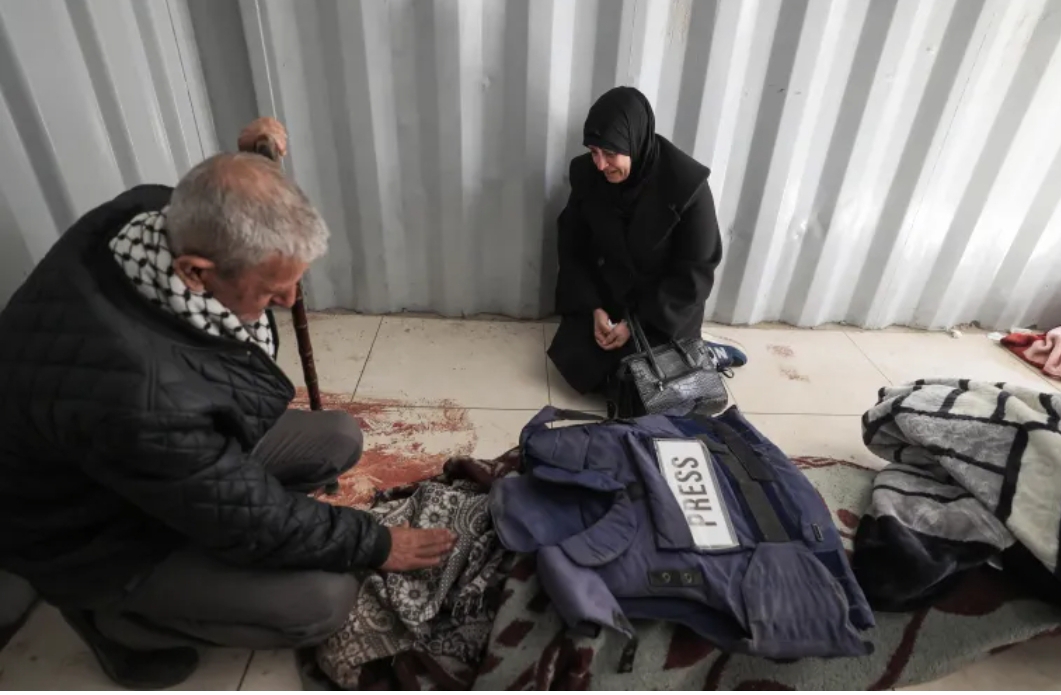
Humanitarian workers have raised fresh concerns over the deteriorating living conditions in the Gaza Strip, warning that freezing temperatures are worsening the health situation of displaced families as Israel maintains tight restrictions on relief supplies.

Doctors Without Borders, also known as MSF, disclosed on Wednesday that infants across Gaza are “suffering from severe cold” while thousands of families remain in fragile, makeshift shelters following months of destruction.

The organisation reported a surge in respiratory infections, skin ailments and other cold-related illnesses, which have spread rapidly among vulnerable groups living in overcrowded and poorly protected encampments.

In a message shared on social media, the group stated: “People are facing torrential rain and heavy winds while living in makeshift shelters,” and added, “All the while Israel continues to block or delay the entry of vital supplies like tents, tarpaulins, and temporary housing.”

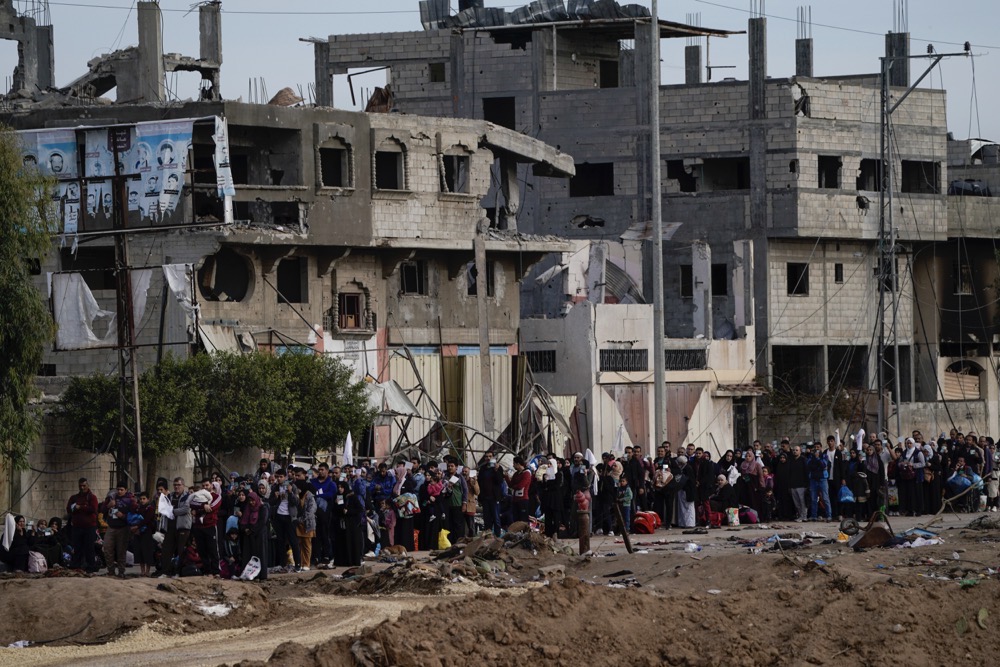
Large parts of Gaza’s population have been displaced since the outbreak of the war, forcing hundreds of thousands of families to seek refuge in tent settlements and damaged structures that offer little protection against the harsh winter weather.

Humanitarian observers note that the continued blockade of essential materials has contributed to widespread hunger and worsening health conditions. Legal analysts have also pointed out that the restrictions breach Israel’s obligations as an occupying power to ensure the welfare of civilians in territories under its control.

The limits on aid deliveries also contradict a ceasefire arrangement brokered by the United States in October, which required Israel to permit the daily entry of 600 humanitarian trucks into Gaza. Despite repeated appeals from the United Nations and other international bodies, the restrictions have remained in place.

Israel has further tightened its stance by cancelling the operating permits of 37 aid organisations, among them MSF and the Norwegian Refugee Council. The new regulations demand extensive disclosure of staff details, funding sources and operational activities.

Responding to the development, MSF said the decision “is a cynical attempt to prevent organisations from providing services in Palestine and is in breach of Israel’s obligations under international humanitarian law”.

Meanwhile, Gaza continues to endure strong winds, heavy rainfall and sub-zero temperatures, which have intensified the suffering of displaced families sheltering in inadequate living conditions.

The ceasefire has not halted violence completely. According to figures released by the Palestinian Health Ministry, at least 424 Palestinians have lost their lives since October 11, while another 1,199 people have sustained injuries in continued Israeli attacks.

As winter deepens, humanitarian agencies warn that without the urgent delivery of shelter materials and relief items, the health crisis in Gaza could worsen further in the coming weeks.

World Council of Churches urges EU to sanction Israel over Gaza genocide

By Ibrahim Yunusa

The World Council of Churches (WCC) has called on the European Union to impose sanctions and an arms embargo on Israel, citing what it described as a “war of genocide” in Gaza and an ongoing pogrom against Palestinians in the West Bank.

Speaking on Tuesday, Iskandar Majlton, a local coordinator of the Ecumenical Accompaniment Programme in Palestine and Israel a WCC-affiliated initiative said the council was deeply shocked by the relentless violence and human suffering unfolding in the region.

Majlton emphasized that the WCC’s position is grounded in international law and human rights, condemning all attacks on civilians regardless of the source. He described the situation in Gaza as an “unprecedented humanitarian disaster,” with thousands killed mostly women and children and nearly the entire population displaced amid destruction, hunger, and disease.

He further stressed that the ongoing crisis did not begin in October 2023 but is rooted in decades of occupation, the blockade of Gaza, and structural inequality, urging global actors to address the deeper causes behind the cycle of violence.

Christmas: Pope Leo urges Israel to honour ceasefire commitments

By Maryam Ahmad

In his Christmas address, Pope Leo appealed for an immediate end to violence and renewed efforts toward peace in the Gaza Strip. Speaking to worshippers during the traditional Christmas message, he expressed deep concern over the humanitarian suffering caused by the ongoing conflict.

The Pope called on world leaders and all parties involved to choose dialogue over confrontation, stressing the need to protect civilians, especially children and other vulnerable groups. He urged the international community to work tirelessly for a just and lasting peace in the Gaza Strip and across the broader Middle East.

He also lamented reports of continued killings of Palestinians in the Gaza Strip, noting that violence has persisted despite announcements of a ceasefire. The Pope described the situation as deeply troubling.

He called on Israel and all parties to respect international humanitarian law, honour ceasefire commitments, and take concrete steps to end the suffering of civilians caught in the conflict.

Concluding his message, Pope Leo emphasised that the spirit of Christmas is rooted in compassion, reconciliation, and hope, values he said must guide global responses to conflict and human suffering.

Mainz lose court appeal over Anwar El Ghazi’s dismissal

By Maryam Ahmad

Bundesliga club Mainz 05 have lost their appeal against the unfair dismissal ruling in favour of Dutch winger Anwar El Ghazi, who has been awarded €1.7 million in compensation.

A German labour court had earlier found that the club acted unlawfully when it terminated El Ghazi’s contract in November 2023 following social-media posts he made during the Gaza–Israel crisis. The arbitration panel upheld that decision, rejecting Mainz’s argument that the posts constituted grounds for immediate dismissal.

In a statement, Mainz said it accepted the ruling but stressed its commitment to maintaining its internal code of conduct. El Ghazi welcomed the outcome, describing it as a vindication of his right to express his views.

Italian journalist dismissed after question on Israel at EU briefing

By Maryam Ahmad

Italian journalist Gabriele Nunziati, a Brussels-based correspondent for the Italian news agency Nova, has been dismissed after posing a question about Israel during a European Commission press briefing.

According to reports from La Stampa, Nunziati asked officials about Israel’s responsibility in the ongoing Middle East conflict — a question his employer later described as “inappropriate” and “embarrassing.” Shortly after the exchange, Nova informed him that his collaboration had been terminated.

The incident has sparked debate within journalistic circles about press freedom and the limits of editorial control. Colleagues in Brussels expressed concern that the dismissal reflects growing pressure on journalists covering sensitive international issues, particularly those related to Israel.

Neither Nova nor the European Commission has issued a detailed statement on the matter. Nunziati, for his part, has defended his question as a legitimate exercise of journalistic duty.

On Donald Trump’s decision against Nigeria

By Saidu Ahmad Dukawa 

Introduction

At last, the President of the United States, Donald Trump, has made the decision he had long planned against Nigeria, following complaints by some Nigerian Christians who alleged that they were victims of religious persecution in the country.

Trump had once placed a similar sanction on Nigeria during his first term, but after he lost the election to Joe Biden, Biden reversed that “rash and unfair” decision.

This new ruling, however, requires Nigeria to take certain actions in line with America’s interests — or face a series of sanctions. For example, these “American interests” could include the following:

1. Any Nigerian state practising Sharia Law must abolish it.

2. Any law that prohibits blasphemy against the Prophet Muhammad (peace be upon him) must be repealed.

3. Any location where Christians wish to build a church must grant them permission to do so.

4. Anything that Christians claim makes them “uncomfortable” in the country — such as businesses involving halal trade — must be stopped.

5. All businesses that Christians desire, such as the alcohol trade, must be freely allowed across the nation.

These are just examples of the complaints made by some Christian groups to the United States, which may also include political and economic demands.

This action by Trump mirrors what America once did to Iraq under Saddam Hussein — accusing the country of possessing weapons of mass destruction, just to justify an invasion.

If true justice were the goal, then both sides — the accusers and the Nigerian authorities — should have been listened to, including Muslim organisations that provided counter-evidence.

Even among Christians, many reasonable voices have spoken against these exaggerated claims, yet their words are ignored. Clearly, a plan against Nigeria had already been set in motion.

So, what is left for the Nigerian government and its citizens to do? Here is my opinion:

WHAT THE NIGERIAN GOVERNMENT SHOULD DO

1. Use diplomatic channels to inform the Trump administration that the situation is being misrepresented. Even if America remains adamant, the rest of the sensible world will know that any step America takes against Nigeria on this basis is pure injustice, and that knowledge itself will have benefits.

2. Reduce dependence on the United States in key areas such as trade, education, and healthcare. Nigeria should instead strengthen its ties with other countries, such as Russia, China, and Turkey.

3. Unite Nigerians — both Muslims and Christians who do not share this divisive mindset — to resist and expose any malicious plots against the nation.

WHAT THE NIGERIAN PEOPLE SHOULD DO

1. All Nigerians — Muslims and Christians alike — should begin to reduce their personal and travel ties with the United States, especially visa applications, as it may no longer be easy to obtain them.

2. Those who hold large amounts of US dollars should consider converting their funds into other global currencies.

3. Muslims with good relationships with Christians should not let this tension destroy their friendships — and vice versa. Let unity prevail.

4. Muslims must not lose hope or courage. They should realise that they have no powerful ally. Non-Muslims are the ones with global backing. The Jews can commit atrocities against Muslims, and America will support them. In India, Muslims are being killed — America is silent. In China, Muslims face persecution — America is silent.

In Nigeria, there is no single town where Muslims have chased out Christians, but in Tafawa Balewa, Christians expelled Muslims and took over the town. Terrorists who kill indiscriminately in Nigeria have taken more Muslim lives than Christian ones — yet Trump publicly declared that only Christian lives matter.

Still, Muslims can take comfort in one fact: Islam is spreading fast in both America and Europe. Perhaps, one day, when Islam gains ground there, justice and fairness will finally return to the world — because today’s problem is rooted in the injustice that Western powers built the world upon.

5. Nigerian Christians themselves need to wake up to the truth — that the Western world does not honestly care about Christianity, only about controlling resources and power.

If they really cared about Christian lives, they wouldn’t have ignored what’s happening in Congo — a country with one of the largest Christian populations — where Christians kill one another. The same goes for Haiti, South Sudan, the Central African Republic, and Rwanda.

There are numerous examples of Christian nations facing crises. And when Nigerian Christians think of running to the US for refuge, they will realise that America will not take them in. Therefore, it’s wiser to live peacefully with their Muslim brothers and sisters here in Nigeria.

6. Finally, it is the duty of all believers to constantly pray for Nigeria — that God protects it from every form of harm and evil.

Peace and blessings of Allah be upon you all.

Dr Saidu Ahmad Dukawa wrote from Bayero University, Kano (BUK).

Over 100 killed in Israeli strikes on Gaza amid ceasefire dispute

By Maryam Ahmad

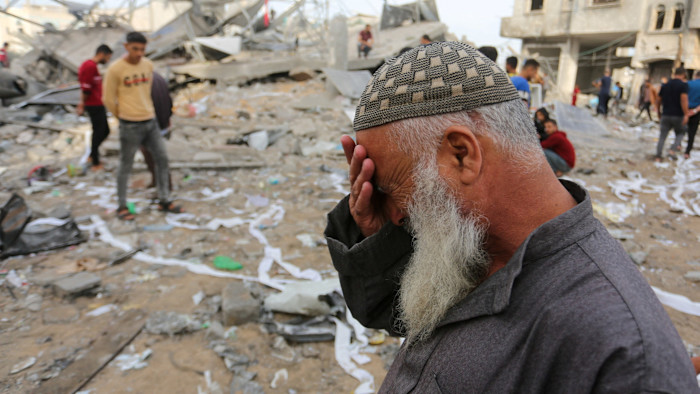
More than 100 people were killed in a series of Israeli airstrikes across Gaza on Tuesday, according to health officials in the enclave. The strikes came shortly after Israel accused Hamas of violating a fragile ceasefire agreement — an allegation Hamas has denied.

Palestinian health authorities said the attacks targeted several densely populated areas, leaving scores of civilians among the dead and many others injured. Rescue teams continued to search through the rubble for survivors late into the night.

In a statement, Hamas rejected Israel’s claims of ceasefire breaches and accused Israel of deliberately escalating the conflict. The group also said Israeli authorities had prevented the return of the bodies of Israeli hostages who were killed during earlier clashes.

The renewed violence has raised fears of a broader breakdown in the ceasefire, which had offered a brief respite after months of devastating fighting. International calls for restraint have grown as humanitarian conditions in Gaza continue to worsen.

Italy gripped by strikes over weapon shipments to Israel

By Muhammad Abubakar

Italy is witnessing widespread labour unrest as dockworkers, unions, and students have launched strikes and demonstrations to protest the shipment of weapons to Israel amid the Gaza conflict.

In Ravenna, Mayor Alessandro Barattoni and local authorities stopped two trucks carrying explosives meant for Haifa, citing solidarity with Palestinians and concerns over loopholes allowing arms transit through Italy.

In Genova, dockworkers participating in a strike have blocked access roads to the port and rallied under the banner of preventing Italian ports from facilitating arms transfers. Similar protests are underway in Livorno. Public transportation services have been disrupted in cities such as Rome and Milan, and several schools have been closed.

Unions are demanding that the Italian government suspend both commercial and military cooperation with Israel, close legal loopholes related to transit of arms, lift any humanitarian blockade on Gaza, and formally recognise the State of Palestine.

The protests highlight increasing internal tensions in Italy’s politics, especially under Prime Minister Giorgia Meloni’s government, which has traditionally aligned more with Israel diplomatically. Observers suggest the strike actions test if citizen and labour moral pressure can influence the government to curb arms exports and transit.

Eric Cantona calls for UEFA and FIFA to ban Israel as Spain proposes a World Cup boycott

By Muhammad Abubakar

Former Manchester United legend Eric Cantona has called on football’s governing bodies, UEFA and FIFA, to impose an immediate ban on Israel over its ongoing military actions in Gaza. Cantona, known for his outspoken views, said football cannot remain silent while civilians continue to suffer.

His statement comes amid growing international pressure on Israel, with Spain reportedly considering a boycott of the upcoming World Cup should the situation persist. 

Spanish officials have hinted that participation in global tournaments could be reconsidered if FIFA does not take more decisive action.

The calls echo previous instances where sporting sanctions were used as leverage against states accused of human rights violations, most notably the bans imposed on apartheid-era South Africa and, more recently, Russia following its invasion of Ukraine.

Neither UEFA nor FIFA has officially responded to Cantona’s demand or Spain’s potential boycott threat, but the developments add further weight to the debate over the role of football in addressing global conflicts.

Israel is committing genocide in Gaza, scholars say

By Muhammad Abubakar

The world’s foremost body of genocide experts has declared that Israel’s military campaign in Gaza meets the legal definition of genocide.

In a resolution issued this week, the International Association of Genocide Scholars (IAGS) urged Israel to “immediately cease all acts that constitute genocide, war crimes and crimes against humanity against Palestinians in Gaza.”

The association cited starvation, the blocking of humanitarian aid, and forced displacement among the practices that, in its view, fulfill the criteria set out under international law.

The resolution adds to growing international pressure as civilian casualties and a deepening humanitarian crisis continue to draw condemnation from human rights groups and global leaders.