Federal Government of Nigeria

On the culture of disrespect and disregard for term limits

By Mujahid Ameen Lilo


When in 2015, the then incumbent president of Nigeria, Goodluck Jonathan, called to congratulate his opponent ahead of the announcement of the election winner, it was hailed as a heroic act. The act further cemented the country’s democratic maturation and avoided the imminent disintegration of the country had the president not accepted defeat. Moreover, it ensured a stable and successful government transition in a country on the brink of war.


The former president of the Niger Republic got the Mo Ibrahim Prize for Achievement in African Leadership because he respected term limits. Yet, nobody was found worthy of the award for eight years, which points to African leaders’  disgraceful culture of disregard for term limits and bastardising of democracy. What’s more annoying, though, is the culture of celebrating the few ones that respect the term limits.


When we understand that it’s the moral imperative of our leaders to bow to the people’s will, to respect the constitutional authority that put them there and dictate their term limits. Until then, we wouldn’t rush to make a big deal of it and lionise them, present them with awards, among other things. We tend to forget and forgive their misrule. The great disenchantment with the previous administration’s sadistic leadership style made Nigerians ready to go to any lengths to vote out that party. People were prepared for war if the election got twisted. So it’s the morally and politically correct thing to do, that is,  handover.  Most of these leaders leave behind enormous debts, worsening insecurity, cases of corruption and so on.


The recent coups in Guinea and Chad and the foiled one in Niger indicate the frightening facts that the West African countries are far from political stability. Military intervention hardly change matters. It shouldn’t be the response to a faulty democracy. The West African subregion should thoroughly shake itself off the yoke of any military powers. The democratisation of the whole subregion would go a long way in stabilising it. Not that democracy is perfect per se (what with her so-called upholders violating one of the fundamentals: periodic election), but that we can and should practice it most purely, quite distinct from the military system. There should be an atmosphere that’ll facilitate proper reforms of democracy.  A stable system of government will guarantee peace and also bring about the desired developments.


It’s on this premise that I’d now address another factor that is damaging to our democracy, threatening what little peace and stability is left in the region: electoral processes.  In my country Nigeria, once it’s time for elections, people who live away from their states of origin start rushing back to their hometowns because elections have been synonymous with violence leading to the death of many people. There should be peace for people to exercise their fundamental right of voting. Instead, thugs are paid to violate the process. Many people believe in the quote that ‘our votes do not count; otherwise, they wouldn’t let us vote’.  However, that is not where the problem lies.  I believe that we’re capable of holding free and fair elections as we’ve done in the past. We can cite many examples with Nigeria as a case study. The fourth republic election in Nigeria that put Chief Obasanjo into power was relatively free and fair. The two elections that put Buhari into power were also pretty free and fair. We cannot forget the annulled election of June 12, 1993.


I was born in the early 2000s. My generation is called the ‘golden generation’ because the Nigeria we’re born in is democratic, free from colonial and military powers. But my generation suffers from a collapsing education system (most have to attend private schools because the government ones are total craps), from frequent strikes in universities to insecurity devouring our lands like an inferno. This semester, I was looking forward to fieldwork we are supposed to go on in a literature course but have to resort to what our lecturer calls ‘mental research’ because nowhere is safe. This generation is so angry – a wave of anger manifested in the Endsars protests.


On days like this, independence day, I sit and reflect on the happenings in my nation while my fellow teenagers are out having fun, draping their bodies in the country’s colours and posting things like ‘happy independence’ on social media. Yet, the ghost of Achebe and Gimba surrounds me as I struggle to intellectualise my thoughts, building it on Achebe’s dictum (the trouble with Nigeria is simply and squarely a failure of leadership) and the Gimba’s theory that differs from Achebe’s.


I am a lover of columns. As a child, I was very socially and culturally conscious, reading my dad’s dailies. On my shelf, I have a collection of columns: Gimba’s Why am I Doing This, Tundes’s Nigeria: A Thousand Cries, A Thousand Laughs, Nda Isiah’s Nigeria: Full Disclosure, and Victor’s Excuse Me. The writings there span Nigeria from Obasanjo’s first tenure to the eventful short tenure of Yar’adua and Goodluck’s tenure. Presently, I read Kakanda, Bulama and Abubakar,  whose columns are about the present administration. All through, there is rage. There is a disappointment. These essays echo in my conscience, making it hard for me to celebrate not only Nigeria’s birthday but those supposed champions of democracy, that after much damage, step aside and respect term limits. Like Jonathan. Like Niger’s Muhammdou, winner of Ibrahim Prize for Achievement in African Leadership.


Mujahid Ameen Lilo is a winner of the Wole Soyinka Essay Competition and a student at the Department of English, Ahmadu Bello University, Zaria.
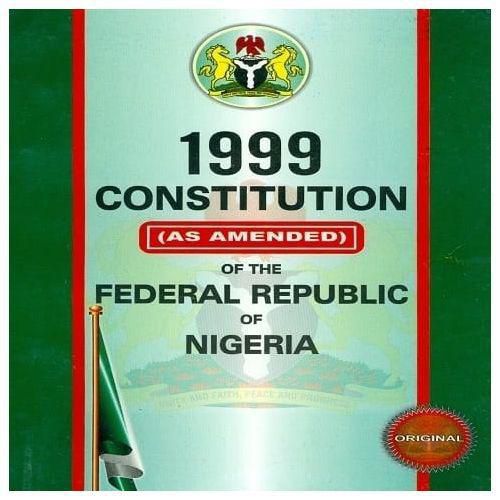

Nigeria’s constitution translated into 3 major languages

By Muhammad Sabiu


All is set for the launch of the copy of the Nigerian constitution (1999), which was translated into Hausa, Igbo and Yoruba by Prince Ade Ajayi Foundation Centre for Constitutional Literacy and Civic Education.


President of the foundation, Mr Ajayi, made the disclosure to journalists in Lagos on Friday.


He said that the translation work into the three languages, whose launch is scheduled to be held on the 25th day of November, took them six years.


According to him, the task aims to promote unity, national orientation.


He added that a book titled ‘I Love Nigeria, My Country’, would also be launched in the hope that national cohesion would be enhanced.


The News Agency of Nigeria (NAN) quoted him as saying: “Of 4,000 Nigerians randomly sampled in urban areas, over 80 per cent had never seen or read in whole or part, a soft or hard copy of the 1999 constitution.


“Of those who had, more than half could not recall what they had read. The statistics in rural areas are abysmal, largely due to literacy levels.


“We believe that the first step in national orientation is adequate civic education. This cannot take place where citizens do not have access to the one document that can most wholesomely, inform them.”

Kaduna enumerators, farmers decry deceit and propaganda in FMARD project

By Bature A.

Initially, it appeared that the Federal Ministry of Agriculture and Rural Development and the Project for Agricultural Coordination and Planning (Fmardpace) had come to help farmers and enumerators. However, the ministry has nothing to offer; it has lost focus and all the promises made have turned out to be deceptive.

When India championed and succeeded in the Green Revolution of the 1960s, it was not grounded on propaganda, delay in payment and late distribution of inputs, withholding extension workers allowances, deceit and misleading publications.

According to the Premium Times online report (June 29, 2020), the ministry targeted 2.6 million farmers, while N600 billion was earmarked for the farmers’ fertiliser subsidy, grant and non-interest loan. However, despite its early approval, the program’s impact is yet to be felt by the farmers and enumerators.

The ministry promised to help reduce the negative impact of the COVID-19 pandemic on agricultural production in Nigeria. Recall that AFJP was launched in Funtua Local Government of Katsina state on July 23, 2020, as reported by Daily Trust and Vanguard. The formal commencement of the program took place at the home town of the chairman House Committee on Agriculture.

Agricultural inputs such as fertiliser, pesticide, herbicides, seeds and motorcycles for extension work are displayed to the attendants and reporters. However, after the occasion, the displayed items are nowhere to be seen or heard of again.

A well planned Agricultural support program should be ready to reach beneficiaries by April or mid-May. Although some ABP companies draw their funds from or liaise with the CBN/Nirsal Plc, they distribute inputs early than the government’s ministry itself. It took Fmardpace almost two years to finalise data capturing, reconcile data and initiate distribution of inputs. Many enumerators miraculously escaped snakes’ bites, kidnapping, robbery or being lynched by angry farmers. Enumerators have crossed through the thick and thin weather[s] to carry out their duties. Manual mapping and data capturing, for that matter.

Enumerators suffered rough handling from the Fmardpace. Initially, the ministry promised to pay for the work done weekly after verification of the Surveys done. Subsequently, it takes months to process despite working as an influencer, Orientation and Mobilization agent.

The first and worst of all, maltreatment is the delay or withholding of payment. The second is, invalidating enumerators surveys without sufficient explanation.  Some surveys were rejected without transparency on what makes them invalid. Thirdly, the complete failure to initiate the distribution of inputs to qualified farmers on time.

In addition, enumerators have carried out soil sampling exercises/collections between May 10 to 26, 2020. However, some enumerators managed to collect the samples without being provided with the due equipment. In the plan, the soil sample collecter would get a hoe, shovel, bucket, and a small bag. However, only the bag was provided.

This is a program that had been moving forth and back without progress. On May 26, 2021, the ministry stated that the second level validation for surveys carried out in June and July was completed. On June 30, 2021, the ministry confirmed that the federal government had approved the Fertilizer Subsidy Grant to farmers whose BVN was validated by the NIBSS. On July 2, 2021, the ministry confirmed that payment processing of the first batch of the fertiliser subsidy grant to qualified farmers had begun. 

Enumerators have raised concerns over certain decisions by the ministry. For instance, when Fmardpace said their agents from Abuja would be calling farmers for verification, they were urged to consider some factors, which I’ll list below.

First, the majority of the farmers are rural dwellers. So they may not be able to speak English (which FMARD agents use). Secondly, there was network scarcity in rural areas. If the ministry uses phone calls, then over a half will be disqualified. Thirdly, when the contractors of inputs distribution came, they came with strangers that are afraid to get to the villages or remote towns to verify farmers, which may automatically disqualify farmers.

It’s fascinating to note that enumerators were doing their work patriotically until when mistreatment of the workers worsened. Then, the faces of enumerators and farmers became wallowed in the mud: no payment, no reply, mainly robotics/programmed responses from the situation room computers.  

Enumerators have since submitted to the formalities of the ministry. Seventeen (17) months of the program, the remaining balance of 50% per cent payment, after the second level validation of the surveys, is not being processed. There’s no specified date for it or helpful insight to it.

Enumerators need a clear statement from the new Minister of Agriculture on why their payment was withheld. Fmardpace should take note that there are damages incurred on enumerators for violating the initial arrangements of the payment. The collective wishes of the enumerators, master trainers and farmers is that the new minister should be different from his predecessor.

I recommend that when the next Fmardpace is to undertake farmers surveys, they should build an app that the enumerators can see right away on the screen of their mobile phone when surveys are valid or otherwise. Meanwhile, transparency is enhanced.

When there’s an exercise to be carried out, the ministry should not send people to the field without having their payment voucher on the ground. Adhoc, part-time or extension work should not be like capital projects that would have to be included in the annual budget before payment could be made. Besides, where is the yearly budget of the ministry?

They should also make sure the application they’re building contains all the necessary steps for the required information that NIBSS and CBN need from every beneficiary to be qualified. There’ll be ease of (extension workers) stress of recollection and reconciling of data. 

Furthermore, farmers need agricultural loans the most between April, May and June to prepare in advance. Therefore, if the ministry is genuinely concern and working towards revolutionising Agriculture in Nigeria, they should act on these issues as soon as possible.


Bature A. writes from Kaduna. He can be contacted via glitzinkreviews@gmail.com.

Dear Nigeria: Don’t fall prey to the false promises of war

Like the mid-1960s, the early 2020s has been heated and filled with war rhetoric. This rhetoric has been well oiled by claims of nepotism, corruption and everything that has been proverbial fertilisers for conflict in post-independence Africa. From Freetown to Kinshasa, the story has always been the same. And intriguingly, the results have also been similar. Deaths and more deaths, reconciliation, then business as usual. Hardly any lessons learnt!

Let’s retake this: the science of war in Africa is essentially a story of frustration, then misinformation, then delusion, then deception, then destruction, then reconciliation and finally rehabilitation. But, except maybe for places like Rwanda, the root causes never get addressed, the warlords never die, the corrupt politicians/soldiers mostly come back wealthier and more confident to assume the mantle of leadership. And the masses who fought and killed one another are further plunged into disillusion and poverty.  

Why then does this story keep repeating itself if data tells us that the investment always ends in red and that the returns are always intertwined with regrets? Here are a few observations, supported by both learning and experience:

Violence is a Political Statement

The old saying that where gentility fails, brutality prevails holds true today as it did in Nigeria’s 1960s, Liberia and Sierra Leone’s 1980s, and Rwanda’s 1990s. Politicians have basically two tools: debate and violence. In climes where one ceases to be effective, the other is automatically activated. And because both do not really take much from politicians by way of casualties, both have been greatly valued assets in their political estates. To change this, the citizens must be enlightened enough to see beyond the rhetoric. And usually, this mass education has to be ultimately championed by concerned and more enlightened citizens outside the political class.

The War Mongers Mostly Have a Contingency Plan

Suppose the chances of death for both leaders and masses in a civil conflict are equal. In that case, the apparent possibility is that wars will hardly be fought, and misinformation will get as little funding as possible. Unfortunately, the truth is that leaders usually have collaborators outside the borders of their countries and these collaborators typically stop at nothing to rescue their friends when things get worse. So, with this in mind, leaders at both ends of the divide beguile their cannon fodders to get the job done while they await the desired if ominous outcomes.

War Promises Freedom and other “Sweet” Things

History is replete with people taking the path of violence and war to regain their freedom. And beyond freedom, war promises access to places, bodies, resources and positions that were otherwise inaccessible. In a strange turn of things, Foday Sankoh of Sierra Leone rose to a position almost as powerful as the President after his rebellion that led to the loss of reportedly 50,000 lives, including hundreds of Nigerian and other ECOMOG/UN Peacekeeping forces.  He committed the crimes, then, for the sake of peace, got rewarded with laurels! Who is going to bring back all those lives, especially those of his loyal foot soldiers? Most of these people willingly took arms because they dreamt of enjoying what only Sankoh could enjoy, while their ultimate lot was destruction. War promises a lot of prosperity, ironically, but delivers a lot of destruction in reality.

The Crux of the Matter: it’s Difficult to Find a Suitable Alternative to War

Not that people want to lose routine or the calm of home. Not that they like to see the hacked body parts of loved ones or wade through the blood of a beheaded or gunned down neighbour in search of safety, not that they like to be refugees and be treated as slaves in strange lands, just that in the heat of the burning issues, with the accusations and counter-accusations and the mutual acrimony that ensues, it’s “difficult” to find a suitable alternative. Or better put, the other options have been abused and exhausted. Elections and coup d’état are the usual alternatives to war in our postcolonial political dispensation, but the two have hardly ever provided the desired outcomes. Therefore, it is safe to say the fault is not in our enemies; the fault, rather, lies in us. People are willing to change evil until they become beneficiaries of such evils. And how quickly do their fans often forget this fact!

In the final analysis, people plan for wars, heat the polity, sponsor misinformation, make promises of victory, but then war is so creative that it hardly subjects itself to anybody’s plans. And when the gruesome scenes of death and destruction start being plastered all over the media, and mercenaries and warlords start gaining unfettered access to national resources and the treasury, when hunger subdues the strongest amongst us and ruins the future that is so dear to us, when ammunitions are in short supply, and the enemy forces are about to be in total control, that’s usually when it becomes clear that it is not really the war we wanted, but the promises it offered from a distance. Too late!

AF Sesay is a writer based in Lagos. He can be reached via amarasesay.amir@gmail.com.

We are herders, not terrorists

Ahmadu Shehu, PhD.

Once upon a time, the Fulani were the aristocrats of West Africa – the wealthiest, most intellectual hegemony in the West African sub-region. They were and still are the traditional rulers, Islamic scholars, leaders of the black civilisation, a melting point of the Arabian and Western cultures assimilated into the river of African traditions. These are the most physically appealing, Caucasian-like Africans; skinny, silky-haired, relatively light-skinned and tall. These were the kings of Africa, founders of the Sokoto, Futa Jalo and the Masina empires.

Back in history, the Fulani conquered kingdoms, took over cities and established polities across the region, for those were the days of war and conquests. But, they have also found cities that are capitals of states and nations, which have become business enclaves of all kinds, and for all Nigerians, nay Africans. From a barracks, they founded Sokoto; from a valley, they created Gombe, and from a hill, they established Yola. They went across mountains, and on the rocks, they found Jalingo. In the deserts, they founded many other cities, talk of Niamey, the capital of Niger, Maroua, Garoua, Ngaundere, etc., in the southern end of the Fombina empire. In these urban centres lie the fortress of fortunes for the Igbo, employment for the Yoruba and civilisation for the Hausa. From these cities comes the livelihood of all Africans, education for everyone and sustenance for all folks. The Fulani provided beef, the manure on which most of the Nigerian crop production relies. These are the employers of millions of people, teachers for many and mentors for others.

The triumvirates and their disciples, such as Nana Asma’u, bequeath West Africans the richest traditions of scholarship, the most valued native literature and a civilisation that has been resilient for centuries. This academic scholarship bequeaths northern Nigeria a space on the world map, drawing global scholarly attention, indigenous metalanguage, indelible history and a proud place in the comity of nations. At inception, the Fulani were the key and lock of the sub-Saharan economy, providing, subsidising, protecting and developing Nigeria with all that was needed. Like other ethnic groups, the Fulani gave their lives for Nigeria – Premier Ahmadu Bello, who inspired Prime Minister Sir Abubakar Tafawa Balewa, Murtala Muhammed, the Yar’adu’as and Shehu Shagari, to mention a few of the Fulɓe folks who served this country with distinction.

They served as the first line of defence for cities, the defenders of our religions and traditions. Even today, they are the leaders of most local security outfits that lay their lives to protect Nigerians against Boko Haram, kidnappers, armed bobbers and other terrorists bred by the failed Nigerian justice system. They are found at most gates of the elites, protecting the lives and property of Nigerians from Sokoto to Port Harcourt and from Maiduguri to Lagos. They are trusted with arms and ammunition to defend their Christian Igbo, Hausa or Yoruba bosses and are brave enough to lay their lives for the unknown passersby. 

But where are these people today? How did they become the villains in the lands, cultures, civilisations, nations and economies they helped build and sustain? The answers to these questions lie in the historical injustice, failure of leadership and sustained discrimination and demonisation of the most essential, most conservative section of the Fulani population. The travail of the herding Fulani began right at the peak of the Fulani empires. First, the hegemony created centuries ago recognised this category of its population for being good at military matters. Then, subsequent traditional administrations continued on the same lane, deploying the same people for warfare and nothing more. The results? They continued in the traditional ways of life and became even more sophisticated at combat.

The colonial rulers neglected this population, focusing only on the taxes, which they significantly contribute more than anyone else. Instead of the native authorities to reinvest these taxes in the integration, education and socioeconomic emancipation of this population, they squandered the resources. So, for our grandparents and parents, and indeed our brothers and sisters still on the cattle routes, nothing has changed in their lives since the 1900s. For us, no change has happened!

Then came the natural discord between herders and farmers, regardless of ethnicities. Then population explosion; sixty million people became two hundred million in sixty years, cohabiting the same 923768 Km2, sharing the same forests, water and other natural resources.

Again, climate change and environmental degradation took over most parts of the Sahel. Major grazing fields and waters, such as Lake Chad, have dried up, and herding folks have multiplied by dozens. Ethnoreligious crises have overtaken much of the Lake Chad region, pushing herding populations down south, searching for water and green pasture. Over there, farms have encroached all lands, including major highways, food insufficiency, joblessness, and economic degradation have forced families into the deeper forests in search of livelihood. Resource control sets in, and crises become inevitable.

Unfortunately, no one came to our rescue on time, as our sedentary brothers moved to modernity, leaving us at the mercy of the forests. Although we are one ethnic group, bound together by language and traditions, the socioeconomic and modern (dis)advantages have created a strong barrier; distinct kinship emerged, often leading to animosities and hostilities. They got the power, wealth, knowledge and resources. But, they have disassociated from us, laughed and called us Mbororo, “the unenlightened”, as stories of our perceived naiveté go viral in cities and communities.

Our closest friends – the farmers – with whom we enjoyed cordial relationships due to mutual economic interests have become enemies of necessity. Just as our lives depend on our herds, their own lives depend on their farms. Call it the clash of economic interests! With this, crises set in; lives lost, and livestock diminished. The large, vast country becomes a small spot, as we were chased away wherever we went. Our cattle were rustled both by our own impoverished, unemployed youth and neighbours. For any slight provocation or disagreement, our means of livelihood – the livestock – are targeted and killed, often leading to reprisals.

But, this situation has been stage-managed until governments in some northwestern states began ceding ancestral grazing lands to farmers and urban development. When herds diminish, herders settle down to crop farming. Thousands of people came out of this economic depression but woke up to landlessness without notice. Add this to the historical aspects, social deprivation and economic dislocation, you find that criminality is the natural turn of events. As usual, the Nigerian governments are ad-hoc, simplistic, never interested in long-lasting solutions and even scared of reality. Instead of addressing these issues head-on, criminals were made political thugs, monies and weapons provided, all for political greed.  

The natural promise land for such a criminally profitable business is more membership, innovations, and recruitments. Similarly, the natural candidates are those with similar backgrounds, social and cultural affiliations and mental dispositions. In this way, the Fulani folks are made the majority in the ongoing banditry and kidnapping. Therefore, the old circle is repeated.

Evidently, the fire-power in the hands of these bandits is far beyond their reach. The economic strength, resources and sophistication are not the kinds obtained by mere herders in the bush. That says a lot about their masters in cities, higher places and strong networks from other ethnic and social backgrounds. So, like they were deployed as foot soldiers for warfare centuries ago, and then as a conduit for taxations and money-making in cooperate Nigeria, they are today deployed as the bush soldiers, arm-bearing, front-raw men in the terrible enterprise that is kidnapping and banditry in northern Nigeria.

Look at it this way. If the billions made in this wicked trade were to be traced, they indeed wouldn’t be found in a ruga or a Fulani settlement. They might, instead, be found in dollar, pounds and naira accounts held by the very ethnic groups that are so quick to demonise millions of the herders’ kinsmen.

When it is elections circle, politicians would turn to the criminals, deploy them and win elections, and promise afterwards, to end them. When the security agencies arrest them, their bosses and other beneficiaries pay huge monies to get them released, damning the justice system and the nation’s well-being. Therefore, the truth is that just like Boko Haram are not Kanuri, Maitatsine not Hausa, IPOB and drug pushers not Igbo, Yahoo-Yahoo not Yoruba, these criminals are NOT Fulani. They are Nigerians and must be treated as such. Because we, the Fulani herders, are not terrorists. We are victims of socioeconomic circumstances. 

Dr Ahmadu Shehu is a nomad cum herdsman, an Assistant Professor at the American University of Nigeria, Yola, and is passionate about the Nigerian project. You can reach him at ahmadsheehu@yahoo.com.

Nigerian doctors in diaspora: Brain drain or money drain?

By Khadijah Tijani

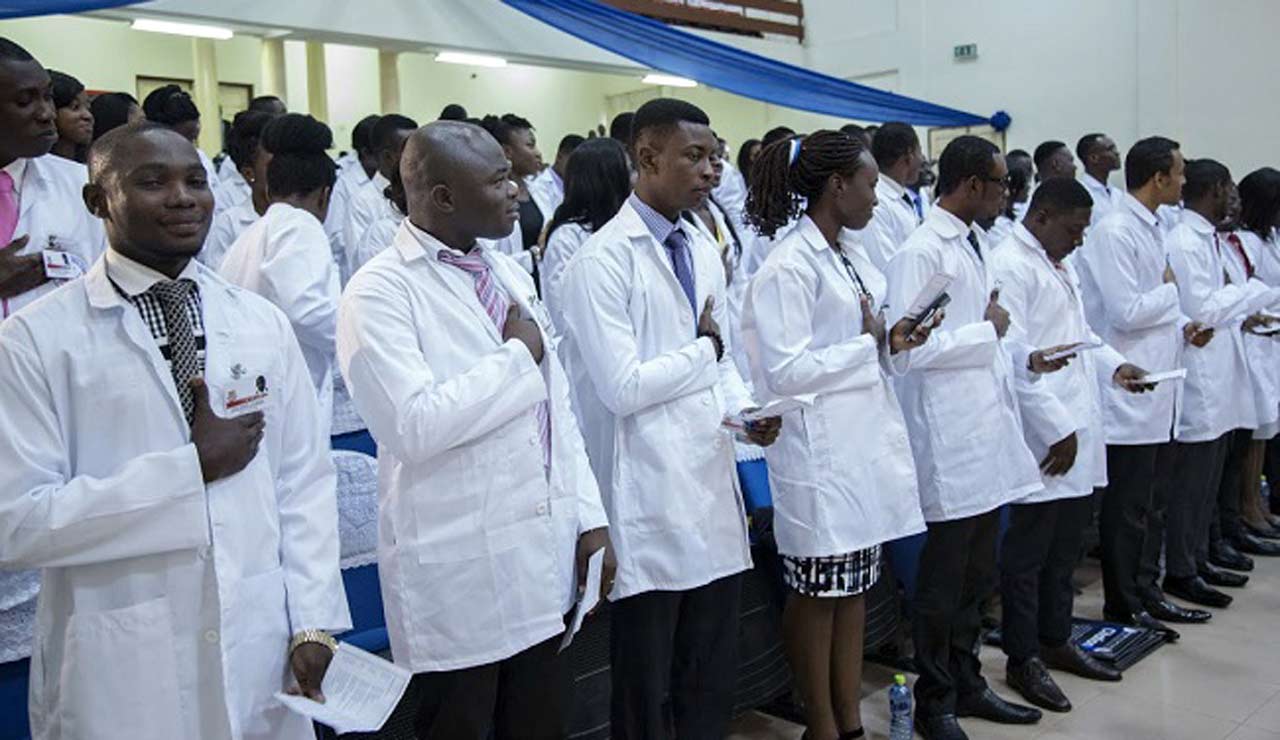
I have read many reactions to the recent trend of young and vibrant Nigerian doctors leaving the country for greener pastures. I also saw the interview with the minister who said the doctors are free to go because “we already have too many of them”. Some people even blamed these “selfish” doctors for refusing to stay after benefitting from “ridiculously cheap” medical education, blah, blah.

Oh well… Maybe I missed it, but I don’t know if anyone has talked about what these doctors are paying in exchange for their right to leave. Where these funds are going is another question begging for clear answers. 

For you to get a new passport or renew an old one, you need to pay something between 35k and 70k depending on the number of pages and the validity period. But you also need to tip some officers so that your passport can be issued on time.

Some universities do not issue your final certificate until years after graduation. Transcripts are not available online. You need to travel down from wherever you are and go to your university to make a request. If you are lucky, you will get it after several weeks. And yes, they will also charge you a not-so-little administrative fee for that.

Suppose you are asked to send a source-verified copy of your credentials to a regulatory body, for example, Saudi Council for Health Specialties. In that case, you need to pay up to 30k for each document to be verified and additional fees for courier services. Moreover, since many universities still don’t have functional emails or reachable phone numbers, you still have to travel down to get it done or pay someone to do it for you.

Talking of regulatory bodies, they also want to be sure that you are a good doctor and have never been in trouble while practising in Nigeria. So, they will ask you to submit a certificate of good standing, which goes for 66k. Some will also ask for detailed medical checks and police clearance certificates – more expenses. You have to pay for the medicals even if it’s where you currently work. 

When you are done with all that, and you finally move out of the country, you will still get yearly reminders to pay your dues to remain a licenced doctor in Nigeria. Of course, some people stop paying, but I know many doctors who still send their 10 to 20k annually. They even mandated us to pay 40k contributions towards the new NMA building last year.

Every university and medical college have their respective association of alumni in the diaspora. They contribute millions of naira to their alma mater each year. In addition, they send expensive machines to help in-patient care and loads of materials to aid in medical teaching. Unfortunately, some of these supplies might become sabotaged by the killjoys within the institutions if there is no direct supervision and maintenance. 

I have not even mentioned the off-record funds you have to send to family and friends back home every month. Or the huge amount of money that doctors have invested in small to large businesses in the country. Or the free medical and surgical services many have provided to the people whenever they come home on vacations. Or the big hospitals many have established to create employment for the people, among other things.

I am worried about the brain drain, but I am also concerned about the people who do not understand the pain of an average doctor who wants to leave. They think it is easy to wake up one morning and jump on the next flight. And oh! Flight ticket and all the hurdles you need to pass through before you cross the border… Phew! 

Since they think we are too many and can be exported like cash crops, we also need to ask them where the money from the foreign exchange is going. Are they building more hospitals or renovating the old ones? Are they providing enough medical supplies to work with? Are they paying the salaries of the few or “just enough” doctors left behind? 

We need answers, please.

Khadijah Tijani is a medical doctor, she writes from Ibadan, and she can be reached be through Askodoctorkt@gmail.com or @AskDoctorKT.

The 61-year-old Nigeria I want

By Adamu Usman Garko

The 61-year celebration of independence by Nigeria in 2021 will be a celebration of faux independence as Nigeria has yet to emancipate herself from the shackles of slavery fully. This slavery, however, isn’t covert but overt; it isn’t manifest but subliminal. Before the independence in 1960, that slavery was manifest. However, the contemporary form of slavery is reflective in the abysmal display of patriotism on all fronts and regards. 

If, in 61 years of existence as an independent nation, Nigeria has yet to boast of policies that favour her citizens confidently and can only boast of policies copied from her colonialists hook, line and sinker, then what independence is there to celebrate? If we have yet to absolve plagues like ethnic rivalry, corruption, the proliferation of theft, among other issues, then these calls for recourse in our actions. These are calls for a pictorial representation of the kind of Nigeria we want and deserve. Maybe that way, we would be able to plan towards the actualisation of our dream Nigeria.  

As a millennial, the first archetype I nurse is a Nigeria that appreciates creativity and innovation; there is no gainsaying that we are people blessed with talents, innovative and creative abilities, clarity of vision, resilience, and other virtues. Yet, the sickening reality is that these virtues are not duly apportioned the appreciation and support they deserve. Because of this, hordes of talents have been silenced and/or lost to countries where they are well appreciated. But, if schemes geared towards supporting and motivating the innovative abilities of young minds are instituted by the Federal Government of Nigeria, I believe that this subtle form of intellectual slavery will be absolved. 

Second, a Nigeria controlled by leaders who nurse a burning desire for recourse and restitution is what I desire. Young minds like myself have, over the years, witnessed so many transitions in government, but these transitions influence nothing; there is a continuum of hunger and pain despite the transitions. 

Leaders elected into public offices are elected on the grounds of financial strength, not on the grounds of shown community service, not on displayed prestige and honour, not on the grounds of brilliance and zeal for change.

During election periods, contestants for public offices litter our streets with faux promises only to be elected and trail the path of their predecessors. So, I want a Nigeria controlled by patriotic, sane, brave leaders who are not afraid to take the bulls of change by the horn. 

Also, a peaceful Nigeria is everything; a Nigeria devoid of violence, one where the insurgency is a word found in the pages of history, not on the daily newspapers, one where the safety of lives and properties is guaranteed. I am honestly tired of embodying fear in the crevices of my body, fear of being kidnapped, fear of leaving home whole and getting back unwhole, fear of losing all I’ve gathered as properties to the hands of thieves or the hands of ruins because this fear cripples the creativity of young minds like myself and this conversely affects our individual contribution to the development of the country. 

A peaceful Nigeria is not the only key to development but also key to the solidification of whatever changes occur. So I want a Nigeria devoid of favouritism, one other cankerworm that has eaten deep into the sinews of all fronts, even the healthcare system, even the judiciary. 

I want a Nigeria I can call home, and a home is a place of respite. I want a Nigeria that is kind. A Nigeria brimmed with people who are open and ready to embrace diversity in culture and language, choked with humane, open-minded people who see life as a commonplace for collaboration and not one for unhealthy competition. 

I want a Nigeria that can boast of being a giant, a Nigeria that isn’t a phoney or paperish giant but one that is living up to the giant tag by being the cheerleader of progress and development on the continent. A Nigeria that is clever in her use of raw materials, one that wouldn’t be exporting crude oil to other countries and rebuy. 

Until the Nigeria I described above is actuated, we would continue celebrating decades of independence without knowing that we are still enslaved in regards stated above; intellectual slavery, financial slavery, mental slavery and even developmental crippling.

Until we have a structured model out in place to actualize the kind of Nigeria stated above, I am afraid we shouldn’t be celebrating independence. And, we need not wait any further, for the future is now. 

Adamu Usman Garko writes from Gombe. He can be reached through poetadamu@gmail.com.

Fulani as Endangered Species in Nigeria (I)

By Ahmadu Shehu, PhD.

It is generally considered an impossible hyperbole when the current trajectory of ethnic profiling against the Fulani people in Nigeria is linked with the road to Kigali. But, except something drastic is done, for most dispassionate observers, this is as sure as the sun rises from the east. Therefore, as Mbororo (i.e. a herdsman), I write from experience to call the attention of Nigeria and the world to the danger facing not only the Fulani but also millions of Nigerians who look like them. With this article, I hope to save the world from escapism and blame-game when our negligence eventually allows the deed.

Let me quickly disabuse the minds of my audience. I do not stand for any criminal, regardless of ethnic, religious or regional background. I do not also hold excuses, whatsoever, for any form of criminality. However, the world needs to understand that the unfolding events in Nigeria are beyond ordinary and are very alarming, even intimidating for every Fulani person of whatever background and socioeconomic status. We are all sinking into a dark hole, scared of what tomorrow may hold for our children or us for simply being Fulani and herders.    

The Rwandan, Bosnian and Burmese genocides, and indeed the worst human tragedies in history, such as the Holocaust in Europe, are all events no one anticipated as possible outcomes of “simple” stereotypes, ethnic and social profiling. For instance, when the Rwandan actors of genocide characterised the Tutsis as cockroaches, not even the victims of that profiling imagined that they were meant to be crushed and eliminated like cockroaches without a drop of human sympathy. But such is the power of language. Its control over our minds and worldviews means that our emotions and worldly experiences are conceptualised, i.e. conceived, and coded, i.e. expressed, based on metaphors that underlie our bodily experiences. This is the subject of Conceptual Metaphor theory[1]

The world looked on as the influential media of Nazi Germany propagated hateful stereotypes against the Jews, poisoning the minds of the majority, providing a fertile ground for the emergence of one of the most despicable men in history, Adolf Hitler, as the Chancellor of Germany. Coming to power under these circumstances, Hitler had all he needed to implement his long-desired goal of “cleansing Europe” from the Jews.

It began by implementing bigoted policies, such as boycotting Jewish businesses and isolating the Jewish population in segregated ghettos, followed by the policy of extermination fondly described as “the solution to the Jewish question” in Europe. The so-called “Jewish question” tells you that Jews were objectified, problematised and removed entirely from the human society of Europe. It went to the extent that most people saw them as a nuisance, a source of their problems, and therefore, unsympathetic to their course. Today, there is seemingly a sad “question of the Fulani problem” in Nigeria, on which the dubious media and politicians thrive.

Today’s Nigeria is to a Fulani what Rwanda of the 1990s was to a Tutsi. The prerequisites for the looming disaster have been met and are consistently, persistently and comprehensively being propagated, promoted and disseminated. Of this, the world must not claim ignorance. Despite their historical contributions to the Nigerian and African civilisations, the economic value chains they have helped sustain and subsidise for centuries, the scholarship they have institutionalised on the continent, and their passionate, patriotic contributions in the creation and growth of this entity called Nigeria, the Fulani are today being commodified and dehumanised in deliberate ethnic profiling.

Like the Jews in Europe, Fulani folks are the herders of Nigeria, holding the largest share in the country’s livestock sector. Unfortunately, this cultural means of livelihood has fallen under persistent attacks and other bigoted attempts to impoverish the herding population. Once the most prosperous, most self-reliant and wealthy in northern Nigeria, millions of the Fulani people have become destitute, impoverished by the twin evils of bad governance and climate change. The results of this are apparent: many have turned to criminality as means of survival. Instead of treating the root causes of this menace, the Nigerian governments at all levels have resorted to criminalising every Pullo and whoever that looks like “them”.  

At every checkpoint of the Nigerian security agencies, one demography is a primary target: The Fulani. The state that has deliberately refused to educate and enlighten them, despite being the highest tax-paying single ethnic group, has turned its security agencies into lions that hunt and extort these vulnerable citizens without discrimination. Police stations, prisons and other detention centres around this country are filled with innocent, young Fulanis without being charged or tried.

The results of this indiscriminate maltreatment are blanket distrust, anxiety and hopelessness that eventually provide the basis for these people to see no reason to abide by the law. Such people are hardened and no longer fear the law, for whatever the law was to do against them for being criminals have been meted against them as innocent citizens. They have lost their livelihood and now their dignity. They have nothing to lose for being a criminal or even a terrorist. This natural law of social injustice applies to all human beings, regardless of ethnic, religious or other backgrounds. 

Similar policies to those deployed to ensure the exclusion of Jews and their final settlement into ghettos designed for their final extermination have long been propagated in Nigeria. It is no coincidence that ethnic warlords who gained political power in Plateau and other middle-belt states in 1999 orchestrated the indigene–settler dichotomy deeply rooted in the hatred for peace-loving neighbouring ethnic groups, perceived as prosperous minorities.

False stories of dominance have been normalised and entrenched in the minds of unsuspecting innocent citizens for political purposes. This deliberate and dangerous xenophobia have plunged these areas into endless ethnoreligious crises, animosities and restlessness. The far more dangerous outcome from this is the reactionary tendencies that have continued to be the basis for the emergence of ethnic chauvinists and bigots as leaders, ala Jonah Jang and that buffoon called Samuel Ortom, the governor of Benue State.

The decades of cattle route blockades across the country has confided herders, who are mostly the disadvantaged category of the Fulani people, to the deserts. More than anyone else, livestock herders cannot do without water and green vegetation. Those are the only sources of livelihood for their stock and subsequently their only means of subsistence and culturally the essence of their lives. But, of course, a country such as Nigeria that cannot help cater for its human population may not be expected to care for its environment – forests, waterways, trees, vegetation have all disappeared, leaving us on drylands. These social and ecological factors have pushed millions of Nigerians whose livelihoods depend on the livestock to possible extinction. I will show you how.

My father had three herds of cattle and two of sheep. Each pack was around 70 to 80 heads of cattle. Each cattle would approximately sell for 80 – 100 thousand naira. Do the math. From the late ’80s to the early 2000s, less than ten cattle were left in my extended family. Add this to family growth and needs. Now you can imagine! Our family had moved thousands of kilometres through these years, from Maini in Niger to Dapci in Yobe, up to the Mambilla Plateau, down to Banyo, Doualayel in Cameroon, and finally Mamukan in Jada LGA, all in search of pastures to nurture the cattle.

With everything lost to the criminal state actors, ethnic discords, climate change and economic instability, an ever-growing family of four is now over twenty and can no longer sustain its only means of livelihood. Sad as this may sound, my story is humane and less tragic than what the herders go through today. The rate at which herders lose their means of subsistence is alarming. By a stroke of a police pen or at gunpoint by cattle rustlers or kidnappers, a Fulani may lose everything he ever worked for to escape detention or rescue himself or his loved ones. Why are we surprised at the natural consequences of this cruelty?       

What has been discussed so far may seem to be based on the unintended consequences of a dysfunctional state, corruption, population explosion, climate change, and the failure of the Nigerian state to implement developmental and social programs for its citizens, which arguably affect all citizens, albeit disproportionately. However, the resulting crises have provided fertile ground and ample opportunity for bigoted politicians to seize power and deliberately formulate and implement desperate, dangerous, racist, chauvinistic policies aimed at ethnic cleansing of the herders’ population. Mind you, herders, not Fulani population, for now, because the road to Kigali is systematic. This is the subject of the second part of this essay.        

Dr Ahmadu Shehu is a nomad cum herdsman, an Assistant Professor at the American University of Nigeria, Yola, and is passionate about the Nigerian project. You can reach him at ahmadsheehu@yahoo.com.


[1] If you are interested in the details of this theory, read Lakoff & Johnson, 1980.

Media as watchdog: foe to government, friend to masses

By Ishaq Habeeb

The media serves as the fourth estate, or the fourth arm of government, that works to ensure that the rights and privileges of Nigerian citizens; rights such as freedom of expression, freedom of information, among others, are well protected and granted under the provisions of the constitution of the Federal Republic of Nigeria.

The media carry out the daunting task of holding the government accountable for their deeds, misdeeds, actions or inactions, by informing and educating the citizenry about the state of the nation, which motivates people to insist that the government keep its campaign promises and are sticking to the rule of law in ways that wouldn’t tamper with the lives and well-being of the citizenry.

In present-day Nigeria, however, practising balanced journalism is arguably one of the most demanding jobs, as Journalists are torn between two dilemmas. On the one hand, they have to own up to their responsibility of informing the people of daily happenings and state of the nation, being as informative and as accurate as possible while at it.

While on the other hand, they can’t do that now without inadvertently giving criminal elements, e.g., bandits, unmerited media popularity. This subsequently encourages them and their heinous activities, plus undermining government efforts in tackling the state of wanton insecurity, currently bedevilling us in Nigeria.

Take today, for example, virtually every news media platform in the country is carrying a headline detailing reports of bandits’ attack on the Nigerian Defence Academy (NDA) in Afaka, Kaduna state. In the attack, two or so officers were reportedly shot dead and one other allegedly abducted.

Recently, rumours were that the APC government, in its autocratic fashion, attempts to gag Nigeria’s media from reporting successful terror attack stories. It is part of its efforts to demoralise the terrorists, instead of emboldening them with catchy news headlines by the media, especially about such embarrassing attacks on key federal facilities as NDA and/or it’s personnel, whenever there’s any.

The policy, undemocratic as it may seem, may not be entirely misplaced. However, if there’s strong political will, the government can do a lot better in handling the insecurity problem than just gagging the news media for simply doing their job legitimately.

As i penned this, the bandits that attacked, killed and kidnapped Nigerian army personnel today, at their strongest base, are probably out there somewhere right now, reading the trending news headlines, gloating, having a house party and perhaps, promoting their daredevil commandants behind the brazen attack on Nigeria’s strongest military facility, for their dare devilishness.

Now you can see how the media, by simply doing their job, are inadvertently giving the bandits undeserved media popularity, which is what the government was thinking – in their narrow approach – when they moved to regulate the way media reports such news, which is, of course, morale-depleting for the security operatives and morale-boosting for the terrorists.

Ishaq Habeeb is a pubic affairs analyst and a freelance journalist; he writes from Nigeria and can be reached through simplyishaqhabeeb@gmail.com.

CBN abandons non-interest loan facility for Nigerian Muslims

By Muhammad Abdurrahman

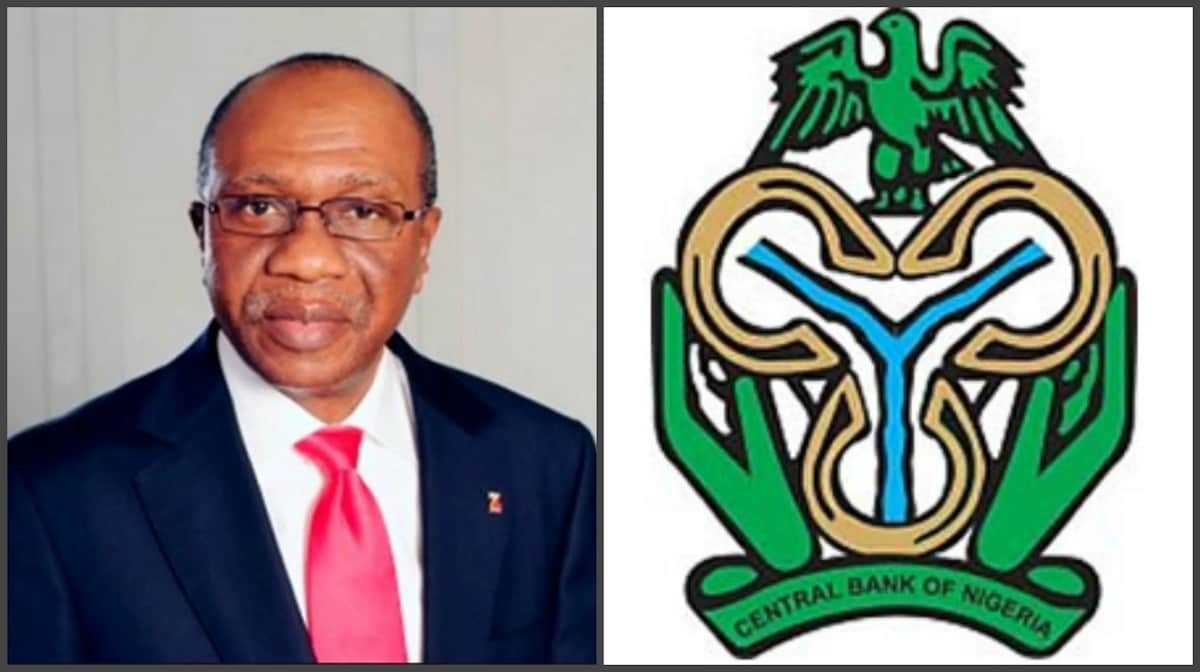
Despite millions of applications by Nigerian Muslims for the Central Bank of Nigeria’s interest-free interventions, the apex bank decides to discard this critical project.

A year ago, on July 24, 2020, the Central Bank of Nigeria (CBN) unveiled series of guidelines for the non-interest financial interventions under its Agri-Business, Small and Medium Enterprise Investment Scheme (AGSMEIS), Micro, Small and Medium Enterprises Development Fund (MSMEDF), the Accelerated Agricultural Development Scheme (AADS) and host of others. Millions of Nigerians, especially Muslims guided by the sermons of prominent clerics and the assistance of many Muslim IT specialists and academics, applied for these CBN’s interventions.

Nevertheless, more than a year later, there has not been any information or explanation from the CBN regarding these crucial programmes. As a result, Nigerians are now left only with speculations, which are gradually gaining ground.

Many people alleged that some interests within the bank and the country’s financial architecture sabotage the interventions, with all the consequences on the Federal Government’s acclaimed concern for integrated development.

In a statement signed by the National Secretary-General of the Da’awah Coordination Council of Nigeria (DCCN), Engr Ahmad M.Y. Jumba said, “It will be a great disservice for the Federal Government, which has been widely applauded for this milestone, to allow this intervention to end up in the dustbin of calculatingly sabotaged policies and programmes. If the CBN is serious, why then the delay in implementation even as it continues to implement other programmes?

“The Da’awah council calls on the authorities concerned to expedite action and make those interventions immediately available, accessible and affordable. At a time when many Nigerians are suffering from extreme poverty and hunger, when small businesses are crumbling due to lack of capital, when millions of youth are roaming the streets with no jobs and no access to start-ups; at this time of hyperinflation amidst dwindling incomes, we find it suicidal for the CBN to remain conspicuously silent about a programme that has all it takes to support Nigerians get out of poverty and put our dear nation on the path of inclusive growth and sustainable development,” Jumba lamented.

Some applicants contacted by The Daily Reality cried out that as is the norm for Muslim faithful, they had resorted to prayers and anticipation for God’s intervention. On this note, Jumba also added that:

“It is our hope that the Federal Government will fulfil its promise by directing the CBN to immediately release the modalities for accessing those interventions in the shortest possible time.

“We will call on all religious leaders, Imams, in particular, to use their pulpits and deliver QUNUT against any person who is deliberately engaged in sabotaging the interventions,” Jumba concluded.