
English language

The Illogicalities in English Grammar

By Salisu Yusuf

As against the traditional definition of grammar, English grammar is a mixture of arbitrary and non-arbitrary, logical and illogical rules that are fused to form a language that was hitherto made up of some feuding tribal groups (Angles, Jutes and Saxons). It was around the 14th century, when the Renaissance started, that many linguistic and literary forms and areas were borrowed from Latin, Greek, Sanskrit, French, Spanish, etc, to swiftly form a language that would be used to conquer the world.

English grammar is full of arbitrary and illogicalities that are used as rules governing language use.

The inconsistency of English grammar is vivid in tense formations. For example, the three broad English tenses are further subclassed into 12. Each one delineates a form of the verb that allows you to express a specific time. But the English language has bizarrely many different ways of forming future references. While, for example, “he has…” and “he had…” express two incongruous tenses, the following 5 sentences express one thing, one idea and one tense:

1. The man will take off in 2 minutes.

2. The man will be taking off in 2 minutes.

3. The man is going to take off in 2 minutes.

4. The man is taking off in 2 minutes.

5. The man takes off in 2 minutes.

Has your language such bizarre ways of expressing the same idea from different tenses fused in one tense?

While the auxiliary verbs such as have, has, had, etc attract past form of a verb, the past modal auxiliaries such as could, would, should and might ironically attract the present forms of a verb:

 He had arrived before you came.

 He could arrive before you.

What an incongruity!

There’s no grammatical environment where the rules of agreements are flouted as in the use of idiomatic expressions. For example, the rule of specification in the use of definite and indefinite articles is sometimes dropped in favour of the arbitrary. For instance, nouns and adjectives take articles depending on the environment. But many idiomatic expressions do not leave rooms for articles:

 He is second to last.✔️

 He is second to the last.❌

 Moreover, idioms such as “it is high time..” and “it is time..” bizarrely take past forms of a verb whenever they are used though they express the present context:

 It is high time we spent the night there.✔️

 It is time he was jailed.✔️

 Sometimes, two similar idioms can be at variance with a slight change in an article. For example, the following sentences express two opposite meanings:

 1. Musa had been the shadow on Abdu’s shoulders during their undergraduate days.

 2. Musa is a shadow of his former self.

While the first means that Musa was so intelligent that he was Abdu’s rival at the university, the second one expresses that Musa is no longer as formidable as he was.

English grammar becomes arbitrary under the notional concord. Notional Concord refers to the agreement of verbs with their subjects on the basis of meaning rather than grammatical form. For example, each of the following quantifiers takes a different rule when it’s used: while “a number of..” takes a plural verb, “the number of..” arbitrarily takes a singular verb: 

 A number of students are missing.✔️

 The number of students is missing.✔️

Similarly, in the use of a “catenative verb”(denoting a verb that governs a series of verbs in a sentence), two or more verbs can appear in different forms. Another can follow a verb in past form in continuous or even base form:

 I saw her complain.✔️

 I saw her complaining.✔️

 I saw her complained.❌

 What a grammatical anomaly!

Conditional tenses clearly expose the incongruity of English grammar. For example, the first conditional tense looks more futuristic than present in their expressions, yet the “if ..” clause uses habitual tense(if you come..), and third person singular marker (if he comes..). But why should a future reference be used with elements of “s” inflexion exhibiting presentness?

The second conditional tense(which expresses unrealistic situations) daringly expresses the grammatical incongruity: “If you, we, he, she, they were..” is used in all the categories of pronouns and nouns. Here, classifications such as first, second and third-person singular and plural are immaterial! 

Under subject/verb concord, he, she, it, Musa, Binta is used in expressing habitual tense aspects using “s” or “es” inflection but I is not used in this pattern. He/she is used with “has” but I is used with “have”. He, she, it is used with “is” but I is used with “am”. You(second person plural), we, they are used with “are” yet “you”(second person singular) is also used with “are”. But you, we, they, he, she, it is used with “might have..”. Why not he, she, it ” might has..”? English grammar is so funny and complex! 

In plural/singular formations, the rule is sometimes arbitrary. For example, boy, girl, friend form their plural with an “s” inflection. Yet, ox(oxen), child (children), etc, are oddly different.

Why, then, is English so complex in its grammar, phonetics and phonology?

First, English is the child of partible paternity (many fathers)as Jute, Norman, Angle, and Saxon have all contributed their semen in the bearing and formation of what would later become English.

Secondly, English is the most subjugated language, with huge borrowing from Danish, Scandinavia, Latin, Greek, German, French, Arabic, Hindi, etc. No language enjoys huge borrowing as English does.

 Even the so-called 8 English Parts of Speech belonged to the Greek, not English grammar. This is why there are lots of incongruous rules. This is why “boy” is a noun but “beautiful” is not a noun but an adjective. Yet “beautiful” has all the qualifications of a noun. A table with a flat top and 4 legs is not called an adjective, but beautiful, an abstract quality is called an adjective.  This is why you have rules such as “he, she is..” but not “I is..” but “am”. These parts of speech are adopted from Greek grammar.

 The above and many more reasons are what make the English language have the hardest spelling system, pretty difficult pronunciation, a high number of sounds and sound shifts, etc.

The logic is that he is he, she is she, but I is not I, you is not you, but I am.. and you are… While she HAS the book, I ought also HAS the book. But it says I have… While we are we, they are they, but why you is not you, they say you are you not you is you.

 This grammar is illogical!

 Salisu Yusuf wrote from Katsina via salisuyusuf111@gmail.com.
Language and the specific gravity of identity

By Prof. Abdalla Uba Adamu

Muhsin Ibrahim had started a very interesting thread on his Facebook wall about language usage in northern Nigeria. Basically, the argument is about whether predominantly Hausa (his publics) should intensify their use of English in public discourse, especially now that things are getting more virtual. There has been a lot of resistance in using English among the Hausa because of the belief that using English (or other languages, except Arabic) leads to the erosion of identity. Muhsin urges the Hausa to embrace or at least immerse themselves as much as they can in the English language to gain a competitive advantage. I agree with him.

The arguments against the use of English are predicated upon language and identity. Generally, language symbolizes our identity and conveys identities to those who speak them. But how true is this in an interconnected world? I have a friend whose children were born in Hong Kong. They are adults now. They hardly speak Hausa. Does that make them Chinese? Imagine an Urdu-speaking Pakistani immigrant whose children were born in Wales and do not speak Urdu. Does that make the children Welsh?

In South Africa, the apartheid regime used language as one of the yardsticks, besides skin colour, to develop its divide-and-rule ideology against the black population. If a Black South African somehow was able to speak fluent Afrikaans, does that shifts his identity and make him White? I have encountered Hausa merchants in the Deira section of Dubai’s textile market speaking fluent Hindi – are they then Indians?

I once encountered a Yoruba mechanic in Gusau – born and bred there, but could only speak the Sokoto dialect of Hausa, not my absolutely wonderful Kano dialect, and informed me that although his parents were Yoruba, he does not speak the language. So, what was he? Bayarabe or Bazamfare? The Kano Hausa even created sociolinguistic categories for his situation: ‘Ɗan Kasa’ (‘son of the soil’), ‘Muna Kano’ (immigrant non-Hausa, Hausa-speaking), ‘Muna Hausa’ (immigrant, non-Hausa, retaining immigrant language identity). The two ‘outsider’ categories are easily recognized by Kanawa, who describe their Hausa as ‘wata iri’/strange. Oh, they will interact freely with you – until you come to marry one of their daughters!

So, does merely speaking a particular language confer on the speaker the identity of the originators of the language? We learn English and Arabic. Become fluent in them. Does that make us English or Arabs? Thus, if we speak other languages besides our mother tongue, does that shift the specific gravity of our identity? I have three adult children (an oxymoron, I know, but there you are!). We always address each other in Hausa, but we always write to each other in English! Does that alter our identity?

Then the big one. Any DNA test on me will reveal that I am genetically Fulbe (Silsilɓe/Torodbe mix). I don’t speak Pulaar. I tried to convince myself that I should speak Pulaar as a form of anchor to an identity. When I asked Aliyu U. Tilde about the easiest way to learn the language of my genetic ancestors, he suggested marrying a Fulɓe woman! Not on the cards – I am a single-wife person for life.

So, I moved into the anthropology of cultural preservation. At one stage, I was even the Grand Patron of the Fulani Development Association of Nigeria (FULDAN) Kano Branch. During one or two erratic meetings, I was the only one who could not speak Pulaar – and I was the Chairman! We set up an evening class school at Gidan Makama school in Kano to teach Pulaar. Not many people came – despite the usual posturing of many Kanawa that they are Fulɓe.

Next, with some funding from Maison des Cultures du Monde in Paris, I produced two CDs of Pulaar children’s songs (Surbajo, Short Round Crew), and with the help of the British Council in Kano, held a Pulaar music festival, Voices from the Desert, and included a Pulaar rap song (Wazobia Waru). I have no clue what the artists were singing! I next personally sponsored a series of video lessons on how to speak the language and paid lots to make the finished product sleek and professional. I planned to upload the lot on YouTube. That was four years ago. I never got around to it. If I could, somehow, learn Pulaar, what, exactly, would I do with it – none of my publics speaks it; so, with whom will I converse this new form of lost-and-found language identity?

I stopped all that and quit deceiving myself on the issue. Not even my great-grandparents from both sides of the genetic pool spoke it. At all. Only lovely, glorious, wonderful Hausa. In this, I stand with The Nigerian Bahaushe, where I belong. Gregor Mendel, the father of the modern study of Genetics, rest in peace.

So where do I find the intersection of my identity – at the junction of Hausa and Pulaar languages? And please, don’t say ‘Hausa Fulani’. There is absolutely nothing like that. The fact that the ‘Hausa’ was written before the ‘Fulani’ suggests a linguistic dominance, at the very least, not a genetic chiasma.

Yes, there is often a particularly strong link between language and a sense of belonging to a national group, a sense of national identity. Further, although fears are voiced in some countries about the loss of national identity caused by learning foreign languages, especially English, there is little, if any, research evidence to justify this fear. Studies of language and identity have traditionally focused on how individuals or groups maintain, construct, project or negotiate their social identities in and through linguistic practices. Speaking English, however, does not make you English (not to talk of being Welsh, Irish, or Scottish), even if you are British.

It is believed that languages become endangered when they are not passed on to children or when a metropolitan language dominates over others. The tenacity of the Hausa language and its speakers will only endanger those who come in contact with Hausa, not the other way around. No matter how much immersion in English the Hausa have, I doubt if they are in danger of losing their language and identity. After all, what is identity?

Broken down to the interpersonal level, identity is a person’s sense of self, established by their unique characteristics, affiliations, and social roles. We must therefore see identity as a shifting focus on multiple planes – cultural identity, professional identity, ethnic and national identity, religious identity, gender identity, etc. Language can bind but not suppress them.

Thus, acquiring the English language gives the Hausa a competitive advantage in any international communication while, at the same time, tenaciously retaining their identity. I know. I am one of them!

Prof. Adamu can be contacted via auadamu@yahoo.com.

Your language is your superpower: My stand on using local languages in schools

By Maryam Augie-Abdulmumin

With the approval of the National Language Policy by the Federal Executive Council (FEC), instruction in primary schools within Nigeria will now be done in the mother tongue. As with every other issue of importance in this country, the policy was greeted with passionate arguments, both for and against. The Government’s decision to promote language learning for greater learning outcomes has been in the making for many years, especially at the lower primary levels. The Federal Government may have officially made it compulsory for the primary mode of instruction to be in the mother tongue. However, this policy has been in practice in most remote communities, especially in the North.

Whilst some arguments against the idea (which we shall review shortly) were valid, it is worth considering the fact that Nigeria is currently facing what is akin to an education emergency. In this regard, whatever little effort is made, especially at the policy level, should be greeted with some positivity whilst exploring ways to augment the effort in the non-governmental and private sectors.

Having said that, it is equally important we explore reasons why this policy might not work. This is because it is only when we clearly understand the hurdles ahead that we will be sufficiently prepared to effectively nurture the policy seed that the Federal Government has planted. Below are three strong reasons advanced against the policy:

The Financial Implication of Educating Children From 500 different ethnic groups.

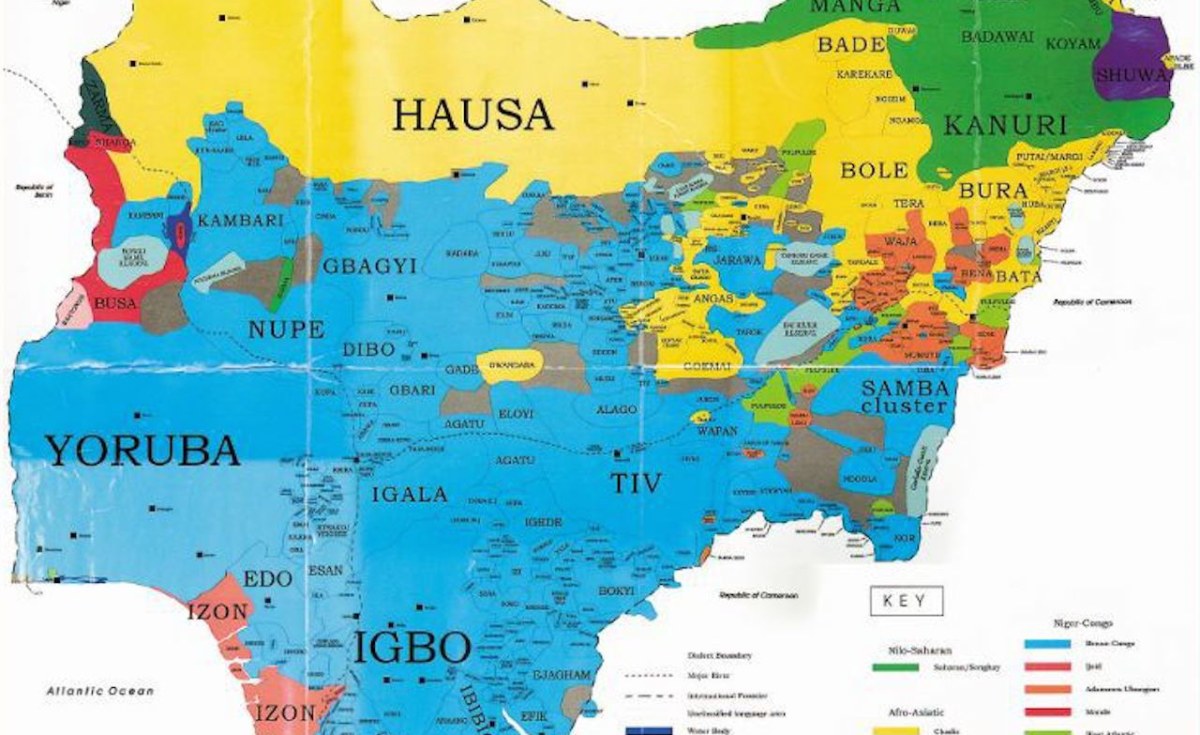
Without mincing words, I agree with those who say it is unrealistic and unachievable to educate children from over 500 ethnic groups. This is especially true considering that education has always been at the low end of budgetary allocations. Let’s face it, the current economic profile of the nation does not look promising for a radical overhaul of this nature. However, in order to take advantage of this policy and benefit from what technologically advanced countries like China, Germany, and Russia have benefited from for many years, we can start with the low-hanging fruits. By this, I mean let’s start with the three dominant languages – Hausa, Yoruba and Igbo.

These languages already have advanced international media backing (BBC Hausa, Yoruba, Igbo, for instance) and a copious body of knowledge accessible through search engines like Google. There is a possibility of easily scaling beyond the three languages by leveraging the data and lessons learnt at this phase of the implementation.

The dearth of Qualified Teachers and Instructional Materials

Closely related to funding is the challenge of the dearth of teachers and the availability of adequate instructional materials to implement such a grand overhaul. The truth is even the current system is grappling with the same challenges, so it is an open secret that any change will mean more challenges. However, with what is available through scientific research on the benefits of children receiving instructions through their local languages, it is clear that it is only a matter of time before this issue becomes the front burner of national discourse. And although we don’t have it all figured out, we have to start with what is available. The NCE curriculum makes provision for every college of education in the Federation to have departments of Hausa, Igbo, and Yoruba and some provision for the language of the immediate community.

Community ownership, NGO, and private sector support will go a long way in ensuring effective implementation. It is also important to note that whilst the Federal Government makes policies, the responsibility of implementing basic education lies with State Governments. Thus, the onus of ensuring this success will vary from state to state. If, for example, northern governors believe this policy will serve their interest most, they should do everything within their powers to ensure the success of this policy at the state and regional levels. The same may not be a priority for the southern region. What is significant here is how we make this policy work in the best interest of Nigeria’s peace and prosperity.

Favouritism and the Challenge to the Fragile Peace in Nigeria

Viewed from the historical context of education in Nigeria, it is obvious that English is more accessible, learnt and understood in the southern part of Nigeria than in the dominantly Hausa-speaking North, where the region has always relied on the Hausa language for the mass dissemination of information. In such a situation, it is obvious that a policy of this nature will find more fertile ground in the north compared to other regions of the country. But let’s face it, the earlier we speed up access to quality education through whatever medium possible, the better for our country’s peace and prosperity.

The data available on the out-of-school population in Nigeria is disproportionately in the north, and the earlier we bridge this gap, the better for our developmental outcome. In the final analysis, this policy might actually make it more cost-effective and efficient to educate a Nigerian child than the current western-based model.

In conclusion, whilst a radical policy of this nature is bound to be confronted with many obstacles, research and comparative curricular studies have proven that our nation gains from a policy favouring our local languages over foreign languages.

It is true that the English language gives us a platform to compete globally, but the spice is in what is truly ours, our local languages, which tell the stories of history and survival. Let’s not forget that nobody says our own languages cannot gain global dominance under the right circumstances, and it all begins with the curriculum.

Mrs Maryam Augie-Abdulmumin is the Founder and  Executive Director of Illmi Children’s Fund. She can be reached via: info@illmichildrensfund.org.

The dynamics of prepositions in relation to meaning

By Hamza Wankari

Meaning, which technically translates as semantics, plays a fundamental role in communication between a speaker and a listener. Without meaning, human activities would have been on a great decline, or worst, come to a halt, for at the heart of civilisation lies in language and meaning.

No doubt, some English words have a few prepositions with which they collocate in different contexts to convey different meanings with ease. If this is the case, then there is a need to study all the various prepositions associated with the words in our vocabulary for effective communication.

Prepositions indicate time, location, direction, etc., in relation to words. More precisely, in English language contexts, determine the prepositions to be used alongside words. In default on using apt prepositions, there may be adverse consequences. 

In light of this, this treatise attempts to shed some light on the different meanings as produced by the different prepositions germane to the word “market”.

According to Oxford Advanced Learner’s Dictionary 10th Edition, “market” is an occasion when people buy and sell goods; the open area or building where they meet to do this.

How, then, can the word (market) be deployed with different prepositions to make effective meanings?

IN the market

AT the market

ON the market

Examples

I am in the market. (Non-standard)

I am AT the market. (Standard)

Meaning:

I’m physically present AT the market.

I am IN the market for a new English dictionary. (Standard)

Meaning:

I’m interested in buying a new English dictionary. However, I may not be physically present AT the market.

My phone is IN the market. (Nonstandard)

My phone is ON the market. (Standard)

Meaning: My phone is up for sale to anyone interested.

Summary of the treatise

IN the market (to be interested in buying something).

AT the market  (to be physically present at the market).

ON the market ( to be up for sale).

Hamza Wankari wrote via ibrahimhamzawankari@gmail.com.

The dilemma and challenges of a Nigerian teacher of English

By Salisu Yusuf

Like other teachers in the so-called Third World countries, Nigerian teachers of English have their dilemma and challenges ranging from sociocultural issues to pedagogical, personality, and condition of service. A teacher has a lot to contend with.

Teaching (at the higher level) in the 21st century has evolved from the traditional teacher-centred to a more pragmatic students-centred approach. Teachers are no longer the dominating forces in the classroom. Instead, they serve as coordinators while students run the show. Ultimately, communicative situations are created in the classroom. Consequently, teachers of English need to be acquainted with the role and place of theatre and drama in education, a method that makes teaching a communicative endeavour.

Unfortunately, students in 21st century Nigeria are no longer interested in communicative situations as education at primary and secondary schools has gone below the standard bar. A teacher, therefore, ought to devise a way to motivate a class of passive learners.

Besides students’ lack of communicative approach, teachers of English in Nigeria are confronted with a dual phonetic issue; a teacher is expected to teach the British phonetic patterning of speech in a strictly diverse Nigerian environment with students under the influence of Nigerian phonetics. The confusion in most Nigerian phonetic realisations emanates from a mix-up of British and American dialects in our daily usage.

Most English words are pronounced in American phonetic realisations. Moreover, Yoruba language phonemics has hugely influenced how we pronounce English words. Therefore, an English teacher must fully explain the phonetic versions to his students. For example, the word “minor” has double pronunciations; the British /ˈmʌɪnə/ and Nigerian /ˈmʌɪnɔː/. Students should know this difference and why the former is the aptest while the latter is strictly Nigerian.

Our students’ lack of reading culture has immensely affected English and literary studies. For instance, some students in literature class don’t want to frequent libraries and read selected texts. Instead, they prefer to visit internet sites, download summaries and read haphazardly. Teachers ought to be mentors in this regard.

A contemporary English teacher must keep abreast with modern English usage. For instance, some years back, a professor of English told our class that the plural of compound nouns such as female teacher and male servant are ‘females teachers’ and ‘males servants’, respectively. While some compound nouns are turned to plural from their first or last elements, the above two and many more are pluralised from their first and last elements. His assertion is, however, today obsolete; contemporary grammar has massively changed such patterns; female teachers and male servants have replaced the former.

 A teacher of English must not lose his head to the identity crisis. Some learners in philosophy and literature subsume into ideological attributes of these fields, thereby becoming victims of pull and inferiority complex. They can only feel superior when they identify with the other culture.

A teacher of English should see himself as a second language user who teaches a foreign language. He should not see himself as an English teacher but as a teacher of English. I have seen a colleague with cultural schizophrenia due mainly to an obsession with English culture. A second language user who sees himself as a  first language user usually suffers from identity crisis, culminating in cultural schizophrenia and, ultimately, psychological turmoil. Many I know have lost their faith and turned to atheism.

A teacher should see himself as someone who mediates between cultures in order to reach cultural equivalence. He should not pretend to be an English man, nor should he speak sleek English through a pointed nose. Rather, he should speak as an African who teaches a foreign language.

This doesn’t free him from strictly adhering to rules governing language use. He should be a traditional grammarian in his pedagogical engagements; he employs some aspects of contemporary grammar in both his classroom and outside classroom engagements.

Girl child abuse, pornography and sexual objectification have immensely affected the teaching profession in the 21st century. Victorianism, that 19th-century literary movement with all its attendant moral lashings, could not stop these deviations in academia. Some teachers see their female students as objects of beautification to be exploited. Female students stereotype and generalise their male teachers as admirers of their sleek bodies. Male students use their female counterparts as shields before their teachers, especially when looking for favours. These and many more are some of the causes of sexual scandals.

A teacher should see his female students as his congenial sisters whom he feeds with knowledge, no more, no less than this.

Many see teachers of English as grammar police, therefore, prescriptivists. I was numerously called a representative of her majesty, the late Queen. A teacher should do away with such social constructs and stereotypes and tackle his work head down. He’s a second language user called by fate to teach a foreign language, foreign culture. Therefore, he cannot escape such naming.

Last but not least, Nigeria’s teachers suffer from poor service conditions. Politicians have turned almost all other professions into… besides their own. Today, a month’s take-home pay of a politician can only be earned by a public servant for his entire working career. An instructor at a college in the neighbouring Niger Republic earns twice my wage.

 A teacher should consider his profession service to humanity, not a means to an end.

Salisu Yusuf wrote from Katsina via salisuyusuf111@gmail.com.
The menace of vernacular in our schools

By ImamMalik Abdullahi Kaga

The rate at which vernacular speaking is becoming rampant in schools (public and private) is so alarming. From elementary to secondary school, our children develop the ability to speak English or Arabic. But, without learning and practising it constantly, you can never be fluent in a language.

English is the official language in Nigeria, yet many people find it challenging to communicate with it. To convey your thoughts or ideas effectively and get well understood by others in many parts of the world, you must have the ability to communicate with the promising language – English because it’s a global language.

It’s regrettable and disappointing that a graduate with a bachelor’s degree or postgrad degree cannot speak or write in the official language appropriately. This, no doubt, results from one’s failure to learn it right from primary and secondary years (childhood). We cannot deny that most of us – northerners – have this weakness. But what could’ve led to this terrible mistake? First, the communication medium in our school days is often our mother tongue (Hausa).

Sadly, most schools don’t emphasise the need to use English to communicate among pupils or students. Some in question subscribe to the idea that (the English) language doesn’t determine one’s intelligence. Arguably, it is not, but we should consider the awful effect of not being able to use it correctly.

To be candid, you hardly find pupils or students communicating in English and Arabic (for bilingual schools) during school hours. For example, some teachers contribute to the escalation of this menace.

Some teach using vernacular, while others aren’t willing to prevent pupils or students from speaking it (vernacular). However, some unwisely claim that the students need a clear explanation of the treated topic. Hence, they use the local dialects to explain. This, however, doesn’t justify explaining lessons in local dialects because educationists have many teaching strategies.

Accordingly, teachers have this “disgusting” habit of speaking to students in the local dialects during class hours or break time. The students respond equally in the local dialects. During break hours, students communicate in the local languages without fear of being caught and penalised for that because the schools they attend don’t impose or simply disregard the rule.

If the abovementioned issue prevails, the coming generations will most likely succumb to the temptations to communicate in their mother tongue. Therefore, school proprietors and their managements should wake up from their deep slumber and confront this issue head-on, which helps deteriorate our education standard.

I believe teachers and prefects are the most powerful “tools” that could influence the students to comply with this because they play vital roles in shaping and correcting the students/pupils if they tend to stray.

ImamMalik Abdullahi Kaga wrote from Borno State University via abdullahiimammalik@gmail.com.

The English teacher who failed kinds of nouns

By Ishaka Mohammed

Sometime in April 2021, an interviewer told me that there were only five kinds of nouns. She went further to reject some of the concepts I used while trying to disagree with her. For example, she claimed that neither ‘uncountable’ nor ‘mass’ could be used while discussing kinds of nouns. Surprisingly, however, she accepted ‘countable’. Before I could say anything further, she had mentioned her qualifications, perhaps to prove her superiority to me. Although I apologised to her, I wished I hadn’t encountered such a drama, thanks to Covid-19. I’ll explain this in the following story.

Due to my observation of many state civil servants, especially teachers, I’m usually afraid of relying on a state government job in Nigeria. Although I’ve applied for some government jobs in Kaduna State, I’ve never thought of depending totally on any (if employed). Besides, it’s highly unwise to rely on a single source of income.

However, as a private school teacher, my Covid-19 lockdown experience made me see one advantage of government jobs. Government workers received their salaries despite being away from work for months. Unfortunately, it was a different story for most of us (especially teachers) in the private sector.

Most schools in Kaduna had been on lockdown even before the federal imposed the same. I thought normalcy would return within a short time, but I was wrong. I had to stay for five months without a salary but not without food. To complement the assistance from some friends and relatives, I did some menial jobs until I decided to post my story on Nairaland. All I needed was a daily income of N500.

About an hour after posting the story, a lady responded and asked me to chat with her via WhatsApp. I wasted no time, and we reached an agreement. She would send snapped or scanned copies of handwritten notes from Ibadan, and I would type them on my phone and send them to her. We agreed on N30 per page, but she usually paid me higher than that. However, the biggest amount of money I received at the time was N1,200, and it took me three days to complete the task. Moreover, it was difficult typing the contents of the photos on the same phone containing them (the images).

With the lockdown experience, I became so much interested in government jobs. So, when the Kaduna State Teachers’ Service Board (KSTSB) advertised teaching vacancies in December 2020, I responded at once. I was shortlisted for a test, and owing to my high score, my hopes were high. So, expectedly, I was invited for an interview.

I prepared well and looked forward to facing the interview panel, but little did I know that I would be asked a question similar to the number of times President Muhammadu Buhari has been shocked. By the way, despite answering the last three questions correctly, the first one had already created friction between a member of the panel and me.

The woman insisted that there were only five kinds of nouns. I immediately disagreed with her and mentioned more than eight. Surprisingly, she accepted ‘countable nouns’ but rejected ‘uncountable nouns’. I quickly drew her attention to the fact that uncountable nouns are also called mass nouns, but my assertion infuriated her. She claimed that she had never come across ‘mass nouns’, and to prove her authority, she had to boast of the number of degrees she had, with the first being in language arts. I kindly said, “I’m sorry, ma.” However, that was like appointing a campaign director after one has already lost an election. I didn’t get the job.

Since then, I’ve consulted many sources to know how many kinds of nouns there are, but I have

yet to get a definite answer. Should you have an answer to that question, please share it with me.

Ishaka Mohammed wrote from Kaduna. He can be reached via ishakamohammed39@gmail.com.

It is an “S-A-N” not a “SAN”

By Hussaini Hussaini

A few days ago, after witnessing the interment of a late Senior Advocate of Nigeria (SAN), I made a grieving post on my social media handles as follows:

“It looks beautiful to witness the admission of an SAN into the inner bar; and it is so direful to witness the laying of a late SAN into the inner earth. The name, the prestige, gone! Bottom line is to watch the end as we watch the goal.”

I received several direct messages seeking to correct my perceived grammatical error in using the indefinite article “an” to “SAN” in the first line of the above post. But in the true sense, there is no error in it, based on the popular usage of the term within the legal circle in Nigeria. An average lawyer uses the term as an abbreviation like “etc” not as an acronym such as NATO or CITAD. So forgive us for not using the dots like “S.A.N.”, which is typical of some abbreviations.

Therefore, an average lawyer pronounces the term to sound like “es-ey-en” and not sound like “-san” as in “Sani”, “san yoghurt”, or “San Francisco”. The contrary is the usual way of pronouncing the term by an average non-lawyer in Nigeria.

It is known that “a” as an indefinite article is attached to a word whose pronunciation starts with a consonant sound, while “an” is attached to a word which starts with a vowel sound. Therefore, since an indefinite article is attached to a word based on the sound of its preceding letter(s) of the alphabet, such as saying “an hour” or “a unanimous”, I believe a lawyer will be correct to say “an SAN”( es-ey-en).

I also said “a late SAN” in my post quoted above. However, I think that is not an issue because the article “a” serves the adjective “late” and not the SAN that succeeded it.

I am not a grammarian, but I hope this little explanation explains the tradition, most especially to people outside the bar.

I can’t imagine how funny it will sound after one works day and night to achieve the silk and a colleague look at him in the eye and call him “-san”.

I sincerely appreciate the efforts of those who attempted to correct my mistakes, and I will always welcome the same at any time. Thank you so much.

Hussaini Hussaini sent this article via hussaini4good@gmail.com.

_____

The views expressed in this article are the author’s own and do not necessarily reflect The Daily Reality’s editorial stance.

Were you mocked because of your English in school?

By Lawan Bukar Maigana

 I was spoofed when my father changed my school from a public school to a private school. I remember the first class I had. Our teacher, a lady, asked me a question, and I answered it. She asked me again where I got the answer, and I told her that I got it from my brain. She laughed at me, and everyone laughed at me because I spoke poorly. Our school fee was 16,650.

My friends were always laughing at my spoken English because I didn’t know how to speak good English. I still can’t speak good English, but I am working hard to perfect it. That same lady—my teacher—forced me to start reading a novel in class every day, and she mostly asked me to explain what I understood from the book. She corrected me as I explained it to the class, and that was how I started speaking gradually.

My proprietor had always told me that I would become a perfect English speaker one day and encouraged me to ignore my classmates and teachers who made jest of my English. With His mercy on me, I started speaking well with confidence until our graduation. Right now, I speak better English than some of my friends who laughed at me because of my English.

Today, she is proud of me anywhere she sees or hears about me. Had I worried about what my friends did to me then, I wouldn’t have become who I am today because they mocked me well. Some of them are on this platform. They will read this post and laugh at themselves because they know they have done many bad things to me.

Honestly, those days were difficult for me because there were days I didn’t talk from morning to the closing time in school. I didn’t know how to speak good English; English was our school’s only means of communication. So I chose to keep quiet because I didn’t want to be laughed at or mocked by my classmates.

Don’t taunt people with English and don’t laugh at people’s spoken and written English because everyone makes mistakes. No one has a monopoly on English knowledge, including native speakers. Don’t stop learning English because of what people think about you or what they do to you. Continue learning. You will perfect it one day; they can’t laugh or mock you anymore.

The world reads me today. I want to read your articles and watch you talking to a large audience one day. So, don’t stop speaking in public. Those who condemn you today can’t do so tomorrow. They won’t have the opportunity.

Lawan Bukar Maigana writes from Abuja and can be reached via lawanbukarmaigana@gmail.com.

English letters and sounds: How we get them wrong

By Salisu Yusuf

One of the problems encountered in learning English phonetics and phonology by the second language learners in Nigeria is the assumption that the English phonemic orthography is having the same trends as those of our first language. For example, the Hausa letter /c/ as in caca, ciki and abinci is always predictably realised as /c/. It can’t be realised as any other sound in any other environment. In contrast, English letters are unpredictable in their phonetic realisation. For instance, the sound /y/ can be realised in ‘lure’ as in ‘failure’ /’feilja/ or something like /felya/ not /felwa/ as we pronounce. The /y/ can also be realised in /year/, etc. 

 While the phonemic orthographies of Hausa, Igbo and Yoruba are uni dimensional, that each written symbol or letter has a predictable sound, the English phonemic orthography is complex and unpredictable. For example, the symbol /ch/ can be realised as /sh/ sound in ‘charade’ /ʃəˈrɑːd/ or /sharad/, the /teous/ in ‘righteous’ /’raetʃas/ or something like /raicas/ not the /raitiyos/ we say.

 What I am trying to say, is that the English spelling of words can’t be a reliable guide to pronunciation. For example, there are 26 English alphabets and 20 vowels but there are 44 conventional English sounds! Moreover, there are English sounds that aren’t found in African languages. For example, the /ʒ/ sound in ‘division’ or /ə/ in ‘police,’ etc.

 Some English letters are not pronounced at all in their phonetic realisation. For example, the /t/ in ‘ ballet’ /’baelei/ or /balei/, the /au/ in ‘restaurant’ /’resrɒnt/ or /restront/ not /restaurant/ as we say, the /w/ in ‘sword’ is deleted /sod/, the /b/ in ‘plumber’ /ˈplʌmə/ or /plama/, the /t/ is deleted in pronouncing ‘sachet’ /ˈsaʃeɪ/ or /sashe/ not /sacet/, the /o/ in ‘leopard’ /ˈlepəd/ /lepad/is silent, the /b/ in bomb /bom/ is also silent, so is /s/ in ‘debris’ /’debri:/ or /debrii/, etc.

Some letters are substituted with other sounds that are different from the actual letters. For example, ‘memoir’ /ˈmemwɑ/ is closer to /memwa/, the ‘chure’ in brochure /ˈbrəʊʃə/ is /sh/ sound pronounce closer to /brausha/, the /toise/ in tortoise /ˈtɔːtəs/is /ta/ sound, pronounce as /totas/ not /totuwas/ as we say. The word ‘poignant’ /ˈpɔɪnjənt/ is pronounce as /poyinyant/, vehicle /vi:ikl/ is more closer to /viyikl/ not /vehikl/ we say. Chasis /ˈʃasi/ is /shasi/ not the /chasis/ we say. 

 Some vowels are changed during phonetic pronunciation differently from the written ones. Example, honey /ˈhʌni/ is /hani/ not /honi/, onion /ˈʌnjən/ or /anyan/ rather than the /oniyon/ we pronounce. Matrix /ˈmeɪtrɪks/ is /meitriks/ , village /’vilidz/ or /vilij/ not /vilej/. Stipend /ˈstaɪpend/, quay is pronounced as /ki/, chaos /ˈkeɪɒs/ or /keyos/, fuel /fjuː(ə)l/ is pronounced as closely as /fyuuwal/, verbatim /vəːˈbeɪtɪm/ or /vabeitim/ not /vaba../ we say. Albeit /ɔːlˈbiːɪt/ is pronounced as /olbiit/, receipt is /’risit/ not /resipt/, and liason /li’eizan/ or /liyezn/.

 We pronounce certain combinations through generalisation of certain features of similar combinations from other environments. For example, the following words are pronounced from similar sounds say in example the word ‘ tuition’. So unlike in ‘ tuition’ almost all those English words with /ui/ combination are pronounced with a long /u:/: juice /dzu:s/ or /juus/, suitable /’su:tabl/, or /suutabl/, suicide /’su:said/ or /suusaid/, suit /su:t/( but ‘ suite’ is /swi:t/ or /swiit/) or /suut/, fruit /fru:t/ is /fruut/, etc.

 In words with similar syllables, a preceding sound is used to randomly pronounce wrongly the immediate syllable. For example, gigantic /dzae’gaentik/ or /jaigantik/ is usually pronounced wrongly as /dzaidzantik/, etc.

These are some of the features that influence Nigerian phonetics. A companionship with an English dictionary, listening to stations like the BBC World Service, etc. can give us some hints on English phonetics and phonology.

Salisu Yusuf wrote from Katsina via salisuyusuf111@gmail.com.