Education

Kaduna Gov’t rescinds decision on nominal fees collection in schools

By Sumayyah Auwal Usman

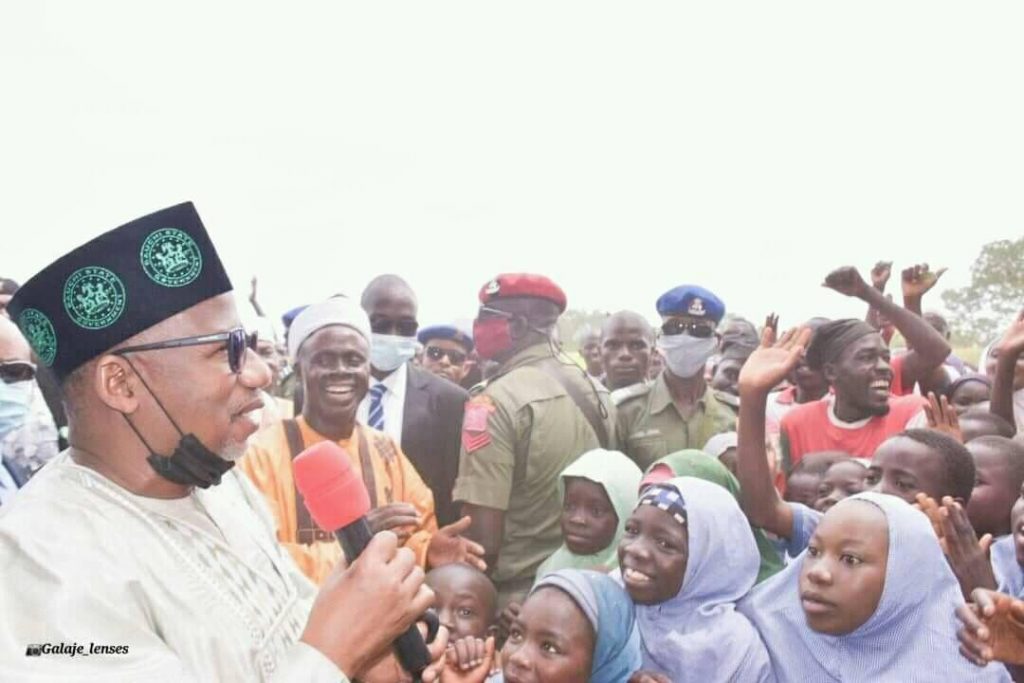
Amidst public outrage, the Kaduna State Executive Council, under Governor Nasir Ahmad El-Rufa’i, has rescinded its decision on the collection of nominal fees in senior secondary schools across the state.

In a statement signed by the Special Adviser to the Governor (Media & Communication), Mr Muyiwa Adekeye on Tuesday said, “the Council observed that the circular issued by the Ministry of Education to school principals on collection of nominal fees is not consistent with government policy, and is thus invalid. The circular from the Ministry of Education to the heads of schools, dated 1st November 2022, is therefore rescinded with immediate effect, and all monies that may have been collected should be refunded forthwith”.

Adekeye further reaffirmed the state government’s commitment to providing free primary, secondary and technical/vocational education to every child resident in the state.

It would be recalled that a memo emanated from the State Ministry of Education imposed the payment of nominal fees to all students of senior public secondary schools in the state.

Why struggle for political power cannot save the North

By Aminu Mohammed

This article may ruffle feathers and annoy some people, but it is done with good intentions. I have observed youths’ excitement and political campaigns for presidential candidates on different social media platforms. In some cases, friends and associates have turned to foes for having opposing views on their candidates. Some even terminate a business relationship because of politics.

Indeed, I am aware of the difficulties faced by the people, especially the increasing cost of living worsened by inflation. Nigerians are suffering because of the bad economic policies of the present government and the ongoing depreciation of the Naira, which has plunged millions of people into poverty. In other words, people’s living standards are getting worse, as life was better a decade ago than now.

First, I want to clarify that I’m not too fond of politics and have no interest in any presidential candidate for the 2023 elections. However, as a Nigerian, I am a bit worried about how our people campaign for their candidates on social media platforms. Some clerics have gone to the extent of warning people not to vote for candidates outside their region. Unfortunately, the northern youth have not learnt any lesson in the last seven years.

The fact of the matter is that the current structure and governance system only benefits the elite and their cronies, as well as a coterie of aides, while most people are pauperized. The northern youths who are dissipating energy on these presidential candidates should note that the elite do not care about them but their aggrandizement. The northern political elites are hiding under the name “Arewa” to deceive the masses while using proceeds of corruption to buy properties in London, Dubai, New York, Kuala Lumpur and Paris.

Have they pondered to ask why public universities were closed for eight months, and the elite did not see the urgency to address the plight of the striking lecturers? Has the life of an ordinary northerner improved in the last seven years, although President Muhammad Buhari is in power? Was there any economic transformation in the North in the previous seven years? In my 12 years of experience as a journalist in Nigeria and my interaction with politicians and government officials, I have concluded that politics will not rescue the North, but only an attitudinal change towards entrepreneurship and commerce will change the narrative.

Attitudinal change towards entrepreneurship/commerce

I have never seen a society transformed based on political patronage. I have never seen a prosperous community due to its people being fixated on political power. So let me clarify that our fixation on political power will not save the North. It will not take millions of children out of the streets or rescue our economy.

Our focus should be on improving our economy, empowering women through education, and creating businesses and initiatives that will improve the general well-being of our people. I have seen many cases of global transformation based on entrepreneurship and commerce. For example, we have all witnessed China’s transformation based on the manufacturing and development of small and medium-scale enterprises. This is also the case with countries in South East Asia such as South Korea, Malaysia and Singapore. Thus, emphasis should be placed on the youths’ personal development and self-reliance. The idea of depending on politicians for handouts instead of pursuing self-reliance in the North should be de-emphasized. No society has prospered based on such practices of handing out peanuts to hangers for survival.

 Acquisition of vocational/ digital skills

Our focus and pursuit of political power have never helped us in the past, and they will not help us going into the future. It only helped to enrich the northern political elite and establishment at the expense of the majority. What will save us is a society with an amalgamation of empowered youths equipped with the requisite education and modern skills relevant to the global economy.

I want to reiterate that our youth should learn vocational skills to support themselves and stop wasting their time blaming their relatives for not helping them or sitting in “Majalisa”. Academically inclined people should learn digital skills offline or online to get remote jobs or fend for themselves. They can also learn digital skills for free on platforms like Coursera, Simplilearn, Udemy, and Udacity, among others. I am appealing to northern youths not to waste their time antagonizing friends and associates over these charlatans masquerading as leaders.

Aminu Mohammed is at the Kiel School of Sustainability, Chrtistan Albrechts Universität zu Kiel, Schleswig Holstein, Germany. He can be reached via gravity23n@gmail.com. 

Why persons with disabilities need education

By Ibrahim Tukur

Persons with disability, otherwise known as differently-abled individuals, encounter immense challenges that leave them at the mercy of socioeconomic underdevelopment. Due to their disabilities, they often struggle to survive. Those with profound physical challenges, especially blindness, spinal cord, leprosy, and cerebral palsy, cannot but resort to financial dependency to survive.

Consequently, street begging, considered taboo in some societies, is rampant among persons with a disability thanks to the lack of governmental and societal support towards the welfare of persons with disability.

Apart from persons with hearing impairment, most persons with a disability depend on begging to survive as they are not physically fit to do some work. What is more worrisome, to say the least, is the fact that many persons with disability family men struggle to ensure end meets. Some would have to go to big cities where people are more charitable to do begging and return home as soon as they are financially well-off.

In some cities like Lagos and Abuja, where many persons with disability make substantial income, the ban on street begging has been imposed. Thus, the sources of livelihood of these people are adversely affected.

Although street begging is a condemnable offence, the imposition of such a ban without proffering any practical solution to the problem is seriously unfair, and almost cruel. 

Even though this lingering problem can be resolved by establishing Social Security Disability Benefits, the needs of persons with disability can not be totally satisfied, thanks to Nigeria’s economic feeble.

All persons with disabilities need education and skills to become financially, economically and intellectually independent. Disability is no longer a barrier to education since the inception of special education in Nigeria in the middle of the nineteenth century.

The government of all levels should do everything possible to make education accessible for all persons with disability. Many special schools should be constructed and well-equipped with special instruments and materials.

Parents with children with disabilty should do the needful by sending them to school where they will acquire sound knowledge that will enable them to turn their disabilities into abilities.

Education is compulsory for all persons with disability. When all persons with disability are educated, life will become easy for them. They won’t have to roam on the street begging. Even if they are unemployed, they can start their own business and get as much money as they like.

Ibrahim Tukur is a 400-level deaf student at Bayero University, Kano. He is a disability rights advocate and proponent of deaf childrens education. He wrote via inventorngw@gmail.com.

Insecurity weakens Nigerian education, increases number of school drop-out – Minister

By Uzair Adam Imam

The Minister of Education, Adamu Adamu, said the lingering security challenge in Nigeria had weakened the country’s education system.

The minister said the insecurity in the country also contributed to the rising number of out-of-school children today.

He disclosed this on Thursday in Abuja during the ministerial session of the 66th National Council on Education (NCE).

In the event themed ‘Strengthening of Security and Safety in Nigerian Schools for the Achievement of Education 2030 Agenda, Adamu said the issue would soon be addressed.

He added that President Buhari’s administration was working tirelessly to reduce the number of out-of-school children and the illiteracy level in the country.

He said, “I’d like to call on all states to rise up to their responsibilities and provide a safe and secure learning environment for both students and teachers.”

Furthermore, the education minister also said that all schools must be safe and secure at all costs.

The negative impact of the Covid-19 pandemic on education in Nigeria

By Maryam Mohammed Bawa

The outbreak of Covid-19 in late December 2019 has wreaked havoc worldwide, especially in critical sectors like education. Students, schools, colleges, and universities have been deeply affected. According to the United Nations Educational, Scientific and Cultural Organization (UNESCO), over 800 million learners from around the world have been affected, 1 in 5 learners cannot attend school, 1 in 4 cannot attend higher education classes, and over 102 countries have ordered nationwide school closures while 11 have implemented localized school closure.

The sudden outbreak of coronavirus disease 2019, which originated in the city of Wuhan, China, has become a major public health challenge for China and countries worldwide. The pandemic has led to the total lockdown of most human activities in various parts of the world. Infection control measures were necessary to prevent the virus from spreading further and to help control the epidemic. One of the control measures is the total lockdown of schools at various levels worldwide on March 19, 2020. Through the Federal Ministry of Education, the Nigerian government ordered the closure of all schools at various levels.

There is no doubt that the interference of the coronavirus pandemic has caused so many challenges in the Nigerian education system. Covid-19 has had an enormous negative impact on education at every level worldwide. Education is among the sectors with the devastating effects of the Covid-19 pandemic. Before the pandemic, the Nigerian education system adopted a face-to-face approach to teaching and learning in primary and secondary schools.

Primary and secondary school learners were not allowed to own any digital gadgets such as phones or computers. With the emergence of the lockdown condition and school closure, teachers and learners were helpless about how to continue learning in the face of the pandemic following the pandemic. In many African countries, the pandemic experience has been traumatic but not perhaps as catastrophic as some observers and experts had predicted. Mistakes were made, but there were notable successes too. Some African governments and institutions took steps that showed the sort of foresight, imagination, and innovation that was often lacking in other parts of the world.

It is on record that education challenges during the Covid-19 pandemic include school closures. So as not to spread the virus, the students and everyone else were advised to stay at home and have classes online instead for those who are able. The lack of face-to-face interaction and poor facilities sometimes led to poor learning. There was also unequal access to education opportunities and poor skills. As I stated earlier, not every pupil had access to gadgets, so there would be unequal knowledge gain or inequality in education.         

Furthermore, the pandemic negatively affects education, causing poor school enrollment and poor achievement because proper attention was not given to schools at that time. Poor school health and challenges in school assessment and transition. This was a challenge because some students were not a part of it, which led to chaos and confusion after the resumption. Also, schools weren’t going at the same pace because some were in their first term while others were already getting promoted. In this direction, Nigeria should put in place measures that will help to tackle such situations in the future, considering the negative impact of Covid-19 on education in Nigeria.

Maryam Mohammed Bawa wrote from the Department of Mass Communication, Skyline University, Nigeria. She sent this article via magicwriter009@gmail.com.

The Nigeria of my dreams

By Abdulrazak Muktar

Dreaming big gives one a sense of accomplishment even if the dream didn’t come true. Interestingly, when people dream, they set their sights on something bigger than their imagination, even when it may seem practically impossible. This gives them the motivation and willpower to make changes and take action towards actualizing their dreams. The Nigeria of my dream should be a poverty-free, or poverty-reduced Nigeria, educated Nigeria, peaceful Nigeria, rich infrastructural Nigeria, and should be Nigeria with massive opportunities for its teeming population. A highlight of these in no particular order is given;

1.  Poverty-free or reduced poverty state: Several countries at various levels of development have shown in the last few decades that it is possible to successfully reduce the level of poverty in a country. However, with the pace of reduction slowing in recent years, poverty is becoming increasingly concentrated in tough-to-reach places. This comes amidst uncertainties that the entire world is facing. From high inequality to slow growth, from macroeconomic imbalances to trade tensions, challenges loom on the horizon that can not only make it difficult to reduce extreme poverty but threaten to reverse the gains. While we have a set of policies that can help to effectively reduce poverty, each policy intervention should be tailored to the needs of Nigerians. I want a Nigeria that is not associated with a host of health risks, including high rates of heart diseases, diabetes, hypertension, cancer, infant mortality, mental illness, malnutrition, lead poisoning, asthma, and dental problems. Obviously, poverty exerts heavy tolls upon those who fall within its traps. For example, one of the most consistent findings in epidemiology is that the quality of an individual’s health is negatively affected by lower socioeconomic status, particularly impoverishment.

There have been several attempts to quantify the cost of poverty in terms of monetary amount. However, the ability to estimate the magnitude of the costs surrounding an issue like that of poverty is exceedingly complex. Poverty affects every Nigerian, whether rich or poor. Again, issues such as crime, access to and affordability of health care, religious fanaticism, ethnic bigotry and job productivity, to name but a few, are the major concerns of all Nigerians. All these as a result of the monster – poverty. The general public winds up paying a heavy price for allowing poverty to walk naked in the streets of Nigeria.

2. Educated Nigeria: A Nigeria without lingering ASUU strike will be truly interesting. If this is achieved, there will be a greater chance of producing more capable graduates. There is also a greater chance that degree holders will have full-time jobs that will ultimately provide health insurance and retirement benefits. With an educated Nigeria, there is going to be more employment opportunities for our teeming population, especially the youth. At present, you often need to compete with hundreds of other equally qualified candidates for a single job position.

In addition to this, the lower the education level, the greater the number of people applying for the same low-paying entry-level post. However, with the right qualifications and educational background, you are likely going to increase your chances of landing a fulfilling job. Would you like to stand out from a pool of applicants? Educate yourself, graduate, get as many qualifications, and learn valuable skills as much as possible.

Also, an educated Nigeria will help in securing a higher income; people with higher education and varied experience are more likely to get high-paying jobs. Dedicate your time and effort to acquire contemporary knowledge and high-level competencies if you would like to lead a comfortable lifestyle. Your credentials are what will motivate a potential employer to choose you instead of others. Studying hard throughout your schooling shows you can handle workloads and you are able to fulfil your goals. Employers see this as a huge advantage as they prefer a responsible and knowledgeable workforce. Once you graduate, you can start searching for jobs that will give you the opportunity to practice what you have learned and, at the same time, secure sufficient pay for your needs.

An Educated Nigeria will provide problem-solving skills. One of the benefits of education is that the educational system teaches us how to develop critical thinking skills so we can be able to make independent decisions. When children become adults, they are faced with lots of challenging issues – paying off their student loans, getting a job, buying a car and a house, catering for their family, etc.

However, if one has spent years educating himself. They should be able to make sound decisions on these various quandaries. Not only are people able to form their own opinions, but also good at finding solid and reliable arguments and evidence to back up and confirm their decisions.

Literate Nigeria will help in improving the economy. People with good academic and educational backgrounds tend to get well-paid jobs. The higher their education and accomplishments, the better employment chances they get. People who grew up poor but educated themselves have a high chance to transform their lives, thus decreasing society’s poverty rates. Education helps countries grow economically since it is about getting knowledge and being able to apply it wisely in our lives and, at the same time, improving other people’s lives.

Truly, education helps in providing a prosperous and happy life. Education has always secured respect from society. In order to ensure a comfortable lifestyle, people should educate themselves to be successful and satisfied. It helps gain a better reputation and increases the chances of climbing the career ladder more easily and faster. It provides financial resources for stable lives people can afford to buy their own house or apartment, thus securing their children’s happiness and success. Furthermore, being able to own a house provides stability and increases self-confidence. It also leads to creating a positive environment for families and communities. “Children of homeowners are 116% more likely to graduate from college than children of renters of the same age, race, and income. According to research at the University of Tennessee, they are also 25% more likely to graduate from high school and have higher math and reading scores, with fewer behavioural problems.

Education contributes immensely to society. How does education benefits society? Educated people understand how valuable living in a stable and secure community is. They are more prone to taking part in projects that help improve not only their neighbourhood but also their society. In addition, when people are able to afford their own house, they are more likely to take part not only in improving their homes but in solving local problems, as well. After all, it is quite important to get involved and give a hand to the less fortunate ones in order to build a better place for all of us to live.

Education is the key to modern Nigeria. Education is the key essence of modern society. One needs to learn about culture, history and other important aspects so that they would be able to contribute to modern society. Education moulds people into leaders not only with knowledge about (college) subjects, but it also shows them how to lead with emotions and true values. Educated people can easily differentiate between right and wrong. Thus, education helps reduce the crime rate. Bad events are happening around the world only competent leaders can help guide us on the good and right path.

Digital Nigeria is possible if we become a literate society. Digital education helps connect with people and organizations around the world. Borders are no longer there. Communicating and sharing opinions with people from other countries and cultures widens horizons and helps us understand and appreciate each other.

Education creates equal opportunities. The importance of education in society has always been great as it is irrespective of caste, race, gender, or religion. Educated people are treated as equals on the basis of their knowledge and competence. In addition to this, educated people are open-minded and are able to listen and accept other people’s views regardless of the fact of how different they are. Education offers the possibility to live independently and thus be free. It is our shelter against financial storms and wrong decisions.

Education helps in initiating empowerment projects; in introducing empowerment, education is the key to turning a weakness into a strength. It offers different tools and ways to understand problems that lay ahead of us and help resolve them. More importantly, education provides us with the considerable mental agility to make the right decisions and spring into action when needed. Many types of research show that educated women can more easily stand up against gender bias and marital violence as they have improved their decision-making capabilities. Whether it is about respect, a higher position in society and a professional environment, financial security, family stability, education provides all of these and much more. Home stability provided by owning a home helps children who grew up in their own houses or apartments become more successful. They are more likely to graduate high school (25%) and finish college (116%). As Nelson Mandela said, education is the most powerful weapon you can use to change the world. Education helps people become better citizens, get better-paid jobs, and shows the difference between good and bad. Education shows us the importance of hard work and, at the same time, helps us grow and develop. Thus, we are able to shape a better society to live in by knowing and respecting rights, laws, and regulations. Learning languages through educational processes helps interact with different people in order to exchange ideas, knowledge, and good practices. It teaches us to live in harmony.

4. A peaceful Nigeria: I want a united working Nigeria where I can relate with my friends and brothers from six geopolitical zones, the North Central (NC), North East (NE), North West (NW), South West (SW), South East (SE) and South-South (SS) freely as One.

A banditry-free Nigeria

A Nigeria free from ISIS, Boko Haram, kidnapping, sara-suka, phone snatchers, IPOB and any terror group that is threatening peaceful coexistence.

A Nigeria that guarantees the safety of travelling by road and by rail as well, a Nigeria where one can hold an iPhone by the street making calls or chatting without fear of losing it to phone snatchers.

I want a Nigeria that’s free from sexual abuse, a Nigeria that’s free from domestic violence and disturbances.

5. Rich infrastructural Nigeria: I pray one day I’ll wake up to a Nigeria that has become like China economically, as it’s now the wealthiest nation in the world according to McKinsey & Co report.

I want Nigeria to be as beautiful as Italy because Italy is truly the most beautiful country. It flaunts the most inspiring cultural treasures and magnificent scenery, which you cannot find anywhere in the world, e.g., Venice, Florence and Rome; with their diverse Architecture, Tuscany, with its rolling hills, will surely mesmerize its visitors.

I have a dream that one day Nigeria will possess technological expertise like that of Japan, not even South Korea or China, the United States, or Germany, talk less of Russia, the United Kingdom (UK) or Singapore; it was ranked eighth in the list of world countries with amazing technological expertise.

6. A Nigeria with many opportunities for the youth without connection: Nigeria’s popular saying says, “it’s not what you know, it’s who you know.’’ On several accounts, many people were denied job opportunities not because they were not qualified but because they knew nobody. Even the lecturing job was denied to many finest brains and given to those with connections; it got to the extent that grades can be manipulated for some reasons; a friend of mine was almost denied first class if not because of the connection he has with school management. Such a problem is all over the country and is beyond any denial. Many people are buying offers of appointment in several ministries, and those who sell the offers do not care whether you can deliver or not, so far as the price is good.

I also hope Nigeria will one day be one of those countries that look for expertise, not only connections, as is the case today.

Finally, the Nigeria of my dreams is possible when we deliberately choose not to repeat the mistakes we made in choosing leaders for our country.

Abdurrazak Muktar wrote via prof4true1@gmail.com.

An open letter to the Chairman of Kumbotso local government

By Musa Idris Panshekara

Dear Sir,

I am Musa Idris, an ex-student of Government Secondary School (GSS) Panshekara.

Mr Chairman, news has been spreading like wildfire all over the town that you are planning to sell some parts of GSS Panshekara or build staff quarters on the land.

Mr Chairman, this news became a nightmare not only to the ex-students or the students but to the entire people of Panshekara.

Mr Chairman, I want to let you know that the school bear its name “GSS Panshekara” because it is located there, under Kumbotso local government. The people benefitting from it are not limited to the people of Panshekara or Kumbotso local government. Still, the school accommodates some students from some parts of Madobi and Gwale LGAs.

Mr Chairman, with your plan of selling or building staff quarters in the land, do you know the school has two sections, one in the morning and the other in the evening, senior and junior classes, respectively? This is happening not for style but because of the insufficient classes to accommodate all the students contemporaneously.

Moreover, the school does not have a friendly and conducive learning atmosphere, despite the overpopulation of students per class. As old as the school is, it has no more than four classes with sufficient seats for the students, not to mention the worn-out ceilings and floors which even you, you can not rear your animals inside one of it. The problems are not limited to that – some classes were previously used but are no longer in use now due to the lack of funds for upkeeping them. Nonetheless, about eight incompleted classes have been without cemented floors for over a decade.

Mr Chairman, there are countless problems the school has: liable scientific laboratory, biological garden, etcetera.

Therefore, no one asks you (if so) to rehabilitate the school from your pocket but the local government treasury. If there is no sufficient amount in the local government treasury, you can refer it to the state government. If the state cannot grant, nobody forces you to intervene in rehabilitation.

Mr Chairman, selling this land for the rehabilitation of the school is inept and inappropriate; moreover, it is a lack of priority if you think of building staff quarters on the land. There are previous chairmen before you who left without glancing at the school. So you are not the first and will not be the last. If you could/would not give your contribution, you can leave the school as it is.

In conclusion, Mr Chairman, do not be deceived by all these people parading behind you like a queen bee. They are parasites who would only suck your blood and throw you away. They will not be with you when you leave your position or with you when you go to your grave.

Mr Chairman, I urge you not to consider yourself or people like you. Instead, please consider the vulnerable children of poor masses coming in the 20, 30, 40 years, whose parents can not afford to take their children to private schools.

Mr Chairman, remember that Boko Haram use weapons to kill students, and teachers and destroy schools brutally. So please, you should not use your office to destroy our mother school in the name of reviving the school.

Yours,

Musa Idris Panshekara

World Teachers Day: English hinders learning progress in northern Nigeria – Engr. Ringim

By Uzair Adam Imam

Over two thousand people, including university lecturers and students, graduated from the Engausa Global Technology Hub.

The graduates were trained in various skills ranging from science and technology.

The founder and chairman of the technology hub, Engr. Mustapha Habu Ringim, disclosed this in an interview with journalists on Wednesday to mark this year’s United Nations World Teachers Day.

Engausa was founded in 2019 and registered in 2022 and recorded numerous successes in teaching people various scientific and technological skills to depend on themselves and become employers of labour.

Engineer Habu said English and other languages inhibit learning progress, especially in northern Nigeria.

He stated, “It doesn’t mean that we are not developed when we teach in our mother tongue. Knowledge can be taught using any language.

“Later, one can learn any other language he feels interested in, like English, Arabic or French.

“But it is not wrong to learn in your mother tongue, as many people perceive. For this reason, we, among others, admit even almajiri, who have no background in western education and are school dropouts, into Engausa Global Technology Hub and teach them in Hausa.

“Today, many such dropouts and almajiri have become teachers in Engausa. They even teach university graduates, MSc and PhD holders as well.”

We give emphasis on the practical aspect

Unlike in tertiary schools and other institutions of learning, the Engausa Global Technology Hub gives emphasis on practical aspects than theories.

This, however, enables the students to fully understand the subject matter rather than mastering theories and definitions of concepts.

Ringim added, “More than 90 per cent of what we do in Engausa is practical. The theoretical aspects do not exceed 10 per cent.”

Unemployment worsens insecurity in Nigeria

Ringim also argued that the rising insecurity in Nigeria is not unconnected with the high unemployment rate in the country.

Insecurity has been one of the ongoing challenges facing Nigeria, especially in the northern part, over the years.

He stated, “We need to know that teaching our youths some skills is one of the panaceas to the lingering security challenge in Nigeria. Therefore, society needs to welcome inventions of this sort.

Engausa is gaining global recognition and support from Federal Government and academics like Prof. Abdallah Uba Adamu, Prof. Hafizu Miko Yakasai, and Engr. Isa Musa Gumel, Prof. Idris Muhammad Bugaje, Dr Binta Usman, Dr Hauwa Muhammad Bagaje, among others.

In defence of Professor Yuval N. Harari

By Rabiu Muhammad Gama

Prof. Yuval N. Harari might be a fake scholar, as some critics are desperately “begging” us to accept and believe. Some critics also imply that he might be the most grossly over-hyped and rigorously marketed scholar in the West. Harari might be basking in unearned attention. He might even be an irritating know-it-all or an intellectual nuisance.

The scientific community might have debunked most of his claims. His works might be riddled with some historical and scientific errors here and there. He might not deserve the wide global acclaim he is receiving today. His works might be replete with idle speculations and groundless generalizations that many scholars find annoying.

However, you cannot dismiss the fact that Harari always asks the big questions – the earthshaking questions that every intellectual worth his salt should be obsessed with. And there’s some “indismissable” magic that seems to clothe his books: when you read his books, you can’t help but feel a bit smarter and/or more informed than anyone who hasn’t read them.

To say Harari is highbrow is a sheer understatement. He is a perfect definition of a polymath. He is blessed with an unusual brain, a razor-sharp brain. His grasp of the esoteric world of science and the humanities is as baffling as it is admirable. Very few scholars can merge science and the humanities as Harari does.

If anything, the torrent of bashings and roastings that Harari is receiving lately from some of the finest critics in the world is a testimony that he has come up with something fascinating that makes his readers curious and his critics restless. Of course, some people might like to dismiss him as a mere talented storyteller. Nonetheless, and at the risk of sounding hyperbolic, he is one of the greatest intellectuals around!

Rabiu Gama wrote from Kano, Nigeria via rabiumuhammadgama0@gmail.com.

How Governor Masari is wrongly governing Katsina state

By Muhammad Malumfashi 

As eloquent people often say, “All leaders after they leave the office are judged on their performance and failures.” So Governor Aminu Masari of Katsina State cannot escape this assessment either.

Since the return of democracy to Nigeria in 1999, Katsina has never been so unlucky to have a wicked leader like Masari. People often talk about his incompetence when he was Speaker of the National Assembly. I thought that was the Nigerian’s usual outcry (body language), especially when someone they see as less qualified to govern them succeeds their kinsman. They don’t know that they foresaw the monster unleashed on the national progress and what might happen to our dear Katsina since the man started eyeing our governor’s seat.

The kind of policies exemplified by the Masari administration in Katsina have, perhaps by no small means, helped to cripple both the state’s education and economy. The Masari government has failed to show outstanding commitment to boosting the state’s economy and reviving the lost glory of education.

For example, in the economic sphere, take as a case examples a multi-billion naira project, the “Katsina Dubai International Market Project”, launched by the previous government of Barrister Ibrahim Shehu Shema. Unfortunately, the current Masari government abandoned it due to some political troubles. Likewise, the “Katsina Multi-billion Solar Project”, started by the late former President Yar’adua of blessed memory and a variety of significant projects Masari government inherited, doesn’t bother to complete.

Much less the siphoning off and wasting of local government funds because this government took six years to conduct local government elections, and it is evident to all that they used non-LG polls campaigning tactics against the previous government. Still, they overlooked them once they came to power and exercised their vested interest in government. Also, most of the infrastructures they built are counterfeits. Tell me six out of ten weren’t renovations, and they would claim to be spending more than it could have cost had it been a new project.

Nonetheless, education in Katsina state faces a significant setback without empathy as the relevant authorities cruelly assess the plight. Learning environments are decrepit, making them unfavourable for teachers and students. Go to any local government and see the poor state of learning environments with your naked eyes, despite the huge amount of money that has always been claimed to be spent tackling it. Promotion, recruitment, arrears, gratuity, salary payment in time and other entitlements to improve teachers’/staff welfare are neglected.

I have always wondered what an ungrateful person Masari is, someone who has told the world that he was raised as an orphan and mowed grass to feed himself or funded his education. I thought someone like him who went through these would have known the reality of life and taken public education seriously as his priority. Still, the kind of negligence he shows towards public education, even those born with silver spoons, could not have done that.

Based on the controversy surrounding his school qualifications, I am not surprised by the carefree attitude that a half-literate like him has towards education. After all, even the highly educated people in Nigeria today have not given education the highest priority. Just look at his questionable educational qualifications published by some of his supporters. They said he attended Kafur/Malumfashi Primary School, Government Secondary School, Funtua AWS Training School, Middlesex Polytechnic, London and Administrative Staff College, Badagary. He holds a Postgraduate Diploma in Water Quality Control and Management. He has taken various courses in and out of the country and earned a Post Graduate Diploma in Water Quality Control and Management from Middlesex Polytechnic, the UK, in 1982, etc.

Although someone might say that education is not a gauge of one’s dominance, to be honest, it is. Meanwhile, reading his interview with Eric Osagie (The Sun Reporter), he refuted some of the qualifications attributed to him: “Why should I advocate having anything I don’t possess?” It doesn’t sound that fascinating to me. He knows the kind of politics played in Nigeria.

Not to mention the fate of the state’s public higher education, which is now in decay. While other state governors are striving hard to find lasting solutions for their citizens to avoid excessive stagnation at home due to the ASUU strike, Masari still wanders in his sleep. He daydreams about what to do to fix problems with Katsina’s academic Staff union of the university so that the school can reopen. Students can resume classes and finish their hanging courses on time.

This administration also scores a capital distinction in breach of trust because it is no longer strange news for Katsina’s citizens to see a headline about missing money in the state’s accounts. Only in Katsina would you wake up and hear the shocking news of your life about missing funds. Instead, our government would simply go to the media and inform the public that this and that animal or theft swelled hundreds of millions by the unknown individual. 

Regarding security, Masari can’t even score zero because Katsina faces serious security challenges, so nowhere is safe! As clearly stated in the Nigerian constitution’s provision, any government’s primary responsibility is to protect its citizens’ life and property. Any government that has not done so has nothing to do in office. Yet, four or more villages in Katsina state are attacked daily, indicating a lack of leadership in the state’s security framework.

It is unfortunate that any government requires its people to defend themselves against bandit attacks. However, this clearly defines what kind of leader Masari is. How on earth would a sane leader urge his followers to take up arms and defend themselves against the enemies, and yet he remains in power, refusing to step down to allow anyone with the ability to be in command to take over?

Muhammad Malumfashi is a cynic essayist and can be reached via muhammadisyakumalumfashi@gmail.com.