Education

Why Nigeria’s education system is failing and what needs to change

By Muhammad Umar Shehu

The Nigerian educational system faces a crisis that can no longer be ignored. After years of neglect and outdated policies, the system has effectively collapsed. The curriculum in many public schools and universities is stuck in the past, failing to keep up with global developments and the skills needed in today’s workforce. Students often learn content that no longer applies to current realities, leaving them ill-prepared for the job market or further study.

One of the key problems is the failure to reform the curriculum in a meaningful way. While other countries continuously update their education content to match technological advancements and changing economic needs, Nigeria remains stuck with decades-old textbooks and syllabi. This disconnect creates a significant gap between what students learn and what employers expect, ultimately undermining the country’s ability to compete internationally.

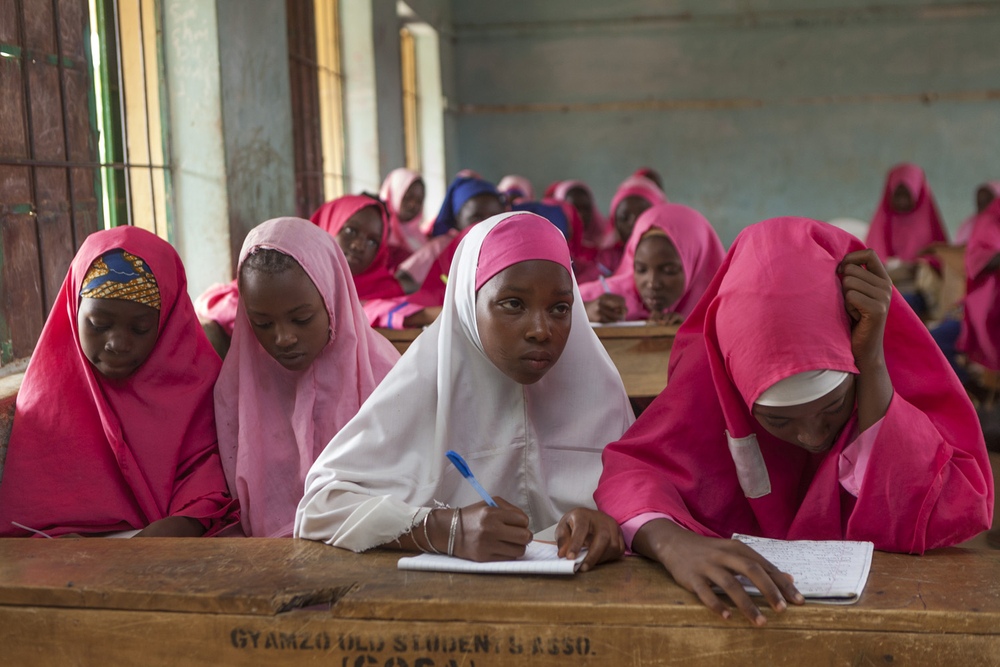
The challenges extend beyond outdated content. Many schools are overcrowded, forcing students into cramped classrooms that are not conducive to learning. Basic facilities such as libraries, laboratories, and lecture halls are either dilapidated or entirely missing in numerous institutions. The lack of adequate infrastructure makes it difficult for students to engage in practical and experimental learning, which is critical to developing critical thinking and innovation.

Equally troubling is the condition of the teaching workforce. Many educators in the system are poorly motivated, largely because of low pay, irregular salaries, and poor working conditions. The absence of incentives and professional development opportunities means many teachers do not perform to their full potential. This creates a cycle where students receive substandard teaching, further reducing the quality of education and widening the skills gap.

Another critical issue is research funding, which is almost non-existent in Nigeria’s public education sector. Research is the backbone of academic and scientific progress, but here, lecturers often have to fund their projects or give up entirely. Without adequate grants, modern labs, or support for collaboration, innovation stalls. This lack of investment in research not only affects universities but also denies the country breakthroughs that could address local and global challenges.

The federal government’s role in this decline cannot be overstated. Despite education being constitutionally a priority, it remains underfunded and undervalued. While political budgets and other sectors receive increased allocations, education’s share continues to shrink. The failure to treat education as a strategic investment has led to a cycle of decay where graduates come out unprepared and schools continue to crumble.

In conclusion, reversing the collapse of Nigeria’s education system requires urgent and sustained commitment. It demands updated curricula, better infrastructure, improved teacher welfare, and significantly increased funding for research. Until these steps are taken seriously, Nigeria risks falling further behind as its youth are denied the quality education they need to thrive in a fast-changing world. The country’s future depends on a system that values knowledge, innovation, and real learning, not just ticking boxes on paper.

Muhammad Umar Shehu wrote from Gombe and can be reached via umarmuhammadshehu2@gmail.com.

Kano beyond educational boom: A call for federal intervention to fuel growth 

By Ismaila Abdulmumini

Kano, renowned for its rich history, cultural vibrancy, and socio-economic vitality, marked 57 years of statehood a few days ago. A long journey of sacrifices and transformations, usually one at a time, gives Kano the new look we see and admire today. Kano is now carving a new identity as Nigeria’s educational powerhouse, boasting four federal universities, three state-owned institutions, and over five private universities, in addition to state and privately funded colleges and polytechnics. 

Equally, quantifiable challenges and rubble need to be put together to build the Kano of our dreams—the one we revere and would be proud of. The state’s transformation into a learning hub has inadvertently exposed systemic gaps in critical sectors, gaps that demand urgent federal intervention to unlock Kano’s full potential.  

Despite its academic strides, Kano grapples with erratic electricity, which stifles the industries that support its institutions. Students and entrepreneurs alike face daily blackouts, which undermine research, innovation, and productivity. Experts argue that federal investment in renewable energy projects and grid modernisation could ignite industrial growth, creating thousands of jobs while sustaining the educational sector’s momentum. 

Kano’s healthcare system, chronically underfunded and overburdened, struggles to serve its 15 million residents. State-run hospitals lack essential equipment, and medical personnel are stretched thin. Federal input through facility upgrades, increased funding, and partnerships with the private sector could reduce pressure, improve public health outcomes, and attract medical tourism, turning a cost centre into a revenue stream.  

In Kano’s bustling large markets that serve Africa, such as Dawanau’s grains, Kwari’s fabrics, and Singa’s groceries, transactions remain stubbornly analogue. This “brick-and-mortar” mentality, experts say, stifles economic scalability in the twenty-first century. “Digitisation isn’t optional; it’s survival,” argues tech entrepreneur Aisha Musa. Federal grants to build a robust digital ecosystem, e-payment platforms, online marketplaces, and broadband expansion could connect Kano’s markets to global consumers, boosting GDP and curbing youth unemployment.  

Kano’s agricultural landscape is littered with bad, indefatigable innuendo. Farms teem with tomatoes, peppers, and livestock, yet the state imports processed dairy goods. The absence of modern processing facilities leaves farmers vulnerable to waste and price fluctuations. A federal push to establish agro-industrial zones with cold storage and meat-processing plants could transform raw abundance into export-ready products, slashing Nigeria’s $10 billion annual food import bill and strengthening the naira. 

Potholed roads and inefficient rail networks cripple trade, inflating costs and deter investors. Upgrading transport infrastructure, which relies heavily on the federal government, would streamline the movement of goods from farms to ports, link markets to neighbouring countries, and position Kano as a logistics hub. “Better roads mean cheaper goods, happier consumers, and a thriving economy,” notes logistics expert Tunde Okoye.  

The blueprint for Kano’s renaissance is clear: targeted federal investments in energy, healthcare, digitisation, agro-industry, and transport. Such interventions promise to generate employment, diversify revenue streams, reduce import dependency, and fortify Nigeria’s economy. As the state stands at a crossroads, the message to Abuja is unequivocal: Empower Kano, and you empower the nation. Kano’s story does not need to be one of unfulfilled promises. With strategic governance, Africa’s “Centre of Commerce” could reclaim its title, this time, as a beacon of inclusive, 21st-century growth.

Ismaila Abdulmumini wrote via ima2040@outlook.com.

Reforming the Almajiri system: A path to inclusive education

By Ibrahim Inusa

Over the years, the Almajiri system of education has served as a traditional form of Islamic education in northern Nigeria, where young boys, often aged between 7 and 14, are sent far from home to memorise the Qur’an by their parents under the supervision of a Malam (teacher). While the system’s intent was to instil religious knowledge, encourage direct engagement in Islamic activities, and provide practical moral learning, it has largely become disconnected from its original purpose.

At present, the system has turned millions of pupils into nuisances, leaving most of them without literacy or numeracy skills. Pupils divide their day between reading and wandering the streets to beg for food and money, intended to cover their living and schooling costs. This model places the pupils in highly vulnerable situations, exposing them to all forms of exploitation and manipulation, and even rendering them a threat to national security.

The Almajiri system of education has been a cornerstone of learning for many Nigerian children. However, its implementation has raised concerns about child welfare, education, and human rights. As Nigeria strives for progress, it is essential to address the challenges within the Almajiri system. One major issue is the lack of regulation and oversight, which leaves children vulnerable to all forms of abuse.

Another significant challenge is the limited access to quality education. Traditional Almajiri schools focus solely on Islamic studies, neglecting secular subjects such as mathematics, science, and English. This restricted curriculum can hinder students’ ability to compete in the modern world. By incorporating modern subjects, Almajiri schools can offer students a more comprehensive education.

The Almajiri system also raises concerns about radicalisation. Some Almajiri schools may promote extremist ideologies, which can have far-reaching consequences. To mitigate this risk, it is essential to encourage critical thinking, tolerance, and inclusivity within Almajiri schools.

To reform the Almajiri system, a decisive approach is necessary. Government agencies, NGOs, and communities must collaborate to provide support for Almajiri students, including access to healthcare, nutrition, and protection from abuse. Almajiri schools should be encouraged to adopt a modern curriculum and teaching methods.

Furthermore, teachers and caregivers in Almajiri schools require training and support to provide a quality education. Community engagement is also important, and parents, guardians, and community leaders involved in decision-making processes are encouraged to prioritise children’s welfare and education.

The current Nigerian government can play a crucial role in reforming the Almajiri system through policy initiatives, such as the Almajiri Education Programme. However, more needs to be done to ensure effective implementation and sustainability. Long-term commitment to reform requires a sustained effort to improve the lives of Nigerian children. By working together, we can create a more inclusive, equitable, and prosperous society for all.

In conclusion, monitoring and evaluation mechanisms are essential for tracking progress, identifying challenges, and making adjustments to reform initiatives. Reforming the Almajiri system is a complex task that requires collaboration, commitment, and creativity. By working together, we can create a more just and equitable education system that benefits all Nigerian children.

Ibrahim Inusa writes from the Department of Mass Communication at Abubakar Tatari Ali Polytechnic Bauchi and can be reached via Ibrahiminusa216@gmail.com.

Grandmother pays school fees with chickens in heartwarming gesture  

By Abdullahi Mukhtar Algasgaini

In a touching display of determination and love for education, an elderly grandmother brought six live chickens to Adiedo Mixed Secondary School in Migori, Kenya, on Tuesday, May 14, 2025, to settle her granddaughter’s unpaid school fees after the child was sent home for non-payment.

The elderly woman’s unconventional payment moved teachers and onlookers, mainly when one of the hens laid an egg on the spot—a moment seen as a divine blessing. 

The incident highlighted the family’s profound dedication to education, despite facing financial hardship.  

School officials accepted the poultry, recognising the grandmother’s sacrifice of her valuable laying hens to keep her granddaughter in class. The story has since touched many, highlighting the lengths families go to secure their children’s futures.

North West Development Commission cancels foreign scholarships 

By Anwar Usman

The North West Development Commission (NWDC) has reversed its decision and announced cancelling its foreign scholarship application scheme. This is in compliance with the Federal Government’s recent directive to prioritise local education and promote indigenous capacity development.

This development follows a policy announcement made by the Federal Ministry of Education on May 7, 2025, reiterating a shift in focus towards reinvigorating Nigeria’s local educational institutions.

The statement, signed by the Ministry’s Director of Press and Public Relations, Mrs. Boriowo Folasade, highlighted the need to invest in homegrown talent and infrastructure rather than sending students abroad.

In a statement issued on Thursday, the NWDC reiterated its commitment to aligning its programs and initiatives with the Federal Government’s policies and priorities.

The statement reads, “This decision is in line with the new directive by the Federal Government, aimed at building local capacity and enhancing the quality of education within Nigeria,” the Commission stated.

The NWDC added that it would provide further updates on new opportunities and educational programs designed to support the development of the North West region in line with the new national educational outlook.

The cancellation marks a significant policy shift in the region’s educational strategy. It is expected to redirect resources towards improving local institutions, providing scholarships for domestic education, and creating skill development initiatives tailored to regional needs.

The importance of time: An appeal for punctuality in academia and elsewhere

By Abubakar Aminu Ibrahim

Deedee rushed around her room, gathering the necessary materials for her PhD proposal defense, her heart racing as she tried to remember everything. The session was officially set to begin at ten in the morning, as specified by the postgraduate college, but by seven, she was already anxious, determined not to be late for such an important academic event.

Thanks to the relentless morning traffic, Deedee barely arrived at her destination by eight. Clutching her papers tightly and breathing heavily, she sighed in relief—at least she was the first to arrive. Finally, she could set aside the worry of being late. She settled into her seat, absorbing the tranquillity in the environment and the nervous anticipation of her imminent defense.

The clock ticked on. By ten o’clock—the designated time—only a few familiar faces were moving about. It was evident that the college had only just started making arrangements for the venue and other necessary protocols. Deedee stayed patient. Maybe the session would begin by eleven, she thought, but I need to pick up Mukhtar from school by two.

Yet, the college workers—both academic and non-academic—moved about leisurely, their faces showing no awareness of time slipping away. As the hours passed, other students began to trickle in. No one noticed who had arrived first; there was no system in place to ensure that Deedee or any early arrivals would be attended to first. It seemed that the very concept of punctuality was foreign here.

Frustrated, Deedee later lamented, “Can you believe the session didn’t start until two o’clock in the afternoon? That was exactly when I was supposed to pick up Mukhtar from school?”

“I’m really sorry,” I said earnestly. “But this is what we refer to as ‘African time.’ People here often don’t prioritize valuing time.”

“But do you realize what that means!?” Deedee interjected. “It means our defense times were shortened, leaving us little opportunity to express the very ideas we spent sleepless nights preparing. I was caught between trying to present my work convincingly and worrying about my poor son. What could I say to impress the professors? What was Mukhtar doing at that moment? Was he thinking I had forgotten him? These thoughts, combined with exhaustion, drained all the energy I’d built up for the session.”

Sadly, lack of respect for time has become our trademark in Africa—or, let me be specific, in Nigeria, which I know too well. It is bad enough that the general populace disregards time, but it is even more disheartening that this culture thrives in academic environments. 

Ironically, some people deliberately arrive late to events, using it as a display of status. They ensure the crowd has gathered before they waltz in, basking in the admiration of those who foolishly equate tardiness with importance. Even more baffling is that these individuals always have some fools cheer and applaud their ignorance or arrogance.

We must recognize that our choices do not impact us alone. More often than not, they have far-reaching consequences for others. Consider how a single instance of lateness can disrupt the timing of subsequent activities. Life functions like a chain—delaying one link interrupts the entire sequence. If action A is postponed, it affects action Y, and ultimately, there may be no time left for action Z, which could be critical to someone else’s plans.

It is time we erased the shameful phrase “African time” from our vocabulary and our reality. We must recognize that adhering to schedules is an act of responsibility, a way of being our brother’s keeper. Whether as teachers, students, participants, or public speakers, we need to respect the time allocated to us, neither taking more than our share nor wasting what we have.

Yesterday is history, which is why it’s referred to as the past. Tomorrow is a mystery, unknown and unpredictable. But today—this moment—is a gift. That’s why it’s called the present. Use it wisely.

Abubakar Aminu Ibrahim wrote via abubakarmuhammadaminu21@gmail.com.

Borno: Education commissioner Wakilbe tours schools

By Rukayya Abubakar Othman

Commissioner of Education Engineer Lawan Abba Wakilbe continued his school supervision tour, visiting the Mafa, Dikwa, and Ngala Local Government Areas. He was accompanied by Bukar Sheriff Kime, Zonal Deputy Director of Monguno Zone, other educational board members, and the local education secretary. 

Engineer Wakilbe commenced his tour at Ngom Primary and Junior Secondary School, where he also visited Government Day Secondary School, Vocational Enterprise Institute, Central Primary, and Junior Day Secondary School in Mafa local government.

During the visit, the Commissioner expressed concern regarding the low student turnout and the high absenteeism among teachers, emphasising the necessity for immediate improvement.

Engineer Lawal Wakilbe, during his visit to Dikwa Government Day Secondary School, Shehu Sanda, Central, Kalaa Garu Primary, and Junior Day Secondary School, inspected the completed teachers’ quarters and the ongoing construction of the Higher Islamic School. 

During his visit to Dikwa, Engineer Lawan commended the attendance of teachers and students, and distributed learning materials and dignity kits to adolescent girls.

Commissioner Lawan Abba Wakilbe, on the second day of his visit to Gamboru, inspected Government Day Secondary School Gamboru, Gamboru Central, and Ndjamaina Primary and Junior Secondary School.

Engineer Wakilbe also inspected the Higher Islamic College Gamboru and Ladari Primary School. At Wulgo, heexamined the completed secondary school project, as well as the Primary and Junior Secondary School Wulgo.

The commissioner commented on the dedication of Ngala Education Secretary, Bulama Kole Bunu, and the Principal of Government Secondary School Gamboru, Mohammed Hamidu Talaki, during the distribution of learning materials and dignity kits to students.

This tour underscores the Borno State Government’s commitment to enhancing education quality and infrastructure across the state.

NERDC inaugurates academic planning committee

By Sabiu Abdullahi

The Nigerian Educational Research and Development Council (NERDC) has inaugurated its Academic Planning Committee (APC) to enhance research and development within the institution.

The inauguration, which took place on Wednesday, February 26, 2025, was held at the Council’s headquarters in Sheda, Abuja.

Speaking at the event, the Executive Secretary, Prof. Salisu Shehu, reiterated the pros of the committee.

He was quoted as stating that “the committee is a crucial committee of the Council to drive research and development activities.”

He noted that its formation would accelerate research progress and play a key role in advancing the Council’s mandate.

Prof. Shehu reminded members that NERDC serves as the think tank of Nigeria’s education sector and is expected to lead in educational innovations.

He urged also them to reposition both themselves and the Council to effectively fulfill their responsibilities, calling on the committee to develop impactful programmes and research agendas that would benefit both the Council and the country.

Expressing concern over financial constraints, the Executive Secretary stressed the importance of demonstrating expertise to attract more funding from the government and development partners.

In his closing remarks, Prof. Shehu appreciated the committee members for their commitment and urged them to stay motivated.

He advised them to contribute meaningful ideas, stating that he is open to “informed advice and quality suggestions and not gossips.”

Earlier in the meeting, Dr. Chima Egbujuo, Head of the Policy and Programmes Unit and Secretary of the Academic Planning Committee, provided an overview of the committee’s structure and responsibilities.

He explained that the APC comprises the Executive Secretary as the Chairman, alongside all Directors, Assistant Directors, and Chief Research Officers of the Council.

As an advisory body, the committee is expected to guide management on academic activities and initiatives.

AI and the future of jobs: How automation will impact employment in Nigeria

By Nasiru Ibrahim

“The introduction of AI and automation is a double-edged sword: it holds immense potential for efficiency, but its consequences on job markets, especially in developing economies like Nigeria, need to be addressed through strategic workforce planning and skills development” (Bessen, 2019).

This article examines the positive and negative impacts of AI on the workforce, supported by economic theory and real-life examples from Nigeria.

Artificial intelligence is the direct opposite of human intelligence. It showcases the ability of machines, such as computers, to carry out tasks that require human intelligence. AI performs tasks such as writing, problem-solving, analyzing data trends, driving self-driving cars, harvesting fruits on farms, and other tasks traditionally performed by humans.

AI automation involves the use of artificial intelligence and technology to automate repetitive tasks that humans traditionally carry out in their daily lives. It enhances productivity, efficiency, and scalability, reduces production costs, and ensures round-the-clock availability for services such as banking.

AI depends on data to perform tasks and learns from humans through data annotation or labelling. This indicates that it cannot recognise images, interpret voices, or understand statements unless trained by humans. Generative AI like GPT–4 is transforming the labour market while influencing the demand and supply of labour in the overall economy. The automation of repetitive tasks in both skilled and unskilled jobs by companies has raised concerns about whether AI will harm or benefit the workforce. This debate has led to the application of traditional economic theory to explore and explain the economic effects of AI.

Economic Theory on AI

Austrian Economist Joseph Schumpeter’s theory of creative destruction explains how new technology and innovation reshape economies by replacing old jobs and technologies with new ones. This theory supports the argument that AI can create new industries, jobs, and opportunities, as seen in Nigeria’s growing tech sector, which includes Fintech, E-learning, E-commerce, and Agritech. Below, we explain these theories with examples from across Nigeria.

Firstly, in Fintech in Lagos, companies like Flutterwave and Paystack now employ AI engineers and data scientists to develop fraud detection systems and personalised banking tools.

Secondly, in E-learning in Abuja, platforms like Ulesson use AI for tailored learning experiences, creating roles like app developers and AI trainers.

Thirdly, in E-commerce in cities like Lagos and Kano, Jumia and Konga use AI for supply chain optimisation and chatbots, fostering jobs in logistics tech and digital marketing.

Fourthly, in Agritech in Kaduna, Thrive Agric employs AI for farm monitoring and analytics, generating demand for data analysts and field specialists.

Human Capital Theory

Human Capital Theory, developed by Gary Becker and Theodore Schultz, emphasises the importance of education and skills in economic productivity. In Nigeria, the demand for human capital has increased in sectors such as machine learning, data annotation, and AI development. The rise of AI has fostered a need for expertise in areas like data science and machine learning. Initiatives like Data Science Nigeria are aiding individuals in acquiring these skills, enhancing their employability and contributing to the nation’s economy. This aligns with Human Capital Theory, which asserts that investing in education and skills enhances productivity.

Pareto Optimality

AI has the potential to increase productivity and efficiency in Nigeria’s economy without worsening the condition of any particular group, achieving Pareto optimality. AI in Nigerian healthcare, such as AI tools for diagnosing diseases, is helping both patients and doctors. These tools make diagnoses faster and more accurate, improving care without harming anyone. This is an example of Pareto Optimality, where everyone benefits without undermining the benefit of anyone.

Dr. G. Yoganandham (2024), Professor & Head of the Department of Economics, in his paper titled Impact of Artificial Intelligence (AI) on the Economy, Politics, Ecosystem, Innovation, and Promoting Inclusive Workforce Frameworks (2024), stated:

“The global economy could benefit by $13 trillion from artificial intelligence by 2030, although 375 million jobs may be displaced. The workplace is one of many areas where AI will bring a revolutionary impact. It can streamline processes, reduce costs, and enhance decision-making. AI can also improve customer satisfaction by analysing data for predictive analytics, reducing accidents in construction and manufacturing, and creating new employment opportunities in data science, machine learning, and AI education.

However, workplace AI raises ethical concerns about racial bias, privacy, security, and democracy. While some argue it may lead to robotic employment, there is ongoing debate about its potential to foster innovative work, create new career paths, and improve judgment.”

From the above theories, it can be deduced that on the one hand, AI, ceteris paribus, could have a positive effect on the expanding workforce in Nigeria, in terms of:

Firstly, AI fosters the creation of new jobs and opportunities. It fosters the emergence of new industries and job roles, particularly in data science, big data technology, AI engineering, and cybersecurity. Companies like Data Science Nigeria (DSN) are equipping Nigerians with skills in data analytics and machine learning, creating employment opportunities in the tech industry.

Secondly, AI enhances productivity and efficiency. It reduces production costs and streamlines processes, enabling businesses to operate more efficiently. In agriculture, Hello Tractor uses AI to connect smallholder farmers with tractor owners, increasing farming efficiency and reducing costs.

Thirdly, improving demand forecasting and profitability. AI tools optimise supply chain management and demand forecasting, leading to increased profitability for businesses. Jumia, Nigeria’s leading e-commerce platform, employs AI algorithms to predict customer preferences, enhance inventory management, and boost sales.

Fourthly, upskilling the workforce. AI encourages the development of skills that align with technological advancements, offering workers better career prospects.

On the other hand, AI could have a negative impact on the workforce in Nigeria, in terms of:

Firstly, job displacement due to the automation of repetitive tasks can affect low-skilled workers, particularly in the manufacturing and service sectors. In Nigeria’s financial sector, banks such as GTBank have adopted AI-powered chatbots (e.g., Habari), thereby decreasing the need for human customer service representatives.

Secondly, bias in hiring and decision-making. AI systems trained on biased data can create discrimination, particularly in hiring processes.

Thirdly, ethical and privacy concerns. AI-driven technologies often raise privacy, security, and data misuse issues.

Fourthly, there is limited access to AI resources. Many Nigerians, particularly in rural areas, lack access to the infrastructure and education required to benefit from AI advancements. For example, I live in Gwiwa Local Government Area, Jigawa State, but the entire local government lacks basic ICT facilities, let alone advanced technological resources that would help people understand artificial intelligence.

While AI promises to increase efficiency and productivity in various sectors in Nigeria, such as agriculture, the question remains: Will the benefits outweigh the job losses, particularly in a country with high unemployment and underemployment?

In Northern Nigeria, where more than 50% of the population is engaged in agriculture, a phased approach is urgently needed. Before AI can be widely adopted, attention should be directed towards improving mechanised farming techniques to enhance food security and tackle inflation. 

Given the shortage of skilled labour prepared to use AI in agriculture, it is essential to prioritise education and training, followed by the mechanisation of farming practices. This would ensure that the workforce is adequately prepared to embrace AI when it is introduced. AI has the potential to boost agricultural productivity by facilitating the timely harvest of crops and minimising the risk of poor yields.

The lack of education in Northern Nigeria exacerbates these challenges. According to the World Bank, the literacy rate in Nigeria stands at approximately 31%, with the Northern region experiencing a significantly higher illiteracy rate. This deficit in educational access has fostered a profound sense of frustration, as many individuals find it difficult to survive amid escalating economic hardships.

People in these regions often face unmet needs, yet politicians offer solutions that don’t address the core issues. This disconnect between the people’s needs and the actions of those in power further deepens the divide and hinders progress. Many feel that immediate economic policies, such as harsh taxation and subsidy removals, are prioritised over long-term, sustainable solutions. There is an urgent need for more inclusive and sustainable economic policies that address the technological transformation driven by AI and tackle the underlying social inequalities.

While AI adoption in agriculture has the potential to boost productivity and reduce costs, the key to its successful integration lies in addressing the fundamental issues of illiteracy, poor governance, and lack of infrastructure, particularly in the Northern regions. Only through a concerted effort to improve education, promote mechanised farming, and gradually introduce AI can Nigeria hope to mitigate the potential displacement of jobs while reaping the benefits of technology.

Ibrahim is a graduate of the Department of Economics from Bayero University, Kano, and writes from Jigawa.

Kano govt pledges reforms in Qur’anic education system

By Uzair Adam

The Kano State Government has reiterated its commitment to enhancing the Qur’anic education system in the state.

In a statement on Tuesday, the Director of Public Enlightenment at the Ministry of Education, Balarabe Abdullahi Kiru, said the government remains committed to improving Qur’anic education and creating a conducive learning environment for students across the state.

The State Commissioner of Education, Gwani Dr. Ali Haruna Makoda, gave the assurance while receiving executive members of the Parent-Teacher Association of Government Tahfeezul Qur’an Secondary School, Kiru, during a courtesy visit to his office.

Makoda, represented by the Permanent Secretary of the ministry, Alhaji Bashir Baffa Muhammad, underscored the significance of Qur’anic education in promoting peace and stability among the Muslim Ummah.

He assured that the government would continue supporting the system to build a better society.

“This administration has done a lot in terms of providing infrastructure in schools and integrating Islamiyya, Qur’anic, and Tsangaya education to ensure access to quality Islamic and Western education in the state,” he said.

Speaking on the upcoming Qur’anic graduation of Government Tahfeezul Qur’an Secondary School, Kiru, the commissioner described the event as timely and pledged the ministry’s support.

Special Adviser to the Governor on Education, Alhaji Tajuddeen Gambo, lauded the school’s contribution to Qur’anic and Islamic education in Kano and beyond.

“The Kano State Government is very proud of Kiru Tahfeezul Qur’an, considering its role in propagating Qur’anic and Islamic education, not only in Kano but across the country,” he said.

He added that the government would ensure the renovation of dilapidated buildings in the school to provide a better learning environment.

The Chairman of the school’s Parent-Teacher Association, Alhaji Umar Natagunda Gezawa, said they visited the commissioner to brief him on preparations for the Qur’anic graduation ceremony scheduled for Sunday, February 9, 2025.

“The graduation covers students from 2019 to 2024, with a total of 1,643 students who have memorized the Holy Qur’an,” he said.

He also noted that the school has produced many graduates who have become prominent figures across the country.

“The school has played a vital role in shaping future leaders, and Kano is proud of them,” he added.

The school’s principal, Alhaji Mamuda, applauded the government’s decision to include the school in the first batch of renovation projects.

“The bill of quantity has already been assessed by the ministry under the governor’s directive to facilitate the project,” he said.