Education

Letter to Hon. Mai Mala Buni, The Executive Governor of Yobe State

Dear Buni,

We need to talk; governance is beyond speeches. It requires actions, commitment and foresight. There is no place in history for those that failed to deliver the mandate given to them in any democratic polity. The world’s political leaders continue to champion the ideal democracy, tell voters you know the best, use your voice to bring change and take ownership of your destiny in knowing the details and aspects of governance. This gives prudent leaders the zeal and passion for taking responsibility, for leading by example. To incorporate new ideas and creativities, which provide an avenue for feedback and to believe in criticisms. These are the attributes that make them stand out amidst many challenges.

However, if we are to measure the growth and progress of our society, the indices we can use is education because acquiring quality and functional education is the concern of every community. That is why scholars in the field of public policy emphasize that, when it comes to educational policy, the stakeholders and actors are paramount to the policy’s success. They need to be integrated, involved, and allowed to participate freely without hindrance from the policy formulation and implementation stage. All their ideas and contribution need to be examined, analyzed and incorporated into the policy. They need to feel important in every step of the policy process. This will give them ample opportunity to take ownership and responsibility for its success and bring about a higher level of commitment in implementing the objective of the policy.

You declared a ‘state of emergency on basic and secondary education’ on your assumption of office. We all cheered and understood something needed to be done to save the sorry state of education. We believe in your powerful speeches on the first-ever ‘Educational Summit’ held in Yobe state. You declared that “I know there are a lot of complaints about some teachers, who are not qualified to teach, and complaints about some teachers who are not able to speak or write well in [the] English Language. This has to change”. We all hailed again, thinking the messiah and symbol of hope had arrived.

From your oratory speeches, we develop confidence that today’s governance transcends what had happened in the previous administrations. We all got a sigh of relief and hoped new ideas and philosophies would guide your administration. The people of outstanding calibre would be called to serve the state, people with foresight and reason.

The problems facing the Basic and Secondary Education policy are many. The broad objective of the policy was in papers, and in practice, it did not demonstrate what it entails. The problem emanated from the formation of the team or committee saddled with the responsibility to craft the policy and to non-involvement and proper participation of actual stakeholders: Teachers, Headmasters/Headmistress, Education Secretaries, etc. Supervisors, Zonal Inspectorates, former and serving Principals and parents of the pupils/students. These are the most important actors and stakeholders alongside the legislative and civil society organizations (CSOs).

This action makes the policy a product of educational elitism or an avenue of wasting state resources. It did not reflect the wishes and aspirations of the general populace. It did not cover every stakeholder because most of the committee members are teaching in higher institutions of learning. They don’t have actual expertise in what it takes to make primary and secondary education functional. The committee lacks the wisdom or vision to go beyond their thinking to involve the real stakeholders in generating the policy ideas.

Since the signing of the committee’s report on January 16, 2020, by you, and declared that “all hands must be on deck to actualize the goals of the policy”, eleven months later, on December 16, 2020, Daily Trust released a survey of the number of out-of-school children in Nigeria by Nigerian Education Data Survey (NEDS). Yobe state has 57 per cent of school children in the country, and this figure corresponds with the technical committee’s report that 40% of Yobe children are out of school.

What have you done to improve the students’ enrollment and retention in the state, enhance teachers’ capacity, and employ new ones to fill the gap? The emergency is not about pronouncing a word; it requires action, and, in this part, you failed to lead and hold the oath of office you took to manage the affairs of state that you’re ready to make education functional and accessible. Leadership is all about making an impact in people lives you promise to govern.

I was surprised by the emergency in education, particularly the deduction of teachers’ salaries in August and September. Everybody knew there was uncertainty in revenue generated and allocated to the state, but this would not be an excuse. You need to understand, the critical stakeholders in achieving the goals of your policy are teachers. How can you declare an emergency on a sector hoping to improve it but end up eating their hard-earned cake?

You need to double teachers’ salaries and allowances, provide proper capacity building training, provide accommodation, and motivate them to work hard. This singular action smeared the image of your administration. Unless you reverse this policy of salaries deduction and apologize to them for the hardship and problem your administration causes them, you’re heading in the wrong direction.

Moreover, as we all know, the significant source of revenue to finance all the intended projects are Federal Allocation. Due to uncertainties in the global oil market, the government should review the policy and allow all relevant stakeholders to review and execute the policy. The government should cut the cost of governance, reduce unnecessary expenses, and accommodate all the projects you intend to achieve in realizing functional education in the state.

In all the projects done in some schools across the state, the major funders of these projects are donor agencies and development partners in collaboration with the State Emergency Management Agency (SEMA) and North East Development Commission. However, what is the role of other institutions, especially the State Universal Basic Education Board (SUBEB) and Ministry of Basic and Secondary Education, in complementing the efforts of these Donor agencies in making and realizing the objective of the policy? Unfortunately, we do not see their visibility, even the recruitment of SUBEB, for almost a year, there is no result.

Given the background above, we need to sit down and talk about governance. History is there to those who leave a golden legacy or otherwise ensure your government adopts a participatory approach to policymaking involving all stakeholders. The policy should be the product of citizenry wishes and aspirations by allowing them to participate in policy design and implementation, enhance teachers’ and administrators’ capacity with the sole aims of improving their productivity and increasing their salaries and allowances.

Funding is key to achieving the policy’s objectives; 26% of budgetary should be allocated to education and ensure proper utilization. In addition, you need to create a Basic Education Trust Fund (BETF), be managed by accomplished education administrators, and provide robust and proper collaboration and partnership with Donor Agencies and Development partners. What we want from you is action and taking responsibility to show you can do it.

Umar Yahaya Dan-Inu wrote from Hausari Ward, Nguru. He can be contacted via umarnguru2015@gmail.com.

Tertiary institutions students to be supported as CBN donates N500 grant


By Uzair Adam Imam

The Central Bank of Nigeria (CBN) has earmarked N500 million grant to the universities and polytechnics in Nigeria.

CBN said that the effort is to help the teeming youths in tertiary institutions to promote entrepreneurship and also reduce unemployment.

In the report titled: “Guidelines for the implementation of tertiary institutions entrepreneurship scheme”, CBN made this known on Wednesday

“Five top Nigerian polytechnics and universities with the best entrepreneurial pitches/ideas shall be awarded as follows: first place – N150m; second place – N120m; third place – N100m; fourth place – N80m; and fifth place – N50m,” it said.

According to the guideline, the aim of the scheme is to promote access to finance by undergraduates and graduates of universities and polytechnics in Nigeria.

Students will be help with innovative Entrepreneurial and technological ideas to enable them build their future.

The guidline added that Individuals will be entitled to a loan limit of N5.0 million to be paid within the maximum period of 5 years at an interest rate of 5 percent for each year.

If your children cannot study here, don’t take gov’t appointments – ASUU President

By Uzair Adam Imam

ASUU President, Prof Emmanuel Osodeke, urged the National Assembly to formulate a law that will ban government officials from taking their children to study abroad. He added that if one knows his children cannot study here, one should not take government appointments.

Osodeke made the disclosure in Abuja at the reconvene meeting with the federal government, chaired by the Minister of Labour and Employment, Dr Chris Ngige.

Daily Trust reported that ASSU also called on the National Assembly to formulate a law that makes it compulsory for the public office holders to send their children to public schools in the country, saying such a step would let the officials know the decay in the public universities.

Speaking, Osodeke stated that, “We hope that the government will make it mandatory that if you accept a government appointment, your children must attend universities in the country.

“The National Assembly must formulate a law that if you take an appointment, your children must study here. If you know that your children cannot be here, don’t take government appointments.

“When you hear those in the government who send their children to schools abroad say that ASUU goes on strike, they should know that strike is not the problem. The problem is the issues afflicting the universities; nobody is interested in tackling them.

“Look at the budget we have seen recently, it is exactly the same thing we have been seeing. Nothing has changed. And this country is paying the high price for neglecting education – the banditry you see, the kidnapping and what have you, is because people are not being taken care of.

“That is why ASUU has been struggling so that Nigerian universities will be revamped so that as our children go outside for learning, other children from other countries will come here too and pay to this country in hard currency.”

World Teacher’s Day: Nigerian students send wishes, prayers to their teachers

Compiled by Aisar Fagge

Today, October 5, is designated as World Teacher’s Day. Students across the globe are celebrating the day with their teachers by sending them flowers, cards, taking them out for dinner and writing goodwill messages on various social media platforms.

The Daily Reality collects some opinions of Nigerian students about this day. Here are some:

Umar Haruna Tami

“Teachers are the nearest alchemists within our reach. The good students they produce are the result of patience, perseverance and dedication to the service. They don’t prioritize what’s in it for them. May their spirits never lose shape.”

Adamu Kazaure

“Without the hard work of Nigerian teachers, the level of illiteracy will have been unmeasurable. We are ever grateful to all the Nigerian teachers. You all deserve to be celebrated.”

Hafeez Kiido

“Uncle Ishaq, who taught me in my elementary school, Maitama Yousuf. He was the first person who had inspired me to read and be courageous when giving it back(public speaking in debates). Malam Sanusi was the second person who usually exempted me out of many applauding my doings. That motivates me, though.

Prof. Tijjani M Naniya of BUK (well-known historian), from whom I retrieve raw knowledge of history. I also emulate some of his positive and solid character. For example, he once told us to be self—defendants and not to part in sectarianism, as sectarianism was solely built upon politics, not religion.

Late Malam Sanee taught me Quran in my early childhood stage (Allah ya gafarta masa).

Last and not least was Malam Abdullahi Abba, who was my Project Supervisor at Kano state Informatics. I will never forget his kindness and guidance towards our studies. May the brim of blessings of Allah flood them all.”

Sohaib Infinity

“Teachers are the reason for what am I today; I always respect them, and my love for them is immeasurable.”

Abdullahi Idris Tikau

“We know we don’t have a Kobo, Naira, or Dollars to pay you. So your (teachers) reward is in heaven. May Allah be your helper and protect you from the trials of this Dunya. May Allah bless your excellent work for humanity. Long live Nigerian teachers. Your good work will not be in vain.”

Jamila Umar

“Teachers are community builders. I can recall when a teacher in primary six once told me about vision 2020 (2005) that all the academic, health challenges etc., we are facing in Nigeria will become history. Since then, I have been dreaming of this dreamland. He speaks sincerely with hope for our future, but upon reaching 2020 now, the result is ‘irony.’ I still have hope for the future generations to come. May Allah reward our teachers.”

Harun Muhammad Yakasai

“Teachers are the angels who enlighten our lives with the light of knowledge and wisdom. Wishing you immense joy, happiness and prosperity because teachers like you deserve the best. Happy teacher’s day to you all.”

Sani Muhammad

“My best regards to both my Islamic and western education teachers as they have really impacted on me in relations to honesty, dedication and many more.”

Dan Ladi Hausawa 

“I don’t have enough words to express my gratitude to my humble teachers who guided me on how to become a useful person among the people. God bless our teachers.”

Auwal Mukhtar

“Today is the teacher’s day. Teachers are the bedrock of any sane and progressive society without which any society can only live in room and gloom. They perform lofty and noble acts which go unnoticed and adequately compensated. My utmost regards to my teachers, who helped to shape and mould my thinking. Who always taught me the act of self-sacrifice and selfless living. My sincere appreciation to Mrs Beatrice Okoro, Mr Yemi Odedokun, Mr Nkuma, Late Atemken Achanga, Mal Abdullahi Musa, Mal Yusufu, Mal Nura Khalid ( digital Imam), Ass. Prof Bappa M Abubakar, Ass. Prof Manir Kamba, Prof Lukman Diso, Dr  Abdulkadir Idris Ahmed and many others too numerous to mention.”

Karama Jamila Sani Yaro

I will forever be grateful to my teachers. My parents were my first teachers. Both Islamic and Western School teachers I attended. And the entire teaching staff of Al-Manaahil Academy. You all are much appreciated.”

Yahanasu Ibrahim Isah

“Dear teachers, it is because of you I became a good student. Thank you, all, that you have done for me. I wish you a delighted teachers day. If knowledge is the light, then you are the guiding stars that give us this light. I celebrate you all. Happy teachers day. Proud to be one. I celebrate us all.”

Hassan Mujtaba
“I was inspired by many teachers, and you are included. The way teachers inspired me is to be a hard-working student. Alhamdulillah. I took their advice. I always work hard. I rather fail and fail than cheat in any exam. I believe deep down in me that this is a very good thing and am proud of it. Above all am proud to be among your students, sir. Am still seeing it as a favour. May God bless all our teachers.”

National Board for Technology Incubation DG visits Engausa Global Technology Hub

The Director-General, National Board for Technology Incubation, Engr. Dr Muhammad Jibril paid a special visit to Engausa Global Tech Hub, Kano, on September 11, 2021. The Engausa Management warmly welcomed the DG.

As the DG frequently does, the purpose of the visit was to monitor and ascertain the level of commitment of the business under the centre towards human capital development, skill development, and youths empowerment.

On his part, the Founder/CEO of Engausa, Engr Mustapha Habu Ringim, profoundly thanked the Federal Government, the Federal Ministry of Science and Technology (through the National Board for Technology Incubation) and the Federal Ministry Communications and Digital Economy ( through National Information Technology Development Agency) for providing a favourable business environment for Engausa Global Tech. Hub

The CEO noted that, if not for this elderly support and guidance from the Agencies, Engausa would not have recorded the successes so far.

Furthermore, the CEO briefed the DG NBTI about the 47 businesses harvested out by the hub and 1000 graduated apprentices powerfully trained in digital technology to bridge the digital skill gaps we have in the North and Nigeria at large.

The DG heartily applauded Engausa’s impact across the country and pledged to support the hub’s goals to cover more milestones. The DG added that they would do whatever it takes to help businesses and grow them to withstand any business tides through his office. He said that people who have business ideas, especially technology and innovation related ones, should put those ideas to work because the government will always be there to support innovative businesses like Engausa.

The DG was taken around the hub and ascertained the quality of the training tools, equipment, and bilingual education system deployed to ameliorate teeming youths’ learning difficulties.

21st-century students and reading culture challenges

By Muhammad Abubakar

Technology has changed the world of education. It provides quicker ways of accessing learning materials in varieties. Indeed, this is a brilliant opportunity. Technology provided cyber-libraries, fully occupied with every knowledge in every fabric of human endeavour. From sciences to humanities, all is available over the internet. There they are available, every time, every day, everywhere and for everyone.

Knowledge with the help of the internet has become accessible and very cheap for almost everyone. With very affordable data, one can download as many reading or learning materials as he wishes to possess in every literature genre—poetry or prose. Moreover, the technology is beyond providing a reader with the recently published works; much older works, dating five, six, seven or more hundreds years back, can be found and be successfully downloaded.

Often I say, “If you want to see the world naked, fall in love with books.” Only through reading and writing the recorded history of the past nations and communities reside in these days; only through it would we record the present as a documentary to the younger ones and the future generations to come. A good reader would have an excellent knowledge of the past, present and can predict the future. Readers have eyes to see the unborn days. If readers didn’t read and write, we might not have lived a complete account of life.

Reading culture died among young people these days. However, in the past three to four decades—albeit I was not part of the days there, I collided with authentic histories of how the predecessors [students] of those days suffered in seeking knowledge. I academically encountered examples of good students—who came through the doors of past days, whose education, knowledge and experience are beyond the curriculum. They are well educated and well trained. They read, write and speak better than 21-century students. Despite their meagre technological resources, short-planned curriculum, reading and learning materials scarcity, they are far more developed than us.

Twenty-first-century students’ poor reading habits lead to many crying stories and anti-social behaviour—for instance, school violence, massive failure and examination malpractice. The massive failure of the 2021 UTME in Nigeria is an example of bad elements generating by poor reading culture.

Students don’t read, and they need high quantity certificates. This century provides an excellent opportunity for students in reading, self-development and intellectual development. But we prefer utilizing our time in other options than reading. We spend most of our time; exhaust most of our data: gossiping and uploading pictures to appreciate others.

Technological advancement has a role in adjusting our reading attitudes. Students should adopt the habit of utilizing most of the time reading. The difference between the past students and these of the present is befriending books. Our being online on Facebook, WhatsApp, Instagram, Tik Tok, and other media platforms should be less—and if necessary, let’s use it positively. It’s crystal-clear that our habits show that we hate reading. Despite the resources we possess in today’s world [21 century], most secondary and tertiary institutions students can not effectively write a letter of any format.

For example, PDF Drive provides any kind of material students can require to learn, curricular or extracurricular. University of People also delivers lectures on every topic need. You don’t need to be constantly reading, and every time, twenty to thirty pages of a book every day will suffice you. Better too late than never. If you’re finding reading boring—read simple stuff, gradually you will make it.

I recommend we should promote reading culture among ourselves through reading and writing challenges. For example, organizing poetry and prose contest, book chats and reading sessions can help. Reading culture would be rapidly promoted among students [young and older ones] in our communities through these means and others.

In conclusion, during our leisure time, weekends and breaks—let’s train our younger siblings; divert their zeal to books. Coach and guide them towards their curricular and beyond. Read them stories, poems, and lots more. Ask them to practice writing—and make simple competitions to them regarding reading and writing. Let’s no go and leave the young generation behind.

Muhammad Abubakar can be reached via muhammadabk1097@gmail.com.

JUST IN: Kaduna releases fresh resumption dates for schools

By Sumayyah Auwal Ishaq

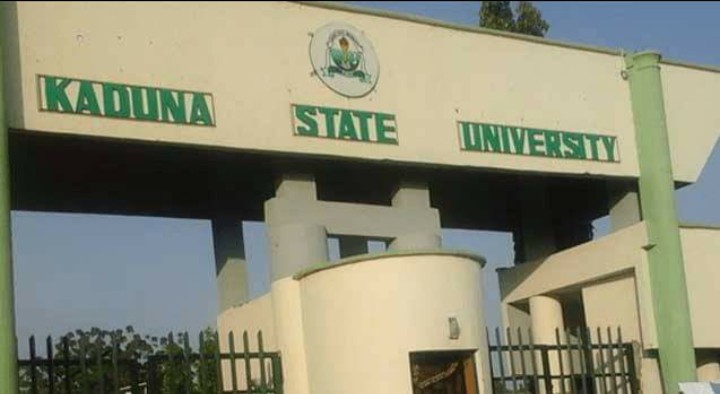
The Government of Kaduna State has announced a new resumption date for its schools after months of disruption in the school calendar due to insecurity ravaging the state.

The state’s commissioner for education, Shehu Makarfi, disclosed this while participating in a virtual workshop organised by the Education Writers’ Association of Nigeria. According to him, students of the state are expected to resume on Sunday, September 12, 2021.

However, the commissioner said rather than resuming for the third term that was aborted in the state, the schools will resume the first term for the 2021/2022 academic calendar.

Kaduna Poly expels 85 students, suspends 8 others

By Sumayyah Auwal Usman

The management of Kaduna Polytechnic has expelled 85 students for their involvement in examination malpractice and suspended eight others. 

A statement issued on behalf of the Registrar, Dr Muhammad Sani Musa, said the decision to expel and suspend the affected students was reached at a meeting by the Academic Board held on 25th August 2021, thereby recommending different levels of punishment for the students, depending on the degree of involvement. 

The list includes forty-four (44) HND students and forty-one (41) ND students. Their expulsion was said to have been prompted by the approval of the report of the Academic Board at its extraordinary meeting held last week.  

The affected students have been asked to vacate the institution’s campuses immediately and hand over all polytechnic property in their custody to their respective heads of department.

See the list below:

Injustice in Jigawa State scholarship scheme

By Garba Sidi

It’s well-known that the Jigawa State government paid half of the registration fee to its indigenes each year. That’s how any governor in this state inherited it and continued it. Still, unfortunately, the present governor, Muhammad Badaru Abubakar, came with some injustice in this matter of scholarship. For three years, the money has not been paid.

The government conducted a screening exercise on 28/01/2021. However, after five months, they selected only three schools within the state and disbursed the money to some students, not all and stop till now. Then, they went on to the media and announced that they gave scholarships to all Jigawa state students. It is an injustice.

Sadly all these injustices that happened, neither the Jigawa state assembly nor the commissioner of education uttered a word about the matter. While students are suffering from poverty, and some even dropped their studies because of registration fees. Those House of Assembly members and commissioner of education are busy taking their children abroad to study in expensive schools.

Unfortunately, it looks like there is no Students Union Government in this state. This is because the Union has failed to discharge its responsibility to fight for students’ welfare. Unfortunately, the acting president of this Union is busy travelling from Kano to Katsina, and others state fulfilling the mission of another group he joined some time ago.

Days ago, leaders of Jigawa state schools’ chapters visited the state capital, Dutse. They met with Special Advisor on students matter on this issue of scholarship. His reaction was, if students protest, the government will not ever give scholarships to any indigenes of Jigawa state. That typically showed students have no freedom to struggle for their rights as the constitution of Nigeria gives to anybody.

May Allah bless us with good leaders.

Garba Sidi wrote from Jagawa State. He can be reached via sidihadejia@gmail.com.

In Search of Solutions for Northern Nigeria

By Ahmadu Shehu, PhD.

The current situation in northern Nigeria is very discouraging, even depressing. But it is not hopeless. Daunting as the current challenges seem, they are far from insurmountable. Before sounding over-optimistic, let me admit that things can head south and that the danger ahead is by no means to be underestimated. The problems bedevilling this country have been dissected, analysed, revised and reviewed regularly. They are well-known to the extent that a curious baby could make a list of them; insecurity, poverty, joblessness, poor education, healthcare, lack of power, water, and all other social amenities. That is how obvious our problems are.

Unfortunately, although various solutions to the above problems have been proposed over time, few improvements are being recorded. On the contrary, things have become worse by the day. What this means is that either the proposed solutions are wrong, inadequate or that these solutions are not well-implemented. Regardless, we shall acknowledge that these problems have been with us throughout our recent history; they have been acerbating all through the decades of our independence, and that they are not going away on their own. Though, it is not as if nothing is being done to ameliorate this sorry situation; it is just not enough.

For instance, as people of faith and conscience, we have been encouraged to pray hard, submit to the true spiritual powers that create and sustain the universe. Luckily, Nigeria is reportedly the most religious country globally, and our attitude to religiosity attests to this claim. As a nation of faith, we have benefitted from our dedication to prayers and spirituality in many ways. However, the deteriorating state of our affairs shows that something is definitely wrong with this approach. We can see that as hard and as much as we pray, these problems are not going away – they have refused to disappear after the night vigils. The home truth is that they will not disappear because they are man-made and, therefore, require human solutions. Consequently, we have to undo them by matching our spirituality with the necessary practical actions.

As concerned and enlightened citizens, we have cried out as loudly as possible, written treatises, provided all the analyses in this world. Still, that is undoubtedly not going to do much in salvaging this precarious situation. This decay is beyond words. As individuals, each of us has a responsibility to this country. Therefore, some pundits claim that we shall quickly solve these problems if we do our parts as individuals. Well, yes and no. Resorting to self-help is itself a measure of failure in a cooperative society. We can only do so much as individuals, but not enough to correct the ills of this society. That is why human society is politically structured since time immemorial. We have never heard of a country, an entity – not even a family system – without a workable structure. As Femi Falana says, “there is indeed no republic of non-governmental organisations”. 

As citizens and subjects of a political structure, we have always pushed all the blame to the region’s political leadership. Indeed, the responsibility of a people is absolutely on the political leaders who have all the instruments of power, administrative and constitutional resources, privileges and responsibilities. But, this too is very much debatable. One undeniable truth is that while political leaders are responsible for the development of a society, the quality of followership has a significant stake in the success of public policy and programs.  Is leadership not the product of followership? Or is it the other way round? This is the case with chicken and egg. Your guess is as good as mine.

As a government, various laws, policies and programs have been formulated, enacted, assented, proposed, implemented, or use any vocabulary that suits your purpose. The bottom line is that we are sinking deeper, moving in reverse order, and things are getting worse. Governments at all levels adopt often conflicting policies and programs on various challenges facing the region. For instance, on insecurity, the Zamfara state government embraces negotiations and amnesty for criminals, while Katsina state adopts the often faulty stick and carrot approach. On the contrary, the Kaduna state government insists on non-negotiation with criminals, without any alternatives for the victims. The governments apply the same conflicting methods to other critical issues such as education, employment, poverty eradication, healthcare, etc. If results are to judge actions, we can loudly, albeit sadly, say that successive governments at all levels have failed in basically everything.

The evidence of the failure of these approaches lies in the fact that there is no sector – one aspect of life – that is better than it was years ago. But at the same time, this evidence is the same reason we should do more because our problems are bigger and more today than yesterday. It means, therefore, that the people of this region must continue brainstorming and inventing new, dynamic solutions in tandem with the current challenges facing it. Northern Nigeria is full of potentials and opportunities to get out of this mess and attain its developmental goals.

The best way to do this, in my opinion, is by focusing on the human capital of the region. The problems mainly result from neglecting the wealth of human resources, both in quality and quantity, by undermining critical social development issues, especially education and skills acquisition. Yes, this region might be rich in natural resources, such as gold, ore, iron, and other geological elements. Still, the truth of the matter is that no society has ever mined itself to greatness. In recent years, the federal government has been fond of oil exploration in the north to counter the southern narrative of “oil-producing states”. But, the essential truth is that the so-called oil-producing states are as underdeveloped as any other state of the federation, except that they alone have the environmental degradation of that magnitude. This tells us that our society cannot drill itself to development.

Likewise, we may argue that agriculture has sustained us for millennia, but the population explosion, waning natural resources, desert encroachment and other global factors mean that the current scale of subsistence farming does not feed us, let alone sustaining our economy. Thus, we cannot farm ourselves out of these troubles.  

I believe we can think and invent ourselves out of these problems. The surest way to development is education – education that develops the minds of the citizens to think, organise and prosper. Fundamentally, this is what only education (in its real sense[1]) can do. Many countries and societies have done this in recent decades. Nations are not born or produced by the roads, farms, bridges, mines, oil fields or industrial estates. They are born by the minds of citizens. The growth of societies is not measured and cannot be attained or sustained by the physical attributes, items and objects on the ground but by the enlightened minds of their citizens. Thus, learning from both our history and the history of nations worldwide, the north can and will be developed, but only through quality education and nothing else. If we can get this right, we will be able to think ourselves out of these problems.

Dr Ahmadu Shehu is an Assistant Professor at the American University of Nigeria, Yola. He writes from Yola, the capital of Adamawa state.


[1] My definition of education and the model that I believe can do this is explained in my article entitled Towards a Community-Based Model of Basic Education in Nigeria published in Chido Onuma’s Remaking Nigeria: Sixty years, sixty voices.