By Ibrahim Ahmad Kala, LL.M
“NDLEA seizes 48,000 Tramadol tabs, 22 UK, France, Portugal passports” – Punch, January, Monday 31st, 2022;
“NDLEA arrests Indian businessman for ‘smuggling 134,700 bottles of codeine”- The Cable of February 13, 2022;
“NDLEA Nabs Suspected Drug Baron Behind N3bn Tramadol Linked To Abba Kyari’s Team” – Channel news, Monday, April 25, 2022.
“NDLEA seizes 1.1 tonnes of Tramadol, 396 kg of codeine syrup in Kaduna” – NewsDirect -April 28, 20220;
“NDLEA uncovers N22bn worth of Tramadol after arrest of Abba Kyari’s accomplice” – Daily Nigeria May 3, 2022; and
“NDLEA Seizes 34,950 Tramadol, Diazepam Capsules Enroute To Boko Haram” – Daily trust, Saturday 5th June, 2021.
The above are some of the recent striking headlines that often hit the news stands in both the online and mainstream media in respect of the Federal Government effort to arrest the rampant abuse of what are termed as “controlled” or “restricted” over-the- Counter (OTC) drugs in the country.
According to Wikipedia, OTC drugs are medicines sold directly to a consumer without a requirement for a prescription from a healthcare professional, as opposed to prescription drugs, which may be supplied only to consumers possessing a valid prescription.
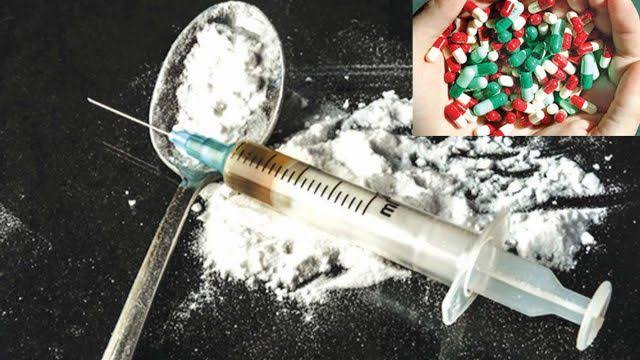
Such OTC drugs include Codeine, Tramadol, Diazepam and all other Analgesics within their genre. The 2020 Nigeria Essential Medicines List, 7th Edition issued by the Hon. Minister of Health, Dr. Ehanire Osagie, restricts the usage of such Narcotic analgesics.
Their restrictions is no doubt connected with their common abuse nowadays in various ways that range from abortion ro sexual enhancement, from halluscination to crimes aiding tranquilizers.
It is therefore, evident that these OTC drugs have outlived their usefulness because of the growing number of Nigerians involved in the production, distribution, its use and abuse, and its consequencal effects such as increase in the likelihood of violent behavior and crime, stroke, mental disorder and brain damage.
However, the drugs control laws and policy have not produced the desired result of curbing the production, trafficking and abuse of these dangerous drugs and substances. To be specific, all these OTC drugs which are mostly Narcotic analgesics being usually prescribed by medical officers for the treatment of mild and severe pain to patients across the country, but now abused by unscrupulous few in the society, have not been clearly proscribed, criminalized, banned, and or outlawed.
The Minister, via his administrative fiat or directive, merely restrict and controlled its sale and usage. The ineffectiveness of the country’s drug laws and policy may be attributed to several factors one of which is that the drug policy and laws are formulated and implemented without the benefit of rigorous knowledge, research and review on them, and their effective enforcement.
For instance, the highbrow grains of Section 19 of the NDLEA Act, Cap. N30, LFN, 2004 – the principal drugs legislation where most drugs charges in courts basically drive its validity and vitality provides as follows: “Any person who, without lawful authority, knowingly possesses the drugs popularly known as cocaine, LSD, heroine or any other similar drugs shall be guilty of an offence under this Act and liable on conviction to be sentenced to imprisonment for a term not less than fifteen years and not exceeding 25 year”.
This section, as faulty and inadequate as it is, has been X-rayed by Nigerian Courts in plethora of cases, exposing the futile attempt by the NDLEA to bring within its fold, such Narcotic analgesics in the category of Tramadol, Diazepam and Codeine that do not fall within the category of negative drugs popularly known as cocaine, LSD, heroine within the ejesdem rule of “or any other similar drugs” stated in section 19 of the NDLEA Act.
This indeed, serves as escape route for drugs cartels to go unpunished in the aftermath of their trial in such drugs related cases. That is why whenever I see these headlines that a person is arrested in possession of these so called “controlled” or “restricted” drugs, I shrug in disapproval, having known very well that such person(s) would never be found guilty of what has never been criminalized in the country.
That section 19 of the Act seems to have created micro elements of the drugs offence, apart from the basic criminal elements of actus reus and mens rea. Namely: i. being knowingly in possession; ii. Without lawful authority; and iii. The drug being confirmed a prohibited or controlled drug. See Ugochukwu v. FRN (2016) LPELR – 40785 (CA).
These micro essential elements of the offence were later held in Eze v. FRN (2018) LPELR – 46112 (CA) to be four, namely; 1. The Defendant was found in possession; 2. The Defendant possess the drugs without lawful authority; 3. The Defendant has the knowledge of the substance in possession to be drugs; and 4. The drugs are proved to be cocaine, LSD, heroin or any similar drugs. See also Ugwanyi V. FRN (2013) All FWLR (Pt. 662) 1655 @ p. 1664.
However, such bifurcation of the ingredients from 3 to 4 is understandably for more elaboration, which does not wear away the substance and efficacy of the section under the Act. These ingredients have to be proved conjunctively to sustain a charge against the Defendant under the Act.
The one that is vital to my point among these micro elements, is “the drug being confirmed a prohibited or controlled drug” or “the drugs are proved to be cocaine, LSD, heroin or any similar drugs.”
This particular element embedded in section 19 of the Act was espoused in the case of Emeka Eze v. FRN (supra). Here the Appellant had made his way to Jimeta Modern Market to collect a consignment of goods comprising of 4 cartons of Tramadol. In the process of evacuating the goods, he was confronted by the officers of NDLEA, who, acting on information, arrested him and seized the cartons.
He was later charged under section 19 of NDLEA Act, but he argued that Tramadol has not been criminalized in Nigeria. While agreeing with the Appellant, the court held that Tramadol does not fall within the ejusdim genre classes of “any other similar drugs” negative to the ones such as cocaine, heroine and LSD listed under section 19 of the NDLEA Act, and the fact that it’s been abused by unscrupulous few people in the society does make its possession and usage illegal.
A drug being merely controlled or restricted without more is not illegal. Consequently, the Appellant was discharged and acquitted.
All I am saying is that category of narcotic analgesics such as Tramadol, Diazepam and Codeine that bring more harm than relief to our youths should be specifically banned and criminalized in the country having outlived their usefulness. New alternatives may be offered that have little or no narcotic effects on the health and well-being of the citizens.
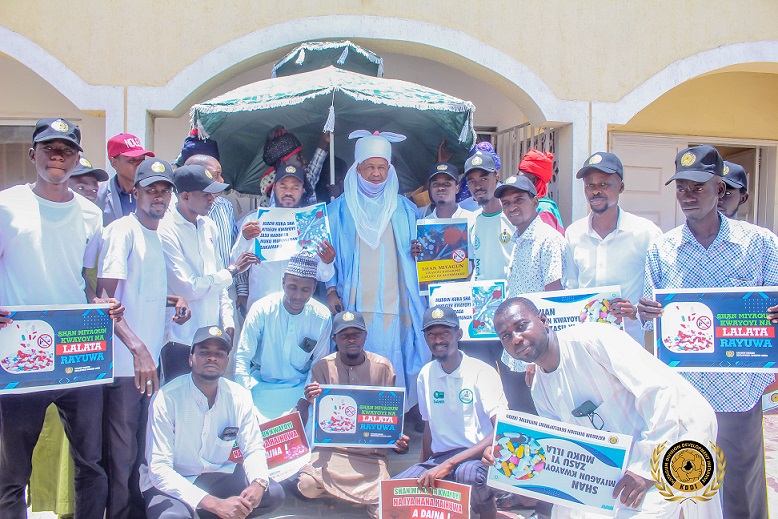
Indeed, the essence of this piece is to celebrate the International Day against Drug Abuse and Illicit Trafficking, or World Drug Day, though belated, which was marked on 26th June every year, to strengthen action and cooperation in achieving the goal of a world free of drug abuse.
Ibrahim Ahmad Kala, LL.M can be reached via Ibrokalaesq@gmail.com