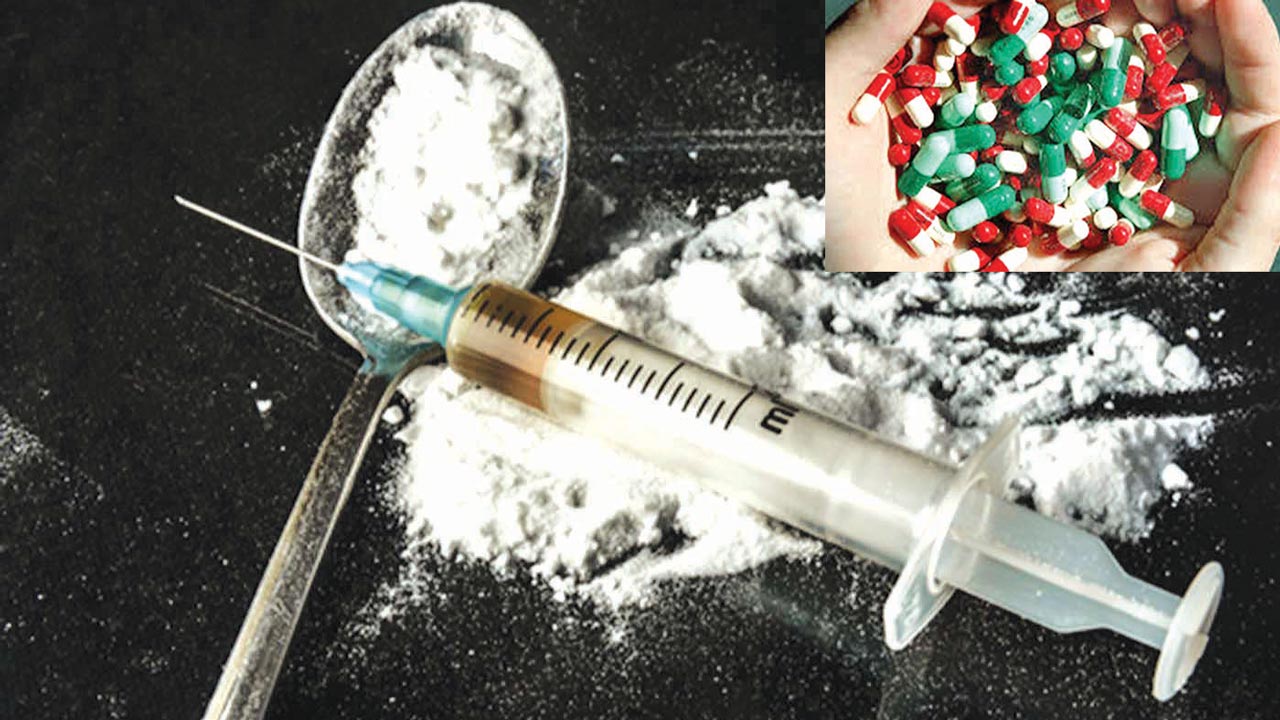
Drug abuse

 A Call to Action: Breaking the vicious grip of substance abuse

By Mohammed Hussaini Hamidu

In our modern society, the prevalence of substance abuse continues to plague communities, leaving a trail of shattered lives and fractured communities in its wake. To truly understand the destructive nature of these habits, one must delve deeper and closely examine the lives of those who engage in smoking, drug use, and similar undesirable activities. The findings are sobering, revealing a harrowing landscape of financial struggles, academic challenges, strained relationships, and a lack of integration within the broader community. It is clear that these activities offer no benefits whatsoever, and therefore, they should be vehemently discouraged.

Regrettably, we find ourselves grappling with a disheartening reality – children born in the early 21st century perceive smoking, drug use, and the consumption of harmful substances as trendy. The consequences of abstaining from these activities are severe, as individuals who choose not to partake may be labelled as insufficiently masculine or excluded from certain social circles. This warped perception and societal pressure contribute to a growing crisis. As a result, crime rates in various states of Nigeria are rapidly escalating, with a significant number of crimes directly linked to drug-related activities. The repercussions of these behaviours extend beyond criminality, penetrating the very fabric of our society. Most disturbingly, a substantial majority of patients in psychiatric hospitals find themselves there due to the dire consequences of their drug and smoking habits.

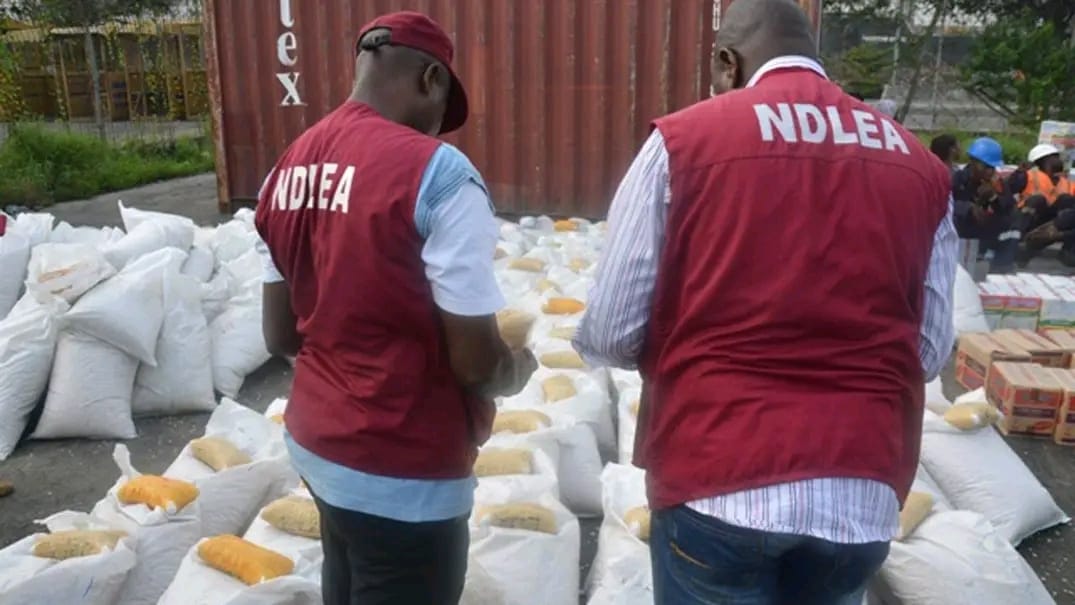
In the face of such a pressing issue, one would hope for swift and decisive action from the government agency responsible for addressing substance abuse. However, our observations within the community reveal a disheartening truth. The National Drug Law Enforcement Agency (NDLEA), tasked with combating this concerning behaviour, often exhibits a lackadaisical approach to its duties. Within my sphere of observation, it is dismaying to witness the agency’s apparent indifference towards tackling this pervasive issue head-on. Offenders caught with harmful substances can secure their freedom by merely having enough money for bail, raising questions about the effectiveness of punitive measures. Even more alarming is the existence of a corrupt system, where officials can be bribed to turn a blind eye or actively support drug dealers in what they call a “return.” This deplorable practice enables the unrestricted sale and distribution of drugs, even during operations. While I have not personally witnessed such acts, claims persist that NDLEA officers themselves engage in returning and selling drugs seized during operations back to the very dealers they are meant to combat.

It is an undisputed fact that substance abuse poses a grave threat to our society, and the time for action is now. We must not remain complacent as countless lives are torn apart, and communities are left in ruins. The consequences of substance abuse demand our unwavering attention and collective effort to bring about change.

To confront this crisis head-on, we must prioritize education and awareness. Community leaders, educators, parents, and all stakeholders must come together to instil in our youth a profound understanding of the realities of substance abuse. By debunking the misguided notion of its trendiness and emphasizing the destructive consequences, we can empower young individuals to make informed decisions and choose healthier alternatives.

Furthermore, systemic shortcomings within the NDLEA must be urgently addressed. It is disheartening to witness an agency tasked with safeguarding our communities falter in its mission. The gravity of this issue necessitates comprehensive reform. Adequate funding, stringent oversight, and the implementation of effective anti-corruption measures are essential to restore public trust and dismantle the pervasive influence of drug-related activities.

In the face of this complex and deeply rooted problem, it is crucial that we rise above complacency and indifference. We must mobilize as a society to combat the destructive cycle of substance abuse. By championing awareness, education, and proactive measures, we can pave the way for a brighter future free from the grip of substance abuse. It is incumbent upon us to break the silence, challenge societal norms, and provide support and resources to those affected by addiction.

First and foremost, we must foster a culture of compassion and understanding. Substance abuse is not solely a moral failing but a complex issue rooted in a myriad of factors, including social, psychological, and environmental influences. By dispelling the stigma surrounding addiction, we can create an environment where individuals feel safe seeking help and accessing the necessary treatment and support.

Education plays a pivotal role in prevention efforts. Schools and community organizations must prioritize comprehensive drug education programs that go beyond the traditional “just say no” approach. These programs should equip young people with the knowledge and skills to make informed decisions, resist peer pressure, and develop healthy coping mechanisms. Engaging parents and caregivers in these initiatives is equally vital, as they play a crucial role in shaping their children’s attitudes and behaviours.

Collaboration between various sectors is key to tackling substance abuse effectively. Healthcare professionals, law enforcement agencies, social workers, educators, and community leaders must work in synergy to develop comprehensive prevention, intervention, and treatment strategies. By sharing resources, expertise, and best practices, we can maximize our impact and provide holistic support to individuals struggling with addiction.

To address the systemic shortcomings within the NDLEA, transparency and accountability must be prioritized. Strong leadership and robust internal controls are essential to root out corruption and ensure that officers uphold the highest ethical standards. Adequate funding should be allocated to bolster the agency’s capabilities, including the recruitment and training of dedicated personnel, improved intelligence gathering, and modern technology to enhance enforcement efforts. Collaboration with international partners can also facilitate knowledge exchange and the adoption of successful strategies from other jurisdictions.

In conclusion, the scourge of substance abuse continues to ravage our communities, leaving a trail of devastation in its wake. We must answer the call to action and confront this crisis head-on. Through education, collaboration, and systemic reform, we can break the vicious grip of substance abuse and create a society that prioritizes the well-being and resilience of its members. Together, let us strive for a future where individuals are empowered to make healthy choices, communities are supportive and resilient, and the cycle of substance abuse is finally broken.

Mohammed Hussaini Hamidu can be reached via mohammed27187@gmail.com.

The need for community participation in fighting drug abuse

By Lawi Auwal Yusuf

It is essential to understand that the community’s participation in fighting drug abuse is an effective remedy that helps tremendously in reversing the trends. Fastidious minds would think that it is beyond exaggeration, if not a mere goof, to make the dubious inference that we cannot clinch a victory over this quagmire without the community vigorously joining the crusade. No doubt, the first step to facing this insidious cankerworm bedevilling the country is dependent on the community’s cooperation.

We are at an appalling risk because drug abuse has become a serious societal phenomenon at an all-time high and regrettably remains unchecked. Youths have already been taken over by drugs which is the centre of crimes and other social vices, while some have succumbed to its suicidal trafficking. Consequently, Nigeria continues to disproportionately bear the brunt of detriments caused by this evil, which thwarts all efforts of transforming our youngsters into enterprising folk.

The emerging trends of terrorism, kidnappings, gruesome murders and a myriad of other reprehensible and despicable crimes are particularly damaging as they create social fissures, flay investors and lead to a total collapse of society necessitate coming together to make concerted clamant efforts in order to battle these crime inducing substances.

But, of course, we must take responsibility for our troubles for being obstinate in breaking away from the old way of doing things and not seeking to unite and confront this lingering peril so as to make way for Nigeria’s defining moment.

It is worthwhile to know that the war against drug addiction is not an exclusive responsibility of law enforcement agencies, in particular, the National Drugs Law Enforcement Agency (NDLEA). Rather, it’s our collective burden. Each and every one of us must honestly believe that he is a worthy stake in this issue, determining to immerse himself in this national salvation giving his best shot.

Collaborative efforts are vital mechanisms for efficient service delivery to Nigerians. Genuine and active community participation is a necessary measure that will absolutely end the age of this atrocious challenge and is a vital step towards addressing heinous crimes and protecting communities. It will truly catalyse meaningful and systematic change. Thus, producing enigmatic and highly yielding episodes that will deliver on the transformation of Nigeria.

It is difficult to dislodge the significance of collective participation in fighting illicit drugs, which necessitates the public to wade in and intervene to support the law enforcers by providing moral and financial support, as well as intelligence information to forge bridges between the community and lawmen. Participation at every level is essential in obtaining commitment and achieving goals.

The need for communal efforts to augment those of the government is a key to tackling this social upheaval and the most effective tool in overcoming this intractable problem for a better society. This idea is not only framed on the goal of extricating drug abuse but also on assisting security agencies in establishing and maintaining a safer and orderly social environment. And also working on improving the understanding and trust between the cops and residents, hence, giving the residents a better vantage of law enforcement.

Nonetheless, a partnership between law enforcement and residents adds to the deepening of our sense of collective responsibility and civic bond while helping security agencies have more accurate information.

Affluent individuals can also contribute by providing vehicles and other logistics to the overwhelmed NDLEA to ease their activities. Moreover, NGOs must embark on active sensitisation to expose the dangers of doing drugs and also extol the virtues of abstaining from it altogether. Equally important as well is the impulsive commitment of traditional rulers, religious leaders and other relevant stakeholders to checkmate the threats at the grassroots level.

However, parents must always monitor the movement of their wards to protect them against the wrong hands and also keep a watchful eye on them to notice any conspicuous behavioural change.

Furthermore, we must band together and face up to the adversaries who are the centre of this issue and report any fishy movement of individuals in our midst to the security operatives. The notorious peddlers are the major concern as they are the key players that continue to supply these perilous drugs just to realise their apocalyptic fantasy of amassing stupendous wealth by all means and at all costs. This presupposes the imperative to put society’s interests at the core and make speak louder than these egocentrics and the demons who pander to them.

We shouldn’t sit idly by while the storms of egocentrism threaten our existence. We need to bolster efforts to strengthen the existential commitment in order to put up a good fight to break the jinx and weather the storm at this crux, and have success over the malicious forces.

Lawi Auwal Yusuf is the PRO and Chairman Media and Publicity Committee, Youth Against Drug Abuse Foundation (YADAF), Kano, Nigeria.

We’ll support Nigeria in fight against illicit drugs—US

By Muhammadu Sabiu 

The government of the United States has unveiled a scheme that will help Nigeria’s fight against illegal drugs.

The National Drug Law Enforcement Agency’s (NDLEA) capacity for forensic and chemical analysis, intelligence gathering, and prosecution will be strengthened by the support.

The intervention is being coordinated by the Bureau of International Narcotics and Law Enforcement Affairs (INL) of the U.S. Department of State.

The announcement was made in a statement released on Monday by Femi Babafemi, Director of Media for NDLEA.

The chairman of the anti-drugs agency, Brig. Gen. Mohamed Buba Marwa (ret. ), made the requests after meeting with American representatives in Abuja and Washington, D.C.

The project will be carried out in Nigeria by the United Nations Office on Drugs and Crime (UNODC).

The assistance will strengthen NDLEA’s intelligence-driven inquiries using various tools, including legal texts, an e-library for prosecution, and others.

Babafemi stated that by adopting enhanced collection, handling, and custody practices, the agency would be able to prosecute cases with solid evidence.

The initiative “will be a vital step in furthering our shared objective of a united, peaceful, and stable Nigeria,” the U.S. government stated in its message.

NDLEA seizes drugs, cash valued at N450 billion in 22 months

By Muhammadu Sabiu

The National Drug Law Enforcement Agency (NDLEA) states that it has seized 100 million pills of the prescription painkiller Tramadol in just 22 months.

The agency estimated the combined value of the cash and illegal narcotics to be about N450 billion. In addition, the agency detained 29 drug lords, while detaining 23,907 drug traffickers.

Brig. Gen. Mohamed Buba Marwa (Retd), Chairman of the NDLEA, said this in a statement released on Tuesday through the Director of Media and Advocacy, Femi Babafemi.

Marwa said the confiscated Tramadol may have had a negative influence on the youth population and the nation’s productivity.

He said this during the Commands’ Awards/Commendations and Decoration of newly promoted officers at the Agency’s National Headquarters, Abuja.

Marwa said, “Within the period under review, the Agency arrested 23, 907 drug traffickers including 29 barons.

“Our seizure was over 5,500 tons or 5.5 million kilograms of assorted illicit drugs, which together with cash seized are worth over N450 billion.

“In the same period, we have taken the fight to the doorsteps of cannabis growers by destroying 772. 5 hectares of cannabis farms. In these 22 months, we have record convictions of 3, 434 offenders. We have equally made good strides in our drug demand reduction efforts where the number of those counselled and rehabilitated is 16, 114.

“The figures are mere statistics until you view them through the lens of human impact and the good or harm that could have come to society, the impact on public health, security as well as law and order if those dangerous drugs had gone to the street. Take, for instance, the one hundred million pills of tramadol seized in the past 22 months.

“If those pills had gone into circulation and ended up in the hands of young people, it would take a heavy toll on lives, families, productivity and, ultimately, the GDP of the country because it will affect these young people who are the engine room of productivity.

“We usually calculate our performance as monthly, quarterly or yearly appraisals. But drug law enforcement is generally a continuum, hence, I am wont to always appraise our efforts from January 2021, when we began far-reaching reforms, reviewed our strategies and rejigged the existing systems to accommodate innovations.

“From then till now, we have been on an upward trajectory. And indeed, what we have done in the last 22 months, from January 2021 to October 2022, based on the available statistics, is cause for celebration.”

Fighting illicit drugs: YADAF is doing the right thing

By Lawi Auwal Yusuf

Drug addiction suffers a death blow occasioned by the outstanding performance put up by the Youth Against Drug Abuse Foundation (YADAF). It is sure that this name now rings a bell in the Nigerian anti-drug crusade by breaking new ground and marking a turning point without historical precedent. Moreover, it has distinguished itself as the leading figure among its peer NGOs.

This voluntary organization was first set up in Lagos in 2017 and in Kano in 2019. It is propelled by its leading force Hajiya Fatima Bature Jikan-Danuwa, its founder and CEO. This great heroine dedicated her life, wealth and everything in her arsenal to realize her dearest wish of extirpating drug abuse. This real gem has an old hand in this national service and carried off multiple awards coupled with eulogies from different quarters.

YADAF is always motivated by its firm conviction that our youth means everything to us. They are the firmament upon which the development of society rest and its future custodians. This makes the team have a penchant for empowering the young to become enterprising, industrious and productive. They derive pleasure from this community service and are always in high spirits to improve the youngsters’ lives. They are so ecstatic to see them living a good everyday life.

It depresses us to see our lads doing drugs, which consequently deals a blow to our society. We are dead scared to see them engaged in this outrageous behaviour which is so detrimental to their health, badly denting their future and lest becoming a nonentity. In 2021, National Drugs Law Enforcement Agency (NDLEA) reported that 40% of Nigerian youths between 18-35 were heavy drug users. This is an awful statistic.

Thus, YADAF felt duty-bound to swing into action and band together with the relevant stakeholders to face the problem squarely. It fights tooth and nail to contain this social upheaval. The problem’s exacerbation never dampens its enthusiasm, nor does the challenges dash its hopes. On the contrary, it remains impulsively committed to its cause. Indeed, its devotion to this job is commendable.

The management presents mass awareness campaigns through TV and radio programmes, public lectures, dissemination of helpful information across different social media platforms, leaflets etc., aimed to dissuade adolescents from engaging in this criminogenic behaviour or ditching it entirely. Furthermore, they expose the evils of this act and extol the virtues of abstaining from it altogether.

Lack of sound education and professional training is a leading cause of this devilish act. Although skills are increasingly becoming more valuable in the labour market, their absence necessitates the young to either remain redundant or wander the street to make ends meet.

This explains why YADAF introduced its Back To School Programme to sponsor drug-addicted juveniles, dropouts and the rehabilitated back to school. Under the scheme, hundreds of such teenagers, including those considered vulnerable to drug abuse, have been registered in both primary and secondary schools. For instance, 347 children benefited from this programme last week, while preparations are underway for the next set.

Furthermore, providing full employment with prospects helps the young develop a worthy stake in the social order. Also, it makes them preoccupied with a legitimate way of earning a decent living, hopeful of a secured future. This motivates them to work harder, become righteous and avoid anything distracting the realization of their dreams.

This speaks to the establishment of the YADAF Skills Acquisition Center to make youths dexterous artisans become self-reliant. It is a costly mistake to leave the young to their own devices or keep them at a distance. Therefore, this centre is furnished with state–of–the–art facilities to help them learn useful skills to realize their potential.

Moreover, we encourage the young to participate in sports activities which enhance community cohesion and a sense of belonging. We promote a sports culture that keeps them away from doing drugs and leads to fitness. The effectiveness of sports is so absolute in promoting peace, unity and curbing crime.

Our strategic approach is to improve the sporting career, enticing more demand for sports industry athletes. This will facilitate the development of our local players to become competitive champions globally.

As the evils of drug abuse are obvious, all hope is not lost for our most resilient youths. On the contrary, the coming of YADAF makes us feel so good that we are on the right track to securing their long-lost potential.

Lawi Auwal Yusuf Maikanawa is a fellow of YADAF, Kano State Chapter.

KDDI rallies youth to shun drug abuse

By Mallam Musbahu Magayaki

On Monday, August 1, 2022, a community organisation known as Katagum Division Development Initiative (KDDI) launched one of its planned programs titled “Awareness on Drug Abuse” at Jama’are Local Government Area of Bauchi State. Several inhabitants of Jama’are communities joined the KDDI youths during the campaign rally.

Jama’are NDLEA officers, local government representatives, Nigerian Red Cross representatives, and social welfare representatives participated in the event. The program was observed at Wabi Academy, major streets, market places, and the Emirs’ Palace.

The Emir, Alhaji Nuhu Ahmed Wabi Mni, was highly impressed with the organisation’s effort. He urged the people of the Katagum community to support the fight against drug abuse.

The organisation calls on the general public to join them in achieving their goals.

On the need to amend NDLEA Act and criminalize some OTC drugs

By Ibrahim Ahmad Kala, LL.M

“NDLEA seizes 48,000 Tramadol tabs, 22 UK, France, Portugal passports” – Punch, January, Monday 31st, 2022;

“NDLEA arrests Indian businessman for ‘smuggling 134,700 bottles of codeine”- The Cable of February 13, 2022;

“NDLEA Nabs Suspected Drug Baron Behind N3bn Tramadol Linked To Abba Kyari’s Team” – Channel news, Monday, April 25, 2022.

“NDLEA seizes 1.1 tonnes of Tramadol, 396 kg of codeine syrup in Kaduna” – NewsDirect -April 28, 20220;

“NDLEA uncovers N22bn worth of Tramadol after arrest of Abba Kyari’s accomplice” – Daily Nigeria May 3, 2022; and

“NDLEA Seizes 34,950 Tramadol, Diazepam Capsules Enroute To Boko Haram” – Daily trust, Saturday 5th June, 2021.

The above are some of the recent striking headlines that often hit the news stands in both the online and mainstream media in respect of the Federal Government effort to arrest the rampant abuse of what are termed as “controlled” or “restricted” over-the- Counter (OTC) drugs in the country.

According to Wikipedia, OTC drugs are medicines sold directly to a consumer without a requirement for a prescription from a healthcare professional, as opposed to prescription drugs, which may be supplied only to consumers possessing a valid prescription.

Such OTC drugs include Codeine, Tramadol, Diazepam and all other Analgesics within their genre. The 2020 Nigeria Essential Medicines List, 7th Edition issued by the Hon. Minister of Health, Dr. Ehanire Osagie, restricts the usage of such Narcotic analgesics.

Their restrictions is no doubt connected with their common abuse nowadays in various ways that range from abortion ro sexual enhancement, from halluscination to crimes aiding tranquilizers.

It is therefore, evident that these OTC drugs have outlived their usefulness because of the growing number of Nigerians involved in the production, distribution, its use and abuse, and its consequencal effects such as increase in the likelihood of violent behavior and crime, stroke, mental disorder and brain damage.

However, the drugs control laws and policy have not produced the desired result of curbing the production, trafficking and abuse of these dangerous drugs and substances. To be specific, all these OTC drugs which are mostly Narcotic analgesics being usually prescribed by medical officers for the treatment of mild and severe pain to patients across the country, but now abused by unscrupulous few in the society, have not been clearly proscribed, criminalized, banned, and or outlawed.

The Minister, via his administrative fiat or directive, merely restrict and controlled its sale and usage. The ineffectiveness of the country’s drug laws and policy may be attributed to several factors one of which is that the drug policy and laws are formulated and implemented without the benefit of rigorous knowledge, research and review on them, and their effective enforcement.

For instance, the highbrow grains of Section 19 of the NDLEA Act, Cap. N30, LFN, 2004 – the principal drugs legislation where most drugs charges in courts basically drive its validity and vitality provides as follows: “Any person who, without lawful authority, knowingly possesses the drugs popularly known as cocaine, LSD, heroine or any other similar drugs shall be guilty of an offence under this Act and liable on conviction to be sentenced to imprisonment for a term not less than fifteen years and not exceeding 25 year”.

This section, as faulty and inadequate as it is, has been X-rayed by Nigerian Courts in plethora of cases, exposing the futile attempt by the NDLEA to bring within its fold, such Narcotic analgesics in the category of Tramadol, Diazepam and Codeine that do not fall within the category of negative drugs popularly known as cocaine, LSD, heroine within the ejesdem rule of “or any other similar drugs” stated in section 19 of the NDLEA Act.

This indeed, serves as escape route for drugs cartels to go unpunished in the aftermath of their trial in such drugs related cases. That is why whenever I see these headlines that a person is arrested in possession of these so called “controlled” or “restricted” drugs, I shrug in disapproval, having known very well that such person(s) would never be found guilty of what has never been criminalized in the country.

That section 19 of the Act seems to have created micro elements of the drugs offence, apart from the basic criminal elements of actus reus and mens rea. Namely: i. being knowingly in possession; ii. Without lawful authority; and iii. The drug being confirmed a prohibited or controlled drug. See Ugochukwu v. FRN (2016) LPELR – 40785 (CA).

These micro essential elements of the offence were later held in Eze v. FRN (2018) LPELR – 46112 (CA) to be four, namely; 1. The Defendant was found in possession; 2. The Defendant possess the drugs without lawful authority; 3. The Defendant has the knowledge of the substance in possession to be drugs; and 4. The drugs are proved to be cocaine, LSD, heroin or any similar drugs. See also Ugwanyi V. FRN (2013) All FWLR (Pt. 662) 1655 @ p. 1664.

However, such bifurcation of the ingredients from 3 to 4 is understandably for more elaboration, which does not wear away the substance and efficacy of the section under the Act. These ingredients have to be proved conjunctively to sustain a charge against the Defendant under the Act.

The one that is vital to my point among these micro elements, is “the drug being confirmed a prohibited or controlled drug” or “the drugs are proved to be cocaine, LSD, heroin or any similar drugs.”

This particular element embedded in section 19 of the Act was espoused in the case of Emeka Eze v. FRN (supra). Here the Appellant had made his way to Jimeta Modern Market to collect a consignment of goods comprising of 4 cartons of Tramadol. In the process of evacuating the goods, he was confronted by the officers of NDLEA, who, acting on information, arrested him and seized the cartons.

He was later charged under section 19 of NDLEA Act, but he argued that Tramadol has not been criminalized in Nigeria. While agreeing with the Appellant, the court held that Tramadol does not fall within the ejusdim genre classes of “any other similar drugs” negative to the ones such as cocaine, heroine and LSD listed under section 19 of the NDLEA Act, and the fact that it’s been abused by unscrupulous few people in the society does make its possession and usage illegal.

A drug being merely controlled or restricted without more is not illegal. Consequently, the Appellant was discharged and acquitted.

All I am saying is that category of narcotic analgesics such as Tramadol, Diazepam and Codeine that bring more harm than relief to our youths should be specifically banned and criminalized in the country having outlived their usefulness. New alternatives may be offered that have little or no narcotic effects on the health and well-being of the citizens.

Indeed, the essence of this piece is to celebrate the International Day against Drug Abuse and Illicit Trafficking, or World Drug Day, though belated, which was marked on 26th June every year, to strengthen action and cooperation in achieving the goal of a world free of drug abuse.

Ibrahim Ahmad Kala, LL.M can be reached via Ibrokalaesq@gmail.com

Drug abuse and illicit trafficking

By Tajuddeen Ahmad Tijjani

Every 26th day of June is the International Day against Drug Abuse and Illicit Trafficking as identified by the United Nations. This year is not unprecedented due to the menace that keeps rising, which sadly causes untold hardship to our communities and the world in general.

The date is to commemorate Lin Zexu’s dismantling of the opium trade in Humen, Guangdong, ending on June 25, 1839, just before the First Opium War in China. The observance was instituted by General Assembly Resolution 42/112 of 7th December 1987. The global observance of the day aims to raise awareness of the major dilemma that illicit drugs represent to society. Indeed, the aim is an expression of the United Nations’ determination to strengthen action and cooperation to achieve the goal of an international society free of drug abuse.

Justice and health are two sides of the same coin when it comes to addressing drug problems. The pertinent question is: what have we done in our immediate communities to address this situation that is posing a danger to our survival as a society and a nation? Are we to maintain silence while the future of our children and that of unborn children is on the brink? No! Most of the crimes committed were done after the criminals took drugs and illicit trafficking caused, according to sociological trumpets.

In Nigeria, the Boko Haram in the Northeast, ungodly bandits and kidnapping in the North West, and the IPOB terrorists in the southeast have something in common, which is criminality, havoc and destruction. However, the acts were mostly committed after taking unprescribed drugs, which are injurious to the health and well-being of the people.

Perhaps, those taking illicit drugs don’t know the dangers and injuries they create for their lives and, at the same time, for society. It’s the drug that impels them to commit crimes against humanity, which, of course, triggers instability in the world. However, there has never been a better time to convert this serious threat into a human cooperative existence than now. But, to achieve this, we must destabilise the sources of illicit drugs.

For one thing, you can’t discourage and combat illegal drugs and trafficking without addressing irresponsible parenting; how could God bless you with juveniles and then neglect their proper upbringing? In our society, you see someone with ten youngsters or more without taking care of their full responsibility. We must take the bold step and tell ourselves the truth. Never produce what you can’t take care of. Their moral upbringing is a primary responsibility of every parent. The association of pair groups in such a way trains your wards to be good ambassadors to society. for them to be productive citizens of the country and the world. 

The Nigerian drug law enforcement agencies must take their obligations with all seriousness. Indeed, perpetrators must be punished according to the law of the land. This is the only way that will serve as a deterrent to all with similar horrible intentions, and of course, at the same time, our justice system must be overhauled.

It’s clear in the northern part of the country, some hawkers go round selling illicit drugs, expired and villagers are taken with their hard-earned resources without doctors’ prescriptions, which post hazards to the health care system. This and similar illegal actions should be properly checked. Indeed, health is wealth. We should all play our part in spreading awareness to make our environment clean and live in a prosperous world.

Tajuddeen Ahmad Tijjani wrote from Galadima Mahmoud Street, kasuwar Kaji Azare, Bauchi State.

Drug abuse and the future of Nigerian youth

By Usman Muhammad Salihu

The menace of drug abuse, spreading like a wildfire in our contemporary society, is gradually or has already become rampant among many members of our society, ranging from old, young and adult and at the same time men and women, rich and the poor.

Drug abuse is in essence, the misuse of drugs or taking them without doctor’s, physician’s or pharmacy’s directives for the purpose of pleasurable effects on the brain, especially by the youths.

The problem keeps on escalating to the extent that you hardly see a group of ten to fifteen youths without finding a member or two that engage themselves in drug abuse.

Nowadays, many people tend to misunderstand why or how some people become drug abusers to the extent that some people look at those addicts as people who lack proper upbringing and thereby ridiculing them instead of counselling them.

According to the National Institute of Health Espanol, as a person continues to use drugs, the brain adapts by reducing the ability of cells in the reward circuit to respond to it. This reduces the high nature which the person feels compared to the high mood they felt when first taking the drug — an effect known as tolerance. They might take more of the drug to try and achieve the same high mood. These brain adaptations often lead to the person becoming less and less able to derive pleasure from other things they once enjoyed, like food, sex or other social activities. These changes are what lead to drug addiction.

As an addict continues taking drugs improperly, the brain adapts by reducing the number of ability cells in the brain circuit that responds. This reduces the high one enjoys when taking the drugs for the first time and thereby increases the dosage for the enjoyment of the first high. Long-term drug usage causes changes in the brain circuit as well as affects its functions.

Despite that, no one may be able to predict the exact causes of drug abuse and addiction in our society, especially among the youth but rather common factors such as the environment, which includes friends, family, peer pressure, and economic status among others.

Other contributing factors are parental guidance, early exposure to drugs, physical abuse, stress, age, gender inequality, ethnicity, genes and mental disorder, all of these contribute immensely to the phenomenon.

The consequences of drug abuse on Nigerian youth, if not properly curtailed, may result in so many social vices as we witness today. These include; poor academic performance, mental disorder,  increasing number of out of school, financial instability, sexual abuse, diseases, difficulties in decision making, depression, anxiety and rampant deaths. Others are troubled relationships, increased crime rate in society, hopeless feelings, etc.

Despite the above-mentioned effects, many youths continue engaging themselves in drug abuse how would one measure the future of our youths in Nigeria? Doom indeed!

Drug abuse is a disease whose quitting takes more than good intentions. It changes the thinking capacity of humans and as such makes quitting it very hard even for those intending to.

But the good news is that drug abuse can be prevented and the best way of resisting and preventing the drug abuse phenomenon in our society is through the creation of awareness of the dangers of the menace. By informing the public about the effects of drug abuse, especially among our youths who are the leaders of tomorrow, the problem will be drastically reduced if not eradicated entirely when teachers, parents, health care providers, media personnel and community leaders join hands together in educating the populace.

Making goodwill intention of resisting drug abuse by an addict, and also seeking God’s intervention is indeed a greater move of bringing an end to the problem.

Usman Muhammad Salihu is an HND 1 student of Mass Communication, Abubakar Tatari Ali Polytechnic Bauchi State. He can be reached via muhammadu5363@gmail.com.