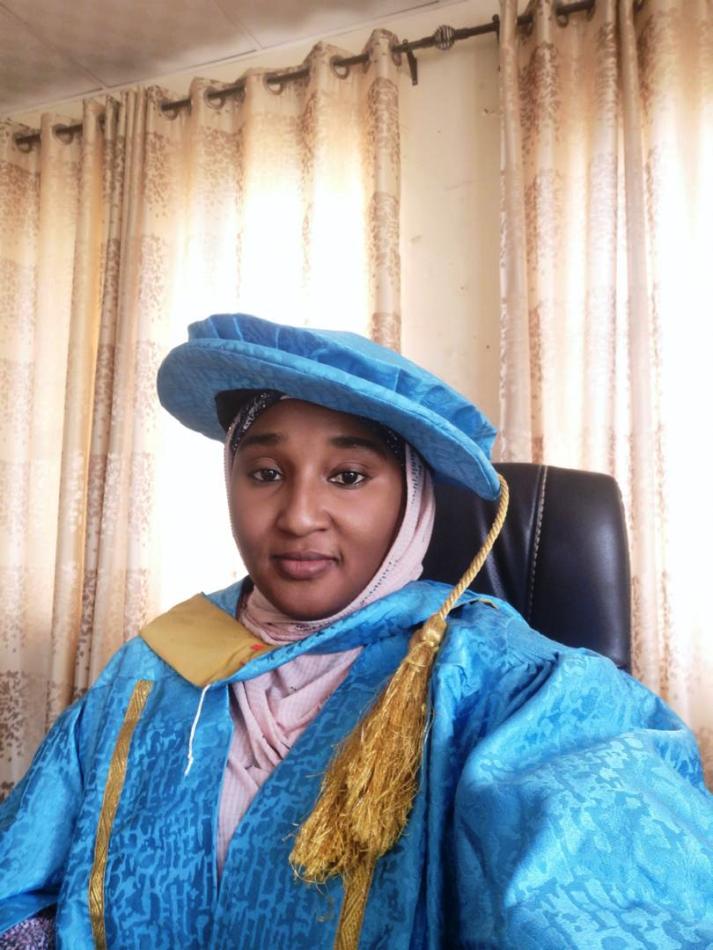
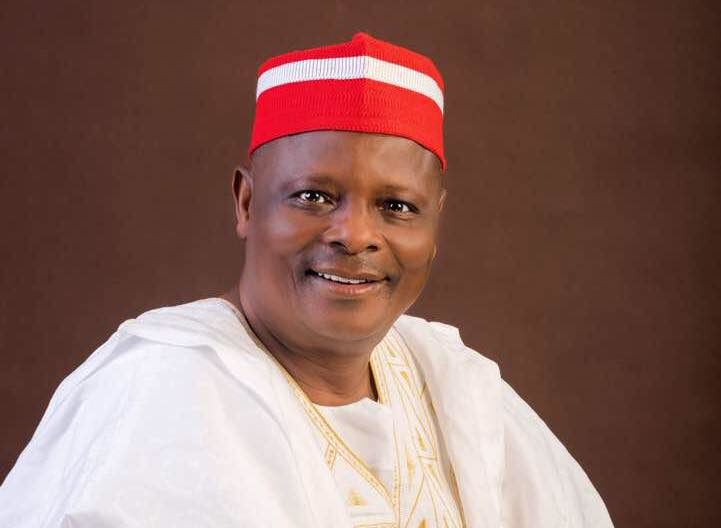
Dr Suwaiba Said Ahmad

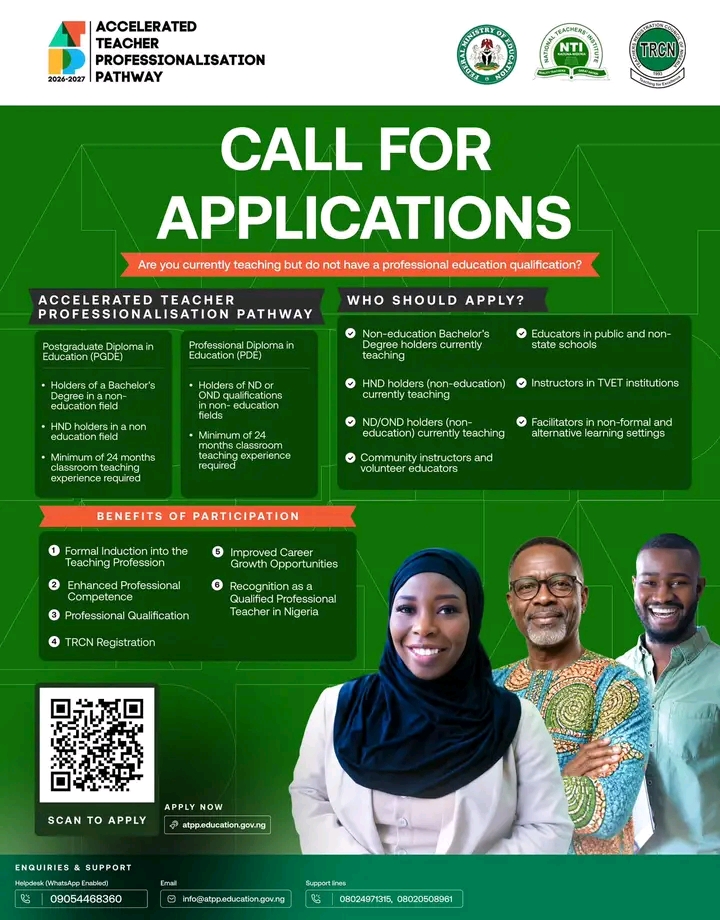
FG Waives ₦200k Tuition As Teachers’ Six Months’ Training Begins

By Ishaka Mohammed

The Federal Government of Nigeria has waived the proposed tuition fees for the six-month professional teaching qualification programme launched in September 2026.

According to the National Teachers’ Institute (NTI), learning will commence in November, after the five-day orientation programme beginning on October 28.

The Daily Reality earlier reported that the Federal Ministry of Education set the cost of the Accelerated Teacher Professionalisation Pathway (ATPP) at ₦200,000. 

However, according to the emails sent to admitted teachers on October 23, the tuition has been waived. 

“Your programme tuition of NGN 200,000 is fully covered by the Federal Government of Nigeria. This sponsorship is part of the Renewed Hope Agenda of His Excellency, President Bola Ahmed Tinubu, GCFR, and its commitment to strengthening the teaching profession and building a skilled, future-ready education workforce for every Nigerian child,” part of message reads.

The six-month training comprises four months of online learning and two months of teaching practice at each teacher’s place of work before eligibility for the TRCN Professional Qualifying Examination (PQE).

Recall that the training is for non-professional teachers with degree or diploma certificates and at least two years of classroom teaching experience.

How Payment Dispute Strains TVET Programme As Centres Grapple with Financial Pressure

By Uzair Adam

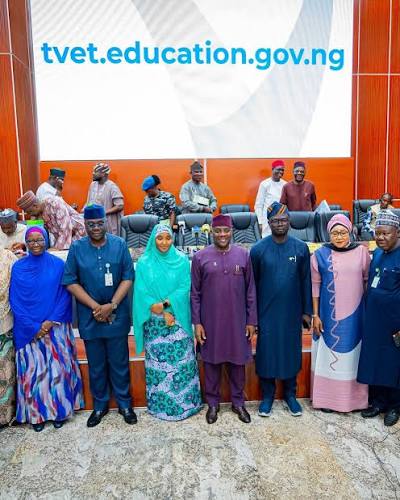
Some training centres implementing the Federal Government’s Technical and Vocational Education and Training (TVET) programme in Kano and Jigawa states are grappling with delayed payments, mounting operational costs and unpaid trainer allowances, raising concerns about the sustainability of the programme.

The Daily Reality gathered that the situation has left some centre operators struggling to meet their financial obligations, while trainers engaged to teach beneficiaries say they have gone for months without receiving their allowances.

There are also concerns over equipment promised to beneficiaries after training, with some graduates saying they completed their programmes without receiving the tools expected to help them establish businesses or secure employment.

The TVET programme is designed to equip unemployed Nigerians and others without sustainable employment with practical skills that can improve their chances of earning a livelihood. Beneficiaries are also expected to receive nationally recognised certificates and, in some cases, equipment packages after completing their training.

With more than 2,300 centres engaged nationwide after passing quality assurance processes, the programme covers more than 36 skills. 

But a growing dispute over payments, particularly the application of a 65 per cent attendance requirement, is now threatening to undermine its implementation in some centres.

Payment Dispute Threatens Training

At the centre of the dispute is a payment condition requiring beneficiaries to attain at least 65 per cent monthly attendance before centres can receive payment.

Participating centre operators argue that the condition conflicts with what they understood to be the payment arrangement in their agreements with the government, which they said was based on the number of verified trainees and agreed programme milestones.

They also object to what they described as the retrospective application of the attendance condition, arguing that it should not be imposed on agreements already entered into.

The operators said they support biometric attendance monitoring and other measures to ensure accountability, but questioned why centres should bear the financial consequences when some trainees fail to attend classes regularly.

One centre owner, who asked to remain anonymous, described the new payment arrangement as an attempt to frustrate training centres.

He stated that, “The new system is to defeat the centres. Instead of the agreement that they would pay centres based on the number of students, now they said no. 

“They did not revise the MoU, and they did not contact anyone. They just decided on their own on that 65 per cent,” he added.

According to him, the government was responsible for recruiting the beneficiaries, leaving centre operators with limited control over whether some of those trainees would remain committed to the programme.

He added, “They recruited the students themselves and they happened to lack interest in the programme.”

The centre owner argued that linking payments to attendance could leave operators financing training for beneficiaries whose recruitment and commitment were largely outside their control.

Centre Owners Count the Cost

Beyond the payment dispute, centre operators said they have continued to incur substantial expenses to keep their facilities running.

They are responsible for paying instructors, maintaining facilities and purchasing training materials while waiting for government payments.

One operator said a centre he knew received only N50,000 last month despite spending more than N300,000 on programme-related expenses.

He said his own centre had invested more than N10 million and expected to receive at least N15 million for the first month, but was paid only N3 million.

The disparity, he argued, makes it increasingly difficult for private operators to sustain the programme.

Another centre owner, Jamil Muhammad, not his real name, said operators could not continue financing government programmes indefinitely from their personal resources.

He stated that, “We cannot continue to finance the programme indefinitely while waiting for payments.”

For trainers, the financial pressure has also become a major concern.

Muhammad Kabir, not his real name, a trainer at one of the centres in Kano, said he had worked for almost three months without receiving his allowance.

He said the delay had affected the morale of trainers who depend on the payments to meet their personal and professional obligations.

Fear of Another Unresolved Government Programme

The payment difficulties have also raised fears among some operators that the TVET programme could eventually suffer the fate of previous government initiatives.

One centre owner said the programme might end without the government settling outstanding financial obligations to participating centres.

He cited N-Power and N-Skills under the previous administration, alleging that unresolved payment issues from those programmes remain a burden between operators and government.

He decried that, “We don’t want TVET to end the way N-Power and N-Skills ended. There are still backlogs with the government from those programmes.”

Our reporter gathered that for operators who have invested heavily in facilities, equipment and personnel, the concern goes beyond delayed payments. 

They fear that prolonged financial uncertainty could force some centres to withdraw from the programme before beneficiaries complete their training.

Centres Seek Government Intervention

Centre operators have appealed to President Bola Ahmed Tinubu and the Minister of Education, Dr Tunji Alausa, to intervene in the payment dispute.

Their demands include settling outstanding payments, reviewing the 65 per cent attendance condition, and deciding that any new payment arrangement should apply prospectively rather than retrospectively.

They also want a mechanism to replace beneficiaries who stop attending classes, withdraw from the programme, or fail to meet attendance requirements.

The operators maintain that such a system would protect public funds while preventing training centres from bearing the cost of beneficiaries who are no longer participating.

The dispute has already prompted some centres to threaten to suspend participation if the payment issues remain unresolved.

The Daily Reality recalls that the operators had previously raised concerns over the financial implications of the attendance-based payment arrangement, warning that continued delays could make it difficult for centres to sustain their operations.

Graduates Left Without Promised Equipment

While centre operators struggle with payments, some beneficiaries are facing a different problem: completing their training without receiving the equipment they were promised.

Kabir Muhammad, another centre operator, alleged that beneficiaries from the first cohort were promised equipment after completing their training, but some graduated months earlier without receiving anything.

He further alleged that beneficiaries in the second cohort were told they would receive equipment before or around the time of their training, but some were already several months into the programme without receiving the promised package.

For beneficiaries, the equipment is not simply an additional benefit. It is expected to provide the means to apply the skills acquired during training and, potentially, begin earning an income.

Aisha Muhammad, not her real name, a graduate of the first cohort, said she completed her training but received no equipment afterwards.

“After we graduated, nothing was given to us,” she said.

The absence of the equipment has raised questions about what happens to beneficiaries after they receive training and certificates if they lack the basic tools needed to put their newly acquired skills into practice.

Financial Burden Extends Beyond Payments

The financial burden on centres extends beyond delayed government disbursements.

Operators are expected to maintain suitable training facilities, engage instructors and provide the materials required for practical sessions. 

Private centres, in particular, also face expenses such as rent, salaries, electricity, fuel and general maintenance.

An advocacy brief reviewed during the investigation also raised concerns about the pressure created by attendance-based payments. 

.

It cited a Kano centre with 40 learners that received N50,000 for July, a figure the document said was insufficient to cover the centre’s operational expenses.

The centre operators argue that payment mechanisms must account for costs already incurred in delivering the training, rather than placing the entire financial burden on providers.

They said the government’s monitoring system should distinguish between centres failing to deliver training and centres that have fulfilled their responsibilities but are affected by beneficiary attendance.

Experts Question Sustainability

Education and skills development experts said the payment problems could affect centres’ ability to retain qualified trainers and maintain the facilities required for effective practical training.

Dr Abdussalam Muhammad Kani, Director, Career Services Centre, Sa’adatu Rimi College of Education, Kumbotso-Kano, said delayed payments could affect facilitator retention and centres’ ability to meet running costs.

He noted that training centres require money for facilitators, maintenance, fuel and instructional materials, stressing that prolonged delays could undermine programme delivery.

Dr Kani called for dedicated funding and a clear budgetary provision for the programme, alongside stronger monitoring, reporting and assessment mechanisms.

Sulaiman Dandago, a lecturer at Aminu Kano College of Islamic and Legal Studies (AKCILS), said the programme’s success depends largely on clear implementation arrangements, adequate facilities, and the availability of qualified instructors.

He said centres must be equipped according to the number of trainees enrolled, while private providers must also cover expenses such as rent and staff salaries.

Dandago warned that failure to pay participating centres and trainers could demoralise those responsible for delivering the programme.

“If the Federal Ministry of Education fails to pay dues, how can the programme attain its objectives?” he asked.

The concerns come at a critical stage for a programme intended to provide practical skills to thousands of Nigerians and improve their chances of becoming economically productive.

For beneficiaries, however, the initiative’s success will not be measured by training alone. It will also depend on whether centres can remain operational, trainers are paid, certificates are delivered and graduates receive the tools promised to help them turn acquired skills into livelihoods.

The payment dispute therefore raises a broader question about the programme’s sustainability: whether the government can maintain a system capable of supporting training centres throughout the process, from recruitment and instruction to certification and post-training assistance.

All efforts to obtain the Federal Ministry of Education’s response to the concerns raised by the centre operators proved abortive as of the time of filing this report.
“Dr” Prefix: The Federal Government Has More Orders to Issue

By Bilyamin Abdulmumin, PhD

No one takes up the title of Dr for head like the famous praise singer Dauda Kahutu Rarara. His predicament began when a university under the aegis of the European-American University conferred on him an honorary doctorate. When the university was later discovered to be a mushroom, given how he had initially taken the title with glamour and pageantry, Rarara received ridicule for his life. 

Perhaps Rarara’s fanfare and grandeur in celebrating the honour stem from mockery over his lack of formal education; as a result, mockers say he doesn’t understand English. Rarara, floating the Dr title would have been a slap to the face of these mockers.

The award of an honorary doctorate was initially given to figures who excel in their field of endeavour and thus render landmark service to their community.  For example, honorary doctorates for Mamman Shata, Ibrahim Babangida, and Aliko Dangote. However, some universities are now believed to resort to awarding the honorary title quid pro quo. Therefore, the recent Federal government order to bar the indiscriminate use of the Dr title is seen as long overdue. 

A doctor is simply referring to someone qualified to teach at the highest level. But a blurred line existed between doctors of medicine and a doctor of philosophy.  Because when “doctor” is mentioned, given our culture of genericising brand names, we subconsciously think of medicine. This is why every toothpaste is a Close-Up, every milk is a Peak, chocolate Milo, seasoning cubes Maggi, instant noodles Indomie, washing detergent Omo or Clean, bleach Hypo, and every antiseptic liquid Dettol. Therefore, after the federal government succeeded to stop abusing Dr title, they had many more disputes to settle. Including clearing this genericization ambiguity. 

Another order that Professor Suwaiba Ahmad has to issue concerns herbal practitioners. The herbalists called themselves doctors, and society also addressed them as such. As traditionalists, perhaps the federal government should order them to stick with the traditional names they are known by:  Mallam (Hausa), Oníṣègùn (Yoruba), Ọnyọ́gwọ́ (Igbo), Oma-oyi (Idoma), Vingir (Tiv), Oboh (Igala), Amawato (Ijaw), Malam (Hausa & Kanuri), and Gandoowo (Fulfulde).

There is also abuse of the title Dr. among Nigerian students. A year-one medical student or a PhD calls themselves a doctor. When do these under-breastfeeding qualify to train others?  The minister needs to issue a warning order.

The most hilarious part is when remedial or matric students are addressed as doctors. Students in this category who intend to study MBBS address themselves as “Dr.” As a matter of urgency, the Honourable Minister should issue a stern warning against this misuse of the professional title “Doctor.”

Titles are held with high regard in Africa. It appears that the longer the titles, the more important the person. In this regard, the former presidents of Gambia and Uganda stand out. Yahya Jameh is addressed as Sheikh Professor Alhaji Dr Yahya Jammeh, Babili Mansa (Conqueror of Rivers” in Mandinka), His Excellency, Master of the River Gambia, Lord of the Animals and Birds of the River Gambia, President of the Republic of the Gambia, Commander-in-Chief of the Armed Forces. 

Idi Amin’s title is much more glamorous: His Excellency, President for Life, Field Marshal Al Hadji Doctor Idi Amin Dada, VC, DSO, MC, Lord of All the Beasts of the Earth and Fishes of the Seas and Conqueror of the British Empire in Africa in General and Uganda in Particular. 

FG Moves Credential Verification Online, Ends Physical Submissions

By Hadiza Abdulkadir

The Federal Ministry of Education has announced the full digitisation of the authentication and evaluation of academic credentials, marking a major shift toward automated public service delivery.

In a press release dated April 15, 2026, the Ministry said the new system is part of ongoing efforts to improve transparency, strengthen data management, and enhance efficiency in the education sector.

Under the new arrangement, all applications for credential authentication and evaluation will be processed exclusively online through the Ministry’s official verification portal. Applicants are required to register, upload necessary documents, and follow the outlined procedures digitally.

The Ministry also directed applicants to request their awarding institutions to send academic transcripts directly from official email addresses to the designated verification channel for processing.

It emphasized that physical visits to its offices for credential verification are no longer necessary, as the entire process has been automated.

According to the statement, the transition is expected to reduce processing time, simplify procedures, and improve the credibility of academic credential verification in Nigeria.

The statement was signed by Boriowo Folasade, Director of Press and Public Relations.

Kwankwaso to receive honorary doctorate as Northwest University holds combined convocation

By Uzair Adam

The Vice-Chancellor of Northwest University, Kano, Professor Muktar Atiku Kurawa, has announced that the institution will host its second combined convocation ceremony from Friday, July 25 to Saturday, July 26, 2025.

Speaking at a press conference on Tuesday, Professor Kurawa described the event as a significant milestone in the university’s development.

He noted that the convocation would cover five academic sessions, from 2018/2019 to 2023/2024, and will include both undergraduate and postgraduate graduands.

The Daily Reality reports that this marks the first convocation for the university’s postgraduate students, following the commencement of its postgraduate programmes in 2021.

Highlighting the uniqueness of this year’s convocation, the Vice-Chancellor revealed that Justice Sidi Bage Muhammad I, a retired Supreme Court Justice, will be installed as the new Chancellor of the university.

As part of the ceremony, the university will confer honorary doctorate degrees on notable Nigerians who have significantly contributed to its growth and progress.

Among them is Engineer Dr. Rabiu Musa Kwankwaso, former governor of Kano State and founder of the university and its sister institution, Aliko Dangote University of Science and Technology, Wudil.

Other recipients of the honorary doctorate include philanthropist Hajiya Maryam Sunusi Dantata, the late Alhaji Aminu Dantata (to be honoured posthumously), Alhaji Aliyu Sa’idu Bebeji, proprietor of Aliko Oil, and Alhaji Adamu Yahya (popularly known as A.Y Maikifi).

“These individuals have supported the university since inception and have been instrumental in promoting its mission. We obtained Senate approval to honour them accordingly,” Professor Kurawa stated.

A pre-convocation lecture is scheduled for Friday, July 25, at the university’s City Campus, to be delivered by Professor Abubakar Adamu Rasheed, former Executive Secretary of the National Universities Commission.

The event will be chaired by the Minister of State for Education, Professor Suwaiba Sa’id Ahmad.Speaking on institutional development, Professor Kurawa disclosed that the university has grown from five to nine faculties, with a tenth — the Faculty of Communication and Media Studies — currently under review by the National Universities Commission (NUC).

Plans are also underway to establish a Faculty of Allied Health Sciences offering programs in Nursing, Medical Laboratory Science, Radiography, Physiotherapy, and related fields.

The Vice-Chancellor also confirmed that the university has reverted to its original name, Northwest University, Kano, following a bill signed by the Governor of Kano State on December 25, 2024.

Describing the institution as “first among equals,” Professor Kurawa emphasized that the university is progressing steadily and remains competitive nationally.

He added that the number of students to be convocated is yet to be finalized but assured that a breakdown by session will be released in due course.

FG unveils committee to boost education infrastructure via PPP

By Hadiza Abdulkadir

In a significant move to overhaul Nigeria’s educational infrastructure, the Federal Government has inaugurated a high-level committee to develop comprehensive Public-Private Partnership (PPP) guidelines aimed at attracting private sector investment into the sector.

The initiative, led by the Honourable Minister of Education, Dr. Maruf Olatunji Alausa CON, seeks to address persistent infrastructural and capacity deficits, particularly in secondary and tertiary institutions.

Speaking at the committee’s inauguration, Dr. Alausa emphasized the need for innovation and collaboration in education financing. “Government cannot do it alone… We must leverage private funding to modernize and sustain our educational system,” he said, noting that while current funding efforts—such as the 2025 education budget and TETFund interventions—are commendable, they remain inadequate.

The newly inaugurated committee, chaired by the Honourable Minister of State for Education (represented by the Director of Special Duties), includes key directors from the ministry, and representatives from the Infrastructure Concession Regulatory Commission (ICRC), Ministry of Housing, and other stakeholders.

Its mandate includes formulating PPP benchmarks, reviewing legal frameworks, clarifying stakeholder roles, establishing performance indicators, designing oversight mechanisms, and recommending penalties for non-compliance. The committee has been given three months to submit its report.

“If we do this right, this document can be a model for other ministries,” Dr. Alausa noted.

Other speakers at the event, including ministry officials and stakeholders, expressed strong support for the initiative and its potential to transform Nigeria’s education landscape.

BUK awards honorary doctorates to A. A. Rano, Col. Sani Bello

By Hadiza Abdulkadir

Bayero University, Kano (BUK) celebrated a significant milestone on February 15, 2025, by conferring honorary Doctorate Degrees on Colonel Sani Bello, former Military Administrator of Kano State, and Alhaji Auwalu Abdullahi Rano, CEO of A. A. Rano Group of Companies, during its 39th Convocation.

The honorary degrees recognised their exceptional contributions to education and socio-economic development in Kano State and Nigeria. 

President Bola Ahmed Tinubu, represented by Minister of State for Education, Professor Suwaiba Ahmad Sa’id, praised the honourees and reaffirmed the government’s commitment to human capital development through education.

BUK’s Vice Chancellor, Professor Sagir Adamu Abbas, highlighted the graduation of 3,400 students, including 295 from the Dangote Business School and 275 PhD graduates, with 176 achieving First Class Honours. 

Pro-Chancellor Dr. Nasiru Yusuf Gawuna encouraged graduands to uphold the university’s reputation, noting BUK’s recent ranking of 43rd in Africa by the 2025 Times Higher Education World University Rankings, inspiring them to strive for excellence and service to humanity.

BUK awards Borodo, others with Emeritus Professorships at 39th convocation

By Hadiza Abdulkadir

Bayero University Kano (BUK) celebrated its 39th Convocation by conferring Emeritus Professorships on Professor Garba Dahuwa Azare, Professor Julius Afolabi Falola, and Professor Musa Borodo for their significant contributions to academia.

The ceremony featured President Bola Ahmed Tinubu, who was represented by Minister of State for Education Professor Suwaiba Ahmad Sa’id. Before her appointment, Sa’id was also a member of the Bayero University, Kano, staff.

Tinubu congratulated the honourees and graduates, emphasised the importance of education in fostering national progress, and assured ongoing support for the education sector to boost global competitiveness.

BUK Vice Chancellor, Professor Sagir Adamu Abbas, praised the awardees as influential figures in shaping the nation and celebrated the graduation of 3,400 students, including 176 who achieved First Class Honours.

Pro-Chancellor Dr. Nasiru Yusuf Gawuna encouraged graduates to become ambassadors of the university, noting BUK’s recent ranking of 43rd among African universities. The conferral of Emeritus Professorships reaffirms BUK’s commitment to honouring excellence in education.

Prof. Suwaiba Sa’id Ahmad: Tribute to the Iron Lady

By Adamu Isah Babura

I want to congratulate Professor Suwaiba Sa’id Ahmad on her promotion to the exalted rank of Professor by the Governing Council of Bayero University, Kano.

Prof. Suwaiba is a pioneer. After 20 years in academia, she became the first female professor from Babura, Jigawa State. She progressed from Graduate Assistant to Professor, holding leadership roles like Head of the Science and Technical Education department and Director of the Gender Studies unit.

Her expertise extends beyond the university. She served as the Provost of Jigawa State College of Education. Currently, she holds the esteemed position of Minister of State for Education, Federal Republic of Nigeria, leveraging her vast experience to shape the country’s education landscape.

Prof. Suwaiba, the current Nigerian Minister of State for Education, is an exemplary academic and a shining star in the field of science education. Her unwavering dedication, unrelenting passion, and uncompromising commitment to excellence have left an indelible mark on the lives of countless students, colleagues, and the academic community at large.

As a renowned scholar, Professor’s contributions to her field of Science Education have been groundbreaking, insightful, and profoundly impactful. Her research has not only advanced our understanding of critical issues in the education sector but has also informed policies, practices, and innovation.

Prof. Suwaiba, a gifted teacher and mentor, inspires generations of students to pursue excellence and cultivate a love for learning. Her rare ability to connect with, listen to, and guide students nurtures their growth and earns her deep admiration and gratitude from all who learn from her.

Throughout her illustrious career at Bayero University, Kano, and outside, Professor Suwaiba has demonstrated remarkable leadership. She collaborates with colleagues, institutions, and communities to advance the cause of education, promote social justice, and foster a culture of inclusivity, equity, and excellence.

As we celebrate Prof. Suwaiba’s achievements at this incredible milestone, we honour her remarkable accomplishments,character, values, and unwavering commitment to making a positive difference in education. She is a true treasure, a beacon of hope, and an inspiration.

Adamu Isah Babura wrote from Bayero University, Kano, via adamubabura@gmail.com.

Senate confirms Yusuf Ata, Suwaiba Ahmad, others as ministers

By Uzair Adam 

The Senate has approved the nomination of several new ministers following a rigorous screening process. 

Among those confirmed are Yusuf Abdullahi Ata as Minister of State for Housing and Bianca Odumegwu-Ojukwu as Minister of State for Foreign Affairs.

Other appointees include Dr. Jumoke Oduwole as Minister of Industry, Trade, and Development, Dr. Nentawe Yilwatda as Minister of Humanitarian Affairs and Poverty Reduction, and Muhammadu Dingyadi as Minister of Labour and Employment. 

Idi Muktar Maiha was also confirmed as Minister of Livestock Development, and Dr Suwaiba Said Ahmad was confirmed as Minister of State for Education.

The Senate dedicated approximately five hours to screen and confirm the nominees following a motion by Senate Leader Opeyemi Bamidele to suspend certain procedural rules. 

This suspension allowed the Special Adviser to the President on Senate matters, Basheer Lado, to introduce the nominees during the plenary session.

Last week, Senate President Godswill Akpabio read out President Bola Tinubu’s letter listing the nominees for the ministerial positions.