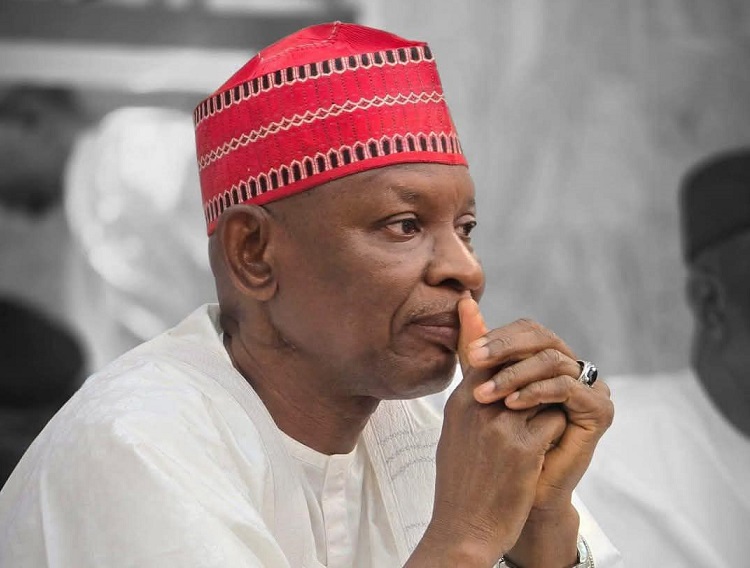
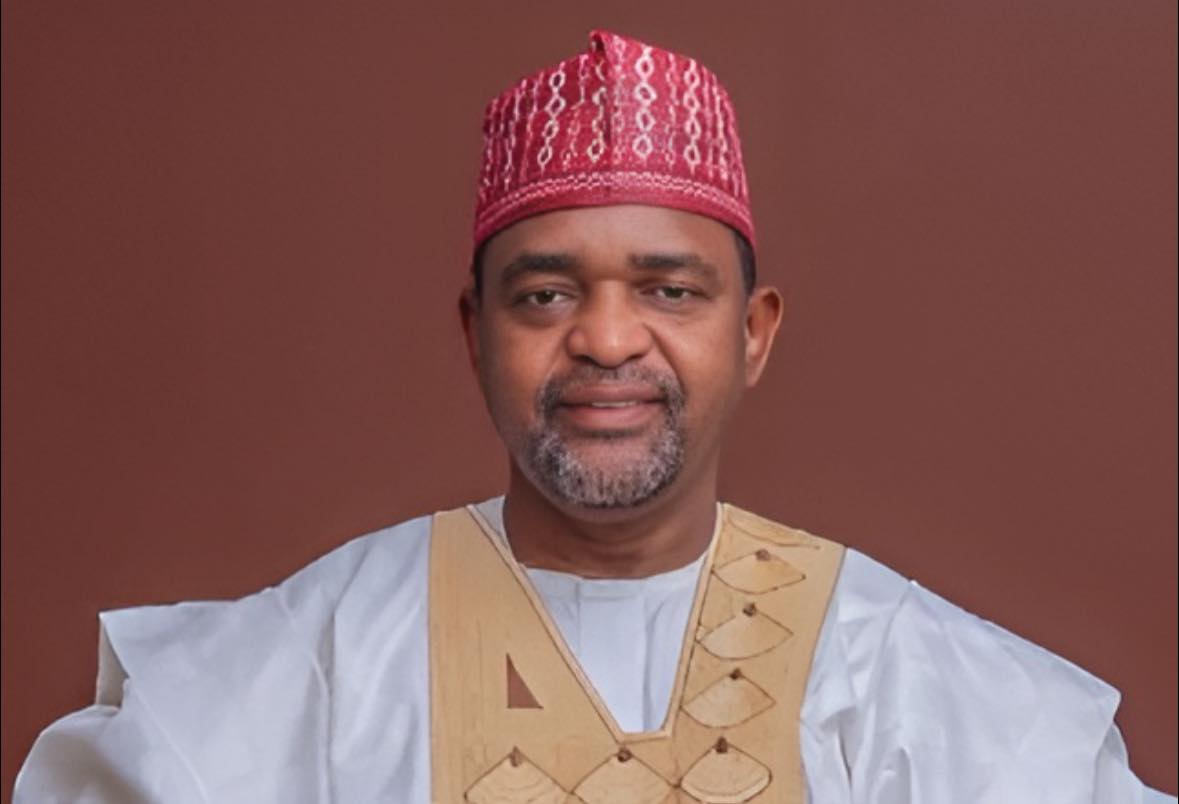
Dr. Rabi’u Musa Kwankwaso

Kano’s Red Pants Controversy and the Cost of Political Spectacle

By Abdulhamid Abdullahi Aliyu

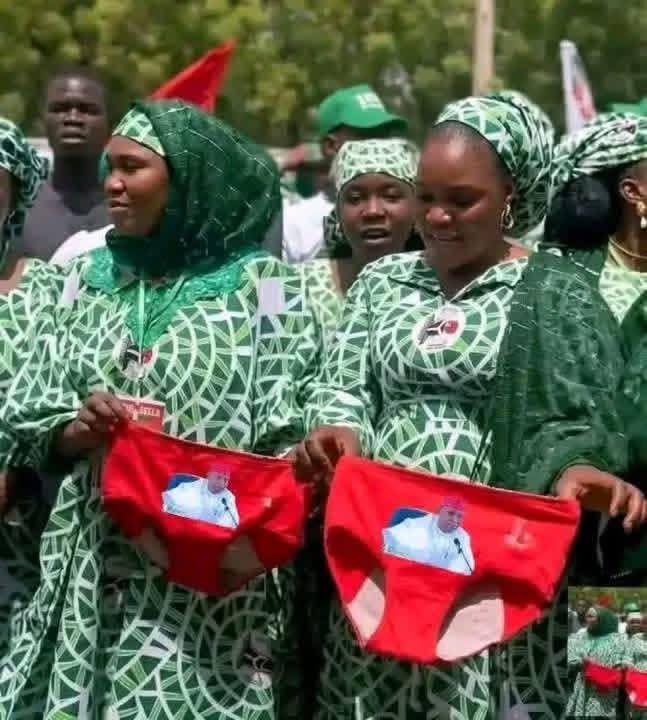
Politics often produces strange moments, but every now and then a controversy emerges that says more about a society than it first appears. The recent uproar in Kano over viral images of women displaying red underwear allegedly linked to supporters of the state government is one such moment. What began as social media comedy quickly evolved into a serious conversation about political culture, digital misinformation, public dignity and the growing danger of supporter excesses in Nigeria’s democracy.

At the centre of the controversy are competing narratives. One version claims the act was staged by enthusiastic supporters seeking to mock the red symbolism associated with Senator Rabiu Musa Kwankwaso and the Kwankwasiyya movement. Another insists no government official procured or distributed such items, and that the women involved purchased them independently as a form of protest. A third line of argument points to manipulated or AI-generated images, especially those showing Governor Abba Kabir Yusuf’s photograph printed on the underwear.

Whichever version one believes, the broader lesson lies elsewhere. In the age of instant virality, perception often outruns fact. Once provocative visuals hit the internet, they begin to live independent lives. By the time clarifications arrive, opinions are already formed, jokes already shared, and reputations already bruised. That is the brutal logic of modern information warfare.

This is why the Kano episode should not be dismissed as mere comedy. It highlights how politics in Nigeria is increasingly shifting from policy contests to symbolic warfare. Rather than debates over education, healthcare, water supply, youth unemployment or urban planning, public attention is hijacked by spectacles designed to humiliate opponents and energise online loyalists. The result is a shrinking space for serious governance discourse.

Kano is especially vulnerable to this kind of politics because of its unique political history. The state is one of Nigeria’s most politically conscious arenas, where colours, slogans, movements and personalities carry deep emotional weight. The red cap is not merely fashion; it represents a political identity. Any attempt to ridicule that identity will naturally provoke backlash. Supporters may consider such mockery clever mobilisation, but politics rooted in humiliation often boomerangs.

There is also an uncomfortable gender dimension to the saga. Across Nigeria, women are too often reduced to props in political performances—assembled for rallies, tokenised for optics, or used to dramatise partisan messages. Whether voluntary or orchestrated, any political theatre that places women at the centre of ridicule or sensationalism raises ethical questions. Political communication should elevate citizens, not use them as instruments of mockery.

For the Kano State Government, the greater challenge may not be the incident itself but how it is managed. Governments today do not only govern roads and budgets; they govern narratives. Silence can sometimes be wise, but in a digital environment, prolonged silence can also create a vacuum into which falsehood rushes. A vacuum of credible information often becomes fertile ground for stereotypes.

That is why communication experts increasingly advise a strategy of rapid clarification and narrative replacement. Rather than angrily chasing every rumour, a government can calmly provide facts, support independent fact-checking, and then redirect public attention to measurable achievements. If the public conversation is trapped on underwear for days, then governance has already lost valuable oxygen.

There is wisdom in the suggestion that the state should flood the public space with verifiable stories of schools rehabilitated, hospitals improved, roads completed, youth programmes launched, and social interventions delivered. This is not propaganda when the facts are genuine. It is simply the discipline of agenda-setting: ensuring governance performance is louder than viral nonsense.

Equally important is internal message control among supporters. Many governments underestimate the damage their unofficial defenders can cause. Overzealous loyalists often believe they are helping, while in reality, they create liabilities. Mockery, coded insults and reckless satire may thrill partisan circles, but they alienate undecided citizens and embarrass the leaders they claim to defend.

This is not a Kano problem alone. Across Nigeria, politicians increasingly face a paradox: their strongest online supporters can also become their biggest reputational risk. In a hyperconnected society, one foolish stunt can overshadow months of policy work. That reality demands more disciplined political engagement from parties and movements nationwide.

The final lesson is simple. Leadership should be measured by competence, compassion and delivery—not by who wins the latest viral skirmish. Kano deserves national attention for industrial revival, educational progress, urban reform and social development, not for underwear controversies. If this episode prompts a rethink of political conduct, media literacy and supporter behaviour, then an embarrassing moment may yet produce a useful correction.

Democracy is serious business. When politics becomes a permanent performance, everyone eventually loses.

Abdulhamid Abdullahi Aliyu is a journalist and syndicate writer based in Abuja.

Beyond Political Party Affiliation 

By Mohammed Usman (Noble-pen)

Let’s talk beyond political party affiliation. Let’s tell ourselves the brutal truth.

Believing that all these people under the shade of one political party, ADC, and many more to move into it, are after the interest of the poor, the masses, instead of themselves, is the gravest mistake one will ever make. 

All these people have their own vested and individual interests, which spurred them to cross-carpet into the party, which seems to them promising, full of potential, and offering vistas for achieving those interests. And you know what? The poor, the masses, are the last thing they think of. Let alone the country’s future. 

Let me give you a practical, relatable elaboration on this by picking the few and the major points among them. Maybe, that way, you will understand what I am trying to say here.

1. Atiku Abubakar 

This person has been investing heavily and persistently in his ambition to become the country’s president. He never reneged since he started. He had been spending billions of naira on it. Therefore, do you sensibly think working for the poor, the masses, will be his top priority when he attains the power he has been so adamantly vying for, instead of looking for a return on his financial and material investment for years before? Don’t forget, he is a business-oriented person. And you should know what I mean. 

2. Nasir El-Rufai 

This person was once one of the cocks of the work of the current brutal government under the auspices of the APC. They entrenched it with their sweat and blood. And he never felt sorry for the poor suffering under the coarse, clueless policies of the government until the government, headed by Tinibu, betrayed him and denied him the opportunity he was dying for: a ministerial post and a place at the driving force of the government. That marked the genesis of his enmity towards the government and turned him into one of its most blunt and fierce foes. Hence, his decision to move to SDP, which refused him, then to ADC. His mission is purely to take vengeance on the government which made him an outcast rather than to save the poor masses from the bondage and shackles of poverty and insecurity, which they have been grappling with for donkey’s years.

3. Rabiu Musa Kwankwaso 

Just like El-Rufai, Kwankwaso is being driven by the force of spite and vendetta over the betrayal he suffered at the hands of his once political apprentice accomplice, Abba Gida Gida. His mission is driven solely by the quest to uproot the government of Abba Gida Gida, rather than by the welfare of the people of Kano State. However, he is a politician with very, very good antecedents. No one can deny that. But he is not into ADC for the masses. No. 

4. Nasiru Gawuna 

This was once an accomplice to the current merciless APC government, who fought a political battle—over his inspiration for the Kano state gubernatorial office—with Kwankwaso and his boy, Abba Gida Gida, but lost to them. He was once their worst enemy. But today, he and the Abba’s boss kwankwaso have leagued up as sweet friends in another political party (ADC) each with different and individual vested interest: kwankwaso to dislodge the assumed betraying government of Abba Gida Gida as well as to occupy an influencial office in the presidency; while Gawuna, to use it as an opportunity to become the kano state governor which he failed to in his previous opposition party APC. 

4. Peter Obi 

This person has the worst political andecedent, being the former governor of Anambra State and has—allegedly— a strong affiliation to IPOB, being the terrorist and outlawed political group in Nigeria, which had been perennially insurgent and rebellious to successive Nigerian governments with their impossible mission of dividing the country and taking their own share, which they aimed to call BIAFRA. So Peter Obi might clearly have this scheme hidden in his mind to, when he tapped the supreme power —presidency—become instrumental for the IPOB to finally make it possible to see the last light —they have been dying and killing people for—at the end of the tunnel, and reach their daydreamed-promised land. Polarising the country is the plot of his horizon. 

Likewise, if you pay very close attention to the other people who will be cross-carpeting into the party, ADC. You will notice that they were once fundamental figures in the previous governments who failed the masses and never took concrete, robust action to save their lives and property. Let alone improving their welfare and standard of living. Tell me, when did they change to be trusted with our mandates and entrusted with our lives once again, simply because they moved into another political party? The same applied to the others who are beneficiaries of the current APC government and are now quitting it for the shining party of the day, ADC.

Let me wrap up by telling you the secret of these Nigerian politicians. 

The fact is, they are always the same set of people.  They only switch color and identity by jumping from one political party to another— using the very public funds they looted while occupying the public offices they were once either elected or appointed into — with romanticized manifestations to sway the minds of the poor masses and pave a wider way for themselves to achieving their vested and selfish interest; increasingly impoverish the already poor masses, steal their future and the future of their children and grandchildren; while enriching themselves, their children and grandchildren, making their lives and future always the brighter.

And mind you, they switch political parties based on their analysis of which political party the poor masses lean their attention and hope towards. This means that it’s always the previous, unchanging enemies the masses mistake for their beloved ones and the beacon of hope, revolution, and transformation. 

Therefore, until the poor citizens of Nigeria understand these Nigerian politicians’ Machiavellian formula and devise a way to dismantle it—instead of continuing with their primitive thinking that their problems lie with one political party and that the solutions are in another—they shall continue to live in bondage, suffering, humiliation and destitution.

Mohammed Usman (Noble-pen) is the Author Of “Butterfly’s Wings.”

Is it really Kano First or Politics First? 

By Dr Aminu Tukur Adam

The recent political drama in Kano State, which began as a rumour before metamorphosing into a full-blown political battle, is interesting: how loyalty is being reinterpreted, how personal interest is being transformed into the people’s mandate, and how politics gradually takes over governance. 

It’s now becoming crystal clear to everyone that the Kano State government is not only static but also backtracking. At a critical point of state emergency and national concern, our dear state is being placed on hold. 

To begin with, APC was initially viewed as a disaster by Engr. Rabiu Musa Kwankwaso, Kano State governor and all their supporters; many of the supporters sacrificed their lives to rescue the state from the APC, a party that was hated for its immense corruption, extortion and oppression. 

As big as Kano State is, with its about 20 million population and an over 1 trillion naira budget, it will surprise you to know that the state’s executive council members are currently redundant; the council held only one executive session in the span of 90 days! The previous buzzworthy council is now scheduled for the end of recess. 

That probably explains why the only visible function of this government, road construction, is also neglected; no one is there to approve new projects or supervise the ongoing ones. 

The most unfortunate event was the visit of the Turkish ambassador to Nigeria to the Kano State government house, with the aim of consolidating multimillion-dollar projects, but astonishingly, only the Chief of Staff and two commissioners received a figure like this! For anyone familiar with the Turkish Cooperation and Coordination Agency (TIKA), it must have been a nightmare. 

TIKA isn’t like the usual agencies you see; it’s an international technical assistance agency. This same agency renovated the Kano capital school without a penny from the state government. 

We’re also talking about the Turkish Trading Firm, Direkçi, which has invested over $22 million in Nigerian states, with Kano as a major beneficiary.

The visit was intended to create an opportunity to secure scholarships for Kano state indigenes, to bring the Turkish humanitarian foundation IDDEF to boost humanitarian services in the state, and to commence visa services at the Turkish consulate in the state.

Yet, when that esteemed Ambassador walked into the Government House, he was neither received by the Governor, nor his deputy, nor the SSG.

While the governor plays an absentee landlordism, some villages in the state were burning and many lives were also lost; the recent unfortunate incident in the Katai and Fauda communities in Wudil local government generated widespread reactions, a police officer lost his life and villages were set ablaze; however, no formal press release, no condemnation and no any form of assurance from the state government. 

Astoundingly, when the governor was too busy to hold a council meeting, overwhelmed to meet the Turkish ambassador to Nigeria and also overloaded with responsibilities to comment on the Wudil incident, we saw his face in the convoy of Yilwatda, the APC national chairman, courting the governor of Bauchi state, Bala Muhammad, into APC. 

To add more salt to the injury, when the governor was returning to Kano, the local government chairmen and some of the governor’s aides orchestrated a drama, where a rented crowd were paid to welcome the governor from his political excursion. You may be surprised as to why the welcoming? Was he not just coming back from Abuja? Was the journey not a political journey for the APC’s convention? Is there any significance to this journey in the life of the innocent Kano people? 

This is the Kano first agenda they’re selling. It’s not about you or the state; it’s simply an idea to sell Bola Tinubu and his party.

Kano Governor Sacks Commissioner for Investment, Shehu Wada Sagagi, Orders Immediate Handover

By Ibrahim Yunusa 

Governor Abba Kabir Yusuf has relieved Alhaji Shehu Wada Sagagi of his duties as Kano State Commissioner for Investment, Commerce and Industry with immediate effect.

 The decision was announced in a statement issued on Thursday by the governor’s spokesperson, Sunusi Bature Dawakin Tofa.

According to the statement, Sagagi has been directed to hand over the ministry’s affairs to the Director of Commerce without delay.

 The move forms part of what the government described as an ongoing strategic realignment aimed at strengthening administrative efficiency and repositioning the state for sustainable growth.

Governor Yusuf expressed appreciation for Sagagi’s contributions during his tenure, particularly in the areas of politics, religion, and support for small and medium enterprises. 

He wished the former commissioner success in his future endeavours and reaffirmed his administration’s commitment to effective service delivery and good governance in Kano State.

This development comes amid ongoing suspicions that some key figures are undermining and backbiting the governor following his split from his former political godfather, Rabi’u Musa Kwankwaso.

Reports also indicate growing confusion within the cabinet and among several appointees in government parastatals, as uncertainty persists over loyalties, specifically on who remains aligned with the governor and who is still loyal to his former mentor.

Abba Yusuf, Kwankwaso and the politics of mandate

By Abdulhamid Abdullahi Aliyu

In Kano today, politics is no longer whispered in corridors; it is argued loudly in markets, mosques and on social media timelines. Since Governor Abba Kabir Yusuf’s reported decision to part ways with the NNPP, the city has become a theatre of competing loyalties, sharp sarcasm and deeper constitutional questions. Supporters have reduced complex political choices into street labels—Abba’s camp being teased as ’yan a ci dadi lafiya, while the Kwankwasiyya faithful wear wuya ba ta kisa as a badge of honour. Beneath the banter, however, lies a serious national issue: who truly owns a political mandate?

Governor Abba Yusuf did not emerge from a vacuum. His ascent to the Kano Government House was inseparable from the Kwankwasiyya political machinery, a movement painstakingly built by Senator Rabiu Musa Kwankwaso over two decades. From red caps to ideological messaging, the movement transcended party platforms and became a political identity. In the 2023 elections, many voters did not merely vote for a party; they voted for Kwankwasiyya as a symbol of continuity, defiance and populist appeal.

Yet, Abba Yusuf is no ceremonial beneficiary. He contested, won, survived legal battles and now governs with all the constitutional powers vested in an elected governor. His mandate, in law, is personal. Once sworn in, no political godfather—however influential—can legally issue directives from outside the Government House. This is where the tension lies: the clash between moral ownership of political capital and constitutional authority of office.

Those derisively tagged ’yan aci dadi lafiya by opponents argue that governance is about pragmatism, access to power and delivering dividends to the people. From their perspective, a sitting governor must build alliances beyond sentiment, protect his administration and ensure stability. Politics, they insist, is not a monastic vow of hardship but a strategic exercise in survival and results.

On the other side stand the wuya bata ƙi sa faithful—Kwankwasiyya loyalists who believe political struggle must be endured to preserve ideology. To them, Abba Yusuf’s move is not strategy but betrayal. They see it as an attempt to reap the fruits of a movement while discarding its architect. In their view, suffering with the movement, even outside power, is preferable to comfort without loyalty.

This divide exposes a recurring Nigerian dilemma: the uneasy relationship between political movements and the individuals they propel into office. From Awolowo’s disciples to Aregbesola’s rupture with Tinubu, Nigerian politics is littered with fallouts between founders and beneficiaries. Kano’s current drama is simply the latest chapter.

Kwankwaso’s influence in Kano politics is undeniable. Beyond elections, he represents a moral compass for millions who see him as a symbol of resistance against elite dominance. His supporters’ anger is therefore not merely partisan; it is emotional and ideological. To them, Abba Yusuf’s political identity was inseparable from Kwankwaso’s shadow.

However, governance demands autonomy. A governor who appears perpetually tethered to an external authority risks administrative paralysis and legitimacy questions. Abba Yusuf’s defenders argue that Kano cannot be governed from outside its constitutional structures. They insist that the electorate voted not just for Kwankwaso’s endorsement but for Abba Yusuf’s promise to lead.

The real casualty in this contest, unfortunately, risks being governance itself. When political energy is consumed by loyalty tests and factional supremacy, policy focus suffers. Kano’s challenges—urban congestion, youth unemployment, educational deficits, and security concerns—require a governor fully immersed in administration, not in constant political firefighting.

There is also the electoral implication. While Kwankwasiyya remains a formidable grassroots force, incumbency is a powerful weapon. State resources, visibility, and administrative control can quickly reshape political narratives. The assumption that loyalty automatically translates into electoral dominance may underestimate the pragmatism of Nigerian voters, especially when power dynamics shift.

Yet, Abba Yusuf’s path is equally fraught. Detaching from a movement that delivered his victory carries political costs. Kano’s electorate is emotionally invested, and symbols matter. If his administration fails to convincingly outperform expectations, the narrative of ingratitude could harden into electoral punishment.

Ultimately, this is not just a Kano story; it is a Nigerian one. It forces a national reflection on whether mandates belong to parties, movements, godfathers or the individuals elected by the people. The Constitution is clear, but politics rarely is.

Perhaps the wisest outcome lies not in triumph or humiliation but in recalibration. Political movements must learn to institutionalise beyond personalities, while elected officials must acknowledge the moral debts that brought them to power. Neither absolute loyalty nor total independence offers a sustainable path.

As the dust settles, the sarcasm of ’yan a ci dadi lafiya and wuya ba ta kisa may fade, but the questions will linger. In Nigeria’s democracy, mandate is both a legal instrument and a moral contract. Kano’s unfolding drama reminds us that ignoring either side of that equation comes at a cost—sometimes higher than any political suffering.

Abdulhamid Abdullahi Aliyu is a journalist and syndicate writer based in Abuja

On ‘Makiyan Kano’ slogan

By Umar Sani Adamu (Kawun Baba)

The defection of Kano State Governor Abba Kabir Yusuf from the New Nigeria Peoples Party, NNPP, to the All Progressives Congress, APC, has exposed more than a political shift. It has laid bare the fragility of slogans elevated above reason and the contradictions within Kano’s dominant political movement.

For years, the phrase “Mayiyan Kano” was used by followers of Senator Rabiu Musa Kwankwaso whenever events did not go their way. It served as a blanket response to court rulings, electoral outcomes, and opposing views. What began as a casual expression gradually hardened into a political shield used to dismiss criticism rather than engage it.

Ironically, Governor Yusuf was once celebrated as the ultimate proof of loyalty to the Kwankwasiyya structure. A report by The Daily Reality during the early phase of his administration went to remarkable lengths to present him as a devoted disciple of his mentor and political godfather. His actions, his rhetoric, and even his body language were framed as evidence of unquestionable allegiance. At the time, loyalty was portrayed as a virtue, and Yusuf was held up as its finest example.

That narrative has now collapsed under the weight of political reality. Following his defection, the same voices that once applauded his loyalty have rushed to brand him disloyal. The sudden moral outrage is striking not because politicians change camps but because of the selective memory at play. If loyalty were absolute, then it should have been defined beyond convenience. If it were conditional, then honesty demands admitting that politics is transactional, not sentimental.

The revival of Makiyan Kano, that’s “The enemy of Kano” or “One who works against the interests of Kano”. In this context reveals its emptiness. Rather than interrogate why a sitting governor would abandon the platform that brought him to power, some loyalists have retreated to slogans. It is easier to chant than to reflect. Easier to accuse than to accept that political authority ultimately rests with individuals, not movements.

What this moment exposes is a deeper problem within Kano politics: the attempt to freeze loyalty in time while ignoring changing realities. Governance is not sustained by personal allegiance to a mentor but by navigating power structures, resources, and national relevance. To pretend otherwise is to confuse political romance with political responsibility.

Supporters of the governor argue that his decision was informed by pragmatism and the pursuit of Kano’s broader interests. Whether one agrees or not, it is a position that deserves debate, not dismissal. Slogans do not govern states. Decisions do.

Makiyan Kano has returned to public discourse, but its meaning has shifted. It no longer signals confidence. It now sounds like frustration. In the end, movements that rely on chants instead of ideas often struggle when reality refuses to cooperate. Kano politics appears to be learning that lesson the hard way.

Umar Sani Adamu (Kawun Baba) wrote via umarhashidu1994@gmail.com.

Kwankwaso and the cost of fighting godsons 

By  Ibrahiym A. El-Caleel

Senator Rabiu Musa Kwankwaso should be competing on the national stage with contemporaries such as Senator Bola Tinubu, Alhaji Atiku Abubakar, and other Class of 1999 political actors. By pedigree, experience, and longevity, Kwankwaso has clearly outgrown Kano politics, and he does not need to prove it again in 2027. However, he appears stuck in state-level politics. 

Kwankwaso is at odds with the two successive Kano governors after him, both of whom are his protégés: Dr Abdullahi Ganduje and the incumbent, Engr Abba Kabir Yusuf. He says they have “betrayed” him. There was a show of electoral force at his residence in Kano this afternoon. A large number of people trooped into his Miller Road residence in what he later called a “solidarity visit”.  

These developments indicate that Senator Kwankwaso is once again positioning himself for state-level dominance rather than advancing a national ambition in 2027. Ideally, Kwankwaso should defeat Governor Abba through a candidate he anoints for #KanoDecides2027. But a deeper question remains: should the 2027 ambition of a politician of Kwankwaso’s stature be focused on unseating a “betraying” godson at the state level, when Kwankwaso’s contemporaries have either honourably retired from politics or are positioning themselves for the presidency? 

Who exactly would Kwankwaso replace Abba with, and what assurance does he have that a newly installed godson would not eventually “betray” him, just as Ganduje and Abba did? At this point, there is little reason to believe the outcome would be different. The current godsons around him are likely to use his influence to rise and then assert their independence once in office. There is no clear indication that they would be more submissive than their two elder political siblings, Ganduje and Abba. How do you keep doing the same thing repeatedly while expecting a different result? 

There is also a genuine political risk. What if Abba Yusuf, like Ganduje before him, survives the onslaught and secures a second term? This is not an endorsement of electoral malpractice, but a recognition of Nigeria’s political realities. Kano’s 2019 gubernatorial election demonstrated how powerful interests can intervene decisively; Dr Ganduje ultimately retained office despite glaring indications that he lost at the polls.

If a similar outcome were to occur in 2027 and Governor Yusuf were to proceed to a second tenure, would that not constitute a second public humiliation for the godfather? What explanation would suffice then? That yet another protégé has matured enough to build political alliances strong enough to neutralise Kwankwaso’s influence? At that point, the narrative shifts decisively: from betrayed mentor to diminishing power broker.

On the other hand, if Senator Kwankwaso succeeds in unseating Governor Yusuf and installing another loyalist, what exactly would he be celebrating at the end of the day? That Kwankwasiyya has simply replaced Kwankwasiyya? That a godfather has prevailed over his own godson? Such victories may satisfy the logic of control, but they do little to expand political influence, strengthen institutions, or advance democratic culture. At best, they amount to an internal power rotation within the same political family, offering no clear gain to the broader society.

Ultimately, this debate goes beyond personalities. Do we really need a political model anchored on godfathers, covenants, and lifelong loyalty to patrons? Has Buhari’s repeated endorsement of anointed candidates meaningfully improved governance or political culture in the North? Has Tinubu’s entrenched godfatherism in the South West translated into measurable social or institutional progress? Until we seriously examine the long-term costs of political baptism, loyalty tests, and patronage politics, it remains difficult to argue that godfatherism is the most viable model for a modern democratic society.

 Ibrahiym A. El-Caleel wrote via caleel2009@gmail.com.

Groups call on Kwankwaso to join ADC

By Ibrahim Yunusa

Amid tensions in the Kwankwasiyya movement and Kano NNPP, fueled by speculation that Governor Abba Kabir Yusuf might defect to APC, the ADC Youth Mandate, with ADC Waziran Waziri, urged Senator Rabi’u Musa Kwankwaso to join other national stakeholders under ADC to help rescue Nigeria from worsening socio-economic and security crises under the APC-led government.

The coalition pointed to worsening economic hardship, insecurity, and governance failures, expressing fears over the ruling party’s push toward a one-party state. They emphasised the need for a united front of progressive leaders to offer Nigerians a credible and people-oriented alternative.

Speaking on behalf of both groups, Engr. Ammar Hamisu Dandago, the Coordinator of ADC Youth Mandate, stressed the political value of Kwankwaso’s experience and mass grassroots appeal. He expressed confidence that Kwankwaso, in collaboration with other prominent figures like Atiku Abubakar, Peter Obi, Rotimi Amaechi, and Nasir El-Rufai, could form a formidable force capable of unseating President Bola Tinubu.

The statement concluded with a renewed commitment to youth mobilisation, national unity, and support for genuine efforts to provide competent leadership and restore hope across the country.

Between Senator Sumaila and Senator Kwankwaso

By Kamal  Alkasim

When Kawu Sumaila decamped from NNPP to APC, it showed that the issue isn’t about party loyalty but about choosing the best leader. Blind loyalty can hinder good governance in Nigerian politics. What matters most is effective representation, not party allegiance. Let’s prioritise good leadership over partisan loyalty and choose the best candidate for the benefit of Kano South.

When choosing between Rabiu Musa Kwankwaso, a prominent figure in Kano politics known for influencing political dynamics, and Kawu Sumaila, the decision leans towards Kawu due to his genuine service to the people of Kano South. Regardless of the political party Kawu affiliates with—whether APC, PDP, or ADC—his actions demonstrate a commitment to his constituents. 

People recognise Kawu’s efforts and intentions, making party affiliations secondary to his impact. Let’s prioritise choosing the best candidate based on their service and dedication, rather than party loyalty.”

Kwankwaso’s impact will be remembered. Let’s choose leaders based on merit, not loyalty to individuals. In politics, those who deliver tangible benefits to the people should be preferred over those who seek dominance. 

After 16 years of Kabiru Gaya’s tenure, which saw the Kano senatorial district abandoned for personal interests, it’s time for a change. Kawu Sumaila has emerged as a rescuer for our region, and let’s give him the support he deserves.

Let’s choose a leader who creates jobs, empowers youth, provides scholarships, and advocates for our interests in the Nigerian Senate. Prioritise your senatorial district’s needs and be vigilant. A leader who brings in multi-million dollar projects, generates employment opportunities for youth, and develops feeder roads in our communities deserves our support. 

Both Kwankwaso and Kawu Sumaila have legacies that will be remembered, but let’s focus on the one who delivers tangible benefits to our region.

Kamal Alkasim wrote via kamalalkasim17@gmail.com.

Kwankwaso to receive honorary doctorate as Northwest University holds combined convocation

By Uzair Adam

The Vice-Chancellor of Northwest University, Kano, Professor Muktar Atiku Kurawa, has announced that the institution will host its second combined convocation ceremony from Friday, July 25 to Saturday, July 26, 2025.

Speaking at a press conference on Tuesday, Professor Kurawa described the event as a significant milestone in the university’s development.

He noted that the convocation would cover five academic sessions, from 2018/2019 to 2023/2024, and will include both undergraduate and postgraduate graduands.

The Daily Reality reports that this marks the first convocation for the university’s postgraduate students, following the commencement of its postgraduate programmes in 2021.

Highlighting the uniqueness of this year’s convocation, the Vice-Chancellor revealed that Justice Sidi Bage Muhammad I, a retired Supreme Court Justice, will be installed as the new Chancellor of the university.

As part of the ceremony, the university will confer honorary doctorate degrees on notable Nigerians who have significantly contributed to its growth and progress.

Among them is Engineer Dr. Rabiu Musa Kwankwaso, former governor of Kano State and founder of the university and its sister institution, Aliko Dangote University of Science and Technology, Wudil.

Other recipients of the honorary doctorate include philanthropist Hajiya Maryam Sunusi Dantata, the late Alhaji Aminu Dantata (to be honoured posthumously), Alhaji Aliyu Sa’idu Bebeji, proprietor of Aliko Oil, and Alhaji Adamu Yahya (popularly known as A.Y Maikifi).

“These individuals have supported the university since inception and have been instrumental in promoting its mission. We obtained Senate approval to honour them accordingly,” Professor Kurawa stated.

A pre-convocation lecture is scheduled for Friday, July 25, at the university’s City Campus, to be delivered by Professor Abubakar Adamu Rasheed, former Executive Secretary of the National Universities Commission.

The event will be chaired by the Minister of State for Education, Professor Suwaiba Sa’id Ahmad.Speaking on institutional development, Professor Kurawa disclosed that the university has grown from five to nine faculties, with a tenth — the Faculty of Communication and Media Studies — currently under review by the National Universities Commission (NUC).

Plans are also underway to establish a Faculty of Allied Health Sciences offering programs in Nursing, Medical Laboratory Science, Radiography, Physiotherapy, and related fields.

The Vice-Chancellor also confirmed that the university has reverted to its original name, Northwest University, Kano, following a bill signed by the Governor of Kano State on December 25, 2024.

Describing the institution as “first among equals,” Professor Kurawa emphasized that the university is progressing steadily and remains competitive nationally.

He added that the number of students to be convocated is yet to be finalized but assured that a breakdown by session will be released in due course.