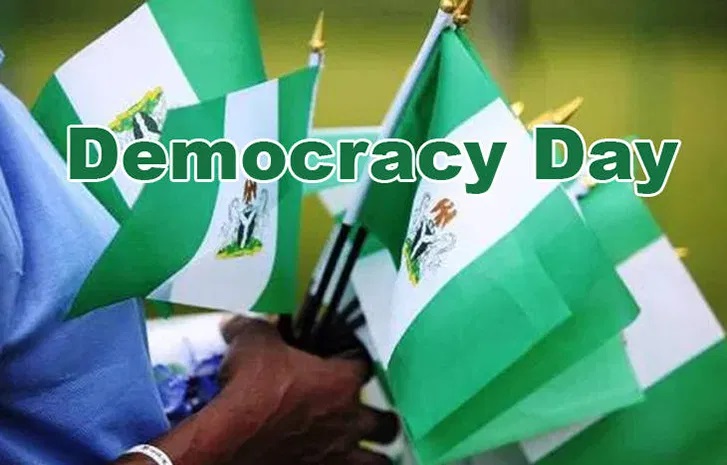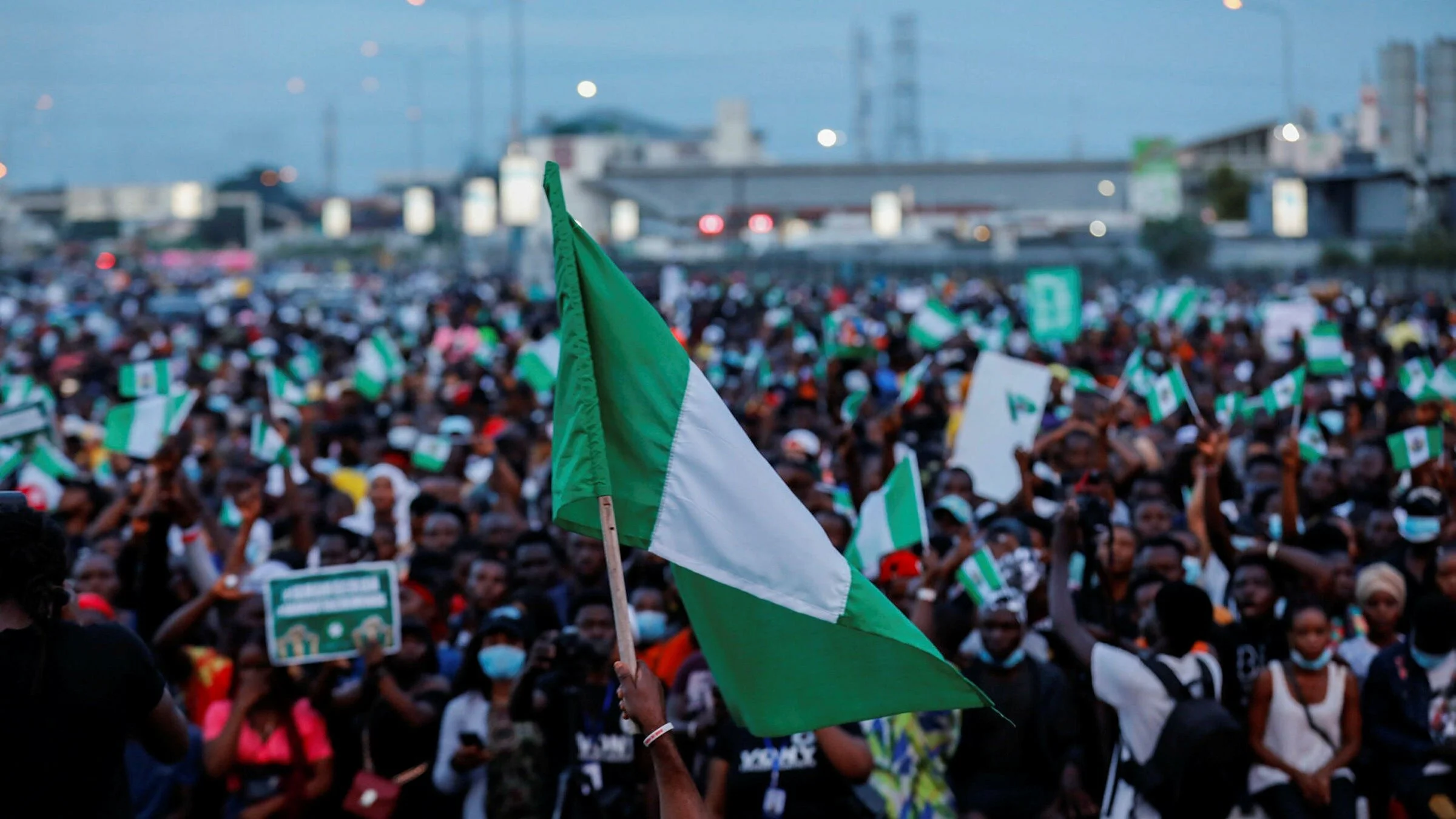
Democracy Day

Democracy at 27 — A Time for Reflection

By Umar Mohammed Dewa

As Nigeria marks 27 years of uninterrupted democracy on June 12th, some are popping champagne bought with democracy dividends, while others are eating their hearts out in lamentation. Such is the paradox of Nigeria’s democratic experience, a journey marked by notable achievements and persistent challenges.

June 12 remains a defining symbol of the Nigerian people’s struggle for democratic governance. It commemorates the historic 1993 presidential election, widely regarded as the freest and fairest in the nation’s history, and honours the sacrifices of countless patriots who fought against military rule and for the restoration of civil liberties.

Twenty-seven years after the return to democratic rule in 1999, Nigeria can point to significant gains. Democratic institutions have endured, political participation has expanded, and citizens continue to exercise their right to choose their leaders at the ballot box. Yet for many Nigerians grappling with economic hardship, insecurity, unemployment, and rising living costs, the promised dividends of democracy remain elusive.

Democracy is more than periodic elections; it is about accountable leadership, responsive governance, social justice, and the improvement of citizens’ welfare. As the nation celebrates this year’s Democracy Day, it is also an opportunity for sober reflection on how democratic governance can better serve the people and fulfil the aspirations of those who fought for it.

The significance of June 12 lies not only in remembering the past but also in recommitting to the ideals of freedom, equity, transparency, and national unity. Only through such commitment can Nigeria’s democracy continue to strengthen and deliver meaningful progress for all.

Happy Democracy Day, Nigeria.

Umar Mohammed Dewa wrote from Yola, Nigeria.                                                                                                                              
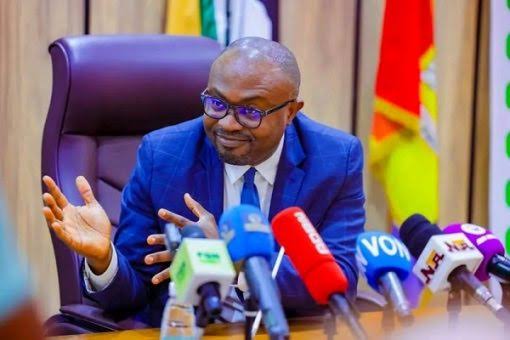
FG Declares Friday Public Holiday For Democracy Day Celebration

By Sabiu Abdullahi

The Federal Government has announced Friday as a public holiday to mark Democracy Day and commemorate 27 years of uninterrupted democratic governance in Nigeria.

The announcement was made in a statement issued on Thursday in Abuja by the Permanent Secretary of the Ministry of Interior, Magdalene Ajani.

According to the statement, the Minister of Interior, Dr. Olubunmi Tunji-Ojo, approved the declaration on behalf of the Federal Government.

Tunji-Ojo reaffirmed the administration’s dedication to protecting democratic principles, the rule of law, transparency, accountability and inclusive governance across the country.

He also stated that the Ministry of Interior, in partnership with relevant security agencies, would continue efforts aimed at safeguarding and enhancing internal security.

The minister stressed that peace and security remain critical to sustaining democracy and promoting national development.

He called on Nigerians to use the occasion to reflect on their civic responsibilities and the progress of the nation’s democratic journey.

“As we mark this historic day, every Nigerian is encouraged to remain law-abiding, uphold the institutions that sustain our democracy, and remember that the strength of any democracy lies ultimately in the character of its citizens,” he said.

Tunji-Ojo further noted that June 12 occupies a special place in Nigeria’s history because it honours the courage, resilience and sacrifices of citizens whose struggles paved the way for democratic rule.

“Their legacies continue to inform the values and responsibilities of the Nigerian state,” Tunji-Ojo added.

The annual Democracy Day celebration commemorates the country’s democratic progress and recognises individuals who played key roles in the restoration and preservation of democratic governance. (NAN)

Nigeria: Is Democracy Day worth celebrating amidst the Japa wave?

By Abdul Sale

The perception of an average young man in Nigerian life is to have a good-paying job, own a house and settle down with his wife. After that, nothing more or less, while in foreign lands, the reverse is the case as struggles to have different means of income usually start after marriage. However, on the other hand, gathered a handful of Nigerians who have zeal and set their minds on travelling abroad looking for greener pastures, which, to them, is the only way to make it to the promised land.

In 2019 alone, during the Buhari administration, over twelve thousand Nigerians, especially professionals like doctors, nurses, medical lab scientists, engineers, and care workers, travelled to Canada as a result of low remuneration and bad conditions of the working environment. They alleged that the Federal Government refuses to address this. At the time, Nigeria fell into recession, which devastated the economy; then, the Japa trend (jakpa Yoruba word meaning “to flee or run”) became an anthem in Nigeria, especially in the southern part.

Thousands of Nigerians have fled to oversee countries like the USA, UK, Canada, Australia, and other European countries to better their lives and families. In the northern part of Nigeria, the trend was not popular then, even though there were hundreds of northerners who had travelled abroad.

Moreover, I have noticed a wave of japa in the northern part of Nigeria lately, especially in the core north; the emergence of travel agencies and travel agents helped. Hundreds of Arewa youths have fled to countries like Saudi Arabia, Qatar, UAE, Oman, Jordan, and Kuwait, spending around 2 to 3 million Naira.

In some cases, Nigerians embark on the journey through land borders en route to Niger, Libya, Algeria and Morocco, which mostly ends in tragedy. For instance, Aljazeera reported that at least 61 refugees and asylum seekers, including women and children, have drowned following a “tragic” shipwreck off Libya, the International Organization for Migration (IOM) says.

On June 14, 2023, the Adriana, a fishing boat loaded with 750 people en route from Libya to Italy, went down in international waters off southwest Greece. There was a series of similar tragic stories as Flavio Di Giacomo, an IOM spokesperson, wrote on X, formerly Twitter, that more than 2,250 people died in 2023 on the central Mediterranean migrant route.

More than 153,000 refugees and asylum seekers arrived in Italy in 2023 from Tunisia and Libya, according to the United Nations refugee agency. One would wonder what triggers this massive wave of migration, especially among youths who are perceived to be the backbone and the future leaders of society.

The country’s economic situation is one of the driving forces that pushed some Nigerians to make that decision. Our leaders should, as a matter of urgency, create policies and bring ways to improve the country’s economic situation, thereby creating an enabling environment for the people to flourish their businesses.

Federal and state governments should invite foreign investors to come and invest in Nigeria to employ the thousands of unemployed graduates in the country. Moreso, the military and other security agencies should always respect the fundamental human rights of the citizens, as Nigeria is labelled as a country with high cases of human rights violations.

As we are reaching the second quarter of 2024, many Nigerians, especially youths, are ecstatic and happy about 2024 democracy day, full of hope and dreams that they wish to accomplish this year. Therefore, the government in power should redouble its efforts in helping these ambitious youths to realise their dreams.

Abdul Sale wrote via abutalatu72@gmail.com.

When not to celebrate democracy

By Mukhtar Jarmajo

Every year, Nigeria’s federal government declares June 12 as a holiday to celebrate the nation’s democracy. It used to be May 29 as it was the date democracy returned to our shores in 1999 after many years of military dictatorship. But to acknowledge and immortalise the democratic struggles of the late MKO Abiola, the date was changed by President Muhammadu Buhari virtually two years ago. It is, however, astonishing that as a nation, we put so much time and energy into celebrating democracy, which in the truest meaning of the word, does not exist on the shores of Nigeria.

Democracy is about freedom, but what there is here is post-colonial slavery, where the ordinary man lives in untold hardship perceiving the miasma of hopelessness. When the lives and properties of the citizens of a nation are not safe; when there is no access to affordable and quality healthcare services; when a nation’s education system is shattered; when a nation’s economy is so unhealthy that most of its citizens hardly afford two meals a day, it bears no repeating that the citizens of this country are in the shackles of slavery. Therefore, one cannot talk about practising the democratic system of government.

How can we even celebrate democracy in today’s Nigeria when our universities have been under lock and key for almost six months owing to industrial action embarked upon by lecturers? It is here that Petroleum Motor Spirit (PMS) is scarce and therefore only obtainable at high prices with attendant consequences on all goods and services.

In today’s Nigeria, human life has no value given the spate of kidnappings and killings that occur daily across the country. Moreover, corruption, which is like a poison coated with sugar and thus mortally dangerous to the entire human species, is rooted in Nigeria’s public and private sectors.

There is no law and order in the polity. Almost everyone is morally and mentally impatient that we cannot follow queues in banks, hospitals, airports and shops. In virtually all instances, one person tries to take advantage of the other. The public space is chaotic. So, ordinary people are under pressure as we go about our daily activities. And worse is that there is hopelessness on our faces, given that there is no hope in sight for merry days ahead.

What is very obvious is that both the leaders and the followers in this country are ready to let the nation continue journeying on this very rough and dusty path. While most of the leaders here are selfish, the biggest number of followers are irresponsible. Most Nigerian politicians aim to rule and please themselves through corruption and self-aggrandisement. They achieve it by using the fault lines of religion, region or ethnicity to divide the people and eventually get the opportunity to perpetuate themselves in power.

And to worsen matters, the people, the electorate, who have the democratic means to save the nation from the drift towards collapse, have failed to do so for obvious reasons. Poverty and illiteracy, which are direct products of bad governance, have effectively forced the people into allowing the leaders of Nigeria to divide us on the fault lines of religion, region or ethnicity and then rule us. This is one of the reasons why Nigerians rarely speak in unison against all the hardships and the apparent injustices the people are grappling with.

Jarmajo writes from Misau, Bauchi state, via dattuwamanga@gmail.com.