Death

Losing my foundation: A journey through grief and resilience

By Zainab Abubakar Abba

I was only nine years old when my world was shattered into a million pieces. My mom, my guiding light, my haven, left me too soon. The pain was unbearable, the grief overwhelming. I thought I would never survive without her warm embrace and loving smile. Not knowing life had other plans.

Ten years later, fate dealt me another cruel blow. My dad, my rock, my hero, passed away, leaving me alone and adrift in a sea of uncertainty. The loss was like a tsunami, sweeping away everything I thought I knew about love, family, and security. The pain of losing one parent was devastating, but losing both was like being stripped of my very foundation.

Growing up without both parents is a journey of unimaginable pain, struggle, and resilience. I have faced countless challenges, from navigating the complexities of adolescence to finding my place in a world that seemed determined to hold me back. The grief that followed was like a tidal wave, crashing over me with unrelenting force. I felt lost, alone, and scared. Simple tasks became monumental challenges, and everyday moments felt like a survival struggle. 

But as the days turned into weeks and the weeks into months, I slowly began to find my footing. I realised that my parents may have left me physically, but their love, wisdom, and legacy remained. I held onto the memories we shared, the laughter we enjoyed, and the lessons they taught me.

Amidst the darkness, I have discovered a spark that refuses to be extinguished—a spark of hope, determination, and courage. Ihave learned to cherish my parents’ memories and hold onto their love and legacy like a beacon at night. And I haven’t been alone in this journey. 

My siblings have been my lifeline, my support system, and my everything. Having supportive siblings has made all the difference in my journey. They have been my parents in every sense of the word, providing love, care, and encouragement when I needed it most.

Losing both parents at a young age has been the most challenging experience of my life, but it has also been a transformative journey. I have learned to cherish every moment, to never take love or life for granted, and to find strength amid vulnerability.

If you are walking a similar path, know you are not alone. Your pain is valid, your grief is real, and your resilience is remarkable. Hold onto the memories, lean on others, and find ways to honour your loved ones. 

And if you are fortunate enough to have supportive siblings, cherish them, appreciate them, and lean on them when the future seems uncertain. You are stronger than you think and will rise wiser and more compassionate than ever.

Zainab Abubakar Abba wrote from the Department of Mass Communication, Bayero University, Kano.

Old Age: The path we all walk

By Abdurrazak Muktar Makarfi

In every society, old age is a phase of life that carries a certain gravity, a reminder of the inevitable passage of time that each of us must face. Seeing an elderly person struggling with tasks that once came easily to them can evoke a deep sense of empathy and respect. 

It is a poignant reminder that no matter how strong or capable we may be today, the years will eventually catch up with us all. This awareness has shaped my interactions with the elderly, fostering a profound respect for them, regardless of their status or achievements. 

When I see an elderly man striving to complete a task that his body can no longer manage, it fills me with quiet sorrow, not because of his struggle alone, but because I recognise that one day, I, too, will face similar limitations. It is this awareness that guides my actions. If an elderly person asks me to stop doing something, no matter how important it may seem, I will stop. Not out of fear but out of respect for the years they have lived and the wisdom they have gained.

This respect for the elderly is not just about acknowledging their age but understanding the value of their experience. They have seen more of life than we have, and their words often carry the weight of that experience. Disregarding their counsel or disrespecting them is not only unkind but short-sighted. It ignores the fact that one day, we, too, will seek the respect and kindness of those younger than us.

Recently, I came across a disturbing video of Sarkin Gobir, a respected elder, who had been subjected to unimaginable cruelty by bandits. The sight of this old man, who had lived through so much, being treated with such brutality shook me to my core. It wasn’t just his status as a leader that made the situation so tragic, but his age. The mere fact that he was an elderly man should have been enough to shield him from such violence. Yet, these bandits failed to see the old age in him, or perhaps they saw it and chose to ignore it, driven by their evil.

When I later heard that Sarkin Gobir had passed away, my heart was heavy with sorrow, not only for his death but for the fate of those who wronged him. They had deprived an old man of his dignity in his final days, and in doing so, they had invited darkness upon their souls. Without Sarkin Gobir’s forgiveness, they are condemned to live with the weight of their actions. And indeed, peace will elude them for the rest of their lives, for they have committed an unforgivable sin against a man who should have been revered, not harmed.

This tragic event serves as a stark reminder of the importance of treating the elderly with the respect they deserve. We are all moving towards that stage in life; how we treat those already there will reflect on us when our time comes. If we are harsh and unkind, we cannot expect to be treated differently when we reach old age. But if we show respect, kindness, and understanding to the elderly, we pave the way for our future, ensuring that we will be treated with the same reverence when our hair turns grey and our steps grow slow.

In conclusion, the reverence of old age is not just a societal expectation but a moral imperative. The elderly have earned our respect through their years of life, and we must honour them for who they were and who they are now. We must remember that we are all on the same path, and one day, we will be the ones relying on the kindness and respect of others. Let us hope that by respecting the elderly today, we will secure the same respect for ourselves in the future.

Abdurrazak Muktar Makarfi wrote via prof4true@gmail.com.

Tribute to Malam Ahmad Garba Amin Kofar Naisa

By Dr. Aliyu Dahiru Muhammad

The late Malam Ahmad Garba Amin (1962-2024) was a remarkable individual I first met in the 1990s as my secondary school Islamic Studies teacher. Subsequently, he rose to the post of Vice Principal before being transferred to the Kano State Welfare Pilgrims Board as a Director of Operations, a position he held for almost a decade. He later moved to the Kano State Sharia Commission, where he finally retired. 

I became close to Malam Ahmad during school and after graduation. He used to ask about my progress in Quranic education even years after my bachelor’s degree. I introduced him to my parents, and we became a family. Gratefully, he made a significant impact on my life to the extent that he was behind some of my achievements – Alhamdulillah. 

When the news of his death broke out to me on Thursday, 5th September 2024 (2nd Rabiul Awal, 1446), I reacted by saying, “Innalillahi wa inna Ilaihi Rajiun” as it is the only action that can relieve me of that material time. After confirmation, I shared it on my platforms, where I received many condolence messages and prayers. What also consoled me was the kind of lovely comments I have received from many who knew him and those who did not know him. Alhamdulillah. 

Imams Al-Bukhari and Muslim reported, on the authority of Anas ibn Malik, that a group of the Prophet (SAW)’s companions were sitting with him when some people came and passed by them carrying a corpse. Some of the people sitting around the Prophet (SAW) made nice comments about the dead person, and the Prophet (SAW) promptly reacted, saying, “Confirmed” (wajib). A similar scenario happened, but on the contrary, the comments were nasty, and the Prophet (SAW) reacted by saying, “Confirmed” (wajib). Wondering why the Prophet said so, the companions asked him for an explanation. 

In the case of the first corpse, the Prophet said what it meant was that their comments about him thus confirmed his entry to Paradise (al-Jannah). The same thing applied to the second person for whom Hellfire was confirmed similarly. The Prophet further explained to them the significance/implications of the comments that people usually make about the dead by either extolling their virtues or otherwise saying bad things about them. He said, “You are the witnesses of Allah on earth (against His servants).”

Allahu Akbar! Whoever knew Mal. Ahmad could testify that he was deeply involved in promoting social welfare and peace in the community. This earned him respect among the youths, women, and elderly, as I noticed every time I visited him, especially during his daily teaching of Islamic books (taalim) outside their family house. 

He was the former Chairman of Safinatul Khair Foundation, which, to my knowledge, is one of the few community-based organisations that have contributed to the socio-economic development of his community. The foundation has a special scheme for education for children through scholarships, extramural classes for candidates who intend to sit for WAEC and NECO examinations, and job opportunities for youths, among others. In the aspects of social development, especially for widows and orphans, the Foundation, at a time, conducted a census of all widows in the area it covered and supported them. During my PhD studies, I interviewed him about their achievement, and I was so excited about it. 

On the aspect of health, the Foundation and Late Mal. Ahmad, in particular, was instrumental in setting up a clinic serving the people, especially the needy patients of Kofar Naisa and beyond. The clinic named after the foundation is the Safinatul Khair Foundation (Kofar Naisa PHC). Thanks to Dr Hassan Sulaiman Kofar Naisa, a resident of the area who worked under the office of the then Senior Special Assistant to former President Muhammad Buhari on Sustainable Development Goals (SDGs), brought this project. 

According to my close associate Mal. Usman Muhammad (Dr. Shehu), the clinic is grade-A in primary health care. It is well equipped with an ambulance, solar system, and water system that serves patients 24/7 uninterruptedly. They invite medical personnel from neighbouring general and specialised hospitals like Aminu Kano Teaching Hospital for weekly medical outreach and to settle the bills for the less privileged patients. 

As we mourn the loss of Mal. Ahmad, we pray that Allah accepts his legacies, forgives his shortcomings, and grants him entry into paradise. “Indeed, we belong to Allah and to Him we shall return. Indeed, only Allah is the place of return. O Allah, record (the deceased) among the righteous, and place the record in the highest place. Replace the goodness for the family left behind. Do not make the reward forbidden, and do not test us after their departure.”

Dr. Aliyu Dahiru Muhammad is an associate professor in the Department of Economics at Bayero University Kano and a Visiting Scholar at the National University of Malaysia (UKM). He can be reached via alitahir797@gmail.com.

Dear Dad

By Aisha Musa Auyo

Dear Dad, I can’t believe you’ve left this world

Earlier today, I found myself

Praying for your health

Instead of praying for your Rahma and Ghuffar

In my subconsciousness

You’re still alive

I’m still in the denial stage of my grief

It’s unbelievable, the man that brought me into this world

The man who loves me from day one

The man who nurtured me day and night

Even after my marriage

He never let go of me

Is no more to see me grow

His dreams for me were larger than life

His belief in me was stronger than rock

His patience with me was deeper than the ocean

His respect for me was limitless like air

Dear Dad, I tried to move on from your death, as you would have loved me to

But I couldn’t escape the reality that my hero was gone

During the day I’m mostly fine

During the night it’s a different story

Only God knows the silent tears I’ve shed

The numerous plates I’ve broken

The countless foods I’ve burnt

The tiny cuts on my fingers

As I tried to move on from your death

Dear Dad, I was told your grave was full of water

That I should be happy, it’s a sign of Rahma

But this news tore my heart

As I imagine you inside the mud

Alone in your grave

But I learned that,

Your Ruuh is with our Lord

It’s just your body under the mud

Dear Dad, I was reminded that you lived a fulfilled life

Reached the pinnacle of your profession

Touched thousands of souls

Mentored countless lives

Fathered numerous of us

Built dreams and hope for others

Cemented relationships and communities

That your life is a dream of many

The smiling scholar as they named you

Yet, I still hoped you were here

To witness my PhD viva

To witness that big appointment you’ve always envisioned for me

To witness the marriage of all your kids

The successes of all your kids

But Allah’s timing is never to be questioned

And in His will, we were together

Few hours before your death

And your parting words: ‘Allah Yai muku albarka’

Will forever echo in my ears

For you’ve repeated it too many times at that moment

The prayers are too much I thought to myself

Not knowing that was the last thing I’d hear from you

Dear Dad, till we meet in Jannah I would say

For I hope writing this poem

Will give me closure

Will make me accept the reality

That you’re no more with us

That you’re in a better place

That you’re in light and peace Bi iznillah

The weight of grief

By Sa’adatu Aliyu

It was in the harmattan of December 2023. My siblings and I were at home when my elder sister, the firstborn, called to update us on her husband’s current state.

He had recently undergone surgery and was back home recovering with his family. I couldn’t tell whether she spoke calmly or sounded agitated when she called my brother on the phone. But as soon as he hung up, he said she told him that her husband’s sickness had resurfaced, and they were heading to the hospital.

Aside from my faith in God that everything would be fine, I remained calm because I believed it was normal for people to fall ill from time to time. Sometimes, the illness may be severe, and other times, it may not, but eventually, everything will be fine. I held onto this thought as I continued eating my plate of boiled yam.

But shortly after, my brother called back to ask what was happening, as anxiety was starting to get the better of him. I kept eating the soft yam with a sprinkling of oil and “yaji” while my brother waited for my sister to answer the phone.

Ya rasu, he’s dead,” she said as soon as she picked up the phone. My brother then softly exclaimed, “From Allah we are and to Him is our return.”

Since I hadn’t considered the possibility of death in our family and had taken the illness lightly – I mean, I, too, have undergone surgery before – my brother’s words didn’t immediately make me think of death. But I couldn’t explain why my heart sank in terror despite my attempt to brush it off. However, I carefully got out of bed and went to the parlour to ask what was happening.

My brother told me that she said he had passed away. I said, “From Allah we are and to Him is our return,” knowing that after this, I wouldn’t return to eating my yam and that it would be a long night.

This was the only thing I had the strength to do. While I watched my younger siblings break into tears and the news spread to the rest of the world, I pretended to be strong. I wanted to be strong. I couldn’t wail like others. Despite being known as the emotional one in the house, I was unusually calm. I easily shed tears over the slightest pain, but I didn’t cry when I heard the news of my sister’s husband’s death, a man who had loved and treated us well.

Later, I realized it had been three to four months since I last saw him physically. I had been studying in my first year of master’s at university, and due to my health issues and other reasons, I couldn’t visit his house.

Afterwards, I realized I had let many memories of him slip away due to forgetfulness. When the announcement of his death came, I struggled to recall even his appearance. I don’t know if this is a form of betrayal. However, after time had somewhat eased our loss, I began to feel a little bereaved. At least I remembered that he fervently supported my writing and had confidence in my ability to succeed in the literary world.

Then, something gripped me. I felt hollow, like a bottomless abyss, suddenly doubting my ability to be the great writer he always praised. I felt like I had betrayed him. I couldn’t shed a tear, only once, and it was when I went to console my sister, and she expressed gratitude to her siblings for being there. Now, my dreams felt hollow, no longer worth pursuing. He called me “our writer” with delight in his eyes and pride in his voice.

However, perhaps I didn’t break down at his death news because I’ve learned to be a pillar for my family to lean on. Maybe I knew that showing blatant grief would break us all. But this death arrested me unexpectedly, making me exhibit a composure that felt real when it was just a mask. It stole my reason to pray consciously for him despite him being a loved one. It reinforced the reality of death as our eventuality and the need to move on, which I tried to do, perhaps too early.

However, I know the fatality of my emotions. Or perhaps I’d changed as a human being, embarrassed to be perceived as emotional, and had become so cruel and cold in this December harmattan because I’d been accused in the past by people I loved of being too emotional. Ever since maybe I’d subconsciously vowed never to show weakness in the face of adversity. Whatever it may be, now I know that I may never forgive those who have accused me of being too emotional because they’ve essentially succeeded in making me a little less compassionate and merciful.

And if this is just one of those things death does to people – causing them to evolve – then I’ve seen such change in my sister. After spending a month in her house during the mourning period, I saw her sometimes hiding her tears as she remembered her now late husband and sometimes reaching for her phone to place a call to her husband to ask for the location of something she couldn’t find in the house before she remembered he was no more. I’ve since noticed new things about her. She would hide her phone underneath the bed every night when she was about to sleep and ask if I did the same with my phone. “My husband always did that to keep away from robbers in case of a break-in,” she would look at me and say. I didn’t know what to tell her.

She cooked spaghetti differently from how we cooked in our house before she was married. She would say, “The foaming top of the ogbono soup must disappear before it’s ready to be eaten.” She did other things I’ll call strange, only because her husband did them. Sometimes, they were against my liking, but I reasoned that perhaps the death of a loved one altered us in ways I could not comprehend. Maybe she held on to those things, even though they sometimes felt strange – a museum of special memories of him that were quickly within reach.

Though I was numb for days after his death, it wasn’t until recently that I was able to pray for him consciously. I hope I’ll pay his rightful due to him, my fervent supporter. May Allah have mercy on him, amin.

Sa’adatu Aliyu is a writer from Zaria. She is currently pursuing an M.A. in Literature at Ahmadu Bello University, where she also works as a lecturer at the Distance Learning Centre. Her writing interests include Prose fiction and International politics. She can be reached at Saadatualiyu36@gmail.com.

Professor Muhammad Lawal Mayanchi: A brief tribute

By Dr. A. M. Lawal

Until fate brought us together at the Federal University Gusau, Professor Muhammad Lawal Mayanchi was an uncle I hardly knew. Growing up, he was a military man who lived far away from home and rarely visited. The few times he visited after his compulsory retirement, I was away in school. So, my first major interaction with him was at FUGUS. 

The first day we met, his attention was divided. On the one hand, he was trying to make up for the lost time he had with me and, on the other, as the then Dean of Students, he was busy trying to control and keep students in line so they could board the University shuttle to town in an orderly fashion. From there, I witnessed first-hand his discipline and how obsessed he was with entrenching the same to the students. Watching him, I could not help but admire his drive to make his children, as he called his students, as disciplined and driven as he was. 

From that day, Prof. usually called me to ask about my progress as a man and as an academic. Where I erred, he often reported me to Professor Ahmad Galadima for reprimand. Thereafter, he would call me to either his house or his office for counselling. In shaping me, Prof. Galadima was the carrot to Prof. Galadima’s stick. And it worked—perfectly. 

Whenever and wherever I met Prof, he always told me his life stories and the challenges he faced post-military career before asking me the lessons I learnt from them. Spending time with him was like being in a class where one is taught the dynamics of life. 

In hindsight, it is clear that during my last physical interaction with Prof, he had a premonition of his death. We discussed some family matters after which he told me, ‘as we are leaving the scene, the leadership of our families both immediate and extended, will fall on your shoulders. You have to be ready. I have a feeling it will be sooner than we think.’  

And then Prof left us. Now we have to fill in the void he left behind. Or at least try to. A task as daunting as it is challenging. 

May his soul continue to rest in Allah’s bosom, amin.

Dr. A. M. Lawal wrote from the Department of Chemistry, Federal University Gusau, Zamfara.

Tragedy as landlord dies after argument with tenant over unpaid rent

By Uzair Adam Imam 

A landlord, Benjamin Apeh, has tragically died after collapsing during an argument with his tenant over unpaid rent. 

The incident occurred on Sunday at Arigbabu Village, Sotubo, in the Sagamu local government area of Ogun.

“The suspect fled the scene, but efforts are underway to apprehend him,” said SP Omolola Odutola, the Public Relations Officer, Police Command, Ogun.

According to the police, the argument started on Saturday evening and continued on Sunday morning, with the tenant threatening to kill the landlord. 

“At around 6:30 a.m., on Sunday, she (the daughter of the deceased) heard her father again arguing with the tenant, who threatened to kill him,” said Odutola.

Unfortunately, the landlord collapsed and was rushed to NNPC Hospital, Mosimi, where he was pronounced dead. “He was later confirmed dead by the doctor on duty,” said Odutola.

The body of the deceased has been deposited at Olabisi Onabanjo University Teaching Hospital (OOUTH) Morgue, Sagamu.

Teen dies after eating spicy crisp in viral ‘One Chip Challenge’

By Uzair Adam Imam

A US teenager died of cardiac arrest after participating in a social media challenge daring people to eat a single extremely hot tortilla chip, an autopsy revealed Thursday.

Harris Wolobah, a 14-year-old from Massachusetts, died in September after participating in the so-called “One Chip Challenge.” The challenge involved a single chip produced by Paqui dusted with Carolina Reaper and Naga Viper peppers.

The dare has evolved over the years, with different peppers used each time.

The local chief medical examiner determined that Harris died of cardiac arrest after ingesting food with a large amount of a chilli pepper extract called capsaicin, according to the autopsy report seen by AFP. 

The autopsy also concluded that the teen had an enlarged heart, which could have contributed to his death.

Days after his death, Paqui removed the product—packaged in a coffin-shaped box with a red skull and marked ‘extreme heat’—from store shelves.

In California, three youths were hospitalized after taking part in the dare, and seven got sick in Minnesota for the same reason, according to media reports.

Palliative Tragedy: Distributions in tertiary institutions can go differently

Bello Hussein Adoto

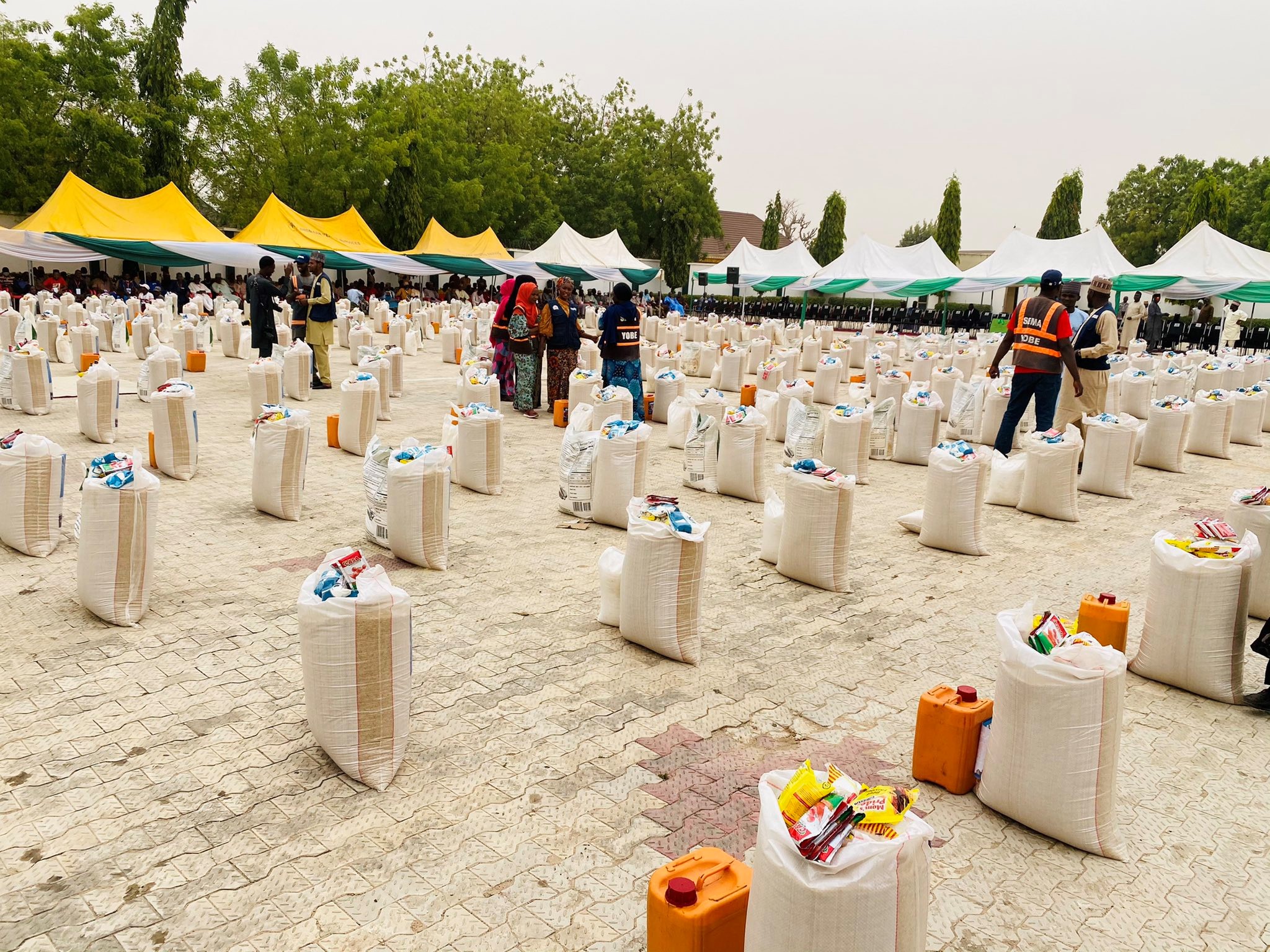
The tragic deaths of two students and the injury of 23 more at the botched distribution of palliatives at Nasarawa State University on Friday is a disturbing addition to what has been a troubling period for undergraduates in Nigeria.

Just last Friday, nine students of Federal University Gusau regained their freedom after spending over 170 days in terrorists’ captivity. On Thursday, three medical students of Abia State University died in a road traffic accident while returning from their seniors’ induction.

Unlike these other tragedies, however, the Nasarawa stampede could have been envisaged and prevented. The successful distribution of similar palliatives at the University of Ilorin shows us how we can do things differently.

Following subsidy removal and the attendant inflation in the country, several state governments distributed palliatives—foodstuffs and stipends—to ease the economic burden on citizens. Some states like Kwara and Nasarawa recently extended the palliatives to students in their tertiary institutions.

The initial distribution of the palliatives across institutions in Nasarawa state was peaceful. A government statement released after Friday’s stampede noted that previous distributions were “a huge success.” Students got two 7.5 kg bags of rice and 5,000 naira each.

However, events leading to the stampede at Nasarawa State University, Keffi, points towards a mismanagement of crowd control by the organizers responsible for distributing the palliatives. According to media reports, the palliatives were scheduled at the university convocation square until students arrived in large numbers and disrupted the distribution.

“After our arrangement for the distribution of palliatives to the students which was to hold at the University’s convocation square, they (students) suddenly arrived at the venue in their numbers and overpowered the security,” said Yunusa Baduku, National President of the Nasarawa State Students Association, in a Punch Online report.

He added that the students “broke through the gate into the Convocation square where the bags of rice was to be shared,” leading to the stampede that consumed the two students and injured many more.

Sadly, such chaos is not new. In February, the Nigerian Customs Service had to suspend its sale of seized bags of rice after seven people died at one of its centres in Yaba, Lagos. Some two years ago, 31 people died at a stampede at the King’s Assembly in Rivers state church during the distribution of palliatives to church members; seven more were injured.

Although the state governor, in a statement by his Chief Press Secretary, was quoted as calling the tragedy “a needless stampede,” the state could have prepared better for it. Distribution events, especially those intended to provide aid or relief, tend to draw large crowds, making effective crowd control essential.

In Unilorin, for instance, where students received palliatives—cartons of noodles—from the Kwara State government, distributions were such that students did not have to gather in their numbers at the arena or use vouchers.

The government sent the palliatives to the university, who distributed them to the faculties. From the faculties, they were distributed to departments, where class representatives from each level went to retrieve the packages for their class. It was as seamless as public distributions go.

I suppose the Unilorin model could help other tertiary institutions plan more effectively. The university leveraged student associations and divided the population into manageable chunks. Such divisions made it difficult for hoodlums to gatecrash, as the class reps knew their colleagues. The strategy also eased accountability.

While I admit there is a risk of student representatives appropriating the palliatives or shortchanging their colleagues, this is more manageable than asking a crowd of desperate undergraduates to gather for government handouts.

A departmental or level advisor can be mandated to coordinate the distribution, even if he has to be paid or receive palliatives, too. It is not likely that the coordinator will conspire with the student reps to loot the palliatives. In the rare event that that happens, then so be it. Nigeria students have suffered enough than to die in avoidable stampedes.

Adoto writes from Ilorin via bellohussein210@gmail.com.

How to avoid sport-related anxiety or attacks

By Aisha Musa Auyo 

Sequel to the recent loss of lives during the heated match between Nigeria and South Africa in the recently concluded 2023 AFCON, it is pertinent to begin sensitizing the public on the effects of anxiety, cardiac, and related attacks.

To avoid anxiety or a heart attack during sports or anything that excites you, try this visualization a few hours before the game or event.

…Expect the worst in this case, even if you don’t want to. Imagine the worst-case scenario a few times in your mind, and no matter how anxious your body becomes, let it be. Don’t resist it, and it will go away…

Anxiety is nothing but the manifestation of your deepest fears, and since you keep avoiding the worst-case scenarios, anxiety keeps building up. But if you have imagined and experienced it, the reality will not come as a shock. It will be something you have already envisioned. Whether the game ends in your favor or not, you will have control over how your body reacts to the outcome.

This is the explanation behind the fight-or-flight response, which is an automatic physiological reaction to an event that is perceived as stressful or frightening. The perception of a threat activates the sympathetic nervous system and triggers an acute stress response that prepares the body to fight or flee.

Sports-related anxiety and heart attacks can be influenced by various factors, and addressing them requires a multifaceted approach. Since this issue will continue to arise even after the AFCON, it would be beneficial to highlight the long-term approaches.

1. Regular Exercise: Engaging in regular physical activity not only improves cardiovascular health but also aids in stress management. Incorporating both aerobic and strength training exercises can contribute to overall well-being.

2. Healthy Lifestyle: Adopting a balanced and nutritious diet, maintaining a healthy weight, and avoiding excessive alcohol and tobacco use are crucial components of preventing heart-related problems.

3. Stress Management: Practice stress-reduction techniques, such as mindfulness, deep breathing exercises, or meditation. Managing stress levels is vital for overall mental and physical health.

Regular Health Checkups: Periodic health checkups help monitor blood pressure, cholesterol levels, and overall heart health. Early detection of potential issues allows for timely intervention.

5. Know Your Limits: Recognize your personal physical limitations and avoid pushing yourself too hard during sports activities. Gradual progression in intensity is essential to prevent sudden stress on the cardiovascular system.

6. Medical Consultation: If individuals have preexisting health conditions or concerns, it’s crucial to consult a healthcare professional before engaging in strenuous physical activities, including sports events.

7. Fan Engagement Awareness: For spectators, emotional involvement during sports events can lead to heightened stress levels. Being aware of one’s emotional reactions and finding healthy ways to manage them are essential.

8. Emergency Preparedness: Knowledge of basic first aid and access to medical facilities during sports events are critical in case of emergencies.

9. Community Awareness: Raising awareness within communities about the risks associated with sports-related stress and the importance of preventive measures can contribute to a healthier sports culture.

10. Education: Providing education on the signs of heart attacks and the importance of seeking immediate medical attention can empower individuals to respond effectively in emergencies.

By addressing these aspects, individuals can reduce the risk of sports-related anxiety and heart attacks, thus promoting a safer and more enjoyable sports experience.

To reduce sports-related anxiety and potential health risks, individuals should prioritize regular exercise, maintain a healthy lifestyle, and be aware of their physical limitations. Seeking medical advice and monitoring stress levels can also contribute to overall well-being.

Aisha Musa Auyo is a Doctoral researcher in Educational Psychology, a mother of three, a homemaker, caterer, and parenting/relationship coach. She can be contacted via aishamuauyo@gmail.com.