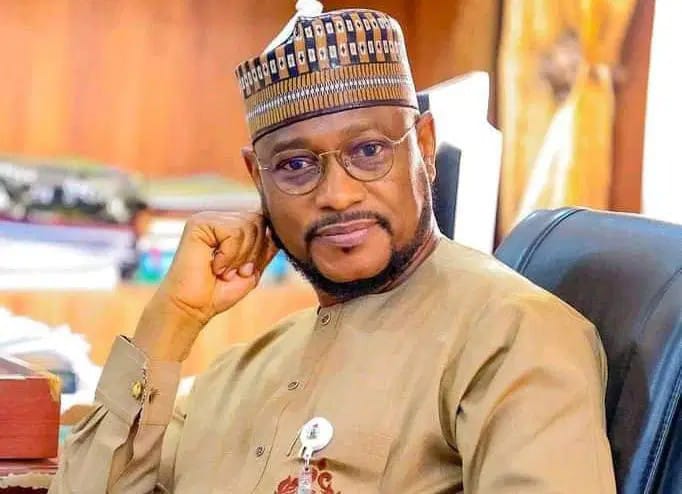
Dauda Lawal

Zamfara Begins Distribution of 72,000 Bags of Fertiliser to Farmers

By Sabiu Abdullahi

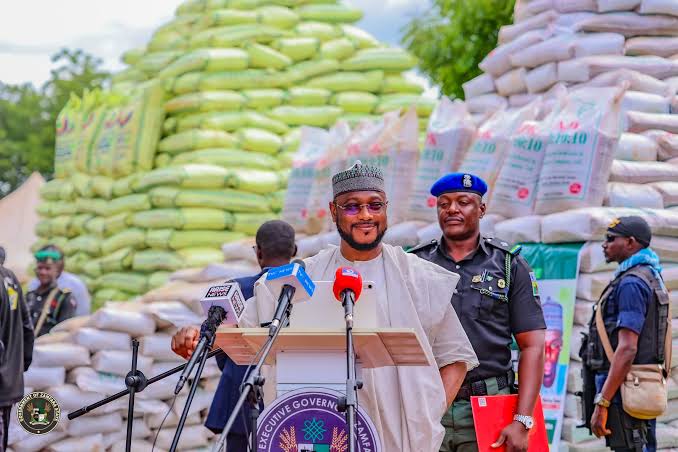
The Zamfara State Government has launched the distribution of 72,000 bags of fertiliser and other agricultural inputs to farmers across the state to support food production during the 2026 wet farming season.

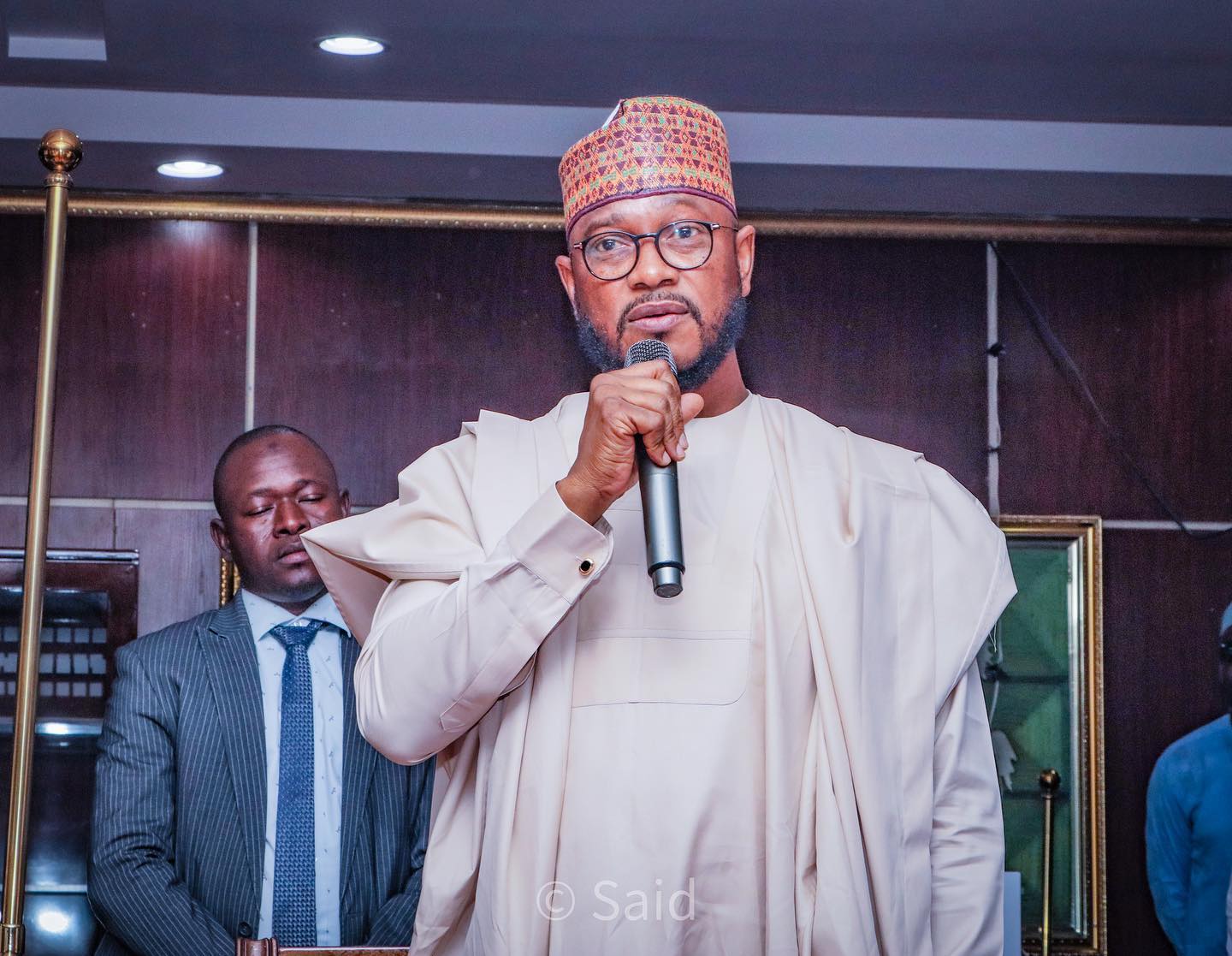
The distribution exercise was inaugurated by Governor Dauda Lawal on Friday at the Trade Fair Complex in Gusau, the state capital.

The governor’s spokesperson, Sulaiman Idris, said the programme involves the distribution of more than 120 truckloads of fertiliser and other farming materials.

According to him, the intervention includes 72,000 bags of fertiliser, 200,000 litres of herbicides, 100 crop residue crushers, 100 grass choppers, and 100 feed milling machines. The government also distributed improved pasture seeds, 20 motorcycles, and 20 mobile phones to agricultural extension workers.

Speaking at the event, Lawal described agriculture as the foundation of Zamfara’s economy. He also reaffirmed his administration’s determination to strengthen the sector.

He said, “Today’s event marks another significant milestone in our commitment to revitalising agriculture, strengthening food security, creating sustainable livelihoods, supporting our farmers, and repositioning Zamfara State as a major contributor to Nigeria’s agricultural economy.”

The governor noted that Zamfara has extensive arable land and a large population that depends on farming, livestock production, and trade for their livelihoods.

He said his administration is working to move the state’s agricultural sector beyond subsistence farming through the adoption of technology and improved market access.

Lawal said, “Our goal is to restore and expand Zamfara’s farming legacy by shifting from subsistence to productive, tech-driven, market-orientated agriculture.

“We aim to unlock farmers’ potential through improved inputs, mechanisation, irrigation, extension services, climate-smart methods, and market linkages. This will make Zamfara a leading Nigerian agricultural hub.”

The governor also stated that improved security in parts of the state has enabled many farming communities to return to their fields. He added that the government will continue to provide the support and infrastructure required to sustain agricultural activities.

Lawal further said the state has strengthened collaboration with the Federal Government, development partners, and international organisations through programmes such as FADAMA III, NG-CARES, SPIN, ZACADEP, the Special Agro-Industrial Processing Zones (SAPZ) programme, and projects supported by the International Fund for Agricultural Development (IFAD).

According to him, these initiatives have provided thousands of farmers with improved seeds, fertilisers, agrochemicals, irrigation facilities, farm equipment, and modern agricultural practices.

He added that the fertilisers and other farming inputs will be shared across Zamfara’s 147 political wards in its 14 local government areas. Each ward will receive 340 bags of fertiliser, while every local government area will receive 8,000 litres of herbicides.

How I Told Kidnappers to Kill My Brothers Instead of Paying N300m Ransom — Zamfara Gov

By Uzair Adam 

Governor Dauda Lawal of Zamfara State has disclosed that he rejected a N300 million ransom demand made by kidnappers who abducted his brothers in 2019, insisting that paying criminals would only encourage further kidnappings.

The governor made the revelation on Thursday while speaking at the ARISE News and THISDAY Town Hall Conference in Abuja, where he also reiterated his support for the establishment of state police as part of efforts to address Nigeria’s growing security challenges.

Recounting the incident, Lawal said the abductors demanded N300 million for the release of his brothers, but he refused to negotiate or pay any ransom.

“My own brothers were kidnapped in 2019, and these criminals were demanding about N300 million. I said, ‘I’m not going to pay a dime. If you like, go and kill them.'”

He explained that despite his refusal to meet the kidnappers’ demand, his brothers were eventually freed after spending about three months in captivity.

The governor said the experience strengthened his belief that ransom payments only empower criminal groups and encourage more abductions.

“By the time we continue to pay ransom to these people, we are encouraging them to keep kidnapping more and more people,” he said.

Lawal maintained that he would never negotiate with criminals or reward them financially, regardless of the circumstances.

“I will not negotiate, and I will not pay ransom to any criminal, no matter what happens.”

The governor made the remarks while advocating the creation of state police, arguing that governors cannot be held fully accountable for security when they lack operational control over security agencies in their states.

He noted that although governors are regarded as chief security officers of their states, they have no constitutional authority to direct the operations of the police and other security agencies.

“In as much as I am being called the chief security officer of the state, I don’t have the command and control structure to determine what happens or give instructions to some of these security officers,” he said.

According to Lawal, the current arrangement places governors in a difficult position because they are blamed for insecurity despite lacking the authority to coordinate security operations.

He stressed that protecting lives and property remains the primary responsibility of every government, adding that meaningful development cannot be achieved without adequate security.

“Why is it difficult for people to understand that my primary responsibility is the protection of lives and property, and I don’t have that control? How do you hold me accountable?” he asked.

Lawal argued that establishing state police would improve accountability, as governors would have direct oversight of security operations and could be judged by residents based on their performance.

He added that state governments would also be better positioned to recruit, equip, train and fund security personnel according to their unique security needs.

The governor further observed that the Nigeria Police Force continues to face challenges such as inadequate funding, poor welfare and insufficient training, which have affected its effectiveness.

Highlighting his administration’s investment in security, Lawal disclosed that the Zamfara State Government currently finances more than 30 per cent of security operations within the state.

He said the government has procured over 500 operational vehicles for security agencies in the past three years and recently handed over 35 Armoured Personnel Carriers (APCs) and Mine-Resistant Ambush Protected (MRAP) vehicles to strengthen the fight against banditry.

Lawal also revealed that the state has acquired both surveillance and combat drones to support security operations.

“We bought drones, both surveillance drones and attack drones, to aid the security forces in fighting these criminals in their respective areas,” he said.

The governor maintained that Nigeria’s insecurity can only be effectively addressed through improved funding, better welfare, enhanced training and the deployment of modern technology, rather than negotiating or paying ransom to criminal groups.

His comments come amid renewed national debate over the establishment of state police and broader reforms aimed at improving security across the country.
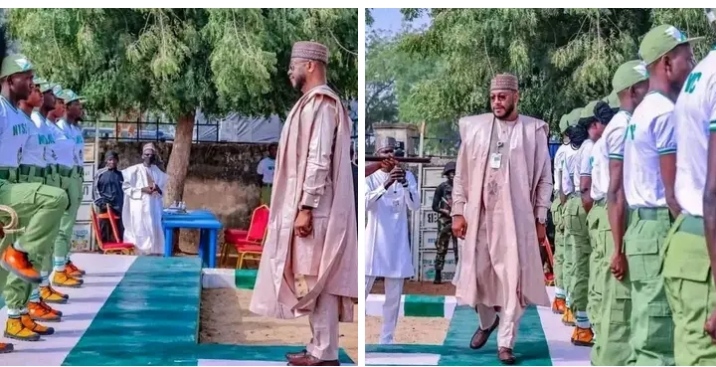
Zamfara Governor Approves Allowance Payment for NYSC Members

By Abdullahi Mukhtar Algasgaini

Governor Dauda Lawal of Zamfara State has approved the payment of allowances to members of the National Youth Service Corps (NYSC) serving in the state.

The approval was contained in a statement issued by the state’s Commissioner for Information and Culture, Mahmud Muhammad Dantawasa, on June 19, 2026.

The approval covers corps members from Batch A Stream I and II through to Batch C Stream I and II.

The state government stated that the move demonstrates its appreciation for the contributions young people are making in sectors such as education, health, agriculture, and other community development activities in Zamfara.

The statement further indicated that Governor Dauda Lawal has directed the Office of the Accountant General of the state to finalise all necessary arrangements to ensure the smooth and proper implementation of the payments, in line with established procedures.

Zamfara governor, Dauda Lawal, defects from PDP to APC

Governor Dauda Lawal of Zamfara State has officially left the Peoples Democratic Party (PDP) and joined the All Progressives Congress (APC).

The development was announced on Monday through a statement issued by the governor’s media aide, Nuhu Anka. He explained that the decision came after the governor held consultations with political leaders, elders and supporters across the state.

“The Government and PDP family of Zamfara State wish to formally inform the general public of an important political development following extensive consultations with stakeholders, political leaders, elders, and supporters across the state.

“After careful consideration, and in the overriding interest of stability, progress, and the sustainable development of Zamfara State, Dauda Lawal, the Executive Governor of Zamfara State, has decided to formally defect from the Peoples Democratic Party to the All Progressives Congress,” the statement read.

Anka said the governor’s move was largely influenced by the internal problems facing the PDP at both national and state levels.

“This decision was reached after wide consultations with political stakeholders and supporters, particularly in view of the prolonged internal crisis, leadership disagreements, and unresolved structural challenges within the PDP at both the national and state levels.

“These challenges have continued to create uncertainty and distractions that could hinder effective governance and the delivery of democratic dividends to the people of Zamfara State,” the statement added.

The governor’s spokesman also stated that Lawal remains focused on addressing security issues and promoting development in the North-West state.

Anka explained that the governor believed it was necessary to join a platform that offers better unity and stronger collaboration with the Federal Government.

He said the governor chose to “align with a political platform that provides greater unity, stability, and stronger cooperation with the Federal Government for the benefit of the people.”

The statement also revealed that the final decision followed a meeting held at the Government House in Gusau. The meeting involved senior government officials and key political stakeholders. It was coordinated by the Deputy Governor.

“The final deliberation leading to this historic decision was held at the Government House in Gusau under the coordination and leadership of the Deputy Governor, alongside senior government officials and key political stakeholders,” the statement said.

According to Anka, the governor also thanked members of the PDP for their support during his time in the party. However, he said the prevailing political situation made the change necessary.

“By joining the APC, the Governor reaffirmed his commitment to strengthening unity, improving security, accelerating development, and ensuring that Zamfara State benefits fully from stronger collaboration with the Federal Government,” it added.

Governor Lawal is among several governors expected to contest for re-election in the 2027 general elections.

His defection came shortly after a Court of Appeal ruling on Monday. The court upheld an earlier order that restrained the Independent National Electoral Commission from recognising the outcome of the PDP national convention held in Ibadan.

With Lawal’s move, the number of APC governors in Nigeria has now risen to 31.

I’m committed to ending insecurity in Zamfara—Gov. Lawal

By Uzair Adam

Governor Dauda Lawal has emphasized that addressing insecurity in Zamfara State remains a shared responsibility of his administration and all stakeholders.

He made the remark on Monday while presiding over the 18th Executive Council meeting at the Government House in Gusau.

A statement by the governor’s spokesperson, Suleiman Bala Idris, said the council deliberated on critical matters such as security, education, health, and infrastructural development, among others.In his opening remarks, Governor Lawal said, “I would like to remind us of our collective obligations in this administration concerning the fight against insecurity.

“We have made significant progress and succeeded in restoring relative calm to most areas of the state. The terror of bandits has been crippled, unlike in previous years.”

He urged council members to be proactive, maintain accessibility to their constituents and local government officials, and consistently provide reports to the Commissioner for Security.

“Let us pray for the souls of all our fallen heroes,” the governor added.

Governor Lawal also encouraged members of the council to build strong working relationships and ensure synergy with other political appointees and elected officials for better governance.

I can end Zamfara banditry in two weeks if given security control—Gov Lawal

By Uzair Adam

Governor Dauda Lawal of Zamfara State has accused political interference and lack of cooperation from security agencies of frustrating efforts to end the decade-long banditry crisis that has devastated the state.

Speaking during a media briefing with local journalists in Gusau on Monday, the governor lamented that despite deploying modern surveillance technology capable of tracking the movement of bandits, his government remains helpless because he lacks direct control over security operatives.

Governor Lawal said, “Sometimes, I can see the bandits moving around on my phone because of the technology we are using. I know where they are, where they go, and where they come from.

“But I cannot stop them because I have no power to command the security personnel. If I had that authority, I swear, within two weeks we would end this problem.”

Lawal disclosed that his administration has engaged more than 2,000 hunters and vigilantes from Yobe and Maiduguri, placing them on monthly salaries and equipping them with vehicles and weapons.

However, he expressed frustration that at one point, these recruits were barred from engaging bandits in Shinkafi after a directive was issued to halt their operations.

The governor noted, “This is our biggest challenge. We have men on the ground, well-motivated and ready to confront the bandits, but sometimes they are told not to act. What then do we do?”

Despite the setbacks, Lawal said his administration has spent heavily to support conventional security agencies, including the purchase of 150 new vehicles recently distributed to them.

He explained that he made the tough decision to provide such resources, even though accountability could expose his government to criticism, because he believes leadership is a trust from God.

Zamfara State has in recent years become the epicenter of banditry in northwestern Nigeria.

Armed groups kill, abduct, and displace villagers, often operating in broad daylight. The violence has left many women widowed and children orphaned, while farmers are prevented from cultivating their lands.

Kidnapping for ransom has become a routine source of funding for the armed gangs, worsening poverty and instability across the state.

The governor, visibly emotional, admitted that the situation sometimes moves him to tears, confessing, “There are moments I cry. I see where bandits should be stopped, but nothing happens because instructions have to come from Abuja.

“I have handed everything to God, but I will never stop doing what I can to restore peace to our people,” he added.

He also questioned the motives of the attackers, asking why they target poor villagers who can barely afford food. “What has the common man done to you?” Lawal asked.

He further pledged, “If you want schools, I will build schools. If you want hospitals, I will provide hospitals. If you want water, I will ensure you get water. All so that we can have peace.”

Governor Lawal accused political actors of exploiting insecurity for selfish interests, warning that such actions harm the entire state.

“Security has been politicized,” he said.

He declared, “Anyone enjoying this situation, or trying to use it for politics, may God disgrace them and expose their secrets. If they seek power, may God deny it to them. And if they already hold power, may God take it away, because the injustice has become too much.”

Despite the challenges, the governor reassured Zamfara residents of his determination to defeat banditry, vowing that his government would not relent until peace and stability are restored.

Governor Lawal Dauda: Redefining the concept of good governance in Zamfara State

By Jamil Jetta

Since assuming office as the Governor of Zamfara State, Alhaji Lawal Dauda has demonstrated an unwavering commitment to restoring the lost glory of the state, particularly in the critical areas of education, security, and infrastructure.

His administration has prioritized human development, aligning with the robust manifesto of the People’s Democratic Party (PDP), which emphasizes the importance of empowering citizens and fostering sustainable growth.

Through strategic and deliberate interventions, Governor Dauda has begun to rewrite the narrative of Zamfara, transforming it from a state plagued by insecurity and underdevelopment to one of hope and progress,positioning it toward becoming an examplar of greatness.

Remarkably, one of the most notable achievements of Governor Dauda’s administration is his dedication to revamping the education sector. Recognizing that education is the bedrock of development, he has launched strategic initiatives aimed at restoring the state’s educational system to its former glory.

His administration has invested heavily in the renovation of dilapidated schools, provision of learning materials, and training of teachers to enhance the quality of education.

Additionally, scholarship programs have been introduced to support indigent students, ensuring that financial constraints do not hinder access to education. These efforts have not only improved enrollment rates but also rekindled hope among parents and students who had previously lost faith in the system.

Hid decision to settle outstanding WAEC and NECO Examination debts was greeted with profound joyIn the area of security, Governor Dauda has implemented a zero-tolerance policy against banditry, kidnapping, and other forms of criminality that have plagued Zamfara for years.

His administration’s security blueprint focuses on collaboration with security agencies, community engagement, and the use of technology to combat crime. This multi-pronged approach has led to a significant reduction in violent attacks, allowing farmers to return to their fields and businesses to thrive once again.

The governor’s commitment to restoring peace has not only saved lives but also revived the state’s economy, which had been crippled by years of insecurity.

Despite the protracted security challenges that has led to the deaths of thousands of innocent citizens and collateral co-efficient, Governor Dauda has made remarkable strides in infrastructure development. His administration has embarked on the construction and rehabilitation of roads, bridges, and public buildings, improving connectivity and access to essential services.

These projects have not only enhanced the quality of life for residents but also created employment opportunities, thereby stimulating economic growth. The governor’s focus on infrastructure underscores his belief that development is possible even in the face of adversity.

Governor Dauda has also prioritized the welfare of civil servants and pensioners, recognizing their contributions to the state’s development. His administration has ensured the timely payment of salaries and cleared arrears owed to pensioners, providing much-needed relief to retirees who had long been neglected.

Furthermore, the governor has introduced agricultural initiatives aimed at boosting food production and creating wealth for farmers. By providing farmers with improved seedlings, fertilizers, and modern farming equipment, his administration has empowered them to increase productivity and contribute to the state’s food security.

Piquantly, Governor Lawal Dauda’s achievements in education, security, infrastructure, and civil service welfare reflect his unwavering commitment to the development of Zamfara State.

His strategic interventions have not only addressed immediate challenges but also laid a solid foundation for sustainable growth. As he continues to implement his robust manifesto, there is no doubt that Zamfara is on the path to reclaiming its lost glory and becoming a model of progress in Nigeria.

Governor Dauda’s leadership serves as a beacon of hope, proving that with determination and vision, even the most daunting challenges can be overcome.

Jamil Shuaib Jetta is former Aspirant for Kaduna State House of Assembly. He can be reached via jamilshuaib57@gmail.com 6 March, 20256 Ramadan, 1446AH.

Zamfara govt halts political gatherings amid rising tensions

By Uzair Adam 

The Zamfara State government has banned all political gatherings and rallies across the state, citing the need to maintain peace and stability.  

The restriction, which immediately applies to all political parties, was announced following a political clash in Maru Local Government Area.  

Speaking with BBC Hausa, Mustapha Jafaru Kaura, the Senior Special Assistant to the Governor on Broadcast, Media, and Public Affairs, said the decision was taken to prevent further unrest after a recent incident in Maru that resulted in casualties and property damage.  

He clarified that the ban is temporary, not intended to suppress political activities but to ensure public safety. Security agencies have been instructed to enforce the directive.  

However, the opposition All Progressives Congress (APC) has rejected the move, arguing that it infringes on their rights. 

The party’s spokesperson, Malam Yusuf Idris Gusau, described the decision as politically motivated, claiming it was triggered by a recent APC gathering that unsettled the state government.  

“There is no law that permits the banning of political gatherings. Our party is registered at the national level, and our members are law-abiding citizens who will not engage in actions that threaten peace,” Gusau stated.  

The ban has sparked debate, with concerns over its implications for political engagement in the state.

On Zamfara students abandoned in Cyprus

By Muhsin Ibrahim

A few weeks before the 2023 general elections, I came across a campaign video featuring students sponsored by the Zamfara State Government to study in Cyprus. I criticised the video, stating that students should refrain from getting involved in politics.

It was not wise for the students to campaign for the governor. Although they might have felt obligated to do so, I was concerned about the consequences if Bello Matawalle, the governor at the time, lost the election. Unfortunately, that is precisely what happened.

As I feared, Dauda Lawal Dare, the new governor of Zamfara, abandoned those students. Today, they live in destitution, struggling to feed themselves in a foreign land. Some don’t even have a befitting accommodation. While their precarious situation may not be connected to that video, it might have added insult to injury.

Governments in Kano, Zamfara, or any other state must reconsider sending people to foreign universities. Of course, those universities are often better than our local ones. However, we need to wake up to the current realities. Our currency (i.e., Naira) has lost much of its value, and inflation is higher, among other unfavourable realities.

Irrespective of the political landscape, it is incumbent upon the government of Zamfara to provide for those students. They are, without a doubt, the government’s sole responsibility. After all, governance is about continuity and the welfare of its citizens.

If the government is unable to meet its financial obligations, it is only fair that it brings these students home and enrols them in local universities in Nigeria. This is the least they deserve.

It is high time the government started paying attention to its citizens and acted upon their requests.

Muhsin Ibrahim, PhD, wrote from Cologne, Germany. He can be reached via muhsin2008@gmail.com.

A time to look at Zamfara from the outside

By Zayyad I. Muhammad

Zamfara State has a sweet-bitter story: massive reserves of mineral resources, including gold, iron ore, granite, limestone, chromate, etc., but illegal mining of gold and other minerals has led to making the state and its neighbours one of the hotspots of banditry and kidnapping in Nigeria.

Zamfara occupies a very important spot in the history of northern Nigeria, being one of the regions in the old Hausa Kingdoms and one of the roots of the Usman Danfodio Jihad of 1804, but its current story is mostly associated with senseless insecurity and bad news.

Zamfara has produced some prominent people who have served Nigeria and humanity well, but nowadays, one cannot talk of misgovernance in northern Nigeria without also pointing at Zamfara state as well.

One cannot talk of the rich culture and important towns in northern Nigeria without mentioning Zamfara. Zamfara hosts some prominent towns in northern Nigeria: Gusau, Kauran Namoda, Anka, Gummi, Talata Mafara, etc.

Some 12 years ago, Zamfara State began to have its fair share of banditry and poverty in Northern Nigeria. There are 8.33 million out-of-school children in northwest Nigeria; when Governor Dauda Lawal took over the state’s affairs, Zamfara accounted for a significant number of this figure. Insecurity, kidnapping, and school closures are some of the factors responsible for the increase in the number of out-of-school children.

In the 2023 gubernatorial election, the people of Zamfara boldly moved away from the past—it was not only surprising, but it shocked the polity. In the presidential election, the Zamfara people voted for the All Progressive Congress (APC), and President Bola Tinubu won the state, but in the gubernatorial election, Zamfarawa voted against the ruling APC in the state; they voted for something entirely new.

But why did the Zamfara people, for the first time in 24 years, massively vote for something outside their traditional trajectory? And why the unnecessary distraction against Governor Dauda Lawal by former Governor Bello Mutawalle and co.? First, let’s look at the man, Dauda Lawal: He is a new-breed politician but an experienced technocrat—someone who is completely outside the ‘system’ borrowing from the language of politicians.

Governor Dauda twice contested the Zamfara PDP gubernatorial primary election and won it twice with a wide margin, beating all his opponents. He is the only gubernatorial candidate whose election was challenged twice in the court of law, but he prevailed. Dauda Lawal spent over 25 years in banking, reaching an Executive Director position at the First Bank. He has over 26 years of post-qualification experience, which covers commercial and public sector banking.

So why the distraction Governor Dauda is facing now when he is trying to tackle insecurity, poverty, out-of-school children, misgovernance, etc.? Recently, there were some shocking revelations from the Zamfara state government: the Zamfara cargo airport and the uncompleted governor’s lodge in the 14 local government areas of the state. Documents released by the Zamfara state government showed that former Governor Bello Matawalle approved the release of over one billion naira for the fencing, landscaping, and furnishing of the governor’s lodge in 14 local areas even before the projects began.

Similarly, the Zamfara state government also released some documents showing that Matawalle has also embezzled over N4.5 billion from the abandoned Zamfara Airport Project, describing the project as a scam and citing what it called dubious transactions. However, Matawalle has denied all the accusations and said that he inherited the Cargo Airport Project from the previous government, saying all the allegations against him were nothing but calculated mischief and diversionary tactics by Governor Dauda Lawal’s government.

In every story, there are three sides: the two sides of the story and the truth, but the truth must be from one of the two sides. But questions need to be asked. Why did the Zamfara people opt for something new and someone ‘fresh’ in the 2023 gubernatorial election? Why did misgovernance and insecurity stay in Zamfara before now? Why is the current government of Zamfara State facing unnecessary distraction? Why is the opposition to the current Zamfara government oiled from the outside of the state, but the masses are supporting the government? The answer to all these questions is likely one: Governor Dauda Lawal seems to have found the silver bullet to solve Zamfara’s headaches: insecurity, poverty, misgovernance, and corruption. If Governor Dauda Lawal succeeds, many people will not only be out of politics but will also be out of the sights and minds of the Zamfara masses, thus the needless distraction to stop Governor Dauda Lawal.

A look at what happened and is happening in Zamfara State: it is obvious that the Zamfara local people’s worldview on governance has changed; they are thirsty for a new beginning free from banditry, corruption, poverty, and mismanagement of the state’s resources, but they also value accountability, inclusivity, responsiveness, and transparency in their aspirations and needs.

Governor Dauda Lawal promised them during his campaign that he would leverage his experience as a technocrat, technology, and people for efficient service delivery and prioritise sustainability and immediate local needs, not white elephant projects. He also promised to face the bandits head-on while protecting human rights and addressing the challenges that birthed insecurity. Thus, many public analysts are of the view that former Governor Bello Mutawalle should have used his current position as Minister of State Defence to work with Governor Dauda Lawal to tackle the security challenges in the state, not unnecessarily distracting the Governor.

Zayyad I. Muhammad writes from Abuja via zaymohd@yahoo.com.