Climate Action

Deserting Desertification

By Abubakar Idris Misau

At first glance, the words “Deserting” and “Desertification” sound almost identical and, taken together, seem to make no sense; ironically, however, especially as intended here, they are the antagonists who jointly tell us what we must do to save life on Earth. Sorry, let me explain.

It was my elementary school Maths teacher who first taught me that multiplying two negative numbers yields a positive result. I had to concede later that this isn’t a conspiracy. If it were, it would never have been corroborated by our English teacher. The two core-subjects’ teachers were staunch enemies [I mean, non-friends]; yet the latter said there’s a similar rule in linguistics and semantics about what is called the “double negatives”.

Since deserting literally means abandoning something, it seems negative. By contrast, desertification, the process by which fertile, productive land becomes arid and desolate, is so dangerous that it no doubt qualifies as another negative. Following the arithmetic-linguistic logic of double negatives, therefore, “deserting”, as used in this piece, becomes an honourable cause. Simply put, deserting desertification does not mean running away from what one needs to care for, but rather abandoning our harmful habits that are turning our green, fertile lands into dry, lifeless deserts. In other words, desertification is a call to action to change how we treat the surface of our dear mother Earth.

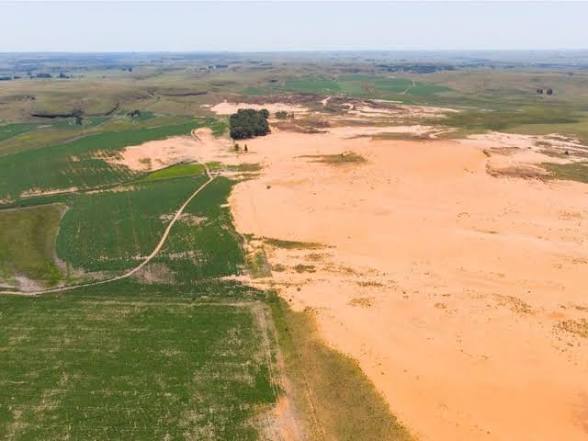
Come to think of it, Mother Earth is the only mother whose children are hell-bent on turning her barren, out of greed. We do this by double-dealing, on the one hand with the mother and on the other with her enemies. It seems to me as though we love coming to her in the morning, saying “Oh, Mama, give us today our daily bread”, and then going behind her back and setting the bakery on fire at night! I mean, it’s no different when the so-called most intelligent species, numbering up to 8 billion, dedicates its intellect to deforestation, overgrazing, poor agronomic practices, open-pit mining, and other unsustainable land-use practices that strip land of vegetation, exhaust soil nutrients, and disrupt the water cycle; all while expecting the mother to keep providing us with every ecosystem service as if nothing happened. But it is simply an “inevitable consequence of nature” [to borrow from Prof. Brian Cox] that when we stretch dryland ecosystems to their breaking points, they turn into arid wastelands – read: deserts – or, more appropriately, “sandlands”.

As a matter of fact, whichever way one sees the bad guy, the truth is that Mr Desertification hardly ever acts alone. In the Sahelian ecological region of Northern Nigeria and other regions globally, he almost always works with Madam Earth’s children to damage her reproductive organs. Now, that’s a bad revelation. Meanwhile, the good news is that not all her children are the same. Some good Samaritans have even been working to extinguish the fire, in which case they deserve some support; some conspire against her out of ignorance, in which case they can do with some education; and so on – hence this call to action.

Here, forgive me for introducing the Greek philosopher Aristotle. It was his idea that writers, in fulfilling their duty, should try to structure arguments around the three fundamental pillars [modes] of persuasion, the rhetorical triangle: Ethos, Pathos, and Logos. Ethos concerns the communicator’s credibility; Pathos, the audience’s emotions; and Logos, the logical reasoning contained in the presentation.

Long story short, since this writer is not an authority on the subject in question, he ought not to suggest any social behavioural change straight out of his moro-moro head. He is simply to convey the message of the world’s most credible Who’s Who on the issue: namely, the United Nations Convention to Combat Desertification (UNCCD).

According to the UNCCD, humanity destroys about 10, 20, 30, 40, 50 …100 million hectares of productive land every year. The first time I read this, I was shocked. I knew that we cleared up to 10 million hectares of forest land annually, but I didn’t know that we were destroying the rangelands, grasslands, and so on at that rate. For perspective, damaging 100 million hectares of land annually is equivalent to losing the whole of Egypt. Or, better still, destroying the equivalent of four football fields every second. Most probably, this message would make more sense to us if the changes were happening right before our eyes. Imagine two countries playing a game in the ongoing World Cup, only for the stadium to turn into a total desert in a second. The World Cup would likely be asked to give way for an emergency UNCCD Summit.

In fact, there is no doubting it, the more land we allow to desert encroachment, the more likely we are to go to war with each other. That is why, in 2020, during a UN Security Council meeting to discuss ‘Maintenance of international peace and security: the humanitarian impact of environmental degradation and peace and security’, Ibrahim Thiaw, Executive Secretary of UNCCD, said: “In arid lands, such as in Africa’s Sahel region, violence often erupts over competition for access to depleted land and scarce water resources.” He then went on to outline three factors that are adding fuel to the fire: over-dependence on natural resources by rural dwellers; shrinking resources due to land degradation, drought, and climate change; and high population density.

All of these are self-evident. In Northern Nigeria, the conflict between farmers and herders over scarce natural resources is a vivid case of that. It’s also common knowledge that Lake Chad has lost up to [a staggering] 90% of its surface area since the 1960s, shrinking from 26,000 km2 in 1963 to as low as <1,500 km2 in 2018 when the United Nations Environment Programme (UNEP) published the story “Tale of a disappearing lake”. These affect millions of people.

There is no question whatsoever: drylands are the closest bus stops to deserts and are therefore the major victims of desertification. Now, let’s go back to Bonn to collect some statistics from the UNCCD again. Covering up to 41% of the earth’s land surface, mainly in developing countries of Africa and Asia, drylands are home to more than 2 billion people. And because more than 70% and 20% of them are rangelands and grasslands, respectively, half of the world’s livestock and up to 44% of crops are produced from drylands. How essential are they?

Meanwhile, right now, as scientists say, up to 40% of the world’s land is already degraded, directly affecting over 3.2 billion people. Also, land degradation and droughts cost the global community an estimated eye-watering $878 billion every single year. Isn’t that a lot of money to squander on making the earth look like the surface of Mars, huh?! For me, turning the green planet into another red planet is a cold, dry, bitter joke.

As the Roman Philosopher-Emperor Marcus Aurelius put it 18 centuries ago, “You can commit injustice by doing nothing”. Indeed, this is an issue on which neutrality is complicity. It now makes more sense to me what one of my mentors once told me, for which I must quote him verbatim: “Mr Idris”, he said, “you see, doing nothing is such an expensive hobby…” Suffice it to say that if we continue to ignore this crisis, the financial and physical hangover will be brutal. Well, it actually already is.

I don’t want to go into a discussion of the need for governments and big corporations to invest $1 billion a day until 2030 to meet global land restoration targets, which, in fact, is precisely required. I know it might sound like a hefty price tag, but it is actually the ultimate buy-one-get-one-free deal. We know for a fact that for every $1 invested in healthy land, the economic return ranges from $7 to $30. It turns out that, under this realistic assumption, saving the planet is highly profitable.

While not everything can be detailed in an article this short, addressing desertification isn’t rocket science. We know how to do it well enough. The solution simply requires a massive shift. We first need to address deforestation and work toward restoring already degraded lands. Farmers need to switch to smart agricultural methods that protect the soil. If we can save rainwater and give the soil periodic holidays to “fallow”, we definitely can stop the deserts from winning. I tell you all these because I have a modest understanding of the basics. After all, I am a development practitioner who envisioned a climate-resilient, food-secure sub-Saharan Africa and whose work and current focus span sustainable land-use practices, assisted natural regeneration, and agroforestry and livelihood systems in Nigeria.  

In 1994, the UN General Assembly established the UNCCD and declared June 17 as the World Day to Combat Desertification and Drought. Since then, June 17 has been commemorated to raise awareness of solutions to land degradation, drought, and desertification. The theme for this year, 2026, is “Rangeland: Recognise. Respect. Restore.” As this writer presumes we all know what rangelands are, it’s fair to allow relevant MDAs, such as the Ministries of Agriculture, Environment, and Livestock, and initiatives such as the African-led Great Green Wall Initiative, to deliver their mandates in peace. At the same time, we equally do our parts as individuals and as groups.

Therefore, the choice before us is simple, yet likely embarrassing depending on how we manage it. We can either continue on our current path, in which case we will watch our favourite green spaces turn to dust, or we can take a stand today to save life on land. Because if we don’t desert our destructive habits right now, the desert is going to move in and claim our dessert (dessert, not desert). My ancestors would say, “Dabara ta rage wa mai shiga rijiya.”

There I lie.

Abubakar Idris Misau, a Forestry and Wildlife graduate from the University of Maiduguri, writes from Akure, Southwest, Nigeria. He is reachable via email abubakar.consult@gmail.com.
Zubaida Umar and the Slow Rebuilding of Preparedness Culture

By Abdulhamid Abdullahi Aliyu

Nigeria has become dangerously familiar with the ritual of disaster. The warnings often come early, the forecasts are circulated, vulnerable communities are identified, and officials hold preparedness meetings. Yet when the floods finally arrive, or fire tears through crowded markets, or another preventable emergency pushes families into distress, the country still reacts with the same confusion, urgency and humanitarian panic, as though tragedy appeared without notice.

It is one of the ironies of public life in Nigeria that disasters are rarely taken seriously until they become spectacles. Before then, they exist as predictions, advisories, technical reports, stakeholder meetings and public warnings. Afterwards, they become breaking news, condolence visits, emergency relief, public anger and committee recommendations. Between those two moments lies the real weakness of the system: the stubborn national habit of knowing danger in advance but failing to prepare adequately for it.

This is the difficult terrain in which the National Emergency Management Agency, NEMA, operates. To many Nigerians, the agency is most visible in moments of distress, when flood victims need support, when displaced persons require relief, when fire victims are counting losses, or when communities suddenly discover the meaning of vulnerability. But the true measure of an emergency management institution is not only what it does after a tragedy has occurred. It is also what it can prevent, reduce, coordinate, and anticipate before the situation becomes a national emergency.

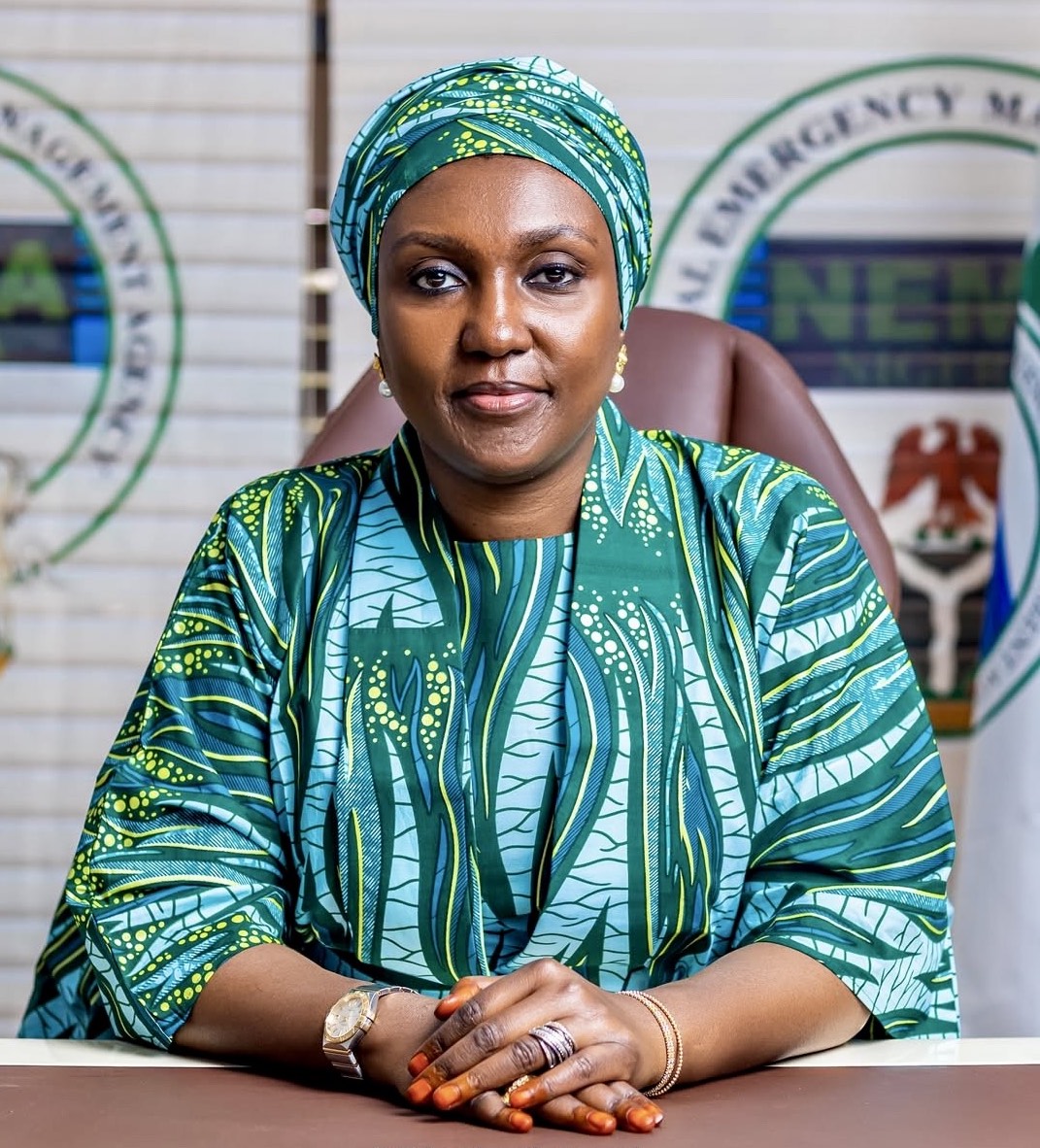
That is why the two-year stewardship of Mrs Zubaida Umar as Director General of NEMA deserves a more thoughtful reading than routine anniversary praise. When President Bola Ahmed Tinubu approved her appointment in March 2024, the expectation was not merely that another public officer would occupy another office. The assignment carried the heavier burden of strengthening operational discipline, improving coordination and repositioning the agency toward a more proactive model of emergency management. Two years later, the useful question is not whether disasters have disappeared. They have not. The real question is whether there are signs that the agency is beginning to think differently about its mandate.

Perhaps the most important development under Umar is not the kind that announces itself loudly. It is not found only in relief distribution photographs, ceremonial visits or official statements. It is evident in a gradual institutional shift from reaction to anticipation, from waiting for disaster to happen before mobilising to placing greater emphasis on preparedness, early warning communication, simulation exercises, inter-agency coordination, and community-level sensitisation.

This shift may appear modest to the casual observer, but in Nigeria’s emergency management culture, it is significant. The country’s problem has never been simply the absence of warnings. Flood forecasts are issued. Meteorological advisories are released. Hydrological risks are mapped. Vulnerable states and communities are repeatedly mentioned. Environmental experts warn against blocked drainage and settlements along waterways. Yet the same cycle continues because warnings, in themselves, do not save lives. They only become useful when they are understood, trusted and acted upon.

For years, Nigeria has struggled to convert prediction into preparedness. Communities remain in danger zones long after alerts have been issued. Drainages remain blocked despite annual warnings. Buildings continue to rise where water must naturally pass. Local structures often wait for Abuja. Citizens sometimes treat evacuation advice as government disturbance until water is already at the door. By then, emergency management becomes more expensive, more chaotic and more painful.

It is within this context that NEMA’s renewed attention to grassroots sensitisation becomes important. Across several states, the agency has intensified preparedness campaigns aimed at reducing the gap between forecast and response. One of the more telling examples was the flood preparedness campaign in Ebonyi State, where the engagement moved beyond formal speeches and stakeholder protocols into direct community interaction. Emergency officials went into vulnerable communities, spoke in local languages, distributed safety information, and discussed flood risks, evacuation culture, and prevention measures with residents.

That may look ordinary on paper, but it carries a deeper meaning. A warning trapped inside a technical report is not yet a warning. A forecast discussed only in Abuja has not fully served the woman whose house sits near a riverbank, the farmer whose farmland will be submerged, the school head who must protect pupils, or the local leader whose community may need to move before danger arrives. Disaster communication becomes meaningful only when it reaches ordinary people in the language of their daily reality.

This is one of the most important lessons Nigeria must learn. Preparedness is not achieved by issuing statements alone. It requires translation, persuasion, repetition and trust. It requires taking risk information from conference halls to communities, from policy language to household action, from official alerts to behavioural change. In that sense, public communication is not an accessory to emergency management; it is one of its strongest instruments.

The same logic applies to coordination. Disasters do not respect institutional boundaries. A flood is not only a NEMA issue. It is an environmental issue, an urban planning issue, a housing issue, a public health issue, a food security issue, a security issue and, quite often, a governance issue. When water overruns a community, it affects homes, roads, schools, markets, farmlands, hospitals and livelihoods at the same time. No single institution can carry that burden alone.

This is why the increasing emphasis on multi-sectoral coordination under the current leadership is notable. The agency’s engagements with ministries, departments and agencies, state emergency structures, security agencies, humanitarian partners and technical institutions suggest a clearer understanding that NEMA’s strength lies not in behaving like a lone responder, but in making the wider emergency management ecosystem function better. In a federal system where fragmentation often weakens public response, that coordinating role is not a small matter.

There is also a growing recognition that modern emergency management must be more technical than sentimental. It must be driven by data, monitoring, logistics planning, early warning systems, communication flow and rapid decision-making. This explains the growing relevance of structures such as the National Emergency Operation Centre, which serves as the command-and-coordination infrastructure required for monitoring and responding to serious disasters. Such systems may not excite the public in the way dramatic rescue scenes do, but they are central to the quiet work of preventing confusion before it becomes costly.

Simulation exercises also belong to this quieter but more serious side of emergency management. Nigeria has never been poor in policy documents; the problem has often been what happens when real pressure arrives. Preparedness drills help institutions identify their weaknesses before a disaster exposes them. In an emergency, questions that look simple in a meeting can become decisive on the field. Who leads the evacuation? Who communicates verified information? Who coordinates medical response? Who controls movement? Who protects children, women, older persons and persons with disabilities? Who documents needs and prevents duplication? The difference between order and confusion often lies in whether such questions were answered before the crisis.

The increased emphasis on rehearsals, simulations, and preparedness drills, therefore, suggests an agency seeking to move from theoretical to practical readiness. The process may be gradual, but the direction is important. A country that waits for every disaster to teach it the same lesson again has not taken preparedness seriously.

The wider humanitarian environment also makes this change unavoidable. Flooding remains one of Nigeria’s most devastating recurring threats, but it is not the only one. Urban fires, tanker explosions, building collapses, communal displacement, food insecurity, climate shocks and other emergencies have expanded the meaning of vulnerability across the country. A serious emergency management institution can no longer think narrowly or seasonally. It must understand how climate, poverty, infrastructure failure, insecurity, public behaviour and weak local governance combine to create disasters.

This broader thinking is beginning to reflect in NEMA’s engagement with issues such as food security, climate vulnerability and community resilience. That is an important evolution. In today’s Nigeria, food insecurity is not merely an agricultural concern. Floods destroy farms. Conflict displaces farming communities. Climate shocks weaken harvests. Poor roads and insecurity disrupt supply. Once these pressures converge, they become humanitarian problems. Emergency management in the 21st century is therefore not simply about distributing rice, mattresses and blankets after tragedy. It is about understanding risk before it matures into a crisis.

Still, any honest assessment must avoid the temptation of easy celebration. Nigeria’s emergency management architecture remains burdened by serious structural weaknesses. Many state emergency management agencies are still underfunded or poorly equipped. Local emergency management committees are inactive in many places. Urban planning violations continue with impunity. Floodplains are still occupied. Drainage systems remain poor across several cities. Citizens still ignore warnings. State and local authorities too often treat disaster preparedness as a seasonal ritual rather than a governance responsibility.

These are not problems one Director General can solve alone, and it would be unfair to pretend otherwise. But leadership matters because it sets institutional tone. It determines whether preparedness becomes a culture or remains a slogan. It influences whether an agency merely reacts to tragedy or begins to organise itself around prevention, anticipation and coordinated readiness. It shapes whether the system waits for sympathy after loss or pushes harder for discipline before loss.

It is not a transformation that should be overstated. Floods have not stopped. Fire outbreaks have not disappeared. Communities still suffer avoidable losses. Operational gaps still exist. But there are visible indications that the agency is increasingly speaking, and slowly institutionalising, the language of preparedness, coordination, public education and anticipatory action. In a country where public institutions often confuse activity with progress, even this shift in emphasis is worth noting.

Some achievements in public service are loud because they are visible. Others are valuable because they prevent losses that the public may never fully count. A community that evacuates early may never become headline news. A market that takes fire safety seriously may never trend online. A state that prepares before floodwater rises may not attract national attention. Yet these quiet outcomes are often the real victories of emergency management.

As Nigeria moves through another season of environmental uncertainty and humanitarian pressure, emergency management must no longer remain an afterthought, activated only after tragedy strikes. State governments must strengthen their emergency agencies. Local governments must revive community response structures. Traditional and religious leaders must help translate warnings into action. Citizens must stop treating risk alerts as routine government grammar. The media must give preparedness the same urgency it gives to disasters.

Two years into Zubaida Umar’s leadership, the agency appears to be attempting something important: the slow rebuilding of a preparedness culture in a country too accustomed to panic after warning signs have been ignored. It is an unfinished journey, certainly. But it is also a meaningful one.

Nigeria may never fully escape disasters. No country does. But stronger institutions can prevent familiar hazards from repeatedly becoming national tragedies. That, ultimately, is the real test of emergency management, and perhaps the quiet significance of the institutional shift now taking place at NEMA.

Abdulhamid Abdullahi Aliyu is a journalist and syndicated writer based in Abuja.

Empowering Nigerian Youth for Climate Action

By Esther Remilekun Abidoye

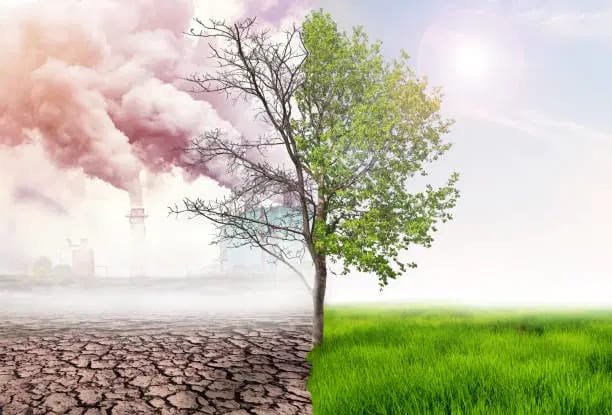
Climate change is no longer a distant concern; its effects are increasingly visible in every part of Nigeria. Rising temperatures, erratic rainfall, desertification, floods, and droughts are disrupting lives, threatening livelihoods, and weakening the nation’s environment, economy, and public health.

While every segment of society feels these impacts, young people are among the most affected. This is because many depend directly on natural resources and environmental stability for their daily survival and future prospects. Yet, Nigerian youth also hold the greatest potential to lead the fight against climate change due to their energy, numbers, creativity, and adaptability.

Mobilizing Youth for Climate Action

Governments, NGOs, and research institutions can play a vital role in empowering young Nigerians to take action. One effective way is through awareness campaigns. Youth are the most connected demographic in today’s digital world, with social media providing an accessible platform to share information, educate communities, and advocate for change. By equipping young people with knowledge and communication tools, they can become powerful voices spreading climate awareness across Nigeria.

Sustainable Agriculture and Green Jobs

Another promising avenue is sustainable agriculture. Training and equipping youth with eco-friendly farming techniques can help reduce environmental degradation while generating income. With proper funding, access to modern tools, and technical support, young farmers can adopt climate-smart practices that boost food security, create jobs, and protect the ecosystem. Both urban and rural youth stand to benefit from such programs, making them central to Nigeria’s environmental and economic resilience.

Tree Planting and Environmental Stewardship

Youth involvement in tree-planting initiatives can also promote environmental protection and wealth creation. Communities could designate land for economic tree planting, allotting small plots to individuals or groups of young people. Over time, these trees would not only enrich biodiversity and combat desertification but also provide financial returns when mature. Greening Nigeria’s cities and towns through such schemes can transform urban landscapes, generate employment, and foster a culture of environmental stewardship.

Technology and Renewable Energy Innovation

Nigeria’s tech-savvy youth can further drive progress through innovation in renewable energy. Training young people to design, fabricate, and maintain solar or wind-powered systems can create new green industries. This approach not only addresses energy challenges—especially with frequent power outages and the removal of fuel subsidies—but also encourages local manufacturing and entrepreneurship. Despite challenges like fluctuating fossil fuel prices and material shortages, the growing awareness and acceptance of renewable energy across Nigeria point to an opportunity for youth-led innovation.

In conclusion, engaging youth in climate action is not just a strategy; it is a necessity. By investing in awareness, sustainable farming, tree planting, and renewable energy initiatives, Nigeria can harness the power of its young population to tackle climate change head-on. Empowered youth bring creativity, energy, and determination, ensuring that environmental protection becomes a shared mission for a sustainable future. Through these collective efforts, Nigerian youth can truly become the driving force behind a greener, more resilient nation.

Esther Remilekun Abidoye, Department of Mass Communication, University of Maiduguri.