CITAD

CITAD launches digital tech forum to shape Nigeria’s AI future

By Uzair Adam

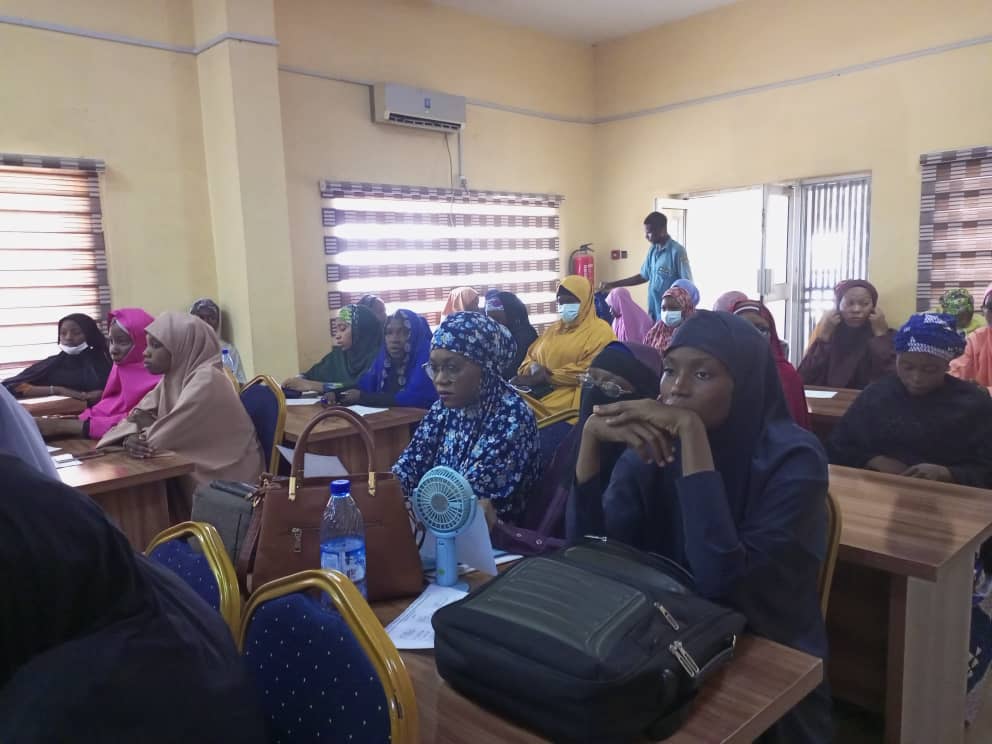
The Centre for Information Technology and Development (CITAD) has launched the maiden edition of its Digital Tech Policy Forum to deliberate on the urgent need for a national Artificial Intelligence (AI) policy framework in Nigeria.

Held in Kano under the theme “Towards a National AI Policy,” the event gathered academics, policymakers, and technology experts to examine the ethical, governance, and infrastructural issues shaping Nigeria’s digital landscape.

In his opening remarks, CITAD’s Executive Director, Malam Yunusa Zakari Ya’u, said the forum aims to foster continuous dialogue between policymakers, academia, and civil society on emerging digital challenges.

He stated, “Our goal is to ensure that technology policy in Nigeria is not reactive but proactive. This forum will serve as a bridge between research and policy, ensuring that innovations like AI are guided by ethics, inclusivity, and human-centered values.”

He added that the forum would convene monthly to discuss critical digital policy matters, stressing that a robust and inclusive national AI policy is vital to building public trust in technology-driven governance.

Participants identified several challenges hindering Nigeria’s AI readiness, including the absence of a national AI policy, infrastructural deficits, ethical concerns in academia and media, and growing fears over data privacy and algorithmic bias.

Head of the Department of Computer Science at Bayero University, Kano, Dr. Hadiza Umar, emphasized that the rapid expansion of AI technologies in Nigeria calls for immediate policy intervention.

“AI is transforming every sector—from education to health and agriculture—but without regulation, it can also deepen inequality. We need a roadmap that balances innovation with accountability,” she warned.

Similarly, Engr. Rabi’u Haruna, former Chairman of the Kano Chapter of the Association of Professional Bodies of Nigeria (APBN), highlighted the importance of collaboration among government, academia, and industry stakeholders.

“Policy without professional input will not work. The government must listen to experts and practitioners if we truly want an AI ecosystem that serves Nigerians rather than exploits them,” he said.

Also speaking, Malam Aisar Salihu Musa, a lecturer at the Department of Mass Communication, Kano State Polytechnic, expressed dissatisfaction with the ongoing trend of unprofessional usage of AI on social media and in academia.

Musa stated that the menace has contributed to the growing concern over the spread of fake news on social media, citing an incident where the picture of Engineer Rabi’u Musa Kwankwaso, the former Kano State governor, was altered by AI to change his red cap, causing confusion about which image was authentic.

He further called on the government to be among the first adopters of policymaking on AI usage.Dr. Sanah Abdullahi Mu’az of Bayero University’s Software Engineering Department cautioned against the misuse of AI in education.

She stated that, “We are already seeing AI-enabled plagiarism among students. Universities must adopt clear AI-use policies to protect the integrity of academic work while promoting responsible innovation.”

Adding a policy perspective, Kano State Commissioner for Information, Science, Technology and Innovation, Dr. Yusuf Ibrahim Kofar Mata, revealed that the state government has begun developing a Hausa-language AI chatbot.

He explained that, “This initiative is about taking AI to our grassroots. We are building a tool that farmers, students, and traders can use in their own language to access vital information on health, education, and commerce.”

He pledged that the ministry would assign a permanent representative to the forum and establish a committee to align AI policy deliberations with state planning efforts.

At the close of the meeting, participants agreed that Nigeria must move from being a passive consumer of foreign AI technologies to an active innovator and regulator within the global AI ecosystem.

“The future of AI in Nigeria,” Ya’u concluded, “depends on our ability to build policies that are not just about technology—but about people, trust, and shared prosperity.”

Tribute to Malam Mu’azu Muhammad Yusif

By Ibrahim Lawal Ahmed

On September 9th, 2023, friends, colleagues and students of Malam Mu’azu Muhammad Yusif, more popularly called M.M. Yusif, gathered to honour and celebrate his long academic service at the Centre for Information Technology and Development (CITAD), Kano, by remembering the old days and reflecting on the transformation the academia has been going through in Nigeria. Malam M.M. Yusif recently retired from the Department of Political Science, Bayero University, Kano, and the occasion was a kind of send-off party.

It was indeed a robust discussion that involved personalities such as Mal. Ibrahim Mu’azzam, Dr. Y.Z. Ya’u, Dr. Nasir Fagge, Prof. Ibrahim Bello-Kano (IBK), among others. As expected, the debate spiralled from eulogising the celebrant to discussion on the character of students and teachers in the universities in Nigeria, the current system of running the university, the struggles of and in the Academic Staff Union of Universities (ASUU), and the neoliberal world order and its effects in Nigeria, particularly on the universities. 

In short, the discussion is a dialectical cross-examination of factors within the university and how their interrelationship is influencing the university education in Nigeria; the relationship between the university and the society (town and gown relationship); and the relationship between the university and the state. The relationship between the university and the state is at the centre of the ASUU issue.

University has been the life of Malam, and as one of the longest-serving chairmen of ASUU, BUK Chapter, ASUU is a union very close to Malam. Therefore, I can imagine his feelings as he witnesses and reflects on the last two battles between ASUU and the government (2020 and 2022) that almost destroyed the public universities in Nigeria. The fundamental issue of ASUU-FGN conflict, in my view, is not the non-payment of allowances but the reductionist approach to governance by the government, which entails decreasing concern for the institutions that provide welfare to the people and total neglect of the idea of ‘public good.’ The result is the systematic collapse of the social contract (and compact) and rising political cleavages, a pre-bendel form of primitive accumulation and rentierism (or sycophancy) which results in the concentration of wealth in the hands of a few. 

Consequently, as the rich get richer and the poor get poorer in Nigeria, commodity fetishism becomes the defining feature of the social relations in Nigeria. In other words, money is now the moral compass in Nigeria. The needs and wants of the average Nigerian are reduced to his stomach – you have to eat for you to think, for when you speak to a hungry man, he answers you with his stomach – as such, ASUU is faced with an enormous challenge of mobilising the society to back its course on its battles with the state. 

Moreover, people are tired of the classical tactics of strikes always taken by ASUU, which, in the last two years, have hurt the university education system more than they have salvaged it. Thus, one key takeaway from the gathering is that ASUU needs to reinvent itself. While remaining steadfast to its goals that are of public interest, it has to change tactics.

Similarly, government at all levels has to pay more attention to the educational sector. To improve education, efforts should focus more on qualitative development rather than the current quantitative development, which prioritises establishing tertiary institutions in remote areas primarily due to trivial political reasons. This is not right. Situating schools and tertiary institutions has to take comprehensive cognisance of the environment. The questions such as how the town will support the gown at its embryonic stage and how the gown will support the city at maturity have to be asked. Answering these kinds of questions requires a comprehensive analysis of the infrastructure (both hard and soft), human and physical factors in the environment where the school or tertiary institution is to be situated. The late Sir Ahmadu Bello set a notable example in establishing Ahmadu Bello University in Zaria. He could have stayed in Sokoto or Maiduguri. However, considering several factors, Zaria is strategically better suited to host the university. Such was a good leader who has vision that transcends personal and primordial interest.

Indeed, the issue of education in Nigeria cannot be left to the government alone. It is a social issue; therefore, it requires an All-of-Society-Approach – from parents, to community leaders, traditional rulers, commercial and industrial enterprises, all have to be involved, especially regarding financing the education. The policy of student loans will not work because the socioeconomic condition of Nigeria is not prosperous enough to favour such a policy. In fact, in some advanced countries, the policy is problematic and an obstacle to social mobility, thereby facing harsh criticisms. The students need grants, not loans. And the wealthy Nigerians have to be philanthropic towards our educational institutions, especially the tertiary institutions. There is no more rewarding investment than investment in education,though it takes time to ripen. There is no better way to empower the youth in Nigeria than through education. The proper education enhances the ability of citizens to think. And unless one can think and understand the complexity of the present world, one can not address one’s personal problems, let alone those of society.

The courses taught by Malam M.M. Yusif aim to help students understand this complex world by interrogating the institutions that hold it up. To teach such courses requires a special personality. Therefore, as his recent student, the gathering was an opportunity for me to know more about my teacher. I listened attentively as his friends and colleagues kept mentioning his academic contribution to social issues that include gender studies, labour studies, and military studies, among many. But one standing quality and lasting legacy of Malam is mentorship. Malam put a lot of his energy into guiding his students. 

He utilised his resources to acquire high-quality materials and provide practical work for his students. He is a teacher who loves questioning and never penalises you for your inability to answer a question. For him, the most important thing is for the students to attempt to answer the question brilliantly. He always has time for his students. 

One day, I visited his office to discuss some concepts I didn’t understand. After explaining the concepts to him, I complained, “Sir, I am confused.” He responded, “Do not worry, Ibrahim. This means you are learning.” It was on that day that I learnt that learning is full of confusion. If you are finding learning easy, then you are probably not learning anything new.

It will take time to fill the gap that Malam M.M. Yusif is leaving in the academia, particularly in the Department of Political Science at Bayero University. I am glad and proud that he has had an accomplished academic career. We, his students, cherish the memory and are thankful for the way he has taught and mentored us. May it please Allah that Malam has a peaceful and happy retired life.

CITAD launches tracking app, trains traditional leaders on technology in public project fast-tracking

 By Sabiu Abdullahi 

The Centre for Information Technology and Development (CITAD) held a workshop promoting transparency and accountability in governance through technology in public project tracking. 

Held at Bauchi’s NUJ Secretariat Complex, key speakers included the Director of Planning, Ministry of Budget, Economic Planning, and Multilateral Coordination. 

CITAD launched its Office of the Citizens app, which enables citizens to track government-funded projects, monitor progress, and report discrepancies. 

In a statement it released on Thursdsy, CITAD said, “The Centre for Information Technology and Development (CITAD) successfully conducted a one day workshop aimed at promoting transparency and accountability in governance through the application of technology in public project tracking.

“The event, which took place at M.A Abdullahi Conference Hall, NUJ Secretariat Complex, Bauchi on Thursday 17/10/2024, highlighted the critical role of technology in ensuring that government projects are completed on time and within budget.

“The highlight of the program was the presentation of CITAD’s Office of the Citizens, an innovative Android mobile application designed to empower citizens by providing real-time updates on government-funded projects and enabling public oversight.

“The app allows users to track the allocation and expenditure of public funds, monitor project progress, and report any discrepancies.”

On his part, Mujahid Ibrahim, the Chief Officer of CITAD in Bauchi stated that, “Public project tracking is essential for transparency and accountability. With tools like the Office of the Citizens app, we give citizens a voice to engage governments and demand proper resource use.”

The event included hands-on training and discussions on challenges, solutions, and best practices. 

CITAD will promote the app, conduct trainings, collaborate with government bodies, establish feedback mechanisms, and foster partnerships.

CITAD, partners push for domestication of Freedom of Information Act (FoI)

 By Sabiu Abdullahi 

The Centre for Information Technology and Development (CITAD) and its partners, under the Open Government Partnership (OGP), urged the Ministry of Information to commit to domesticating the Freedom of Information Act (FOIA) in the state. 

Mujahid Ibrahim, CITAD’s co-secretary, led the advocacy visit alongside Lawal Bako, representing state actors. 

In his speech, Mujahid reiterated the importance of transparency in governance and the affairs of running public service. 

Below is the full text of his speech: 

Speech to the Hon. Commissioner, Ministry of Information, Bauchi State Honorable Commissioner

Distinguished Ladies and Gentlemen,

All Protocols Observed, 

It is a great privilege to stand before you today on behalf of the Open Government Partnership (OGP) Steering Committee, to commend the Ministry of Information and the entire Bauchi State Government for the strides made in advancing transparency and good governance. 

I especially want to recognize His Excellency, the Governor, for his bold decision in signing Bauchi State into the Open Government Partnership in November 2022. 

This commitment to openness and accountability is commendable and stands as a beacon for other states to follow. As you are aware, the Freedom of Information Act (FOIA) was signed into law at the national level in 2011, providing the legal framework for citizens to access vital information that promotes accountability and good governance. 

While this law exists nationally, the benefits it offers can only be fully realized when it is domesticated at the state level. This is why we are here today: to seek the Ministry’s invaluable support in pushing for the domestication of the FOI Law here in Bauchi State. 

Honorable Commissioner, Bauchi State’s signing into the OGP is a testament to the state’s resolve to remain at the forefront of open governance. 

However, for this resolve to translate into practical, everyday benefits for the citizens of Bauchi, the FOI Law must be domesticated. It is through such domestication that citizens will be empowered to access information freely, ensuring that public institutions remain transparent and accountable to the people they serve. 

Your Ministry, being the voice of the government, plays a crucial role in ensuring that this process is initiated and sustained. 

We believe that with your leadership and support, Bauchi State can once again take the lead in promoting openness, fostering an inclusive governance system, and enhancing citizen participation. 

We therefore solicit your commitment and that of the Ministry toward making the FOI Law a reality in Bauchi State. 

Together, we can create an environment where information flows freely, fostering trust between the government and its citizens. We are confident that with the Ministry’s dedication, this important law will be domesticated, marking yet another milestone in Bauchi State’s governance journey. 

Thank you for your time and attention, and we look forward to working closely with you on this endeavor. God bless Bauchi State.God bless Nigeria. 

Thank you.

Covid: CITAD awards another winners of Covid-19 vaccine campaign

By Aisar Fagge

The Centre for Information Technology and Development (CITAD) has awarded another set of Covid-19 vaccine champions on identifying, tracking and countering Covid-19 related false narratives, rumours, misconceptions and disinformation on social media platforms.

The program tittled “Public Education on COVID-19 Vaccine Project” was aimed at educating, informing and sensitizing people on the importance of Covid-19 vaccine with a view to counter false narratives about it.

Supported by MacArthur Foundation, the centre has been working with 18 partner organizations and social media influencers in six selected states from Northern Nigeria to enlighten the public about the vaccine through various activities and programmes.

Recalled that, Covid-19 is a communicable respiratory disease that terrorises the entire world, leading to the death of number of people and set the economies of hundreds of nations in limbo.

The details on the event was in a statement signed Wednesday, 14th September 2022, by the coordinator of the campaign, Mal. Hamza Ibrahim.

The statement reads in part: “CITAD received 93 applications from young people who want to be champions and 18 of them were selected from six northern states – Kano, Kaduna, Bauchi, Borno, Plateau and Kogi State and trained for two days.”

“After their training, they embarked on daily campaigns on tracking, countering and persuading people to take the vaccine. They submitted reports of their campaigns at the end of every month and the reports were shared with panel of judges who review, assess and subsequently selected the best three who are then regarded as the Covid-19 champions.”

“In this fourth round of the competition, Sumayya Abdulaziz from Kaduna emerged in the 1st position with 97 points and got Hisense refrigerator. Mundi Ilyasu from Kogi State emerged 2nd with 75 points and was rewarded with Plasma TV. From Bauchi State, Abdullahi Barau emerged in 3rd position with 70 points and went home with a mini laptop.”

Kano records 7 rape cases in June – CITAD

By Muhammad Aminu

No fewer than seven cases of rape were reported with some involving minor in various parts of Kano State in the month of June alone.

This was revealed by the Gender-based Violence (GBV) monitoring team of the Center for Information Technology and Development (CITAD) during a press briefing on Thursday, 21st July, 2022 in Kano.

CITAD’s GBV project manager, Zainab Adamu said there are reported cases of various Gender-Based Violence on the increase in the State.

She said online harrassment, sexual abuse and harrassment have significantly increased in June when compared with reported cases in May.

“Rape cases were 7, Online Harassment 22, Sexual Blackmail 8, Sexual Harassment60, Sexual Abuse39, Wife Battering 3 while School Violence1, she noted.

She stated that the data collected for the month of June showed “In comparison with the data obtained in previous months, GBV cases are still on the increase. 140 cases were reported via our GBV App for the month.”

According to her, CITAD’s GBV App and Sustained awareness creation have increased people’s reporting of the GBV hence the need to have perpetrators brought to justice.

“The GBV Offenders database which the government adopted recently will go a long way in curbing the menace as offenders will rather desist from the act than to be publicly shamed.

“As much as we continue to monitor and report, we will like to appeal to parents, relatives and others to always report cases to the various agencies handling GBV cases. Keeping silent will not protect the victims who suffer. It encourages the perpetrators to take this silence as a stamp of acceptability, she added.

She reiterated CITAD’s call to Kano State Government to create Special court for GBV related cases and monitoring units in schools to help check GBV in schools to enable students particularly female students to be protected from abuse.

She appealed to all other stakeholders and the general public to lend their support and cooperation to combat Gender-Based violence both physically and virtually.

Youths tasked on eschewing hate speech, constructive use of new media 

By Muhammad Aminu 

Youths have been advised to eschew hate speech and use new media constructively for peacebuilding and sustaining peace and peaceful coexistence in their communities.

A communication expert and media scholar, Dr Ruqayya Yusuf Aliyu, gave the advice while engaging youths in a Critical Knowledge Production Dialogue Organised by the Center for Information Technology and Development (CITAD) on Wednesday.

Dr Ruqayya, who discussed the Roles of Youths in Peace Building From a Communication Perspective, said youths play active roles in conflict and peacebuilding situations due to their agility and activeness.

She reminded the youths that peace and peaceful coexistence are the bedrock for the development of any society.

“Youths can be used for good or bad, peace or violence; hence it’s imperative that they know the importance of their roles in peacebuilding in their communities.

“Although conflict is inevitable in any society, managing it matters most in escalating or de-escalating the situation, ” she added.

“You can be partisan, but avoid hate speech and use new media positively.

According to her, communication is relevant in peace building through mobilisation, advocacy, persuasion and behaviour change among the youths.

In another development, CITAD, in collaboration with eTrash2Cash, has trained 220 low-income women on plastic waste entrepreneurship in Bauchi.

Chief Executive Officer (CEO) of eTrash2Cash Abdullahi Salisu said the participants were trained to convert plastic waste into weaved bags, shoes, bangles, and flower vases, among others.

He said:” Items made from these wastes seem so original and authentic that one cannot tell if they are made from the “wastes” we improperly dispose of. Perhaps, one of the main reasons why so much keen interest is evident in the faces of the women beneficiaries.”

Some of the beneficiaries expressed their appreciation for the opportunity. 

Amina Bello and Hafsat Adamu said their newly acquired skills would enhance their living standard.

Hafsatu Adamu, while thanking the training organisers, said she benefitted greatly and had never known wastes could become useful in this way. “I’m proud to be a waste champion, and I will step down the training to my siblings, friends and immediate dependents,” she added.

According to Abdullahi Salisu, plans are underway to ensure that the trained women are continuously engaged and supported to keep cleaning the environment and support others to improve their lives and livelihoods.

Salisu said: “This social responsibility is continuous. It is non-stop. Other stakeholders have already expressed their interest to keep the impact going. We hope to keep engaging these beneficiaries through an innovation centre that will further help them in other areas of business development and entrepreneurship”.

Experts advise young women to utilize ICT to change society

By Muhammad Aminu

Experts have advised women and young girls, particularly in northern Nigeria to make judicious use of Information and Communication Technology (ICT) to better their lots and change society for the better.

The experts gave the advice at a roundtable discussion on the Challenges of Seeding and Nurturing Creativity and Innovation Among Young Women Organised by the Center for Information Technology and Development (CITAD) in Kano.

Aliyu Aliyu, an Independent Consultant, decried that socioeconomic and cultural barriers as well as inadequate role models to emulate are stifling women and young girls from actualising their full potentials in Nigeria.

Aliyu contended that women and girls are creative and problem solvers and that all they need are inspiration and mentorship to leverage digital technology to unleash their potential for their success and societal development.

“Young women need to use their time in a way that will better their lives, use social media in an effective and rewarding way, set their priorities and know how to achieve them, he added.

According to Dr Sana Muaz of the Department of Software Engineering, Bayero University, Kano, there are challenges for young women but with passion and zeal to excel, they can create a niche for themselves in society.

She advised girls to always understand a business idea well before venturing into it so that they can not just start a business but can build a sustainable brand in business against all odds.

She called on the participants to always remember their important position as women that other girls would look up to as role models.

In her contribution, Malama Aisha Bako, Chief Executive Officer, Onyx Investment Advisory Limited, challenged the participants to penetrate the ICT sector to make their contribution to society instead of wasting their resources on fruitless activities on social media.

“Platforms like TikTok and Instagram are paying huge amounts of money to those that know how to use them well,” she added.

The Chairman of the discussion, Prof. Asabe Mohammed while commended CITAD for the Initiative called on the participants to make the best use of the “unique opportunity” to improve their lives and society.

Earlier, CITAD’s head of Digital Creativity and Innovation for Girls (DICIG), Kamaluddeen Umar, said the programme is aimed at empowering girls to have access to digital skills in order to address the gender digital divide in Northern Nigeria.

He said: “The aim is to provide digital skills training for 200 girls (100 per year), to produce 80 digital entrepreneurs (40 per year) and create 160 new digital jobs for girls (80 per year).

“Selected participants were: girls between the ages of 18-30 who have a minimum secondary school education and are from Bauchi, Gombe and Kano States in addition to having an interest in building and running their business.”

According to Umar, the participants will undergo five phases of training basic, advanced, business ideation, business development support services market transition which some participants will be selected on the merit of their performance and business idea for awards.

2023: CITAD launches hate speech monitoring team

By Muhammad Aminu

The Center for Information Technology and Development (CITAD) has launched a hate speech monitoring team to monitor and record politically inclined cases of hate speech on social media as the 2023 general elections approach.

In a press briefing in Kano, the head of monitoring team, Malam Hamza Ibrahim, said the team would provide database for incidents of hate speech in Nigeria.

Mal. Ibrahim noted that monitors were trained to monitor utterances in both English and the Nigerian languages on the Nigerian political process leading to the 2023 election.

“The essence of the monitoring is to record instances of hate speech and sensitise stakeholders about them and devise strategies to counter them,” he said.

According to him, hate speech on social media when left uncountered could impede unity and diversity of Nigeria as a country.

He cautioned political actors to avoid engaging in hate speech in their electioneering as many elected political actors engaged in it during the 2019 elections.

“In 2019, politicians used hate speech for political gain and incited violence. Government elected officials used hate speech.

“Politicians need to be cautioned. We advised that as we approach the 2023 election, politicians’ utterances should be free from inciting violence and hate speech.”

He called on scial media influencers, bloggers and the media to support in countering hate speech which he described as “a cancer that must be eliminated.”

He regretted that youths were mostly used hence targeting the youths in CITAD’s intervention against the menace of hate speech.

He further revealed that June 18 was set aside by the United Nations to observe countering of hate speech. That signifies the serious attention it’s getting because of its roles in conflicts that could lead to loss of lives and displacement.

“It’s timely recognition by the UN because many lives were lost due to conflicts induced by hate speech,” he noted.

The team unveiled a publication titled “Extinguishing Hate Speech: Roles for Politicians, Religious and Community Leaders” to help guide key stakeholders to ensure peaceful election in 2013.

“It is based on researches across Nigeria with recommendation for political, religious and community leaders on how prevent and tackle hate speech,” he concluded.

In another development, CITAD converged a roundtable on the draft code of practice released by the National Information Technology and Development Agency (NITDA) to guide operations of major social media platforms in Nigeria.

Experts argued that while some parts of the codes were needed to checkmate the excesses of the giant tech, others were aimed at stifling freedom of speech and expression.

They called on Nigerians to have their inputs before the draft codes were operationalized in the country.

Covid: CITAD awards Covid-19 champions on enlightening, countering fake news

By Uzair Adam Imam

The Centre for Information Technology and Development (CITAD) has trained 18 covid-19 vaccine champions on identifying, tracking and countering Covid-19 related fake news on social media platforms.

The program tittled “Public Education on COVID-19 Vaccine Project” was aimed at sensitizing the public on the importance of covid19 vaccine and the need to take it with a view to promoting uptake of the vaccine.

Supported by MacArthur Foundation, the centre is reportedly working with 18 partner organizations and social influencers to enlighten the public about the vaccine through various activities and programmes.

However, COVID-19 is a communicable respiratory disease that terrorises the entire wold, leading to the death of number of people and set the nationwide economic back.

The details on the event was in a statement signed Saturday, May 28, 2022, by the coordinator of the campaign, Mal. Hamza Ibrahim.

The statement reads in part: “CITAD received 93 applications from young people who want to be champions and 18 of them were selected from six northern states – Kano, Kaduna, Bauchi, Borno, Plateau and Kogi State and trained for two days.”

“After their training they embarked on daily campaigns on the vaccine on social media. They submit reports of their campaigns at the end of every month and the reports are shared with panel of judges who review and assess and subsequently select the best three.”

“So, there is competition among the vaccine champions every month and the best three winners are selected and rewarded with gifts. This month, Hadiza Aliyu from Kano emerged in the 1st position and got Hisense refrigerator. Ashafa Abdulkadir from Kaduna and Hauwa Shettima from Bauchi State were the 2nd and 3rd position. They received plasma television and mini laptop.”

It is not known whether there will be another new competition for Covid-19 vaccine champions after this campaign has ended.