
Breastfeeding

The Inappropriateness of Public Breastfeeding: A Call for Modesty and Mutual Respect

By The Daily Reality

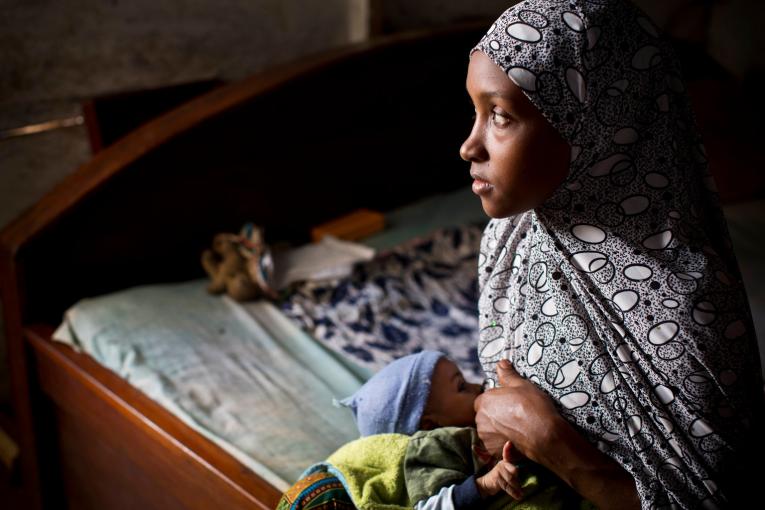
Public breastfeeding remains one of the most debated issues in modern society. While no one disputes that infants need timely nourishment, opinions differ on whether breastfeeding should take place openly in public spaces. For many people, especially in conservative societies, exposing the breast in public (even for the purpose of feeding a child) raises concerns about modesty, privacy, and public decency.

Those who consider public breastfeeding inappropriate often argue that mothers should, whenever reasonably possible, seek a private location or use a nursing cover. Their concern is not necessarily about feeding babies but about preserving cultural values and respecting the diverse sensibilities of people who share public spaces. In societies where modest dressing is highly valued, public breastfeeding may make some individuals uncomfortable.

On the other hand, supporters of public breastfeeding point out that babies cannot always wait until a private room is available. They argue that breastfeeding is a natural and essential act that should not be treated as shameful. In many countries, the law also protects a mother’s right to breastfeed her child in public.

This debate should not become a contest between the rights of mothers and the expectations of society. Instead, it should encourage practical solutions that respect both. Shopping malls, airports, hospitals, parks, and other public facilities should provide clean, accessible nursing rooms where mothers who prefer privacy can comfortably feed their babies.

Within the family, disagreements over this issue should be handled with wisdom and mutual respect. Husbands and wives should discuss their expectations calmly and privately. A husband who believes his wife should exercise greater discretion should express his concerns respectfully rather than scolding or embarrassing her. Likewise, wives should be willing to listen to their husbands’ perspectives while explaining the practical realities of caring for an infant.

Healthy marriages are built on understanding, not intimidation. Respectful dialogue strengthens relationships, whereas harsh criticism often breeds resentment.

Ultimately, the goal should be to protect both the well-being of the child and the dignity of the mother. Whether one favors greater privacy or broader acceptance of public breastfeeding, the discussion should remain grounded in compassion, courtesy, and mutual respect rather than condemnation.
A clarion call to make breastfeeding and work, work!

By Tukur Hafsat Sani 

The art or science of breastfeeding can be projected to be as old as the childbirth phenomenon itself. Some historians have hypothesised that this important act became a widespread practice about 2.6 million years ago.

Inappropriate marketing of breast milk substitutes, stigmatisation, body image crisis, and public shaming, among others, have continued to undermine the efforts of medical experts and world organisations to improve breastfeeding rates and duration worldwide. With the world evolving, this is gradually changing.

In view of the importance of breastfeeding, over 30 years ago and even more precisely on February 14th, 1991, the World Alliance for Breastfeeding Action (WABA) came up with the World Breastfeeding Week (WBW), of course in partnership with World Health Organisation (WHO), United Nations Children Fund (UNICEF), government agencies and other non-governmental organisations across the globe.

The event was innovative, aiming to establish a global breastfeeding culture and provide support for breastfeeding mothers or even surrogates everywhere while promoting exclusive breastfeeding for a minimum of six months.

Therefore, World Breastfeeding Week is an annual tradition celebrated from the first and ends on the seventh of August worldwide, each year with a peculiar theme or slogan. Interestingly today, more than 100 countries globally participate in this important event.

On themes, for example, WABA, for the year 2020, chose “Support breastfeeding for a healthier planet’’ as its theme. The focus of WBW 2020 was aligned with thematic area 3 in WBW-SDG 2030 and is on the impact of infant feeding on the environment or climate change and the imperative to protect, promote and support breastfeeding for the health of the planet and its people owing to the fact that breastmilk is environmentally safe; produced and delivered without pollution.

In 2021 it was “Protect Breastfeeding: A Shared Responsibility”, which was with respect to the survival, health and well-being of women, children and nations, as well as how nursing mothers can be supported. For last year, it was “Step up for Breastfeeding – Educate and Support”. The WABA for this year set a theme – “Enabling breastfeeding: making a difference for working parents.”

Breastfeeding is the process of feeding a mother’s breast milk to her infant – newborn baby because, apart from the bond of love that is built between a mother and her child through the process, breast milk is the most important and essential food an infant should receive due to colostrum it contains, and this colostrum possess antibodies and other immunological benefits that can give babies a healthy boost.

Universally, breastfeeding is of two types, exclusive breastfeeding and partial breastfeeding, which only a few in our society are able to differentiate and know the significance of.

Exclusive breastfeeding implies availing a child only breast milk without any solid food for the first eighteen weeks of his or her life, while for partial breastfeeding, an infant receives both breast milk and solid or semi-solid food. Noteworthy of the fact that exclusive breastfeeding is highly recommended by health professionals both for the benefit of mother and child. 

Since is singular act of breastfeeding helps mothers, according to studies, reduce conditions such as depression and breast cancer while simultaneously breeding children who are physically, biologically and mentally alert, it becomes imperative to help drive the 2023 campaign of “Let’s make breastfeeding and work, work!” – a campaign which focuses on promoting practices that can help support workplace-related breastfeeding in different countries.

Hence, employers of labour should support working-class mothers in different countries across different contract types and sectors and promote action that can be taken to help ensure breastfeeding works for all working-class women.

This can be achieved through sensitisation, supporting rather than stigmatisation of this prime natural process, and providing secluded areas where working mothers can feed their babies without eyes preying on them needlessly while at work. 

While mothers across the globe are encouraged to keep up the good work of breastfeeding in other to build a healthier and smarter global population, providing them access to breastfeeding their babies while at work would mean that we are making breastfeeding and work, work!

God Bless All Mothers Across the World.

Hafsat, a 200-level Student of Ahmadu Bello University, Zaria, Kaduna State, writes via hafsasarney@gmail.com.