Atiku Abubakar

Tinubu wins APC presidential primary election

By Ahmad Deedat Zakari

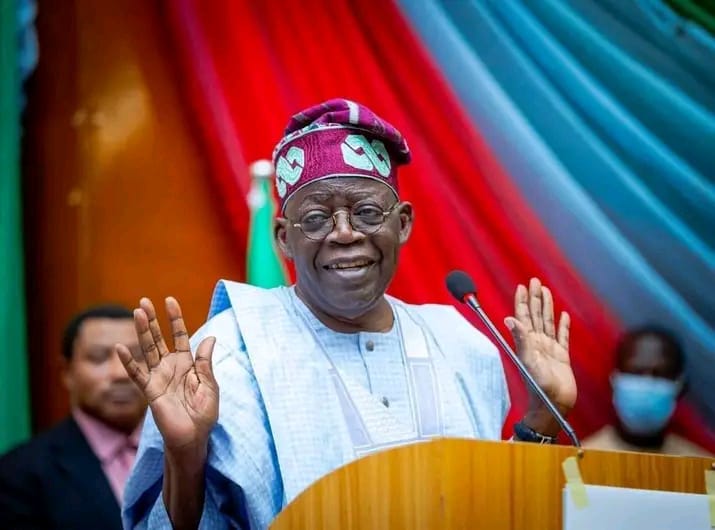
Former Governor of Lagos State, Asiwaju Bola Ahmad Tinubu, has been declared the winner of the All Progressives Congress, APC, presidential primary election. 

APC held a special convention between 6 to 8 of June 2022 to elect the ruling party’s presidential candidate.

Tinubu emerged as the APC candidate at the end of the presidential primary after polling about 60% of the 2300 votes. 

He defeated his closest rivals, Nigeria’s Vice President, Professor Yemi Osinbajo and former Minister of Transportation, Rotimi Chibueke Amaechi, to clinch the ruling party’s ticket.

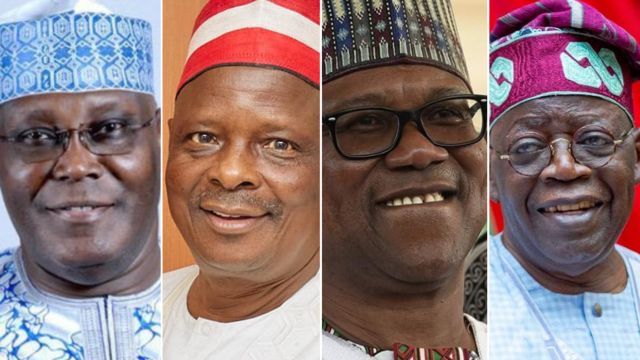
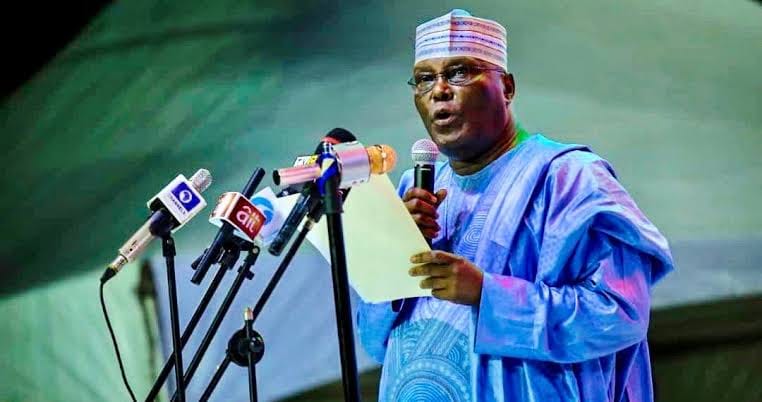
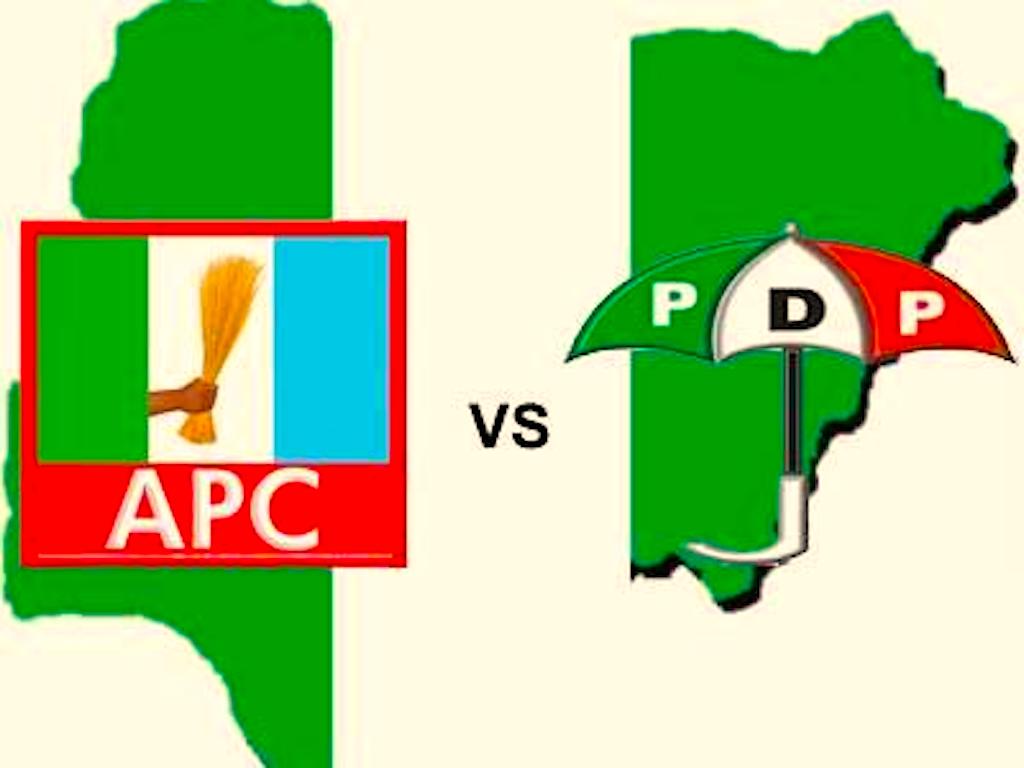
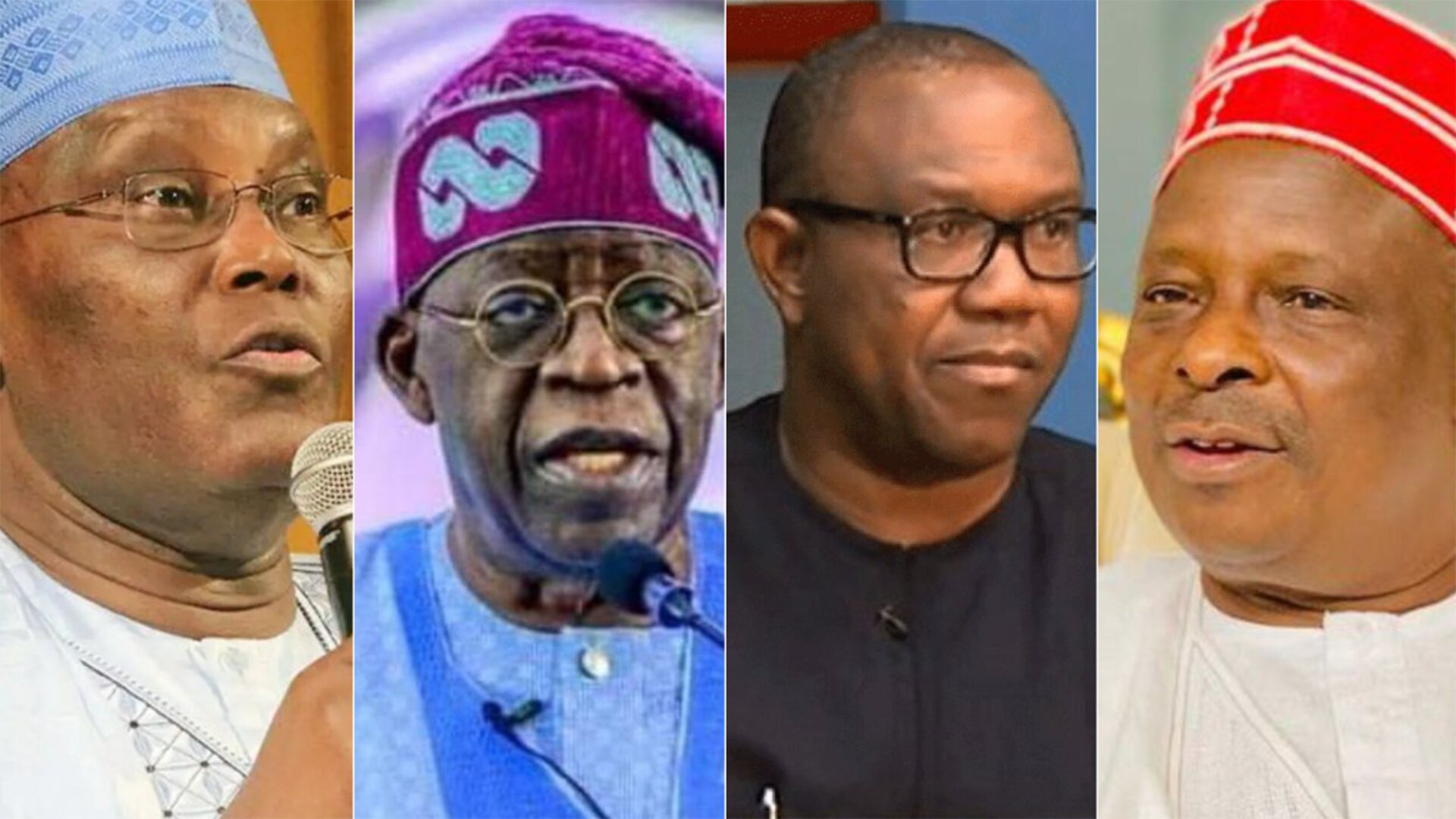
Tinubu is expected to face the candidate of the country’s major opposition party, Atiku Abubakar, and others in the 2023 general election.

PDP will not win 2023 elections

By Aliyu Nuhu

When I analyze this election, you see some people shouting bias, especially when the prediction did not suit them. I said Atiku would clinch the ticket. I only stated the obvious fact based on my own calculations. It didn’t mean I liked Atiku or disliked Wike. Just that I knew Atiku mastered the art of political brinkmanship and he has experience and wider network and followers above all the contenders. He can’t be a vice president for eight years and run for president the sixth times for nothing.

Now I said Tinubu will take the APC ticket. The wait won’t be long but facts on ground support his candidacy. If it is about winning this election, APC can’t make the mistake of destroying the regional alignment that gave it power in 2015. North and Southwest can work together and cruise home to victory.

PDP will not win this election whether Buhari is popular or not. Whether his government failed to deliver on its promises and rubbished Nigeria’s economy and allowed insecurity to exacerbate people’s suffering is also immaterial. Performance is a good requirement but winning Nigeria’s election is not that straightforward because of the kind of voters we have who are largely poor and ignorant.

Democracy flourishes where there is prosperity and enlightenment among the voters. Stomach infrastructure plays a bigger role in Nigeria’s election. I am saying this to underscore the importance of having governors during presidential election. No party with a sitting governor will fail to get at least 25% of the votes of his state.

In this election APC has all the states where the numbers are concentrated and will surely deliver their states to the party. PDP has only four states in the North.

Having federal government is another big booster to APC. Security agencies always work for the government in power. There is also federal resources from CBN and NNPC and what the ministers will bring on the table from their ministries. Even INEC is working hands in gloves with federal government. APC has a big advantage there over PDP.

Some people will argue why PDP lost election in 2015 when it was in power. It was because the PDP broke to pieces before the election with all the important governors leaving the party. Jonathan was stoned in states where PDP had governors. If you don’t have governors that will work for you, forget presidential election. It is impossible to win Nigeria’s election without controlling states.

The danger of PDP relying on South East votes is that there are few voters there despite the region being notorious for voter apathy. Actions of IPOB will also stop people from voting, this is the reason why I say the region is not important in winning election. This a fact not a support for APC.

Atiku has tenaciously been in the race for Nigeria’s president and with his fierce independece and good health he will outperform other candidates. But this is a moment of truth. He is in the losing party and may have to wait for Tinubu to finish his eight year terms, besides the fact that the North cannot rule Nigeria forever. Power has to go to the South this time, and Southwest for that matter.

Last year I wrote on the biological retirement of older northern Nigerians and after 2023 if you add with years to their ages, most of them will either be in their graves or in their late seventies and eighties struggling with health issues.

Sheikh Nuru Khalid: The way they and I see it

By Bilyamin Abdulmumin

The nation has woken up with yet another round of controversial news, as the committee to the National Assembly mosque, Apo legislative quarters Abuja, deemed it fit to suspend the renowned Islamic cleric Sheikh Nuru Khalil before sacking him later. The committee cited incitement and lack of showing remorse as reasons for the suspension and the final sacking, respectively.

Last week’s Friday prayer sermon the Sheikh delivered was the action that earned him the sack. In the sermon, reeling from the Abuja-Kaduna train attack tragedy, the Sheikh supported a boycott of the upcoming 2023 general election should the government fail to protect the lives of Nigerians. This message immediately went viral to generate a heated debate among the public on social media.

Those who support the message have some reasons. Because it was just history that repeated itself; before the 2015 general election, Nigeria, especially the North, was literally on fire. Amidst the chaos majority of the northern Islamic clerics openly criticized the government of the day – PDP, while drumming support for the opposition – APC.

Fast forward, seven years later, the table has turned. The APC is in charge, and similar to the eve period of the 2015 general election, the insecurity is threatening the country again. So, for this category of view, what is good for the goose should also be good for the gender.

Some try to strike a balance. According to these people, the Sheikh’s sermon was right, but they argue that leadership comes with responsibility. So, a leader with a large audience has both privilege and responsibility. Some of these responsibilities are eschewing opinion, unlike any ordinary person who doesn’t mince words. In other words, the Sheik should have a tread with caution. 

Some categories look at it from the extremism tendency. According to them, some extremists, such as Muhammad Yusuf, the Boko haram leader, started as a spokesperson to the masses. First, he became a fierce critic of the government, but later, when his antics escalated to insurgency, those masses clapping for him became the most victims in the end.

Some sought to politicize the controversy. According to them, the Sheikh has pitched a tent around the opposition – PDP, so they claim he has been a critic of the Buhari government for the last seven years. These critics sealed their arguments with the allegations that the Sheikh was appointed an Imam at a mosque built by Atiku Abubakar, a new Jumu’at Mosque behind the Central Bank Nigeria (CBN) Quarters, Abuja.

The peculiarity of any argument is that if anyone is allowed to explain his view, one will somehow see a reason for their claim. The above four viewpoints on the same thing are good examples.

By and large, if there is anything this raging debate achieved, it is one thing: it made Nigerians forget the series of other pressing issues like the ASUU strike, fuel scarcity, the naira to dollar depreciation, VP Osinbajo, Minister Pantami, and Farooq debates, even the plight of the actual victims of the attack (may theirs be a speedy release, harmless). One Nigerian coined this scenario: “one rising issue after another makes Nigerians forget their suffering; Nigerians live for the moment.”

Bilyamin Abdulmumin is a PhD candidate in Chemical Engineering at ABU Zaria. He is also an activist for a better, informed society.

PDP and consensus presidential candidate

By Zayyad I. Muhammad

The 2023 presidential elections will present to the Peoples Democratic Party (PDP) a golden opportunity to wrestle power from the ruling All Progressive Congress (APC). However, the greatest challenge facing the PDP is how to utilize this opportunity seamlessly by presenting a candidate that can secure for the party sufficient votes throughout the country.  

Today, all indices indicate that the APC’s presidential candidate may come from the southwest. Since 2015, APC’s trump cards have been the north and the southwest. However, the north may be APC’s biggest dilemma in 2023- the party has to appease the north while striking a balance on Nigeria’s complexities- this is where the PDP can take advantage if it plays its own cards very well.

Former Senate President Bukola Saraki, Governor Aminu Tambuwal, and Governor Bala Mohammed, all presidential aspirants on the PDP platform, have kick-started a move for the PDP to present a consensus candidate for the 2023 presidential elections. Saraki said the reason they were pushing for a consensus candidate was to reduce the likely rancour in the process of choosing the party’s flag bearer. Apart from having a rancour-free process, a consensus candidate will give the PDP an opportunity to pull resources together for a common goal. Furthermore, the party will have ample time to campaign for the general elections, as it has eliminated the long and tedious campaign for the primaries.

The big question is, who is PDP’s ideal consensus candidate among all the aspirants? The person should be someone who is well-known, have a network and connection, and is sellable across the country.

As a matter of real politics, the PDP may consider a one bloc vote. That is the Buhari cult-like followers, who, as of now, have undecided votes. The PDP can win the vote of that bloc vote and combine it with its own traditional votes by presenting someone different from Buhari but acceptable to Buhari’s cult-like followers. In addition, a consensus candidate should be someone who knows the Nigerian political terrain –and is acceptable to the common people- someone who Nigerians see as capable of tackling the current problems in the country.

If the PDP agrees to go for a consensus candidate- the party should do this based on certain logic. Firstly, the PDP should analyze the North and Southwest- two parts of the country with the highest number of voters- to define which of them will give the party some cutting-edge advantage. The party should then present a candidate that can bring the votes from that region.

Secondly, as the APC is looking southwest, the PDP should analyze the entire south and do its arithmetic with an open heart on just how to win the election.

Thirdly, PDP’s ideal consensus candidate should be chosen relative to the APC’s likely presidential candidate. It should be someone from the PDP ranks who has the clout, the political structure, the war chest, and the human resources to face any candidate from the APC.

An open discussion among the PDP presidential aspirants can produce good results for the consensus candidate. Though some of the aspirants will fizzle out from the race if the party does not use a zoning formula because their aspirations are based on permutations that the ticket is zoned to a particular section of the country.

Consensus is good for an opposition political party with an opportunity to get power. But some observers are of the view that a primary election will eliminate any hassle for the good candidate- as he may be tied down with many demands from other aspirants and interests.

If the call for a PDP consensus presidential candidate by Bukola Saraki, Governor Tambuwal, and Governor Bala is without any ulterior motive, it will be a welcome and excellent idea for the PDP. Former Vice President Atiku Abubakar said, all the presidential aspirants don’t have issues with each other, once they sit down in a room, they will select the best candidate among themselves. Most political observers said Atiku made the statement because he is fully aware that, as of today, all the odds are in his favour – either consensus or primary election.

 Zayyad I. Muhammad writes Abuja via zaymohd@yahoo.com.

Kwankwaso and his over-ambitious movement

By Sagir Ibrahim

Recently, we witnessed a new direction in our modern politics, whereby former Governor of Kano State, Engr. Rabi’u Musa Kwankwaso and other former political heavyweights formed a new movement with an ambition to upset the status quo ante of our politics.

No doubt, Kwankwaso is a political juggernaut with a track record of achievements within his state. I don’t think it will be an exaggeration to say, none among his peers can match him in terms of positive impact on the lives of the poor. From that, he successfully built a team of educated youth that penetrated the nook and crannies of Northern Nigeria. On a visit to any tertiary institution in the North-West, it is rare to register the absence of a lecturer who happened to be a benefactor of the Kwankwaso government or under his present Kwankwasiyya Foundation.

And on the other hand, looking at his peers, for instance, Sokoto, under Governor Aminu Waziri Tambuwal, is not yet free from the shackles of illiteracy despite being a former speaker a second-term governor. Moreover, Sokoto is ravaged by persistent banditry insecurity. So then, how can he save the nation from the current insecurity challenges if he can’t secure his state? But in terms of party acceptance and the 2019 PDP presidential primary election’s result, his political strength is more extensive than Kwankwaso’s.

Although, that will not be unconnected with his ability to forge a good relationship with his party leadership, unlike Kwankwaso, who is known to have mad love for dominating relationships and space without considering others. For instance, when he left PDP for APC in 2014, he dominated the APC in his state by anointing his preferred candidates on the party tickets leaving no room for those he met in the party. The same happened when he defected to PDP from APC. He cornered all the party structure and candidates to his faction without regard for others that were there before him. That forced people like Sen. Ibrahim Shekarau to leave the party.

Kwankwaso’s New Movement

Recently, Kwankwaso launched a new movement that aimed to bring a positive change to the country’s political atmosphere. Known political figures that attended the launching are ex-governors, ministers, political actors and some technocrats. But, there is a possibility that the movement would join an existing political party outside the two major parties to serve as a third force in the upcoming election. Assuming that it joins another party, is he the only person in the movement with a presidential ambition? How ready are his colleagues to assist him financially and politically? Are they influential enough to sway people to vote for him? These and many more questions are begging for an answer.

Currently, forming and marketing a new political party in Nigeria less than a year before the election is almost impossible unless it is a merger of existing political parties. But, unlike this new movement, the influence of its convener is the most potent force that can be marketed. And if he can be sold in his Kano quickly, could that be done in Northeast, which has VP Atiku Abubakar, Ahmed Mu’azu, and Gov. Bala Muhammad that are eyeing the same seat?

Even in the North-West, how well prepared is the movement to confront the likes of Tambuwal that outshined him during the 2019 primary election?

What about Southerners who believe this is their perfect time to clinch the seat? Therefore, Kwankwaso has a lot to face in this new direction.

If not for wishes being horses, he would’ve exercised enough patience to join either of the two bigger parties, especially the APC. Because if the likes of Prof. Yemi Osinbajo emerge as the party flag bearer, they will be left with no perfect match to serve as his running mate than him. But his desperation is for leadership is second to none.

But looking at the constitutional provision, one needs a political party to contest any political seat since there is no constitutional provision for independent candidacy. With this, we can understand the political calculation of Kwankwaso. Going by the obstacle(s) mentioned, there is no possibility of Kwankwaso being the flag bearer of any of the two major parties. At best, joining NNPP could serve as an avenue for him to test his relevance in the national political space since his new party has no candidate of his calibre. Therefore, there’s every possibility for him to clinch the party presidential ticket.

Can He Win?

This is something that only time could tell. But, indeed, if any of the political parties give their ticket to a Northerner, Kwankwaso will now turn into a major spoiler to the Northern votes and a distraction. Thus, this could pave the way for a Southern candidate to victory. And in the end, if God lend us long life to 2027, maybe then he’ll contest again and luckily emerge as a winner since most of the contestants are either in old age or have given up their ambition

Sagir Ibrahim is a graduate of Economics from the Department of Economics, Bauchi State University Gadau. He can be reached via ibrahimsagir1227@gmail.com.

Character and strategy: The nutritive requirements for Nigerian leadership

By Mubarak Shu’aibu Hardawa

Nigeria is on borrowed time at the moment and not just because of an awful leadership it is experiencing, but for having that ‘onerous’ task of finding the marquee leader that would be her saviour. This arduous mission has become inevitable after many years of failed attempts that defied belief, much less explanation.

The leadership problems in Nigeria are structural and systematic, while the crisis at hand is long-lasting and accelerating. The system has become so overwhelmed by anger and frustrations that even the most basic task of any government, which is securing the lives of its citizens, is becoming increasingly impossible.

While good leadership is essential – especially in a country the size of Nigeria- the anticipation, grit, and determination to inspire the citizens to be there, unfortunately, that looks like a distant hope. Despite the arrays of potentials and the abundance of resources, which, if properly harnessed, would transform Nigeria into an unmatchable place, this runs contrary to reality. The result obtained is a satiric giggle. The reason may not be unconnected to the fact that our leadership group lack the requisite qualities to take Nigeria to a greater level of ceaseless progress and prosperity.

To put it simply, Nigeria has the capacity and nous to be as rich as the United Arab Emirates. Still, due to its poor choice of leaders, it is now as filthy as pigsty moving on India in the pecking order of countries with the highest number of citizens living in extreme poverty. This situation is avoidable. How? By not allowing ethnicity, religion, region and party affiliation to cloud our judgment when choosing the right leader.  

Thus, by eschewing leaders of a good character, grand ideas and strategy, we are restricted only to a bunch of clowns whose leadership style cannot inspire even a cheap hope in anyone. And what is obtainable from such leaders is a failure that we are now seeing as it has metamorphosed to a greater extent that most Nigerians no longer have faith in the government. 

As it is now, it will only take the starriest eyed optimist to make a case for believing in Nigeria at the moment. The dailiness of wanton killings, kidnapping, stealing of public funds, the meteoric rise in poverty index, corruption, and so on say everything about the kind of leaders Nigeria has. With what is obtained today, Nostradamus himself will hesitate to bet that wrecked Nigeria will be great in the near future. (I’m optimistic, though! As optimism oils the wheels of everyday living.) But such a level of demoralisation and crestfallen require a strong antidote whose composition is character and strategy combined to turn things around.

Since the return of democracy in 1999 to date, those touted with the leadership of this country come with asterisks—either of corruption, poor economic management, health challenges, ethnicity, ageing, nepotism, etcetera. Although there were numerous pros with President Yar’adua’s short shelf-life, the hopes were soon taken away by the inevitable finality which laid him and his famous anthem of “7 Points Agenda” to rest. The rest doesn’t have much to write home about.

The point where Nigeria looked set to hit the proper course was in 2015 when President Buhari came with his ‘Change’ mantra, but that ultimately goes to show that he is not the finished article based on his sheer lack of strategy. This imbalance left Nigeria without a vertebra in her spine for a couple of years. Although we had the chance to change the narratives in the 2019 election, with character (Buhari) coming up against strategy (Atiku Abubakar), Nigerians failed to the wisdom in the saying “A leopard never changes its spot” thus persisted with Buhari thinking that things will change in the second term. The majority of Nigerians at that material time held the view that his character, which fetched him the public appraisal of “Mai Gaskiya”, would wave wands and make things magically better. A dogma that is fruitless at best and hazardous at worst.

Some Nigerians even went vigorously beyond delimitation and common sense, arguing that Atiku was plotting to sell Nigeria (NNPC). While some purported that President of the Senate Bukola Saraki, Speaker House of Reps Yakubu Dogara, Senator Dino Melaye and co are the saboteurs of Buhari’s government in the NASS and must therefore be cleared off the deck to allow Buhari an enabling environment. These are publicly sold opinions and thus became very hard to change even when most of the evidence suggests that they should.

This premature decision under predicated conditions of illusionary belief backfired heavily as his weakness for lack of strategy has been laid bare even in the second term, with Nigerians paying the premium price to date.

Today’s Nigeria is unrecognisable from halcyon days, and her golden generation passes. However, some ethos is sacrosanct, such as having the leadership group to look up to, such as Tafawa Balewa, Dr Nmandi Azikiwe and Ahmadu Bello (the Sardauna of Sokoto). Even without the crude oil, they left Nigerians every reason to be optimists. That was a sheer display of character and strategy.

While you would hope to see a similar Nigeria sooner rather than later, the choice to be made should be factored into character and strategy. Nigeria is in a store for hectic decisions to make. However, the cold, hard reality is that Nigeria, like never before, needs a leader whose character will help unify the country through healing, dialogues and not by polarising the recent past. 

A strategic leader will find a way to midwife the return of peace to Nigeria, grow and maintain our economy, asphyxiate corruption, fix our education to be able to stand on our own, and cut down the unnecessary government expenditure all the recklessness we are known for. Meanwhile, a character will help that leader follow the right path in seeing through the above tasks.  All these sound plausible, right? Theoretically, it does. However, in reality, given the constraints of apparent options, debates were ignited on whether we could find such a man in our political arena (that’s a pulsating debate!). 

Nigerians must challenge and X-ray anyone who throws his hat in the ring to avoid falling foul of past mistakes. 

Finally, I insist on a person who embodies these invaluable assets (character & strategy). We hope our leaders and Nigeria itself are going to be alright! And reeling out the rationale for pitching tent behind such a person, Prof Zulum of Borno will suffice.

Mubarak Shu’aibu Hardawa wrote from Bauchi State via naisabur83@gmail.com.

Road to Aso Villa 2023

By Ahmad Murtala

Ever since Asiwaju Bola Ahmed Tinubu declared his ambition to succeed President Buhari earlier this month, the political sphere off and online stirred up debates in favour of Tinubu and the potholes along his way. People cite some irrelevant motifs that may hinder Tinubu’s success. However, these are not paramount of any buyable candidate at the moment, and of course, for the electorate.

The intrinsic status quo of our polity entertains those factors that undermine the democracy and the governance—rating region, tribe, religion, age, school attended, above competency and capacity going even further to dig up the ancestral root of a candidate. The result we are cultivating under this administration says a lot about the mistakes we’ve committed in the past – from  2015 to date—by using only those yardsticks to scrutinize a candidate. Can we still pelt with our intelligence to subscribe to the same mistake of the past come 2023, which appears new dawn to our country?

We imported the American presidential system of government, which is quite expensive and implemented its only cover page. It’s a multi-party system that compels too much spending which a saleable candidate capable of taking the lead is hindered from contesting by the processions. These include the ticket, the campaign, and the mobilization. In this context, two major parties are on the run, which the rest endorses the party that has the chance of winning in subterranean manoeuvre.

The Southeast has configured and domesticated PDP as its political party since 1999, while APC appears nascent in the region—the weakness of the ruling party and the deterioration of the security across the country under the watch of APC makes the nascent party lose its credibility far to the NE. If the president is to emerge from the region, two possibilities may arise.

First, northern people stereotype and characterize PDP as evil, callous and looters, which most of the states in the region are under. Second, APC has lost its shining plate before the people based on what appears on the ground since coming to power in 2015. Therefore, no matter the candidate’s credit from the SE, if APC deems it fit to give the flag bearer to the region to entertain zoning as postulated by some northern state governors, the chances are its success would be a bottleneck.

The polarization within the spheres of politics that SouthEast translates to secession if not given a chance to rule, it appears that PDP would have to play the same card of the last election, by choosing the running mate from the SouthEast, here the North would draw a line looking at the indices of the carnage their businesses faced in the region. Meanwhile, APC would play the South-West and the running mate from the North, perhaps a Muslim-Muslim ticket. The result would be determined by the primaries from the parties in a couple of weeks ahead.  

In those countries that have built the social establishments and have smooth working systems with literally little or no corruption, the age of presidential aspirants is not a matter of concern. We see Biden of US—unlike Nigeria when chunks of domestic battle are entangled yet to be addressed. The age of the candidate matters a lot in this context. Tinubu, who appears to be more robust so far from those who declared their aspiration, is brazenly feeble. If not a good diet and wealth make politicians appear strong, most of the politicians at the frontline ought to assume coach duties guiding the upcoming ones. We forbid the like we’ve seen in this administration by encasing the president in the Villa and plunging the country into anarchy.

From the view and the colour of the game, Atiku Abubakar, the former vice president, would swiftly take the PDP flag and Tinubu APC. Both have been dented by the people’s court to have maliciously accumulated wealth—having no other alternative polling box for the electorate. If history is to repeat itself, Buhari contested four times before he won. Now, Atiku is running on his fifth time is likely to have a smooth ride based on APC losing its credibility because of insecurity across the country. 

The extreme thirst for power to fulfil the ‘need hierarchy’ is not dangerous to the beholder alone. The motive is only to possess the authority without a sketched-architectural blueprint and clear manifestos which will coalesce with the national need. Buhari came on this platter, and the result is unbecoming.

So far, the two giants have not made it to the public the what-and-how to attend to the tangled problems agonizing every sector. The currently delicate security and imbalanced economy are at the top, strangling the country by the neck—finding it arduous to breathe. We, for now, don’t need the so-called ‘kingmakers’ who cannot heed or take advice from the public opinion but become foreign puppets—since, intrinsically, the presumption of superiority as the number-one citizen is established. 

Road to Villa 2023 must come from the parties and play the game card to sew the polarization across the region. The Villa in 2023 and beyond begs for a head that has both stick and carrot in his hands, the one who has a clear understanding of foreign policies and has immediate treatment to our problems, both short and long-term solutions. If to suggest best candidates, there are a multitude of them from SS, SW and NW, both fit in into position of President and Vice President, but for now, let’s see the outcome of the parties convention, which is the utmost decider.

Ahmad Murtala sent this article via ahmadmurtala@outlook.com.

As Tinubu commences the difficult and easy journey

By Zayyad I. Muhammad

The battle for the 2023 elections will be fascinating. Asiwaju Bola Ahmed Tinubu has commenced a challenging but exciting quest to be President of Nigeria in 2023. Tinubu would face five significant obstacles.

Firstly, his faith. Secondly, the choice of a running mate. Thirdly, the rugged politics the PDP would play – the PDP may present a northern presidential candidate and just ‘Siddon-look’, putting the APC on the defensive. And fourthly, how the North would vote relative to Omatekun and anti-Fulani sentiments in the southwest. And fifthly, Vice-President Yemi Osinbajo supporters are on the move, solely focused on the presidency with confidence.

Tinubu, a Muslim from the Southwest, might have a free sail at home because of the complex nature of the socio-political settings of the southwest. But to appeal to other zones in the country, he will be in a quandary regarding his choice of a running mate. If he picks a Christian from the North, the bulk of APC support in the North, particularly the Muslim North, will look the other way. If he chooses a Muslim from the North, the country will undoubtedly be against a presidential Muslim-Muslim ticket. However, if the PDP picks its presidential candidate from the North, he may get some ‘relief’ in the South

Operation Amotekun and Sunday Igboho’s January 2021 one-week ultimatum to Fulani herders to vacate the southwest, Tinubu’s old statement – ‘ I don’t believe in one Nigeria’ will be another weapon that will be used against him in the North.

Tinubu’s war chest is enormous. His political tactics are shrewd; his political structure is solid, widespread, and well-organized They recently ‘bombarded’ the North and scared their opponents. Tinubu is a good candidate but has a big dilemma, as mentioned above.

On the other hand, the 2023 presidential election battle will be exciting – PDP will be on the offensive, while the ruling APC will be on the defensive. The flag bearers of either political party will also have many political hurdles to cross.

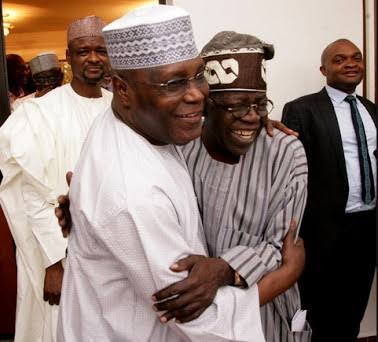
Most people expect the 2023 presidential election finale to be an Atiku vs a Tinubu game. Atiku vs Tinubu will be an interesting big game, a very BIG one. Two similar people with similar public perceptions and similar game styles; “I-know-you, you-know-me” scenario will come to play. The two have well-established political structures that can easily scare an opponent. They pay their bills; the contest would be 100 per cent politics, politics, politics- even the choice of the running mates. It will be a fascinating zero-sum game. Both have similar advantages and disadvantages.

Zayyad I. Muhammad writes from Abuja via zaymohd@yahoo.com.

Political crisis rocks Gombe as thugs storm Atiku’s campaign office, set PDP secretariat ablaze

By Uzair Adam Imam 

Suspected political thugs have stormed the campaign office of former Vice-President Atiku Abubakar, situated some few kilometres away from the Gombe metropolis.

The Daily Reality gathered that the office had its windows broken by the thugs while taking away valuable items like air conditioners.

The thugs were also reported to have set the Gombe State Secretariat of the opposition Peoples Democratic Party (PDP) ablaze. 

Confirming the incident, an eyewitness said that men in the area extinguished the fire with the help of Fire Service personnel.

Addressing reporters, PDP Chairman General Audu Kwaskebe (Rtd) blamed Youth Leader of the All Progressives Congress (APC) in the state, Kawu Lero, saying he was the one who led youths to burn the secretariat.

He added that they had already written a petition to the state police command for the appropriate action.

Meanwhile, State PRO of the APC, Mr Moses Kyari, alleged that it was PDP members that set their office ablaze “due internal crisis over control of the party structure.”

Efforts made to speak to the Police Public Relations Officer (PPRO) in Gombe, SP Obed Mary Malum, were fruitless.

Between 2014 and 2022 and the race for Nigeria’spresidency

By Ahmad Mubarak Tanimu

It’s 2022. The twilight of Buhari’s administration is here, and the political permutations that will produce his successor are about to come bare. “Change” was the mantra in 2014. The Giwa barrack attack in March by Boko Haram, the Kibaku school girls abduction in April, the capture of Gwoza in August, the occupation of Bama in September and the ransacking of Baga in December by the terrorist group together with the over ten thousand lives lost during the year made 2014 an unforgettable year.

Goodluck Jonathan carried so many political accruals that outweighed his political assets, giving him an unfavourable political balance sheet that led to his well-anticipated defeat at the polls in 2015, becoming the first-ever one-term president in Nigeria. It’s an unusual political crash that the former presidential spokesman, Segun Adeniyi, calls ‘Against The Run of Play’.

Jonathan’s political misfortune didn’t start in 2014. He promised Nigerians a breath of fresh air after winning the 2011 elections. His major decision after the victory was fuel subsidy removal. He sent the then CBN Governor, Sanusi Lamido Sanusi and the then Finance and Coordinating Minister of the Economy, Ngozi Okonjo-Iweala, to beg and convince Nigerians to accept subsidy removal.

The first nail on the political coffin of Jonathan was hit on January 1, 2012, with the announcement of fuel subsidy removal, which birthed a national outrage and mass protest known today in our history books as Occupy Nigeria. After that, Boko haram insurgency, the slump of oil prices in the global market, and the PDP crisis he poorly managed sent him to an early political abyss.

Whilst all these were happening, one man positioned himself suitably and leveraged on every misstep of the President, often described as clueless. The man is Muhammadu Buhari. When the commoner was not happy, as late political siege J.S Tarka would say, Buhari offered himself as the hope, the happiness and the long-awaited missing piece of the jigsaw. Buhari moulded all Nigeria’s problems into just one thing that he kept saying repeatedly; ‘corruption, corruption, corruption’. He then placed himself as the one and only man with an incorruptible toga in the political arena that could solve Nigerian security challenges and economic turmoil.

He became president in 2015, Nigeria’s economic crisis soared, and like the sunshine, insecurity moved from east to west in the North. But unlike 2014, in 2022, no one is leveraging Buhari’s ineptitude. Though to be fair to Buhari, with Nigeria’s over-reliance on oil for export revenue and foreign consumer goods, an economic crisis will always be inevitable in the situation of a fall in the global prices of oil.

The polity in Nigeria still looks primordial. No one is ready for issue-based conversation. Even the pundits often put in more sentiment than logic in their analysis. The reaction of Buhari’s detractors shortly after Tinubu’s declaration to run for the presidency in 2023 says it all. They want him to surrender a platform he built with his sweat over some decades of enduring and surviving political persecution under Abacha, Obasanjo and Jonathan.

One doesn’t need to be a seer or bookmaker to predict that Nigerians will face Tinubu and Atiku’s choices in 2023. This could be a run that will not dig and damage the image of Buhari. Atiku may keep things ethical as he did in 2019, whilst Tinubu will primarily defend the Buhari administration throughout the campaign and make promises of improvements.

In 2014, there was an exodus from the ruling party to the opposition. Governors Kwankwaso of Kano, Wammako of Sokoto, Amaechi of Rivers, Ahmed of Kwara and Nyako of Adamawa all defected to the APC and other party chieftains like Atiku, Saraki and Baraje. The defection made the ruling party’s defeat imminent even before the elections.

On the contrary, the ruling party is taking governors to its fold this time. Governors Umuahi of Ebonyi, Matawalle of Zamfara and Ayade of Crossriver defected to the ruling APC last year. While the long-awaited APC national convention can make or mar the party’s fortune in the next general elections, the current atmosphere spells gloom for the opposition again come 2023.

Going by the non-negotiability of Nigeria’s unity as enshrined in the constitution and the unwritten political arrangement of political parties in Nigeria, the next president should be ethnically and culturally Igbo. Still, the ethnic group can only claim that stake in the PDP, a party they supported wholeheartedly since 1999. They rejected the APC, and I don’t think the party will pamper the same region with a presidential ticket in 2023. I am harbouring a feeling that an Igbo presidency is all Nigeria needs to turn its fortune around as a country. It will bring integration and a sense of belonging for all, which may translate into socioeconomic success. But that’s a conversation for another day.

Ahmad Mubarak Tanimu wrote via ahmadmubarak.tanimu243@gmail.com.