ASUU

Stop intimidating our members: SLUK-ASUU tells Jigawa State government

By Ibrahim Mukhtar

There is a continued misunderstanding between the Academic Staff Union of Universities, state chapters and some state governments who feel that the strike action embarked by the national body of the association should not be bound on the state chapters. This is why some state governors, instead of mediating and putting efforts into reconciliation between the ASUU and FG, are now trying to divide and break the hierarchy of the association. This made some of the governors start confronting and intimidating ASUU members in their states. This is contained in a press release sent to The Daily Reality by the Zonal Coordinator (Kano Zone) of ASUU, Professor Abdulkadir Muhammad.

According to the released statement, the “Academic Staff Union of Universities, Kano Zone comprising of Ahmadu Bello University, Zaria (ABU), Bayero University Kano (BUK), Kaduna State University (KASU), Kano University of Science and Technology, Wudil (KUST), Yusuf Maitama Sule University, Kano (YUMSUK), Federal University Dutse (FUD), and Sule Lamido University, Kafin Hausa (SLUK) met on 12th September, 2022 at SLUK. The Zone deliberated on the ongoing strike action which has entered its seventh month due to the failure of government to honour the Agreements it willingly reached with our Union. The issues discussed include among others, the intimidation of members at Sule Lamido University, Kafin Hausa (SLUK) by the government of Jigawa State through the University Administartion.

This intimidation takes the form of withholding of salaries and sack threat among others. It was hinged on the premise that ASUU SLUK members are on ‘Solidarity Strike’. For the avoidance of any doubt, ASUU-Kano Zone wishes to state that ASUU-SLUK is a Chartered branch of our Union and is bound by all the decisions taken by the Union. Recently, the University Management resorts to emotional blackmail against our members using close relatives to persuade them into signing return-to-work register in desperate attempt to undermine the Union struggle to salvage the Nigerian University System.

It is pertinent to note that SLUK has benefitted immensely from the proceeds of ASUU Strike in terms of Tetfund projects, revitalization funds and staff development. To say the least, Jigawa State Government has so far invested very little to the infrastructural development of the University as majority of infrastructure in the University was funded by Tetfund, which is a brain child of ASUU struggles. Recall that the Union had previously intervened to ensure the restoration of the 2% Local Government contribution to funding of SLUK. This intervention by the Union was to ensure that students of SLUK continued to enjoy subsidized education.

Furthermore, the University heavily relies on academic manpower from other Universities in the zone, making it difficult for SLUK to operate even if the government succeeds in its agenda of forceful reopening of the University. It is on record that similar antics have failed in Kaduna State University where shamble examinations were conducted, to the extent that students were made to invigilate examinations. These were also the case in Gombe State University, Yobe State University, Ekiti State University, Ambrose Ali University Ekpoma, to mention but a few.

At this juncture, the Union urges the good people of Jigawa State to prevail on the State Government to desist from its desperate attempt at undermining the Union’s patriotic efforts towards improving the condition of teaching and learning in Nigerian public universities as it is a futile effort that would only compound the current challenges in SLUK.

Parents and students should note that proper academic activities cannot run in the University under the forceful reopening, especially due to the heavy reliance of teaching manpower from other universities. Hence, the zone call on students not to waste their limited resources to return to the University when no meaningful academic activities can take place until the strike action is properly called off by the Union.

Our union strongly believes that government must fulfill its constitutional responsibility of providing quality and affordable education to ALL Nigerians as enshrined in Section 18(1) of the 1999 Constitution. We call on well-meaning Nigerians to join hands with the Union in its efforts at salvaging the Nigerian Education System.
In conclusion, ASUU wishes to commiserate with the people of Jigawa State over the resent flooding that has resulted in the loss of lives and property and calls on the authority concern to render all the necessary support to victims of this disaster.”

FG meets striking ASUU in Industrial Court today

By Uzair Adam Imam

The Federal Government meets the striking Academic Union of Universities (ASUU) at the Industrial Court of Nigeria (NICN) for adjudication over incessant strike on Monday.

The Daily Really recalls that ASUU has been on strike since February 14, 2022, resulting to a total closure of all Nigerian public universities for over seven months now.

The union is protesting against alleged infrastructure decay at various institutions, as well as neglect of its members’ welfare.

The Minister of Labour and Employment, Chris Ngige, made this disclosure Sunday in Abuja in a letter addressed to the Registrar of NICN, dated Sept 8, 2022.

Ngige stated that the referral instrument had become necessary following the failure of dialogue between the union and the Federal Ministry of Education.

”The Federal Government has asked the NICN to inquire into the legality or otherwise of the ongoing prolonged strike by ASUU leadership and members that had continued even after apprehension.

“It asked the court to interpret in its entirety the provisions of Section 18 LFN 2004, especially as it applies to the cessation of strike once a trade dispute is apprehended by the Minister of Labour and Employment and conciliation is ongoing,” he said.

The ongoing dispute between the FG and ASUU, which started taking a new dimension, has made some people believe that things have all being politicised.

Enough of educational apartheid in Nigeria

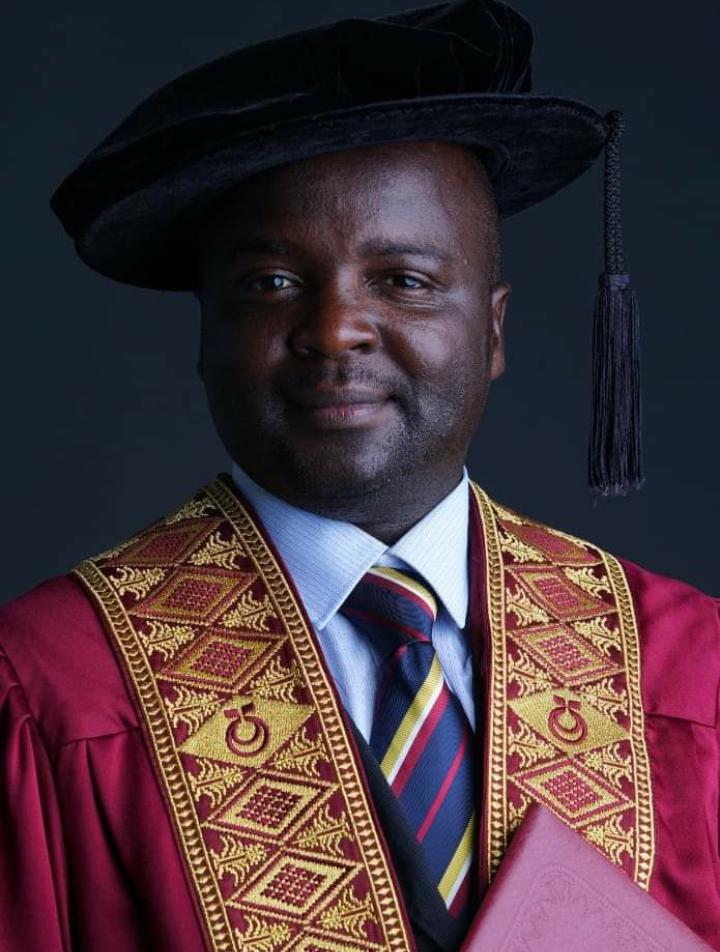
By Sule Muhammad Zubairu, (PhD)

“I appeal to the federal government under the leadership of President Muhammadu Buhari to declare a state of emergency in the Education sector for the country to be able to change the fortunes of the system. Indeed, even among Sub-Saharan African countries, we are trailing far behind smaller and less endowed nations in terms of our investment in education. There is a need for a major investment in education in the national interest” – Adamu Adamu, 2017.

Let me express my sincere sympathy to the patriotic Nigerians in the education profession for their sheer sacrifices and selfless services for the betterment of public education. It is a heartfelt piece of article that aimed at mourning the last relic of the educational sector in a country where its policy makers think that university education is a mere burden that needs to be dropped aside. I am always in disbelief whenever I woke up to see how pitiful is the condition of the public universities in this country. Most often, I ask myself what went wrong with our leaders? Is this borne out of capitalists’ instincts, ignorance, self aggrandisements, corruption or a combination of all?

Nigerians and Elitist’s Sheer Hypocrisy:
In fact, if one wishes to see the real ‘educational apartheid’ then, one should have a look into the Nigeria’s educational system. Paradoxically, the primary stakeholders, managing the affairs of Nigeria’s public education are largely not enrolling their children in the public universities. For how long the masses will be deceived? How on earth this could even be possible? We have seen lots of graduation photos and selfies from foreign universities with their children, year in year out. Indeed, recently, we have seen them sending their pictures from Harvard University, while the public universities back home are still shutdown for months.

The poor attention given to our university education in this is simply about creating and maintaining different classes between so-called elite and others, the masses. But, they don’t want you to see it that way. Those in power may argue that they have been doing a great service to our educational sector, particularly the universities. Logically, if that is true why are they not patronizing them?


The sheer hypocrisy of the ruling elites in this country is a real source of concern and disturbing. But, I don’t think these guys understand it very well. I’m still wondering why up to this time there is no comprehensive statistics of children of high ranking office holders that school abroad. Imagine they use tax payers money to educate their children and leave those of poor in darkness. What a shame!

I pity my fellow poor Nigerians for generations to come, if they are destined to be ruled by these types of leaders. The writing is clear on the wall: the university education, as we know it, would be only for the rich!

ASUU members and their families’ woes:
I also pity ASUU members across the country for their steadfastness dodgedness to defend the remnants of our universities’ past glories. However, when dealing with shameless people one needs to be extra careful and have a rethink. In other words, how can you deal with a situation when some of the officials are thinking that education is not a critical issue, falsifying the outcomes of their own committees, and the Head of state seems not to be fully aware or even grasp the core issues at stake? In serious societies, education always tops the table and takes a reasonable share of their annual budget.

Shockingly, they are punishing the only set of people who stand against the total collapse of our public university system, by inflicting hunger, starvation and threats on them and their innocent family members. What a country! I sometimes use to thinking that the hate from our current ruling elites towards ASUU members and their families in this country is by far bigger than that of Boko Haram members, Niger Delta militants and treasury looters. Because these guys have been enjoying series of amnesties and even presidential pardon. I argue that even the Palestinians, black Americans (during the civil right movement) and black South Africans (during the Apartheid) have experienced fair or even better treatments from their oppressors than what ASUU members and their families are experiencing currently in their sovereign country.

My fellow ASUU members, whenever any second thought pops in your mind, you should remember what Adamu Adamu once said: “This nation owes a debt of gratitude to ASUU and the strike should not be called off until the government accepts to do and does what is required. So, instead of hectoring ASUU to call off its strike, the nation should be praying for more of its kind in other sectors of the economy” – Adamu Adamu, 2013.

To this end, as a concerned citizen, I pray to God, to guide us and our leaders to the right path and save public education from total collapse, amen.

Zubairu teaches Geography at Ahmadu Bello University, Zaria. He can be reached via; sulemuhd@gmail.com

El-Rufai calls ASUU “useless union”

By Ahmad Deedat Zakari

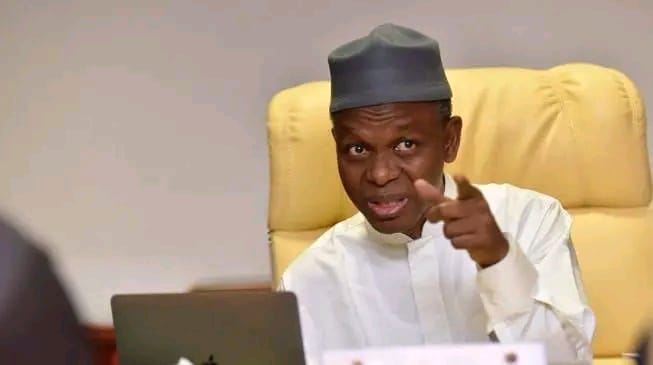
Bashir El-Rufai, the son of Kaduna State Governor Nasir Ahmad El-Rufai, has described the Academic Staff Union of Universities, ASUU, as a “useless union” that should be scrapped.

The junior El-Rufai, on Monday, August 29, 2022, said ASUU is useless and should be replaced with educators that care about the students and Nigeria.

“ASUU is a very useless union. They should be scrapped & replaced with educators that actually give a damn about students and how that translates to the future of this country.” He tweeted

El-Rufai’s condemnation of ASUU is coming after the union extended its ongoing strike in the early hours of this morning. ASUU has been on strike for half a year, an industrial crisis that has crippled the academic activities across Nigeria’s public universities.

Drama as Maqari hammers ASUU, says varsity dons plagiarise for promotion

By Sabi’u Muhammad

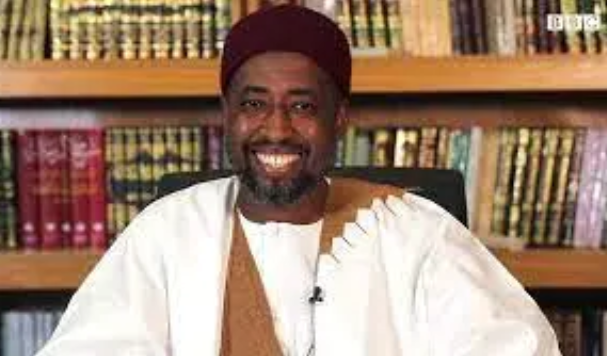
One of the imams of the National Mosque, Abuja, Professor Ibrahim Maqari, has criticised and rubbished the conduct and nature of work of Nigerian university lecturers, members of the Academic Staff Union of Universities (ASUU).

Commenting on the issue of the ongoing ASUU strike, the controversial cleric queried the work of the university lecturers arguing that it does not yield any fruitful results.

In a 2-minute video clip in Hausa that went viral on social media, Maqari boasts, “No one would claim I don’t know university system. If anyone says so, it’s up to him.

“However, I had some knowledge of this position. This position presents several opportunities for disagreements and miscommunication. This work, as we’re calling it, is. In the name of work, what are we doing in the universities? The studies are where? There is no action taken.

“They steal and lie about everything. Each of them plagiarises the work of others. It’s all falsehoods, I assure you (wallahi).”

The retired academic stresses that most of his colleagues only feign carrying out research, but they don’t actually do it. He also laments that they only make an effort to have their papers published just to be promoted.

“It might be claimed, for example, that you are supervising or conducting research. That is false! except for a tiny minority, nothing is being done. They may be acting” (the research). But 80% of them aren’t doing it, which proves that they aren’t doing anything.

“When you see someone performing research, he’s pursuing promotion; therefore, he’d gather the works of his students or joint papers and enhance them to publish as his work merely to be promoted.

“His pen stopped after he was promoted! Did you get the point? How many people, after receiving a professorship, write 100 pages? Visit the universities to confirm! It would surprise you. I’m positive they’re 2/10. After that, 8/10 of researchers leave the field because their primary goal was to advance their careers.

“Like lecturing, it’s tough to find somebody who can complete 10 credit units weekly for a 6-hour course. It’s not much more than that, but I’ve forgotten. We’re down to 4 or 2 credit units, just like you. I took only 4 credit units over around three years.

“Before class, there is no preparation work to be done. It is entirely false. It’s been a 20-year-old handout. There is no investigation. The handout has been ingrained in each student’s memory.

“He has been teaching the same thing for nearly three years, and he is still teaching it now,” he said.

TETfund unveils 10 books authored by Nigerian academics

By Muhammad Aminu

The Tertiary Education Trust Fund (TETFund) has unveiled ten textbooks authored by Nigerian scholars.

The books, which were TETFund-sponsored, were aimed at reducing over dominance of foreign publications in the nation’s higher education institutions.

Speaking at the event in Abuja, Minister of Education Adamu Adamu said the dependence on foreign academic publications portends great danger to the nation’s education sector, adding that boosting indigenous authorship would address the problem.

The minister, who was represented by the State minister of education, Goodluck Nana Opiah, said: “The paucity of indigenously authored and produced tertiary level textbooks and related academic publications in the nation’s tertiary education institutions is a known fact over time. Nigeria’s tertiary education institutions became dependent on books published outside the country with the attendant consequences of the pressure on the demand for foreign exchange.

“It is equally worrisome that the quality of most academic publications in our country leaves much to be desired. It is therefore expected that nurturing the culture of quality authorship and the production of indigenous books will not only ensure the availability of relevant books in the diverse subject areas that take cognisance of our local environment and sensitivities but will also safeguard national pride and reduce the demand for foreign exchange,” he said.

He commended TETFund for establishing the Higher Education Book Development project to tackle the scarcity of tertiary level textbooks which has before now reached a crisis proportion.

Adamu hailed the Fund for putting in place the Technical Advisory Group (TAG), whose mandate includes collaboratively working with the agency to ensure Nigerian authors churn out quality books.

“TETFund Book Development Fund intervenes in the three key areas of publication of academic books and the conversion of high-quality theses into books, support for Professional Association Journals, and the establishment and sustainability of Academic Publishing Centres (APCs).

“It is worthy of note that so far, seventy-seven manuscripts have passed through rigorous review processes by distinguished scholars and are ready for publication as books. I want to assure this gathering that an additional thirty books will be presented before the end of this year under the TETFund sponsorship programme.

“It will be of interest to note that over 60 per cent of these books are to be published by the Academic Publishing Centres (APCs) established by TETFund,” the minister said.

Executive Secretary of TETFund, Arc. Sonny Echono, who expressed delight over the quality of the ten books, said additional 30 books sponsored by the Fund would be unveiled before the end of the year.

He noted that the agency would sponsor the production of 50 textbooks in 2023.

“We have over 66 manuscripts; what we are unveiling today were published by only one publisher (one printing press) ….., by the time we unveil the remaining 30 in December, you are going to see all the authors cut across the three layers of our tertiary education institutions,” Echono said.

The TETFund boss also revealed that the Fund had provided support to ensure all the Academic Publishing Centres in the country become fully operational.

“There are seven of them across the country. When we came in March, only the University of Lagos academic publishing centre was fully functional and running, a few of them had little issues, some equipment, and other contractual issues, we have resolved all of them now.

“Four have been completed since the last few months, and the remaining we hope to finish by the end of September. The issue of operationalising them, making them self-sustaining is the debate we are having currently because we want them to run as a business enterprise and trying to create balance by focusing on academic publishing and being able to sustain themselves,” he said.

On his part, Chairman of TETFund TAG, Professor Charles Aworh, said 20 TETFund-sponsored textbooks were published in 2014 on different fields with wide acceptance from within and outside the country, adding that three of the ten new books unveiled today were from PhD theses.

He, however, called for more empowerment of the nation’s publishing centres.

“We are on course to publish 40 books before the end of the year, but the only challenge is the capacity of our universities to publish. Authors are ready to publish, manuscripts are ready,” Aworh said.

The high point of the event, which also attracted authors, academic staff unions and heads of education agencies, among others, was the public presentation of the TETFund-sponsored books, which include;1.Principles of Veterinary Surgery: A Concise Text for Veterinary Students 2. Fundamental of Chemistry 3. Fundamental of Public Finance 4.Java for Beginners and Web Design and 5. Programming for Beginners.

Others are 6. The Comparative Method and Civil-Military Relations 7. Fluid Mechanics and Hydraulics for Engineers 8. A Guide to Teacher Competence Evaluation 9. Financial Deepening and Economic Growth in Nigeria and 10. Motivational Factors and Teachers Efficiency in Secondary Schools.

Federal Government fails to salvage education sector

By Yusuf Salisu Muhammad

It’s a very sad incident to Nigerians that the Academic Staff Union of Universities’ (ASUU) strike has been persistent for decades. It firstly started in the 70s during Obasanjo’s regime. ASUU went on firmly with its struggles and opted for strike as a major weapon to fight for its rights and those of Nigerian students. For many years, strikes have been  reoccurring like celebrated festivals; it’s hardly to end an academic session without ASUU embarking on a single strike. If the history of the ASUU strike will be unbundled, it will be clearly seen that it has been consistent since the military regimes and thus; one may not be unjust to say, the needed actions were not taken even in the past, had they heeded to ASUUs agitations and calls, we wouldn’t have been experiencing what we are experiencing now. 

Today, under Buhari’s administration, which even a layman thought would enjoy when it grabbed power; students have been suffering from the repercussions of the conflicts between the FG and ASUU. On Monday 14th February 2022, the union declared its first one month warning strike, and then added two months, after which they extended the strike by three months. If I may ask a question which may not have an answer, I would say, even in Africa, if not in Nigeria, where can universities be shut down for almost more than six months, and the government seems not to care? But if answer is to be given, it might be: no serious administration will “take no notice of” its country’s education sector sliding into anarchy and confusion like this. However, no thanks to the I don’t care attitude of the government, it is surely making history. 

The main ASUU’s demands now, as declared by the union, are: ensuring the acceptance of the University Transparency and Accountability Solution (UTAS) and also to fulfill the ASUU/FG’s signed agreement of 2009, which can all be implemented if the FG’s effort is genuine in getting rid of the “cog in the wheel” of the future of the Nigerian Youths. Therefore, the FG’s refusal to implement the aforesaid ASUU’s demands is simply “adding salt to the wound” of the Nigerian students and the education sector in general.

On the other hand, the demanded money and facilities by ASUU for revitalizing the sector can be disbursed as far as the FG treats the issue seriously considering what it spent on other sectors, which compared to education, they are definitely less important. Some menies spent are even irrelevant to the welfare of the masses or misplacement of priorities.

For instance; on  24th November 2021, the Punch Newspaper disclosed that “the minister of State for Budget and National Planning, Prince Clem Agba said that, the FG spent more than 2.3 trillion as a stimulus for covid19.” If the FG can spend more than 2 trillion on Covid-19, why can’t it at least spend 1 trillion on the education sector for ensuring its activation and ending the ASUU strike that has been in existence for more than twenty years? The same union strike which the current president and his minster of education were criticizing the last administration on?

In addition, Vanguard Newspaper reported on May 15, 2022 that the “Socio Economic Right and Accountability Project (SERAP) sues Buhari for spending  N1.48 trillion on maintaining refineries with no crude oil”. If more than 1 trillion can be unfruitfully spent on reviving the useless refineries why can’t 500 billion be disbursed to ASUU for revitalizing the education sector?

Additionally, the Punch reporterd on 22 February 2022 that: “FG to spend 3.53 trillion on infrastructure and human capital development in 2022”. This was amidst the ASUU strike, which is yet to be called off. If 2.53 trillion would be spent mostly on invisible infrastructure, why can’t 1 trillion be allocated to the education sector for its rescue or is there any infrastructure that can be enjoyed without qualitative education? I believe commoners would rather love to have education than any other infrastructure. Also, providing sound knowledge is the best way to development, not only for humans but for the whole country and what it contains.

Based on Daily Post analysis on October 15, 2021,” about 12 trillion has been allocated to the security sector in the past 7 budgets under president Buhari”. Based on this analysis the increment of the spending for the sector in the administration is whooping 15 percent of the country’s budget. If this can be done in an attempt to tackle the insecurity we still suffer from, despite the relevance of security in any country, why can’t the same attempt be done for the education sector even for once? These are few examples. One may argue that all the aforementioned spendings were already budgeted and also the education sector has its own budget, but is he aware that the sector’s budget is just a paltry sum?

Premium Times Nigeria, on October 27, 2021 stated that “since taking office, president Buhari’s highest allocation to the education sector is 7.9 percent of the total budget”. Meanwhile, the United Nations Educational, Scientific and Cultural Organization (UNESCO) recommended 15-20percent of any developing country’s budget for the sector. 

The FG should be alerted that this persistent strike is affecting not only students, their parents, and lectures but also the economy of the country as many small scale and medium enterprises depend on the campuses, howbeit, It’s indeed condemnable that ASUU’s demands have not been attended to. 

Moreover, it will shock any Nigerian of good will to hear the claim that the president was unaware about the ASUU strike till when he was notified during his Sallah visit to his home town! Kudos to Nigeria, my fatherland, where universities could be shutdown and academic staffs’ salaries stopped for months and yet the president doesn’t even know what is happening! The university lecturers’ strike for months with stoppage of their salaries, but the president was unaware? This alone, can prove the FG’s failure in salvaging the education sector in Nigeria. They don’t seem to care and I don’t think they will care at all. Their beloved children are elsewhere, outside the country, enjoying good education, while the poor peoples’ children grow in ignorance.

In addition to the points raised above, Nigeria, with 10.5 million out of school children, topped the list in the world, as declared by the United Nations Children Funds (UNICEF), Daily Trust on Monday, 24th January reported. Furthermore, the FG’s budget allocation to the sector is yet to reach the UNESCO’s recommendation, while looting allegations on government officials are not unknown, but still ASUU’s demands are neglected. 

In conclusion, I urge the government to move with rapid efforts in overcoming the hindrances in the education sector, others the government and all Nigerians should await more troubles, confusions and skirmishes.

Yusuf Salisu Muhammad writes from Katsina State, Nigeria.

Our struggle is bigger than you – ASUU-KASU replies El-Rufa’i

By Muhammad Sulaiman

The ongoing academic dispute between the Academic Staff Union of Universities (ASUU) members, and the Federal Government of Nigeria, has taken a new dimension in Kaduna State. The governor of Kaduna State, Malam Nasiru El-Rufa’i, has threatened to sack the Union members if they fail to resume their normal academic activities at Kaduna State University. However, the ASUU branch at the Kaduna State University (KASU) responded, saying that they are far above his usual tactics. They added that they would not, in any way, stoop to his intimidation and threats.

Excerpts of the ASUU Zonal press release, signed by its coordinator, Comrade Abdulkadir Muhammad, read:

“The Kano Zone of ASUU comprising Ahmadu Bello University, Zaria (ABU), Bayero University Kano (BUK), Federal University, Dutse (FUD), Kano University of Science and Technology, Wudil (KUST), Kaduna State University (KASU), Sule Lamido University, Kafin Hausa (SLU) and Yusuf Mataima Sule University, Kano (YUMSU) met on 7th August 2022 and deliberated on the intimidation meted on the ASUU members at KASU by the Government of Nasir Ahmed El-Rufai due to the ongoing nationwide strike action embarked upon as directed by the ASUU National. The Governor had threatened to sack all academic staff that have been on strike in the branch as he usually does on similar matters. ASUU as a Union had experienced similar threats in the past, and that had never deterred it from the patriotic struggles to salvage our public universities from imminent collapse.

As you are fully aware, our roll-over strike action has now entered its sixth month. The goal of the strike is to get government to timely and substantially address ASUU’s demands, namely: revitalization funds for public universities, Earned Academic Allowance (EAA), conclusion of the renegotiation of the 2009 Agreement, Visitation Panels to universities, and stoppage of the proliferation of state universities and governance issues in them, and deployment of UTAS as a payment system in Federal Universities. These demands were agreed upon, with timelines, by the Federal Government in the MoU and MoA it signed willingly with ASUU in February, 2019 and December, 2020 respectively.

The rhetorical question as to why ASUU is always embarking on strike action has been asked time and again by the concerned citizens and stakeholders. The straightforward answer is that ASUU is strongly convinced that if academics fail to fight the cause of university education, the fate that befell public primary and secondary schools would soon become the lot of the public university system in Nigeria. It is also worthy of note that ASUU as a Union does not derive pleasure in the disruption of academic calendar and hindering students from graduating in good time. Strike action always comes as the Union’s last resort after exhausting all other options and consultative avenues.

KASU has benefited immensely from the TETFund interventions, revitalization fund, staff development and provision of research grants, which are dividends of ASUU strikes. In fact, KASU is one of the universities that could rightly be described as “TETFund University” since virtually all buildings in the University were constructed through TETFund interventions. At this juncture, we challenge the Visitor of KASU to show a single structure he constructed on KASU campuses during his two-term tenure as Governor of Kaduna State. It is therefore illogical for the Government of Nasir El-Rufai to bluff that members of ASUU-KASU should either break away from the National strike or be sacked. Since the issuance of this threat, our members have constantly been intimidated and coerced by the University Council and Management through opening of registers, conduct of a comic exercise called examinations, selective stoppage of staff salaries, among others.

These theatrical exercises that the University Management confused and referred to as examinations that are currently going on in KASU are characterized by non-coverage of course outlines, incomplete lecture contact hours, non-participation of lecturers who taught the courses in the setting of the examination questions and supervisions, involvement of students in invigilation and non-moderation of question papers, which are clear violations of the laid down rules and regulations governing the conduct of examinations.

The Union would not fold its arms while the University evaluation system is being bastardized and abused by the Management of KASU. Therefore, ASUU demands that all the so-called examinations so far conducted be discarded in order to maintain and respect the sacred system of evaluation in the university system. The examinations must be re-conducted after following the due process and suspension of the ongoing strike action, otherwise, the Union will be left with no option but to write a petition to the National Universities Commission (NUC) and the Independent Corrupt Practices Commission (ICPC) against the Management of KASU.

The ASUU-Kano Zone commends the commitment and resilience of ASUU-KASU members for not succumbing to the antics of Kaduna State Government and its agents. The Union calls on its members in KASU to remain resolute and prosecute the strike action to its logical conclusion. Finally, the Union thanks the good people of Kaduna State for their patience, understanding, support and cooperation.”

ASUU’s undying struggle

By Auwal Mustapha Imam, PhD

Nigerian politics should copy ASUU politics. There’s no union, party, association, society or any group in Nigeria that has the structures as firm as that of ASUU. None has united, tolerant and harmonized structures as ASUU. ASUU is mindless of the religion, region, ethnicity or tribe of who becomes its leader, the only thing ASUU members are after is, someone that has the capacity to face and challenge any inappropriation, misconduct, injustice or insincerity from the powers that be.

The leadership has been like that since its inception. No one cares wether or not the leader is a Muslim/Christian or any tribe. If the leader is a Christian from the South, he challenges the powers and addresses the problems of every Muslim lecturer from the North, devoid of consideration of his faith. This goes vice versa.

When my teacher and mentor Dr. Nasir Isa Fagge, a Muslim from Bayero University, Kano was the President of ASUU, he faced and challenged the then President Goodluck Ebele Jonathan, a Christian from the South. None of either ASUU members or Nigerians complained that he was harsh because the President was a Southern Christian. All they were after was the result and the struggle.

Now that President Buhari, a Muslim from the North is the President, the two consecutive ASUU leaders Professor Biodun Ogunyemi (immediate past) and Professor Emmanuel Osodoke (the present) are fiercely challenging the Buhari’s government for the betterment of education in Nigeria, where both Muslims and Christians from all angles of the country can benefit. None of either ASUU members or Nigerians are complaining that the strike lingers because a Northerner is the President. All we are after is the result and the struggle.

Whereas, in Nigerian politics, one’s religion, region and ethnicity are scrutinized and looked at first before even his intellectual capacity. This has thrown us into a deep mess that led us to underdevelopment and public service abuses. Every organization recruits not based on merit, but connection, relationship and nepotism. This can never allow us to establish a structure that will ensure transparency and good governance.

ASUU’s structure, opinions and decisions are both descending and ascending. All deliberations from the local chapters ascend to the zone, then to the national. Likewise, all communications and decisions descend from the national to the zones and to the local chapters. Every member of ASUU is a stakeholder and all opinions are listened to and respected. This is why it is difficult for government to break the structure and penetrate with any inducement to corner the loyalty of some members to the agreement of government’s policies against ASUU.

ASUU’s structure enables unity and enforces loyalty to decisions. If your voice is heard and respected, you have no reason to go against the decision you took part in. This is why every member is loyal.

My master, Professor Mutari Hajara Ali of Physics Department BUK, once told me how he used his Vespa then for commercial “achaba” to survive the harsh policies of the then government of no-work-no-pay against them. I know many lecturers who are currently into commercial transportation services with their vehicles to survive the policy and endure the strike.

To all ASUU members, struggles and sacrifices are part of the job. Hence, nor starvation can force ASUU to retreat, unless its demands are met. Many of us are into hardships, but to us, the struggle needs to reach a logical conclusion rather than back down because of hunger.

Aluta Continua!

ASUU strike: presidency denies giving ultimatum to reach agreement

By Muhammad Aminu

The Federal Government has denied giving any ultimatum to the Minister of Education, Malam Adamu Adamu, to bring an end to the lingering industrial action in public universities.

Senior Special Adviser to President Buhari on Media and Publicity, Malam Garba Shehu, said in a statement on Wednesday that there was no ultimatum given to the education minister to end the strike.

He accused the media of being deceived by their sources by giving definite time, saying the minister only suggested two or three weeks or even less.

The statement noted: “Neither during nor after the meeting was any ultimatum given to the Minister of Education.

“During the meeting, the Minister of Education requested that the Minister of Labour hands off the negotiation to allow him lead and conclude what he had earlier on started with the Academic Staff Union of Universities (ASUU). And he promised that he could get an agreement within the shortest possible time, possibly two to three weeks.”

“It is a pity that almost all media houses allowed themselves to be deceived by interested sources that are not the authorized spokesmen of the government.

According to Shehu, the Minister will carry all the necessary stakeholders who can realistically work to end the strike as the government doors are open.

“In carrying out this assignment, the Minister will carry along all relevant ministries and agencies with statutory functions and duties relating to the issues involved.

“The Presidency is optimistic that agreements can be reached in even a shorter period if all parties/stakeholders are not unrealistically obstinate. We appeal to the parties to work together to end the strikes.

“On the part of the administration, all doors remain open for dialogue and the resolution of the issues.”

The statement called on the media to desist from spreading misinformation on the matter.

“We appeal to the media not try to spread misinformation. The orchestrated media narratives seeking to present an entirely different picture, attributed to sources, in the last 24 hours are not helpful at all.

“The outcome of the meeting held by President Muhammadu Buhari on Tuesday with relevant Ministries, Departments and Agencies (MDAs) to end the agitations by university unions ought to be beyond spin-doctoring and conjectures, it added.