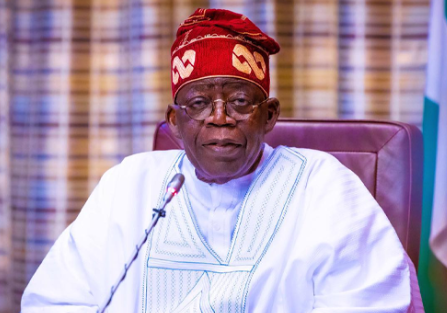
Asiwaju Bola Ahmed Tinubu

A deconstructive reading of Sunusi’s remarks on Tinubu’s economic policies 

By Bashir Uba Ibrahim, Ph.D.

Emir Muhammadu Sanusi II’s recent remarks about the harsh economic policies of President Bola Ahmed Tinubu’s government, made during the 21st Memorial Lecture for the late Gani Fawehinmi organised by the Nigerian Bar Association, NBA Ikeja Branch in Lagos, themed ‘Bretton Woods and the African Economies: Can Nigeria Survive Another Structural Adjustment Programme’, have sparked a diverse range of reactions across social media. 

As the chairman of the occasion, when giving a microphone to comment, he remarked, “I can give a few points here about what we are going through and how it was predictable and avoidable. But I am not going to do that because I have chosen not to speak on the economic reforms or to explain anything because if I explain it, it will help this government. But I do not want to help this government. They are my friends, but if they do not behave like friends, I will not behave like a friend”. 

 These remarks received and continuously attracted fierce critical rebuttals and approbations from the government and Emir Sunusi’s perceived critics. On the other hand, his apologists are overtly in a tactical defence of such remarks on the pretence that the Emir is a victim of misperception by the public and misinterpretation by the media as they usually used to quote him out of context. Even the Emir himself is reported by the Leadership newspaper lamenting that his remarks were taken out of context, reducing the broader message of his speech to a single paragraph. But Emir and his media warriors fail to understand that linguistically, by the time a person makes an utterance, he no longer has control over it. 

To borrow a popular Hausa adage which says magana zarar bunu, idan ta fita ba ta dawowa or what Jean-Paul Sartre called “every word has its consequences” or in what Roland Barthes, the prominent French Structuralist and Post-structuralist literary theorist and critic called in his widely celebrated magnum opus “the death of the author is the rise of the reader”. Similarly, Barthes argues that “once the author is removed, the claim to decipher a text becomes quite futile. To give a text an author is to impose a limit on that text, to furnish it with a final signified”. And the text here refers to both spoken discourse (phonocentrism) and written (logocentrism). The former is the spoken remarks by the Emir, while the latter is its interpretations or deconstructive reading(s). Thus, the latter supplements the former in what Derrida called “doubling critique”.

Meanwhile, concerning the above remarks by the Emir, the media houses have done what part of their job, i.e., deconstructive or interpretive journalism. Thus, by the time the Emir loses authority or control over his utterances, it is when the media and the general public have the right to interpret him the way they like. Thus, it forms the crux of their deconstructive readings of Emir Sunusi’s remarks. Therefore, the more remarks are enmeshed with aporia and entangled in contradiction, dislocation and disunity of words or, to borrow Jacques Derrida’s words, “play”, “decentering”, or “rupture” like the one made by Emir Sunusi, the more it attracts deconstructive readings or interpretation from various standpoints.    

For instance, Emir’s remarks, as widely reported by the media, sound contradictory if not antipodal or antithesis. Given his unflinching and uncompromising stand as an unrepentant neo-liberalist who always supports the removal of fuel subsidy and currency liberalisation, floating of the naira against the dollar, which ultimately leads to the devaluation of the former, how can you say the situation the Nigerian government find itself is “avoidable” while you are among those who advise the government to implement such policies for reforming the shrinking economy. As the popular social media influencer Aliyu Dahiru Aliyu (Sufi) argues, “…For years, Sanusi has been a vocal advocate of neo-liberal economic policies, including subsidy removal and currency liberalisation–policies now adopted by Tinubu’s administration. These were once touted by people like Sanusi as the perfect remedies for our economic woes, yet their implementation, according to his recent expression, hasn’t delivered the promised relief. So, what fresh ideas Sanusi hides that he can offer if the FG has been friendly towards him apart from the familiar intellectual manoeuvres?”. 

Finally, as opined by the father of modern linguistics, the popular Swiss linguist Ferdinand de Saussure, that language be spoken as the one used by the Emir or written, i.e., the one used by his deconstructive readers is a system of signs; that the sign (word) is the basic unit of meaning, and that the sign comprises a signifier (form) and signified (mental representation or meaning). Therefore, the signifiers uttered by Emir Sunusi carry variants of signifieds in what Derrida called “transcendental signified”, which are beyond the control of their owner (the Emir) and thus warrant such myriad deconstructive reading(s).

Bashir Uba Ibrahim, PhD, wrote from the Department of English and Literary Studies, Sule Lamido University, Kafin Hausa. He can be reached at bashirubaibrahim@gmail.com.

Sanusi questions Tinubu’s economic policies, vows to withhold advice

By Anwar Usman

The Emir of Kano, Malam Muhammadu Sanusi II, has made it clear that he will not use his expertise to address Nigeria’s economic challenges simply because he is unwilling to assist the Tinubu administration.

As a certified economist and former CBN governor, Sanusi made this assertion while speaking at the 21st anniversary of Fawehinmiism with the 2025 Gani Fawehinmi Annual Lecture held today at the Lagos Airport Hotel in Ikeja, Lagos state.

He stated that “explaining the economic crisis would simply provide solutions to the lingering economic problems and pave the way for the proliferation of Nigeria’s economy.” 

While speaking, the Emir emphasised that despite being a good friend to the government, he would not offer any solutions that could help the administration achieve its goals. 

He criticised the Tinubu administration, stating they lacked credible and competent people who could explain the persistence of economic constraints on Nigerians.

He reiterated, “I’m not going to discuss any of the problems, let alone provide an insight to navigate this challenging period”.

Instead of offering solutions, Sanusi shifted the responsibility to the administration, saying, “It’s up to them to explain to Nigerians why their policies keep failing. He attributed the current economic woes to decades of unnecessary economic reforms.”

Shocked by ISWAP attack, Tinubu calls for enhanced military measures

By Abdullahi Mukhtar Algasgaini

President Bola Tinubu expressed his condolences to the soldiers who lost their lives in an attack on a military base in Sabon Gida, Damboa, Borno State.

Members of the ISWAP (Islamic State West Africa Province) group launched the attack at dawn on Saturday, using heavy military vehicles and motorcycles. The attack targeted the military base in Sabon Gari, located in Damboa Local Government Area, Borno State. They set the base on fire, including military vehicles, as confirmed by several military sources who requested anonymity due to restrictions on speaking about the matter.

Fighter jets dispatched from Maiduguri, located 100 kilometres (62 miles) away, retaliated against the attackers as they tried to flee.

In a statement released by the President’s spokesperson, Bayo Onanuga, Tinubu expressed deep sorrow for the loss of six brave soldiers who died in the terrorist attack on January 4th. The President has ordered a full investigation to determine the cause of the incident and ensure that it serves as a lesson to prevent future occurrences.

“The actions taken by the military demonstrate our strength and readiness to confront threats and eliminate them for the safety of our country. This operation highlights our commitment to fighting terrorism and banditry and working towards a peaceful and secure future for all Nigerians,” the President stated.

Tinubu further expressed his gratitude and sympathy to the soldiers and other security personnel on behalf of the grateful nation. “Your dedication and sacrifice will not be in vain. We stand with you 100% in this fight against these threats,” he affirmed.

The Chief of Army Staff also commended the military’s swift and decisive response, particularly the air support, which successfully struck many of the terrorists and destroyed their equipment as they attempted to escape.

According to Tinubu, the airstrike resulted in the killing of several terrorists and the destruction of their resources. The President urged the military to take further steps to launch direct assaults on bandits and terrorist camps.

He emphasized that special attention should be given to the North-Western region, where these criminal groups continue to pose a threat to the lives and property of innocent rural communities.

Tinubu also called on Nigerians and the media to support the military’s efforts to restore peace and security in the country.

Tinubu’s unyielding policies: Nigeria at the crossroads of economic turbulence and hope

By Usman Abdullahi Koli

As 2025 begins, Nigeria is grappling with an unprecedented economic crisis. Inflation is at an all-time high, the cost of living continues to skyrocket, and millions of Nigerians struggle to make ends meet. Against this backdrop, President Bola Ahmed Tinubu, in his maiden media chat, aired on December 23, 2024, reaffirmed his commitment to the controversial reforms that have significantly reshaped the nation’s economic landscape. For many Nigerians, his steadfastness in the face of public outcry has been both perplexing and polarising.

During the televised chat, Tinubu made it clear that he has no regrets about the swift removal of the fuel subsidy, a decision he implemented on May 29, 2023, immediately after assuming office. “I made the swift decision to preserve Nigeria’s future and that of generations yet unborn,” he stated. The move, he argued, was necessary to redirect funds toward critical infrastructure and social investments. However, while the rationale may have been rooted in long-term sustainability, its immediate impact on ordinary Nigerians has been devastating.

The President also defended his administration’s tax reform bills, currently before the National Assembly, insisting they were essential to Nigeria’s economic recovery. Despite significant pushback, particularly from Northern leaders who feared the reforms could deepen regional disparities, Tinubu maintained that these policies were non-negotiable. “The tax reforms have come to stay,” he declared, further solidifying his reputation as a leader unwilling to waver, even in the face of widespread criticism.

For the average Nigerian, these reforms have translated into unbearable economic hardship. Inflation rose to an alarming 33.95% in November 2024, up from 22.41% in May 2023. The cost of basic commodities such as food, fuel, and transportation has nearly doubled, pushing millions below the poverty line. The removal of the fuel subsidy, intended to save the government trillions of naira annually, has led to an exponential increase in the cost of petrol, which now hovers around ₦1000 per litre.

The ripple effects are evident everywhere. Transport fares have tripled, food prices are beyond the reach of many families, and small businesses are folding under the weight of operating costs. According to the National Bureau of Statistics, unemployment rose from 33.3% in Q1 2023 to 40% in Q3 2024, leaving millions without a source of income. For many Nigerians, survival has become a daily struggle, with no immediate relief in sight.

While President Tinubu’s reforms undoubtedly aim to stabilise the economy and ensure fiscal responsibility, their execution has lacked a critical human element. Policy changes of this magnitude require technical precision, empathy, and strategic cushioning to mitigate their impact on vulnerable populations. Governments worldwide that have implemented subsidy removals or tax reforms have typically done so gradually, accompanied by robust social safety nets.

In Nigeria, the absence of significant palliatives has amplified the suffering of the masses. The promised conditional cash transfers and mass transit buses remain primarily theoretical, leaving citizens to bear the brunt of these reforms unaided. The government urgently needs to adopt a more holistic approach that balances fiscal discipline with the immediate needs of its people.

As a writer, it has been my habit to pen a year-in-review piece every December, reflecting on the highs and lows of the past year. This year, however, I chose to wait until President Tinubu’s address to the nation, hoping for a message of hope or at least a roadmap to alleviate the suffering of Nigerians. Unfortunately, his reaffirmation of policies exacerbating the economic crisis offers little comfort.

The government must urgently prioritise measures to ease Nigerians’ economic burden. Initiatives such as targeted subsidies for essential goods, tax relief for low-income earners, and the accelerated implementation of promised palliatives could provide immediate relief. Additionally, robust dialogue with stakeholders, particularly those from regions expressing concerns, is critical to fostering a sense of inclusion and national unity.

President Tinubu’s vision for a self-reliant Nigeria is commendable, but the path to achieving it cannot come at the expense of the people’s well-being. Economic reforms must be designed to stabilise numbers and improve lives. As the nation stands at a crossroads, the government has an opportunity to recalibrate its approach, demonstrating that it is not only fiscally responsible but also deeply empathetic to the struggles of its citizens.

Nigerians’ resilience is unmatched, but resilience alone cannot drive a nation forward. It is time for governance that is as humane as it is ambitious—leadership that listens, learns, and adapts. As 2025 approaches, the hope is that the lessons of the past year will inspire a more inclusive and compassionate governance style, ensuring that no Nigerian is left behind in the pursuit of progress.

Usman Abdullahi Koli wrote via mernoukoli@gmail.com

Tinubu promises better days for Nigerians in 2025

By Uzair Adam 

President Bola Ahmed Tinubu expressed optimism about brighter prospects for Nigerians in 2025 in his New Year message. 

He highlighted economic improvements, such as reduced fuel prices, strengthened foreign reserves, and increased foreign investments, and attributed them to his administration’s efforts.  

Tinubu acknowledged challenges like high food and drug costs and pledged to tackle inflation, aiming to lower it from 34.6% to 15%. 

He announced plans to expand credit access by establishing a National Credit Guarantee Company to begin operations by mid-2025 to boost economic growth and support underserved groups.  

The president called for unity, urging Nigerians to avoid divisive tendencies and remain focused on building a prosperous nation. 

He reaffirmed his commitment to reforms, emphasising his goal of achieving a one trillion-dollar economy.

Tinubu ranked third in global corruption and crime list for 2024

By Abdullahi Mukhtar Algasgaini

The Organized Crime and Corruption Reporting Project (OCCRP), an organisation focused on investigating global corruption and crime, has announced the list of the top individuals involved in corruption for the year 2024. Nigerian President Bola Ahmed Tinubu ranks third on this list.

OCCRP conducted this selection by gathering votes from people around the world to identify those who have significantly promoted corruption, dishonesty, and increasing poverty in their countries.

In this year’s list, President Tinubu secured the third position, following the former president of Indonesia, Joko Widodo. The president of Kenya, William Ruto, received the most votes. 

However, the prestigious “Person of the Year” award was given to former Syrian President Bashar al-Assad, who is said to have fled to Russia after years of plundering his country’s wealth.

Will renaming the University of Abuja to Yakubu Gowon University ease congestion for FCT residents?

By Adamu Abdullahi 

As Nigeria’s capital city, FCT Abuja needs a university other than the University of Abuja, established in 1988, to cater to the increasing number of people seeking university education within the territory and in Nigeria at large.

Establishing the Federal Capital Territory University of Science and Technology, Abaji would provide the legal framework to close the knowledge gap in science and technology.

FCT is the fastest-growing city in Africa, with only one federal university and no single polytechnic. The FCT find it challenging to study, yet the federal government has only a name to change in the federal capital instead of commissioning the one that the weed snake has taken over. 

What reduction of congestion will change the educational sector of FCT? Will the rename accommodate our prospective admissions seeker seeking to study for their ambitious course? Has the renamed university had all the courses that will interact with the international community to study in Nigeria?

Universities can be viewed as brands, much like corporations. Just as corporate brands maintain their identities over time, educational institutions rely on stable branding for recognition and credibility. 

A troubling precedent is set when university names are changed impulsively—particularly to honour politicians. This practice undermines the integrity of these institutions and can create significant confusion, particularly in the global context.

For instance, renaming the University of Abuja to Yakubu Gowon University raises several important concerns. Many foreign employers and academic institutions may now struggle to recognise the new name, which could impact their perceptions of the institution’s legitimacy and reputation.

The sudden name change may also confuse prospective employers, who might not be familiar with the new name but have been aware of the previous branding.

Moreover, graduates of these renamed institutions face a unique dilemma. They are handed Certificates that no longer align with the name they are familiar with from their years of study. This disconnect between the institution they attended and the name that appears on their degrees can lead to questions about the validity of their education and qualifications. 

It can also complicate further academic pursuits and job applications, as they may confront scepticism from potential employers or institutions unaware of the name change.

In essence, this practice of renaming universities to immortalise political figures can have far-reaching consequences. It disrupts the continuity and coherence of an educational brand built over the years, potentially diminishing the value of the degrees it confers and creating unnecessary barriers for its graduates in the competitive global job market.

Adamu Abdullahi wrote via nasabooyoyo@gmail.com.

The lost glory of Kano’s textile industry

By Salihi Adamu Takai

I was at Zakir Naik’s lecture on “The True Religion on Earth,” which concluded in the last few days, standing with brothers Uzairu and Abul-Khair, medical students at King Ceasor University, Uganda. As I was standing in my full Hausa dress with a match-colour cap, an old man saw me

“Assalamu alaikum”, the man greeted me. He was interested in discussing my dress with me. He asked me, “Are you a Nigerian?” I replied, “Yes, I am.” He said, “You must be from Kano State.” Yes, I am from Kano. “Masha Allah,” he said, excitedly.

As I was fully attentive to him, he told me how he knew Kano and its relevance in Islamic history in Uganda. He told me he knew about Kano in two ways: its impact on Islamic history in Uganda and its being the centre of commerce for decades back then. 

“I have constantly visited Kano for thirty years since the state retained its centre of commerce. I exported textiles from there to Uganda, which we found so cheap. In those days, there were many mills producing cotton fabrics. The Trans-Saharan trade fueled Kano’s textile industry, bringing cotton and other raw materials from North Africa”, the man reminisced. 

This meeting taught me a lot of knowledge, which I could say is of non-fortune because I understood that my state has missed what can’t be recovered quickly. 

Gradually, the things the state was known for started to escape from it — right from when it lacked a well-focused leader who could maintain what it had then — thinking that a title could be helpful in the future. 

The headline is the “Reform Tax Bill,” which President Bola Ahmed Tinubu proposed to the National Assembly. The bill aims to favour a state with many factories. Unfortunately, Kano is no longer such a state. The industries established by colonial masters and maintained by the founding fathers have been neglected and abandoned by northerners. The textile industry has declined, relying on importation. So unfortunate!

Salihi Adamu Takai wrote via salihiadamu8888@gmail.com.

Debunking the claim that 90% of Nigerians support the controversial tax reform bill

By Adamkolo Mohammed Ibrahim

The Truth Behind Nigeria’s Controversial Tax Reform Bill

Professor Taiwo Oyedele, Chairman of the Presidential Committee on Fiscal Policy and Tax Reforms, recently claimed that 90% of Nigerians support the contentious tax reform bills currently before the National Assembly. This claim is not only misleading but also contradicts the palpable opposition across various sectors of the country. As a university lecturer, researcher, public policy critic, and advocate of public accountability, I find it imperative to refute these unfounded assertions with facts and context.

Professor Oyedele and his team have lauded the proposed tax reform bill as a transformative framework, but it has sparked nationwide outrage, including on social media platforms. Far from the purported overwhelming support, the bill faces staunch opposition from key stakeholders across Nigeria, particularly in the 19 states in northern Nigeria. Among those voicing their discontent are the 19 northern governors, traditional rulers such as emirs, religious organisations, youth groups, business associations, and a myriad of concerned citizens, both in real life and on social media platforms.

Nigeria’s Vice President, Senator Kashim Shettima, who also chairs the National Economic Council (NEC), offered a particularly significant perspective. In alignment with the collective stance of northern governors (drawing from his deep understanding of the region as a proud son of the northeast of Nigeria) and other national stakeholders, he emphasised the importance of ensuring inclusivity and fairness in the proposed tax reform process. 

The Vice President firmly advised against submitting the bill to the National Assembly without wider consultations. During one of NEC’s monthly sessions, a unanimous decision was reached: the bill should be halted to ensure no region or demographic is marginalised in our democratic process. Despite this well-articulated stance, the President disregarded this advice and pushed ahead with the submission of the bill. This move has understandably deepened mistrust and resentment.

Critics argue that the tax reform bill is structured to disproportionately benefit Lagos State to the detriment of 35 other states and the Federal Capital Territory. For northern governors, this directly threatens their ability to sustain basic governance functions, including the payment of salaries and provision of essential services. Governor Babagana Zulum of Borno State is one of the most vocal opponents, warning that the bill if passed, would cripple northern states economically.

Such criticisms are not baseless. Deep inequalities mark Nigeria’s economic landscape, and any policy perceived to exacerbate these disparities inevitably meets with resistance. The tax reform bill appears to reinforce these fears, offering no clear mechanisms to balance its purported benefits with the realities of Nigeria’s diverse socio-economic terrain.

Questionable Survey Claims

Professor Oyedele’s assertion of a 90% approval rating for the bill demands rigorous scrutiny. According to his statement, the survey involved over 3,000 participants, a mix of online and offline respondents, with approval rates ranging from 76% among passive readers to 100% among in-person attendees. These figures raise more questions than they answer.

Who exactly were the survey respondents? What methodology was employed? How representative was the sample of Nigeria’s diverse population? What strategies were used for data collection and analysis? These critical details remain conspicuously absent, leaving the legitimacy of the survey in serious doubt.

Nigerians deserve transparency in policymaking. If this survey indeed reflects national sentiment, Professor Oyedele and his committee should publish the raw data, methodology, and results for independent verification. If they have not done so, this can only be interpreted as an attempt to mislead the public using propagandistic executive intimidation and push through an agenda that lacks popular support.

The Case for Wider Consultation

The NEC’s earlier recommendation to halt the bill and engage in broader consultations was wise and democratic. Policymaking in a pluralistic society like Nigeria requires inclusivity, transparency, and sensitivity to regional and socio-economic disparities. By bypassing these principles, the federal government risks deepening the divisions that have long plagued the nation.

Wider consultation is not just a procedural formality but a necessity. It allows for the incorporation of diverse perspectives, ensuring that no part of the country feels short-changed. Given the widespread criticism of the bill, particularly from regions like the North that stand to lose the most, the government’s failure to heed this advice represents a glaring lapse in leadership.

Furthermore, President Bola Ahmed Tinubu’s policy direction, particularly concerning the contentious tax reform bill, raises critical questions about his government’s approach to governance and inclusivity, especially regarding the northern region of Nigeria. It is a region that not only demonstrated overwhelming support for his candidacy in the 2023 general election but also provided the majority of the votes that secured his presidency.

In the 2023 presidential election, President Tinubu garnered a significant 8,794,726 votes, with the northern region contributing the bulk of this figure. Northern voters cast over 4.9 million votes — approximately 55.7% of his total votes — in his favour. These numbers highlight the region’s decisive role in his electoral victory. Yet, it is disheartening to observe the implementation of policies that appear inimical to the socio-economic interests of this same region.

The adage “do not bite the finger that feeds you” is not only a moral maxim but a practical guide for leadership in a diverse democracy like Nigeria. Unfortunately, recent government actions, particularly the insistence on the controversial tax reform bill, seem to disregard this wisdom. The northern region, often referred to as the agricultural and cultural heartland of the nation, stands to bear the brunt of these policies. Stakeholders, including northern governors, traditional rulers, and socio-political groups, have consistently voiced their opposition, warning that the bill could exacerbate regional inequities and economic hardships.

Rather than recognising and addressing these legitimate concerns, the administration appears determined to forge ahead. This approach not only undermines the trust of a region that played a pivotal role in President Tinubu’s electoral success but also risks alienating key stakeholders whose support is crucial for national stability. It is worth noting that governance is a reciprocal relationship; the trust and support of the people should be met with policies that prioritise their welfare and reflect their collective aspirations.

Every action or inaction in politics has consequences, and the grievances of the northern region should not be underestimated. Leaders must remember that political capital is not an endless resource; it must be replenished through equitable and inclusive governance. President Tinubu’s administration must demonstrate its commitment to Nigeria’s unity and progress by re-evaluating policies that could harm the very citizens whose votes propelled him to power.

The northern region’s contribution to President Tinubu’s mandate was not a token gesture but a profound expression of trust and hope in his leadership. To erode that trust through policies perceived as neglectful or exploitative is to undermine the very foundation of the democratic pact. As the government moves forward, it must prioritise consultation, transparency, and equity to ensure that all regions of the country, especially the North, feel represented and valued. Anything less would not only be a betrayal of the region’s support but a potential threat to the unity and stability of the nation.

The Way Forward

To restore public trust and ensure equitable governance, the Federal Government must take the following steps:

  1. Publish the Survey Data: Nigerians have the right to scrutinise the data underpinning claims of popular support for the bill. Transparency is non-negotiable.
  2. Engage Stakeholders: Governors, traditional rulers, religious leaders, youth organisations, business associations, students, and other demographics must be actively involved in refining the bill. Their insights are crucial for crafting a policy that benefits all Nigerians.
  3. Reassess the Bill: The tax reform must be revisited to address its perceived regional biases. Mechanisms should be introduced to ensure that no state or region is disproportionately disadvantaged.
  4. Strengthen Regional Equity: Any reform should prioritise clear, open, transparent, unambiguous, and sincere equitable distribution of resources and revenue, balancing the needs of economically vibrant states like Lagos with those of less developed regions.
  5. Promote Public Dialogue: The government should organise town hall meetings and public forums across all geopolitical zones to educate citizens about the bill and solicit their input. Relying solely on the National Assembly’s public hearings will not be sufficient to ensure broad-based participation and understanding.

Therefore, the claim that 90% of Nigerians support the tax reform bill distorts reality. The widespread opposition from across Nigeria, including key voices in northern governance, traditional institutions, and civil society, underscores the contentious nature of this legislation. Rather than pushing ahead with a deeply flawed policy, the Federal Government must prioritise inclusivity, transparency, and equity in its approach to fiscal reform.

Cherry-picked survey results, lofty rhetoric, or political propaganda will not silence Nigerians. Democracy thrives on accountability, and the people deserve nothing less than policies that genuinely reflect their collective will and serve their common good. Professor Oyedele and his committee must heed this call, for the integrity of Nigeria’s democratic process and the future of its fiscal stability depends on it.

Adamkolo Mohammed Ibrahim, a Lecturer at the Department of Mass Communication, University of Maiduguri, wrote in from Pompommari Sabon-Fegi, Damaturu, Yobe State, and can be reached via adamkolo@unimaid.edu.ng.

ACF takes step toward tax reforms with new committee

By Abdullahi Mukhtar Algasgaini

The Arewa Consultative Forum (ACF) has established a Tax Reform Committee to tackle the challenges of taxation in Nigeria, especially the four proposed tax bills currently undergoing legislation. 

The committee, chaired by Senator Ahmed Muhammad Makarfi, former Governor of Kaduna State, comprises members with diverse expertise in finance, law, taxation and economics.

Other members of the committee include:

Dr. Mansur Mukhtar former Minister of Finance, Dr. Yerima Ngama, former Minister of State Finance, Joe-Kyari Gadzama SAN, Prof. Kabir Isa Dandago, Gambo Hamza, Kabiru M Ahmed, Mouftah Baba-Ahmed, Tajuddeen A Dantata, Chris Umar SAN and Abdullahi Ali Gombe, mni

The establishment of the Tax Reform Committee is a significant step towards addressing the tax challenges facing the region and Nigeria as a whole. 

The committee’s recommendations are expected to contribute to developing a more effective tax system in the country.