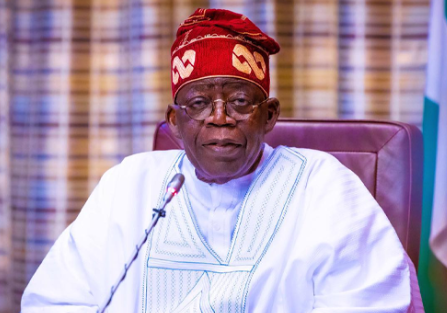
Asiwaju Bola Ahmed Tinubu

Nigeria should turn its abandoned assets into revenues

By Zayyad I. Muhammad

The Federal Government of Nigeria owns thousands of abandoned and incomplete buildings, roads, dams, electricity, etc, projects, vast tracts of unused land, thousands of obsolete and unserviceable vehicles, and millions of scrap machines and equipment scattered across the country. These assets, though neglected, represent significant untapped potential that could be leveraged to generate much-needed revenue.

Both the federal and state governments need additional funds to finance developmental and humanitarian programs and sustain ongoing projects and programs. The solution to this financial challenge may lie in the assets that have been left to deteriorate. By auctioning some of these assets, commercializing others through private sector participation, and completing abandoned projects, the government can unlock substantial revenue streams.

For instance, Nigeria has thousands of kilometers of abandoned or dilapidated federal highways. Rehabilitating and conventionalizing these roads through private sector involvement would improve infrastructure and generate revenue for the government. This approach would shift the financial burden from the public purse to private investors, who would fund the construction or rehabilitation of the roads and recoup their investments through tolling.

In 2022, the Federal Government introduced the Highway Development and Management Initiative (HDMI), a commendable program that identified 19 federal highways for rehabilitation and tolling. However, recent reports suggest that the current Minister of Works, Senator David Umahi, has become a bottleneck to the initiative.

As Bismarck Rewane, Managing Director of Financial Derivatives Company Limited (FDC), noted, “This idea was thwarted with the entrance of the current Federal Minister of Works, who came into the picture, first as a catalyst and next as a spoiler.”

The President Bola Ahmed Tinubu administration should prioritise reviving schemes to convert abandoned properties, highways, lands, vehicles, machinery, and other assets into sustainable revenue streams. However, the process must be meticulously planned, transparent, and supported by robust legislation and institutions. Given Nigeria’s history of failed concessions and partnerships, neither private sector players nor international investors will be willing to participate without these safeguards.

Failures include the Lekki-Epe Concession, Ajaokuta Steel Company’s 2004 concession to GSHL (revoked in 2008), Lagos-Ibadan Expressway’s 2009 concession to Bi-Courtney (revoked in 2012), and the Nigerian Ports Concession program, where operators failed to meet obligations due to weak enforcement and oversight. Another case is the ALSCON concession to UC Rusal, leading to ownership disputes and legal battles.

To succeed, the government must learn from past mistakes and create an enabling environment that fosters trust and accountability. By doing so, Nigeria can transform its abandoned assets into a goldmine of opportunities, driving economic growth and development for the benefit of all.

Zayyad I. Muhammad writes from Abuja via zaymohd@yahoo.com.

BUK awards honorary doctorates to A. A. Rano, Col. Sani Bello

By Hadiza Abdulkadir

Bayero University, Kano (BUK) celebrated a significant milestone on February 15, 2025, by conferring honorary Doctorate Degrees on Colonel Sani Bello, former Military Administrator of Kano State, and Alhaji Auwalu Abdullahi Rano, CEO of A. A. Rano Group of Companies, during its 39th Convocation.

The honorary degrees recognised their exceptional contributions to education and socio-economic development in Kano State and Nigeria. 

President Bola Ahmed Tinubu, represented by Minister of State for Education, Professor Suwaiba Ahmad Sa’id, praised the honourees and reaffirmed the government’s commitment to human capital development through education.

BUK’s Vice Chancellor, Professor Sagir Adamu Abbas, highlighted the graduation of 3,400 students, including 295 from the Dangote Business School and 275 PhD graduates, with 176 achieving First Class Honours. 

Pro-Chancellor Dr. Nasiru Yusuf Gawuna encouraged graduands to uphold the university’s reputation, noting BUK’s recent ranking of 43rd in Africa by the 2025 Times Higher Education World University Rankings, inspiring them to strive for excellence and service to humanity.

BUK awards Borodo, others with Emeritus Professorships at 39th convocation

By Hadiza Abdulkadir

Bayero University Kano (BUK) celebrated its 39th Convocation by conferring Emeritus Professorships on Professor Garba Dahuwa Azare, Professor Julius Afolabi Falola, and Professor Musa Borodo for their significant contributions to academia.

The ceremony featured President Bola Ahmed Tinubu, who was represented by Minister of State for Education Professor Suwaiba Ahmad Sa’id. Before her appointment, Sa’id was also a member of the Bayero University, Kano, staff.

Tinubu congratulated the honourees and graduates, emphasised the importance of education in fostering national progress, and assured ongoing support for the education sector to boost global competitiveness.

BUK Vice Chancellor, Professor Sagir Adamu Abbas, praised the awardees as influential figures in shaping the nation and celebrated the graduation of 3,400 students, including 176 who achieved First Class Honours.

Pro-Chancellor Dr. Nasiru Yusuf Gawuna encouraged graduates to become ambassadors of the university, noting BUK’s recent ranking of 43rd among African universities. The conferral of Emeritus Professorships reaffirms BUK’s commitment to honouring excellence in education.

Shakeup looms at NNPC as Tinubu moves to appoint new leadership

By Abdullahi Mukhtar Algasgaini

President Bola Ahmed Tinubu is reportedly making significant changes at the helm of the Nigerian National Petroleum Company Limited (NNPCL). Plans are underway to replace the current Group Chief Executive Officer, Mele Kyari, with Bayo Ojulari, a former Managing Director of Shell Nigeria Exploration and Production Company (SNEPCo).

In addition to this change, Ahmadu Musa Kida, a seasoned oil and gas professional and former Deputy Managing Director of Total Oil, is set to take over as the new Chairman of the NNPC Board. This move will see Chief Pius Akinyelure, who has been in the position since 2023, stepping down.

According to reports, Kyari will remain in office until March 1, after which Roland Ewubare, who had previously resigned amid reports of disagreements with Kyari, will assume the role of Group Chief Operating Officer.

Ojulari, who has vast experience in the oil and gas sector, has held leadership positions across Nigeria, Europe, and the Middle East. He led SNEPCo from 2015 to 2021. Kida, on the other hand, brings decades of expertise. He has worked with Total Nigeria since 1985, including serving as Deputy Managing Director for Deep Water Services and holding various board positions within the company.

The leadership overhaul is expected to bring new direction to NNPCL, with both Ojulari and Kida seen as experienced hands in the industry.

Naja’atu Muhammad refuses to apologise amid Ribadu’s defamation claims

By Hadiza Abdulkadir

National Security Adviser (NSA) Malam Nuhu Ribadu has issued a formal demand for a public apology and retraction from Naja’atu Muhammad, a renowned activist and former director of the All Progressives Congress (APC) Presidential Campaign Council, following allegations she made in a viral TikTok video.

In the video, Muhammad asserted that during Ribadu’s tenure as chairman of the Economic and Financial Crimes Commission (EFCC), he accused President Bola Ahmed Tinubu, Senators George Akume, and Orji Uzor Kalu of being among the most corrupt governors in Nigeria 

Ribadu, through his legal representatives, described the allegations as “false, malicious, and highly defamatory.” He insists that the accusations are an attempt to damage his reputation and discredit him in his role as the NSA. Therefore, hehas demanded an immediate and public retraction of the statements and an apology.

“This is a clear case of character assassination. The allegations are not only baseless but also deeply injurious to my reputation,” Ribadu stated through his lawyers.

However, in a recent development, Naja’atu Muhammad has declared that she will neither apologise nor retract her statements. In a media interview, she maintained her claims and dismissed Ribadu’s demand, asserting that she has the right to express her views.

The dispute has stirred political circles, with analysts emphasizing responsible public discourse. Some warn against spreading unverified claims on social media, as they can lead to serious political and legal consequences repercussions. 

Political commentators have also noted that the unfolding situation underscores the increasing tensions within Nigeria’s political space. Many are watching closely to see whether Ribadu will take further legal action or escalate the situation further.

Tinubu dismisses Prof Aisha as VC of Uni Abuja, names an interim successor

By Uzair Adam 

President Bola Ahmed Tinubu has removed Aisha Maikudi as Vice Chancellor of the University of Abuja, now renamed Yakubu Gowon University.  

Her dismissal was announced just hours after she presided over the institution’s matriculation ceremony. 

Maikudi’s tenure had been marred by controversy, with some lecturers alleging she held the position illegally.  

In her place, Tinubu appointed Professor Lar Patricia Manko as Acting Vice Chancellor for a six-month term, with a directive that she would not be eligible to apply for the substantive position when it becomes available.  

Details later…

Revisiting the Barau-IBK responses to Kperogi’s critique of Emir Sanusi’s Lagos outburst

By Bashir Uba Ibrahim, Ph.D.

In my article “A Deconstructive Reading of Sunusi’s Remarks on Tinubu’s Economic Policies,” published by The Daily Reality on 19 January 2025, I noted that the Emir loses authority over his words when the media and the public interpret him as they wish. This provokes deconstructive readings of his remarks. The more his statements are rife with contradictions and aporia, the more they invite diverse interpretations. Prof. Kperogi presents one notable critique of the Emir’s outburst in Lagos.

Kperogi’s scathing deconstructive critique of Emir Sanusi’s Lagos outburst, “Emir Sanusi’s Quid Pro Quo for His Friends Turned Friends,” is simultaneously attracting national and international critical attention, indignation, and approval due to its epitomising use of language and skilful deployment of sarcastic symbolism to ridicule its target subject (Emir Sanusi).

The piece provokes sporadic responses and comments that seem to open a Pandora’s Box. Consequently, this write-up reviews notable responses and comments on Kperogi’s piece, primarily authored by Prof. Aliyu Barau and a remark by Prof. Ibrahim Bello-Kano (hereafter referred to as Barau-IBK comments). 

The piece revisits the epistemological challenges posed by such critique from the perspective of speculative criticism. Speculative criticism is a branch of theoretical criticism. As a philosophical approach to textual and non-textual studies, theoretical criticism focuses on the analysis and interpretation of spoken and written texts.

Prof. Barau, in a piece titled “Kperogi: A Captive of the Raw Emotions”, makes a scathing “scientific” deconstruction of Kperogi’s piece. In that article, he x-rays Kperogi’s write-up from scientific lenses. He argues that “Kperogi’s overloaded bags of insults towards Sanusi are unguided by science or descent knowledge”. Thus, Kperogi’s punch on Emir Sanusi should be predicated upon a scientific mode of inquiry by formulating research questions and hypotheses that would guide his critique as he succinctly puts that “writing on Sanusi Lagos outburst, I expect Kperogi to be deeply critical and analytical with scientific objectivity”. 

The above reference to systematic research questions and hypotheses provides an invariable allusion to Barau’s scientific method of criticism (critique). His astute exploitation of language, adeptly combined with an erudite excavation of symbolism (e.g., the Tower of Babel, Neo-Babel Tower, etc.), to register his caustic critique of Kperogi’s piece, remains a recurring feature in his write-up.

On the other hand, in his response to Barau’s deconstruction of Kperogi’s deconstruction of Sanusi titled “Science” or “Critique” in Reguting Malice, IBK refutes the scientific method of critique advanced by the latter. He contends that the best way to match Kperogi’s verbiage is through eclectic methods of criticism. Thus, his reason for deploying sizzling anger and vituperative language in his comment on the latter’s piece. 

Supporting this argument, Prof. IBK maintains that “only the concept of critique can meet head-on and devastate mere malicious criticism”. For that, he surmises that there is a problem with offering “a scientific critique of ideas” as Kperogi’s piece on Sanusi is “speculative ideas”. Thus, there cannot be a “scientific criticism”; science relies on facts, and there are no facts but only interpretations, as argued by IBK quoting Nietzsche. Since Kperogi’s article on Sanusi is a speculative idea, there cannot be a “scientific criticism”. 

Finally, IBK concedes that his comment is by no means a criticism of Barau’s magisterial write-up but rather his way of showing how a convergence of Philosophy, Social Theory, Psychoanalysis and Chaos Theory within analytical critique can or could be used to deconstruct any discourse. 

In conclusion, Barau’s write-up and the subsequent response by IBK are both deconstructions of the deconstructive critique of Kperogi’s earlier article on Emir Sanusi’s Lagos outburst. While the former advocates for a “scientific critique”, the latter espouses critical standpoints.

Dr Bashir Uba Ibrahim writes from the Department of English and Literary Studies, Sule Lamido University Kafin Hausa. He can also be reached via bashirubaibrahim@gmail.com.    

Response to Farooq A. Kperogi’s article on Emir Muhammadu Sanusi II

By Usman Abdullahi Koli

I read Professor Farooq A. Kperogi’s article “Emir Sanusi’s Quid Pro Quo for His Friends Turned Fiends” with keen interest. While it was well-written and rich in rhetorical flair, I believe it unfairly misrepresents the character and contributions of His Highness Emir Muhammadu Sanusi II and the broader context of his remarks. My intention here is not to disparage Mr. Kperogi or his intellectual depth but to offer a more nuanced perspective based on facts and a balanced understanding.

Sanusi’s commentary on economic reforms is not new, and it is not driven by self-interest, as the article implies. His economic positions, controversial as they may be, have always been rooted in his commitment to transparency, accountability, and fiscal prudence.

As governor of the Central Bank of Nigeria (CBN), Sanusi spearheaded reforms that stabilised the financial sector and exposed corruption, notably the mismanagement of funds in the petroleum industry. His leadership saved the Nigerian banking system during the 2009 global financial crisis. These efforts reflect a consistent commitment to economic pragmatism, not the “self-loving sadism” Mr. Kperogi ascribed to him.

At the Gani Fawehinmi Memorial Lecture, Emir Sanusi addressed Nigeria’s economic challenges within a historical framework, highlighting how years of poor management led to today’s difficulties. His statement about not defending the current government’s policies was not a quid pro quo demand but an expression of discontent over the failure of political leaders to reciprocate loyalty or act decisively for national progress.

Sanusi’s critique of governance has often transcended personal affiliations. For instance, he openly criticised the Goodluck Jonathan administration despite being part of the government apparatus, risking his career in the process. His comments in the lecture reflect this same principle: his loyalty is to ideas, not individuals.

The article unfairly caricatures Sanusi as an unrepentant neoliberal apologist indifferent to the suffering of the masses. While he has supported subsidy removal and exchange rate harmonisation, his positions are informed by Nigeria’s fiscal realities. Subsidy regimes, historically marred by corruption and inefficiency, drained trillions of naira from public coffers without addressing systemic energy sector challenges.

Critics often overlook the fact that subsidies disproportionately benefit the elite rather than the poor. Studies by organisations like the World Bank and Nigeria’s Budget Office have shown that wealthier Nigerians consume more fuel and thus benefit more from subsidies. Sanusi’s advocacy for subsidy removal aims to redirect these funds toward targeted interventions, such as healthcare, education, and infrastructure, which directly benefit the masses.

Contrary to the claim that Sanusi derives “delight from the misery of the masses,” he has consistently called for equitable resource allocation and the empowerment of marginalised communities. As emir, he launched initiatives to promote girl-child education, gender equity, and poverty alleviation in Kano State. His reforms in the Kano Emirate Council prioritised addressing social injustices that have long plagued Northern Nigeria.

For instance, his campaign against child marriage and his emphasis on the importance of education for girls drew both applause and backlash. These efforts single out his commitment to social progress and human dignity.

Mr Kperogi’s passionate critique of Sanusi’s remarks offers no clear alternative solutions to Nigeria’s economic woes. If we agree that Nigeria’s economy has suffered from decades of mismanagement, what is the path forward? Should we continue subsidising consumption at the expense of critical investments? Sanusi’s prescriptions, while debatable, are at least anchored in economic logic and long-term sustainability.

Nigeria’s challenges require a balanced, solutions-driven discourse. Reducing complex issues to personal attacks or dismissing individuals who have contributed significantly to national development is unproductive. Emir Sanusi’s positions are not beyond critique, but such critiques should engage with the substance of his arguments rather than resorting to ad hominem attacks or speculative interpretations of his motives.

Nigeria stands at a crossroads, and leadership—whether in government, traditional institutions, or civil society—must rise to the occasion. While Emir Muhammadu Sanusi II is not infallible, his track record of service, advocacy, and reform warrants a more balanced appraisal. Let us concentrate on fostering a Nigeria where ideas are debated with civility and respect, rather than transforming crucial national discussions into platforms for derision.

Usman Abdullahi Koli is a public relations expert, writer, and advocate for balanced public discourse. He can be reachedvia mernoukoli@gmail.com.

Presidency accuses El-Rufai of conspiring to overthrow Tinubu’s government

By Abdullahi Mukhtar Algasgaini

The Nigerian Presidency has criticized former Kaduna State Governor Nasir El-Rufai for his comments about democracy in the country.

The Daily Reality reported that El-Rufai, speaking at a national conference in Abuja on Monday to strengthen democracy in Nigeria, stated that the ruling All Progressives Congress (APC) party has failed to fulfill its promises to the people.

He said, “I no longer see the APC as a party. There has been no meeting of any party organs for two years—no meetings of the party leadership, no NEC, nothing. We don’t even know if it’s a one-man party or if there’s no structure at all.”

The former governor added that there was a significant gap between the party and the people, noting that the APC had deviated from its founding purpose and could no longer deliver on its promises to the public.

He further stated that the country’s problems result from the leadership of incompetent, lackadaisical individuals who hold power.

In response, Daniel Bwala, former Federal Capital Territory Minister and Special Adviser to President Bola Tinubu on Communications, accused El-Rufai of plotting to destabilize the government he helped establish.

On his X platform, Bwala queried whether El-Rufai would make such remarks if he were part of the current government and seated in the cabinet.

“Brother, if you were in the government and the cabinet, could you take this position and express such views? History has shown such behaviour in the past. Now you want to overthrow the government you helped establish,” Bwala said.

Student leaders reject Tinubu’s rice palliatives, demand focus on educational reform

By Abdullahi Mukhtar Algasgaini

Student union leaders from Obafemi Awolowo University (OAU) in Ile-Ife and Ahmadu Bello University (ABU) in Zaria strongly disapprove of President Bola Tinubu’s distribution of rice palliatives to student leaders across Nigerian tertiary institutions. They call for more substantive reforms in the education sector.

In separate statements, the Student Union Government (SUG) Presidents of both universities criticised the gesture, highlighting that the rice distribution fails to address the deeper challenges Nigerian students face, particularly tuition costs and poor university infrastructure.

Damilola Isaac, the SUG President at OAU, emphasised that he had not received any rice palliatives and made it clear that he would not accept them, even if offered. Isaac stressed that his administration focuses on advocating for systemic change in the education sector rather than accepting temporary handouts that do not address the root causes of student hardship. He called on the government to prioritise measures that would reduce tuition burdens, improve university infrastructure, and generally enhance the quality of education across the country.

“While the government may have good intentions, it is crucial that efforts are directed toward addressing the real issues in education,” Isaac said. “We are committed to fighting for the interests of students and ensuring accountability in the education sector.”

Similarly, Ibrahim Nazeer, the President of the Students’ Representative Council at ABU, voiced his rejection of the rice palliatives. Nazeer, through his media advisor Abdulrazak Shuaibu, said he would not accept the rice unless it were ensured that all students at ABU received their fair share. He urged the government to focus on creating an environment where students can afford necessities like food without relying on sporadic palliative distributions.

Instead of periodic rice handouts, Nazeer suggested that the government focus on long-term solutions that ensure students have access to basic necessities year-round.

While some student leaders, including Fahad Abdullahi, the SUG President of Abubakar Tafawa Balewa University (ATBU), confirmed receiving the palliatives, several other institutions, including Usmanu Danfodiyo University, Sokoto (UDUS), and Moshood Abiola Polytechnic (MAPOLY), reported being unaware of the distribution.

The rice palliative, which allocated two 25kg bags of rice to each SUG President, has been criticized for being limited to student leaders rather than the entire student body. Many students expressed concerns over the perceived unfairness of the selective distribution, noting that all students, not just those in leadership positions, are affected by the country’s economic challenges.

Anas Abdulrahman, a student from UDUS, questioned why only student leaders received the palliative. He stressed that all students should benefit from government initiatives, as they are all citizens of Nigeria. “We all voted for this government, and we should all be considered for such palliatives,” he remarked.

The rice distribution is part of the government’s repeated efforts to alleviate the economic hardship exacerbated by the removal of the petrol subsidy and the floating of the naira, leading to high inflation and food price increases. Despite these measures, inflation has reached 34.8%, with food inflation soaring to 38.94%, according to the National Bureau of Statistics (NBS).

Many students and citizens are questioning the effectiveness of distributing rice as a response to the economic crisis, with some suggesting that more meaningful policy changes are needed to address the underlying economic issues facing Nigerians.

As Nigeria grapples with economic instability, student leaders are calling for a shift in focus toward lasting educational reforms, improved infrastructure, and sustainable solutions to the challenges faced by students.