APC

2027 and the Opposition Dilemma: Unity or Another Gift to APC?

By Abdulhamid Abdullahi Aliyu

As Nigeria moves gradually toward the 2027 general election, the most consequential political drama may not be unfolding within the ruling party, but among those seeking to unseat it. Across the opposition space, there is visible movement: coalition talks, strategic meetings, defections, counter-defections, legal disputes and renewed ambitions. Yet beneath all the activity lies an old and stubborn question: can Nigeria’s opposition finally unite around a credible alternative, or will familiar rivalries once again deliver victory to the incumbent?

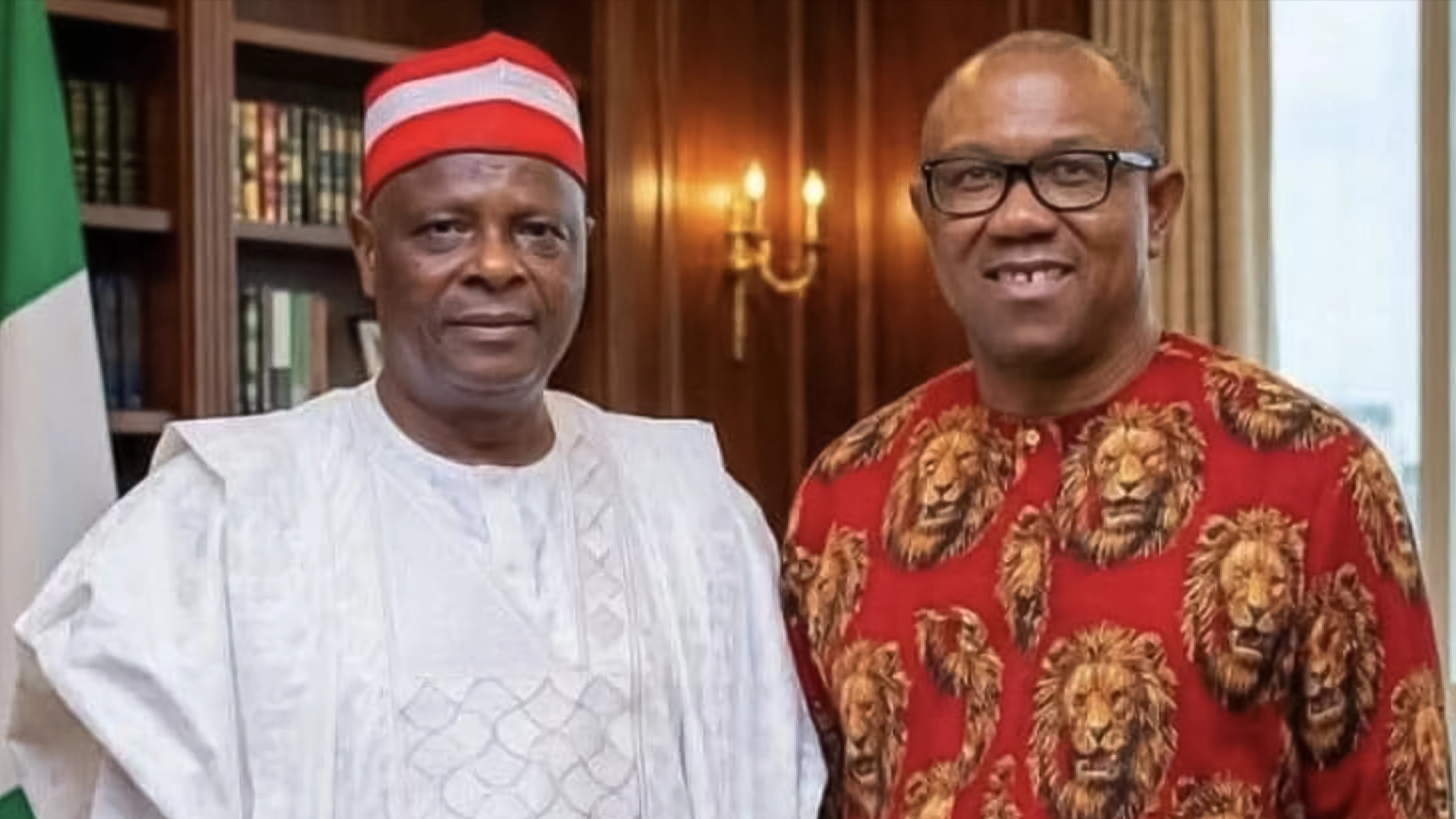
The latest controversy surrounding Senator Rabiu Musa Kwankwaso’s political future has brought that question sharply into focus. Reports recently circulated that the former Kano State governor and his political associates were considering leaving the African Democratic Congress (ADC) for another platform, the Nigeria Democratic Congress (NDC), citing fears that the ADC had become vulnerable to legal complications and possible political sabotage. The speculation intensified after statements from individuals linked to the Kwankwasiyya movement suggested fresh political calculations were underway.

Kwankwaso himself later issued a clarification. He stated that no final decision had been taken regarding his political future or that of his associates, while confirming that consultations were ongoing with stakeholders across multiple parties. It was a carefully worded intervention. It neither closed the door to the ADC nor ruled out future movement elsewhere. In effect, it confirmed what many political observers already suspected: Nigeria’s opposition remains in a season of negotiation rather than consolidation.

For many Nigerians dissatisfied with the current direction of governance, the ADC had recently emerged as a possible umbrella for a broad anti-incumbent coalition. With the Peoples Democratic Party weakened by years of internal crisis and the Labour Party still struggling to convert popularity into a nationwide structure, the ADC appeared to offer something useful: a relatively fresh platform around which major opposition actors could gather.

But Nigerian political history offers a warning. Coalitions are easiest to announce and hardest to sustain.

The challenge before the ADC was never simply about attracting prominent names. It was always about managing them. Once major political figures occupy the same platform, difficult questions naturally arise. Who gets the presidential ticket? Which region should produce the candidate? Who controls party machinery? Who funds mobilisation? Who steps down for whom? These are not procedural details. They are often the very fault lines that break apart coalitions.

Kwankwaso’s position illustrates this reality. He remains one of the most significant opposition actors in northern Nigeria, with a loyal political base that has survived multiple party transitions. The Kwankwasiyya movement has demonstrated unusual cohesion and emotional commitment over the years. That makes him valuable to any coalition seeking national competitiveness.

Yet his role also generates tension. Admirers see him as experienced, disciplined and electorally relevant. Critics see him as a strategic power broker whose bargaining posture can complicate broader unity efforts. Social media reactions to the latest controversy reflect this divide. Some accuse him of prioritising leverage over coalition stability. Others argue that he is merely refusing to lead his supporters into another uncertain political arrangement.

Both arguments contain elements of truth. No serious opposition coalition can ignore Kwankwaso’s political weight. But no coalition can thrive if every major actor insists on maximum personal advantage.

Peter Obi presents a different but equally important dimension of the opposition equation. He commands strong youth enthusiasm, urban support and reform-minded voters who remain deeply invested in his message. His appeal extends beyond conventional party structures and taps into a wider demand for cleaner governance and fiscal discipline.

But Obi’s popularity also raises difficult coalition questions. Can a politician with genuine national momentum agree to play a subordinate role in a unity arrangement? Can rival blocs accept him as lead candidate? Can supporters who see him as a transformative figure embrace compromise for strategic reasons?

This is where opposition politics in Nigeria repeatedly encounters its greatest obstacle. Many leaders endorse unity in theory, but hesitate when unity demands sacrifice in practice.

Perhaps the most revealing aspect of Kwankwaso’s recent statement was the emphasis on legal uncertainty. He referenced court rulings, disputes over party legitimacy and fears that political platforms could be weakened through prolonged litigation. Whether one accepts that interpretation or not, the perception itself is politically significant.

In politics, uncertainty can be as damaging as defeat. If opposition actors begin to believe that party platforms are unstable or vulnerable, they will spend more time shopping for alternatives than building durable institutions. Time that should be used to mobilise voters gets consumed by legal consultations. Energy that should be spent presenting policy alternatives is diverted into internal survival battles.

While opposition figures debate platforms and personalities, the ruling All Progressives Congress quietly benefits from something often underestimated in Nigerian politics: structure. Incumbency provides access to nationwide networks, state-level influence, mobilisation machinery and the psychological confidence that comes with power.

The APC does not necessarily need the opposition to disappear. It only needs the opposition to remain divided.

That is why many analysts argue that the greatest ally of incumbency is not popularity, but fragmentation among rivals. If 2027 becomes a contest between one organised ruling machine and several competing opposition ambitions, the arithmetic naturally favours the government. If it becomes a disciplined one-on-one contest built around a credible coalition, the political equation changes considerably.

The decline of the PDP has made this moment even more significant. Once the dominant national platform for anti-government sentiment, the party now appears burdened by unresolved disputes, declining elite confidence and repeated internal turbulence. That vacuum created the opening for newer coalition experiments such as the ADC.

But replacing the PDP as a headline platform is easier than replacing it as an electoral structure. National parties are built ward by ward, polling unit by polling unit, not merely through high-profile defections and conference-room agreements. The opposition still lacks a clearly dominant institutional vehicle.

If opposition leaders are serious about challenging the APC in 2027, three urgent tasks stand before them. First, they must settle on a credible platform early and avoid endless migration between parties. Constant movement signals instability to voters. Second, they must resolve leadership questions through transparent negotiation rather than ego-driven public contests. Third, they must move beyond elite arithmetic and present a practical agenda on inflation, jobs, insecurity, electricity and governance reform.

Many Nigerians are frustrated with present realities. But frustration alone does not automatically translate into votes for the opposition. Citizens may desire change and still distrust the alternatives before them.

The latest Kwankwaso controversy is therefore not merely about one politician considering another party. It is about a deeper truth in Nigerian politics: opposition forces often agree on what they oppose, but struggle to agree on what they want to build.

That remains the central dilemma of 2027.

If unity prevails, the election could become genuinely competitive. If ambition prevails, the ruling party may receive another gift from its opponents—without having to ask for one.

Abdulhamid Abdullahi Aliyu is a journalist and syndicate writer based in Abuja.

Gov. Kaura’s Defection to APM: A Political Suicide or a Stitch in Time?

By Usman Muhammad Salihu

In politics, timing is everything; at the same time, timing alone is never enough.

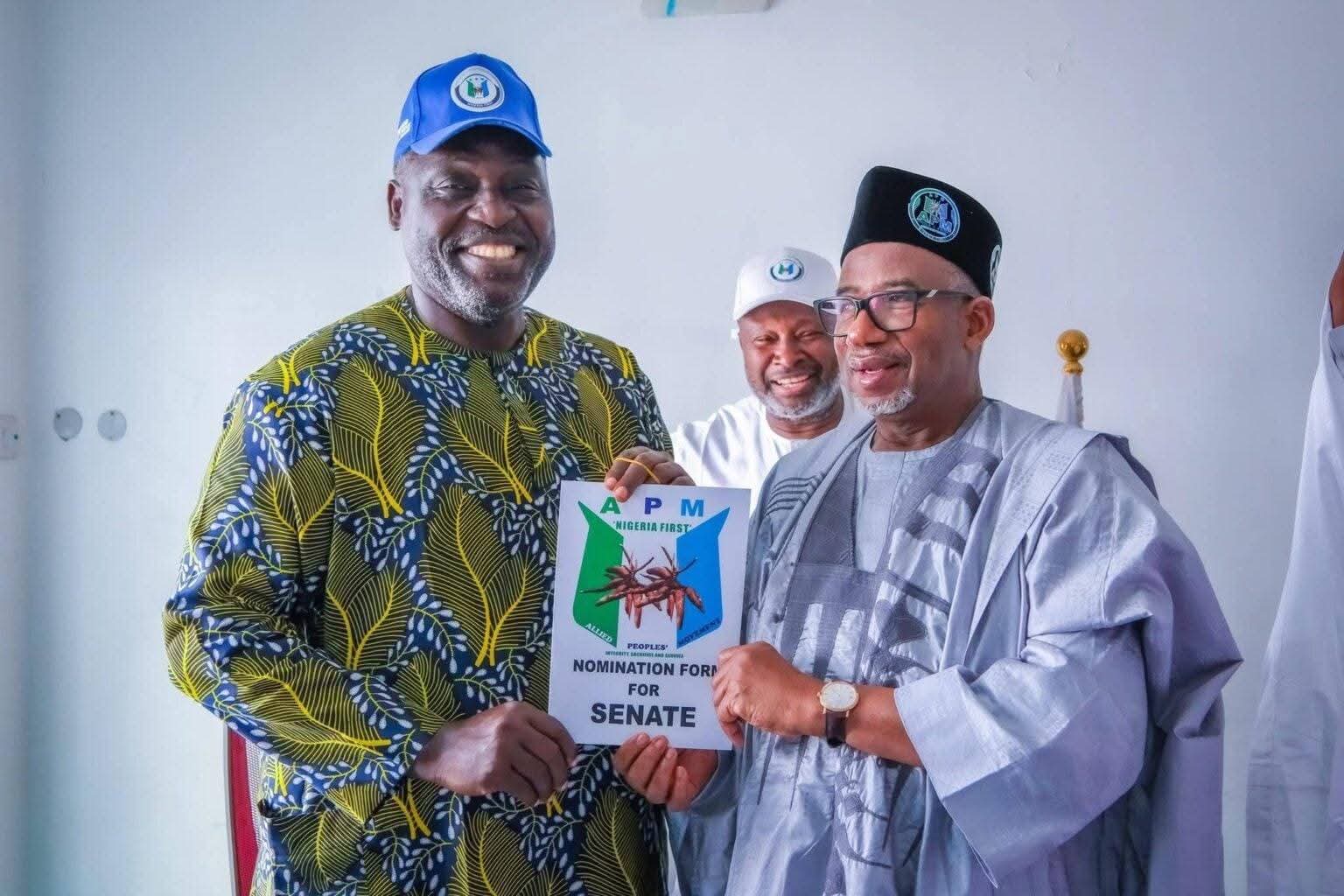
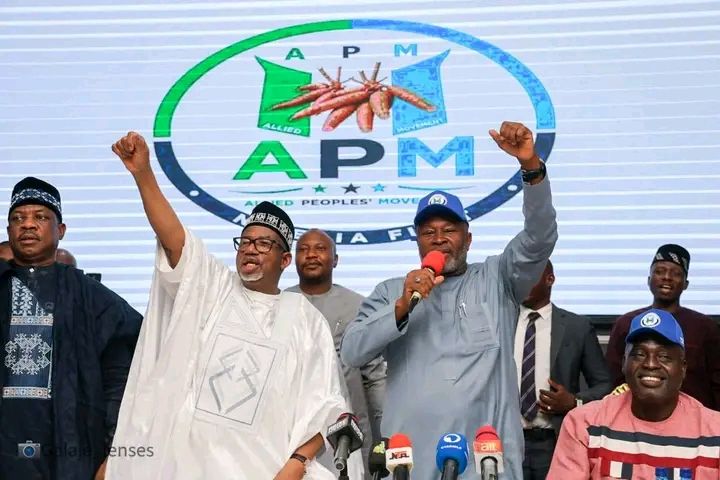
The defection of Governor Bala Abdulkadir Mohammed (Kauran Bauchi) to the Allied Peoples Movement (APM) has continued to generate debate. With key loyalists reportedly moving with him, what initially appeared as a risky political leap is now being interpreted by some as a calculated repositioning.

But beneath the surface of strategy lies a more complex electoral reality, one that could ultimately decide whether this move succeeds or collapses. At the heart of the argument is the voter.

While Bauchi State has seen moments when lesser-known parties gained traction, particularly at the legislative level, where individuals have won seats in the State House of Assembly outside dominant party structures, statewide or nationwide politics operate on a far wider and more demanding scale.

The dynamics are different. The visibility is broader. The stakes are higher. And most importantly, party identity still carries significant weight.

At the level of electoral reality, however, the risks cannot be dismissed. Nigerian elections—especially at the governorship level—are still heavily influenced by party identity. Voters, particularly in rural strongholds, often associate credibility with established platforms rather than emerging ones.

In that sense, defecting to a less dominant structure, such as the Allied Peoples Movement, introduces an immediate disadvantage: the loss of automatic party loyalty.

Campaigning under such conditions creates a double burden. It is no longer just about selling a candidate—it is about introducing and legitimising a political platform simultaneously. That dual responsibility can stretch time, resources, and political influence thin, especially in a competitive race involving the All Progressives Congress (APC) and the emerging coalition around the African Democratic Congress (ADC).

From this view, the move carries a real risk of political isolation if voter perception does not align quickly enough with elite-level strategy.

Yet, it would be premature to interpret the move purely as risk. Nigerian political history also rewards early structural repositioning. Movements that eventually became influential often began as unpopular or misunderstood alignments.

In that context, Gov. Kaura’s move may be less about immediate electoral gain and more about long-term political architecture—building a platform where loyalty is personal, structure is controlled, and direction is defined internally rather than inherited from party hierarchies.

There is also a strategic possibility that this move is an attempt to build or shape a movement similar in political culture, if not in scale, to the Kwankwasiyya associated with Rabiu Musa Kwankwaso, a structure rooted in identity, loyalty, and grassroots emotional connection rather than party stability alone.

If sustained, such a model can evolve into a political identity strong enough to survive beyond a single election cycle. But like all movements, it requires time, consistency, and deep voter penetration.

If the electorate does not understand or accept the new platform in time, the strategy weakens. If the structure grows slowly but steadily, the strategy strengthens. Either outcome is possible.

Because while elite political calculations move fast, voter acceptance does not. And in elections, voters, not strategy rooms, ultimately decide outcomes. So, is Gov. Kaura’s defection a political suicide or a stitch in time?

From one angle, it introduces clear electoral risks that cannot be ignored. From another, it suggests a longer-term ambition to build something more controlled and identity-driven. Both interpretations hold weight.

So whether this move is a masterstroke or a misstep remains uncertain. The calculations may be clear. The intentions may be bold. But in politics, certainty is a luxury.

For now, all eyes remain on the unfolding reality… because, in the end, time will tell.

Usman Muhammad Salihu writes from Jos, Nigeria, via muhammadu5363@gmail.com.

Pantami Distances Self From Controversial Facebook Post, Suspends Admin

By Sabiu Abdullahi

Former Minister of Communications and Digital Economy, Professor Isa Ali Pantami, has disowned a controversial message shared on his Facebook page. He said the post, which described critics and non-supporters as hypocrites, did not have his approval.

In a statement issued on the same platform, Pantami explained that the content was published by one of the page administrators without his consent.

He said, “My attention has been drawn to a post on this page by one of the admins, containing a strongly worded message suggesting that anyone who does not support Prof. Pantami is a hypocrite, and that any cleric who does not support him is equally a hypocrite. I would like to state clearly that this message was not authorised by me, nor does it represent our approach to leading the affairs of our state. Furthermore, the admin in question has been placed under suspension until further notice.”

The former minister stressed that political engagement should allow room for differing opinions. He noted that respect for all individuals must be upheld, regardless of their views or affiliations.

Pantami also stated the importance of criticism in leadership and public discourse. He stated, “First, it is important to note that in politics, everyone is valued and respected, regardless of sectarian differences. Moreover, as an administrator, academic, former Minister, and, most importantly, a religious cleric myself, I understand the value of criticism. It is a vital ingredient that shapes discourse, upholds standards, and sustains development.”

He further reiterated his commitment to inclusive leadership, especially in a diverse society. According to him, “I would also like to state that, as a politician aspiring to lead a heterogeneous, multi-ethnic, and multi-religious society, I am for everyone. Islam equally enjoins every leader to be just to all, irrespective of differences, and I hold firmly to these values.”

Pantami added that his team reflects a mix of backgrounds and beliefs. He said, “It is also noteworthy to reiterate that my team comprises individuals of impeccable character from diverse ethno-religious backgrounds. It includes people of different faiths, both Christians and Muslims, as we understand that our diversity across many dimensions makes us stronger and greater as a people.”

He ended the statement with a brief note of appreciation to his supporters and followers.

2027 Lagos Guber: Jandor Steps Back from Contest

By Anas Abbas

Dr. Abdul-Azeez Adediran, popularly known as Jandor, has officially withdrawn from the 2027 Lagos State governorship contest under the platform of the All Progressives Congress (APC).

Jandor, a former governorship candidate of the Peoples Democratic Party in the 2023 election before joining the APC, announced his decision in Lagos, bringing an end to his ambition for the state’s top seat.

His withdrawal reportedly follows recent political developments within the party, including high-level consultations and growing consensus around the emergence of a preferred candidate ahead of the party primaries.

Recall that Jandor had earlier obtained the APC Expression of Interest and Nomination forms, signalling his readiness to participate in the governorship primaries scheduled ahead of the 2027 general elections.

However, the latest shift indicates a change in strategy as party realignments intensify.
Party insiders say the development is expected to further narrow the contest for the APC ticket in Lagos State, as attention now shifts to remaining contenders.

Jandor is expected to formally address his supporters in his next political direction in the coming days.

After Public Display of Underwear, APC Rewards Teemahcool with Appointment

By Uzair Adam

The recent appointment of a Kano-based social media personality, Fateemah Naseer, popularly known as Teemahcool, into a political role within the All Progressives Congress (APC) has sparked renewed debate, not just over the decision itself, but over what many see as a troubling signal about the direction of political culture in Kano.

The appointment, announced on Wednesday in a Facebook post by Shamsu Coverage and sighted by The Daily Reality, comes only weeks after Fateemah’s involvement in the widely condemned “pant saga” that dominated public discourse across the state.

The controversy dates back to a political gathering organised during the visit of Nigeria’s First Lady, Oluremi Tinubu, who was in Kano to commission a road project.

At the event, Fateemah reportedly mobilised a group of women who raised underwear in a coordinated display, widely interpreted as a mockery directed at Eng. Rabiu Musa Kwankwaso, a former governor of Kano State.

Accompanied by chants of “dan kanfan tsula,” a derogatory slogan used in political rivalry, the act drew immediate backlash, particularly in a society deeply rooted in religious and cultural values.

Many observers described the display as not only indecent but also damaging to the image of Kano, especially given the expectations placed on women in the Hausa cultural context.

The Daily Reality reports that in response to the outrage, the Kano State Governor, Abba Kabir Yusuf, summoned those involved alongside Islamic clerics for a public prayer session (dua), where they were urged to seek forgiveness.

While the move was seen by some as a culturally appropriate step, others criticised it as insufficient, arguing that it diverted attention from the need for accountability.

The situation has now taken a new turn with Fateemah’s appointment as S.A by Yusuf Imam (Ogan Boye), the Chairman of Nassarawa Local Government Area.

For many critics, the timing of the appointment—coming shortly after the incident—raises serious concerns.

Many argue that rather than serving as a corrective moment, the development risks being interpreted as tacit approval, or even encouragement, of conduct that had already been widely condemned.

In a political environment where symbols and actions carry significant weight, such decisions may shape future behaviour among party supporters.

“This creates a dangerous incentive structure,” a political observer noted on Facebook. “If controversial actions that attract public outrage are followed by political reward, it suggests that visibility—regardless of its moral implications—can be a pathway to recognition.”

Beyond individual responsibility, the episode points to a broader challenge within political communication and party discipline.

The initial incident, amplified by social media and partisan rivalry, exposed how quickly narratives can spiral in the absence of coordinated messaging.

The subsequent appointment, rather than calming tensions, has instead deepened public scepticism.

The public display of underwear as a form of political expression—and its apparent aftermath—has therefore been viewed as a significant departure from established norms.

Critics warn that if such actions are normalised, they could redefine the boundaries of acceptable political behaviour, not only in Kano but potentially across other northern states.

This concern becomes even more pronounced as the country gradually moves toward the 2027 general elections, where political messaging and mobilisation are expected to intensify.

While supporters within the APC may view the appointment as routine or politically strategic, the broader public reaction suggests a deeper unease.

The Daily Reality observed that for many, the question is no longer just about one incident or one individual, but about the standards being set—and whether Kano’s political future will be shaped by values or by viral spectacle.

APC Releases Revised Timetable for 2027 General Elections, Sets N100 Million Presidential Nomination Fee


By Abdullahi Mukhtar Algasgaini

The All Progressives Congress (APC) has unveiled its revised schedule of activities for the 2027 general elections, with presidential aspirants required to pay N100 million for nomination and expression of interest forms.

The timetable, released by the party’s National Secretariat at Buhari House in Abuja, outlines key dates for primaries and other critical activities leading up to the elections.

According to the schedule, the sale of forms will take place from April 25 to May 2, 2026, at the APC National Secretariat. Aspirants have until May 4, 2026, to submit completed forms and accompanying documents.

Screening of aspirants for various positions is slated for May 6–8, 2026, with results published on May 11, 2026. Appeals on screening outcomes will be heard between May 12 and May 13, 2026.

The party’s primary elections are scheduled as follows:

a· House of Representatives: May 15, 2026

b· Senate: May 18, 2026

c· State House of Assembly: May 20, 2026

d· Governorship: May 21, 2026

e· Presidential: May 23, 2026

Election appeals will follow immediately after each primary, with the last appeal for the presidential primary scheduled for May 25, 2026.

The APC also released the cost of forms for various positions, with a 50% discount for female aspirants, youth, and physically challenged persons. However, this discount applies only to the nomination fees, not the expression of interest.

1· House of Assembly: N6 million (Expression of Interest: N1m, Nomination: N5m)

2· House of Representatives: N10 million (Expression of Interest: N1m, Nomination: N9m)

3· Senate: N20 million (Expression of Interest: N3m, Nomination: N17m)

4· Governorship: N50 million (Expression of Interest: N10m, Nomination: N40m)

5· Presidential: N100 million (Expression of Interest: N30m, Nomination: N70m)

All payments are to be made directly into designated accounts with Union Bank, UBA, or Zenith Bank.

The timetable was signed by the National Organizing Secretary, His Excellency, Sulaiman Muhammad Argunu, OFR. The party has directed all inquiries to its Directorate of Organisation.

Gov Yusuf Summons Girls Over Street Underwear Display In Kano

By Sabiu Abdullahi

Governor Abba Kabir Yusuf of Kano State has reacted to a recent incident in which some young women displayed underwear in public, an act he described as inconsistent with the cultural and religious values of the state.

The governor addressed the matter at the Government House during a monthly prayer session, where the girls involved were invited following widespread reactions on social media.

“We heard what happened. We were going about our normal activities when some group of young women went to the street to display something. The governor was not aware of that at the time,” Yusuf said.

He explained that he became aware of the situation after he was briefed, adding that he does not actively follow developments on social media.

The governor criticised the act and said it does not align with the teachings of Islam or the moral expectations of Kano society.

“We must condemn this act because it is not in our teachings. It is not Islamic,” he said.

Yusuf appealed to individuals who may be encouraging such behaviour to stop, stressing the need to maintain peace and unity in the state.

“Those teaching them, I am begging them to stop. Allow Kano to be in peace and allow the people to continue to live in harmony,” he added.

He also disclosed that he directed authorities to bring the girls to him after learning about the incident, noting that they have expressed regret.

“When I heard about it, I directed that wherever the girls were, they should be brought to me. They are here now, and as you can see, they are praying,” he said.

According to the governor, the girls have been warned and advised to change their conduct, with an expectation that such behaviour will not occur again.

“We have warned them and they have shown remorse. We should not hear anything like this again,” he stated.

Yusuf further called on parents, teachers and community leaders to take responsibility for guiding young people and preventing actions that could undermine societal values.

“We want our teachers to advise those instigating young people into wrongdoing to fear God and stop such actions,” he said.

The incident has generated mixed reactions among residents, with many calling for stronger moral guidance and increased engagement with youths across the state.

Opposition Parties Unite, Reject One-Party State, Demand INEC Chair’s Removal Ahead of 2027 Polls

By Abdullahi Mukhtar Algasgaini

Nigeria’s main opposition political parties, under the banner of a national summit in Ibadan on Saturday, issued a sweeping declaration rejecting what they called the All Progressives Congress (APC)’s attempt to create a one-party state, and demanded the immediate removal of the Independent National Electoral Commission (INEC) Chairman, Prof. Joash Ojo Amupitan.

In the communique titled the “Ibadan Declaration,” released after hours of deliberation, the parties resolved to field a single presidential candidate for the 2027 elections, vowing to resist President Bola Tinubu’s purported plan to run unopposed.

The summit, which gathered chairmen of participating opposition parties, accused the APC of anti-democratic maneuvers and expressed no confidence in INEC’s leadership. “Prof. Amupitan, having shown bias in favour of the ruling APC, should not conduct the 2027 general elections,” the communique read, warning that his continued tenure could trigger a nationwide crisis.

The opposition also called on the National Assembly to urgently review the 2026 Electoral Act, remove provisions threatening electoral integrity, and release all politicians detained on bailable offences. They described recent INEC guidelines as deliberate obstacles and demanded that the deadline for party primaries be extended to the end of July 2026.

The declaration commended Nigerians for their resilience and thanked Oyo State Governor Engr. Seyi Makinde for hosting the summit.

APC Shifts Presidential Primary to May 23, 2026, as Party Releases Revised Election Timetable

By Abdullahi Mukhtar Algasgaini

The All Progressives Congress (APC) has rescheduled its presidential primary election to May 23, 2026, moving it from the previously proposed May 15–16 dates, the party announced on Thursday.

The party’s Deputy National Publicity Secretary, Duro Meseko, disclosed the changes after the 186th National Working Committee (NWC) meeting in Abuja. According to Meseko, the adjustments comply with the Constitution, the Electoral Act 2026, and the Independent National Electoral Commission’s (INEC) revised timetable for the 2027 general elections.

Under the new schedule, the governorship primaries will now hold on May 21, 2026.

The sale of nomination forms will run from April 25 to May 2, 2026, with a submission deadline of May 4, 2026.

Screening of aspirants is scheduled as follows:

1· May 6–8, 2026: House of Assembly, House of Representatives, Senate, and Governorship aspirants

2· May 9, 2026: Presidential aspirants

Screening results will be published on May 11, 2026, while screening appeals will be heard on May 12–13, 2026.

Primary election date:

a· May 15, 2026: House of Representatives

b· May 18, 2026: Senate
· May 20, 2026: State House of Assembly

c· May 21, 2026: Governorship

d· May 23, 2026: Presidential

Post-primary appeals are slated for May 18 (Reps), May 20 (Senate), May 21 (Assembly), May 23 (Governorship), and May 25 (Presidential).

Meseko also released a schedule for ward, local government area (LGA), and state congresses in Zamfara State, beginning April 28, 2026. Ward congresses will hold on April 30, followed by LGA congresses, while state congresses are to wrap up by May 3, 2026, with appeals running concurrently.

The NWC adopted both direct primary and consensus options as provided in the Electoral Act 2026.

“Aspirants are free to decide their preference. Where consensus works, it stands. Where an aspirant disagrees, it automatically reverts to direct primaries,” Meseko said.

He dismissed claims that nomination forms would be restricted to select individuals, stating: “Forms are available for all aspirants under the APC, not exclusively reserved for anyone.”

INEC has fixed the Presidential and National Assembly elections for January 16, 2027, and Governorship/State Assembly polls for February 6, 2027. Party primaries must hold between April 23 and May 30, 2026.

Campaigns for presidential and NASS elections will begin on August 19, 2026, while governorship and assembly campaigns start on September 9, 2026.

The APC said state chapters were notified of the changes on April 20.

Gov Yusuf Welcomes Shekarau to APC, Says Party Gaining Strength in Kano

By Uzair Adam

Kano State Governor, Abba Kabir Yusuf, has welcomed former governor and senator, Ibrahim Shekarau, into the All Progressives Congress (APC), describing his return as a major boost to the party’s strength in the state.

This was contained in a statement issued on Sunday by the Governor’s Chief Press Secretary, Mustapha Muhammad, who said the development reflects the party’s growing appeal and consolidation in Kano.

Governor Yusuf said a date would soon be announced, in consultation with the party’s national secretariat, for the formal reception of Shekarau into the APC.

He noted that the party “continues to witness increasing support and consolidation,” positioning it as a dominant force in the state.

According to the statement, the governor expressed confidence in the party’s readiness for future elections, stressing that unity and strategic political alignments are key to its rising strength.

He added that the APC is “battle-ready to win all elective positions” in the forthcoming polls.

Yusuf further assured members that the leadership remains committed to strengthening internal cohesion and expanding its grassroots base across Kano.

He urged party loyalists to remain steadfast and intensify mobilisation efforts.

“We call on all party faithful to remain committed and continue mobilising support as we prepare for future political contests,” the governor said.