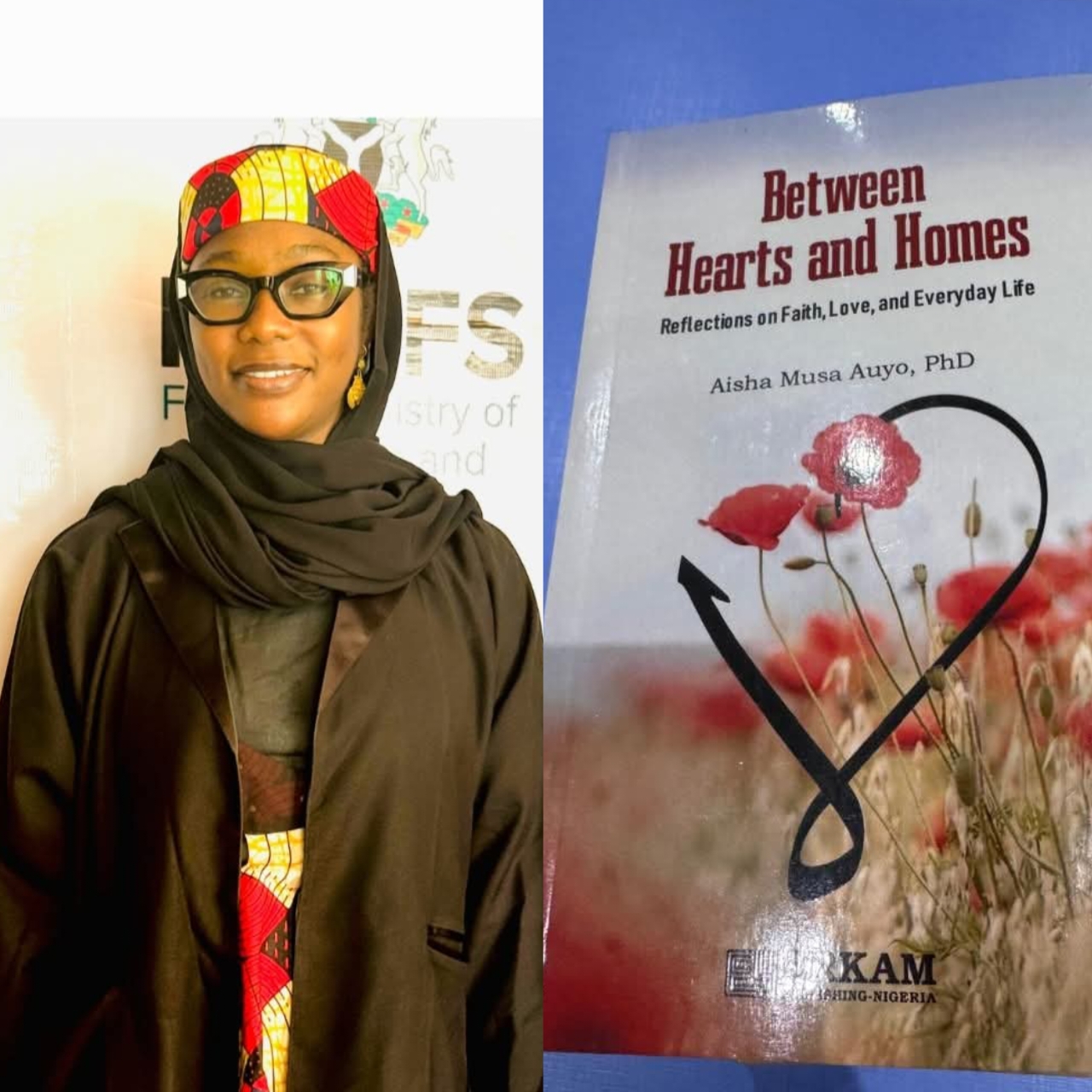
Aisha Musa Auyo

BUK’s Pride: Aisha Musa Auyo defends PhD, extends family legacy of scholarship

By Muhammad Sulaiman

A regular contributor to The Daily Reality’s opinion section, Aisha Musa Auyo, has successfully defended her PhD dissertation in Educational Psychology at Bayero University, Kano (BUK).

Dr Auyo’s doctoral research, titled “Influence of Achievement Motivation, Academic Self-Concept, Emotional Regulation and Locus of Control on the Academic Achievement of Public Secondary School Students in Kano and Jigawa States of Nigeria,” marks a significant contribution to the study of learning behaviour and student performance in northern Nigeria.

Her achievement comes after six years of rigorous academic work and dedication. Described by her husband, Dr AC Abdullahi Maiwada, as “an authentic product of BUK,” Dr Auyo was born, raised, educated, and married within the university community, where she obtained all her degrees.

Academia also runs deep in her family. Her parents, Prof. Musa Auyo and Dr Hadiza Umar, both serve in BUK’s Department of Library and Information Science, while her husband, Dr Maiwada, holds a PhD in Mass Communication. Her parents-in-law are also accomplished academics, making the Auyo-Maiwada family one deeply rooted in scholarship.

The Daily Reality congratulates Dr Auyo on her outstanding achievement and wishes her continued success in her academic and professional pursuits.

The most important kindness: To yourself, for here, and hereafter

By Aisha Musa Auyo

I preach kindness every now and then—kindness to a spouse, kids, parents, relatives, and others in our lives. But today, I want to dwell on the most crucial kindness… kindness to oneself.

This is a kindness that goes beyond this dunya (this world); a kindness that rewards you with the best of here and the hereafter. Being kind to oneself has many faces, but I’ll discuss the most important ones here:

Prioritising the Akhirah Over the Dunya

This world is merely a temporary place. Try as much as you can to resist the temptation of indulging in sins. Strive to stop any act that you would not love to die doing. Stop procrastinating regarding good deeds. We do not know when our lives will end; no one gives us notice. We owe ourselves this profound kindness: preparing for the inevitable.

The Investment of Sadaqah (Charity)

Giving out sadaqah, even if it’s merely half a date, expiates sins and prevents tragedy. We often spend a great deal on ourselves without calculation, yet when it comes to giving to others, we hold back and start calculating. What we forget is that whatever we give out is multiplied and comes back to us many times over. Whatever we spend only on ourselves ends here.

But you see, when we make other people’s lives easier, lessen their burden, or make them feel better, Allah multiplies that, and the reward is for both here and the hereafter. Whenever we spend on ourselves, let’s try to include those who are less privileged. We are not only helping others; we are being incredibly kind to ourselves beyond this dunya.

The Perpetual Reward of Sadaqah Jariyah (Ongoing Charity)

Let’s discuss Sadaqah Jariyah—a charity, in which the reward continues to reach you even after your death. We can achieve this through various means, such as investing in raising pious children, teaching the Quran, performing good deeds, drilling a source of water, contributing to an Islamic school or any other worthy cause, even if we can’t afford to sponsor it entirely, planting trees, etc.

We benefit more from this benevolence than the people it was intended for. We truly owe it to ourselves to show this type of kindness.

Cultivating Great Relationships

Cultivating good relationships with others, elevating their mood and ranks, making them feel great about themselves, and improving the quality of their lives are powerful ways we can be kind to ourselves. These are the investments that make people miss us and sincerely pray for us after we are gone. We owe this kindness to ourselves—being able to invoke the feeling of longing, missing, and praying for us when we are no longer here.

Sustaining Spiritual Well-being; keeping our mouth moist with Zikr (remembrance of Allah), Istighfar (seeking forgiveness), and Salawat (blessings upon the Prophet); reading the Quran; and constantly upgrading our knowledge and practice of our Deen (religion) is a kindness to ourselves that we should never compromise.

Integrity and Truthfulness

Saying the truth, having integrity and decency, minding one’s business, and having a halal (lawful) source of income is a profound kindness we owe ourselves, for this will be a shield from the Hellfire.

Simple, multiplied deeds

You see, a simple gesture—smiling at strangers, a kind word, an encouraging nod, removing a harmful object from the road, helping or feeding animals, or watering a plant—will go a long way in benefiting us here and hereafter. Angels are praying to Allah that whoever gives out, may Allah increase his wealth, and whoever withholds his wealth, may Allah withhold His blessings from him. So we should never forget that whatever we do, small or big, we shall receive it in multiples.

Being Intentional

One crucial thing I’d like to remind us here is to be intentional about everything we do. Let’s always ensure that our deeds and actions, big or small, are motivated by the reward of our Creator. Let every action or inaction emanate from the craving for Allah’s Rahma (Mercy) and the fear of His punishment. This, indeed, is the biggest kindness we owe ourselves.

Lemme stop here..

Aisha Musa Auyo is a doctoral researcher in educational psychology. A wife, a mother, a homemaker, a caterer, a parenting, and a relationship coach. She can be reached via aishamuauyo@live.co.uk.

Don’t postpone kindness, you may never get another chance (2) 

By Aisha Musa Auyo

The second story that inspired this reflection is the death of an acquaintance. She was the HR of a company that once offered me a job as an editor. We had exchanged emails, and I went there in person to explain why I couldn’t take up the role. That first visit also turned out to be my last. The company’s owner is a friend, so it was easy to discuss things openly.

After hearing me out, she understood my situation as a young mother. She said she had once been in my shoes and offered some warm advice, assuring me that the company would always welcome me if I were ready in the future. As I was about to leave, she asked about the fragrance I was wearing. She said, “The whole office is filled with your scent. It’s so calming.”

I explained that it wasn’t a regular perfume but Turaren Wuta (incense) and humra. She smiled and said she was familiar with them but had never come across such heavenly scents before. I promised to send her some to try.

It was a casual conversation, but I took it to heart. I packed black and white humra with some incense and gave them to my driver for delivery, as I was travelling at the time. Days turned into weeks, with excuse after excuse from him. When I called her, she said she never got his call, and even if she wasn’t around, he could have left the package at the office.

Back from my trip, I retrieved the parcel and handed it to another driver. Again, excuses. Frustrated, I shared my ordeal with a family member. She dismissed my worry: “You’re overreacting. This woman has probably forgotten about the incense. She doesn’t owe you anything. Why stress yourself over this?”

But deep down, I couldn’t let it go. Something urged me on. I said, “Whatever it takes, I’ll do this delivery myself, I insisted. The family member teased me, calling me stubborn, “Aisha kina da naci wallahi, kin damu kowa a kan abin da ba shi da mahimmanci”. I said na ji. It felt as though everything, including the universe, was determined to stop me from sending that gift.

Finally, when I demanded the second driver return the parcel so I could deliver it personally, he apologised and promised to take it that week. Two days later, she sent me a message, thanking me warmly. She said, “It was worth the wait.” I apologised for the delay, and that was the last time we spoke.

This week, I received the news of her death. She had been battling a heart condition. I remembered how she once mentioned wanting to lose weight for health reasons. My heart sank. I prayed for her soul and felt profoundly grateful that I had managed to give her something she wanted before her passing. Suddenly, I understood why my instincts had been so insistent.

The lesson is clear: never postpone kindness. Please do it now, because tomorrow is never promised.

Aisha Musa Auyo is a doctoral researcher in educational psychology. A wife, a mother, a homemaker, a caterer, a parenting, and a relationship coach. She can be reached via aishamuauyo@live.co.uk.

Don’t postpone kindness, you may never get another chance (1)

By Aisha Musa Auyo

When you can be kind and helpful, do it immediately. Don’t procrastinate or wait for the “right time.” You may not live to see that time, or the person you want to help may not. The point of power is always now.

I’m inspired to share this because two recent incidents made me reflect deeply. One was the death of a close relative, the other, the passing of an acquaintance I only met once but stayed connected with through social media.

In the first incident, an aunt of mine came from another town for her monthly hospital appointment. She usually arrived a day before to avoid being late. That evening, after visiting some relatives, she spotted a shawarma shop and sighed: “Zan so na ci shawarma ko da sau ɗaya ne a rayuwata” (“I would love to taste shawarma at least once in my life”).

My cousin, who was driving, ignored her words and sped past. I pleaded with him to go back, but he insisted the shop was closed and wouldn’t open until 7 p.m., which is true. My aunt looked disappointed.

Later at home, I begged him again to get me shawarma bread so I could prepare it for her. He brushed it off, saying he was tired, and reminded me she’d be leaving early the next morning. “You can always make it for her next month,” he said. But my heart wouldn’t allow me to postpone it.

Eventually, he bought the bread, and I stayed up late preparing the fillings, finishing by midnight. I set my alarm for 4 a.m., woke up, rolled, and grilled the shawarma. By 5 a.m., it was ready. When I handed it to her, she was overjoyed. She couldn’t believe I went to such lengths to fulfil her simple wish. She prayed for me with a smile, and we said our goodbyes.

Later that day, she called to say she had arrived home safely and that my shawarma exceeded her expectations. She even saved some to take home. Though I joked, it must have been cold by then. She prayed again for me before hanging up the phone.

A few days later, she passed away.

I was in shock. Just last week, she was with us, longing for shawarma. I wept, but deep down, I thanked Allah that I didn’t delay. That shawarma became her first and last.

The lesson is clear: never delay an act of kindness. Tomorrow is not promised for you or for them.

Aisha Musa Auyo is a doctoral researcher in Educational Psychology. A wife, a mother, a homemaker, a caterer, a parenting and relationship coach. She can be reached via aishamuauyo@live.co.uk.

Dear wife, be classy with a touch of sophistication 

By Aisha Musa Auyo

Let me start with this adage: being predictable is boring. The only way to keep attracting your man is by constantly exciting him.

A woman’s unpredictability and mystery can add excitement and intrigue to a relationship, keeping things fresh and engaging. This sense of mystery fosters curiosity and a desire to continually learn more about her, which can help prevent complacency. By maintaining an air of unpredictability, a woman can inspire her partner to stay attentive and actively invested, enhancing emotional and romantic connections.

A classy woman in a relationship exudes respect, grace, and self-confidence. She values herself and her partner, communicates maturely, and maintains her dignity even in challenging situations. Her elegance comes through her kindness, understanding, and ability to express love while setting healthy boundaries. This balance makes her an inspiring and cherished partner.

There are many ways to display charm and sophistication in everyday life.

When it comes to names, choosing affectionate ones for your spouse can depend on the mood, occasion, and shared history. Some days, you can be casual and warm, like “My love,” “Sweetheart,” or “Habibi.” At other times, use respectful titles like “Sir,” “Ranka ya dade,” “Alangubro,” or “Yallabai.”

Use playful nicknames on fun and flirty days (I won’t drop examples here, yauwa). During special moments, use affirming and supportive names like “My Hero” or “My Rock.”

In terms of dressing, if you’re always wearing native wear, surprise him with bum shorts and a spaghetti top. Or try a clingy evening gown or a see-through nightie. Let him know you possess what those Ashawos flaunt, except yours is reserved for his eyes alone.

When styling clothes, try different outfits that give you a new look and poise. We love comfort, but we can still make comfort look sexy and appealing.

Before experimenting with style, know your body type. Know what flatters your figure and what doesn’t. You can’t wear a fitted gown with a big tummy or bum shorts with bow legs. If you’re Qashi da Rai, avoid bubu—it may make you look like Muciya da Zani at home. Yauwa! This isn’t body shaming—it’s being real.

On perfume: know that perfume is the silent language of emotions. A single scent can lift a mood, stir memories, and instantly transform feelings. Use perfume to your advantage at home. It’s a soft weapon of attraction.

Learn to use scents to evoke peace, desire, and comfort. Use different perfumes for the day, night, special occasions, or even just to create a relaxing atmosphere. If you stick to one scent, he might get used to it, and it may lose its effect. Find out which scents he likes and rotate them. Explore English and Arab perfumes, humra, oils, kulaccam, incense, body mist, body milk, body sprays, bath mists—you name it. And remember: your house should smell pleasant too. Don’t smell like a flower while the house smells like Daddawa! Set the tone with your space, then yourself.

Nana Aisha (RA) said:

“I used to perfume the Prophet (peace be upon him) with the best perfume I could find until I saw the shine of the perfume on his head and beard.” (Sahih al-Bukhari, Hadith 5923)

When it comes to homemaking, we must constantly evolve. If you can’t change furniture often, update your space with small touches: new decor, decluttering, rearranging, or freshening up your environment. Minimal furnishing in small spaces often gives the cleanest look. Keep the house neat and germ-free. Fumigate regularly, burn incense, and use home mists, fresheners, and mopping sprays.

On behaviour—this is tricky, because we can’t be who we are not, but we can improve. If you’re naturally moody, try being more cheerful around your man. A cheerful wife is a huge turn-on. Be the woman he rushes home to. This way, he’ll notice quickly when something is off.

Avoid nagging. Often, a gentle reminder or silence works better than complaints. Be calm when he expects arguments, and then ‘show him shege’ when he least expects it—that’s the art of being unpredictable with a touch of sophistication. But this only works if your man is mature and understanding.

If you have the freedom and mutual understanding in your relationship, playfully surprise him by pretending to be away—perhaps plan a two-day trip, but return after just one. Welcome him with a good meal, a new nightie, and a memorable evening. Or, if he’s open to it, surprise him at work or send a special lunch to brighten his day.

If you always cook continental dishes, try traditional meals sometimes. If you usually serve food plainly, try plating and garnishing. Serve kunun tsamiya instead of a smoothie, or fresh juice instead of fruit salad. Don’t be the woman who only cooks shinkafa da miya and tuwo. Learn, upgrade, and initiate.

For hairstyles, try different braids or updos—ponytails, doughnuts, Kitson GABA, all-back, Calabar styles, etc.- but choose based on your hair type. Don’t insist on a style that doesn’t suit your hair. Most importantly, keep your hair clean and fragrant.

In Oza’s other room, learn to initiate intimacy. Don’t be the boring wife who waits for her husband to make the first move. A wife initiating intimacy strengthens emotional and physical bonds, makes her husband feel desired and valued, and breaks the assumption that one partner must always lead intimacy. It deepens connection, enhances communication, and fosters a more fulfilling relationship.

Also, explore different styles to keep things exciting and mutually satisfying.

If you’re used to black henna, try red or maroon. If you always wear ‘daurin ture ka ga tsiya, switch to turbans or different gele styles.

Sometimes, soften your voice—lower your tone and speak gently when needed. I heard there’s a tone called bedroom voice, right?

If you’re usually strong and independent, try being soft and playful sometimes.

If you’re always asking for money, ease up on small requests, especially when he’s managing big expenses. Surprise him instead with a perfume, shoes, a book, attire, pyjamas, a watch, or a ring. You shouldn’t always be the one expecting gifts. That’s why we say ‘ki nemi kudi, Lantana’.

And to you, Dan Lami or Man Sagir, know that all this charm, sophistication, versatility, and surprise can’t happen if you are too strict, stingy, or overbearing. You must be friendly and generous with your words, smiles, time, emotions, and yes, your wallet. Yauwa.

Lemme stop here….

Aisha Musa Auyo is a doctoral researcher in Educational Psychology. A wife, a mother, a homemaker, caterer, parenting, and relationship coach. She can be reached via aishamuauyo@live.co.uk.

Praise strengths, hide weaknesses in marriage and beyond

By Aisha Musa Auyo

I will begin my write-up with this Hadith: Prophet Muhammad (peace be upon him) said, “Nothing is heavier on the believer’s scale on the Day of Judgment than good character.” (Sunan al-Tirmidh).

If we pay attention and are fair to ourselves, I bet you will realise that none of us is perfect. We all have areas in our lives where we excel, and we all have areas where we do not excel – or even fail. This will be true in your marital life as well. So, let us try to upgrade our character based on this fact.

Marriages collapse for many reasons. Some marriages and relationships go wrong because people fail to praise each other’s strengths and tend to criticise each other’s weaknesses. 

Let me tell you from experience. I love getting praise when I do something good, but if I totally blow something, I am already critical and upset enough with myself that I do not need my mate coming in and twisting the knife, so to speak. I am pretty sure everyone out there would agree with me on this. 

If you want to approach marriage the right way, you must generously praise each other, particularly when one excels at something, and use criticism sparingly when one flounders. Pray about the challenges and allow Allah, the Most High, to handle the work. 

Crushing your spouse’s soul will only push them away and never pull them toward you. When you see your spouse has messed something up, this is a time to draw them into your arms, hug them tight, and assure them everything will be okay. 

Marriage is teamwork, not competition, so learn to support and encourage each other. If you discover that you have strengths in areas where your spouse is weaker, take the lead in those aspects of the relationship and allow your partner to excel in what they do best. This synergy is achievable only in a healthy, selfless, progressive marriage.

If you both struggle in an area, agree to collaborate to address it. Learning to use this key effectively will create tremendous harmony in your relationship.

This formula can be applied beyond marital relationships. Any type of relationship can benefit from it, including those between parents and children, teachers and students, siblings, coworkers, or employers.

In a world where you can be anything…. choose positivity, compassion, empathy, and kindness. Remember, people may forget how you look, but they may never forget how you made them feel.

One more reason to be kind, encouraging, and compassionate is the hadith that the Prophet Muhammad (peace be upon him) said: “The best among you are those who have the best manners and character” (Sahih al-Bukhari).

Aisha Musa Auyo is a Doctorate researcher in Educational Psychology. A wife, a mother, a homemaker, caterer, parenting, and relationship coach. She can be reached via aishamuauyo@live.co.uk.

If wishes were horses: Tribute to Prof. Musa Auyo

By Khaleed Suleiman Abdul

We thank Allah for a life well spent. Indeed, from Allah we come, and to him we shall return. Professor Musa Abdu Auyo’s death is undoubtedly one of the few transitions that shocked Bayero University Kano and the entire academic circle within and outside Nigeria. 

The Comrade, as we fondly called him, was an unrepentant freedom fighter and social justice crusader. His uncommon spirit of tolerance and forgiveness earned him popularity among different classes of people. In fact, he is a man of the people, and the turnout of people from all walks of life who paid their last respects during his internment testified to that.

My first close encounter with him was when he and a few other individuals helped me secure admission into Bayero University. That was about three decades ago, 1993 – 1994, to be precise. From then on, the relationship knew no boundary and continued to wax stronger until his death.

I always recall with joy how he facilitated the securing of admission for ten qualified candidates in different departments and faculties whose credentials were forwarded to him by my humble self.

His simplicity and sense of accommodation enabled him to act or respond with dispatch to any request I put before him, particularly on student admission or counselling issues.

He once said, “As a lecturer, I don’t have much financially to give, but when it comes to securing admission or imparting knowledge to people, I must do my best”.

Comrade was always ready and willing to help you irrespective of your tribe, religion, class, or age. He believed that society must change positively through education and the creation of public awareness. 

His exemplary, simple lifestyle contributed immensely to our conduct. 

He taught us the spirit of accountability, answerability, patriotism, and sympathy in the common person.

The late academic guru was bereaved by two wives and nine blessed and educated children. One of them is completing her PhD, and others have or are doing their master’s degree and undergraduate programs in different fields of human endeavour. May God Almighty protect and guide them, ameen.

Professor Musa Auyo graduated in library and information sciences from the prestigious Bayero University Kano, received a master’s degree in the same field from Ahmadu Bello University Zaria, and received a PhD from BUK. He has also been a professor from the same institution lately.

He was the Head of the Department of Library and Information Sciences, Dean of the faculty of education, Bayero University librarian, one-time pioneer librarian at Federal University Kafin Hausa, and, very recently, chairman of the Board College of Education, Gumel, Jigawa State.

Despite all these academic responsibilities, the late professor still found time to belong to associations within and outside the university walls. 

I remember as a student, whenever a symposium was organised, and comrade Auyo and the likes of Prof. Ibrahim Bello-Kano (IBK), late Auwalu Umar, and Auwalu Kawu of sociology were to make a presentation, the theatre always appeared too small to accommodate the mammoth crowd of students anxious to hear words of wisdom from the effervescent cum erudite scholar.

His belief in public education and enlightenment led him to champion the establishment of the Auyo Youth Association (AYA), Hadejia Youth Organization, and Literacy Club Society of Bayero University (LICSOBUK) in which I worked closely with him to champion the cause but was short-lived immediately after we graduated.

He was a great pillar, a beacon who nurtured and groomed students and intellectuals within and outside the campus. Some of his students today are professors doing well in their chosen professions. They include professors Abbas Mai Dabino and Baffa Abubakar, to mention a few.

I recall with pride how the late Professor Auyo, as a crusader of social justice and other sound-minded intellectuals in the Senate, saved many students from rustication for merely embarking on a lack of electricity and water protest in the new campus, where the Vice Chancellor insisted that the students must be punished. 

However, these noblemen, including the late professor, stood their ground to ensure no student fell prey to victimisation.

In conclusion, filling the vacuum created by your demise will be very difficult. Your contribution to education, community development, social justice, mentoring, and nurturing within the university perimeter and across society will remain indelible in our memory.

We pray to almighty God to grant you the highest level of Jannah, peace, and everlasting Rahma in your grave until we meet and part no more. Alhamdulillahi!

Khaleed Suleiman Abdul (Sardauna of Gwagwarwa) wrote via akhaleed431@gmail.com.

Dear Dad

By Aisha Musa Auyo

Dear Dad, I can’t believe you’ve left this world

Earlier today, I found myself

Praying for your health

Instead of praying for your Rahma and Ghuffar

In my subconsciousness

You’re still alive

I’m still in the denial stage of my grief

It’s unbelievable, the man that brought me into this world

The man who loves me from day one

The man who nurtured me day and night

Even after my marriage

He never let go of me

Is no more to see me grow

His dreams for me were larger than life

His belief in me was stronger than rock

His patience with me was deeper than the ocean

His respect for me was limitless like air

Dear Dad, I tried to move on from your death, as you would have loved me to

But I couldn’t escape the reality that my hero was gone

During the day I’m mostly fine

During the night it’s a different story

Only God knows the silent tears I’ve shed

The numerous plates I’ve broken

The countless foods I’ve burnt

The tiny cuts on my fingers

As I tried to move on from your death

Dear Dad, I was told your grave was full of water

That I should be happy, it’s a sign of Rahma

But this news tore my heart

As I imagine you inside the mud

Alone in your grave

But I learned that,

Your Ruuh is with our Lord

It’s just your body under the mud

Dear Dad, I was reminded that you lived a fulfilled life

Reached the pinnacle of your profession

Touched thousands of souls

Mentored countless lives

Fathered numerous of us

Built dreams and hope for others

Cemented relationships and communities

That your life is a dream of many

The smiling scholar as they named you

Yet, I still hoped you were here

To witness my PhD viva

To witness that big appointment you’ve always envisioned for me

To witness the marriage of all your kids

The successes of all your kids

But Allah’s timing is never to be questioned

And in His will, we were together

Few hours before your death

And your parting words: ‘Allah Yai muku albarka’

Will forever echo in my ears

For you’ve repeated it too many times at that moment

The prayers are too much I thought to myself

Not knowing that was the last thing I’d hear from you

Dear Dad, till we meet in Jannah I would say

For I hope writing this poem

Will give me closure

Will make me accept the reality

That you’re no more with us

That you’re in a better place

That you’re in light and peace Bi iznillah

The pains, emotions and struggles of families living with sickle cell

By Aisha Musa Auyo 

September is globally declared Sickle Cell Awareness Month.  The month is dedicated to raising awareness about sickle cell disease (SCD) and the challenges faced by those living with this inherited blood disorder. It serves as an opportunity to educate the public, promote early diagnosis, and advocate for better treatment options and research. 

The month also highlights the importance of genetic screening, support for patients and families, and increased funding to improve the quality of life for individuals affected by SCD. Through community events, health campaigns, and social media, advocates aim to bring attention to the urgent need for action and support for those impacted by sickle cell disease.

Today, I want to discuss sickle cell disease from a social and psychological perspective rather than a medical one. While I’m not a medical doctor, I’ll focus on the impact this condition has on families and individuals beyond the clinical aspects.

Anyone who knows me as a relationship coach knows that I deeply love and believe in love. I advocate for it passionately. However, when it comes to marriage, love is just one of many essential foundations. I’ll be very realistic here—there’s much more needed to make a marriage thrive. We’re all witnesses to the struggles and the painful moments of crisis of sickle cell sufferers. We know how their parents strain to cope with the financial demands at times of crisis.

For AS-AS couples who choose to look beyond their genotype and marry for love, the romantic vision they once had is often overshadowed by constant worry, fear, and apprehension. The looming possibility of having a child with sickle cell disease adds significant stress. After having children, the anxiety only deepens, with parents constantly fearing an impending crisis or managing one. This often results in the other children not receiving the care and attention they need, as the focus shifts primarily to the sick child.

Sometimes, the mother has to forfeit most of her dreams and aspirations because she’s always in and out of the hospital. I don’t want to mention the fear, horror, and pain they endure whenever their kids are in the hospital. The hospital becomes the second home of sickle cell kids with their parents. 

These parents hardly have any social life outside their homes and hospitals. The mothers, who are naturally more emotional, tend to be most affected by this.

Now, let’s discuss the pain and agony of sickle cell children. As much as I hate to write about it, we have to do it.  The pain experienced by a sickle cell patient is not only severe but often unpredictable. It can occur when least expected. 

The crisis stems from the sickle-shaped red blood cells that block blood flow, reducing oxygen delivery to tissues and causing intense pain. The pain can affect various parts of the body, particularly the bones, joints, chest, and abdomen. It can be acute (lasting hours to days) or chronic (persistent over time). The episodes are triggered by stress, dehydration, cold, or infections. The ensuing pain can be debilitating, leading to hospitalisations and significantly affecting the patient’s quality of life.

As these children grow older, many develop feelings of resentment toward their parents. They feel that their parents prioritised their desires over the potential suffering of their children. Every painful episode and crisis can remind you of choices made without fully considering the long-term consequences. This resentment stems from a sense of betrayal as they bear the physical and emotional toll of a decision that was not theirs. Parents often face this blame, which adds another layer of pain to an already difficult journey.

Parents in this situation are bound to carry the heavy burden of guilt and regret. Some marriages don’t survive the strain, leading to divorce, while others remain intact but with the painful decision to stop having children. 

I’ve seen firsthand the difficult choices couples make, including terminating multiple pregnancies because the babies were predicted to have sickle cell disease. It begs the question—why start down this path in the first place, knowing the potential heartache? No one should have to make these choices, and it’s a reminder of the importance of understanding genetic risks before taking that step.

Dear aspiring couples, Love, while beautiful, is not enough to withstand the many challenges that marriage brings. If both of you carry the AS genotype, I urge you to reconsider your relationship. There are many potential partners out there, and though it may be difficult, stepping away now could save you unimaginable heartache later. Trust me, it’s not worth the pain.

To couples already married with the AS genotype, please think carefully before bringing more children into the world. Consider the immense suffering that comes with sickle cell disease—for both you and your child. Spare them the pain and constant crises. Your love can be expressed in ways that protect their future.

Dear parents of children with sickle cell, my heart goes out to you. As a fellow parent, I can only imagine the trauma, pain, regrets, and difficult choices you face. The physical, financial, and emotional toll can feel overwhelming at times. 

Please remember that this is beyond your control, and you are doing your best for your child. Stay strong and lean on each other for support. Don’t hesitate to seek help from family, and make time for yourselves to recharge. Remember, there’s a life outside the hospital and home—try to socialise and find moments of joy. 

Connect with other parents who understand your journey, learn the best ways to care for your child, and never stop seeking knowledge. Above all, pray for Allah’s guidance and strength. You are not alone, and you will get through this.

Dear sickle cell warrior, please know your parents are deeply feeling your pain. They live with a mix of empathy and guilt, wishing they could take away your suffering. While they can’t change the course of destiny, they are sacrificing so much to ensure you have the care and support you need. Their love for you runs incredibly deep, often even more so because of the battles you face. If they could go back and change things, they would do so in a heartbeat. Always remember that your health and happiness mean the world to them.

The spread of the sickle cell genotype can end in a few generations when we intentionally avoid reproducing that genotype. It is a must for all of us to know our genotype before engaging in any serious relationship with the opposite gender. A stitch in time saves nine.

In my next post on this topic, I will discuss prevailing medical solutions in the management and treatment of sickle celldisease.

Aisha Musa Auyo is a Doctorate researcher in Educational Psychology. A wife, a mother, a homemaker, caterer, parenting, and relationship coach. She can be reached via aishamuauyo@live.co.uk.

Secrets to elegance and self-care for women

By Aisha Musa Auyo

Come, let me share some secrets with you, my sis. Sure, many will not accept it as a fact that most men dislike heavy makeup and artificial stuff. Of course, like in every rule, there are exceptions. So, know your man. 

My opinion is based on the fact that you can look very classy, elegant, and feminine without using hard makeup or loud stuff. Yes, in most cases, decent men prefer the natural looks of the opposite gender.

Gurl (this also applies to you, bro.!), neatness is paramount in all cases. Bathe at least twice a day. Take time to wash your underarms, under and between busts, thighs, and navel. Pay attention to your feet, areas around your ears, and between your face and neck, and wash down with warm, clean water.

Brush your teeth at least twice daily, and floss at least once daily. Shave at least once a week. Use deodorant at least once a day. Use alum or lemon on your armpit if deodorant is expensive for you. Once in a week, try to exfoliate your lips. Dry, cracked lips are a turnoff. Mix sugar and olive oil to form a scrub, then rub on your lips for a few minutes. Clean with a wipe. Repeat the process more than once a week if you have dry skin. The result is something I consider a subject for another day. But know for now that moisturized and soft lips are more alluring than lipstick-painted lips.

You see, exfoliation or scrubbing is very essential. Our body releases new cells daily, and the old cells die. Ordinary soaps do not exfoliate. This is where bath salts, bath sugars, scrubs, and exfoliating body washes come in. These products ensure the dead cells leave your skin and let the new cells breathe. This will make your skin look fresher, softer and younger. This will make you neat and glow. Just as it will help eradicate bad smells from your body.

If money is a problem, there are cheaper options. Lemon. Squeeze lemon in your bathing water. It helps to remove dirt and impurities from your skin. It also removes all bad smells and won’t let your sweat smell during the day. It also lightens your complexion and leaves your bathroom smelling fresh. Scrubbing your body with salt once in a while similarly does the trick. Henna (lalle) also helps exfoliate, soften, and remove bad smells from the skin.

On perfume, this is tricky, especially for us Muslims, because our religion frowns at women using it. So, deodorant, cool body spray, and a kullaccam will work when you go out. When you’re home, if you like, bath with perfume. If you’re married, check with your husband what kind of perfume he prefers on you. 

Another very important self-care is manicures and pedicures. You see, the first thing people, both men and women, subconsciously observe in your body is your feet. It’s crucial, therefore, to work on your toes and fingers. Make sure your nails are trimmed. Learn how to cut cuticles and shape your nails. If you can afford it, go to the salon for expert service.

Long nails are a turnoff, please! As a Muslim, please use natural henna—black, red, or maroon- if you must colour your nails. If you’re married, check if your husband likes it before you do. “Kada garin neman gira a rasa ido.’

Let’s talk about the feet. Our feet must be clean, regardless of the weather or your skin type. If you have dry skin and cracked feet, make time every day to exfoliate the dead cells, and apply shear butter after every ablution and bath. That will soften the feet and make it look neat. Also, use socks regularly. If you’re lucky your feet don’t crack, make sure they’re always dirt-free and moisturized. Cracked, dirty, and dry feet are a turnoff. Soft, moisturized, neat feet are a turn-on.

For your palms, always use moisturizers after washing or using water. Because we ladies touch water often, this results in dryer, harder palms. Coconut oil, olive oil, and shea butter help with moisture and softness, but they darken the skin. Let’s look for hand creams made specifically for hands to overcome this. If you can’t afford one, vaseline also works wonderfully well.

Dear lady, the choice of body cream or moisturizer you use significantly affects your life. I’m not exaggerating. Girls who are comfortable with their skin colour, in other words, who do not bleach their skin, clearly exhibit contentment in how our Lord created them. They exude confidence, and they don’t smell like rotten fish when they’re under the sun. These ladies have almost the same skin colour throughout their bodies and do not have to hide their palms and toes. 

Don’t disobey your Lord and harm your body to attract men. Decent men prefer women in their natural colours. Moreover, while your skin colour or body may attract a man, it’s your character that will keep him.

Universally, that’s in time and space. Women have always known that our hair and how we take care of it play a huge role in our looks and attractiveness. 

Wash your hair regularly. Plait your hair, or style it in ways that accentuate your beauty. (Some ladies look better with braids, while others look better without them.) Or, in ways your husband prefers… if you’re married.

Wash your hair with shampoo and conditioner regularly, steam it monthly, and dry it after washing. Find a good-smelling hair moisturizer, or use natural oils that smell nice. You can add a drop of oil perfume to your hair creams or oils. When you’re home, please allow your hair to breathe. 

Earrings are the basic jewellery. If you can, necklaces and waist beads are perfect additions. Some people like anklets, nose piercings, bracelets, wristwatches, rings, etc. Please don’t overdo it—it’s classless! Keep it simple and modest.

When it comes to clothes, decency should never be compromised. But please don’t look like a granny when you’re a teen or even anything less than 60 years old. Even the grannies are now slaying—they don’t care for anybody! 

Tight clothes are bad for you religiously and health-wise. They make you look cheap and classless. Even hygiene-wise, tight clothes are bad. People who wear tight clothes smell! Yes, because the human body needs to breathe, and tight clothes hinder that process. 

Avoid shouty colours or mismatched colours when dressing. Don’t interchange corporate dressing with wedding attire. Dress nicely and appropriately for each occasion, and don’t take any outing for granted. You don’t know who you’ll see or meet. The phrase ‘Dress the way you want to be addressed’ is something you should always hold on to. 

Accessories like shoes and bags are available at different prices. You know better than me what you can afford, but they’re a must-have for ladies. Wear shoes that will not embarrass you, that are comfy, and that will not splash sand on your feet. We are in Nigeria. When they say there are shoes for car owners and trekkers, understand that it’s nothing but the truth. Shoe shining and polishing are not only for men. Please keep your shoes and bags neat.

Let me stop here… I’m tired😒… I’ll conclude with this statement. “No matter how neat and beautiful you are, you sink if your character stinks. In other words, there ain’t no need telling it: with a character that stinks, you’re finished, girl. So work on your personality more than your physicality”.

You are welcome😉.

Aisha Musa Auyo is a Doctorate researcher in Educational Psychology. A wife, a mother, a homemaker, caterer, parenting, and relationship coach. She can be reached via aishamuauyo@live.co.uk.