Africa

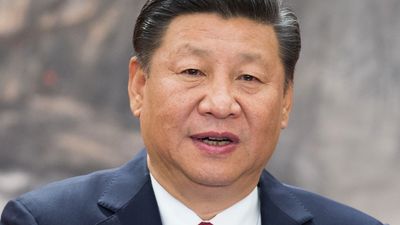
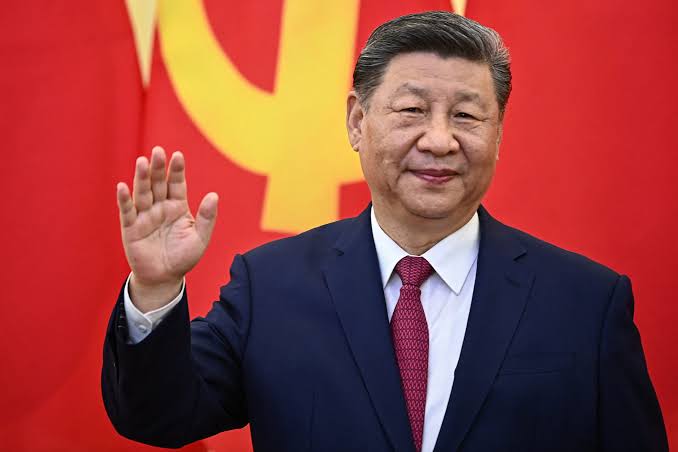
We’ll scrap tariffs for almost all African countries from May, says China’s president Xi Jinping

By Sabiu Abdullahi

Chinese President Xi Jinping announced on Saturday that Beijing will remove tariffs on imports from nearly all African countries starting May 1, according to state media reports.

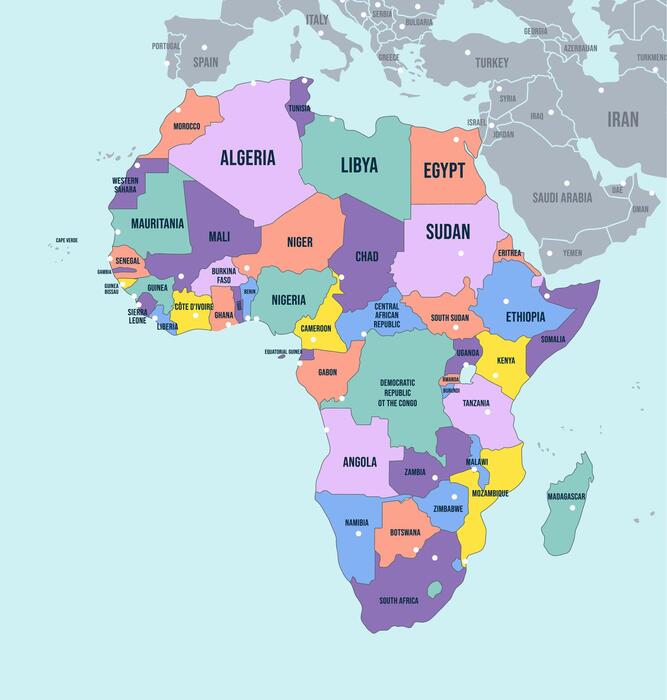
Currently, China maintains a zero-tariff policy for imports from 33 African nations. However, last year, the government pledged to extend the policy to all 53 of its diplomatic partners on the continent.

From May, the zero-tariff arrangement will apply to every African country except Eswatini, which continues to maintain diplomatic relations with Taiwan.

Xi highlighted the move during the annual African Union summit in Ethiopia, describing it as a significant boost for development across Africa.

“This will undoubtedly provide new opportunities for African development,” he said, underscoring China’s role as Africa’s largest trading partner.

The country has been a major supporter of infrastructure projects across the continent through its expansive “Belt and Road” initiative.

African nations are increasingly turning to China and other international partners for trade, following the imposition of steep tariffs by US President Donald Trump last year.

The zero-tariff policy is expected to strengthen trade ties between China and Africa, giving African exporters greater access to Chinese markets while encouraging economic growth in the region.

The return of naked power: What Africa must learn from today’s global conflicts

By Iranloye Sofiu Taiye

The world has entered a phase in which power no longer feels compelled to wear moral disguises. From Eastern Europe to the Middle East, from East Asia to Latin America, coercion has re-emerged as an acceptable instrument of statecraft, and sovereignty has become increasingly conditional, least respected when convenient and violated when costly restraint disappears.

The Russia–Ukraine war, China’s posture towards Taiwan, Israel’s war in Gaza, and the long-standing pressure campaign against Venezuela are not isolated crises. They are symptoms of a systemic transition: the erosion of post–Cold War restraint and the reassertion of raw power politics in a crowded, mistrustful, and increasingly multipolar international system.

For Africa, this moment is not abstract. It is existential. The same forces reshaping Europe, Asia, and Latin America are already present on the African continent through resource competition, security outsourcing, debt diplomacy, sanctions regimes, proxy alignments, and political conditionality. The difference is that Africa often confronts these forces without a unified strategy, relying instead on appeals to history, morality, or international goodwill. That approach is no longer sufficient.

Realist theory, as articulated by thinkers such as Hans Morgenthau and John Mearsheimer, offers a brutally honest diagnosis of the international system. It reminds us that global politics is characterised by anarchy, not law; that survival, not virtue, motivates states; and that power, not rhetoric, ultimately determines outcomes.

Recent conflicts confirm realism’s core claims: Russia acted in Ukraine not because of moral failure but because it perceived a narrowing window to secure its sphere of influence. China’s pressure on Taiwan is driven less by ideology than by long-term assessments of capability, timing, and strategic opportunity. Israel’s conduct in Gaza reflects the logic of overwhelming deterrence in an insecure regional environment. The United States’ treatment of Venezuela illustrates how economic warfare substitutes for direct military intervention in an era of reputational constraints.

In each case, capability trumped legality, and vulnerability invited pressure. Yet realism, while accurate in diagnosing power behaviour, becomes dangerous when treated as destiny. Taken to its logical extreme, it suggests that weaker states have only three options: submission, alignment, or destruction. This is analytically lazy and politically paralysing.

History and current global practice demonstrate that survival is not reserved for the strongest but for the most strategically positioned. The key distinction between states that withstand pressure and those that collapse is not moral standing but strategic architecture.

Ukraine did not survive Russia’s invasion because it matched Moscow militarily. It survived because it transformed a bilateral war into a multilateral stake. By embedding its security dilemma within NATO, the EU, and global norms, Ukraine increased the cost of Russian victory beyond the battlefield.

Taiwan’s resilience lies not only in its arms but also in its economy. Its centrality to global semiconductor supply chains converts any military action into a worldwide economic crisis. Invasion becomes irrational not because it is impossible, but because it is prohibitively disruptive.

Palestine commands unprecedented global sympathy yet remains structurally vulnerable. Without credible security guarantees, economic leverage, or institutional power, moral legitimacy alone has not translated into sovereignty.

Venezuela’s leadership adopted confrontational rhetoric without building defensive alliances, diversified economic networks, or institutional shields. The result has been isolation, sanctions, and internal fragility, confirming that outrage without insulation invites coercion. The lesson is stark: states do not survive because they are right; they survive because they are costly to dominate. Afghanistan’s resilience is a case study. 

Africa today occupies a paradoxical position. The continent is: Central to the global energy transition (critical minerals), demographically pivotal, geopolitically courted by rival powers, and numerically powerful in multilateral institutions; alas, Africa remains strategically fragmented. Most African states still approach global politics through the language of gratitude, alignment, or moral appeal rather than through calculated leverage. The continent’s diplomatic posture is often reactive rather than anticipatory.

This is dangerous in a world where: aid is weaponised, debt is politicised, sanctions are normalised, and security assistance comes with strategic strings. Africa risks becoming the quiet theatre of the next great-power contest, not because it is weak, but because it is insufficiently coordinated.

What Africa requires is neither idealism nor cynicism, but strategic realism with agency a doctrine that accepts power politics while refusing subjugation.

Such a doctrine would rest on five pillars.

1. Strategic Indispensability: Africa must move beyond raw resource exportation toward value-chain centrality. Countries that control processing, logistics, and industrial ecosystems are harder to coerce than those that merely supply inputs.

2. Networked Sovereignty: Sovereignty in the 21st century is not isolationist. It is embedded on favourable terms through regional blocs, trade regimes, and security compacts that dilute unilateral pressure.

3. Institutional Power, Not Institutional Faith: Africa must stop treating international institutions as moral referees and start using them as arenas of contestation. Voting blocs, agenda-setting, and procedural leverage matter.

4. Strategic Non-Alignment, Not Passivity: Non-alignment must evolve from rhetorical neutrality into active hedging, diversifying partnerships, avoiding dependency traps, and exploiting multipolar competition without becoming a proxy.

5. Continental Coordination: No African state, regardless of size, can negotiate effectively alone in a hardened global system. Continental coherence in economic, diplomatic, and security-related is no longer aspirational; it is existential.

Conclusively, power will not wait for Africa to be ready; the defining feature of the emerging world order is not chaos, but selective constraint. Power will be exercised where resistance is weak, fragmented, or sentimental and restrained where costs are high, and consequences diffuse. Africa cannot afford another century of learning this lesson too late. The continent must abandon the illusion that shared history, moral standing, or international sympathy will shield it from coercion. Those narratives did not protect Ukraine, Palestine, or Venezuela. They will not protect Africa.

What will protect Africa is a strategy: the ability to anticipate pressure, restructure vulnerability, and convert relevance into leverage. In a world where power has shed its disguises, survival belongs not to the loudest protester, but to the most strategically prepared.

Iranloye Sofiu Taiye is a policy analyst and wrote via iranloye100@gmail.com.

Saif al-Islam Gaddafi, son of former Libyan leader, killed in Zintan

By Hadiza Abdulkadir

Saif al-Islam Gaddafi, the son of Libya’s former leader Muammar Gaddafi, has been killed in the western Libyan town of Zintan, according to local authorities and sources close to the family.

He was reportedly shot after armed men stormed his residence, disabling security cameras before opening fire. The circumstances surrounding the attack remain unclear, and no group has claimed responsibility so far.

Once seen as his father’s political heir, Saif al-Islam became a central and controversial figure following the 2011 uprising that ended the Gaddafi regime. He was captured that year, later sentenced to death in absentia for war crimes, and released in 2017 under an amnesty law.

In recent years, he had sought a return to politics, including an unsuccessful attempt to run in Libya’s postponed presidential election.

Libya’s Attorney General has announced an investigation into the killing. Analysts say his death could have political implications in a country still struggling with deep divisions and instability more than a decade after the revolution.

CAF sanctions Senegal coach, players following AFCON final walkout

By Muhammad Abubakar

The Confederation of African Football has imposed heavy sanctions on Senegal following the dramatic Africa Cup of Nations final against Morocco, including a five-match suspension and $100,000 fine for coach Pape Thiaw.

Thiaw was penalised for “unsporting conduct” after instructing his players to walk off the pitch during the final. The incident marred Senegal’s championship victory.

Senegalese players Ismaila Sarr and Iliman Cheikh Baroy Ndiaye have each been banned for two CAF matches for similar misconduct. The Senegalese Football Federation faces a substantial $615,000 fine despite lifting the trophy.

Morocco has also been penalised. CAF handed the runners-up a $315,000 fine for improper conduct, whilst defender Achraf Hakimi received a two-match suspension for unsporting actions.

Neither federation has yet announced whether they will appeal the decisions.

Senegal’s AFCON winners receive cash and land in presidential honour

By Muhammad Sulaiman

President Bassirou Diomaye Faye has awarded Senegal’s AFCON 2025–winning squad a total of $6.2 million in cashand 68,000 square meters of land, marking one of the most generous state rewards in African football history.

Each player will receive $135,000 and a 1,500-square-meter plot on the Petite Côte, while members of the technical and backroom staff will be awarded $90,000 and 1,000-square-meter plots, according to the presidency.

Senegal clinched the continental title with a disciplined 1–0 victory over the Morocco national football team in the final, a tightly contested match that underscored the Lions’ defensive organisation and tactical maturity.

Led by head coach Pape Thiaw, the Lions’ triumph has been celebrated as a symbol of national pride and sporting excellence, with officials saying the rewards reflect the country’s gratitude for a team that once again placed Senegal at the summit of African football.

COP30 and Niger’s turn to shine on climate action

By Abdulsalam Mahmud

Across the world today, governments are recalibrating their economies to fit a green and sustainable future. From Brazil’s vast reforestation drive in the Amazon to Morocco’s solar revolution in Ouarzazate, nations are realising that the path to prosperity now runs through the low-carbon economy. 

The green transition has become more than an environmental necessity; it is the new global economy in the making — one that rewards innovation, resilience and foresight. For Africa, this transition is both an urgent challenge and a rare opportunity. 

As the continent most vulnerable to climate change, Africa stands to lose the most from inaction. Yet, it also possesses immense natural capital — sunlight, land, biodiversity and youthful human potential — that can power a sustainable transformation. Countries that act early and boldly will not only build resilience but also attract the finance, partnerships and technologies shaping the next century.

In this global context, Niger State, under the visionary leadership of His Excellency, Farmer Governor Mohammed Umaru Bago, has chosen to define its future differently. Over the last two years, the state has pursued one of the most ambitious subnational green economy transformations in Nigeria’s history. 

By linking local realities to global climate ambitions, Niger is steadily positioning itself as a hub for climate-smart agriculture, clean energy, and green industrial development. Governor Bago’s administration began by recognising an undeniable truth: climate change is not just an environmental issue but an economic one. 

Desertification, flooding and deforestation have long undermined livelihoods across the state. To confront these threats, Niger launched its “Green Economy Blueprint”, an integrated strategy designed to build resilience while creating green jobs and sustainable prosperity. From that moment, the state’s engagement with the world deepened. 

At COP28 in Dubai, Niger presented its blueprint before international partners, and by COP29 in Baku, it had become a recognisable name in subnational climate leadership. These appearances were not symbolic. They yielded partnerships that have since defined the core of Niger’s transition agenda.

One of the most transformative was the Memorandum of Understanding with Blue Carbon, a UAE-based company committed to developing sustainable climate solutions. The agreement to plant one billion economic trees across one million hectares in Niger State is among the largest private–public reforestation programmes on the African continent. 

Beyond ecological restoration, the initiative promises rural employment, carbon credit generation and long-term economic dividends from timber, fruit and non-timber forest products. Equally significant was the partnership with FutureCamp Germany, a globally renowned firm in carbon markets. This collaboration aims to unlock over ₦1 trillion in climate investments and build the technical framework for Niger’s carbon market activation.

For a subnational entity, this is pioneering work — one that could see Niger emerge as the first Nigerian state to fully participate in voluntary carbon trading, attracting new revenue streams while promoting transparency in climate finance. The MoU with the NNPC Limited extends Niger’s climate action to the energy frontier. 

It covers a suite of renewable and low-carbon projects, including a Greenfield hydroelectric power plant, mega solar parks for institutions and home solar systems targeting 250,000 households. The agreement also envisions an ethanol plant capable of producing 500 million litres annually, powered by crops cultivated across 100,000 hectares — a project that will create value chains, empower farmers and reduce dependence on fossil fuels.

Meanwhile, the collaboration with ECOWAS Bank for Development and the Environment for an $11 million Madalla Green Economic Market promises to turn commerce itself into a model of sustainability—blending trade, recycling, and renewable energy into a single modern ecosystem. Similarly, Niger’s partnership with the Turkish firm Direkci Camp is reshaping agribusiness through smart agriculture, irrigated soya cultivation and export-oriented value chains.

These developments are not isolated. They are coordinated through the Niger State Agency for Green Initiatives (NG-SAGI), the institutional anchor established two years ago and now led by Dr Habila Daniel Galadima. Beyond a doubt, NG-SAGI is more than a bureaucracy; it is a policy engine designed to harmonise the state’s environmental, agricultural, and energy programmes into a coherent climate-resilience framework.

Under this framework, Niger hosted Nigeria’s first-ever subnational Green Economy Summit in 2023, attracting investors and development partners from across the globe. The summit’s outcomes validated the Governor’s approach: local action can be globally relevant if guided by a clear vision and credible governance. The pledges and partnerships secured there continue to serve as foundations for current projects — from afforestation to renewable energy and sustainable agriculture.

Another milestone was the creation of the Niger State Agriculture Development Fund, with ₦3.5 billion in startup capital from the state and local governments. The fund is enabling 1,000 young farmers to access ₦1 million in grants, along with hectares of land for nurseries across all 25 local governments. This initiative has quietly triggered an agricultural mechanisation revolution, empowering a new generation to view farming as a business —and sustainability as a strategy.

Partnerships with the United Nations Industrial Development Organisation (UNIDO), the Energy Commission of Nigeria, and the Global World Energy Council are driving new frontiers in wind energy and industrial decarbonization. Niger’s growing alignment with UNIDO is already yielding plans for circular-economy models within the agro-processing free trade zone, blending job creation with environmental responsibility.

And while some of these projects are at different stages of implementation, the direction is unmistakable: Niger State is building a green identity anchored on innovation, inclusion and international collaboration. Even modest steps, like installing solar-powered streetlights across Minna, tell a larger story — one of a government deliberately moving toward a future powered by clean energy and driven by public safety and climate consciousness.

As the world prepares for COP30 in Brazil next month, Niger State’s delegation is expected to present these achievements not as isolated efforts, but as part of a coherent subnational climate narrative. It will highlight how a state, once challenged by deforestation and poverty, is now leading a structured march toward carbon neutrality and green prosperity. 

The focus this time will be on climate-smart agriculture, renewable energy expansion, youth inclusion, and green finance innovation—key pillars aligned with the global call for just and equitable transitions. At COP30, Niger’s voice will also speak for Nigeria’s broader subnational climate movement — demonstrating how state-level leadership can accelerate the nation’s commitments under the Paris Agreement. 

The lessons from Niger are clear: climate action must be localised, data-driven and economically beneficial. Beyond the conference halls of Brazil, Niger’s agenda carries deep human meaning. Every hectare reforested, every solar panel installed, every youth trained in sustainable agriculture is a statement of faith in a livable future. 

Climate action here is not an abstract ambition; it is a lived policy that transforms communities, restores hope and redefines governance as stewardship. If properly amplified, Niger’s story could inspire other states to view climate change not as a threat but as an opportunity—a chance to create industries, attract green finance, and protect generations unborn. 

That is the broader promise Governor Bago’s vision now represents: that sustainability is not an aspiration for rich nations alone, but a shared moral and developmental duty for all. As COP30 draws near, Niger’s turn to shine on climate action is not just about showcasing progress; it is about reinforcing possibility. 

For a state once defined by its rivers and farmlands, the journey toward a green economy may well become its most enduring legacy — one that proves that in Africa’s heartland, the seeds of a sustainable future are already being sown

Mahmud, Deputy Editor of PRNigeria and a rapporteur at the maiden Niger State Green Economy Summit, writes via  babasalam1989@gmail.com.

Indomitable Lions’ AFCON preparations descend into chaos

By Muhammad Abubakar

Cameroon’s upcoming Africa Cup of Nations (AFCON) campaign is in turmoil due to a major power struggle between FECAFOOT President Samuel Eto’o and head coach Marc Brys, who remains under contract until 2026. Eto’o unilaterally declared Brys’s role was over.

The dispute has resulted in two rival 28-man AFCON squads.

Eto’o’s faction released a list naming David Pagou as coach and controversially omitted stars Andre Onana, Eric Choupo-Moting, and captain Vincent Aboubakar. Reports suggest Aboubakar was dropped to protect Eto’o’s national scoring record.

Coach Brys responded with his own squad announcement, restoring the high-profile players and questioning the team’s ability to compete in Morocco without them. This internal conflict severely undermines the Indomitable Lions’ preparations.

My experience at the Africa Youth Health Summit in Abuja

By Saifullahi Attahir

I had the privilege of attending the Africa Youth Health Summit organised by the Federation of African Medical Students’ Associations (FAMSA). It was a 3-day event, a highly engaging program in which over 200 young and passionate healthcare students and professionals gathered at the United Nations House to learn, network, discuss, and chart the future of the healthcare system in Africa.

The delegates come from many African countries and represent diverse cultures, languages, backgrounds, religions, and colours. We had the privilege of hearing from representatives of leading agencies, including the World Health Organisation (WHO), the Africa Centre for Disease Control (CDC), the United Nations, the Nigerian Minister for Youth, Information Technology experts, and several other non-governmental organisations (NGOs).

Several hands-on workshops were organised on public health advocacy, cutting-edge cancer management, transformational leadership, reproductive health issues, and policy formulation. I was fortunate to sit next to the Nigerian Minister for Youth, Mr Ayodele, and even took a memorable photo.  

As a side trip, we visited memorable places like the Africa Medical Centre of Excellence Hospital (AMCE), the NIKE ART AND GALLERIES, and Abuja Magic Land.

AMCE is a state-of-the-art facility built by AFREXIM Bank to curb health tourism by Africans to Europe. The facility is a replica of King’s College Hospital in London, featuring the latest technologies and expertise.

My visit to NIKE GALLERY left a lasting impression on me about the human ability to turn waste into wealth through talent. The gallery contains thousands of beautiful paintings, some made from trash (bola/shara). Indeed, Nigeria is full of untapped potential!

As a President, National Association of Jigawa State Medical Students (NAJIMS) National Body, I make the best use of the opportunity in this summit to network with a lot of like-minded individuals, to voice out my opinion, and to shine Jigawa State on the radar of African maps.

I am aware of the challenges of the healthcare system in Jigawa State, ranging from maternal mortality, under-5 infants mortality, vaccination misconceptions, mental health, adolescent challenges, infrastructural and manpower shortages. I’m fully equipped with the knowledge to help my dear state and medical students back home.

Panels were organised around essential topics such as the efficient use of Artificial Intelligence in medical practice, data-driven research, Japa syndrome, and youth inclusion in healthcare system leadership.

The trip was worth attending, the investment priceless, and the experience handy. I love travelling to important places like these, as it broadens my horizons, pushes me out of my comfort zone, lets me interact with like-minded individuals, and teaches me things books or classrooms could never teach me.

Saifullahi Attahir is the President of the National Association of Jigawa State Medical Students, NAJIMS National Body. He can be reached via saifullahiattahir93@gmail.com.

The messiah-villain binary: A trap in democracy

By Oladoja M.O

In the grand, often tumultuous, theatre of African politics, a deeply entrenched and insidious narrative persists: the Messiah-Villain Binary. This simplistic, yet devastating, framework casts political leaders not as fallible public servants, but as either divine saviours or malevolent destroyers. It’s a binary that suffocates nuance, stifles accountability, and, in a continent desperate for democratic maturity, acts as a corrosive cancer on the body politic. We must call this what it is: a dangerous delusion that has shackled Africa’s progress for far too long.

This orientation, a relic of post-colonial strongman politics, reduces the complex art of governance to a moral melodrama. Citizens, conditioned to see their leaders as larger-than-life figures, become spectators in a perpetual battle between good and evil. When a new leader emerges, they are instantly elevated to the status of a messiah, the one chosen to slay the dragons of poverty, corruption, and instability. Any opposition is, by default, cast as the villain, a saboteur working against the people’s will. This is not just a rhetorical device; it’s a profound psychological trap that prevents a healthy, critical relationship between the electorate and those they elect.

Look no further than the story of Robert Mugabe in Zimbabwe. In the euphoric dawn of independence in 1980, Mugabe was the indisputable messiah. He had led the liberation struggle, promised the people a new land, and was seen as the architect of a new, prosperous Zimbabwe. But as his rule solidified, dissent grew. His staunchest supporters did not see his brutal suppression of the Gukurahundi massacres and his increasingly authoritarian tendencies as the actions of a flawed leader, but rather as the necessary evils required to defeat the ‘villains’—the opposition, foreign agents, and internal critics. This narrative allowed him to dismantle democratic institutions and cling to power for nearly four decades, all while his country’s economy imploded. The messiah had morphed into a tyrant, but the binary, with its pre-assigned roles, kept many from seeing the reality until it was too late.

A similar pattern can be seen in Rwanda, albeit with a different trajectory. Following the 1994 genocide, Paul Kagame was hailed as the man who pulled his nation from the brink of total annihilation. He is undeniably a messiah figure for many Rwandans, credited with bringing stability, order, and remarkable economic growth. Yet, this messianic status has made it incredibly difficult for a genuine political opposition to emerge. Critics, journalists, and political rivals who question his iron grip on power are often swiftly silenced, accused of undermining national unity or of being sympathisers of the genocidal past. 

The messiah’s narrative, while perhaps initially justified, has become a tool to legitimize the suppression of democratic pluralism. The ‘villain’ is no longer the genocidal regime, but anyone who dares to challenge the man who defeated it. This is a profound danger: when a leader’s infallibility is tied to a nation’s salvation, dissent becomes tantamount to treason.

The messiah-villain binary is a disease that festers in the heart of African electoral politics. It’s visible in the fervent, almost religious, rallies where supporters see their candidate not as a political leader with a manifesto, but as an oracle. The 2017 Kenyan election and the subsequent crisis offered a stark illustration. Both Uhuru Kenyatta and Raila Odinga were cast as messianic figures by their respective supporters. For Odinga’s base, he was the long-awaited liberator, the man who would finally lead them to a promised land of social justice. For Kenyatta’s supporters, he represented stability and continuity, the man protecting the country from the ‘villainous’ forces of instability. This emotional fervour, fueled by tribal and regional loyalties, led to a deeply polarised society where compromise became impossible. The result was not just political gridlock, but a cycle of violence and deep-seated animosity that continues to haunt the nation. The election wasn’t a contest of ideas; it was a crusade.

This issue is not just a problem of the past; it remains alive and well today. In Nigeria, the perennial politics of ‘saviour’ and ‘enemy’ plague the electoral landscape. From the military regimes to the current democratic dispensation, every election is framed as a life-or-death struggle against forces of darkness. A new candidate emerges, promising to sweep away the corruption of the past, and is instantly elevated to a messianic pedestal. Yet, once in power, the same old patterns of patronage and unaccountability emerge. The people, having invested their faith in a person rather than in institutions and processes, are left disillusioned, only to repeat the cycle with the next messiah figure. This prevents the building of strong, independent institutions, a free press, an impartial judiciary, and a non-partisan civil service, because the entire political system revolves around the individual, not the rules.

The messiah-villain binary is a trap, a narrative cul-de-sac from which genuine democratic progress cannot escape. It’s a cancer because it preys on hope, exploiting the legitimate frustrations of the populace for political gain. It turns citizens into blind followers and opponents into sworn enemies. This dangerous orientation must be dismantled. We must stop looking for messiahs. There are no magical saviours.

There are only men and women who are fallible, flawed, and accountable to the people they serve. We must demand a politics of substance, not spectacle. We must judge our leaders not by the promises they make on the campaign trail, but by their respect for democratic institutions, their commitment to the rule of law, and their willingness to be held to account.

The true liberation of Africa as a continent and Nigeria as a nation will not come from a single hero, but from a critical and engaged citizenry that understands that the power to govern belongs to them and that no politician, no matter how charismatic, is a god. It is time to retire the messiah, to dismantle the villain, and to embrace the hard, unglamorous work of building a true and lasting democracy.

Oladoja M.O writes from Abuja and can be reached at: mayokunmark@gmail.com.

The Google gauntlet and the grandfather’s trust: An African lesson in peace

By Hauwa Mohammed Sani, PhD

I thought I was making a simple, kind gesture—choosing an older gentleman’s cab late one night after a long flight. I figured it would be an easy ride. What unfolded next wasn’t just a navigation problem; it was a bizarre, real-time collision between the old way of the world and the new, AI-driven one. This true story of a taxi ride truly happened to me last week.

​It was late, the kind of late where the airport lights look sickly and the air is thick with fatigue. I needed a ride. Looking over the line of sleek, modern taxis, my eye landed on one driven by an old man—a true gentleman of the road, old enough to be my own grandfather. A small surge of pity, mixed with a desire to give him the fare, made me choose him. Little did I know, I wasn’t just hopping into a cab; I was walking into a generational drama.

​The man knew the general area of my destination, but finding the exact estate became an odyssey. We drove, we turned, we asked passersby—a frantic, real-world search in a fog of darkness and street names. Frustrated, I reviewed the apartment information on my phone and saw a contact number within the address details. I called it.

​The voice on the other end was bright and American. “Oh, that’s my apartment, but I live in the U.S.,” she cheerfully informed me. “I’ll have someone call you.”

​True to her word, a local contact called back. “I’ve sent you the location,” she said. “Just Google it.”

​And there was the rub. My driver—a man whose mind held a living map of the city’s every alley and backstreet—and I, a modern traveller, stared at each other. Neither of us was familiar with using Google Maps.

​The poor old man was desperate. “What are the landmarks? Describe the building!” he pleaded into the night air. The girl on the phone, however, was stubbornly one-dimensional: “Just follow the GPS. Google the location.”

​That’s when it hit us both. In that moment, the taxi cab became a time capsule. Here were two people operating on landmarks, intuition, and human description, battling against an AI generation that has completely outsourced its sense of direction. Simple communication—a left at the bakery, a right past the big tree—was utterly lost.

​The driver was absolutely fuming. He kept grumbling, “Where is our sense of reasoning? They’re being machine is programming them!” To him, this reliance on tech wasn’t progress; it was the crippling of a fundamental human skill. He saw creativity and simple reason dying, replaced by a glowing screen that gives an answer but can’t hold a conversation.

​We eventually found the place, not by Google, but by a final, desperate, human description from a local. But the lesson lingered: Technology is fantastic, but sometimes, when it replaces basic common sense, it really can feel useless. We need to remember how to read the world, not just the map.

The Climax: The Race for the Flight

The next day, it was time for my return. The old man—who I now affectionately called Papa—had promised to pick me up. He came, but he was late. I kept calling, reminding him of my flight and the town’s busy roads. He assured me we would take an “outskirt” route with no traffic.

We found otherwise.

The clock was racing, and the roads were choked. In his confusion, the poor man even pulled into a station to buy fuel, a detour that felt catastrophic. But the beautiful part? He kept accepting his mistakes. He was frantic, not defensive. We kept running against the clock, fueled by mutual anxiety.

By the time we reached the terminal, the counter was closed.

“Hajiya,” he said, using the Hausa honorific reserved for me, the Yoruba man’s passenger. “Don’t worry about the fare. Just run. Run and make your flight first.”

I rushed in and had to beg the counter staff to issue my ticket. I became the last passenger on the flight, all thanks to a desperate sprint.

The Unbreakable Trust

A display of profound, inter-tribal trust eclipsed that moment of panic. Here was Papa, a Yoruba man, sending off Hajiya, a Hausa woman, without a dime for his service, instructing me not to worry about payment until I was safely at my destination.

He kept calling me after I took off, checking on my travel and praying I made my connection. Not once did he mention money.

It wasn’t until I reached out and said, “Papa, please send me your account details,” that the drama of the day resumed (as expected, getting that detail was another adventure!). But in the long run, I paid Baba a generous amount—one he met with a flood of heartfelt prayers for my future.

This journey, from a confusing GPS battle to a race against the clock, taught me the most significant lesson: amidst all the conflict and generational friction, there is still peace and trust in connection. 

As I work on our research for the University of Essex London on conflict resolution and prepare for my ‘Build Peace’ conference in Barcelona, I realise that sometimes the greatest examples of peace aren’t in treaties, but in a simple promise between a Yoruba taxi driver and his Hausa passenger.

Hauwa Mohammed Sani, PhD, teaches at the Department of English and Literary Studies, Ahmadu Bello University, Zaria.