Abuja-Kaduna

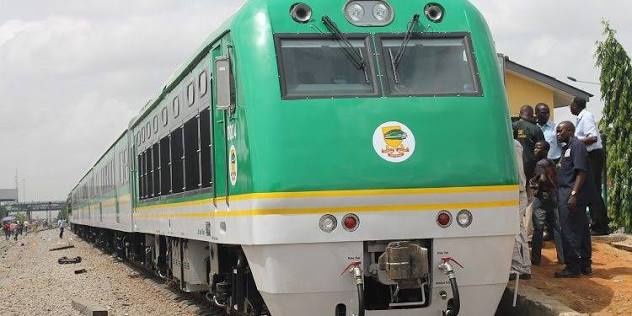
Abuja–Kaduna Train Services: My Little Rant

By Abubakar Suleiman

Before our very eyes, the Abuja–Kaduna train service is slowly dying. Its final demise is only a matter of when, not how.

If nothing drastic is done, the Rigasa, Kubwa and Idu stations may become comatose in a not-too-distant future, just as the Jere, Rijana, and Kakau stations have been left to weeds, rodents and reptiles. 

Forget the rapid infrastructural development of the Kaduna–Kano rail line; without the leadership and management required to sustain it, it risks following the same trajectory as the Abuja–Kaduna train services.

This is not pessimism. It is a warning about what happens when infrastructure is built without the strong leadership, top-notch maintenance culture and institutional commitment needed to keep it functional.

The number of daily train trips between Abuja and Kaduna shrank from four in each direction to just one.

The waiting area is gradually becoming shabby. When you lift your head to look at the roof or walls, cobwebs stare back, reminding you that Nigeria is a slaughterhouse where maintenance meets its dead end.

Let’s not even talk about buying a ticket. That’s a hassle. You just can’t get one in peace. For your sanity, you need a third party to get it for you.

The barcode scanners meant to grant access to the place housing the train and rail tracks can sometimes just choose not to work. Power supply issues? I don’t know. Functionality issues? I still don’t know. You’re left with a manual screening method that generates traffic.

Simple things like this, which ought to be fixed with urgency, only become paramount when a security breach leads to something unimaginable. But then, this is not even unimaginable.

The escalator and elevator can be idle, leaving you with the must-exercise of using the staircase. 

Mid-trip, the AC could just stop working, leaving the coaches stuffy. It has happened to me countless times. Pray you’re not unfortunate enough to have someone quietly fart, leaving the space momentarily filled with a rotten-egg-like fume. 

To fart is human, but to do so in a fully packed coach is not only inconsiderate and irresponsible; it is ungodly.

The lavatory in the train is another eyesore. Even prisoners deserve better; talk more of dignified people who are not convicts. Some of them have no water. You need to walk into another coach to ease yourself. Some charging ports aren’t working.

Should we not talk about the inconsiderate noise makers?

You’ll find yourself on a train in another country and wonder whether it’s a national mourning day because people are so mindful not to be a nuisance to the next person. No noise. Silence rules the sojourn. They’re not dumb; they are simply being civil and considerate.

Try the Abuja–Kaduna train. It can be so disgusting. From the person at the top of his voice making phone calls with no moral scruples, to acquaintances or friends who bump into each other and then start a noise like an unsolicited ‘radio station,’ to the one who turns on music on his phone without using earphones or AirPods.

I don’t know whether our loudness is meant to prove a point. Sometimes, we carry this particularly bad behaviour into another country without reading the room. I digress.

What about some unruly guys who jump onto the moving train to help passengers carry their luggage? They sometimes drag the right of way with passengers along the walkway as the train tends towards a halt. Moving luggage can be done with decorum and in peace. But it seems we thrive in chaos.

I know the aviation sector has a dedicated Ministry of Aviation. It is much more regulated worldwide than the railway industry, so it is more important to remove it from the Ministry of Transportation.

However, in other countries, railway transportation falls outside the Ministry of Transportation’s purview. They have a dedicated Ministry of Railways. I had wanted to suggest the same for Nigeria. But is it even about having a dedicated ministry?

The key policy question is whether a separate ministry would improve accountability, funding, coordination, oversight, and efficient service delivery, or simply add another layer of bureaucracy to the current red-tapism we have? Your guess is as good as mine.

We already have the Nigerian Railway Corporation, the Railway Property Management Company Limited and the Rail Transport Services Department within the Ministry of Transportation, yet our train services are anything but reliable and efficient.

Okay, End of Rant.

Rethinking national assets protection

By Zayyad I. Muhammad

In recent times, Nigeria has faced a concerning increase in audacious attacks on its critical national assets and infrastructure. These assaults, carried out by bandits, insurgents, and vandals, threaten the stability and security of the nation. The targeted facilities are essential for the country’s economic growth and public safety. 

On January 14, 2022, the 132 kV Ahoada-Yenagoa transmission line towers belonging to the Transmission Company of Nigeria (TCN) were vandalised.

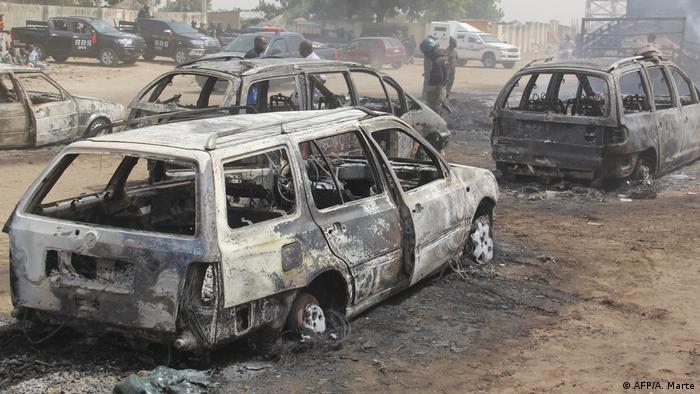
On March 28, 2022, the Abuja-Kaduna train was attacked by insurgents. The incident occurred in the evening when the train from Abuja was en route to Kaduna. This attack tragically resulted in casualties and the abduction of several passengers. Train services on the Abuja-Kaduna route were halted for many weeks.

On September 25, 2022, vandals attacked the Transmission Company of Nigeria (TCN) towers 303 and 304 along the Jos road, disrupting electricity to the entire Northeast for weeks.

On June 20, 2024, the rail fittings installed on the Second Niger Bridge were uprooted and vandalised.

On June 11, 2024, insurgents attacked TCN towers T193 and T194 along the Damaturu-Maiduguri 330 kV Single Circuit Transmission Line, leaving Maiduguri and its environs in darkness for weeks.

In July this year, a report published by Thisday Newspaper estimated that Nigeria lost approximately $3.57 billion in just the first five months of 2024 due to oil theft, which was largely attributed to pipeline vandalism and militant activities.

Experts suggest improvements have been made in security measures to protect oil and related assets, with around N50 billion allocated annually for local security contractors. Furthermore, the Joint Task Force (JTF), known as Operation Delta Safe, comprises all branches of the armed forces and Federal Road Safety Corps members to tackle this challenge. The Nigerian Navy has also initiated Operation Delta Sanity to bolster maritime surveillance.

It appears that bandits, vandals, and insurgents are becoming more daring and sophisticated than the strategies implemented to combat and prevent attacks on critical national assets. What needs to be done? 

The government should consider utilizing technology in addition to its boots-on-the-ground strategy. For example, Nigeria can deploy advanced SCADA systems to monitor critical national assets and infrastructure, such as power grids, water treatment plants, oil and gas pipelines, transportation networks, and communication systems. 

Secondly, while the National Security and Civil Defence Corps (NSCDC) is doing good work protecting some oil pipelines, it should be retooled, adequately staffed, and better funded. More personnel should be deployed to protect critical power transmission lines and towers, as the core mandate of Civil Defence is safeguarding critical infrastructure—safeguarding government facilities and installations. The Transmission Company of Nigeria (TCN) should enhance its manual and high-tech monitoring systems, including drones and real-time surveillance. 

Additionally, the TCN’s public relations strategy should be improved. Showcasing to the world that insurgents can disrupt the northern Nigerian electricity supply was a significant PR blunder, providing free publicity for the bandits, insurgents, and vandals. 

Any country that fails to adequately protect its national assets and infrastructure will compromise its national security, compromising economic stability, public safety, and resilience to disasters, which may result in social disorder. 

For instance, the frustration in the north, caused by nearly ten days of blackouts in the region, stems from an attack on critical national assets—the 330 kV Shiroro-Kaduna transmission lines 1 and 2. Nigeria’s international respect and reputation are at stake, as protecting critical national assets and infrastructure is integral to global security frameworks. 

 Zayyad I. Muhammad writes from Abuja via zaymohd@yahoo.com.

Abuja-Kaduna train service must not resume – Victims’ Families

By Uzair Adam Imam

The families of the abducted Abuja-Kaduna train victims threatened that the train service must not resume unless all the abducted passengers are rescued.

Speaking through their spokesperson, Dr Abdulfatai Jimoh, the victims’ families said adequate security measures must be put in place to guarantee the safety of prospective passengers.

The Daily Reality reported how bandits attacked the Kaduna-Abuja train, killed eight persons, and abducted many passengers last month.

The bandits in a video threatened to kill all the victims if the federal government refused to negotiate with them.

However, reports disclosed that President Muhammadu Buhari had directed the NRC to set up a situation room for the coordination of the rescue mission for the passengers.

But the families lamented that “Still, one week after this presidential directive was issued, the NRC has never contacted the relatives of the kidnapped victims nor established any situation room.

“This display of gross incompetence and insensitivity should lead to appropriate punishment,” they said.

Worsening Insecurity: Our lives latter 

By Najeeb Maigatari 

The recent attack on travellers along the Abuja-Kaduna road is shocking. The fact that those ‘terrorists’ could now detonate explosives before killing and kidnapping innocent people is damming and quite alarming. It says a lot about our security system. 

It also sends a clear message to everyone that no one is safe. We are all in this mess together; the ordinary people and the ‘elites’ alike. No transportation system is secure in the country. One could now be attacked when travelling by road, railway or even by air. 

The unfortunate train attack is not the first of its kind- and will seemingly not be the last unless the needful is done. The only difference is that this time around, unlike other attacks before, the ‘terrorists’ appear well-armed, more audacious with the hunger to kill, which shows their daunting strength. 

Those terrorists have been attacking villages and killing people, especially in the northern part of the country, where such attacks have become the order of the day. They have established themselves as an authority with several villages under their control. Some of their brutal attacks and heinous crimes are underreported in the news media. 

According to the Nigeria Security Tracker (NST), in a report published from January to February, at least 1761 people lost their lives across the country in incidents related to insecurity and protracted armed violence. 

Under our noses, our beloved country, once a nation of peace and tranquillity, is gradually turning into the likes of Somalia, Libya, and Afghanistan or worse; today’s Nigeria has become a slaughterhouse, and its citizens turned into walking corpses. 

Even worse, most of those killed are people trying to make a living for themselves and their families. People are killed in their homes, offices, markets, on roads, and virtually everywhere. It’s practically killings everywhere at every turn under every circumstance. 

It suffices to conclude at the moment that there’s seemingly the creation of ‘a state within another’. On the one hand, there’s almighty sovereign Nigeria – that continually fails to protect its citizens – and on the other hand, the hypothetical terror nation ruled by such terrorists as Boko Haram, bandits, kidnappers and the likes. 

The government is evidently failing – woefully so – in its fundamental responsibility of securing the lives of citizens, as they swore to do before taking over from the previous administration. 

Therefore all hands must now be on deck to nip in the bud this issue that threatens our existence irrespective of gender, ethnicity, religious or political affiliations. 

To begin with, the government should be bold enough to fish out and address the ultimate cause of all these crises, such as answer the question as to the genesis of the terror groups, their sponsors, financial channels, sources of arms and weaponry, contacts in the community, etc. 

In addition, such factors that tend to inflame the situation as poverty, social injustice, illiteracy, etc., should also be proactively addressed by devising measures to assuage people’s suffering and displeasure. 

Furthermore, the security forces should be well equipped with state-of-the-art weapons to take the war to the terrorists’ camp. They should also engage the public as people. If people can get trained, they can be utilized for intelligence gathering, informant tracing, reporting suspicious activities, etcetera. 

In conclusion, the people should also cooperate and work hand-in-hand with security forces and other relevant government agencies in every way legally possible in order to curtail the worsening insecurity crisis ravaging the country once and for all. 

Our lives must matter as long as we continue to call this our homeland. We should not allow those ‘terrorists’ to take over our homes and rule our lives in perpetual fear. If those in authority cannot secure our lives, they should honourably step aside and let competent individuals take over the helm of affairs in the country. Enough is enough! 

Najeeb Maigatari writes from Jigawa State and could be reached via maigatari313@gmail.com.

Drivers: Insecurity is killing our business

By Uzair Adam Imam 

Drivers in Nigeria decried the current security challenges bedevilling particularly the northwestern part of the country, saying the situation is gradually killing their business.

The Daily Reality report that bandits activity has claimed thousands of lives, destroyed property worth millions of naira and sacked many villages.

Some analysts believe that the incessant security challenges are politically motivated.

The recent Abuja-Kaduna train attack is one of many bloody attacks by bandits that forced the citizens to remain deeply pessimistic, not to mention commercial drivers plying roads in the restive region.

Our correspondent gathered that those abducted during the infamous train attack were taken to nearby bushes by the notorious, heartless bandits. 

Twenty-four hours later, bandits blocked the Kaduna-Abuja highway and abducted dozens of travellers.

Drivers who spoke to The Daily Realty said the situation had done significant damage to their business, saying they are still in the business because they do not have an option.

A driver, Haruna Lawan Ahmad, recounted his bitter experience in dismay, saying sometimes they had to descend and run for their dear life on sighting the bandits. 

Ahmad said, “We used to see terrible things on our way. Sometimes we have to alight and run away to save our lives after sighting bandits and come back later to take our vehicles after they finished their operations and abducted the ill-fated individuals.”

“There are roads that we can no longer follow, such as Birni Gwari of Kaduna State. Before, the drivers used to team up with the security personnel escorting them.”

“But sadly enough, even the security personnel stranded and accelerated their vehicle at high speed and run away from bandits.”

“Many of my colleagues and I remain in the business not because we are still passionate about it, but because we don’t have anything to do other than this driving,” he recounted. 

Another driver, Idris Bamba, urged the government to come to their aid as the situation was getting out of hand.

He said, “Insecurity in the country is worsening day by day. We usually drive with uneasiness of mind. Before, I used to leave Abuja for Kano by 5 am and arrived around 11 am. But due to security issues, I no longer do that. Some of my friends have even moved to other businesses.”

‘Insecurity sponsored’

A lecturer at the Department of Business Administration and Entrepreneurship, Bayero University, Kano, Dr Mu’az Hassan Mu’az, said the incessant security challenge in Nigeria is quite unfortunate and sponsored by some scrupulous elements. 

He said, “It’s quite unfortunate that these things are happening to the most peaceful and hospitable people in this country. Words cannot express how saddened our people are by the recent experience of attacks on innocent Nigerians.”

“The continued insecurity situation in this part of the country, mastered by people who are illiterates (Islamic and Western) and is sponsored by some scrupulous elements in our society who are selfish and never cared about their people, who worship money and have given up on the hereafter.”

“It’s quite unfortunate that the situation is getting worse day by day in spite of the huge investment in security by the federal government.” 

“Many people see the train as the last resort and safe haven for the common people. He thought the warning attack on the train was treated with glove hands, and security was beefed up on the train operations to prevent subsequent attacks.”

“But it happened again, in a very terrible manner. Painfully, the minister of transport was quoted to have said he envisaged the attack but Federal Government did nothing to prevent it from happening. Our leaders should come back to their right senses.”

Dr Mu’azu added that the leadership of Nigeria is responsible for every Nigerian’s life. They must come back to their senses to face the problem squarely to the end. 

He urged the authority concerned to provide aerial surveillance of the train routes from Kaduna to Abuja, engage every security stakeholder in the discourse of solutions to the menace of banditry n kidnapping, negotiate with the culprits and later deal with them silently, declare war against their residency in Nigeria and kill them all.

He said, “Let the authority concerned track and block their supplies of weapons, send a few security personnel on a secret mission, i.e. to be amongst them for some time, recruit locals to join in the fight against the bandits and block all their food supplies and medications.”

Train Attack: Unite against terrorism – MURIC

– News Desk

The Abuja-Kaduna train was attacked by bandits on the evening of Monday, 28th March 2022. The attack led to the killing and abduction of some passengers. Meanwhile, the Muslim Rights Concern (MURIC) has called on Nigerians to unite against terrorists, bandits and saboteurs.

MURIC’s input was contained in a press statement issued on Wednesday 30th March 2022 by its director and founder, Professor Ishaq Akintola.

The statement reads:

“Bandits attacked the Abuja-Kaduna train yesterday Monday, 28th March 2022. The attack led to the killing and abduction of some passengers. We strongly condemn this attack. It was mindless, vicious, brutal and barbaric. This is also major evidence of the extent to which unscrupulous elements can go to sabotage the good efforts of the government to provide comfort for the citizens.

“With hindsight, the latest attack may not have been too surprising, particularly with the ominous signs presented by previous activities of bandits in the zone. It is obvious that Kaduna Airport was attacked last week because the bandits had become desperate since they could not find enough victims on the roads.

“Our security agencies should be more proactive. Intelligence Transport Systems (ITS) should be used in all our transportation networks starting with the modern railway line and critical national routes of our roads. They should all be linked with control rooms of the security agencies. We also need tactical surveillance teams at critical locations along the modern railway lines. Not only that, unmanned aircraft and drones can be used to collect information during the trains’ working hours. This will prevent criminal elements from springing surprise attacks on innocent passengers.

“The citizenry must also be security conscious. They need to complement [the] government’s efforts. Nobody should tell us that the present government did the wrong thing by introducing a modern rail system but the people benefiting from it must be prepared to pass information about suspicious moves at sabotage.

“We call on Nigerians to look beyond this mindless attack. It is the work of saboteurs, rebellious subjects and enemies of peace. Nigerians must not allow the tragic incident to test their will. Rather, we must unite against those who seek to destroy our fragile civilisation and our nascent democracy. We must speak with one voice targeted at the inhumanity of man to man. The criminals are not happy with the progress being made. They want to drag us back to the Stone Age. We must resist them.

“No single government, no matter how popular, or how powerful, can be competent enough to repel terrorists and saboteurs. The people must become partners with [the] government. They must become [the] eyes and ears of the security agencies. The modern trains on Abuja-Kaduna, Lagos-Ibadan and Itakpe-Warri should be enough to inspire patriotism.

“Patriots all over the world stand with their governments. That was what Americans did when the country was attacked by terrorists in 2001. That is what the Ukrainians are doing now against the invading ultra-Red communist war criminals. We must unite against those who are making it difficult for innocent citizens to enjoy the dividends of democracy.

“The media has a special role to play at this critical point. There is no professionalism in celebrating terror. Nobody is immune from terrorists’ attacks, not even journalists. That is why all hands must be on deck in the fight against insecurity. Terrorists are cowards who pick on soft targets to embarrass [the] government and traumatise the citizenry, including journalists. That is why all media fora must mobilise themselves against marauding bandits and terrorists.

“The modern trains introduced by this administration are superb and they are reducing the sufferings of travellers but it is now time to leverage on the infotech facilities at our disposal to make the trips hitch-free. Nonetheless, the challenge of insecurity should not be seen as a mark of [the] failure of the project. We must put saboteurs and enemies of the people to shame by forging ahead. We must not surrender to terrorists. Nigeria is on course.”

Terrorist bandits bomb Abuja–Kaduna train conveying over 900 people

By Muhammad Sabiu

Reports coming from the northwestern part of Nigeria have indicated that suspected terrorist bandits detonated bombs on the rail track of an Abuja-Kaduna train, thus immobilizing it.

The attack was said to have taken place between Katari and Rijana.

According to sources who spoke to journalists, the attackers were said to have surrounded the train, shooting intermittently.

As of the time of filing this report, there are still no details of the number of casualties in the attack.