Abdalla Uba Adamu

Salute to a Woman of Substance: Hajiya (Dr) Hafsatu AbdulWaheed, D.Litt., Honoris causa

By Prof. Abdalla Uba Adamu

She has done it again. She first did it in 1974/80. In 2024, she repeated it. The feat that no female northern Nigerian has ever performed. Hajiya Hafsatu Abdul Waheed (b. 1952, Kano, northern Nigeria) was the first woman creative fiction writer from northern Nigeria to be published in any language, although hers was in Hausa.

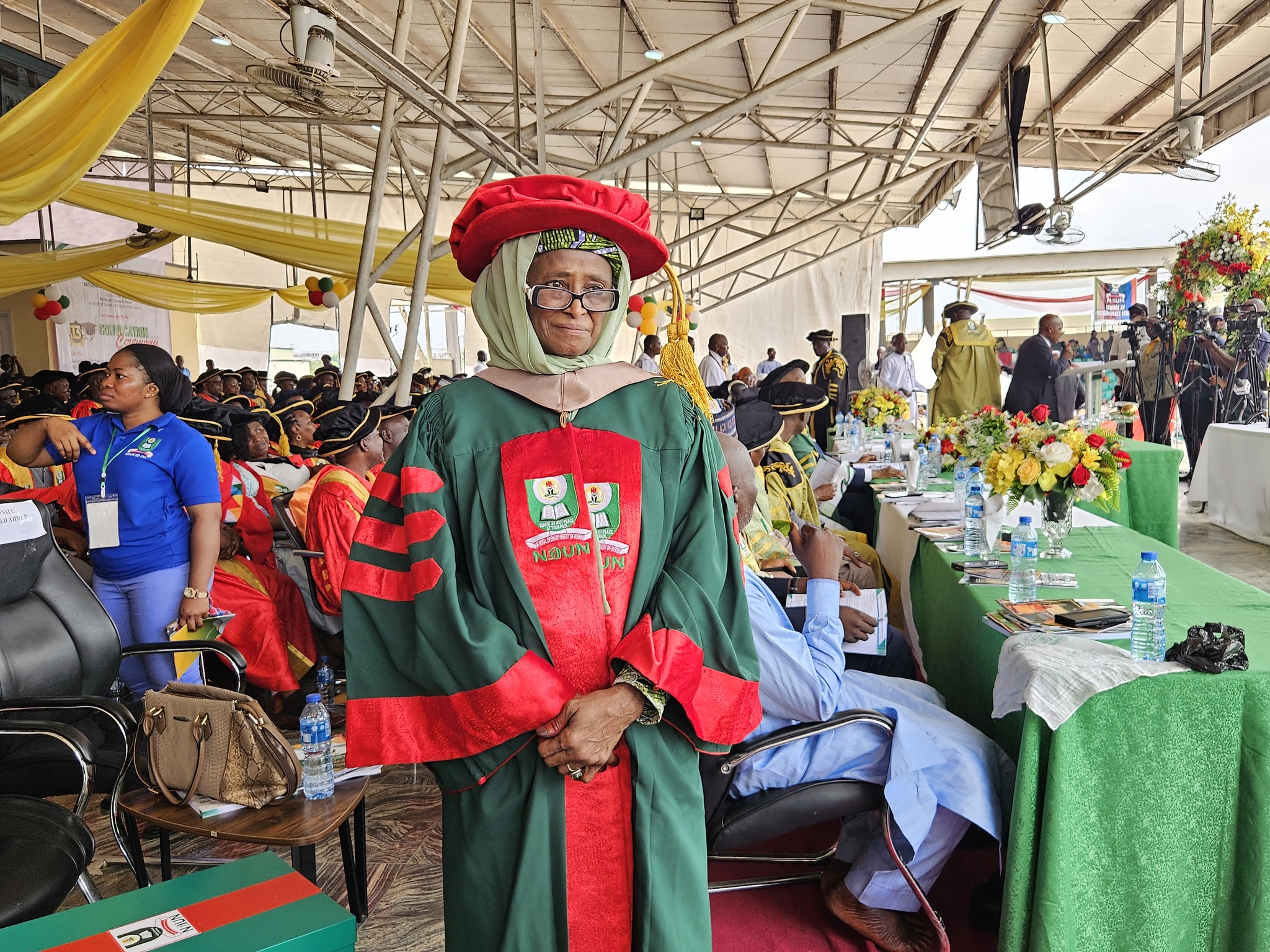
On 13th April 2024, she became the first female Muslim northern Nigerian to be honoured with D.Litt. (Honoris Causa “for the sake of the honour”) doctorate degree from a no less institution than the biggest online university in Africa, the National Open University of Nigeria (NOUN). This was at the 13th Convocation Ceremony of the university held on 13th April 2024 in Abuja, the main headquarters of the university.

In a way, Ms. AbdulWaheed represents a paradox. She is not Hausa or Hausa-Fulani. She is Fulani, pure and simple. She learnt Hausa only outside her family home, in school, but at home, it was Fulfulde all the way. Yet her creative writing has always been in Hausa, with the exception of one book of poetry in English and the recently published collection of short stories titled Sharo. Nothing in Fulfulde, though.

The common historical narrative on literary development in northern Nigeria was that a literary competition to encourage the reading culture among Hausa youth was organized by the Northern Nigerian Publishing Corporation (NNPC) in 1978. One of the entries, which was also one of the winners, was “So Aljannar Duniya” by Hafsatu Abdul Waheed. It was in the Hausa language. However, it would appear, according to Hafsatu herself, that she wrote the novel in 1972, and it was published in 1974.

It was, quite simply, the most radical novel in Hausa literary history. Even “Ƙarshen Alewa Ƙasa” by Bature Gagare (who died in 2002), an unconventional novel, , published in 1982 (as a result of a literary competition organized by the then Federal Department of Culture, Ministry of Social Welfare and Culture) did not come close. Curiously, they contrasted each other. Gagare’s novel is about the lost glory of the ‘original’ Hausa people—the Maguzawa. Hafsatu’s novel is about breaking the Pulaaku—the Fulani code of behaviour. Both Hafsatu and Gagare became spokespersons of their ethnicities.

So Aljannar Duniya is brash, bold, audacious, trenchant, and unapologetic. It is a declaration of war against Pulaaku. It was unarguably the first Fulani feminist tract written in Hausa. Hafsatu’s style and critique of tradition might be compared with those of Bilkisu Salisu Ahmed Funtuwa and Balaraba Ramat Yakubu. However, there are quite a few differences.

Despite its pioneering boldness, So Aljannar Duniya is difficult to read. Perhaps that was because the author started writing it while still in secondary school! Its narrative is often jumbled and non-linear. Understandable. It was written in anger, so words tend to wobble, but the message is clear. This is more so because it is ethnographic. Hafsatu wove a story around her sister, of course, a Fulani, who had every intention of marrying an ‘alien’—an Arab from Libya. So Aljannar Duniya is, therefore, a true story, spiced up by fictional elements to convey a message. As I said before, it is a feminist tract.

Balaraba Rama Yakubu, however, writes in a deeply engaging mature and absorptive style with plenty of hooks. For instance, “Wa Zai Auri Jahila?”, which I consider her best novel, is dark and deeply disturbing narrative of what in contemporary feminist Woke world would be considered an injustice to women, especially young girls in a traditional African society.

Although Novian Whitsitt, who did his PhD on Balaraba’s novels, referred to it as ‘feminist’ I disagreed with him. I labelled her works ‘womanist’, after Alice Walker’s short story, ‘Coming Apart’ (1979). As explained elsewhere, “a womanist is committed to the survival of both males and females and desires a world where men and women can coexist while maintaining their cultural distinctiveness.” This inclusion of men provides women with an opportunity to address gender oppression without directly attacking men (Adamu 2003). Balaraba reflects this in her novels, especially “Alhaki Kwikuyo” (translated by Aliyu Kamal and published by Blaft Books in India). Can’t say much about Bilkisu Funtuwa’s books, though, as I have never read any.

But Hafsatu AbdulWaheed is a feminist—at least as portrayed in So Aljannar Duniya. The plot revolves around a young Fulani lady who wants to marry an ‘alien’ (Arab) from Libya. In real life, Hafsatu’s elder sister. Their parents rejected the idea. The plot of the novel does away with the Fulani Pulaaku and introduces a brash, assertive, loud and anti-establishment heroine, Boɗaɗo, who, armed with a degree in Pharmaceutical Sciences, comes back to her village to set up a drug store (called Chemists in Nigeria, a bit like Walgreens) and introduces her fiancé—all un-lady like behaviours in the Fulani mindset.

Thus, she discards the Fulani munyal (self-control), semteende (modesty) and hakkillo (wisdom)—central components of Pulaaku—and declares, openly, her love for an “alien” in her auntie’s presence! The opening dialogue from the novel sets the pace in which Boɗaɗo, speaking, informs her aunt:

(Hau) Aure! Inna ni fa na gaya muku ba zan auri kowa ba sai wanda nake so. Kun san zamani ya sake.

(trans) Marriage! Aunty, I have told you that I will only marry the man I love. You know times have changed.

Such direct confrontation in a Fulani village was uncommon and reflects the author’s autobiographical rebellion against tradition. Her aunt—delegated to mediate in these matters on behalf of the protagonist’s mother—is shocked. As she lamented:

(Hau) Mhm! Wannan zamani, Allah Ya saukaka. Yarinya ki zauna kina zancen auren ki, sai ka ce hirar nono da mai. Don haka fa ba ma son sa ɗiyar mu makarantar boko. In kun yi karatu sai ku ce kun fi kowa. Me kuka ɗauke mu ne?

(trans) Mhm. These are difficult times. May Allah save us. Listen to you talk about your marriage as if you are talking about milk and butter. That is why we don’t want to send our daughters to school. After you finish, you feel superior to everyone. What do you take us for?

A battleground and the rules of engagement have been established—female empowerment through education—and Hafsatu chose the most conservative arena: a Fulani settlement, considered generally more trenchant about Pulaaku than urban Fulani. Additionally, the novel’s subtext of rebellion against arranged and forced marriage underscores Hafsatu’s acerbic demand for personal choice in marital affairs by women. It was a template for rebellion.

Another contrast between Hafsatu’s So Aljannar Duniya and Balaraba’s Wai Zai Auri Jahila? is in the choice of careers. Hafsatu chose Pharmacy for her protagonist, while Balaraba made her own a nurse. Pharmacy was a profession in the period, and by making her character a pharmacist, she thrusts Boɗaɗo into a man’s world to compete equally with men. Balaraba, on the other hand, by making her character a nurse instead of a doctor, maintains the womanist ethos of an achieving woman in a male-dominated society, fitting in with career stereotypes of women in caring professions.

The success of So Aljannar Duniya sent a message to the budding Hausa literati to pick up their pens and set to work—thus spawning a genre which t revolutionized the Hausa literary landscape in contemporary times.. Furthermore, the combined effects of the harsh economic realities of the 1980s (the decade of military coups and counter-coups in Nigeria) ensured reduced parental responsibility in the martial affairs of their children. Therefore, fantasy, media parenting, especially Hindi films, anti-authority and a loud, persistent message from bursting testosterones in a conservative society that sees strict gender separation combined to present Hausa youth with soyayya (romance) as the central template for creative fiction. It was a safety valve to repressed sexuality.

Hafsatu’s radicalism, however, did not end at rebellion against arranged or forced marriage for women. At one stage she declared to run for the office of the Governor of Zamfara State. This was provoked by a statement by the sitting governor that there were no educated women in the state. To prove him wrong, she decided to campaign for his chair! She even made posters, but was asked by her father to stop. At least, she had made a statement. Furthermore, her real-life echoes Boɗaɗo’s—she was also married to an ‘alien’ from the Middle East (a Syrian). Incidentally, it was a marriage that took her to Gusau, the Zamfara State capital, and I had the pleasure of meeting her late husband, Malam Ahmad Abdul Waheed, during a British Council “Intensities in Ten Cities” Islamophobia tour on 9th July 2003. Both Hafsatu and her husband were born and raised in Kano. It was his career that took them to Gusau.

In literary circles, she also has a voice. For one, she used to assiduously attend every single literary convention anywhere it was held. As part of ANA Kano activities, we were together in Niamey and Maraɗi in Niger Republic at various times to attend international conventions of Hausa writers. She never tired of attending and actively participating. Wonderful enough, she often went with her children and grandchildren, showing them the way. It is little wonder that some of these children became well-celebrated in their chosen professions—for they had a strong role model at home. A good example is her eldest daughter, Kadaria Ahmad, the award-winning journalist who owns and runs the NOW FM radio station in Lagos.

Thus, the recognition of the pioneering efforts of Hafsatu AbdulWaheed by the National Open University of Nigeria (NOUN) on 13th April 2024 during the university’s 13th Convocation was a salute not only to the resilience of feminist women but also to all Hausa language writers of both genders. As far as I know, she was the first female Muslim Fulani (or Hausa) writer to be so honoured by any university in Nigeria. She has, therefore, entered the history books. She is truly a woman of substance.

References.

Adamu, Abdalla Uba. “Parallel Worlds: Reflective Womanism in Balaraba Ramat Yakubu’s Ina Son Sa Haka.” JENDA: A Journal of Culture and African Women Studies, no. 4 (2003). https://bit.ly/3Q2gNlY.

Whitsitt, Novian. Kano Market Literature and the Construction of Hausa-Islamic Feminism A Contrast in Feminist Perspectives of Balaraba Ramat Yakubu and Bilkisu Ahmed Funtuwa. PhD dissertation, University of Wisconsin, 2000.

From Ruga to Artificial Intelligence: A mother’s lexicon of love

By Prof. Abdalla Uba Adamu

You might have remembered the post. March 8, 2023, to be precise. It was on International Women’s Day in 2023. It was about Sadiq, the fura hawker, and his wonderful mother, the fura seller at Bayero University, Kano. It was about love, faith, and sacrifice.

A simple Fulani woman sells fura so nourishing, fresh, and delicious that she could be given a slot in any restaurant at Harvard University—not the tree shade she occupies—and is often harassed at Bayero University. She does not sell fura because she needs the money. She sells it because she does not want to be idle. She is wealthy. Very wealthy. No mansions with a sea of workers at her beck and call. No fancy cars. No holiday retreats to the Seychelles. Simple meals. No crabs, oysters, lobsters, or caviar. No shopping in Paris and Dubai. Just cows. Many cows. Her lifeblood. She was willing to sell some of the cows to pay for her son’s education because, as a mother, she believed in him. She loves him and was willing to sacrifice her heritage—the cows—to ensure a sustainable future for him.

The son, Sadiq, has his head in the sky. He wants to fly, to be a pilot. The cost of the training at the Nigerian College of Aviation Technology, Zaria, in northern Nigeria, was more than ₦7 million. “No problem,” says the woman who lives in a hut with no electricity and draws her water from a well in a land that is not hers. “I can sell my cows for you to become a pilot.”

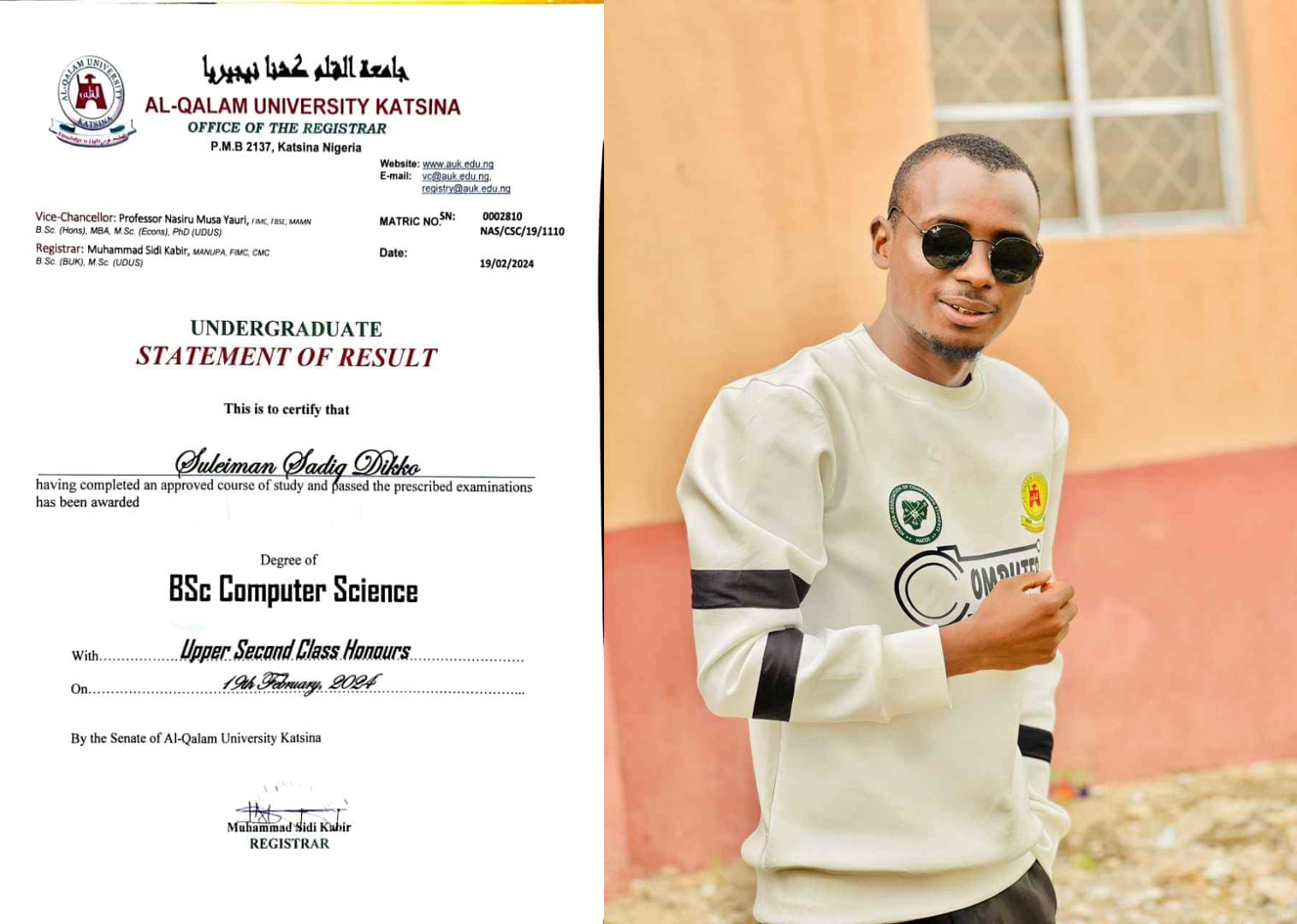
Unfortunately, Sadiq could not make the student pilot selection tests. Undeterred, she paid for his next choice—Computer Science at Al-Qalam University, Katsina, also in northern Nigeria. What made her a heroine was her sheer determination to see that he was educated. Human resource development at its most anthropological best—more sophisticated than the theories of Robert Owen, Charles Babbage, and Frederick Winslow Taylor, the credited proponents of the discipline. In this single but simple act of sacrifice, we see the power of love and the power of a woman who is not educated in any fancy school but the massive school of life. Yet, she knows, as a mother, the value of human capital development and is willing to sacrifice what she has to actualize it for her child.

At Al-Qalam, Sadiq was no slouch. His mother had sold a few cows to pay for his school fees for four years and also gave him spending money. He invested it in a fura business in Katsina—no doubt bringing Katsinawa the best fura they would ever taste from Kano! He did so to sustain himself throughout his college years without burdening his mother for upkeep money. He even employed some fellow students as his distributors. Extremely outspoken, he was the perfect candidate for the presidency of the Computer Science Students Association of the college, to which he ascended after being the Vice-President II of the association.

Back in Kano, he became a youth activist. He encouraged the formation of the Kano State Nomadic Fulɓe Youth Association in 2018. This was a coalition of all Fulani youth who had some form of education, especially higher education, and could therefore demand integration into society and better attention from politicians for their kraals. Ironically, considering that the power, hegemony, and control are actually in the hands of the Fulani—and have been so since 1807. This created a linguistic anomaly for the Fulɓe youth: those in power claim to be Fulɓe and although they have voices, they care less about Fulani causes. Those who speak Fulfulde and care more about Fulani causes are voiceless in the larger scheme of things.

Sadiq’s Fulɓe Youth felt the only way to gain attention to the plight of the Fulani was to align themselves with a political party. They chose a party not in power, the New Nigeria Peoples Party (NNPP), because they felt they would be listened to. Ironically, the All Progressives Congress (APC), which was in power, would have worked for them because of the “ability to speak Fulfulde” factor, since the then Governor of Kano, Dr. Abdullahi Umar Ganduje, is a genuine “I can speak Fulfulde” Fulɓe. But they chose the NNPP and its gubernatorial candidate, Eng. Abba Kabir Yusuf. They believed in him and devoted themselves to his cause.

During Engineer Abba Yusuf’s campaigns in 2019, a lyricist named Tijjani Gandu composed a political song for him titled, “Abba Gida Gida Abba”/Abba in every home. This actually became more or less Abba Kabir Yusuf’s nickname. With a catchy chorus and hook, it was perhaps the most iconic political song in Kano’s popular culture, even eclipsing “Kwankwaso Dawo Dawo”/ (Kwankwaso re-contest). Someone even had White kids somewhere in the US or Europe dancing to the chorus on social media!

Sadiq and Fulɓe Youth came up with a brilliant plan: map out all the Fulani kraals (Ruga) in Kano using their GPS coordinates in Google Maps to obtain data for easy access to the Fulani kraals (which he pluralizes as ‘Rugage’). Using satellite mapping, it would be relatively easy to determine access, population, and the level of development in each Ruga, which would be effective for campaigning, as well as for other uses—health and vaccination campaigns, schooling drives, etc. Next, the Fulɓe Youth under Sadiq came up with a slogan to campaign for Abba Kabir Yusuf: “Abba Ruga Ruga Abba,” deliberately rhyming with Abba Gida Gida Abba. They were even able to negotiate access to the man himself, i.e., Abba Kabir Yusuf. But it all came to naught.

Sadiq continued his studies, finishing in the autumn of 2023. Everyone knew he was excellent, and when Al-Qalam held a convocation ceremony last year for only First Class students, everyone who knew Sadiq expected him to be among those honored. Alas, it was not to be. However, Sadiq scored a Second Class Upper in Computer Science—perhaps a first for a fura hawker who lives in a kraal.

With such brilliant results in computer science and a committed social philosophy of uniting all Fulani youth in all kraals on a peace mission, it remains to be seen whether his mother’s sacrifice has been in vain. Being the son of a nobody, he lacks access to ‘big people’ who will give him a job. But Sadiq is not one to give up easily. His mind is too sharp, too restless to trudge from one office to another with a large brown envelope carrying his CV and looking for a job in futility.

I won’t be surprised if he uses these attributes to design an Artificial Intelligence routine that would perfect milk production—thus giving us better fura. Who knows? Harvard University might even invite him to open the first AI Restaurant in the world. Before then, as he faces his NYSC in May 2024, it would be a shame to waste his organizational skills. SA on Fulbe Youth? Why not? After all, the kraals also need development and attention—and not only during elections either.

Sadiq is what he is now—a unique, proud, hardworking, and brilliant Fulɓe youth advocate—because of his mother’s love and dedication. An ordinary mother, not the daughter of a “big man” or “important people,” just ordinary, but with an extraordinary commitment to love and sacrifice—and without being a social parasite.

Allah’s blessings for eternity to all mothers of the world on this day of re-embrace of Sadiq’s mother and her lexicon of love.

Prof. Abdalla Uba Adamu can be contacted via auadamu@yahoo.com.

“Mine is bigger than yours”, professorial count, that is!

By Prof. Abdalla Uba Adamu

The recent Facebook ribbing about the number of professors from states and localities in various northern cities with universities reminds me of the male adolescent macho posturing of “mine is bigger/thicker than yours” game played behind classrooms! I am even mentioned as a trophy — “yes but WE are the ones with a double professor!” referring to my being from Bayero University, Kano (BUK), in Kano State (Daneji in Kano Municipal).

The whole thing was ignited by an infographic with its origin in ₦airaland Forum where one Zafsy75 posted the graphic. Right away a fierce debate ensured on the forum with many commentors disputing the figure. Zafsy75 themselves did not provide additional scientific methodology on how they arrived at the figures. Nevertheless, they infographic became viral — and started the prideful ‘mine is bigger than yours’ ribbing.

The infographic was from Statisense which uses Generative Artificial Intelligence to generate its data! A search on its site revealed another graphic of “most professors” in Nigerian universities, in September 2023, with the University of Jos leading with 530 professors. BUK had 434 professors which included 10 women. I can personally count more than 20 women professors in BUK in 2021, not 2023! No methodology was provided as to how the figures for the universities were arrived at.

People should be aware that AI generated data is based on what the engine can find — it does not create the data. Thus, it is actually not possible to accurately determine the number of professors per state or local government even based on the much-quoted NUC Directory of Full Professors, 2021 (link to the publication attached below).

This is because the directory lists professors by DISCIPLINE in order to promote research collaboration and networking amongst Nigerian academics. Also, the Directory was not based on official submissions by various universities, but voluntarily by INDIVIDUALS which was synthesized and summarized by NUC. Additional source for the AI was personal websites where a professor proclaims to come from a particular university.

Thus, not EVERY professor agreed to submit their details to be captured. With this, it therefore becomes very difficult to accurately determine the number of professors from each state, as that was not the focus of the Director (or NUC’s intentions).

You can only get the official number of professors from individual universities. As of October 2023, BUK had 381 professors with the largest category being in Medical Sciences. All the professors were, however, not listed by their States or Local Governments, but their DEPARTMENTS or specializations.

So, I can’t see how the game of ‘mine is bigger than yours’ started. I believe; however, it was started by the infographic floating around showing the number of professors per UNIVERSITIES in the various states. The graphic was not providing the number of professors per state of origin, but per the universities IN the state. It made it clear by stating it is “by state where the school is located.”

Thus, if you are from Anambra and are a professor in BUK, this infographic will capture you as being from a university in Kano, but you will not be captured in any university in Anambra. In this way, it does not tell you the number of professors from indigenous to Anambra.

Right away, it is faulty (or fake). As of October 2023, BUK had 381 professors. Last week another 11 were announced bring the total to 392 as of February 2024. So how can Kano have 428 professors in 2022? Granted there are many universities in Kano, but the main prominent ones — Aliko Dangote University of Science and Technology, Yusuf Maitama Sule University — are basically tributaries of BUK. Indeed, most of the others rely on BUK professors as ‘visiting’ to their faculties.

Kaduna State where Ahmadu Bello University is located has at least eight universities — and you want me to believe the entire universities in the State have 62 professors? I am sure Kaduna State University (KASU) alone had either more than or close to that.

While the ribbing was fun while it lasted, at least it wakes us up to the idea of fake data and weaknesses of Generative Artificial intelligence.

As promised, below is the link to the authentic number of professors voluntarily submitted to NUC as of 2021. BTW, yours truly is listed TWICE on page 836. They still pay me single salary, though!

Directory of Full Professors in the Nigerian University System, 2021: https://shorturl.at/yKV34

#2: Kannywood Chronicles – Aminu Hassan Yakasai and Turmin Danya

By Prof. Abdalla Uba Adamu

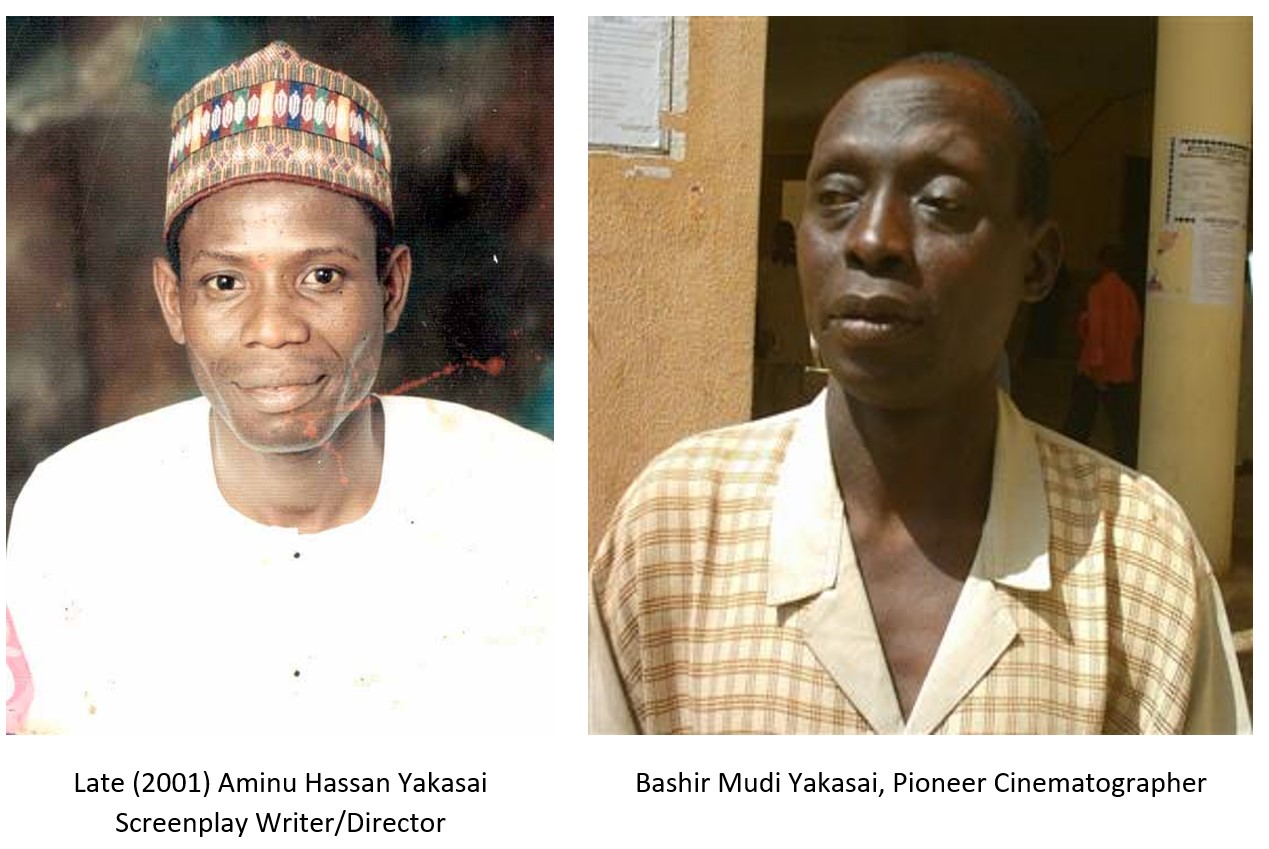
An industry is a system made up of interconnecting parts that synchronise together to create a perfect dynamic and functional entity. However, there is a central creative focus. Thus, while no one can claim to have been the actual originator of commercial Kannywood since many people – and processes contributed to its development – nevertheless, the creative spark that lit the fire of Kannywood was the late novelist Aminu Hassan Yakasai. If one person can be credited with creating the industry, it was him and only him. 

In the late 1970s, the Nigerian film director Ola Balogun directed two successful Yoruba films. The first, “Ajani Ogun”, was co-produced with the actor Ade Love. The second, “Ija Ominira”, starred Ade Love. Hubert Ogunde, a famous Yoruba travelling theatre showman, decided to join the trend. He invited Ola Balogun to direct Aiye, which was hugely successful and led to a follow-up, Jaiyesinmi. 

These Yoruba films found their way to Kano’s bustling “stranger” (or, more appropriately, “guest settlers”) communities of Sabon Gari in the 1980s, where they were shown in cinemas and hotel bars. This attracted the attention of Hausa amateur TV soap opera stars and crew, such as Bashir Mudi Yakasai (cinematographer), Aminu Hassan Yakasai (scriptwriter) and Tijjani Ibrahim (director). Surprisingly, despite the massive popularity of Hausa drama in television houses and government financial muscle, the idea of full-scale commercial production of Hausa drama episodes by the television houses was never considered. Individuals wishing to own certain episodes simply go to the television station and pay the cost of the tape and a duplication fee, and that was it. There was no attempt to commercialise the process on a full scale. 

In the same period, the northern cities of Kano, Kaduna, and Jos benefitted immensely from the massive transfusion of modern media influences caused by not only a liberal society but also the tolerant interaction of diverse cultures and religions in the same public spaces. They were, undoubtedly, the creative hubs of northern Nigerian popular culture. Jos was famous for its vibrant nightclub and music scene. Kaduna also had a rich musical heritage, coupled with a TV culture. Kano was more muted and relied on music and club life inflows to Sabon Gari from other regions. 

However, one aspect of popular culture Kano had that was absent in Kaduna and Jos was prose fiction. While other cities were grooving the night away, residents of Kano were burning the midnight oil. The first published modern Hausa fiction was “So Aljannar Duniya” by Hafsat AbdulWaheed from Kano in 1980`. It opened the floodgates and led to hundreds of novelists creating a whole genre of African indigenous fiction referred to informally as Kano Market Literature. 

Also, at the same time, Kano had many drama groups that enjoyed stage plays that were often improvisational and not based on any script but with a general focus on social responsibility. These drama groups became spawning grounds for those who established the Kannywood film industry. These included Tumbin Giwa Drama Group (Auwalu Isma’ila Marshall, Shu’aibu Yawale, Ibrahim Mandawari, Adamu Muhammad, Ado Abubakar, Jamila Adamu. (Gimbiya Fatima), Hajara Usman, Ɗanlami Alhassan, etc.), Jigon Hausa Drama Club (Khalid Musa, Kamilu Muhammad, Fati Suleiman, Bala Anas Babinlata), Tauraruwa Drama & Modern Film Production (Abdullahi Zakari Fagge, Shehu Hassan Kano, Iliyasu Muhammad, Hajiya Rabi Sufi, Auwalu Ɗangata, Ado Ahmad G/Dabino, Asama’u Jama’are), and Hamdala Drama Wudil ( Its members include Rabilu Musa Ɗanlasan (lbro), Mallam Auwalu Dare, Ishaq Sidi Ishaq, Bappah Yautai, Bappah Ahmad Cinnaka, Haj. Hussaina Gombe (Tsigai), Shua’ibu Ɗanwamzam, Umar Katakore etc.) There were many more, of course, but these were foundational to Kannywood. 

The TV shows from then Radio Television Kaduna were gripping and inspiring to these drama groups. TV show stars that became role models to these Kano drama groups included Ƙasimu Yero, Usman Baba Pategi Samanja, Haruna Ɗanjuma, Harira Kachia, Hajara Ibrahim, Ashiru Bazanga (Sawun Keke) and others. 

Thus, it was that at the time of producing Bakan Gizo in Bagauda Lake Hotel 1983 to 1984 Aminu Hassan Yakasai, Ali “Kallamu” Muhammad Yakasai, Bashir Mudi Yakasai started strategising creating a drama for cinema settings (thus Kannywood was often seen as the creation of a ‘Yakasai Mafia’ as those from Yakasai dominated its creative direction!).

The tentative title of the film they were thinking of shooting was to be called Shigifa. It was a story of four unemployed graduates thinking about setting up a company – a departure from the romantic or comedic focus of then-then-popular TV shows. A script idea was floated, and Aminu Hassan Yakasai was to be the scriptwriter. However, before the idea matured, the group started getting contracts for video coverage of social events, etc. Actually, part of the coverage was also stored as footage, although the film was not eventually made. 

The precise decision to commercialise the Hausa video film, and thus create an industry, was made by Aminu Hassan Yakasai in 1986, with technical support of Bashir Mudi Yakasai, the leading cinematographer in Kano, and Tijjani Ibrahim, a producer with CTV 67. 

Aminu Hassan Yakasai was a member of the Tumbin Giwa Drama Group. He was also a writer and a member of the Raina Kama Writers Association, which spearheaded the development of what became known as Kano Market Literature in the 1980s. Thus, the idea of putting Hausa drama—and extending the concept later—on video films and selling it was a revolutionary insight, simply because no one had thought of it in the northern part of Nigeria. The project was initiated in 1986, and by 1989, a film, Turmin Danya, had been completed. It was released to the market in March 1990—giving birth to the Hausa video film industry. Salisu Galadanci was the producer, director, and cinematographer, while Bashir Mudi Yakasai provided technical advice. 

The moderate acceptance of Turmin Danya in Kano encouraged the Tumbin Giwa drama group to produce another video, Rikicin Duniya in 1991 and Gimbiya Fatima in 1992 — all with resounding success. By now, it was becoming clear to the pioneers that there seemed to be a viable Hausa video film market, and this viability laid the foundation of the fragmented nature of the Hausa video film industry. While organised groups formed to create the drama and film production units, individual members decided to stake out their territories and chart their future. Thus, Adamu Muhammad, the star of Gimbiya Fatima, decided to produce his own video film, independent of the Tumbin Giwa group in 1994. The video film was Kwabon Masoyi, based on his novel of the same name, and outlined the roadmap for the future of the Hausa video film. At the same time, it sounded the death knell of the drama groups. This was because Aminu Hassan Yakasai, who created the very concept of marketing Hausa video films—and thus created an industry—broke away from Tumbin Giwa and formed Nagarta Motion Pictures. Others followed suit.

Other organised drama groups in Kano did not fare too well either. For instance, Jigon Hausa, which released a genre-forming Munkar in 1995, broke up with the star of the video film, Bala Anas Babinlata, forming an independent Mazari Film Mirage production company (Salma Salma Duduf). Similarly, Ado Ahmad Gidan Dabino broke away from Tauraruwa Drama and Modern Films Production (which produced In Da So Da Ƙauna) and formed Gidan Dabino Video Production (Cinnaka, Mukhtar, Kowa Da Ranarsa). While Garun Malam Video Club produced Bakandamiyar Rikicin Duniya, written by Ɗan Azumi Baba, after the video film was released, Baba left the group and established RK Studios (Badaƙala). 

From field studies and interviews with the producers in Kano, most of these break-ups were not based on creative differences but on financial disagreements or personality clashes within the groups. The number of officially registered “film production” companies in Kano alone between 1995 and 2000 was more than 120. There were many others whose “studio heads” did not submit themselves to any form of registration and simply sprang into action whenever a contract to make a film was made available. 

Interestingly, Adamu Muhammad of Kwabon Masoyi Productions produced the first Hausa video film entirely in English. It was “House Boy”. Although it was an innovative experiment by a Hausa video filmmaker to enter into the English language video genre, it was a commercial disaster. Hausa audience refused to buy it because it seemed too much like a “Nigerian film”, associating it with southern Nigerian video films. When the producer took it to Onitsha—the main marketing centre for Nigerian films in the south-east part of the country—to sell to the Igbo marketers, they rebuffed him, indicating their surprise that a Hausa video producer could command enough English even to produce a video film in the language. Further, the video had no known “Nigerian film” actors and, therefore, was unacceptable to them. Thus, the Hausa audience rejected it because it looked too much like a “Nigerian film”, while non-Hausa left it because it used “unknown” Hausa actors, so it must be a Hausa film, even though the dialogue was in English!

Tragically, Aminu Hassan Yakasai died in an automobile accident on Saturday, June 16, 2001, on his way to Katsina to participate in a film, “Arziki da Tashin Hankali”.

The Three Musketeers and the Last of the Mohicans

By Prof. Abdalla Uba Adamu

It is not every day that a series of coincidental events converge. Like the passage of Haley’s Comet, these events happen only once in one’s lifetime. I am eternally grateful to Allah (SWT) for enabling me to witness one of these coincidental events. 

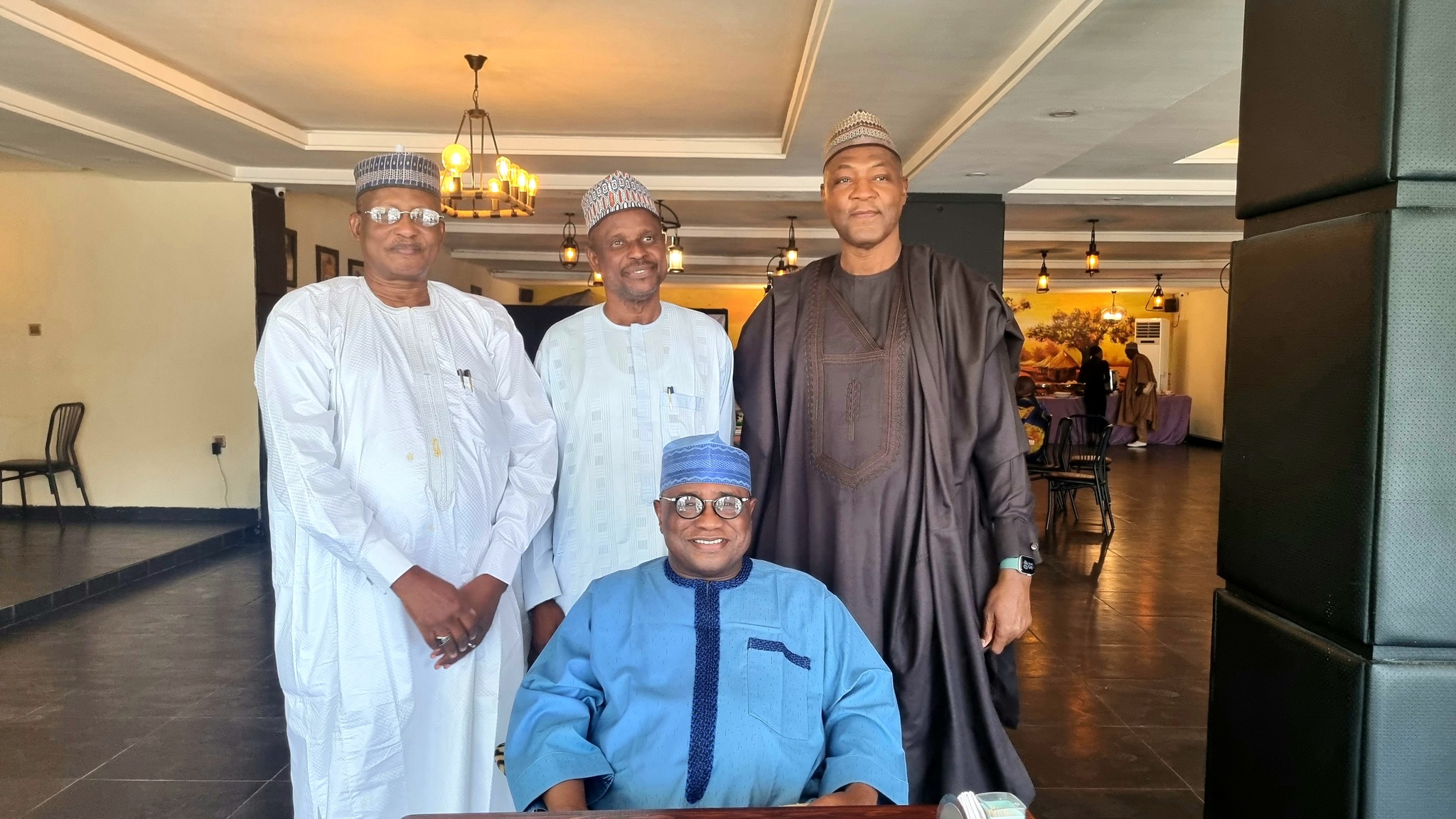
While still in active service in the university, where I have been for the last 43 years, I feel fulfilled that three of my students who became my colleagues and friends in the Department of Education have now become Vice-Chancellors in the same period within three years of each other. These are Prof. Sagir Adamu Abbas (VC Bayero University Kano, 2020), Prof. Abdulrashid Garba (VC, Khalifa Isyaku Rabi’u University Kano, 2023) and the most recent, Prof. Muhammad Ibrahim Yakasai (VC Sule Lamido University, Kafin Hausa, Jigawa State, 2023). 

During their career development, I nicknamed them “The Three Musketeers” because of their closeness to each other, coupled with the almost military approach they adopted to their career. They started their doctoral studies at the same time, finished at the same time, rose and became professors at the same time! Each was highly focused with a target in mind. Each has proven his mettle scholastically – with each spending extended periods as a Visiting Professor in foreign universities. The research area of each of them was truly a contribution to knowledge in the discipline. 

The term I chose to describe them is based on characters in a novel by Alexandre Dumas in 1844 called “The Three Musketeers”, which describes the adventures of three-foot soldiers who were close pals. I consider myself part of them because they are individually my friends. And these three Vice-Chancellors are really close, not just as professional colleagues but their families are also close. 

Of course, besides myself, they had other tutors in the Faculty of Education (Bayero University Kano). Still, I am the only one remaining out of all those who tutored them since all the others have retired. I am, therefore, the Last of the Mohicans (another literary reference, this time to James F. Cooper, 1826) and had the unique opportunity of seeing his career convergence in December 2023 when Prof. Muhammad Ibrahim Yakasai was appointed the Vice-Chancellor of the Sule Lamido University, Kafin Hausa, Jigawa State. 

It is a rare opportunity to see a celebration of such success, humility and friendship in each of them. Allah Ya taya su riƙo, amin.

Rarara: Loyalty for sale

By Bilyamin Abdulmumin

When the former president Muhammadu Buhari’s praise singer Dauda Adamu Abdullahi Kahutu (Rarara), held a media conference some time ago, he stirred up the hornet’s nest. A press conference that initially appeared to lament about being sidelined in the current government ‘that they work hard to enthrone’ took an unexpected turn. Rarara would veer off the course to make damning allegations about the administration of his former boss. 

One of these damages, which sent shockwaves in social media, was that President Buhari did not leave the office until he brought every part of the country to a grinding halt, stating, ‘sai da ya yi dama-dama da kasar nan’. A journalist immediately posed the question that many Nigerians would be wondering: You were in the administration for eight years but haven’t raised a finger until now. Why? Rarara’s response was typical; he claimed he had been hopeful that something positive would happen, so he remained aloof during the eight-year tenure. 

However, sceptics, who don’t take things at face value, could argue that the president had an eight-year mandate. Within those years, how long would have been enough time for Rarara to raise the alarm? This was not to mention the apparent romance Rarara had had with the government during those years. This reminds me of one scandal that occurred during the Goodluck Ebele Jonathan (GEJ) government, and upon the pressure from the public, GEJ appeared determined to leave no stone unturned, so he gave two two-week ultimatum to the committee he set up to finish the investigation to bring the culprit to book.

However, to the most awe and shock, the person indicted for corruption would join the then-presidential foreign tour immediately after the order. A typical case of saying something, but body language says another. When considering the complete picture of the scenarios, the questionable timing and an unconvincing response led almost everyone to dismiss Rarara’s claims with a wave of the hand.

Rarara also launched another salvo, asserting that the 100 days of Bola Ahmed Tinubu were better than the entire eight years of Muhammadu Buhari. While the general view is that Buhari didn’t meet the messianic expectations set for him, drawing a parallel between eight years and 100 days for two different governments is like judging a sprinter’s performance in the first few meters of a marathon. For Rarara to make this shallow comparison, he must be among the Nigerians who thought 100 days was enough for the government to make substantial development. Ever since the United States president, Franklin D. Roosevelt, coined “first 100 days”, the gesture kept going wild; Nigerians have since imported and made it a ritual.

Because the mainstream media has amplified it and become embraced by the public, the newly elected Nigerian officials have become desperate to show that they could lift Zuma rock in the first 100 days in office. Assuming the new government has no serious court litigations to contend with, and the previous administration has little influence on their government, when did the busybody officials finish digesting the thousands of pages of the transition document handed over to them to decide on the administration trajectory? It is even the previous government budget that is already running. When they started to make their own, when were the projects conceived and implemented and matured for the public’s admiration? The speed at which a project is untimely executed to impress the public would go down the heel with double the speed.

In another arsenal that Rarara unleashed, he claimed to have contributed more to Buhari’s success than Buhari did himself. Following the historic dethronement of the incumbent in 2015, people pondered on the key figures that played the most significant role in paving the way for this landmark event: Rarara, President Buhari, and the Card Reader. Including Rarara in this list is a testament to his significant contribution to President Buhari’s success. However, that is not the complete story. All successful people have a tale to share; one crucial factor that defines them is consistency. They persistently push forward until circumstances align for success. So, in that moment of triumph, who rightfully claims the bragging rights?

Two theories were put forward to explain Rarara’s controversial media conference. One theory suggested that Rarara was acting based on the consent of the current administration, an indirect way of informing the public about the status quo of the country they inherited. Masses were already a block of ice waiting for an opportunity to rupture, no thanks to the ever-increasing prices of goods and services. This gave the ruling APC a conundrum: Should they give themselves excuses by condemning the previous administrations, or should they avoid self-sabotage and keep quiet? Therefore, Rarara, lacking a political appointment but commanding a Northern audience, became a strategic mouthpiece. This theory is plausible enough because, beyond the surface, the government could employ several manoeuvres to shift the public’s focus during hard times to avoid citizens’ wrath. 

The second theory shared by many, including Prof. Abdallah Uba Adamu, was that Rarara is a typical gold digger; his loyalty is not through thin and thick. He has consistently known to forsake one boss at a time of scarceness and identify with another where the abundance is emerging. From praise songs to invective ones; from Saraki Sai Allah for Shekarau to Malam yayi rawa da alkyabba, from dawa ta bare for Kwankwaso to Tsula tsilla tsilla, from uban Abba for Ganduje to hankaka.  But despite that, the nation was surprised to wake up with Rarara’s latest bombshell.  Because Rarara seems to have gone aboard when it comes to Buhari and his government, he goes all out against the critics of Buhari not only in his songs but also in several interviews he offered. 

As Rarara now courts new relationships with incumbents like Nasir Yusuf Gawuna, Dikko Umar Radda, or Bola Ahmed Tinubu, caution is advised. His track record of shifting loyalty raises questions about the depth of his commitment. These figures and their supporters should be wary of potential shifts and assess the sincerity of the newfound alliances.

Bilyamin Abdulmumin wrote via bilal4riid13@gmail.com.

Lost Heritage Series: Furakenstein Monster and the Rufaidahization of Tradition

By Prof. Abdalla Uba Adamu

Birnin Kudu. The 1960s. An incredibly wonderful town. Still a wonderful town! Even more, wonderful, friendly people. So far away from Kano that a whole limerick was composed to warn of its distance ‘Birnin Kudu da nisa take / ɗa ya ɓata bare jika /.

For me, the town evokes memories of wonderful summer months spent there in my auntie’s house in ‘Gangare’ quarters, literally, a sloppy part of the town located in a depression. Years later, they filled the depression on the main road, making it easier for motorists to travel through the town easily. The mountain range has a wonderful greenback during the rainy season. The range stretches as far as the eyes can see, providing a wonderful wallpaper for the students in the secondary school (BKSS) at the foot of the mountain.

Memories of her earthen water storage pot (randa) with jema-scented grass floating in to give the water a cool, pleasant scented taste. The mere presence of the jema grass also scented the room. Then there is the river, about two kilometres away from her house. More like a brook than a river, the clear water flowing over the underlying rock bed was a wonderful sight for a city boy. I used to spend hours just watching the water bubbling gently under the bridge towards an unknown destination and trying to read my African Film (Lance Spearman) pictorial novels

And the rocks that littered the town – dark, broody, holding centuries of secrets. Massive rocks – you can see them from the atrium of her house. It became a pleasure to sleep in the open atrium, the night sky framed with those slabs. The rock paintings enhanced the appeal of the town discovered a decade earlier, in the 1950s. Conferring on the town an ancient status – and they had evidence of a 2,000-year human artistic activity.

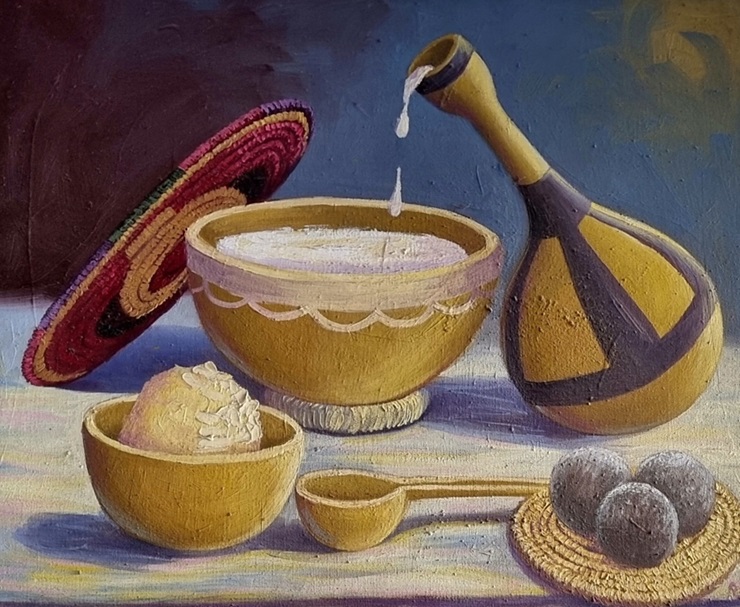
However, the best memory was the kindirmo (yoghourt) market, right by the roadside near the entrance to the market. Sold by the stereotypical Fulani milkmaids. Kindirmo is so thick that it breaks up like ice floes on a frozen river when you hit the skin film on top of the large calabash holding it. Kindirmo is so sweet that it harks back at an ancestral memory of existence. Pure. Natural.

My old aunt was an artist and adept at churning up the thick kindirmo with equally massive balls of fura. Using a ludayi (ladle) carved from a gourd plant, she was adept at blending the fura right into the kindirmo floes in a calabash. The end product was a supremely nourishing, rich, tasty meal of classic fura – containing all the ingredients needed to nourish the body. Absolutely no sugar is needed or even desired. As you slurp it, you are often lucky to come across an unblended fura – gaya. Taken in a calabash container with ludayi. The ecstasy can only be imagined.

Sold with the kindirmo was fresh butter. Aunt used to fry the butter into a ghee. Pour a spoonful into any meal – ecstasy reloaded! Evoked Hassan Wayam’s verse:

Ga fura ta mai nono /

Tuwo na mai nama /

Years passed by, and my childhood memories of Birnin Kudu were kept in storage in my mind. Whenever I passed by the town – my aunt had left the place in mid-1980s when her husband passed on – and crossed the bridge, the memories came flashing by. Of the only friend I made, a Yusha’u, whom I cannot trace.

The daily grind made it difficult to re-create the culinary pleasures of my aunt’s fura. Further, I was too occupied with other things. One day, the urge came back after my return from studies. The question was, where would one get a fura meal? I was told it has now become a franchised business, and right opposite the block of flats I was staying in, Zoo Road, was what I called ‘Fura Café’ run in a kiosk. I dashed up there for a treat.

I was shocked. First, the fura balls were tiny. Like a baby’s fist. And white – not enough millet, obviously. Then, horror of horrors, he dropped three of them into a BLENDER! Would you believe it? A BLENDER! That’s the machine I saw my wife using to grind those ingredients used in making a soup! The worst was yet to come.

Next, he poured WATER into the blender. I could not stand it any longer, and I stopped him, asking for the kindirmo. ‘That was it. I just poured it into the blender,’ he saucily replied. Nothing like kindirmo – more like ‘tsala’ – watered down milk. He pressed buttons. Everything churned and chugged in the blender cup. He stopped, removed the cup, and then poured the lot into a PLASTIC cup – more like moɗa! I was speechless throughout this charade. I decided to see it through.

I asked for the ludayi. He gave me a look that clearly indicated he had never heard the word and passed on a PLASTIC spoon – y’know, the kind that comes with a cheap rice takeaway. I paid, took the cup, and had a sip. It was horrible. Sour. No pleasant flavour (garɗi) of a true kindirmo. Seeing the expression on my face, he offered cubes of sugar. I passed. I handed the entire sludge to him and left. That was the end of my first attempt at rekindling a memory.

Years later, after a five-year absence from Kano, I came back to see modernised Fura Cafes all over – Habib, Yusrah and the new kid on the block – Rufaidah. I was told some, e.g., Habib, had been around for a long time. Knowing I might regret it, decided to relive Birnin Kudu again. So, I popped into Rufaidah for a treat. Better than the horrid kiosk I had been to before. I was attracted by the post-modernist décor. Like the airport in Dubai.

Ahaf! The same Furakenstein monster was there. A blender, watery milk, lots of sugar, tiny chunks of unblended greyish fura, and a ‘dambu’ – moistly powdered fura as a spare. All are neatly packaged in a pretty container. It’s not as bad as what I had before, but it’s still a Furakenstein monster. Seems the Rufaidah Fura Café is the ultimate in the fura business. I am happy for them and impressed by their franchise. But for old codgers like me, even at our Fresh Young Dattijo (FYD) phase? Thanks, but no thanks. I can’t stand the monster – Furakenstein – that is the modern blender-churned fura, no matter how ‘ultra-modern’ their café is. Young people who throng the place, happily taking selfies, have no idea what they have missed in the generational journey.

Fura, as a meal, should be churned in massive chunks of kindirmo floes, the likes of which I am pretty sure can only be found in Birnin Kudu, Bulkachuwa and Danbatta. With huge dark grey fura balls providing high millet content. Spicy fura. Thick floes of yoghurt. No sugar. Not because you are on a health kick, but because it is almost a sacrilege to put sugar in such yoghourt.

So, to celebrate this culinary purity, I am sharing the third painting in my office of classic Fura da Nono and fresh butter lost heritage scene painted on a medium canvas by the brilliant Bashir Abbas of Kano Polytechnic. It reminds me of the idyllic, peaceful and wonderful Birnin Kudu, with its rolling hills, tema grass (still available?), and the now drying river.

Murja Ibrahim Kunya, a TikToker, in the Curriculum? Why the heck not?

By Prof. Abdalla Uba Adamu

I was tagged in a Facebook thread lamenting the perceptions of Hausa popular culture studies by Muhsin Ibrahim on how such a course of action is looked down upon. Indeed, he related personal bad experiences on his encounter with what one might call ‘culture purists’ who do not see anything worthwhile studying about contemporary popular culture. I feel that my response should be enlarged beyond the one I gave in order to reach wider audiences and stimulate debate.

‘So, what exactly is ‘popular culture’? Without being bogged down by technicalities, it is simply what people like. Often referred to also ‘mass culture’. Which differentiates from the ‘elite culture’ preferences of the high order of the society. Elite culture is often favoured because it is seen as cultural representative due to its historical purity. For instance, Shata is an elite culture, while Rarara is a popular culture. Both are singers. But while Shata was a griot whose lyrics represent the historical antecedents of his society and culture, Rarara is a singer whose lyrics represent his pocket.

Thus, everything people do can come under the purview of popular culture – fashion, food, literature, cyberculture, sports, architecture, theatre, drama, films, music, art, you name it, it is popular culture. It is the dominant culture. Some of the universities that teach popular culture in the world include Harvard, Cambridge, MIT, and Stanford, to name some of the top ones, plus thousands of others.

So, why study popular culture? There are many reasons, but one of the most compelling is social awareness. Such a study makes us aware of important social issues. You may not follow Hausa TV show operas, but they illuminate critical tensions within communities, and some reflect the ideals of the political culture; Ado Ahmad Gidan Dabino’s “Kwana Casa’in” is a case in point. Mediated popular culture gives creators opportunities to be creative.

Thus, popular culture can raise awareness about important social issues. TV shows, films, and music often address topics like discrimination, environmental concerns and mental health, sparking discussions and encouraging positive change. For instance, in Kano in early 2023, AA Rufai Bullgates [sic], an individual with mental health issues, became a popular culture media celebrity due to his delusions of grandeur; at one stage, he bought Kano State for ‘gangaliyan’ naira – his coinage. It took social media to make people aware of the extent of his illness – and stop exploiting his guile.

The contempt with which we approach studies of Hausa popular culture – or, let me modify, modern/contemporary culture – allowed a big room for others to be experts on us. In this way, researchers such as Mathias Krings, Carmen McCain, Novian Whitsitt, Brian Larkin and Graham Furniss came to dominate the documentation of Hausa popular culture.

In 2007, I was a visitor to Graham Furniss’s house in London for lunch, and I was blown away by a bookshelf covering a whole wall devoted to his documentation of Hausa romantic (soyayya) fiction containing over one thousand volumes. In Kano, we refused even to acknowledge such novels existed, and at one conference, I heard a University librarian describing them as ‘trash’. Now, if you want to study the earlier novels in the genre, you can only find them in the Library of the School of Oriental and African Studies, courtesy of Graham Furniss – while they are not available at Bayero University, Kano.

Novian Whitsitt, an American, became an expert on the feminist ideologies of Bilkisu Salisu Ahmed Funtuwa and Balaraba Ramat Yakubu – two wonderful and brilliant female writers we ignored. He made a name out of researching their novels – and he had to learn the Hausa language first before he could even read the novels. In Kano, where we speak Hausa, we looked down on these writers. Now, if you want any reference to the works of these ladies, you have to go to Amazon for his books, for he is considered an expert on Hausa feminist writers.

Matthias Krings collected more Hausa cinema tapes than any European researcher and established a vibrant Hausa film reference library at Johannes Gutenberg University, Mainz, Germany, where he is based. In Kano, we refused even to acknowledge that Hausa film is worth studying – until we gave the study a shove and held an international conference on Hausa films in 2003 – the first of its kind in the whole of Africa in studying an indigenous African language film industry. Even the practitioners – filmmakers, producers, directors – don’t see the value in studying their works, believing that such is done to denigrate them rather than a critical analysis of their art. When I established Yahoo! Groups social network in 2001 – long before Facebook – those who entered the group were constantly fighting us for studying their art.

In any event, it was Brian Larkin from New York who even opened up the doors in 1997 with his brilliant paper, “Indian Films and Nigerian Lovers: Media and the Creation of Parallel Modernities.” Soon enough, he became the only reference point on the emergence of modern-mediated Hausa popular culture. I could go on, but you get the point.

As for music, no one cared – until the Talibanic censorship regime from 2007 to 2013 in Kano favourably enabled the separation of Nanaye soundtrack music from Hausa films, creating an independent Hausa Afropop music genre. It also led to the emergence of Rap music among young Hausa lyricists in 2013 – the year of creative freedom for Hausa popular culture. Billy-O produced the biggest hit Hausa Afropop hit of the year with ‘Rainy Season’, producing a brilliant Engausa song accompanied by Maryam Fantimoti.

No attempt was made to internationalise the study of the emergent music genres by anyone. They were all obsessed with studies of the songs of griot acoustic musicians, believing that the Afropop genre was a passing fad. Seeing a room for documentation, I entered into the field. In any event, I was considered a loose cannon in the whole Hausa ‘adabi’ canon. Luckily for me, my foray into Hausa popular culture, or ’Adabin Hausa’ as they often call it (while I prefer ‘Nishaɗin Hululu as the Hausa term for popular culture), was from the prisms of Stuart Hall (Birmingham School) and Frankfurt School critical theory perspectives.

Most importantly, I was analysing popular culture as a mass-mediated communication, rooting myself firmly in communication theories. I was not interested in etymology, morphology, syntax, grammar, pragmatics, stylistics or other branches of the study of literature in my analysis (I profess ignorance of these branches). My focus was that something was happening; it was providing a stethoscope on the social awareness pulse. We need to document it. It was no longer acceptable to let others become experts on us.

Thus, studying or even debating mediated popular culture was definitely frowned upon in northern Nigeria. I believe I am one of the few flying the flag of the discipline – such that it has now crept its way into a university curriculum. Next semester (December 2022/23), I will be teaching M.Sc. Popular Culture in the Department of Mass Communication – one of the very few Departments in the country courageous and bold enough to do so. It’d be a fully interactive class, touching all aspects of what gives us social awareness through mediated popular culture.

Now, to the question of Murja Ibrahim Kunya, a TikTok influencer who speaks at more than 100 km per second. She is important enough to have a Wikipedia page. Dr. Muazu Hassan Muazu was one of the lecturers teaching the EEP 4201 – Venture Creation and Growth course in the School of General and Entrepreneurship Studies (SGES), Bayero University Kano. We once taught the course together. In the first semester (2022/2023) examination, question #5 went like this: “Murja Kunya and Me Wushirya are bloggers who trend by causing scandalous contents on their social media handles, for that reason, they are given advertisement jobs. If they do that, they become – (a) influencer marketers, (b) brand ambassadors, (c) trading agents, (d) marketing managers.” Students are to choose one which they believe was the correct answer.

What drew attention was the focus on the activities of TikTokers – activities not taken seriously, especially those of Murja Kunya, who elicited different reactions from different people. One posting on Facebook even labelled her a mental health patient. And yet, here, a university is asking academic questions about their activities. The entire 70-item question paper included references to various brands – KEDCO, Rufaidah, Salima Cake, A.A. Rano, L&Z Yoghourt, Sahad Stores, MTN, Chicken Republic, and so on. All these are marketing HUBS. Why not TikTokers?

Marketers are looking for audiences – notice how those silly and irritating videos pop up on news sites on your device to attract your attention. Dr. Mu’azu’s inclusion of cyber popular culture in his course – and Chicken Republic, dealing with food, IS part of popular culture – to me, is a brilliant acknowledgement of popular culture and its social relevance. Crazy, drugged, attention-seeker or not, people follow Murja Kunya. That means audiences, that means market – making her a perfect vehicle to advertise products. So, what’s wrong with that? If a woman frying ƙosai by the roadside has the same level of audience attraction, we should also acknowledge her as a marketing potential. That does not mean we endorse what they do – it means we are interested in reaching out to their audiences to buy our products.

Without pop culture, we wouldn’t be able to understand generations, so knowing gives us all a better understanding. Overall, a critical analysis of pop culture and media can help to shed light on the ways in which media interacts with society and can help to promote a more informed and nuanced understanding of media’s role in shaping our world.

Now, print Ale Rufa’is Bullgates gangaliyan note and purchase your village.

Lost Heritage Series: The (w)rite stuff of Hausa Islamic learning

By Prof. Abdalla Uba Adamu

The painting evoked memories. And a sense of scholastic pride. Pride in being part of a process that has generated centuries of excellence. And today is Teacher’s Day, a case for celebration of scholarship from below. Even Google’s Doodle for the day acknowledges this.

Years ago, a painting was brought to me to purchase by an artist, Nura Yusuf – the artist being aware I am an art nut. It was a medium-sized canvas and truly beautiful in a photorealistic way. My Ajamization of Knowledge initiative inspired him. But there was no way I could afford the price he was asking, even if I accepted that it was a fair price. I asked his permission, though, to photograph it with my Sony DSC.

I eventually saw the canvas hanging in the outer waiting room of the Emir of Kano’s main reception chamber. Regretfully, you will only notice it if you swing your head up. I think, eventually, it was relocated.

Looking at the painting, as I said, evoked memories of Makarantar Malam Hussaini, Mandawari. Now renamed Makarantar Malam Buhari and reinvented as an Islamiyya school, along Sabon Titi, in the inner city of Kano. In the school, when Malam Hussaini was the Head, you left early if you reported early; otherwise, you stayed behind after the school closed to continue your studies.

Memories of going from house to house, requesting the good folks to allow us to brush their cooking pots with our bare hands, seeking the fine soot that covers the pots, the result of open-fire cooking with logs of wood. Once you gather enough powdered soot, you then dunk your hand in a bowl of water and wash the soot off. Next, you sprinkle a few crystals of gum Arabic in the water and boil the lot – effectively creating a syrupy ink, the classical ‘tawada’. While burnt wood from home cooking fires can do the job, the elite of Tsangaya inks is ‘zuge’, a burnt desert-date tree. The ink itself is often mixed in various colours, depending on its use in copying the Qur’an. These colours come in handy, especially on the graduating certificate – allo – when it is decorated with zayyana calligraphic designs. A whole industry has existed around this trade for years, especially in the heart of the city of Kano, northern Nigeria.

To make a pen, you need a thick dry stalk – gamba – from the grass used for fencing (zana) homes in rural areas. Using a Tiger razor blade (not Nacet, as it easily breaks), you sharpen the edge of the stalk and fashion a neat nib, creating an alƙalami — pen. There were many styles for the nib, depending on the writing to be done. For some, the alƙalami can be a true calligraphic tool.

Properly armed with a pen and ink, you begin the process of carefully copying the verses of the Qur’an, according to your grade, onto the wooden slate until you copy the right passages. You lean it against the wall for it to dry and await your turn to read what you copied by the teacher. Once properly groomed on the reading, off you go to practice reciting on your own.

Once you feel you are proficient enough, you go back to the teacher, read your passages and once satisfied with your diction, and cadence, you are permitted to go to the next passages – wash off the present one – wanke allo – and copy the next sequence. Due to the dark colour of the ink, the wooden slate often absorbs the ink and darkens the slate. The best way to get rid of it is to use sandpaper to scrape it completely – or, failing that due to cost, rice bran – ɓuntu – which works just as well – to remove traces of the previous ink. If the smudges or shadows of the ink still remain, you can use powdered limestone – farar ƙasa – to overlay the darker stain of the ink, giving a clean white surface on which to write.

Ink is kept in a pot, kurtun tawada, while the pens are kept in a pen holder, ƙorami/alkurdu. For adolescents starting up, it was the wooden slate. For the more advanced students, the writing is done on conqueror bond paper (usually imported from North Africa), but the pen is now a quill from the tail or wing feathers of a bird (chicken, duck, guinea fowl).

And in case one gets thirsty doing all that hard work, you can always quench your thirst from the water stored in your water bottle – jallo, made from a gourd. This type of water bottle enters into the Hausa lexicon with the expression: “ina neman sa kamar ruwa a jallo/desperately looking for him.”

This scholastic tradition is well-preserved in this painting by Nura Yusuf, who incidentally happened to be a brother to the writer and poet Khalid Imam. Being Teachers Day today, I dedicate this painting to all Alarammomi, Gardawa, and Ƙolawa, who are my fellow classmates in every Tsangaya in this country. We pray for the souls of our Malaman Tsangaya, who set us on the right path. Allah Ya jiƙansu da Rahama.

Yusufu Bala Usman – The quintessential historian

By Prof. Abdalla Uba Adamu

I was never lucky enough to come under Yusuf Bala Usman’s tutelage while I was a student at Ahmadu Bello University Zaria, Nigeria, from 1976 to 1979. Being a student in the Faculty of Education, I missed out on having to take lectures in the famous FASS – Faculty of Arts and Social Sciences, undoubtedly, the hotbed of critical theories in the 1970s.

Yusufu Bala Usman, Ibrahim Tahir, Patrick Wilmot, and Mahmoud Tukur enlivened the university with their rhetoric about culture, history, polity and anthropology. My roommate was a History student, so I gleaned a lot from him about the critical theories flying about on the campus. Those years were indeed the intellectual years of ABU. Every subsequent northern radical traces his roots to that era and its critical reflection on Nigerian society.

As M.M. Gwadabe noted in his obituary to Yusufu Bala Usman, published in Africa: Journal of the International African Institute, 2010, 80(1): 165-168.

The contributions of Bala Usman lie not only in the number of papers he has written or the publications he has left for posterity. He spearheaded the establishment of a school of thinking quite distinct from the perception of history that used to be prevalent in Nigeria before the 1970s. Before him, history was generally understood and taught within the paradigm of colonial historiography. The efforts of Bala Usman and some of his colleagues in the department liberated history teaching as they masterminded the establishment and nurturing of the School of African historiography at Ahmadu Bello University, Zaria (ABU).

And in spite of his towering intellectualism, he remained humbled by the very scholarship he served. As Gwadabe further informs us:

“In 1985, the authorities of Ahmadu Bello University, considering Dr Usman’s contribution to knowledge, promoted him to the rank of a Professor. Humble as he was, Dr Usman turned down the promotion on the ground that ‘he was not convinced that he had done enough to be a Professor’. While he was without [a] doubt qualified for the promotion, his action was an attempt to show his displeasure with the way promotions to the rank of professorship were politicized and abused. So, Dr Usman died with the rank of a Reader.”

Now compare this towering inferno of intellectualism with our intellectuals today – who, based on some newspaper and junk journal publications, proudly present themselves as professors – when no one has ever read their works or become impacted by their expected contribution to knowledge.

Yusufu Bala Usman passed away at 60 years old in 2005, relatively still in his prime. His thoughts and ideas, however, live on through the Yusufu Bala Usman Institute in Zaria. To refresh our memories about his fiery and critical writing, the Institute, on 23rd September 2023, released a compendium of his lectures that captured the years of engagement as a leading Nigerian historian, political activist and public intellectual, mainly from 1972 to his death, in 2005. The book, The Historian and Society: Selected Historical Writings of Yusufu Bala Usman, was edited by George Ama Kwanashie and Normal Perchonock. It provides a handy introduction to the thoughts of Yusufu Bala Usman for those who only heard about him. Going through the 12 chapters of the book would convince you that with his death, northern Nigeria has lost a formidable voice in contemporary critical theory.

The book is now available as a physical copy. There is a website for the Institute where you can order the book at 3,500 NGN.