2027 elections

APC cautions Ndume over prediction of Tinubu’s 2027 defeat

By Uzair Adam 

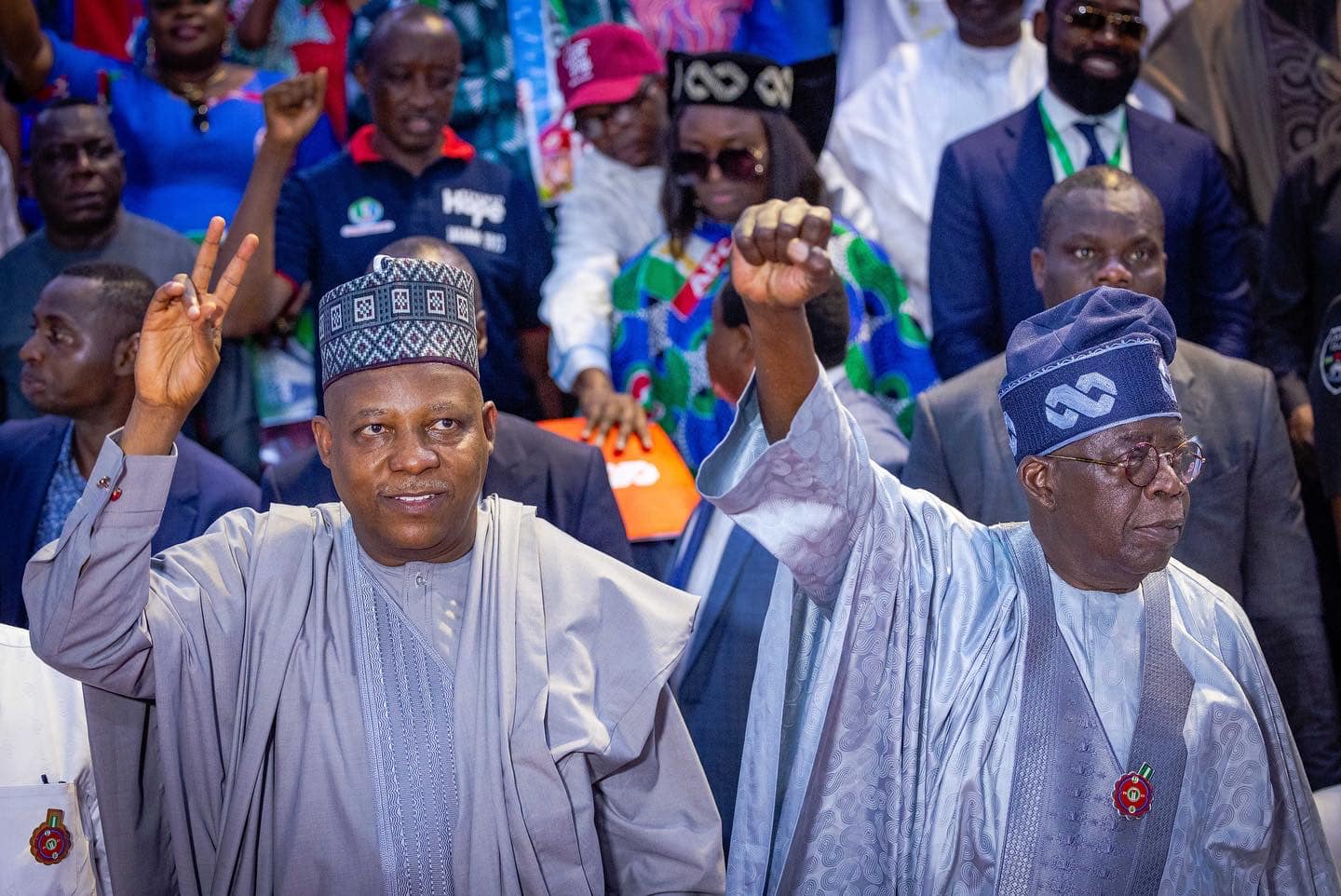
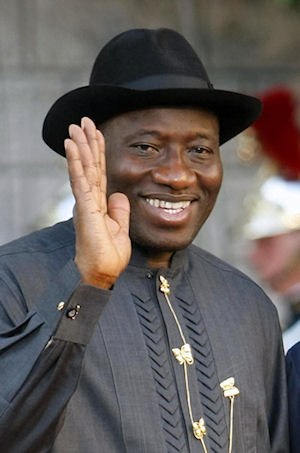
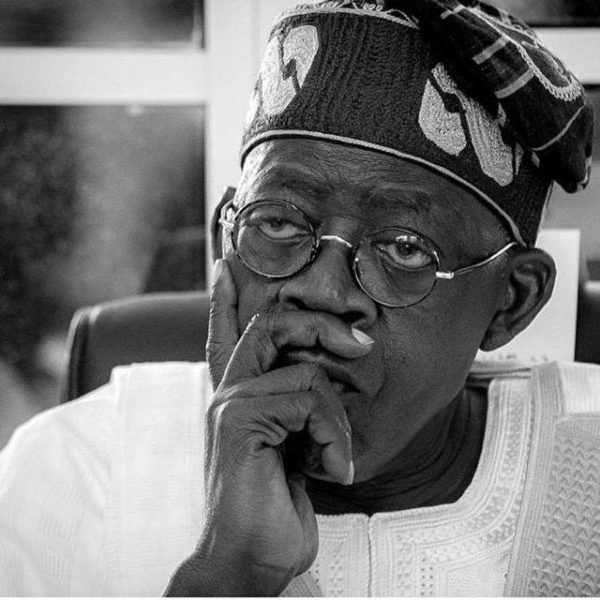
The All Progressives Congress (APC) has issued a strong warning to Senator Ali Ndume following his recent remarks suggesting that President Bola Tinubu could face the same electoral fate as former President Goodluck Jonathan in 2027 if urgent reforms are not implemented.

Senator Ndume, who represents Borno South Senatorial District, made the statement during his appearance on Channels Television’s Politics Today on Sunday.

Responding to his remarks, the APC Director of Publicity, Bala Ibrahim, on Tuesday acknowledged Ndume’s longstanding role within the party but stressed that discipline within the party is of utmost importance.

“Senator Ndume is a senior and respected member of the APC. This is not the first time he has aired his views publicly about how the country is being governed by his party, sometimes expressing dissent or contrary opinions,” Ibrahim said.

He continued, “However, the APC is a party of liberal-minded people. We do not reject diverse ideas, provided they do not violate the party’s constitution.”

Ibrahim reiterated that while the APC upholds internal democracy and freedom of expression, members are expected to operate within the party’s defined limits.

2027: A gale of defections, eroding opposition and quest for power

By Emeka Blaise Okpara

As the 2027 general elections draw closer, the gale of defections that has rocked the People’s Democratic Party in recent times has thrown those in the current ruling All Progressives Congress (APC) into wild ecstasy. Once the largest political party in Africa, the PDP ran out of luck in 2015 when it lost the presidency to the APC. Before then, the party held power for sixteen years. 

In fact, at the peak of the party’s stronghold in power, the national chairman, Chief Vincent Ogbulafor, boasted in 2008 that the PDP would rule Nigeria for another sixty years. Perhaps lost in the effervescent aplomb of public office, he forgot that the future cannot always be assured. His boisterous vituperation was perceived as the height of braggadocio, a trait synonymous with most Nigerian political elites. 

Many were not surprised when, a few years after this declaration was made, the party started witnessing some implosion within its ranks. The fall of the PDP was masterminded by members of the party who formed an alliance with the opposition, which eventually led to its calamitous loss in the 2015 general elections.

Sadly, the party that once reigned monstrously in Africa’s most populous black nation has become a shadow of itself. Unfortunately for the PDP, since they found themselves out of power, they have not been able to play the role of the opposition because it is not in their DNA to do so, unlike the APC, which was birthed through opposition. 

In fact, it would not be out of place to say that the APC has so mastered the art of opposition that it has even devised means of creating its own opposition within and outside the party to keep any real opposition party at bay through controlled opposition.

With the open declaration of support for Tinubu’s presidency from governors of supposed opposition parties, and the defection of notable figures like the current Governor of Delta State, Mr. Sheriff Oborevwori, and Senator Ifeanyi Okowa, the immediate past governor of Delta State and running mate to Alhaji Atiku Abubakar in the 2023 presidential elections, many in the President’s camp have picked up a trumpet to sound it to whoever cares to listen that President Tinubu is a master political strategist.

As far as those in the President’s camp are concerned, the 2027 presidential election is already in the bag, awaiting to be transported home. In their assessment and assertiveness, nobody can defeat the chief political strategist of our time in the forthcoming elections.

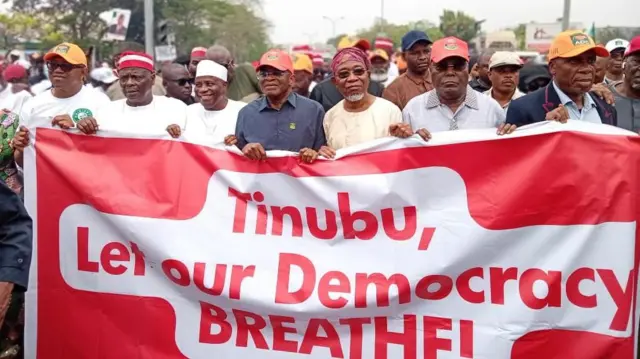
It would be simplistic for anybody to assume that the mere fact that opposition members are trooping into the President’s camp is enough reason to believe that he will have an easy ride into his second term – far from it! If anything, Nigerians should be worried, as such actions only indicate state capture.

Nigerians are well aware of the politics their political office holders play. With the nature of politics played in Nigeria,where stomach infrastructure and personal interest supersede national interest, this junketing shouldn’t be a surprise.  What do you expect from politicians in a land where political parties lack ideologies apart from grabbing power? 

Interestingly, these massive defections should teach Nigerians that there is obviously no difference between the APC and the PDP. These political elites only care about themselves and not the welfare of Nigerians! At a time when Nigerians’ living standards are at an all-time low due to ill-thought-out policies by the Tinubu-led administration, politicians are falling over themselves to dance owambe in the APC. 

To keen observers of the Nigerian political landscape, these mass defections to the APC are nothing short of a defense mechanism employed by the party to give the impression that it is in total control, and for the defectors – whose priority should be governing and serving the people – to have a haven when the chips are down.  Unless on paper, there is no clear evidence that this administration has performed well enough to warrant admiration from the supposed opposition,who now join them in troops.

Moreover, the only reason political elites are decamping is that Nigeria has a flawed electoral process where the votes of the electorate do not count. If the so-called independent electoral umpire, INEC, were living up to its mandate, political office holders would learn to be disciplined and understand that only performance can guarantee their election or re-election.

While those who believe that the President is a political strategist continue to bask in his political mastery, one is compelled to ask why he has not been able to apply his strategy effectively in governance. Politics, according to Plato, should be for the common good. Nigerians would love to see and benefit from President Tinubu’s acclaimed strategy. 

Political strategy should not begin and end with seizing power. Where is his strategy for overhauling the economy since he assumed the presidency? Are Nigerians better off today than they were three years ago? Why hasn’t he employed his renowned strategy to tackle the nation’s insecurity? Or has the security of lives and property ceased to be the government’s primary responsibility? Where is his plan for reliable power, and why must Nigerians pay excessively for unstable electricity? Don’t we need his strategy for quality healthcare facilities? These vital sectors urgently require his strategic attention!

It would be ludicrous for anyone to believe that the future of Nigeria is solely in the hands of the political officeholders. Whether or not anyone wants to believe it, 2027 is still a long time off. Though Nigerian politicians are always thinking of the next elections, and not how to better the lives of their citizens, they must realise that the political dynamics can change anytime. 

General Sani Abacha was almost certain of becoming a civilian president in 1996. He had convinced all the key political actors of the time to endorse his presidency, and everything was working for his good, but fate had other plans. 

The only thing that will guarantee any political office holder a re-election in a constitutional democracy like ours is performance! A second term in office is like a referendum on an individual’s first term. The power to elect still rests with the people and not with politicians, except that we are no longer a democracy. 

If President Bola Ahmed Tinubu is keen on his second term, he should up his game. If he is unaware, someone should inform the President that Nigerians are not having it easy. Instead of focusing on the 2027 reelection in 2025, he should take advantage of the remaining two years of his first term in office to show his work. PR without performance is pure propaganda!  

A working Nigeria benefits all, irrespective of religion or tribe. Nigerians are groaning under his knee-jerk policies, which have plunged a vast majority of citizens into penury. More than ever, this is when Nigerians expect to feel the impact of his much-trumpeted strategy. Nigerians want to see evidence beyond the rhetoric.

Blaise Emeka Okpara, a student at the International Institute of Journalism, writes from Abuja and can be contacted at: emyokparaoo1@gmail.com

2027 elections or surviving in 2025?

By Abdulhakeem Yetu Zakari

Across Nigeria today, the earth is wet with the blood of innocents. Villages are raided without warning, highways have become death traps and communities live in a cloud of constant fear.

Yet, even as the nation bleeds, much of the political class appears more fixated on the 2027 elections than on saving lives in 2025.
Insecurity has become a cruel backdrop to political ambition—a painful reminder that, for many leaders, the pursuit of power still matters more than the safety and survival of the people.

The current administration, led by President Bola Ahmed Tinubu, was elected on a promise to restore security and revive the nation’s economy. But less than two years into his tenure, insurgency, banditry, and economic instability have remained stubbornly persistent.

What was supposed to be an era of renewed hope has turned into a daily struggle for survival for millions of Nigerians. Despite interventions by security agencies, no significant improvement has been recorded.

Families are displaced from their homes. Schools are shut down. Markets are abandoned. Mass graves are dug with horrifying regularity.
States such as Zamfara, Benue, Plateau, and Borno have become synonymous with unending violence.

Our beloved Nigeria—once full of hope and promise—is fast becoming a theatre of tragedy. Critics argue that government efforts have been largely reactive instead of proactive. Intelligence failures are frequent.

Security operations often come late. Many see a dangerous lack of political will to tackle the root causes of insecurity: endemic poverty, chronic youth unemployment, and deep ethnic divisions.
Without addressing these underlying issues, peace will remain a distant dream.

Yet, even as insecurity deepens, political calculations for 2027 are already underway. Massive defections are occurring across political parties as politicians jostle for advantage and consolidation of power.

Instead of emergency summits on security, we see strategic meetings on how to win elections.
The people, who ought to be the priority, are pushed to the margins of political discourse. Their cries are drowned by the noisy drumbeats of political ambition.

Nigerians deserve better. They deserve leaders who value their lives more than the pursuit of office. They deserve leaders who recognize that every life lost is a national tragedy, not just a statistic.

If current trends continue unchecked, by the time the 2027 elections arrive, Nigeria may have paid a price in blood too heavy to bear—and whatever victory is achieved will be a hollow, shameful one.

Nigeria stands today at a crossroads. The choices made in security, governance, and leadership over the next year will determine whether the country finds its way back to the path of stability and progress—or slips even deeper into violence and despair.

As the blood of innocent Nigerians continues to soak the ground, one question cries out louder than any campaign slogan: Who will listen? Who will act? And when?

The time to choose between survival and ambition is now. Nigeria cannot afford to wait until 2027 to find out what path we chose.