
![[OPINION]: The Confidence to Stand, By Maji Bappa Maina](https://dailyrealityng.com/wp-content/uploads/2026/08/IMG-20260827-WA0000-160x160.jpg)
Kano Emir calls on Katsina counterpart for closed-door meeting
By Uzair Adam Imam
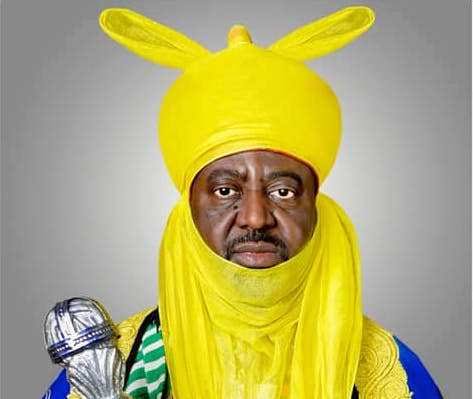
The Emir of Kano, Alhaji Aminu Ado Bayero, has called on his Katsina counterpart, Alh. Abdulmumini Kabir Usman, this afternoon for a closed-door meeting.
Reports disclosed that the meeting, which started at 12:30 pm at the palace of the Katsina Emir, lasted for more than one and half hours.
Although the details of the meeting were not made public at the time of filing this report, there were speculations that it was about the resignation of Wazirin Katsina, Prof. Sani Abubakar Lugga.
Recall that Prof Lugga signed his resignation after responding to the query by the Katsina State Emirate Council over statements he made about the menacing security challenge in the North.
Lugga, in a statement to the Katsina State Emirate Council, argued that he did not speak on the matter on behalf of the emirate council but as a citizen of the country.
2023: Kano South Forum endorses Alhassan Rurum for governor
By Uzair Adam Imam
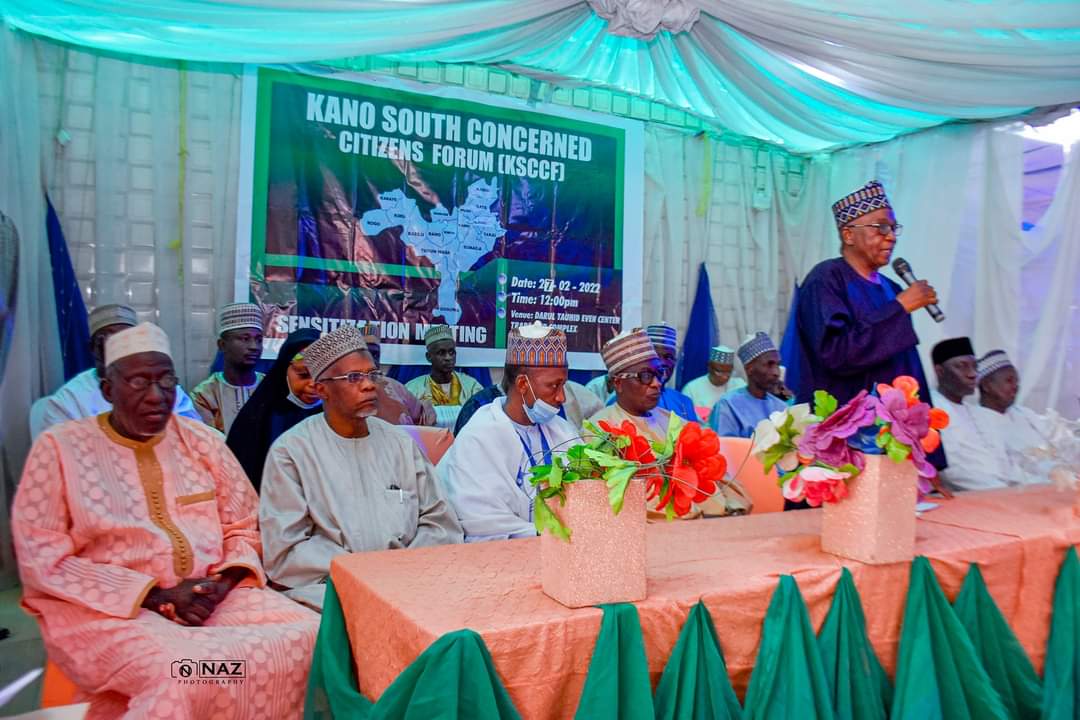
With the 2023 general election approaching, the Kano South Concern Citizens Forum (KSCCF) has called on Alhassan Rurum to succeed Governor Abdullahi Umar Ganduje in the state.
A communiqué issued to journalists on Sunday by the forum immediately after its sitting in Kano disclosed the endorsement.
The chairpersons of the forum, Sen Masud Eljibrin Doguwa, former Senator Kano South and Alhaji Musa Salihu, said Kano South deserves a fair share of the exalted political post.
They also stated that the Kano South has a vital role to play in building Kano State, saying the zone is ready to give its best for the purpose.
Rurum is a former speaker of the Kano State House of Assembly during Ganduje’s first tenure and is currently a member representing Rano, Kibiya and Bunkure Federal constituency and the Chairman House Committee on pension.
The forum had also endorsed Hon. Kawu Sumaila for Senator Kano South and Hon. Alhassan Ado Doguwa to be re-elected as the Member Tudun Wada/Doguwa so that he will have a chance to become the Speaker of the house.
Also lamenting, the from stated that Kano South has not had a chance to produce a governor for the state since 1992, saying, “Kano South has largest local government councils among others in Kano with 16.”
Alh. Musa Salihu said, “Kano north and Kano Central produced governors. In 2023 the governorship position should be zoned to Kano South for it to have a fair share of the exalted political post.
“We, therefore, endorse Alhassan Rurum for governor in 2023 to succeed Governor Abdullahi Umar Ganduje.
“And since we are basing our argument on competency, Hon. Kawu Sumaila should be elected Senator Kano South and Hon. Alhassan Ado Doguwa be re-elected as the Member Tudunwada Doguwa so that he will have a chance to become the Speaker of the house,” he added.
However, the sitting that hosted many important personalities said the forum would soon convene a meeting with the endorsees to tell them their position.

Character and strategy: The nutritive requirements for Nigerian leadership
By Mubarak Shu’aibu Hardawa
Nigeria is on borrowed time at the moment and not just because of an awful leadership it is experiencing, but for having that ‘onerous’ task of finding the marquee leader that would be her saviour. This arduous mission has become inevitable after many years of failed attempts that defied belief, much less explanation.
The leadership problems in Nigeria are structural and systematic, while the crisis at hand is long-lasting and accelerating. The system has become so overwhelmed by anger and frustrations that even the most basic task of any government, which is securing the lives of its citizens, is becoming increasingly impossible.
While good leadership is essential – especially in a country the size of Nigeria- the anticipation, grit, and determination to inspire the citizens to be there, unfortunately, that looks like a distant hope. Despite the arrays of potentials and the abundance of resources, which, if properly harnessed, would transform Nigeria into an unmatchable place, this runs contrary to reality. The result obtained is a satiric giggle. The reason may not be unconnected to the fact that our leadership group lack the requisite qualities to take Nigeria to a greater level of ceaseless progress and prosperity.
To put it simply, Nigeria has the capacity and nous to be as rich as the United Arab Emirates. Still, due to its poor choice of leaders, it is now as filthy as pigsty moving on India in the pecking order of countries with the highest number of citizens living in extreme poverty. This situation is avoidable. How? By not allowing ethnicity, religion, region and party affiliation to cloud our judgment when choosing the right leader.
Thus, by eschewing leaders of a good character, grand ideas and strategy, we are restricted only to a bunch of clowns whose leadership style cannot inspire even a cheap hope in anyone. And what is obtainable from such leaders is a failure that we are now seeing as it has metamorphosed to a greater extent that most Nigerians no longer have faith in the government.
As it is now, it will only take the starriest eyed optimist to make a case for believing in Nigeria at the moment. The dailiness of wanton killings, kidnapping, stealing of public funds, the meteoric rise in poverty index, corruption, and so on say everything about the kind of leaders Nigeria has. With what is obtained today, Nostradamus himself will hesitate to bet that wrecked Nigeria will be great in the near future. (I’m optimistic, though! As optimism oils the wheels of everyday living.) But such a level of demoralisation and crestfallen require a strong antidote whose composition is character and strategy combined to turn things around.
Since the return of democracy in 1999 to date, those touted with the leadership of this country come with asterisks—either of corruption, poor economic management, health challenges, ethnicity, ageing, nepotism, etcetera. Although there were numerous pros with President Yar’adua’s short shelf-life, the hopes were soon taken away by the inevitable finality which laid him and his famous anthem of “7 Points Agenda” to rest. The rest doesn’t have much to write home about.
The point where Nigeria looked set to hit the proper course was in 2015 when President Buhari came with his ‘Change’ mantra, but that ultimately goes to show that he is not the finished article based on his sheer lack of strategy. This imbalance left Nigeria without a vertebra in her spine for a couple of years. Although we had the chance to change the narratives in the 2019 election, with character (Buhari) coming up against strategy (Atiku Abubakar), Nigerians failed to the wisdom in the saying “A leopard never changes its spot” thus persisted with Buhari thinking that things will change in the second term. The majority of Nigerians at that material time held the view that his character, which fetched him the public appraisal of “Mai Gaskiya”, would wave wands and make things magically better. A dogma that is fruitless at best and hazardous at worst.
Some Nigerians even went vigorously beyond delimitation and common sense, arguing that Atiku was plotting to sell Nigeria (NNPC). While some purported that President of the Senate Bukola Saraki, Speaker House of Reps Yakubu Dogara, Senator Dino Melaye and co are the saboteurs of Buhari’s government in the NASS and must therefore be cleared off the deck to allow Buhari an enabling environment. These are publicly sold opinions and thus became very hard to change even when most of the evidence suggests that they should.
This premature decision under predicated conditions of illusionary belief backfired heavily as his weakness for lack of strategy has been laid bare even in the second term, with Nigerians paying the premium price to date.
Today’s Nigeria is unrecognisable from halcyon days, and her golden generation passes. However, some ethos is sacrosanct, such as having the leadership group to look up to, such as Tafawa Balewa, Dr Nmandi Azikiwe and Ahmadu Bello (the Sardauna of Sokoto). Even without the crude oil, they left Nigerians every reason to be optimists. That was a sheer display of character and strategy.
While you would hope to see a similar Nigeria sooner rather than later, the choice to be made should be factored into character and strategy. Nigeria is in a store for hectic decisions to make. However, the cold, hard reality is that Nigeria, like never before, needs a leader whose character will help unify the country through healing, dialogues and not by polarising the recent past.
A strategic leader will find a way to midwife the return of peace to Nigeria, grow and maintain our economy, asphyxiate corruption, fix our education to be able to stand on our own, and cut down the unnecessary government expenditure all the recklessness we are known for. Meanwhile, a character will help that leader follow the right path in seeing through the above tasks. All these sound plausible, right? Theoretically, it does. However, in reality, given the constraints of apparent options, debates were ignited on whether we could find such a man in our political arena (that’s a pulsating debate!).
Nigerians must challenge and X-ray anyone who throws his hat in the ring to avoid falling foul of past mistakes.
Finally, I insist on a person who embodies these invaluable assets (character & strategy). We hope our leaders and Nigeria itself are going to be alright! And reeling out the rationale for pitching tent behind such a person, Prof Zulum of Borno will suffice.
Mubarak Shu’aibu Hardawa wrote from Bauchi State via naisabur83@gmail.com.

Just In: Violence erupts in Ukraine’s second-largest city
By Muhammad Sabiu
As Russian troops entered Ukraine’s second-largest city, Kharkiv, street violence erupted.
According to Synehubov, the head of the Kharkiv Regional State Administration, residents of the eastern city should stay in shelters and avoid travelling as Russian vehicles invaded Kharkiv on Sunday.
He was quoted as saying, “The Russian enemy’s vehicles advanced into the city of Kharkiv. Including the central part of the city. Warning! Do not leave your shelters!” Governor Synyehubov said in a Facebook post Sunday.
“The Armed Forces of Ukraine are eliminating the enemy. Civilians are asked not to go out in the streets.”
For the previous three days, Ukrainian forces have been able to keep Russian troops out of the city, but Synehubov claims that this has suddenly changed, with the battle taking place in the city’s core.

SPECIAL REPORT: How desire for materialism affects marriages and relationships
By Uzair Adam Imam
Materialism is not limited to friendship or brotherhood; marriages and relationships also suffer greatly.
Friendship and brotherhood are gradually losing their true meaning, if not buried at all, because of this sudden shift of behaviour to materialism, The Daily Reality gathered.
The menace led and is still leading to the breakdown of many relationships, including marriages, thereby manifesting itself into a serious problem in society – such as the increase in the number of widows and heartbreaking individuals.
The Daily Reality speaks with some people on this issue.
People like Aisha Mujitaba believe that guys pretend to be rich in life in order to woo girls.
“Nowadays, both loves and marriages are based on materialism; that is how equivocation and deception have chipped in in the process of getting married.
“Guys pretend to be wealthy in order to win girls’ hearts. Consequently, when they are joined in matrimony, the true nature of what the person is will be revealed. This leads to the breakdown of relationships,” Aisha said.
Parents were also accused of encouraging this lingering issue in society, according to Suwaiba Umar.
She said, “Today, parents encourage their children to marry rich people. Marriages nowadays are not for the sake of Allah, the almighty. That is why guys make-believe a big life.”
Frowning at this behavioural change, Juwairiyya Aminu compared marriages in the past and marriages today.
She said, “Marriage in those days was entirely different from the marriage in these days, including the process, lefe (trousseau), ceremonies and whatnot.”
Both girls and their parents find it very exciting to have rich as their husbands or sons-in-law, making it difficult for the poor to get married.
“A poor man finds it very difficult to be loved, much less being married. But when a rich person proposes, without hesitation or any proper investigation on his religion, habit or maturity, he will be accepted,” Sa’adatu Shu’aibu.
Buhari Ahmad posited that guys fear being rejected by the girls, let alone the parents. For this, he said, “Guys make a pretence of big life out of fear of being rejected by girls and their parents.
“That is why guys now rent clothes, hats, shoes, bikes or even cars when visiting their suitors.”
Materialism: What Brings About It?
Dr Muhammad Sulaiman Abdullahi is a lecturer at the Department of Nigerian Languages, Bayero University, Kano. He told this reporter in an interview that many reasons made our society materialistic.
“There are so many reasons which contribute to the moral decadence we are witnessing today in the Hausa society. I can summarily list them as follows:
“1. Deficiency in terms of Islamic education and pursuing more in terms of Western educational life and style.
2. Negative modernity
3. Access to the new media and multi-media stuff which led to increasing in absorbing haram items.
4. Lack of proper orientation, etc.”
The solution to materialistic life
“Having sound Islamic education and fear of Allah, pursuing what is halal in any form of education and social life; and abiding strictly to Islamic teachings are the solution,” Sulaiman added.

Roman Abramovic steps down as Chelsea owner
By Ahmad Deedat Zakari
Roman Abramovic, the owner of Chelsea Football Club, had relinquished control of the club. Skynews reported this development on Saturday, February 26.
“During my nearly 20-year ownership of Chelsea FC, I have always viewed my role as a custodian of the Club, whose it is ensuring that we are as successful as we can be today, as well as build for the future , while also playing a positive role in our communities. I have always taken decisions with the Club’s best interest at heart. I remain committed to this values. That is why I am today giving trustees of Chelsea’s charitable foundation the stewardship and care of Chelsea FC ” He said.
“I believe that currently they are in the best position to look after the interests of the Club, players, staff and fans” He added
Abramovic decision is coming amidst the Russian-Ukraine crises and the call for the UK government to take over Chelsea Football Club and other Russian establishments in the country.
A day in the jungle of love
By Uzair Adam Imam
Looking at her eyes, it was clear that the decision taken by her parents wasn’t favourable. Soon, a shiver began to run down my spine that I couldn’t help standing, but fell to my knees. My hands supported my head, and I quickly sank deeply into the thought of how our love led to the ruination.
Hot-felt tears had already begun racing down my innocent cheeks; I felt drunk with the world playing magic to me, turning around like a bicycle wheel peddled by a fast rider. However, I couldn’t tell about happenings around me.
I got started when her soft hands held both of mine tightly. She lifted me and drew me closer to her; then she whispered into my ears: “I can’t let you go, dear,” she said with her engrossing eyes which tore my heart out looking into mine, then continued “, All creatures have various can’t do-without things. Your love is to me as water is to a fish.”
“It’s indeed known to everyone that we love each other and no word can describe our relationship – it’s, without a doubt, incalculable and immeasurable,” I responded, paused, cleared my throat and continued, “this is our destiny, and we’ve no option but to accept it.”
“I have an idea,” she said.
“What can that be?” I quickly interrogated.
“We shouldn’t run away to save our love and get a secret marriage elsewhere,” she suggested.
“Certainly no! Love is a sacrifice, and now it’s my turn to pay you back, for I’m indebted to you beyond the settlement,” I said rather emotionally and added, “if you really love me, accept it.”
“I do for your sake. But a favour, please! Don’t forget me for whatsoever reason. For me, you’re undeletable; the blood that pumps by my heart and circulates in me.” She retorted hopefully with misty eyes.
“I won’t!” I said. “You’re indeed unforgettable. Even though the thought of losing you would have soon killed me, my life won’t be for nothing because I have very good news for my friends and relatives who have gotten their residence permit in the great beyond many years now – the story of our exemplary love,” I managed to say though in a shaky voice.
For the uncertainty on when our next meeting shall be again, we departed after getting our point across to each other. I stood to leave but only to feel forcefully halted; as I turned, it was her hand clutching the tail end of my kaftan. She smiled, then words flowed on her blessed lips, “we’re destined to each other. So I know we’ll reunite again.”
Her words created in me the reflection of the stream of affection we’ve passed through. No love tangle had ever existed in our voyage since we began crushing on each other. So that our relationship had always been quarrel-free, I found it difficult to reply to her words. Instead, I nodded and smiled warmly. But inside me, my mind grew heavier and my heartbeat at the rate of three times a second or so, I thought, making me doubt my chest’s ability to bear it.
I didn’t wait for a taxi or bus. Therefore, I made for home and arrived after a trek of more than an hour. I entered my dilapidated room, laid on my ramshackle and crumpled bed with my head conveniently placed atop a decaying pillow made of dirty old clothes, looking high up to the dusty and unworkable ceiling fan. I was, all this while, trying to discard the thought of my execrable situation with which I became like a conjoined-twin, but yet failed. My heart was enveloped with the flashback of my first encounter with Aisha, to mention her name.
After four years of silence, one blessed Monday on my way to call on my friend, I saw a pretty girl of about eighteen, the apparel of whom I instantly admired, the beauty of whom shouted for attention. I tried but failed to hide my surprise that was now all over my face, so she couldn’t notice.
As she came nearer, the pleasant scent of the Malaysian perfume, she wore struck my nostrils. She gave me an attractive, though tricky, smile.
The girl alluringly passed by without uttering a word. Her beauty is indeed beyond description. But, to my utmost surprise, seeing the girl for a brief moment, I suddenly began to feel a strange feeling descending on me. I couldn’t figure out the meaning of this peculiar feeling, but a few days later, I got to know what the feeling was all about. And I also came to know her name and her address.
She lives in a mansion and is fathered by a well-known rich man in Kano. My heart was full of fear of rejection. But interestingly enough, I was lucky! My proposal was accepted.
In the spot of our existence, we became the talk of the town, whereas our relationship travelled far on the lips of our contemporaries. Thus, she couldn’t deny me a gingering and auspicious text if she denied me her face, and so did I.
Nevertheless, no sooner had her parents stood on our path than we started calculating the ramification that led to the break-off of this journey. Love, from then, proved itself bitter, not better since it produced something short of sweet. Indeed we’re knifed apart as our dreams fell apart.
Uzair Adam Imam writes from Kano and can be reached through uzairadamimam@gmail.com.

Germany: Thief steals ex-Chancellor Angela Merkel’s purse in supermarket
Ex-Chancellor Angela Merkel’s purse was stolen while she was shopping in a supermarket in Berlin on 24 Feb.
According to reports, the wallet contained an ID card, EC card, driver’s license and cash.
Berlin police said that the theft took place in a delicatessen supermarket in Charlottenburg’s Morsestrasse.
Merkel is said to have filed a criminal complaint with a police section on Friedrichstrasse.
© Berliner Zeitung

Ukraine-Russia crisis: What should Nigeria do?
By Salisu Uba Kofar-Wambai
Nigeria’s foreign policy of nonalignment is on the right track. Thus, I commend how we keep mute and only call for peace in this ongoing face-off and altercation between Ukraine (backed by Western powers) and almighty Russia under President Putin.
Nevertheless, any attempt to side with one of the warring parties can be a big blow to the international relations prowess we have been displaying over decades. History had it that Russia supported Nigeria during the Biafra civil war. Reportedly, Malam Aminu Kano served as a bridge and intermediary embodiment between the Nigerian government and Russia in arms purchase, which positively impacted winning that war.
Aminu Kano’s Communist stance captivated Russia. Therefore, he successfully had that bilateral thing with them. It was a critical moment for Nigeria when France was solidly behind Biafrans.
However, even our much-talked-about project expected to shoot Nigeria into the league of technologically oriented countries – Ajakuota Steel project – was Russian technology. As a result, many of our technocrats were and continue to be trained in Russia.
Despite the shift in our foreign policy from the East to the West and now to Asia, Russia still maintains fantastic and fine bilateral relations with Nigeria. So supporting Ukraine to please Western powers will not do us better.
We better keep to our callings for peace and leverage primarily on this soaring of oil prices in the international oil market, evacuate Nigerians caught up there. We shall continue to run with the hare and hunt with the hounds.
Salisu Kofar-Wambai wrote from Kano. He can be reached via salisunews@gmail.com.
Pantami’s professorship debate and 2023 elections
By Zayyad I. Muhammad
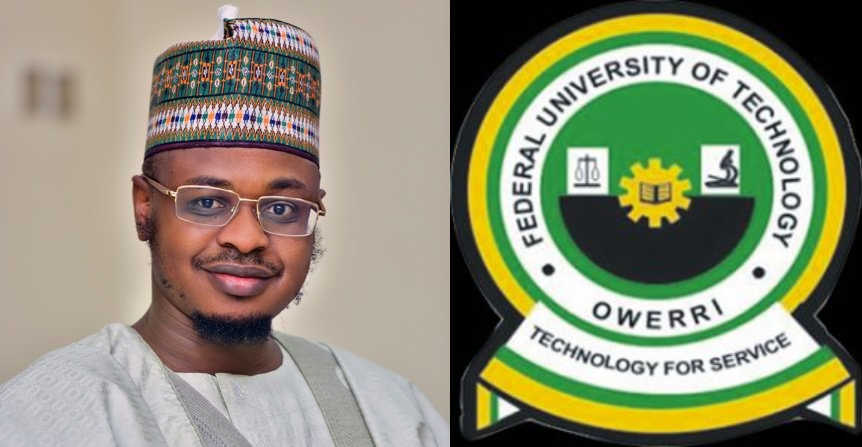
The debate on the legitimacy of Dr Isah Ali Ibrahim Pantami’s professorship is back. The National Executive Council (NEC) of the Academic Staff Union of Universities (ASUU) said that the professorial conferment on Pantami’s didn’t follow the laid-down procedures of the Nigerian university system. Accordingly, the union directed all its members and branches throughout the country not to recognize, accord, or treat him as a professor of Cybersecurity under any guise.
On the other hand, the Vice-Chancellor of the Federal University, Owerri (FUTO), Prof. Nnenna Oti, has said that the management of FUTO will sue against ASUU’s rejection of Dr Pantami’s promotion to the rank as a professor of Cyber Security by his university. When asked to comment on the issue, Minister Pantami – said ‘No Comment, No Comment, No Comment’- the matter is in the court.
The 2023 election campaigns, horse-trading, politicking, and strategizing have begun. Thus, the debate on Pantami’s professorship will linger, especially in the political arenas, notwithstanding the litigation. How Pantami’s political handlers manage the issue will determine the direction and weight of the debate, including the political impact on him. In contrast, how FUTO’s lawyers handle the case will determine the future of Pantami’s professorship.
Isa Ali Ibrahim Pantami – Honorable Minister of Communication and Digital Economy, an Islamic Sheik, a UK-trained PhD holder, has found himself in a triangular situation – a federal political appointee, an Islamic Sheik and an academic. This revered status means any issue that affects his personality will always be a hot one.
Most of the people who criticized Pantami’s appointment as a Professor were academics. So, ASUU’s NEC stand is not a surprise. But, equally, the majority of those who supported the critics were Pantami’s political adversaries. On the other hand, the supporters of Pantami’s professorship are academics who have soft spots for him, members of religious bodies, his students and his political friends, and those who are sitting on the fence.
In retrospect, the FUTO chapter of ASUU had set up a five-person panel chaired by Prof. M. S. Nwakaudu, with members: G.A. Anyanwu, C. E. Orji, Mrs O.P. Onyewuchi; and T. I. N. Ezejiofor (Member/Secretary), which cleared the appointment and asserted that due process was followed, a verdict that gave Pantami and FUTO some respite. However, ASUU NEC has reversed the verdict, giving Pantami’s political opponents more strength to fire at him more.
Pantami’s political allies, supporters, and students will be prayerful for the courts of law to clear this issue once and for all. This is because to Pantami’s supporters, his professorship is a significant addition to his already ‘unmatched’ credentials in his own rights. Pantami’s supporters believe that he is young, highly educated with a PhD. from the United Kingdom (UK) at Robert Gordon University, Aberdeen. They argue that Pantami is a good material to balance a presidential ticket politically.
Moreover, Pantami is from northeast Nigeria and fits into the agitation for the northeast to present the vice-presidential candidate in 2023. He is a household name in the northwest. They will feel at home with him – he is their cousin. He is an Islamic scholar with immense, even cult-like, followership nationwide. Pantami is Buhari’s strong confidant and ally.
The general belief among Pantami’s promoters is; Pantami from the north-east as vice-presidential candidate with any presidential candidate from the south, especially the southwest, will balance a presidential ticket and serve as a strategy for the APC to retain the presidency in 2023. Nevertheless, opposition against Pantami’s professorship will continue to have a field-day, striking him. At the same time, his political rivals will clap for them as the nation awaits the courts’ verdicts on the Professorship.
Zayyad I. Muhammad writes from Abuja, 08036070980, zaymohd@yahoo.com