


UAE President, Sheikh Khalifa Bin Zayed is dead
By Ahmad Deedat Zakari
The Ruler and President of the United Arab Emirates, Sheikh Khalifa Bin Zayed, is dead.
The Ministry of Presidential Affairs announced the sad news on Thursday, May 13.
The Ministry of Presidential Affairs condoles the people of the UAE, the Arab and the Islamic nation and the world over the demise of His Highness Sheikh Khalifa Bin Zayed Al Nahyan, the president of the UAE, ” the statement reads.
The late president was born in 1948. He was the second president of the UAE and the 16th Ruler of the Emirate of Abu Dhabi. He succeeded his father, the late Sheikh Zayed bin Sultan, who was UAE’s first president upon his death in 2004.

Gombe inventor develops ride-hailing app
By Muhammad Auwal Ibrahim
The business of the e-hailing company is no longer news in some Nigerian cities like Abuja, Lagos, Kano and Jos. Now, Abubakar Musa, Gombe indigenous inventor, has invented Gomba Ride, a ride-hailing app in Gombe.
The inventor stated this during an interview with our reporter today, May 12, 2022.
According to him, creating Gomba Ride is “to make life safe, secured and convenient for Nigerians. The purpose of life is to live for others. Anytime, everywhere, you and your family can book a ride at the comfort of your bed with just a click of a finger.”
Responding to how long it took him to develop this e-hailing app, Musa said “it was exactly 14 months” despite being a political scientist.
He added that his passion for science and technology made him build this app that will work in all the states of the federation and the Federal Capital Territory, Abuja.
“Since my childhood, I have had a passion for technological invention. Since then, I am always thinking of a possible way to take advantage of science and technology to ease people’s lives.
“As a political scientist by training, after my graduation, I devoted my time and energy to researching, reading inventory books and learning ICT skills to come out with something new that can make life simple.”
He further explained that there are security measures to help curb the menace of kidnapping, raping and theft while on a ride.
“I programmed the app so that It will store the car plate number, image and phone number of the driver for easier tracking. The customer can share his location with trusted contacts to address kidnappings and other related crimes. The app stores the travel history of the customer containing the information of the car and driver, which can be accessed anytime. The app has a quick response section, where a customer can make a complaint via call, WhatsApp, email, Twitter and Facebook.”
Keke Gomba, Bike Gomba, Gomba L and Gomba X are the various vehicles one can choose for a ride.
Musa further solicited “observations, criticisms and recommendations” and prayed that “may the Almighty Allah bless our knowledge to continue to make life easier for people.”
The app will be available for download from Google and Apple stores on May 30, 2022.

Court orders Polaris Bank to pay customer N500,000
By Engr. Ibrahim Nasidi Saal
An Akwa Ibom State High Court has ordered Polaris Bank to pay a customer N500,000 as damages for the bank’s failure to reverse a failed Point of Sales (POS) transaction within 72 hours as provided by law.
The plaintiff, Idongesit Nwoko, is a civil servant in Akwa Ibom and a Polaris Bank customer. She made a withdrawal of N61,000 via POS on December 24, 2020, but was debited without payment.
Mrs Nwoko said she made several efforts, including several visits to the bank, but the debit was not reversed until after 28 days. Dissatisfied with the way she was treated by the bank, the woman, through her lawyer, Utibe Nwoko, sued Polaris Bank.
Mrs Nwoko asked the court to compel the bank to refund her N61,000. She also asked the court to compel the bank to pay her N100 million as damages and N1 million as cost of her legal action.
Justice Bennett Ilaumo, in her ruling, ordered the bank to pay N500,000 as damages to Mrs Nwoko for failing to reverse the transaction within the 72 hours as provided by the law.
The Defence lawyer Anthony Ebuk, told The daily reality source on Wednesday, that his client would appeal the ruling.
Mr Ebuk, who said the court cannot amend the pleadings of a party in a suit, argued that the plaintiff, in her prayers, asked the court to order the return of her money, pay her damages for her money that ‘was lost’ and pay her the cost of legal action.
He said the plaintiff did not ask for payment of damages for the delayed reversal which the court awarded to her.
He further said that his client returned the said money to the customer’s account within the 16 days allowed by the law for such transactions.
Mr Ebuk said the plaintiff later withdrew the money before approaching the court.
According to Mr Ebuk, the judgment was not based on the pleadings of the party, but on “a total misdirection of fact.”
“The judgment was not the true position of the law. It wasn’t the terms of agreement. There was no hearing in that matter. Everything was totally against the rule of practice and the law.
“The plaintiff tried to withdraw money with a Polaris Bank Automated Teller Machine (ATM) card, but she did not go to Polaris Bank. She went to another bank’s POS. Going to another bank’s POS, that bank debited her account from Polaris Bank but did not pay her.
“The law is if you come to Polaris Bank with its bank card it should be reversed immediately or within 24 hours, but when it has to do with a third party bank, you have to file an application before the money is reversed to the owner.
“The law allows for 16 days for the money to be reversed from the day the application was filed.
“The woman was debited on December 24, 2021 but she did not notify the bank until after the Christmas holidays about January 4, 2022. From the day she notified the bank we covered the period and returned her money within the 16 days in line with the law,” Mr Ebuk said.
The spokesperson for Polaris Bank, Rasheed Bolarinwa, described the N500,000 damage as disproportionate compared to the N60,000 that was ‘trapped.’
He said the bank was reviewing the judgment and would take ‘the necessary legal steps’ thereafter.
2023: Bulus raises hope for APC in Southern Kaduna
By Sumayyah Auwal Usman
As the 2023 elections draw near, the two big parties, the ruling All Progressives Congress (APC) and the Peoples’ Democratic Party (PDP), parade several contenders for the Kaduna South Senatorial seat.
Being one of the strongest senatorial zones for the PDP since 1999, the aspiration of APC bigwigs from the zone is challenging PDP’s dominance. As a result, political pundits opined that next year’s senatorial election in the zone will be a fierce contest between PDP and APC.
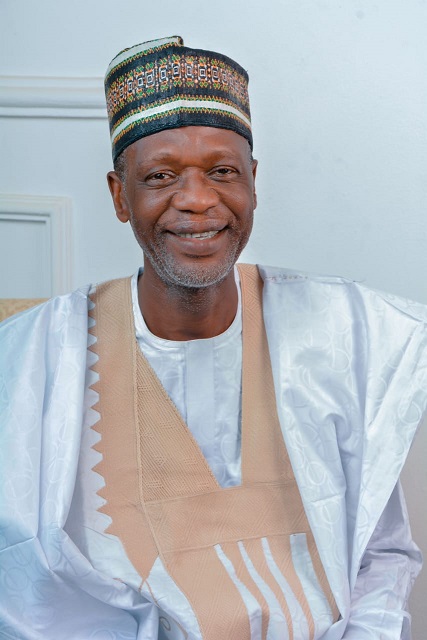
For the APC, political observers believe that the expression of interest of Honourable Bulus Banquo Audu is receiving a massive boost in the zone. He’s believed to be one of the most experienced and most politically savvy APC politicians in Southern Kaduna that could defeat other contestants and amass votes for APC in the forthcoming election.
As a grassroot politician, Bulus played a critical role when APC won the seat of member House of Representatives in Kachia/Kagarko Constituency in 2019. Recently, his political influence paved the way for a more remarkable outcome for APC in the last local government elections. He wields enormous influence among the Christian communities in the zone.
Investigations revealed that the recent mass defection of members of the PDP to APC in the zone is not unconnected with Hon. Bulus’ senatorial ambition. One major determinant of which party wins an elective position at the end of the day is the choice of the party candidate. With the changing political atmosphere in Southern Kaduna, any party that makes the mistake of presenting a weak candidate or person with questionable character will undoubtedly lose the election.
Revenue is not a substitute for healthy environment, let’s tell Baba Ganduje
By Murtala Uba Mohammed
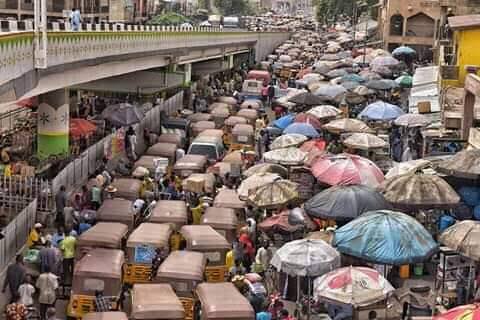
Governor Ganduje’s romance with capital project is too obvious and apparent. Only a bias mind can deny him his love for billion of Naira capital projects such as construction of some urban roads, underpasses and flyovers which qualify the city to lead in terms of transport infrastructure all over the country. Governor Ganduje’s interest in commerce and revenue drive is quite vivid considering his bias towards conversion of every available inch of land in the metropolis into commercial property. This is in addition to the proliferation of shops created in over ten markets in Kano Metropolis. In his zeal to generate revenue, Baban Abba has transformed Kano Road Traffic Management Agency (KAROTA) from law traffic enforcement to tax collection agency!
History of Kano would definitely remember this government of converting some of the most sacred spaces such as prayer grounds, cemeteries and historical places into commercial plots. While, Colonel Idris Garba has found it wiser to relocate Kano City Animal Market from its old location to accommodate the increase demand for bigger Kano Central Eid Ground and to give the ancient city a kind of Eid ground it deserves; Ganduje felt it is necessary to downsize it to nearly one fifth of its original size in order to make way for his dearest commercial land use. In fact, governor Ganduje’s romance with commerce qualified him to have national honour award of commercial order for Niger (CON)!
It is also obvious that governor Ganduje has given Kano more than what it requires as centre of commerce by converting the remaining open spaces, green areas, blue ecosystems and city’s recreational gardens into commercial plots, leading to the emergence of multi-million plazas in all parts of the already gentrified city. The case of destruction of the last phase of the city wall along BUK road, the Freedom pond along Gwarzo Road, the Dan’agundi on BUK Road and many other smaller water bodies are just tips of Ganduje’s land conversion icebergs. A case of city garden along Maiduguri is another justification for his romance with commerce.
Also, many waste collection centres were either allocated to Ganduje’s political lieutenants to develop it for commercial use or sold to a highest bidder. No thanks to irrational desperate attitude of Kano people to land acquisition which Bandirawo capitalized upon and coupled with the creation of plots on many state’s parks located in peri-urban local government under the forestry department of Ministry of Environment. Ganduje would have converted city’s Zoological Garden to commercial plot if not for the outcry and serious pressure from good sons and daughters of the State.
While, expanding the commercial land use and (possibly) enlarging what goes into supposedly state IGR, the government action is negatively affecting the environment. The governors love for the building of commercial areas at the expense of other landuses affects the functioning of the ecosystem there by distorting the near equilibrium state of the environment. A city without parks and green areas is just like child whose nose was covered or severed; suffocation is inevitable and death is the end point. Our governor (whom the law saddled with responsibility of land protection) should be reminded that the green areas are not just for decoration, they are carbon sink meant to absorb harmful air like Carbon dioxide, Sulphur oxides, chlorofloro carbons and other pollutants which are hazardous to human health. They also help in moisture retention, groundwater recharge, check soil erosion and ecosystem stability. The importance extends to social and economic contribution by providing revenue, connecting people with past and providing shades. Kano City is already noisy, building more roads and destroying greens which this administration is supporting and encouraging, make people to own more cars and reduce the functional attenuation city’s noise. In a city where transport is not regulated and left at the mercy of highly informal private individuals, one will just end up with a growth that is going in a reverse way. Today, only God knows the number of tricycles in Kano that pollute the air and colliding with peoples’ vehicles.
Nowhere, water and blue infrastructure is as important as dryland, however, unfortunate the protector turns destroyer. The city therefore is witnessing urban drought due to water table dwindling. The city dwellers now buy water from cart-pusher, whose hygienic condition is terribly bad, at the rate of 50 to 100 naira per 25 litre jerrycan. The state’s own water supply is just a nightmare.
Kano city now witnesses intrusion of newly emerged hills, not of lava, rather of refuse. This is a clear pointer to the problem of rush in privatizing the long-time government’s REMASAB to a very little-known private company. Surprisingly, rather leasing the formal areas (where pilot testing were done through Franchisee System), the government decided to include the informal areas where residents are overwhelmingly poor and unlikely to afford commercial waste service. The government had successfully improved its revenue by not shouldering part of its social responsibilities, but it had traded-off the health and well-being of the public for worthless amount of money. The city-folk now pay the price through living in the mid of waste.
No matter how crucial it is, revenue is not in any way akin to destruction of environment. One can get good revenue without depriving the environment its decency. This can be achieved through verticalization of buildings where shop demands can be met without losing open and green areas. Also, city’s green and open spaces can be privatized in their natural state to generate more revenue. The recent proliferation of Event centres and sport Centres can utilize the city’s ponds and open spaces without necessary building up permanent structure.
While the state makes a lot of noise on domination of public transport by Adaidaita sahu tricycle where revenue was difficult to generate, not much was done to introduce more formal public mass transit such as Bus Rapid Transit and Bus Mini Transit that would fetch more revenue to the government with less damage to the environment. It is still not late for the government to reverse and rethink of best ways to manage the waste generated. Commercial, industrial and formal areas can be made to pay for waste services, but not slum and shanty areas. Let the state engage radically in educating and reorienting the citizens, this will make people to be more formal in their businesses, and which will eventually boost the state’s revenue.
It is important to note that for every city to be liveable, certain ecological services and resources must be retained at all cost. Failure to keep them is tantamount to exhibiting nonchalant attitude to nature despite that Nigeria is a signatory to most environmental treaties. It implies that one is at war with descent living. I am afraid, history will judge this administration for destroying the little it inherits of environmental heritage in the name of foolhardy capitalism. I hope His Excellency was not punishing us for someone’s faults. Other individuals might have done some wrongs to him, but let him remember that he has no place like Kano. Let us give Kano a descent ecosystem, not only for us but for the yet to be born generations.
Murtala teaches Geography at Bayero University, Kano.
Troops embark on search and rescue operations for missing personnel
By Ibrahim Nasidi Saal
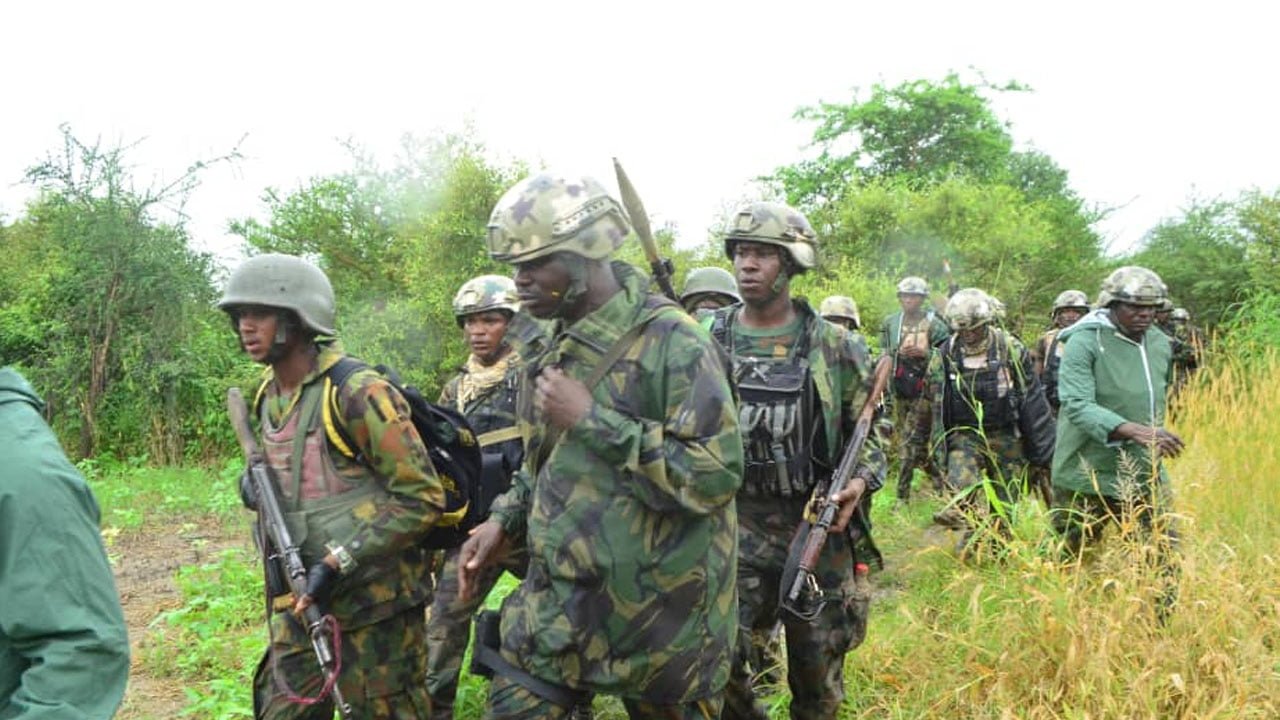
Troops of the 93 Battalion have launched a search and rescue mission for personnel missing in action while responding to a distress call of an attack on the Tati community in Takum Local Government Area of Taraba State in the early hours of Tuesday, May 10, 2022.
The troops acted swiftly after receiving a distress call that the Tati community was under attack by suspected bandits. While pursuing the bandits, troops fell into an ambush staged by the criminals. The troops fought fiercely through the ambush neutralizing four of the bandits. Sadly, six gallant soldiers paid the supreme price during the firefight, while one person was missing in action.
However, a reinforcement team from the 6 Brigade deployed against the fleeing bandits at Ananum village in Donga Local Government Area of the state, neutralized two additional bandits and recovered one Ak 47 rifle, one pistol, one locally fabricated gun, 2 AK 47 Magazines, 19 rounds of 7.62 mm special, seven rounds of 9 mm ammunition and three motorbikes.
Troops are currently pursuing the bandits and will leave no stone unturned in the ongoing search and rescue operations for the missing personnel.
The good people of Taraba state are urged to be vigilant and report any suspicious movement to security agencies.
N/Assembly urges China to help Nigeria rescue abducted train passengers
By Uzair Adam Imam
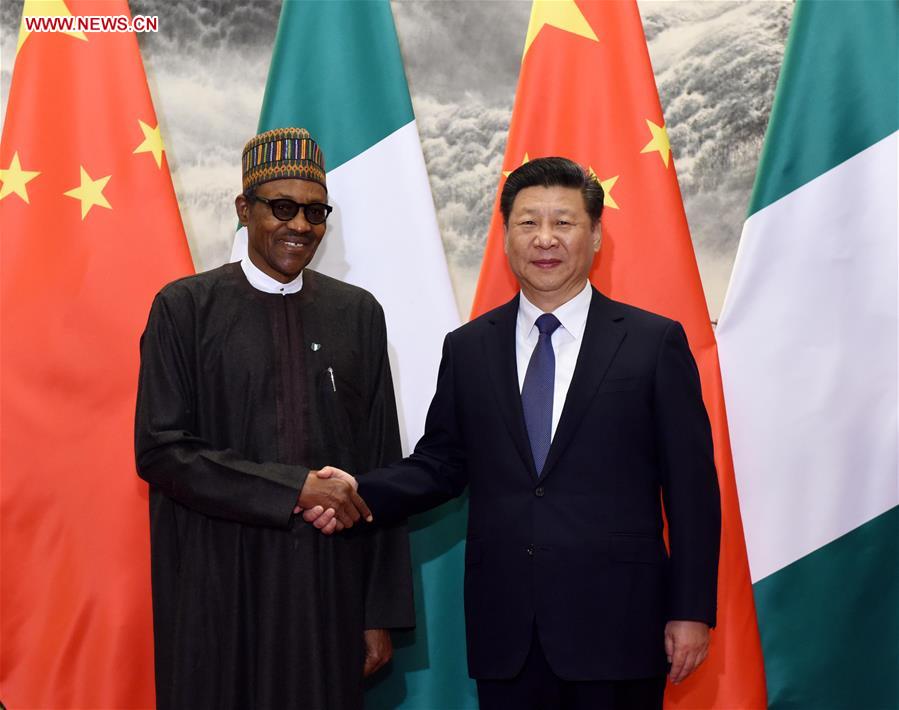
The National Assembly urged the Chinese government to help Nigeria rescue the Abuja-Kaduna abducted train passengers.
Today marks exactly 45 days since the 62 passengers were attacked and abducted while in transition on March 28, 2022.
The Daily Reality reported how bandits stormed the Abuja-Kaduna train, gunned down eight people and abducted over sixty people in March.
The Chairman Senate Committee on Land Transportation, Senator Abdulfatai Buhari, expressed sadness over the failure to rescue the victims 45 days after.
Also, the people concerned have shown great sadness over the government’s failure to rescue their loved ones and threatened that the train service must not resume until those abducted have regained freedom.
The lawmaker representing Oyo North in the National Assembly decried that the attack had created fear in the minds of Nigerians who had started embracing the railway.
He said, “The Chinese government makes money from the many rail projects that are being handled by CCECC in Nigeria, so asking them to help us is not out of place.
“Nigerians are no longer ready to listen to the number of passengers that have been carried by the trains since they were commissioned. Nigerians are not interested in what has been put in the various stations by the CCECC. What we want to hear now is the effort being put into rescuing those people in captivity.
“If a Chinese national was among those people abducted, we know that the Chinese government would have come to rescue him.
“I remember when an American was kidnapped, the Americans came and took him away from where he was held captive. We know that with the level of technology that the Chinese have, even without leaving Beijing, they can help us track where these people are, or even give us enough intelligence that would aid their rescue,” he added.

Adamu Garba dumps APC
By Ahmad Deedat Zakari.
Adamu J. Garba, a tech-entrepreneur and former presidential aspirant on the platform of the All Progressives Congress (APC), has left the party.
Garba tweeted a video of himself removing the APC flag in his office on Wednesday, May 11.
He captioned the video, saying, “We joined APC for the sake of Nigerians, now that all is not looking straight. We believe only Allah is the Guarantor & Grantor of Authority. He never ever gives up on the betterment of humans. Trusting in Him, following His Guide, we bow out of APC in peace. The flag is down.”
Garba’s dramatic exit from the APC is coming a day after his withdrawal from the presidential race on the party’s platform.
Recall that Garba in a press release announcing his withdrawal, he told his supporters that it is the beginning of their political journey and that they should wait for further directives.
Three more Kano Assembly members dump APC, join NNPP
By Ibrahim Nasidi Saal
Days after nine Kano State House of Assembly members defected from the opposition Peoples Democratic Party, PDP to New Nigeria People’s Party, NNPP, three more lawmakers have dumped the ruling All Progressives Congress APC, for the new party.
On Wednesday, a spokesman for the Assembly, Uba Abdullahi, announced their defection, citing three separate letters the legislators sent to the speaker, Hamisu Chidari.
According to the statement, the members notified the House of their defection from the ruling APC to NNPP through the letters dated May 5, officially received by the House.
The defecting lawmakers are:
Hon.Abdullahi Iliyasu-Yaryasa, member representing Tudunwada Constituency;
Hon.Muhammed Bello Butu-Butu, member representing Tofa/Rimin Gado Constituency.
Hon.Kabiru Yusuf Ismail, member representing Madobi Constituency.

JUST IN: ASUP embarks on two-week warning strike
By Uzair Adam Imam
The Academic Staff Union of Polytechnics (ASUP) will commence a two-week warning strike on Monday, May 16, 2022.
According to the ASUP president, Anderson Ezeibe, the decision was borne out of the emergency meeting of the union National Executive Council on Wednesday, May 11, 2022.
However, this is coming amidst worries over the extension of strike by the Academic Staff Union of Universities (ASUU).
ASUP decried that the federal government has refused to meet their demand, making it necessary for the union to embark on a strike.
Recall that ASUP has suspended its industrial action declared on the 10th of June, 2021, following the Memorandum of Action (MoA) which the government had signed.
The union said in a statement, “Non-release of arrears of the new minimum wage: The owed 10 months arrears for the Polytechnics is yet to be released. The composite amount covering all Federal Tertiary Institutions to the approximate figure of N19Bn currently exists as an AIE in the Accountant Generals Office.”
“We are deploying this medium to equally appeal to members of the public to prevail on the government to do the needful within the two weeks period so as to avoid an indefinite shutdown of the sector,” the statement added.