


Police arrest man for trafficking wife, selling son for N600
By Uzair Adam Imam
Police in Ogun State have confirmed the arrest of a 36-year-old man, Kingsley Essien, for allegedly trafficking his wife to Mali for prostitution.
Consequently, Essien reportedly went ahead to sell his 2-year-old son for N600,000 to the yet to be identified person.
The Police spokesman, Abimbola Oyeyemi, made the disclosure to journalists in the state.
He said the suspect was arrested following the report lodged at Agbara divisional headquarters by the suspect’s wife, Bright Essien.
The Daily Reality gathered that the wife was lured into prostitution by her husband by saying he had secured a job for her in Bamako Mali, last year’s October.
But to her utmost dismay, the discovered that she had been sold to a human trafficking cartel headed by a woman at the rate of N1.4 million.
“While in Mali, she was forced into prostitution, but later find her way to Nigeria embassy in Bamako where she was assisted back to Nigeria.
“On getting to Nigeria, she discovered that her two years old son in care of her husband is nowhere to be found,” the Oyeyemi quoted her saying.
Oyeyemi said, “On interrogation, the suspect confessed to the commission of the crime, he confessed further that he sold the two years old son to somebody at the rate of six hundred thousand naira.”
Investigation by police to trace the boy’s whereabouts and save him is on top gear.
Tension in Kano APC as Garo mulls over defection to NNPP
By Uzair Adam Imam
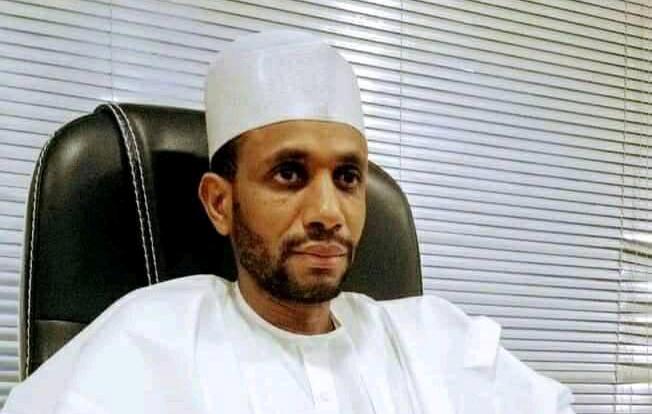
Another political crisis is rocking the Kano chapter of All Progressives Congress (APC) as the endorsed deputy governorship candidate, Murtala Sule Garo, is reportedly mulling over defection to the New Nigeria People’s Party (NNPP).
Governor Abdullahi Umar Ganduje endorsed Garo to pair with the current deputy governor, Nasiru Yusuf Gawuna, as governor in the 2023 gubernatorial election.
However, Garo was said to have felt slighted following a peace parley between Governor Ganduje and his political arch-enemy, Senator Barau Jibrin.
Recall that Ganduje had reconciled with Barau and agreed to step down for him for the Kano North senatorial ticket after the senator abandoned his gubernatorial ambition.
According to a source who preferred not to be named, Garo plans to discuss the issue with his associates for a final decision.
He said, “he is planning to meet with his associates and make [a] concrete decision, but he is still very sad about the development (Barau back in the fold), but he has not defected or abandoned the ticket,” one source, who asked not to be named, said.
2023: Who is pushing for Jonathan’s presidency?
By Ibrahim Mustapha Pambegua
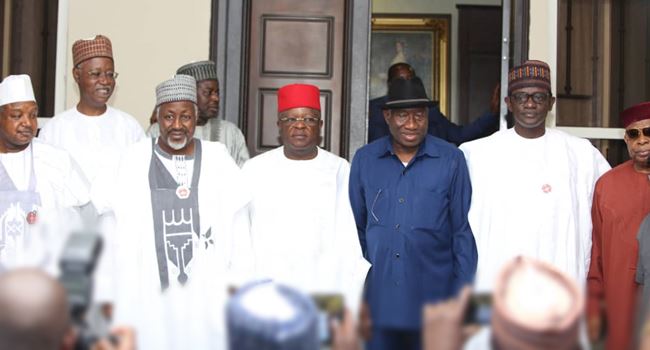
After an initial denial of rumours that he would join the ruling party, the former Nigerian president, Goodluck Jonathan, has finally ditched his party. However, after long speculations, his defection to APC has continued to elicit mixed reactions in the country.
Before his defection, many signals emerged that the former president had stopped attending activities organised by his former party. The Bayelsa state’s gubernatorial election conducted in 2020, whose former party lost to APC before a court ruled in its favour, suggested Jonathan’s indifference to PDP affairs. Does Jonathan’s defection have to do with how the party treats him during and after the 2015 general elections?
While the former president might have lost the 2015 election due to the zoning arrangements of PDP, which he disregarded and refused to abide by, the betrayal and backstabbing that ensued among trusted party loyalists led to his resounding defeat remains fresh in his mind.
The emergence of a new PDP split group led by Atiku Abubakar, Bukola Saraki, Aminu Waziri Tambuwal and other heavy party juggernauts who abandoned him at the tail end of the party’s convention had wreaked great havoc on his re-election bid. With these politicians who deserted him returning to PDP, Jonathan would not feel comfortable staying with them.
As a former president, Jonathan should be the party’s leader. However, Nelson Wike, Rivers State governor, has hijacked the party and has since been calling the shot. Wike and his surrogates have firmly controlled the party and failed to consult or engage the former president on the party’s decisions.
The inability of PDP to respect or recognise Jonathan as their leader must have dampened his morale and forced him to change his mind. One imagined how the former president, who was a governor, a vice president and president under PDP, could suddenly ditch his benefactor.
The former APC national chairman, extraordinary convention committee, Mai-Mala Buni, must take credit for Jonathan’s defection. The Yobe state governor, during his stint as chairman, visited and subsequently wooed him to APC. Do Malam Buni and his co-travellers sign a pact that they would throw their weight behind his presidential ambition if he joins the party? Jonathan did not only join the ruling party but also bought nomination form through the northern youth group.
Goodluck Jonathan’s presidential ambition has raised some critical questions. First, is the ruling party toeing the dangerous path of PDP by jettisoning its zoning arrangement? With Buhari completing his tenure, one will advise for equity and justice. There is a need for power to be shifted to the South.
Also, during its recent convention, APC opted for Abdullahi Adamu, a northerner, as the National chairman. This development has further buttressed that the South will produce the next president. Moreover, with Jonathan joining the presidential race, what will be the future of southwest politicians, especially Bola Ahmed Tinubu, who sees his contest as a lifetime ambition. It is no understatement to say that President Muhammadu Buhari’s victories in 2015 and 2019 are to the credit of Tinubu and other southwest politicians.
If APC fields Jonathan, the southwest politicians will unite and reject the party. To them, having played second fiddle in the previous elections, the 2023 ticket should be exclusively reserved for them. But, on the other hand, if the ticket is not given to them, there is every tendency of anti-party, as these politicians will ally with either PDP or Kwankwaso’s NNPP to ensure APC loses the election in the region.
Second, who and who are dragging or promoting Jonathan’s presidency and their motives? It was reported that Jonathan’s presidency had two northern governors’ tacit support. One from the northwest and the other one from the northeast. If their plan works as scheduled, Jonathan promised to pick one of them as running mate.
The legal technicalities that may await the former president will unarguably discourage APC from giving him its ticket. Jonathan took an oath of office twice. If he is allowed to contest and luckily wins the poll, Jonathan will take his third oath of office, which is unconstitutional. This will open up serious court litigations.
What will happen if the opposition PDP finally settles for Atiku Abubakar as their candidate? Will APC stick to Jonathan’s presidency? The former president had received accolades globally for conducting a free and fair election in 2015. Jonathan was the first African president who conceded defeat and called and congratulated the winner even before the result was announced.
Since he left office, his diplomacy performances have endeared him to many Nigerians. However, the former president should have kept a low profile, continued his diplomacy engagement, and advised the country where necessary. With the former president throwing his hat in the ring, what will be his fate during and after the 2023 general elections?
Ibrahim Mustapha Pambegua wrote from Kaduna state via imustapha650@gmail.com.

My journey from a poor to the best mathematics student
By Husseina Ojochenemi Abubakar
“Collect the like terms”
“Divide both sides by 2”
Mathematics was my worst nightmare during my primary education and my early years in secondary school. The pronunciation of the word “M.A.T.H.E.M.A.T.I.C.S” always got me some butterflies jollying in my stomach, if you know what that means. But, on the contrary, other subjects were just easy as beans.
My twin sister Hassana helped me solve particular arithmetic involving a word problem more than a dozen times in my junior year in secondary school, all to get the hack to solve similar problems. Especially since I was the class captain, you are often the focal point of most teachers.
But once the question is a bit twisted from her examples, I would start developing migraine, which often marked the end of that practice. Nevertheless, I kept wondering about these two mathematical terms.
“collect the like terms”
“divide both sides by so and so.”
As I type this now, I can’t stop laughing at myself how something so simple could cause me sleepless nights. In short, it was a miracle that I fairly scaled through during my Junior School Certificate Examination.
This miracle became more apparent in my first year at Senior Secondary School. Then, I was made the female class captain.
Our charismatic, vibrant maths teacher walked majestically into our class one fateful morning with his head up high. We immediately stood up to welcome him, which was the usual class tradition whenever a teacher walked into the class. He gestured to us to sit down and, without introduction, went straight to the chalkboard and wrote Mathematics followed by an equation. He demanded that the class representatives stand, which was my assistant and me.
Upon hearing this, I lost my composure, my palms and feet began sweating profusely, and I started running high temperature all at once. It was one of those moments you would wish you had a magic wand that could be used to tear the earth widely open to swallow you.
He turned to the other lady and asked her the first step to solving the equation. “No idea,” my then assistant answered sheepishly.
Mr maths teacher then gestured in my direction. Without knowing where the energy suddenly came from, I quickly answered, “collect the like terms.”
He was so impressed that his applause echoed through the four walls of the classroom and beyond. Then, he went to the board and carried out the command.
From no angle of elevation or depression, this exercise stirs a cognitive essence in my brain. I had treated this topic in my extra moral class, and I think I got a zero in the mini-test given at the end of that day. Now, it became crystal clear to me what the term stood for in Mr maths teacher’s class.
Again, he turned in my assistant captain’s direction asking for the next step, and she couldn’t come up with the answer. As he turned in my direction, I quickly answered, “Divide both sides by 2.”
He was impressed once again. He went back to the board and executed the command. That was how we arrived at the answer that marked the beginning of my journey to stardom as one of the best mathematics students.
After that incident, a mathematics Milo competition was organised amongst all the SSI students of the secondary schools within my local government (i.e. Idah).
I was approached to represent my class and join two others for the whole arm of SSI at that time. However, I was still unsure of my mathematics potential, so I declined because I’m not good at maths. But the senior prefect convinced me that my other colleagues would assist as it was a collective effort. So, I agreed to participate.
Lo and behold, the day came, and I, who was supposed to be the backbencher during the mathematics, ended up receiving a standing ovation and monetary prizes because even the questions that were meant for the other school students, which they could not answer was answered majorly by me effortlessly.
One thing became clear to me—the power of grit (passion and perseverance when you face obstacles). I was not good at mathematics, but I never stopped trying to improve. I didn’t give up. I kept struggling. As you can deduce from the story, my effort eventually paid off when I least expected it.
This is my true life story. Even the mathematics was not in my hand; it was in my heart and subconsciousness.
You may be having some migraines over some challenges now. So, taking a break is allowed but don’t completely give up because not one of your efforts goes unregistered in your subconscious mind.
These are my words, my dear readers. Believe in the process, and you will arrive at your destination in sha Allah.
Husseina Ojochenemi Abubakar sent this article via hussymusty@gmail.com.
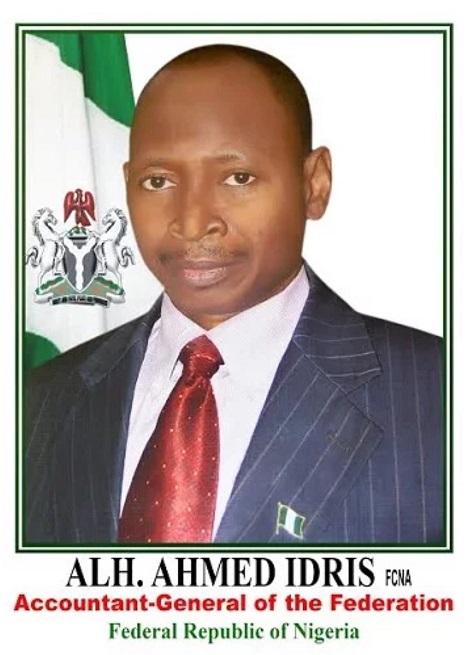
FG suspends Ahmed Idris as Accountant General
By Uzair Adam Imam
The Federal Government has suspended the Accountant General of the Federation, Mr Ahmed Idris, over the allegations by the Economic and Financial Crimes Commission (EFCC) for laundering over N80 billion.
The Minister of Finance, Budget and National Planning, Mrs Zainab Ahmed, disclosed this in a statement signed Wednesday, May 18th, 2022.
The statement read in part, “following your recent arrest by the Economic and Financial Crimes Commission (EFCC) of allegations of diversion of funds and money laundering, I write to convey your suspension from work without pay effective 18th May 2022.
“This is to allow proper and unhindered investigation into the serious allegations in line with Public Service Rules 030406.”
The Daily Reality reported that Idris was arrested by the EFCC over N80billion fraud Monday, May 16th 2022.
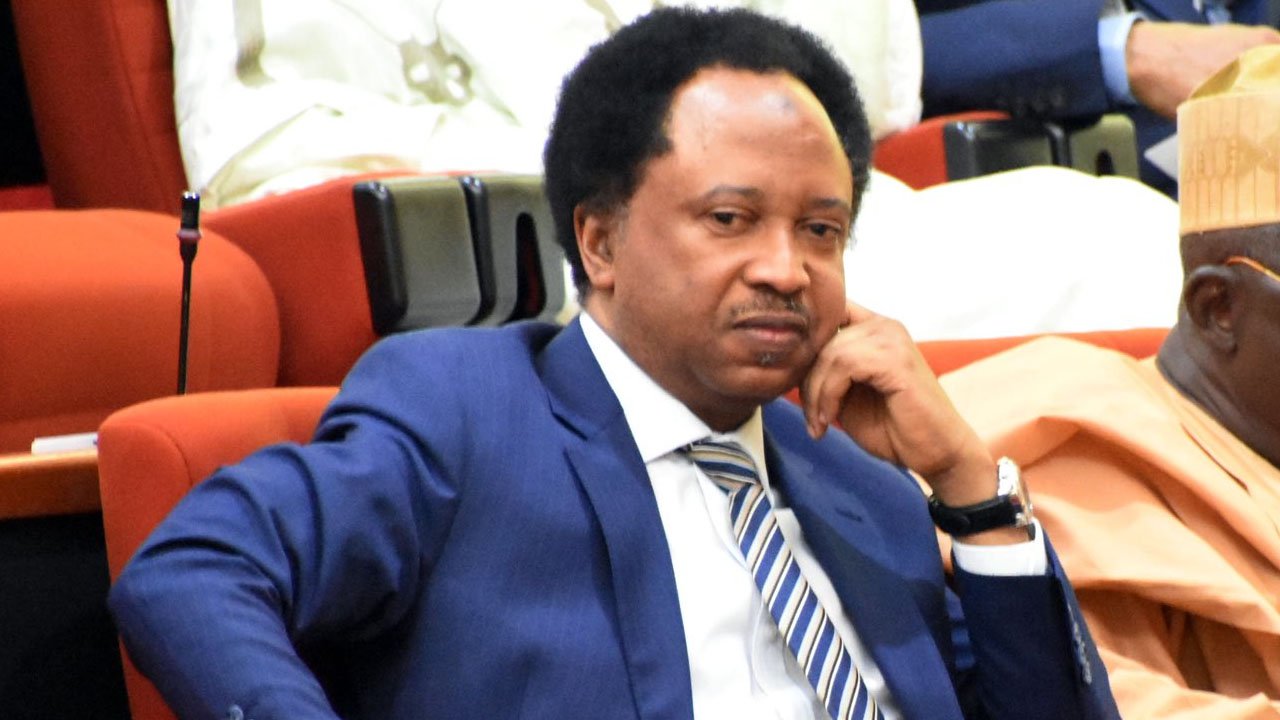
Shehu Sani decries money politics
By Ahmad Deedat Zakari
Shehu Sani, a former Senator representing Kaduna Central, has decried extortion of aspirants in political parties ahead of the 2023 elections in Nigeria.
On Wednesday, May 18, 2022, Shehu Sani took to his verified Twitter handle to subtly express his displeasure regarding the extortion of aspirants in his party, the People’s Democratic Party (PDP) and others.
“Pay for Form. Pay for Submission of Form. Pay for Screening. Pay or “contribute” for venue and logistics for Primaries. Pay delegates. I’m not supposed to write this, but I have to; Extortionist Tollgates or Checkpoints to power,” Sani tweeted.
In January, the former senator declared his interest in contesting for the Kaduna State governorship seat. He has consequently obtained his nomination and expression of interest forms.

Yobe State: Education and Mai-Mala’s counterproductive handling
By Kasim Isa Muhammad
Since 1999, the people of Yobe have continued to give mandates to the ruling party, what is now known as the All Progressive Congress (APC), hoping that their lives will be better on all fronts- particularly in the education sector. Unfortunately, the Yobe education sector is known to be one of the worst in the nation. This is manifested by a legacy of dilapidated blocks of classrooms, a lack of laboratories; a lack of teachers; no teacher promotions, and the list goes on.
With the emergence of Mai-Mala Buni as the Governor in 2019, he, on the inaugural date, in the most dramatic manner, convinced the nation that the education sector in Yobe is rotten-Yes, rotten! He declared what was known as an “emergency” in the sector. He announced his aim and gathered a committee to work out a plan for the sector. Millions of naira were spent on meetings, travel, and photography on a matter that a single administrative circular could have solved.
Two years into the administration of Buni, not a single milestone was made in the education sector. The State Basic Education Board could not recruit trackers, teachers’ promotions stalled, teachers’ salaries were mutilated, and the hardworking principal of secondary schools was bullied by the business that leads the ministry of education. The sad news continues, and the peak was the video of Fika Government Secondary School that rattled the government. One could ask, what exactly is the problem? Is Buni the problem, or is his team at the peak of insubordination?
One of the most dramatic events that put the Yobe education sector in the spot was the case of the Buni Foreign Scholarship Scheme (BFSS), a scheme managed by a few of Buni’s trusted men. BFSS is characterised by poor stipend payment, poor academic quality, etc. Today, the BFSS is still a problem that will continue to make the Buni government unpopular and give the opposition a chance to punch the APC hard.
The local scholarship allowance is also an area where there is a hitched to pin network of students and their families to dispense protest votes against Buni and give the upper hand to opposition parties like the New Nigeria People’s Party (NNPP). It was only last week when NNPP moved to consolidate its gains by inviting Stand Up and Be Involved (SUBI) to adopt its party and contest all elections. Should this partnership work as planned, the APC will likely experience the most effective and fierce opposition in its history in Yobe State.
The local scholarship allowance payment has been epileptic, inconsistent, and marred by a lack of competence in leadership. One can quickly note that this administration has provided the most inexperienced and inefficient leadership of the board in the history of Yobe. No one knows if the Yobe State Scholarships Board (YSSB) has adequate access to its budgetary allocations. If, in any case, it has access to funds, who can defend Buni or his proxy at the head of the YSSB for the lack of payment of local scholarship allowances? An act that even the military administration did well in Yobe!
One might wonder if paying for local scholarships was related to the massive fund-raising effort for the 2023 elections. It is terrific, and only in APC’s Yobe State one can find people heading a government parastatal that failed to perform in contesting elections. Does this mean that Buni is impressed with the performance of the scandal-marred YSSB?
Buni needs to know that there is significant dissatisfaction with his administration and team. Everything that the government does seems suspicious such as the maiden Education Appeal Fund, where billions of Naira were accumulated. Whether Buni knew or knew not, there is speculation on the ground that the education fund was a cover to grasp financial muscles to fight for the 2023 elections. Whether true or political, this sentiment makes up the opposition, and the chances to pin the people against the APC are high. It has always been easy to blackmail a government that cares less about its spending, budget performance, and revenue base.
It is, however, clear that whatever sterling personal qualities a governor may have, of which Buni has many, the chances of failure can be significant. The popular opinion is that Buni is highly unlikely to succeed with his existing team. Buni must change gears and relate to reality on the ground and begin to listen to others rather than his yes-men. Those who tell him that he is always right even when he is wrong—for no one can always be right. We are calling for Buni to search for a new effective team should the 2023 election tide blow in his favour. Whereas the YSSB Chairman has a dual and conflicting constituency that rests with the constituents to decide. Ultimately, the YSSB has failed the children of the poor.
Kasim Isa Muhammad wrote from Potiskum, Yobe State via kasimimuhd1999@gmail.com.

PWI at 6: A Northern Nigerian Literary Voyage
By Shehu Mubarak Sulaiman
“I believe that the best learning process of any kind of craft is to look at the works of others” – Wole Soyinka
About a month ago, I woke up to a message on my Facebook Messenger. I was perplexed as to why a message would come in that early. It was dawn, and the skies had not brightened significantly enough for the layman’s morning to be declared.
The sender was someone who had once informed me of his interest in poetry. He had slid into my inbox a couple of months ago, and had registered his love for my writings, after which he requested that I mentored him.
Without wasting much time, I had introduced him to Poetic Wednesdays Initiative and urged him to follow-up on their activities. I had also introduced him to similar platforms, like the Poets in Nigeria Initiative Facebook Group.
A week later, I sent him a flyer for a forthcoming workshop and asked him to register. The workshop was organized by Poetic Wednesdays Initiative, and was to be facilitated by top-notch poets: Umar Abubakar Sidi and Dr. Ismail Bala. To cut the long story short and hit the nail on the head, Abdul-Rahman Jafaru Wali, a medical student of Ahmadu Bello University, Zaria was the person in my inbox.
He had messaged me that early to inform me of his emergence as one of the ten winners of the recently-concluded “The Nigeria I See” poetry competition organized by MOP (Movement of the People). His feat had come just about a month after he had registered for a workshop organized by Poetic Wednesdays Initiative.
That is a practical portrayal of how much of a platform Poetic Wednesdays Initiative is, one does not come and leave empty-handed.
For three years now, I have been approached consistently by people slightly younger or even older than I am. Their solicitation has over the years lost every element of surprise. Whenever I receive a message from a stranger on Facebook, half of the time, it’s about poetry writing or writing pertaining to other genres of literature.
The question had always been the same from all of these people. They keep asking: “How can I learn poetry?” This is such a difficult question to answer, as there is a never-ending debate about whether poetry writing is an innate or a learnt skill.
Regardless, I refer back to Wole Soyinka’s quote about learning the craft of writing; how it relies heavily on imitation, and Poetic Wednesdays Initiative had always been my first recommendation for them.
First, if the advances are offline, I will ask them if they have a Facebook account. And if they answer in the affirmative, I’d urge them to like the page, and submit poems of any quality every Wednesday of the week. Over the years, I have lost count of people I had introduced to this platform. Some of them have now grown to become a significant fraction of the finest writers that we have around.
The journey of these wonderful poets and wannabe poets reminds me of my own journey. I had started just like them, a newbie, and a sprouting seed. In the concluding months of the year 2016, I had grown tired of talking about my dream of becoming a writer. The more I talked about it, the more I felt like a fraud, my impostor syndrome was becoming more and more intense that I had contemplated giving up writing altogether.
I was at the crossroads, one road led to an Eldorado of a life I had always made up in my head; the fantasies of what a celebrated writer’s life seems, and the other led to a path of giving up, a one-way route to despair.
Being a science student was more than enough deterrent already. I talked to a friend who had graduated from the university a year before me and who I believe had more life experience than I. He spoke of his friend called Salim Yunusa, who has founded this small literary platform that aims at nurturing young talents in literary-inclined endeavors.
I talked to Salim Yunusa and he introduced me to a platform called Poetic Wednesdays, that was before it became Poetic Wednesdays Initiative. It was the newly-founded platform of his. I had written a couple of poems before then, but I had posted none, they were all in my phone’s notepad, longing to be seen.
So, all I did was waited for that fateful Wednesday before making my entry. My poem was handpicked and afterwards posted on the page. I followed the poem up, and relished some of the praise-coated comments. That was my first official encounter with poem writing.
As time went by, submissions from me became more and more regular. I enjoyed every bit of it; the praise, the feeling of having written something someone else enjoyed reading. Amidst all that nursing school monotony, consistent memorization, and voracious reading to stay afloat, I found an escape.
I had started to look forward to every Wednesday, it felt refreshing reading through poems on the page, and sometimes using them as a blueprint to craft mine. I started to make friends online, Facebook transfigured from a place where I come to catch up on viral gossip, or post pictures, to a place where I have direct contact with intellectuals and like minds. My time online started to become more of an educative endeavor rather than a fun-seeking one.
Weeks passed by and I had started to play with different themes, I had become a favorite on the platform. People looked forward to every Wednesday, so they could catch a glimpse of my poem and savor all its flavors. I had copied styles of poets like Maryam Gatawa, Salim Yunusa, Sani Ammani, Nasiba Babale, and a host of others, before I had come to find my feet.
In 2018, there was a literary hangout somewhere in Ahmadu Bello University, Zaria organized by this selfless platform. We dined, and recited poems for the relish of fellow poets and literature lovers present. We had a swell time. In 2019, I rendered my masterpiece titled “I AM NORTH” at one of Poetic Wednesday Initiative’s get-together at Kongo Campus, Ahmadu Bello University, Zaria.
It is the reception it received that had led me to promoting it on different platforms. The video of the poem was played at the 2020 edition of the Nigerian Students Poetry Prize event that held in Lagos. The written form of the poem was published on Daily Trust Newspapers, Yasmin El-Rufai Foundation official website, and other notable platforms in Nigeria.
The creatively titled essay of Sa’id Sa’ad “Poetifying the North” is not a coincidence. I particularly love the witty coinage of the word ‘Poetifying’. Indeed, the North has been ‘Poetified’. Today, in northern Nigeria, as opposed to the nearest past, there is a resurgence of literary activities and discussions like never before. There has been a fast-rising awareness of what literature stands for, and many have continued to embrace it.
Virtually all the states in northern Nigeria have one festival or the other, celebrating literature and further educating young minds on the importance of both literature in English as well as in other indigenous languages. This is not to say that the region had always been dormant in the realms of literature and arts, that won’t be fair to a region that has produced notable writers like Helon Habila, Abubakar Imam Kagara, Abuabakar Adam Ibrahim, Ahmed Maiwada, Ismail Bala, Aliyu Kamal, Victor Dugga, Maria Ajima, Zainab Alkali, Abubakar Gimba, and many others.
It is to say that the awareness about writing, reading, and other literary-inclined endeavors has been quite unprecedented in the last decade. Many young people have come to find it as interesting as any other thing young people enjoy. There are now more festivals, literary contests, literary magazines, literary organizations, school-based literary clubs and so on.
The younger generation had come to transform reading and writing from a tortuous exercise to something exceptionally pleasurable.
The perception towards literature has taken an entirely different dimension. If I am asked to pinpoint literary organizations in the north that have contributed immensely to this growth and literary resurgence, I will place Poetic Wednesdays Initiative amongst the first five on my list.
For the fact that it deals basically with young people and neophytes who may have or have not written anything before, it lays a solid foundation for those who develop cold feet when literary matters are being brought to the table.
This is quite hypothetical, but if one is to assemble ten young writers in northern Nigeria today, I am rest assured that two to three of them would attribute their literary indoctrination and growth from having to read, follow, or interact with poets and literature lovers like the likes of Salim Yunusa, Nasiba Babale, Aliyu Jalal, Mujahid Ameen Lilo, Abdulbasit Abubakar Adamu, Abdul-Rahman Abu-Yaman, Hajaar Muhammad Bashar,Usman Karofi, Maryam Gatawa, Sani Ammani, Abduljalal Musa Aliyu, Sa’id Sa’ad Ababakar and many more.
These writers that I have all had or still have something to do with Poetic Wednesdays Initiative. Nothing makes one more proudhearted.
Poetic Wednesdays Initiative’s six years anniversary is a celebration of poetry, literature, passion, creativity, community development, man-power development, and social change. As it stands, the initiative has organized offline creative writing workshops for more than three hundred secondary school students in Kano, Katsina, Yobe, and Kaduna. It has organized several literary hangouts for free, while also partnering with literary organizations like PIN (Poets in Nigeria), Ahmadu Bello University Arts Festival (ABUFEST), The Arts-Muse Fair, Open Arts, Creative Writer’s club, ABU, Minna Book and Arts Festival (MinnaBAF), Hausa International Book and Arts Festival (HIBAF) and many others, all to promote literary activities, especially in northern Nigeria.
If this literary organization is assisted in its selfless strides, the future of literature in northern Nigeria will be as rosy as it could ever get.

ICPC arraigns professor over $40,000 bribe
By Ibrahim Nasidi Saal
The Independent Corrupt Practices And Other Related Offences Commission (ICPC) has arraigned Professor John Kester Ifeanyichukwu over allegations of bribery and inducement of officers of the Commission.
In a single-count charge brought before Honourable Justice A.O. Otaluka of the Federal Capital Territory (FCT), High Court 12, sitting in Apo, Abuja, ICPC is accusing the Professor of issuing a cheque valued at $40,000 to a staff of the Commission.
The cheque was part of the $50,000 and a house in Abuja, promised to the officer to compromise the investigation by retrieving the accused person’s devices, Macbook S/N Ciml8bugdty3, Macbook S/N W80204j7atn and iPhone Pro11 which were in the custody of ICPC for investigative activities.
John Kester Ifeanyichukwu had earlier been reported to the Commission by the Presidency for alleged acts bordering on corruption, extortion and money laundering.
ICPC, in a charge No: CR/025/2022, informed the court of how the defendant induced one of its operatives to smuggle out a particular iPhone and a laptop and replace them with a dummy that was to be provided by his personal assistant.
The accused person’s action is contrary to section 18 (B) and punishable under section 18 (D) of the corrupt practices and other related offences act, 2000.
He pleaded not guilty to the charge when it was read to him. Therefore, he was admitted to bail in the sum of N10 million and two sureties in like sum. The sureties must be residents within the court’s jurisdiction, and one of them must have a landed property n Abuja.
The trial judge also ordered that the defendant’s international passport and other valid travel documents must be submitted to the court before the next adjourned date; otherwise, his bail will be revoked.
The case has been adjourned to June 21, 2022, for the commencement of the hearing.
Kano court restrains Sagagi-led PDP executives
By Ibrahim Nasidi Saal
A Federal High Court sitting in Kano on Tuesday granted an order of interim injunction restraining the Shehu Sagagi-led executives of the Peoples Democratic Party, PDP, in Kano from exercising any power pending the hearing and determination of the Motion on Notice.
Mr Sagagi is allegedly loyal to a former governor of Kano State and national leader of the New Nigeria Peoples Party, Rabiu Kwankwaso.
The case was filed before Justice A.M. Bichi by one Bello Bichi against INEC, PDP and 40 others.
The order is as follows:
“That in order not to create a serious power vacuum In the party at the State level and to prevent any anarchy which could result from such a vacuum, an order of interim injunction is granted restraining the 3″‘ to 42nd Defendants from parading or continuing to parade themselves as the Party Executives of the PDP in Kano State, from exercising any power pursuant thereto, or doing anything in that purported capacity pending the hearing and determination of the Motion on Notice herewith filed, which is fixed for hearing on the 24th day of May, 2022.
“That an order for leave is granted allowing the substituted service of the Court Order and the originating and other subsequent processes on the 3rd to 42nd Defendants by leaving same with or at the office of the 25th Defendant, Mr. I. Wangida, Esq.”
The daily Reality reports that on April 28, another court of concurrent jurisdiction, the Federal High Court sitting in Abuja, had reinstated the Shehu Sagagi-led state and 44 local governments’ executives of PDP, pending the determination of the substantive case before it.
Ruling on the matter, Justice Taiwo O. Taiwo granted all the prayers of the Sagagi-led executives and warned the PDP national leadership against taking any action that would undermine them.