


In appreciation of Sergio Agüero
By Aliyu Yakubu Yusuf
Teenage Sergio Aguero first came into my football consciousness sometime in 2006 when his team Atletico Madrid took on their arch-enemies Real Madrid at the legendary Santiago Bernabeu Stadium. The match ended one apiece, and Aguero wasn’t on the score sheet. However, his name was on the lips of everyone who watched the game after he ran Fabio Cannavaro and Pepe ragged all afternoon long. Those 90 minutes were more than enough for me to realise that a legend was born. Before that match, I had no idea Atletico had signed the next footballing sensation from the football-mad Argentina.
Being an avid follower of everything regarding Argentina national team players, I am still surprised how I didn’t notice the presence of Sergio ‘Kun’ Aguero in the victorious Argentina team at the FIFA U20 World Cup in 2005. Perhaps, it was because he wasn’t part of the favoured starting lineup. And perhaps, it was because of the presence of another boy wonder, Lionel Messi, who won both the top scorer and the best player in the tournament. This tournament marked the beginning of a friendship between Aguero and Messi that has seen them share the same room for 16 years during national team duties.
If Aguero was upstaged in that 2005 FIFA U20 World Cup, he made up for it when he, too, guided Argentina to another title at the same tournament in 2007. And like Messi previously, Aguero also won both the top scorer and the best player gongs. That makes him the only player in football history to have played in and won two consecutive U20 World Cups. And just two years down the line, Aguero, alongside his friend, Messi, went on to win the Olympic gold medal for Argentina.
Aguero’s career is a spectacular story of success and glamour. This is a player who, at 16 years of age, became an undisputed starter in one of South America’s most storied clubs. From Independiente to Barcelona via Atletico Madrid and Manchester City, Aguero’s incredible talent, goalscoring exploits, and professionalism saw him capture the hearts of fans of all the clubs he played for.
If Aguero’s club career is that of being the first go-to man, in Argentina set up, the story was somewhat different. Despite playing alongside some of the best arrays of attacking talents in Messi, Higuain, Tevez, Lavezzi and Di Maria, Aguero more than held his own. His tally of 41 goals in 101 games is a respectable return for a player who had to share attacking duties with other illustrious names.
Although he won several trophies for almost all the clubs he played for, it is beyond doubt that the moment that best defined Aguero’s career came at the colours of Manchester City in 2011 when he scored a stunning stoppage-time winner that handed City their first-ever EPL title. This, coupled with four more EPL titles, more than 200 goals for City and being the non-European player with most EPL goals, saw him etched his name as one of the best ever foreign imports in the history of English football. And with a little south of 500 career goals, Aguero will surely go down as one of the best strikers of this generation.
As fate would have it, this remarkable player was diagnosed with a heart problem after playing just five games for his new club, FC Barcelona. As a result, doctors advise that it would be risky for him to continue playing professional football. As tearful Aguero announced his retirement from what he loves most, I just can’t shake the nostalgia. After all, this is a player with whom I shared so many happy and sad memories. All I have to say is: Adieu ‘El Kun’. The streets will never forget you.
Aliyu Yakubu Yusuf is a lecturer at the Department of English and Literary Studies, Bayero University, Kano. He can be reached via aliyuyy@gmail.com.
North-West Governors Forum donates N50m to Sokoto massacre victims’ families
By Abdurrahman Muhammad
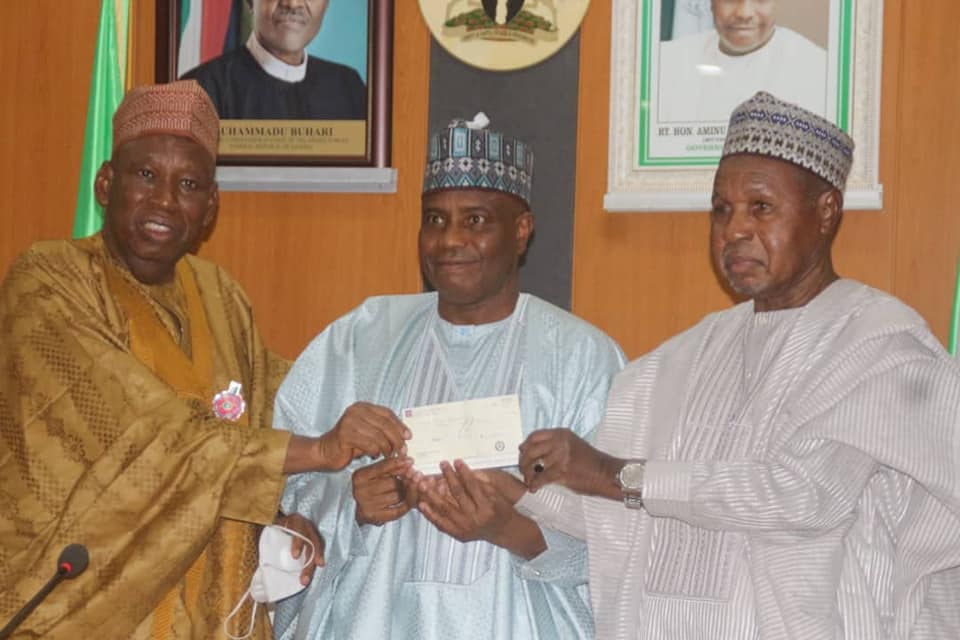
The North-West Governors Forum, led by Governors of Katsina Aminu Bello Masari and his Kano counterpart, Dr Abdullahi Umar Ganduje, on Wednesday donated the sum of fifty million naira (N50,000,000) to the 23 families of the victims of last week’s gruesome attack in Sokoto.
The governors presented a cheque to their counterpart, Governor Aminu Waziri Tambuwal, at the Sokoto State Government House.
The governors prayed for the repose of the souls of the deceased.
On November 8, 2021, bandits shot at a bus conveying travellers from Sokoto to Kaduna. They, later on, set the bus on fire, killing all the passengers.
Local reports put the number of the victims as 42 while the Sokoto government says they were 23.
DSS invites Kaduna activist, Buhari over protest against killings in the North
By Sumayya Auwal Ishaq
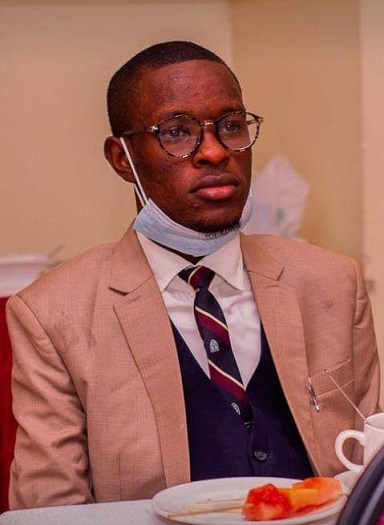
The Department of State Services (DSS) has invited another convener of the #NoreMoreBloodShed protests, which have enveloped Northern Nigerian states since the immolation of escaping travellers in Sokoto State last week.
The activist, Muhammad Bello Buhari, confirmed this on his verified Facebook handle: “I have just been invited by the DSS Kaduna State — to report at their office by 10 am tomorrow.”
Buhari further said that “I shall honour their invitation. This is our country. We have no any other place other than Nigeria. Our only offence is that we asked for the lives of Nigerians to be secured. We asked for the whereabouts of the few we elected to secure our lives and properties when we are being killed daily.”
So far, Muhammed Bello Buhari is not the first organiser to receive such an invitation from the nation’s secret police.
Zainab Nasir Ahmad, a Kano-based activist, was also grilled over the same protest she convened last week. She subsequently dissociated herself from future planned protests, citing security concerns.

ASUU: FG impoverishes us, no going back on strike
By Uzair Adam Imam
The Academic Staff Union of Universities (ASUU) has threatened that there is no going back on its planned strike action as long as the government did not meet its demands.
The union also tackled members of the National Assembly for earning ₦1.5 million or thereabout monthly to the detriment of professors with ₦416 000 monthly takehomes.
Mr Adelaja Odukoya, the Zonal Coordinator of ASUU, Lagos Zone, made the disclosure on Tuesday while addressing journalists at the end of the zonal meeting of the union held at the Federal University of Agriculture Abeokuta (FUNAAB), Ogun State.
Odukoya also criticized Senators and House of Representatives members over “jumbo pay”, adding that academic members “are being impoverished by the federal government.”

Bandits terrorisms is a 5-dimensional issue
By Zayyad I. Muhammad
Firstly, the military has been stretched doing other ‘peoples’ jobs’ the military is tackling the terrorist bandits at the ‘surface’- see and kill, while the root causes still remain. The military is not a policing institution. The Nigerian Army is under intense pressure to fill security gaps. Security experts say, globally military involvement in crime-fighting is problematic practically because they are not trained to do so.
Secondly, the police which are trained to uproot the causes of this kind of criminality, deal with it at the surface & seal the seals, are handicapped beyond tolerance level- the police are underfunded, ill-motivated, under-equipped, and neglected. If the Nigerian police can get half of what it needs, they will tackle the bandit terrorists from end to finish. The police are superb in gathering intelligence from primary sources because the police are everywhere and trained to do so.
Thirdly, it seems, President Muhammadu Buhari is so much relying on a bulk information-first line of information ( service chiefs) he should also get information from the second and third levels- field commanders and local communities dwellers. If he is doing it, he should seek more. Though, the presidency on December 12th, 2021 said “Alongside military force, the government is seeking to address the violence at its economic source. Massive infrastructure projects like the coastal rail and new train from the southern coast through the north-east to our neighbour Niger, aim to expand employment and opportunity across the country, bringing hope to our more remote and poorer regions where bandits and terrorists thrive”
Fourthly, Governors, security votes and benefits- some officials of government who in one way or another benefit from the opaque security vote system will always work hard to make sure bandits’ Terrorisms continue- it’s a business. some state governors are doing their best, but some of their officials may be sabotaging their efforts.
Fifthly, communities social disorder- abject poverty, the death of community-living, everybody for his own has also contributed in oiling recruitments into the banditry business- this problem was as a result of one thing- the hijack of the local government system by the governors and state legislators. LGAs are the best sources to cater to the need of local people- when this source is no more, local people start searching for new sources to survive. Though, sheer criminality and materialism among some Fulbe including the international proliferation of small arms are also factors
According to a report by American Security Report (ASP)- ‘Banditry in northwest Nigeria has become an appealing method of income in the region where weak governance, youth unemployment, poverty, and inequality have left people with depleted options for livelihood. Security services are often understaffed and lack the proper resources to effectively combat banditry. Vast areas of unregulated forests allow for easy concealment, and police and military forces have difficulty penetrating the rough terrain. In addition, under-policed borders have aided the proliferation of small arms and light weapons’ amongst bandit groups’
Bandits Terrorisms have reached the red level- the problem now requires a holistic approach – new and already established effective methods must be implemented to tackle the problem from the root causes. For example, academics and security experts have done some excellent research on the cause of banditry in the northwest and other regions, the intelligence community can use it for early warning and intelligence gathering. Furthermore, the firing angle must be backed by more funding of the police by the federal government. Intelligence, accountability, selflessness, and national interest must also be a priority as well.
We are in a war against ourselves.
Zayyad I. Muhammad writes from Abuja, zaymohd@yahoo.com.
Travellers killed, dozens abducted as bandits block Kaduna-Zaria highway
By Uzair Adam Imam
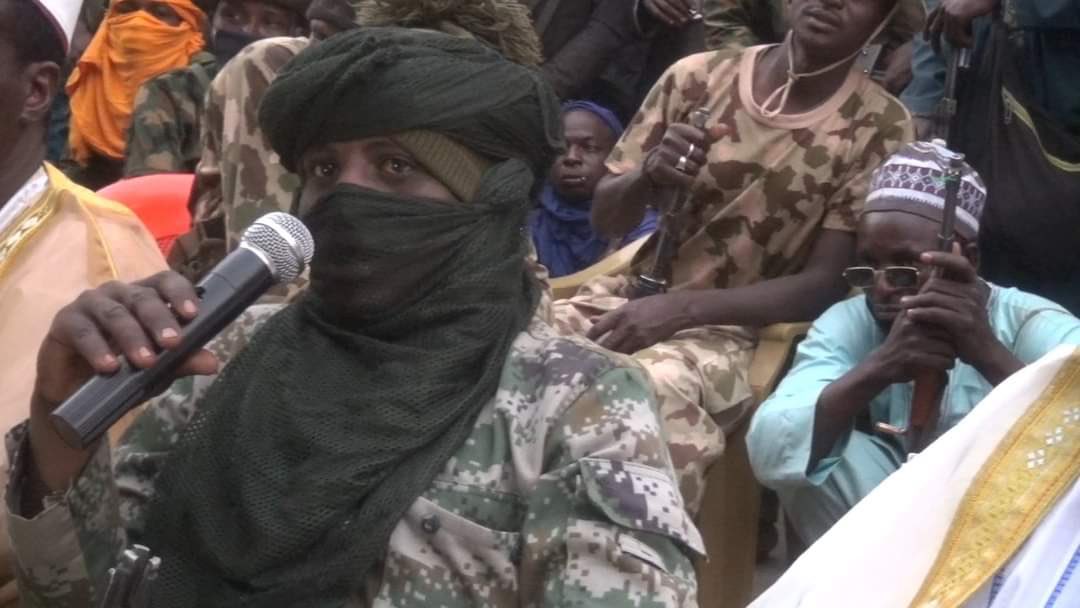
Reports from Kaduna disclosed that one person was shot dead while many travellers were abducted when gunmen blocked the Kaduna-Zaria highway in the state.
The incident happened around Mawai village, also known as Gonar Magajin Gari, on Monday night.
A source identified the victim killed as one Alhaji Sani Dogara and was heading for Kaduna from Zaria.
Reports also disclosed how the bandits operated ‘unchallenged’ for almost three hours.
However, an eyewitness said that the bandits came in vehicles and stationed them around Tudun Gaude village.
He added that the vehicles were used to evacuate their captives to an unknown destination.
Bandits abduct Mother of Yahaya Bello’s Chief of Staff
Uzair Adam Imam
Unknown gunmen have abducted Mrs Seriya Raji, mother of Abdulkarim Jamiu Asuku, the Chief of Staff to Governor Yahaya Bello of Kogi State.
Reports disclosed how the gunmen raided her residence in Adavi Local Government Area of the state on Monday night.
An eyewitness confirmed that Mrs Seriya Raji was abducted moments after she observed her evening (Ishai) prayer in a mosque within the house.
According to the source, the abductors were about six and wore masks concealing their identities.
Up to now, the abductors have not made any contact with the family since the incident.

Letter to late Sir Ahmadu Bello, the Sardauna of Sokoto and Premier of the defunct Northern Region
With pain and anguish, I decided to make this communication with your soul, which I believe is resting well. I must confess that I do not know you personally, as I was not born when you held sway as the Premier of the defunct Northern Region. However, I have heard so much about you from my late father. He narrated stories about how you conducted your political activities geared towards our region’s progress.
Today, things are no longer at ease in Arewa. The land of our great ancestors is in chaos and anarchy while life has become nasty, brutish and short. Arewa has been turned to a killing field by terrorists with the blood of innocent people crying for vengeance. The elites that took over the mantle of leadership from you have destroyed all that you laboured to build. They live in luxury and great comfort while most people are dying in poverty and hunger. Their children study in Ivy League schools in the West with public funds and return home to take the best jobs while the children of the poor are roaming the streets and eating from the dust bin. Many families can no longer eat three meals per day, as good food has become a luxury. The cost of living has continued to rise with stagnant wages.
Sardauna, you are known as a warrior who strived hard during your era to emancipate the poor by ensuring that parents sent their children to school, which was free those days. Your late daughter Hajiya Aishatu, whom I interviewed at her residence in Sokoto in 2013 during my stint with THISDAY Newspaper, spoke extensively on how you carried all along and worked tirelessly to ensure unity in the north irrespective of tribe or religious affiliation.
It is no longer at ease at the moment. The children of the poor that you trained free with the resources of the Northern region before Nigeria’s independence, and those who came after them, have ruined your efforts. They have become feudal lords and turned out to enslave us. They have sold all the assets that you and other great northerners toiled to build over 60 years ago, while organisations you set up like the New Nigerian and textile industries in Kaduna, among others, have all collapsed. They not only mismanaged these organisations but also destroyed your legacies. Many people in northern Nigeria have been homeless and are currently in IDP camps, frustrated and dehumanised. They have been sacked away from their villages by terrorists while vast agricultural lands have been left fallow without any farming activities.
Today our region is littered with many orphans and widows whose husbands have been hacked to death by bandits. We have so many children (Almajiris) roaming the streets without any future while the elites do not care. Some of the Almajiris, neglected by the society, lack basic education and opportunities, unleash terror on the society that neither cared for them. Your grandchildren no longer have access to what the people you earlier trained free in some foreign institutions enjoyed a few decades ago. Today the children of the poor no longer have access to quality education, as they study in dilapidated primary and secondary schools. At the same time, the political elites send their children to study in private schools both locally and overseas.
The painful aspect of this is that they now packaged a man without empathy and presented him to us as a messiah in 2015. Our people heeded the call and voted him into power, believing that he would usher us into prosperity. Since then, our region has never known any peace. Bandits have taken over our major roads in the north, especially Abuja-Kaduna road, kidnapping people for ransom. Families have been compelled to sell their properties to raise money for ransom. These hoodlums kill their victims, especially those whose families cannot pay the ransom, while their remains are thrown away in the forest.
Similarly, our farmers in rural areas can no longer go to their farms in peace for fear of being killed. Those who managed to plant their crops could not harvest them, as the crops were set ablaze by these urchins. The agricultural foundation of the region is being destroyed while those at the helm of affairs do not care.
Inequality is at its peak in Arewa. The political leaders are using politics and religion to balkanise our society. In fact, as a journalist who worked in the region for over a decade, I had it on good authority from a reliable source that some politicians are behind the killings in Arewa. I am, indeed, aware that you did not amass any wealth before your death. But the people that came after you have stolen our commonwealth and used the funds to purchase mansions and exotic houses in London, New York, Paris, Switzerland, Malaysia, Dubai and other top cities in the world. They do not care if our region goes up in flames because they believe they have a place to hide in case of an outbreak of war.
Today our people are being killed daily by primitive herdsmen while our women are raped indiscriminately in remote communities. The political elite in cahoots with the traditional rulers have neglected a large segment of the society. The clerics who are supposed to serve as a beacon of hope for the masses have been compromised. They have become silent and afraid to speak out for fear of the unknown. Those Islamic scholars, who had the courage to speak, admonished our youth not to protest but engage in fervent prayers. Allah will come down to fight our battle if our youth refuse to take action.
The painful aspect of this is that even the activists who protested a few days ago to create awareness about the ongoing genocide by Fulani bandits in rural areas of Sokoto, Zamfara, Katsina, Nigeria and other northern states have been threatened by the officials of the Department for State Security Services (DSS). So, who will fight for the poor and downtrodden and fight for the orphans and widows?
Our people have become hopeless. The issue that has been bothering me is what the Arewa dream is? Of course, it won’t be easy to answer at the moment. An average Arewa youth is just focused on marriage. That is the dream for many of our youth. Illiteracy, drug abuse, unemployment has become recurring decimal. Is our society on the brink? Are we heading towards a state failure? Who will rescue our people and wipe away our tears? Should we take the law into our hands or hearken to the voice of reason? What is the way out of this misery?
History will always be kind to you, Sardauna, as all and sundry adore you due to the sacrifice you made for the development of Arewa. However, history will not be kind to the present crop of leadership in Arewa, as they have mismanaged your legacies and our patrimony, thereby plunging millions of our people into misery. May you continue to rest in peace, and I pray Almighty Allah to forgive your mistakes and grant you Aljannah Firdaus.
Yours sincerely,
Aminu Mohammed
The writer is at the school of Sustainability, Christian-Albrechts Universität zu Kiel Schleswig Holstein, Germany. He can be reached via gravity23n@gmail.com.

Do you need a police permit to hold a protest in Nigeria?
By Rabiu Muhammad Gama
For a start, protest is something that you do to show publicly that you think something is wrong and unfair. Protest is an expression of disapproval; it’s done in different forms and on any day; it can be verbal or physical or via social media. In a democratic society like Nigeria, protest is an effective and legitimate tool, usually the only tool, that citizens can use to express their displeasure concerning some government measures or policies publicly. For example, when the government fails to discharge its duties, the citizens can hit the streets to register their grievances against the government. The nagging question, which this article sets out to answer, is: must people get a permit from a state governor or the Police Commissioner before convening a protest?
The Constitution of the Federal Republic of Nigeria, 1999 (as amended), is the fundamental law of the land. It is the law on top of which there is no other law. It is over and above any law, body or authority. It has been aptly submitted that the Constitution of any country, and don’t forget Nigeria is still a country, is the embodiment of what the people desire to be their guiding light in governance – their supreme law – the “grundnorm” of all their laws.
By virtue of Section 1(3) of the 1999 Constitution, any law, and that ‘any’ does mean ANY, that is inconsistent, or in conflict with a provision of the Constitution, that law is invalid and utterly useless due to its inconsistency with the Constitution. Please, permit me to draw an analogy; whenever there is a boxing match in a ring (read: court of law) between the Constitution and any other law, the referees (judges) always rule, and will undoubtedly continue to rule, in favour of the Constitution. No law can knock out the Constitution, no matter how strong and powerful its muscles are. The Constitution always prevails.
The Constitution provides for Fundamental Human Rights, precisely from Section 33 to Section 44, and these sections are in Chapter Four of the Constitution. These Fundamental Human Rights are simply those Rights that every human is entitled to simply because he is human. Therefore, these Rights cannot be taken away or restricted except in full compliance with Section 45 of the Constitution and some other relevant provisions therein.
Section 39 and Section 40 of the 1999 Constitution provide for the Right to Freedom of Expression and the Right to Freedom of Association and Peaceful Assembly, respectively: merging these two Sections gives us the Right to Protest. In the light of the foregoing, it is safe to submit that Right to Protest is a Fundamental Human Right that is clearly guaranteed and enshrined by the 1999 Constitution. Hence it cannot be restricted by anybody, including the DSS or the Police, or rather particularly the DSS or the Police. It is only the Constitution that can restrict that Right.
Before 2005, there was one undemocratic federal law (Act) that was dripping with dictatorship and some leftovers of colonialism mentality, the Public Order Act. The Law (Act) was initially promulgated as the Public Order Decree 5 Of 1979, and it later became an Act of the National Assembly under Section 274 of the 1979 Constitution. Sections 1 (2) (3) (4) (5) (6), 2, 3 and 4 of the Act required intending protesters to get a permit from the Governor (he can delegate the powers to the Commissioner of Police) of the state where the protest is to be held before they can protest. When the Governor, or the Commissioner of Police as the case may be, thinks that the protest is likely to disrupt public order, he can refuse to issue the permit.
However, in the celebrated case of IGP v. ANPP (2008) 12 NWLR 65 when Malam General Muhammadu Buhari (as he then was) and his then political party, the ANPP, lost the presidential election in 2003 to Olusegun Obasanjo, requested the Inspector General of Police (IGP) by a letter dated 21st May 2004, to issue police permits to their members to hold unity rally throughout the country to protest the alleged rigging of the 2003 election. The request was refused.
General Buhari and the rest of them organised the rally without the permits. As a result, there was a violent disruption of the rally organised in Kano on 22nd September 2003, on the ground that no police permit was obtained as required by the Public Order Act. The Federal High Court invalidated the provisions of the Act that required a Police permit before a protest is staged on the ground of their being inconsistent with the provisions of the Constitution, particularly Section 39 and 40, and Article 11 of the African Charter on Human and People’s Rights ( Reification and Enforcement) Act, Cap. 10, Laws of the Federal Republic of Nigeria, 1990.
On appeal, the Court of Appeal also affirmed the decision of the Federal High Court. Right from the Federal High Court, the learned trial judge relied on the decision of the Supreme Court of Ghana in the case of New Patriotic Party v. Inspector General of Police (1992 – 93) GBR 585 – (2000) 2 HRLRA 1 where it was aptly submitted that:
“Police permit has outlived its usefulness, statutes requiring such permits for peaceful demonstrations, processions and rallies are things of the past. Police permits is the brainchild of [the] colonial era and ought not to remain in our statute books.”
That was how the Court sent those unconstitutional provisions of the Public Order Act to their eternal grave. By the way, it may interest you to know that by virtue of Section 83 (4) of the Police Establishment Act, 2020, where a person or an organisation CHOOSES to notify the police of his or its intention to hold a public meeting, rally or a procession on a public highway, the police officer responsible for the area where the rally will take place shall mobilise personnel to provide security for the rally! The police or the DSS have no powers whatsoever to stop or restrict the Fundamental Right of Nigerians to freedom of expression and assembly once those rights are exercised within the ambit of the law.
As the law stands today, no police permit is required before staging a protest in Nigeria. The right to protest is a Fundamental Human Right given by the Constitution, which cannot be taken away or restricted except in accordance with the provisions of the Constitution.
Rabiu Muhammad Gama is a Law student from Bayero University, Kano (BUK). He can be reached on 09061912994 or via rabiuminuwa327@gmail.com.
The cow does not need oil
Ahmadu Shehu, PhD.
It is true that the large chunk of Nigeria’s export comes from oil and that Nigeria depends to a great extent on this commodity for economic survival. However, this situation results from economic laziness – one of the many curses that came with crude oil to our country.
Pre-oil era, Nigeria was faring better, leading in many aspects of social and economic endeavours, especially agriculture and technical skills. This diversity of resources made our economy very resilient. Those were the days when Nigeria was a role model to the developing world.
Speaking of livestock and animal husbandry in today’s Nigeria leads to misleading insinuations that some supremacist ethnic group domiciled in the bush wants to hijack the “southern-oil-money” to rear cows.
These claims are not only wrong, but their makers are also pathetically ignorant of national and global economics. The fact is that, all over the world, animal husbandry is mainly economic and not ethnic, religious or regional. It is a matter of income, survival and sustenance. Data from butcheries, ternaries, restaurants, etc., in Enugu, Lagos and Port Harcourt can confirm this.
However, I do not squarely blame the proponents of these narratives for their lack of understanding of the fundamental economic outlook of this country. Instead, I assume that this kind of utter ignorance is also one of the curses caused by crude oil in Nigeria. Just as it killed all other viable sectors of our economy and transformed our political leadership into a set of docile, sit-and-wait set of people, it has succeeded in destroying our intellectual discourse. Today, all socio-economic conversations are viewed from the narrow prism of petrodollars.
Thus, our socio-economic and political conversation is now bereft of ideas and far from our social realities. It is sad to see many people failing to appreciate the glaring fact that six decades after the discovery of oil at commercial quantity, this country did not only fail to develop but has moved backwards in all indices of human and social development.
The topmost hierarchy of political leaders, policymakers, and civil society has failed to learn one simple, practical truth: our country’s strength, resilience, and prosperity are not in oil. They are right there under our feet and noses, at the backyards, waiting forever to be harnessed and utilised. Nigeria can take a cue from our mates, ala Malaysia, Indonesia, Brazil, India, etc.
Now, back to the “oil-money” narrative. Are herders and cattle breeders asking for “oil money”? No. In fact, herders do not care – or are not interested in crude oil in Nigeria. Secondly, those of us advocating for the development of the livestock sector do so for the economic advancement of Nigeria, in general, and not just the herders, or “Fulani”, as would say the bigots.
For one, agriculture (livestock and crop) is the largest contributor to Nigeria’s economic growth. It contributes 40% of economic activities, employing over 60% of our country’s population – that is, one hundred and sixty million Nigerians.
You may think that the livestock sector is economically barren and that governments and other sectors of the economy do not benefit from it. You may even argue that only the “malams/awusas” benefit from the economic resources in this sector. But, you are dangerously mistaken, and I will show you why.
In Nigeria today, livestock is a multibillion-dollar business sector. Estimates by the Federal Ministry of Agriculture show that each year, Nigeria produces (and consumes) at least 18.4 million cattle, 43.4 million sheep, 76 million goats, 180 million poultry birds, among other things. Multiply these numbers to any amount of years and see the contribution of the livestock to the Nigerian economy.
For demonstration, let’s assume each of the 18.4 million heads of cattle is valued at $200 only. What you get is a staggering 6 billion dollars – three trillion naira per year – i.e. about ¼ of the country’s annual budget.
My experience in cattle businesses tells me that governments at all levels make a minimum of 10% direct revenue on each cattle, ranging from the market, local government, state, transportation, etc., levies that trail the cattle market chain.
But, this is just for cattle. These numbers multiply exponentially when other varieties of livestock come into the equation. Now, consider additional extended revenues on factories and sub-sectors that rely solely on livestock, such as leather, meat, and dairy.
While doing the maths, please remember that these raw and food materials serve Nigeria, one of the largest markets in the world, the most populous African country and the largest economy on the continent. Thus, the economic resources and taxations derived from this sector are massive!
Therefore, the question that naturally follows this arithmetic is: How much is Nigeria’s budget for the development of this sector and the millions of people it employs?
As Nigerians, we are aware of the 12% derivation to the so-called oil-bearing states at the expense of other equal federating units. The basis for this disparity is to enhance the development of the immediate oil-bearing communities.
Similarly, a large chunk of the oil income is reinvested in the oil and gas industry development. Businesses and individuals in this industry benefit tremendously from these incentives and investments.
On the contrary, the Nigerian budgetary allocations for agriculture, particularly the livestock sector, have been very meagre and far below the lowest AU benchmark of 10%. For instance, from 2015, the allocations for agriculture have been below 2% of the budget, receiving a paltry N160 billion (1.37%) in 2020.
Obviously, this is far from commensurate to the economic and financial contributions of the sector in Nigeria’s GDP. It also negatively affects the lives of the majority of Nigerians whose livelihoods depend on agriculture.
While the government’s spending on agriculture is pathetic, the situation is even worse in the livestock sub-sector. For instance, under “promotion and development of animal production and husbandry value chain”, the 2020 budget proposes only N546, 156, 792 for the whole livestock sub-sector. Note that this amount was not budgeted for just cattle, sheep, or poultry but Nigeria’s entire livestock value chain. And that is just a proposal, not actual spending.
This, given the resources, financial and material contributions of the sector, is an insult on the human senses of any keen observer. Moreover, juxtaposing this estimate to that of the crop value chain makes the economic injustice against livestock producers even more glaring.
Therefore, it appears that livestock production and development are grossly marginalised across all three tiers of government and even within the agricultural sector. I had hypothesised elsewhere that this disparity is one of the major causes of the setbacks in Nigeria’s efforts at agricultural development.
Now, in this socio-economic reality, the governments and other Nigerians outside the economic chain of livestock anticipate a quick, sufficient, and even elegant modern livestock breeding system in Nigeria.
Worse still, the government expects these people who suffer from this severe lack of financial support, access to social development and political representation to be absolutely immune to the social consequences of this economic inequality and injustice.
This, without fear of contradiction, is an impossible mission. For, we have learned from the works of the philosopher-king, Emir Muhammad Sanusi II, that every economic situation bequeaths social reaction(s), as humans are not only social but also “economic animals”.
The points derived from the previous discussion are that herders and livestock breeders do not need oil or its by-products to grow livestock. They do not also ask for money accrued from the oil and gas industry to be invested in developing the sector.
What the livestock needs – which is legitimate and necessary – is the reinvestment of a fair portion of the wealth it creates back into the sector and the social development of the herding communities.
By and large, herders are not asking for “oil money” because the cow does not need oil to prosper. We are only saying that the money accrued from the livestock sector – a small portion of our contribution to the nation’s economic basket – be reinvested into the very sector that produces it as is done for other salient sectors of the economy. Full stop!
Dr Ahmadu Shehu is a herdsman and academic. He can be reached via ahmadsheehu@gmail.com.