Gombe: Zakah and Waqf Foundation empowers women
By Nabeela Usman El-Nafaty
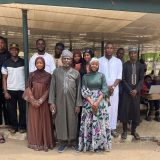
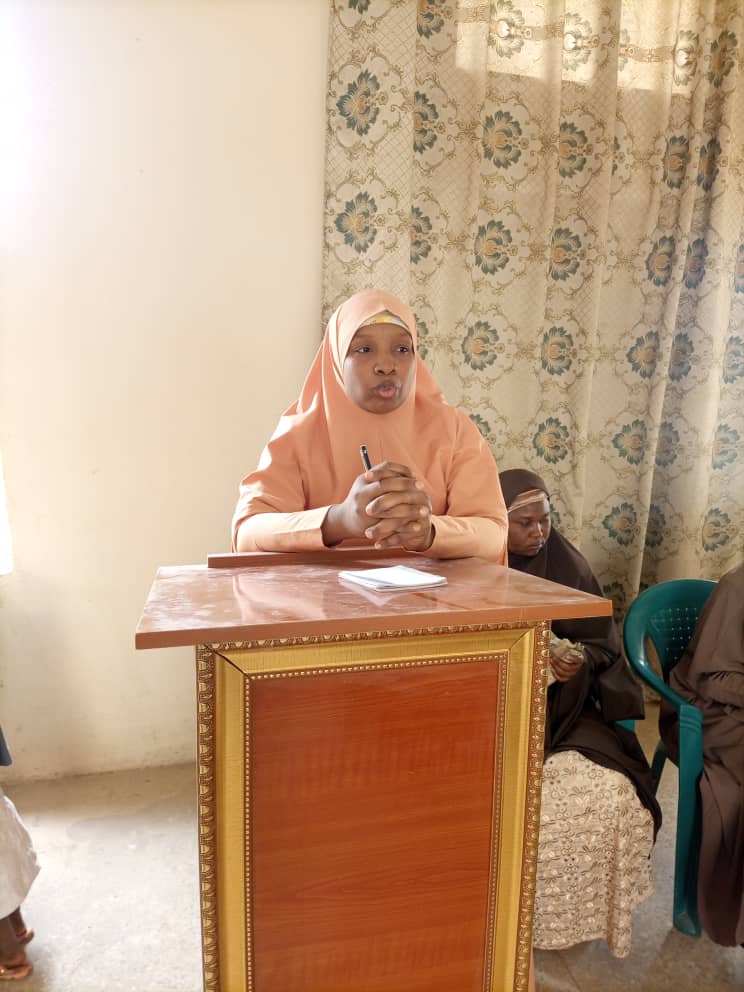
The 5th set of the beneficiaries of the Women Empowerment Program under the Zakah and Waqf Foundation, Gombe, have undergone a semi-final graduation ceremony on Sunday, March 13, 2022. The main graduation ceremony and inauguration of the new empowered (6th Set) is expected to hold after Ramadan.
The beneficiaries who were inaugurated on February 14, 2021, numbering 88, were each given N10000 start-up capital. Those who reached the finish line were about 40. The ceremony had the attendance of the Chairman of the Foundation, the Heads of Women Empowerment, Education and Training, and the Chairperson of Wadata Multipurpose Cooperative Society (WAMCOS), among others.
Malama Maryam Yaya, the Head of Women Empowerment, gave the welcome speech. She thanked the beneficiaries for their doggedness in completing a full year of biweekly meetings, savings and enlightenment, as they saved close to N1,200,000 since February 28, 2021.
The Chairman of the occasion, Vice-Chairperson of the Foundation, QS Ahmad M. Kabir, prayed for the Foundation and thanked its head for her tireless efforts to keep the program alive and functioning.
The VC’s speech was followed by the keynote address by the Chairman of the Foundation, Ameer Abdullahi Abubakar Lamido. He gave a detailed speech about the next level of their empowerment, including joining the WADATA Women Cooperative Society.
The Chairperson of WAMCOS, Malama Hanne Abdullahi, was the next on the podium where she welcomed the successful beneficiaries into WAMCOS. She emphasized the need to come to monthly meetings and make monthly savings regularly. She also introduced to them the idea for ‘special savings’, which is usually for long-term plans like the wedding of a daughter, registration fee of kids, hajj savings etc.
The event’s highlights were feedback from the beneficiaries about how the Empowerment Program benefitted them in ways beyond measure. One of the beneficiaries, Kulu Muhammad, from Tudun Wada of Gombe, said that the programme was “like a person on a standstill in total darkness, and then someone comes with torchlight and shows him the way out of the darkness.
Another highlight of the event was the presentation of gifts to the most outstanding beneficiaries in performance, determination, frequent attendance to meetings, and savings.
The beneficiaries were allowed to come and pick from items of their choice, including food flasks, clothes, kids’ wear, Hijabs, and shoes donated by some officials and volunteers of the Foundation. No one among the attendants of the graduation went home empty-handed. There were smiles everywhere and prayers to the Foundation for more success and greater heights.
On schooling and becoming rich
By Alkasim Harisu Alkasim
Often, the people that idolise going to school are arguably the ones who, in the long run, turn out to be stinking poor. This is to paraphrase a friend that ardently considers schooling a total waste of time. This assertion is controversial. But, is my friend spot-on or not? It is, to some extent. Still, I have my buts.
This argument has often generated a heated debate amongst us. Whenever it comes to my mind, it reminds me of Kiyosaki’s book Rich Dad, Poor Dad. The writer dissects factors that hinder the learned from earning big bucks. Kiyosaki argues that going to school is the biggest hurdle that denies one the chance to make a bank. He opines that a person spends twenty to thirty years worshipping books, yet, over that period, he scarcely becomes a big gun. Unfortunately, in Nigeria, one ends up jobless after this long journey.
Debunking formal education, Kiyosaki argues that a person is not taught a single subject on how to make money from primary school to university education. The conventional subjects such as chemistry, physics, literature, etc., are what one seriously enrols in. In his opinion, students should be taught topics such as financial education. Education indeed discourages one from accepting jobs that are not money-spinning. For instance, somebody with a Master’s degree or PhD will feel ashamed to sew for a living, not to talk of driving the commercial tricycle (aka A Daidaita Sahu).
Are the graduates the only ones to blame? This is a question we should all ponder. The government is blameworthy too. Like it or not, the government cannot give everybody a job. True. But it can establish a conducive environment to doing other jobs. I have never hunted for gainful employment, thanks to my passion for academia. I know this job in Nigeria does not make you a money bag. Yet, I have for long picked interest in it.
In the developed and even some developing economies, the private sector employs a great score of people. The government creates an environment that will aid it to carry out its businesses for the sector. Private sectors pay handsomely in such countries, especially in the western world. I wondered if you know that employment is scarce even in the UK. Even the rampant lack of jobs causes deviance and other criminal acts there. (See Haralambos and Holborn’s book on Sociology).
Of course, we walk tall. We don’t want to do what society looks down on. However, some of us make an exception here. I know of a person with a First Class honours degree in engineering who humbled himself and took up a job many of us can’t do. He ekes out his livelihood from selling coals, taking pride in it. He sees the world of the little he earns from what he sells. Life goes on. Nothing reduces his charm.
I was once in India for a higher degree. There, I saw a lot of wonders. We had a cook in our university who is a master in political science. It is said that people with first degrees in India outnumber the whole population of France. Remember, India is the second-most populous country in the world. Imagine somebody in Nigeria cooking for a living. I don’t say we can’t find one. But rarely can you find more than two in your quarters. Of course, people with degrees, or even diplomas in Nigeria, feel too big to do lowly jobs. I, nevertheless, think our arrogance is reducing because you can now see graduates doing menial jobs. Why not? There is a score of jobless First Class students roaming the streets.
I submit that people with higher educational qualifications always end up jobless or not raking it. People with lower qualifications or no qualifications are the ones that are the business moguls. Jeff Bezos, Bill Gates, Elon Musk, Mark Zuckerberg and Aliko Dangote are textbook examples. Zuckerberg dropped out of Harvard, and he is now stinking rich.
Indeed, formal education discourages and slows down creativity. It also dampens one’s enthusiasm. Honestly, the way an avid reader confines himself in his study speeds his entrepreneurial death. This is nothing but creative imprisonment. Whenever in his study, the reader seems to imprison his creative faculty in books. He brims with wishful thinking, ideals and all what-have-yous owing to his fervent reading of all sorts of books.
Having read a lot, he begins to idealise the world. He pictures and pores over how the world should be. But this is just his wildest dream. In his attempt to make the ancient Greece an ideal state, Socrates lost his life. He was sentenced to death for being a corrupt influence. In his book The Republic, Plato also romanticised how Greece should be, how rulers should lead, the type of people to obtain in a state, and those exiled. After all, he died not having his dreams fulfilled.
Not very long ago, Karl Marx and Friedrich Engels conceptualised and advocated a classless society in their works. For instance, they co-authored a book titled Communist Manifesto. In the book, they discussed how the masses could emancipate themselves from the domination of the bourgeoisie. In his three-volume book Das Kapital, Marx critically studied the architecture of the economies of European societies. Unfortunately, most of the ideations and philosophies of these great thinkers flopped. For instance, Marx’s classless society idealised where all and sundry would live equally has yet to happen. Marx, who died an atheist, lacked the knowledge that such a classless state is a paradise. So said Dr. Saidu Ahmad Dukawa.
May Allah awaken and help us embrace the realities of today’s world. May we not feel too big to do the most menial jobs we can find around. The journey is long. You can start unimportant and end up important, and vice versa. Remember that Margaret Thatcher was from a lower-class family. She went through rigours to make it to the upper class.
Wonderfully, Thatcher became the first female UK Prime Minister. She was even taught how to speak, walk, and act in an upper-class-like way when voted into office. Like the UK and other democratically capitalistic countries, Nigeria also allows social mobility. Thus, try to move up the economic ladder. Just give it your best shot. You can. I, rest assured, know you can.
Alkasim Harisu Alkasim wrote from Kano via alkasabba10@gmail.com.

Social media addiction and its adverse effects on youths
By Mukhtar Garba Kobi
Communication is one of the fundamental means people command, caution and interact with one another. It is as old as human beings because the first created beings (Adam and Eve) communicated. Primitive generations used so many ways in sending signals or messages to other people. They include beating metal gongs, lighting fires on hills, blowing flutes, beating local drums, firing Dane-guns, intense ululations, especially during marriage ceremonies, etc. Moreover, communication passed through generations. More advanced platforms and channels are created to enable people to interact with fellows in far and near places with ease from their comfort zones.
Every day, sophisticated communication gadgets are invented and taken to markets. The more advanced features are added to social media platforms, the easier messages and information are conveyed to target audiences. According to Global Digital Overview, Facebook has 2.910 billion users, Instagram has 1.478 billion, Twitter has 436 million, TikTok has 1 billion, and WhatsApp has 2 billion active users.
With smartphones and data, people interact live through video calls, share pictures, upload movable images and audio messages, and get instant replies. Yet, despite these developments, youths in Africa and other parts of the world are so addicted to social media that some could not spend 30 minutes without logging in instead of studying for a better future, assisting parents with chores, learning skills to be independents, etc.
Regrettably, some users enjoy chatting in darkness by offing light, not knowing the brightness from phones screens harm their eyes. An eye doctor working with Makka Specialist Hospital in Bauchi, Abba Salisu Abba, explained that the pupil constricts when the light is more than what eyes can accommodate. But when the light is too low or in the darkness, the pupil dilates to search for available light. He further revealed that frequent staring at a light could result in itchy, watery, reddishness of eyes and, if nothing is done, could lead to blindness.
Some parents purchase phones, laptops, and tablets primarily to aid studies of their wards without regular supervision; it is unknown to them that most of their wards use such devices for irrelevant chatting or streaming pornographic content in late hours.
These days, young ladies in recent years shamelessly upload videos of them on TikTok dancing seductively in half-naked dressings; the act pushes some youths to rape teens, work sexually for sugar mummies or pay to satisfy themselves in brothels. Unfortunately, hours spent interacting with friends on social media platforms by students are high compared to the short time given for their studies or research; that has contributed hugely to mass failure during exams. A student from the State Polytechnic even told me that he often sacrifices his meal money to buy data primarily for chatting with friends. Sadly, many lost their lives after applying for jobs advertised on social media. They were pushed to early graves by their employers in unspecified locations.
Shallow-minded adults and teenagers who heavily use social media platforms tend to believe whatever they come across and easily influence peers, thereby influencing them to snatch phones, kidnappings, or do other criminal acts to possess what celebrities have been bombarding them with on social media platforms. Consequently, most people in Nigeria believe that building crime-free societies is a collective responsibility, but only a few contribute in that direction. Parents no longer check the kind of postings, comments, pictures being uploaded or whatever their children are doing on social media platforms but are good at condemning others.
In summary, it is sacrosanct upon parents to be acting as watchdogs over the activities of their teenage sons and daughters on social media platforms. Parents should be collecting their devices and keeping them from them for days to know the messages coming in or people they are interacting with; this would help them determine the best decision.
Social media laws should work on all and sundry irrespective of positions, backgrounds or influences. The law should provide punishment for users sharing violent content, abuse, or false accusation to innocent individuals or groups to serve as a lesson to others. Furthermore, posting educational content on social media should be encouraged and youths doing that need to be rewarded by authorities; doing so would significantly improve students’ academic performances, thereby leading to good results.
Mukhtar Garba Kobi Wrote from Bauchi State.

ASUU NEC members to meet tomorrow amidst one–month warning strike
By Muhammad Sabiu
The Academic Staff Union of Universities (ASUU) will meet on Sunday for its National Executive Council (NEC) to assess the ongoing strike and determine the appropriate action to take next.
The union’s president, Emmanuel Osodeke, a soil science professor, stated this on Saturday but did not provide details about the scheduled meeting.
A member of the NEC who did not want to be named to avoid sanctions, however, indicated that the meeting would be held in Abuja.
Recall that about a month ago, the union declared a one-month warning strike to mount pressure on the Federal Government to have its promises fulfilled.
Therefore, tomorrow’s meeting is the determinant as to whether the strike will continue or not.
On buying and selling job offers: A true, harrowing story
By Ibrahim Aminu Iliyasu
A job is a valuable thing that many graduates aspire to gain after graduating school, especially those who consider certificates as tickets for a better life. Years back, our parents told us to go to school and read well so that we could get better jobs and live in affluence.
Today, the trend has changed. Many graduates have now become financially unsuccessful since day one. Of course, it is good to be educated because education is a privilege even among one’s peers. Yes, it is. But that does not assure one a luxurious life. Also, being a graduate does not allow you to be selective in the business or job you can do. I am saying this from pure experiences.
It has not started today. Buying job offer is as old as the Nigerian post-colonial bureaucratic system. To join the military, one has to pay the sum of 100K or 150K or even above to get himself a permanent ticket for life in the Sambisa forest.
Doubtlessly, all our public institutions have been compromised. They are after money, not merit. Sadly, schools and health institutions where professionalism is supposed to be prioritised are also indulged in this. These days, if you do not have money, no matter your qualifications, you would be unemployed. Even those who can link you to those who give job offers have to pay for you or bribe the human resources team or MDs for a job offer.
I have received different but few job vacancies for sale. Sometimes I ignore them or deliberately reject them. For example, there was a time when I was a security guard at one institution that I coincidently met a father’s friend – a banker, an influential one. He is currently a bank manager in Kano. I opened the gate for him, welcomed him and greeted him. He was surprised that I was a security guard because my father knows the big guns.
While having a conversation, he told me one word that still makes me happy and proud. “Ai matsalar Alhaji dan due process ne, shi ba zai iya ba da kudi ba a samo ma ka aiki ba” (the problem of Alhaji is that he is a man of principles. Therefore, he cannot give money for his son to be employed”. At last, he promised to talk to Alhaji. While parting, he gave me some money I desperately needed, but notwithstanding, I summoned some courage and rejected the money. I thanked him and moved on.
Secondly, I was once sent to an interview. After I answered all their questions, the interviewer asked me what I had for him while leaving. I said nothing. He nodded his head and told me they would call me. Till now, they have never called me.
Thirdly, I had another interview with an organisation. The guy who sent me to the organisation pretended to care about my condition and wanted to find a better place for me. Fortunately, I have all the requirements. While I thought I would be automatically employed, the man invited me to his office and confessed that he was “gay”. Angrily, I insulted his forefathers, himself and the satan that sings for him. I still regret knowing him. Thus, I forgot about his job.
Frankly, I cannot do things to get a job and/or find a place in the labour market. I cannot do voluntary services in any organisation anywhere on earth because my family and I sponsored me to study. I did not attend a community school either, and I had never enjoyed any government scholarship. Therefore, I cannot share my knowledge or time free of charge.
I cannot use my money to buy a job offer because any institution that requests me to pay something before it gives me a job is certainly not looking for my credibility or proficiency. Thus, it doesn’t deserve my energy and time, for I would rather die as a hawker than do such evil.
I will not betray my Creator to please the created. For instance, I will not sodomise to get a job. God forbid. Amin.
Ibrahim Aminu Iliyasu is a graduate of Political Science and writes from the ancient city of Kano. He can be reached via ibrahimailyasu@gmail.com.
RCCG’s support for Osinbajo shows his narrow mindedness – Farooq Kperogi; others react to church’s political move
By Ahmad Deedat Zakari.
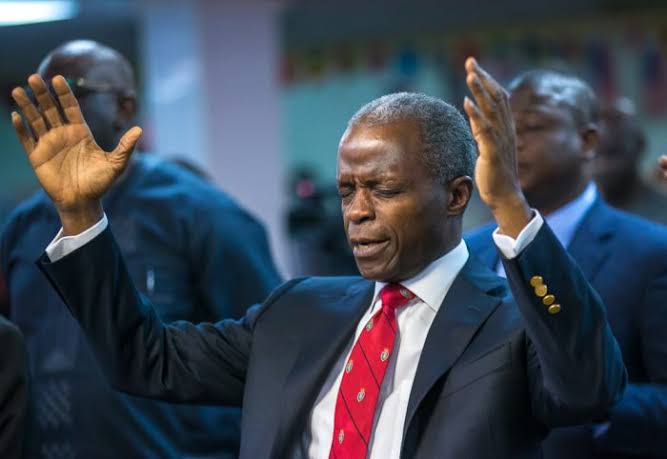
Professor of Journalism and Emerging Media at Kennesaw State University, Farooq Kperogi, has faulted the Redeemed Christian Church of God’s interest in partisan politics.
Kperogi expressed his disdain regarding the church decision on his verified Facebook account on February 10, 2022, in an article titled “RCCG’s Dangerous Foray into Politics for Osinbajo.”
He said he was not surprised at the church’s sudden interest in partisan politics.
“This isn’t really surprising, frankly, because Pentecostal Christians see Osinbajo as their representative in government and think he is the fulfilment of Pastor Enoch Adeboye’s oft-quoted prediction that one of them would become Nigeria’s president during his lifetime.”
Kperogi also threw a subtle jab at President Muhammadu Buhari, faulting Osinbajo’s rise to the presidency as a ploy to burn the notion that the president is a fanatical Muslim.
He also described Osinbajo as a pentecostalist whose inner circle are his fellow pastors and churchgoers.
“Osinbajo himself defines his role in government in the narrow terms that his co-pentecostalists see it: as the materialization of a Pentecostal Christian theocratic dream. That’s why his inner political circle is almost entirely made of Yoruba RCCG members,” he wrote.
Kperogi further argued that Osinbajo is not fit to be president.
“There’s no Christian in government in Nigeria’s history who has ever been as narrow-minded, as culturally clueless, and as insular as Osinbajo, which was why, a senior Yoruba Christian professor told me recently that Osinbajo would “create greater instability as president” than Buhari has because “The Sharia folks will confront [Osinbajo’s] Christian fundamentalism with more violence” which would precipitate disabling communal upheavals.”
Several people have also reacted to the development.
Aisha Yesufu, a human rights activist, in a Tweet said there is nothing wrong with the church supporting Osinbajo
“So let’s assume RCCG is doing this for Osinbajo, what is wrong with that? Why shouldn’t RCCG support a candidate? If the candidate is good, we vote. If the candidate is bad, we do not vote! Simple! RCCG have (sic) as much right to be interested in politics as anyone else.” She tweeted
Also reacting to the news on the Daily Reality Facebook page is Mallam Muktar, who condemned RCCG’s political move, said that “religious leaders participation in politics will lead to divided allegiance”.
“It will be devastating to hand over Nigeria presidency to religionists/extremists whether pastor or Imam because their first allegiance will invariably go to their faith. They are the propelling force behind the clamour for religious configuration of contesting persons and religious blackmail of our electoral process. Who knows, they might also be behind the continuous blackmail of that notable SW Muslim presidential aspirant and political benefactor of their man, who may be perceived as their major obstacle to the presidential ticket.
“Nigeria doesn’t need such leaders. Nigeria needs [a] liberal Muslim and Christian who only fear God but [is] not bound by a non-displaceable religious creed or allegiance. We should resist and shake off religious politics in 2023 by demystifying religion configuration ticket and by voting for liberal candidates with total disregard to their faith,” he concluded.
Intellectuals
By MA Iliasu
More than seventy years ago, the American or rather the undeniably global economist for all that he has influenced with his precise textbook, Paul A. Samuelson, wrote an article titled “Intellectuals”. He uncovered the fallacies of the established Intellectuals of the American society. To him, how they author books that only their friends and students can read, venture discourses only they can engage in, and prescribe policies that have zero respect for emotions, feelings, cultural intelligence and any mortal touch that may agree with common decency epitomises their names: “The Intellectuals”.
In Nigeria, we’re not short of them. Currently, we’re in an international political menace in which Russia put efforts to decimate Ukraine. The moral, ethical, physical, metaphysical, philosophical, epistemological, and even the economic motives and justifications flow freely on the internet. I will not tell you my own, but I’m relaxed knowing about others’. However, “The Intellectuals” are only interested in prescribing books and journal articles, publishing eccentric articles with dense grammar to vividly show they’re not for public consumption but only produced to satisfy the demand of their inner circle. Meanwhile, they bastardise, thus urging the public to take every piece of information on the conflict they may get from the BBC, VOA or CNN with a pinch of salt like the tyrannical antisocials they’re, despite not giving the public any alternative. That’s “an intellectual” for you.
To be precise, this is not a musing on Russia and Ukraine. It’s about the nerve-racking fuel scarcity that has bamboozled the Nigerian federation over the previous month and current. The one started with the speculation of the economically controversial subsidy removal that triggered the ever wicked economic class into succumbing to their Animal Spirit through hoarding. After all, which non-God-fearing mogul would allow the chance to double his revenue off the oppressed lower class without any effort? There’s none!
Discussions on the Nigerian political economy, especially outside university classrooms, are more dominated by the fake, impractical ideal of national consciousness and patriotism. And it takes place even though at no point does the term “Nigeria” ever mean the same to everybody; the poor wanderers, the profit makers, capitalist exploiters and the political hoodwinkers. And still, the Intellectuals want to build our economic skeleton upon that nonexistent psychological pillar. Is it possible?
Nigerians are the brilliant species who have gained relevance by declaring “Economics nothing short of common sense”. And that’s why they despise efficiency and efficacy despite their horrible love for eccentricity. But, if that’s not the case, how do you justify persuading people to buy what’s expensive when what’s cheap and of superior quality is available?
Through patriotism, they say. After all, people should use their hard-earned money to fund the ego of the anti-logic system of governance. For in the future, they say, there’ll be wonders. Meanwhile, the only wonders we’ll ever see is the one that reflects on the ironic, unethical, inefficient and anti-liberal, unreasonably orthodox, the often mix of the two, logic of the Nigerian Intellectuals that I’ll disclose below:
“Let’s stop importing fuel till we achieve self-sufficiency. That should be our way. A country with the mineral muscles of Nigeria should not be importing fuel. Let that be our moral standard. Let’s endure all the suffering for now. Let’s be patriotic. We’ll be alright shortly afterwards.” – isn’t this a lovely musing?
Do you disagree? Yes, I know you do. You’re an economist! What I want to ask is, why do you agree with the same pattern of thinking and logic when it’s used on Rice? – One reason:
Fuel scarcity & inflation is pressing every aspect of my society, up to the bottom, thus the outrage. And mostly the rich, who have limousines and Corollas to drive home from work and to the wedding evenings at the city parks, to power gigantic generators for their freezers and air-conditioners, and to calm their nerves from the so-called working stress. Then the industrialists who power their workshops and trade zones. And the artisans who harness all the profits. And that’s why nobody wants to hear anything long English Language, solution or no!
But rice scarcity & inflation, that one only press the poor, the bottom tier. That’s why every time we speak, they quote the models of David Ricardo & Keynes. That’s the only time they remember Ricardo and his comparative advantage or Keynes and his misunderstood, poorly-implemented government intervention. That’s the only time they want to disagree with Audu Ogbeh. So maybe Economics is more than common sense, after all. Thus they even go deeper into the mathematical models of Euler and Nash.
Everybody is acknowledging the need for government to take off its hands from fuel because it’s unfriendly for the lords at the top and the intellectuals at the middle, which is a policy prescription that sanity has advocated forever. But nobody wants to acknowledge the need for government to take its hands off the food industry, perhaps because the top dogs eat what they want from wherever they want, while it’s the bottom tier servants of God that are dying of hunger and historical inflation.
But why the lack of consistency?
Confusion is the reason, which can also disclose the lack of coherence along with discussions of such relevance. In Nigeria today, you’ll see an acclaimed intellectual who’ll die for his liberal romanticism supporting the economics of border closure. It makes me curious how possible it’s for Friedrich Hayek and Paul Samuelson to eat at the same table without arguing? Well, I think that’s the probability of the logic being consistent & cogent. Likewise, the essential orthodox wondering around the idea of ‘unpolice-able’ modern technology despite every magnum opus of their scholarly background suggesting otherwise.
The problem of the American society we love to imitate when it suits us (to quote Chinua Achebe) is that they believe in economics too much. But, interestingly, in Nigeria, they don’t believe in economics at all. And that’s why both are paying the price of extremism while hiding behind Keynesianism. In their experience, greed has taken over everything. But in our own, the economy has become a prison. And the wardens holding the keys are the intellectuals who will rationalise anything.
MA Iliasu wrote from Kano via muhada102@gmail.com.

Two policemen fired for alleged murder of army officer, drug trafficking
By Muhammad Sabiu
Two Inspectors from the Nigerian Police Force in Borno have been fired for alleged unprofessional behaviour.
Tahir Ali and Saidu Nadabo, the two sacked Inspectors, are both assigned to the Borno-based 53 Force Mobile Unit.
Mr Abdu Umar, the Commissioner of Police (CP) in charge of Borno, told the News Agency of Nigeria (NAN) about the development in Maiduguri on Thursday.
According to Umar, Ali was fired for allegedly killing Army Warrant Officer Donatus Vokong, who was assigned to Operation Hadin Kai, while Nadabo was fired for allegedly trafficking 4.5 kilograms of cannabis sativa.
He added that the army officer was killed by the policeman, who was under the influence of alcohol.
“I have just directed senior officers of the command to arrest any personnel with riffle and is under the influence of alcohol or who engage in gross misconduct,” the Commissioner assured.

2023: Redeem Church moves to support Osinbajo
By Ahmad Deedat Zakari.
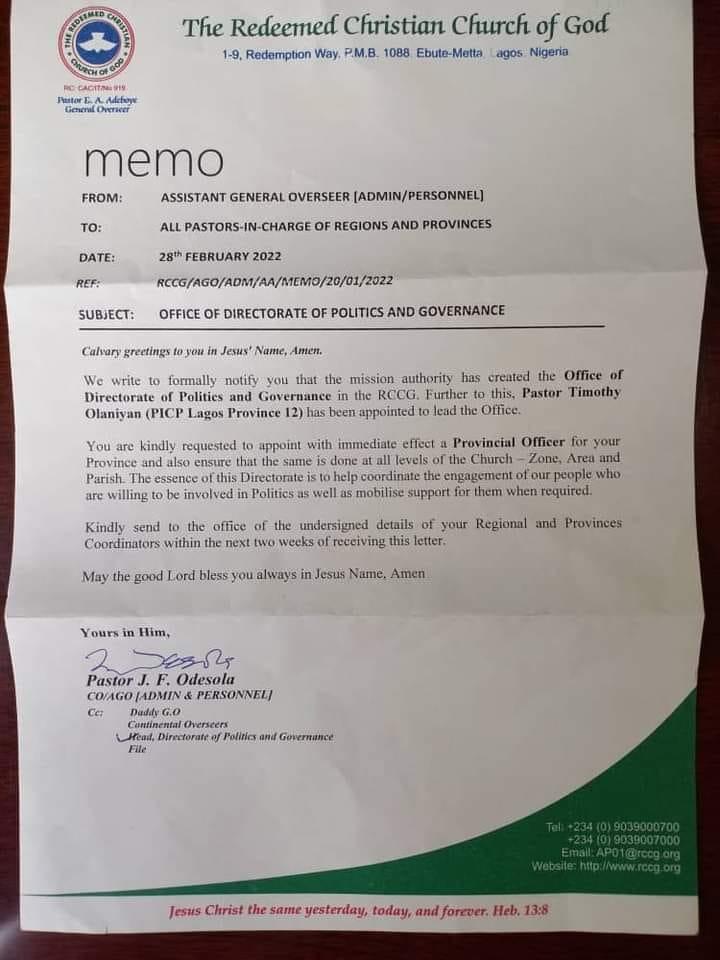
The Redeemed Christian Church of God (RCCG) has created a new directorate, named the “Office of Directorate of Politics and Governance.”
This development was contained in a memo dated February 28, 2022, and signed by the Assistant General Overseer Administration and Personnel of RCCG, Pastor J.F. Otedola.
“We write to formally notify you that the mission authority has created the Office of Directorate of Politics and Governance in the RCCG. Further to this, Pastor Timothy Olaniyan (PICP Lagos Province ) has been appointed to lead the Office” The first paragraph of the memo reads.
Pastor Otedola also requested for provincial officers to be appointed for each province of the RCCG and all levels of the church with utmost urgency in respect of the new directorate.
“You are kindly requested to appoint with immediate effect a Provincial Officer for your Province and also ensure that same is done at all levels of the Church – Zone, Area and Parish. The essence of this Directorate is to help coordinate the engagement of our people who are willing to be involved in Politics as well as mobilise support for them when required,” the memo further reads.
Nigeria’s Vice-President, Professor Yemi Osinbajo, maintains a father and son relationship with RCCG General Overseer, Pastor E. A Adeboye, is in charge of the Lagos Province 48 (Olive Tree Province Headquarters) of the RCCG. The recent development coming from the church cannot be unconnected with his 2023 presidential ambition.
People have expressed different views on politics and religion and the active participation of the church and religious bodies.
According to Mr Peter Onah, “they are biblical figures that participated actively in politics”. He added that religion and politics are two different things that can go together.
However, Mr Nurudeen Bukar, who was confronted by the Daily Reality on the issue of politics and religion, expressed a different view. According to him, “it is best when religion focuses on its primary mandate of preaching and guiding people”.
Bukar argued that partisan politics is not suitable for religious groups as it will distract them from their religious obligations.
JIBWIS tackles CAN, cautions against fanning embers of disunity in Nigeria
By Uzair Adam Imam
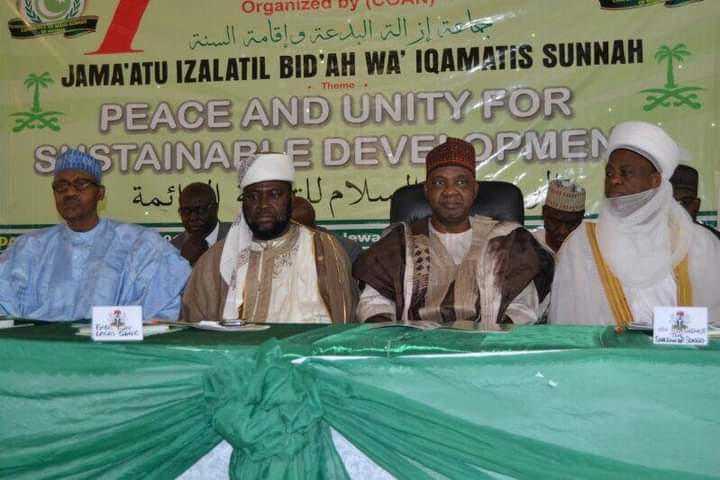
The National leadership of Jama’atu Izalatul Bid’ah wa Ikamatus Sunna (JIBWIS), has urged the Christian Association of Nigeria (CAN) to desist from sticking its nose into politics.
Recently, CAN said that there must be a presidential power shift to a Christian to succeed President Buhari in 2023, a comment that continues to generate mixed reactions from Nigerians.
But in a statement on Thursday, 10th March, 2023, the National Leader of the JIBWIS, Sheikh Abdullahi Bala Lau, said the decision as to who should succeed who should be the business of registered political parties not CAN’s.
Bala Lau warned that CAN should not abdicate its responsibility of preaching peace and national stability for politics.
Bala Lau said: “The attention of JIBWIS Nigeria has been drawn to the widely circulated news of Christian Association of Nigeria insisting on a Christian successor for President Muhammadu Buhari in 2023.
“This is as ill-timed as it is dangerous. The position of CAN as widely reported by Nigerian newspapers has elicited reactions that seem to have further overheated the polity. Jibwis Nigeria notes that this, a wrong move, is what you get when religious leadership indulges in decidedly-partisan campaigns.”
According to Bala Lau, CAN’s campaign of the presidential power shift to a Christian successor will not augur well for the country.
He added, “Like any responsible organisation, JIBWIS Nigeria carefully reviews the implication of CAN’s campaign for a shift of Presidential power to a Christian in 2023 with deep concern.
“To begin with, the campaign in favour of a Christian successor for President Buhari does not make sense, if we reflect on the historical reality of where and how power has resided in recent years.”
“It is common knowledge that from 1999 to date, we had Christians dominating the democratic space for 14 years. Break it down: Chief Olusegun Obasanjo, a Christian was in power for 8 years and Dr Goodluck Jonathan had 6 years. Conversely, if we look closely, the Nigerian Presidents who were Muslims were two – Alhaji Umaru Musa Yaradua governed for 2 years and Muhammadu Buhari is now in his second term of 8 years. Unlike CAN, JIBWIS Nigeria is not mounting undue pressure on any political party or group by insisting on a Muslim candidate as a matter of entitlement. All we ask for is that political parties must insist on a competent, capable and upright Nigerian to be fielded.”
“CAN should not court the trouble of the nation’s political party leadership, who have the mandate to screen and nominate candidates and wait for the final verdict of the voters.”
“Most importantly, CAN should be viewed as a respected religious association and not a political party with mandate to determine what qualifies one to be a Buhari successor,” Lau concluded.