How ASUU strike cripples businesses in BUK and Yusuf Maitama Sule varsities (I)
By Aminu Adamu Naganye
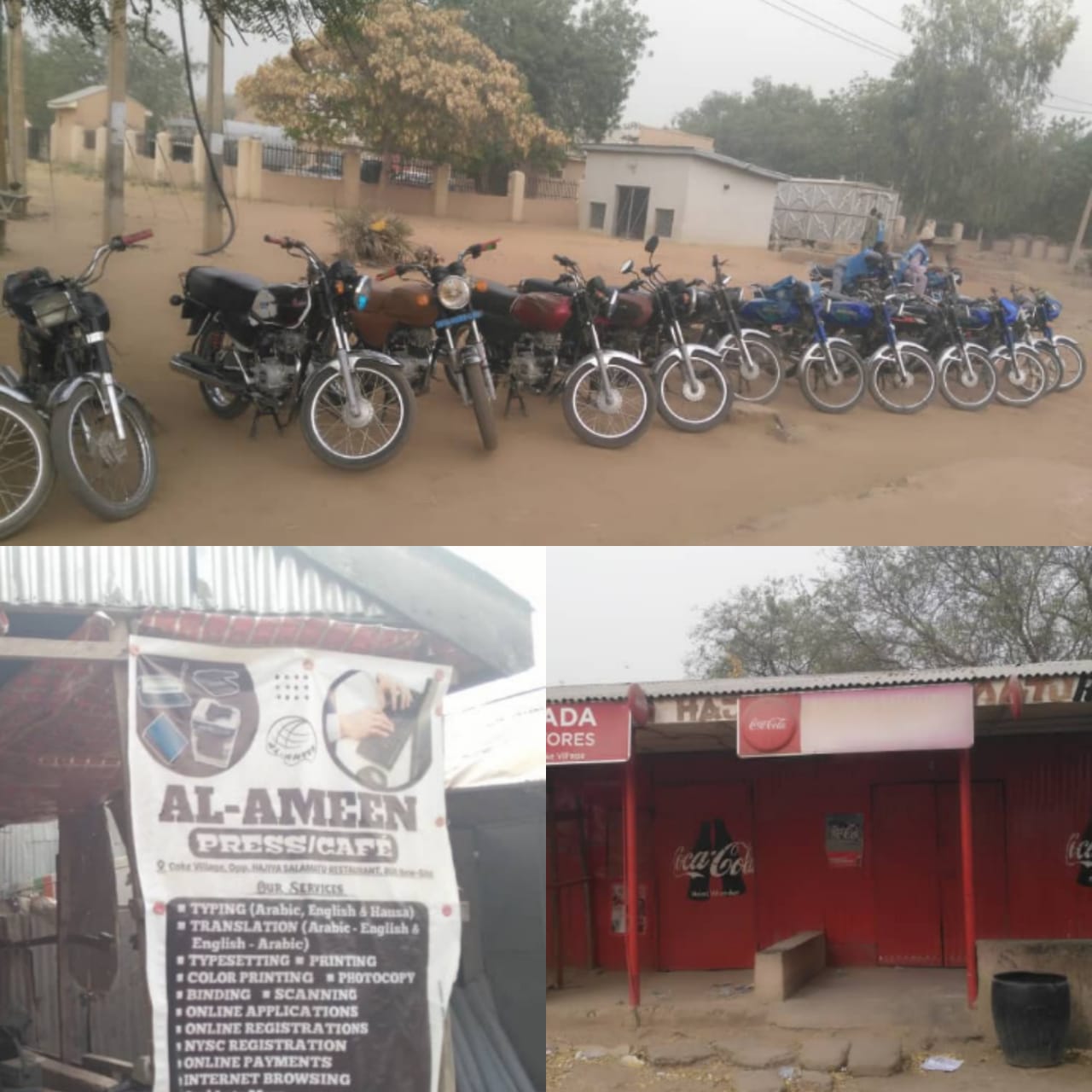
Campus-based businesses in and around Bayero University and Yusuf Maitama Sule University Kano have mostly closed following strike action by the Academic Staff Union of Universities (ASUU), leading to the loss of multiple jobs amid the harsh economic situation in the country.
The strike, apart from terminating academic activities across the campuses of the Universities, has left the institutions desolated as the absence of students grounded business activities to a halt.
A cross-section of petty traders, okada riders, restaurateurs, typesetters and other campus-based artisans have complained about how the strike is taking a toll on their businesses, scuttling their means of livelihood amid soaring inflation in Nigeria.
Nigerian public universities have been on industrial action since 14th February 2022 to pressure the government to fund the universities and settle some outstanding issues as contained in the 2009 Memorandum of Understanding (MoU) and 2020 Memorandum of Action (MoA) as negotiated by the Union of the University teachers and the Federal Government.
Why is ASUU on strike?
The university teachers signed an agreement with the Federal Government of Nigeria in 2009 for the revitalisation of public universities, which will enable the ivory towers to access 200bn annually for six consecutive years. The FG reneged as it only released once in 2013.
Government’s inability to implement other issues of 2009 MoU and 2020 MoA, such as salary upward review after three years relative to the strength of naira-dollar, payment of Earned Academic Allowance (EAA), etc.
The continued use of the controversial Integrated Payroll and Personnel Information System (IPPIS) did not capture university peculiarities and refusal to accept ASUU’s alternate payment system called University Transparency and Accountability Solution (UTAS).
Another point of concern by ASUU is the proliferation of universities by the federal government without adequate funding for the existing ones, which the union argues will further jeopardise the entire Nigerian public university system.
From warning strike to “extended” warning strike
The university dons have completed a 4-week long warning strike in an effort to press home their demands for the Government to honour the agreements. However, after a series of talks between government delegations and the leadership of ASUU, the union extended the warning strike by another eight weeks “to give the government enough time to implement the agreement”, according to ASUU President Prof. Osodeke.
Equally, meetings between the minister of education and the leadership of the National Association of Nigerian Students (NANS) did not yield the resolution of the bone of contentions.
Businesses disrupted, livelihood lost
As the industrial action continues, its effect is taking a toll on businesses and vocations on and around the campuses, with many business owners facing bankruptcy. Although most businesses, such as petty traders, cafés, restaurants, typesetting and photocopying centres, barbing shops etc., have closed down, the remaining few yet to close narrate their harrowing experiences at Bayero University Kano and Yusuf Maitama Sule University.
Ummi Abdulaziz, whose shop in BUK could not sell goods of N1000 a day due to the absence of students, described the ongoing ASUU strike as unfortunate, adding that “The strike affects us really seriously. There are no customers now. There are no people around. We open our shop, but there are no buyers. We are adversely affected. Sales have drastically reduced or even stopped. I can’t even make 1k a day now…”
Ummi, who called on the Federal Government to meet up with ASUU’s demands, said the plight of students and campus-based business people should not be allowed to suffer for long. She urged the two parties to have “A discussion and resolve this problem once and for all.”
Another business owner who identified himself as Sarkin Noma Maitireda BUK said the strike had brought misery and deprivation to their lives as his sole means of survival was being threatened. He was thinking of moving out of campus to find ways to feed his family.
Maitireda further lamented, “Honestly, we are not happy with the strike. We are pained because of our business. Everything on the campus isn’t functioning now. We only sit down by our stalls and shops sometimes to even nap. It badly affects our lives negatively.”
He recalled nostalgically how he survived past strikes partly by leaning onto his savings and ultimately on support from family and friends, saying, “We used to survive on our savings, then we borrowed from friends and family. When the strike ended, and businesses normalised once again we repay our debts”.
He decried that the current situation in the country makes it extremely difficult for him to obtain any support from friends and family, saying “everyone is battling with his challenge.”
“We call on the Federal Government to consider their demands so that they resume their activities and our university to reopen.” He appealed as he narrated how he naps by his stall due to no patronage.
Adamu Aliyu, who used to rake N30, 000 daily on average through his stationery stall but now less than N1000, argued that business people suffer the multiplier effects of the strike more than other members of the university community, including students.
Adamu called on the Federal Government to fulfil its promises to the academics and observed that “the situation in the country today is very terrible. So, I call on the FG to consider the situation of the country generally and consider the students and campus-based businesses specifically.”
Mohammed Kabir of Chiroma Business Centre in BUK, whose typesetting and stationery business vicinity remain desolate, said the strike alongside soaring inflation in the country makes his survival as a father and a husband very difficult.
Narrating his challenging sailing through the harsh reality of the economy compounded by the ongoing strike noted that “it has been difficult for me to survive because before now we were feeding from hand to mouth because of the economic situation. Most of the materials we were using have skyrocketed because of inflation…and now strike….”
Kabir lamented further that, unlike previous university strikes where few works were available, currently, “Probably due to the economic situation of the country, everything stopped. Nothing comes.”
Kabir pleaded that in the interests of students and the nation, even if business owners would not be considered, the two parties should resolve their differences to allow academic and business activities to return to universities as soon as possible.
”As a matter of urgency, the Federal Government and ASUU should come together and have a dialogue to resolve the issue. For the interests of the students’ even if they won’t recognise us, business owners… FG should fast track implementation of the issues so that at least the strike can be called off”, he further stressed.
It is no different at Yusuf Maitama Sule University (YMSU), as academic and business activities are grounded following the declaration of the strike. Unfortunately, like students, most businesses on the campus have closed due to poor patronage created by the vacuum left by students.
Abdussalam Adam was among a few business owners that come around to open their business for a few hours daily but now is considering total closure.
His business centre that provides Café services, typing, printing and photocopying to students has been badly hit by the ongoing strike. As a result, his average earning of N5000 has been depleted to around N500.

“Seriously isn’t easy for us that have business here on campus. The strike isn’t affecting students alone. It affects us. When the students were around, there was much work to do. I used to make 5k, 6k a day but now ….since morning I am just having 500 naira with me”, he complained.
He stated that “If I have the opportunity to talk to the federal government, I would advise them to consider ASUU’s demands and resolve the issue. They spend more than what ASUU is demanding on their personal issues. Why not on universities?”
“New World Cyber Café has already temporarily disengaged its staff because of the strike, but they will resume work when the university’s academic activities resume’’ said Bitrus Monday, who operates the biggest cyber café at BUK.
Bitrus Monday, who decried that strike is becoming habitual in Nigerian public universities, stated that there is an urgent need for the parties to have dialogue that will lead to settlement of the burning issues soonest.
“We are negatively affected. They should help us settle themselves. They should have a round table discussion and sort things out. It is obviously becoming a yearly habit in our universities.” He said.
Food and vegetable sellers worse hit
Food-related businesses that serve the universities and their communities are currently facing unique challenges that differ from their past experiences during varsity strikes in the past.

Shamsu Haruna, whose famous Gurasa Joint at BUK serves hundreds of students, staff and other university community members daily with this Kano delicacy, appeared visibly hapless due to the destructive effects of the strike on his business.
Shamsu soberly recalled how busy and deeply engaged his staff were when students were on campus. He noted that more than ten people were fully engaged in full-time jobs in his Gurasa Business but now are rendered jobless because of the strike.
He reminded the relevant authorities of the ephemerality of power and authority should they fail to discharge it for the public good, adding that “Other powerful, influential people have gone so also the current leaders will go. But what they do now is what they will be remembered for. They should try and leave a good legacy. They should consider the situation of the country and resolve the problem.”
He further noted that although members of non-teaching university staff are not on strike, his business has lost over 85% of its customers, expressing that “As we are in a very difficult situation because if you consider the market, we’ve already lost over 85% of our customers. This is not a small loss in business. We pray that God intervene in this situation… But Federal Government and ASUU should remember that life is transient.”
Restaurateur Fatima Ibrahim owns Al-Khairat Restaurant and has been in the campus-based food business for years, but the current strike is giving her a hard knock.
The strike is painfully touching for Fatima as her once-booming food business is struggling to recover after a near-death experience occasioned by the corona pandemic lockdown. “I used to go to the market to supply foodstuff on a daily basis, every blessed day, but now we go to market once a week. Unfortunately, after you prepared the food, there were no customers. Sometimes you sell, some other times you dispose of it.” she noted, adding that “FG and ASUU should please sympathise with the students and us to solve this conundrum so that they shouldn’t jeopardise the future of the students.”
Similarly, at Medinat Restaurant, the disturbance of the peace caused by the lingering university academics’ strike is making resilient Medinat Mohammed have sleepless nights. Her narration reverberated unpalatable experiences by other business community members of the university since the commencement of industrial action in public universities.

”I used to cook 4-5 mudus of rice and prepare other varieties of meals, but now half mudu doesn’t finish a day. No students. No teachers”, she bemoaned
Determinedly tenacious, Medinat said of her over 20 years of experience in the business, this is the most devastating strike she experienced, alluding to the spillover effects of coronavirus pandemic lockdown “Sometimes we take a loan and after the cooking children will eat, and we (staff) too eat from it and pay transport…for over 20 years selling food, this strike is the worse because we did not recover fully from corona lockdown. It is only through the grace of God that we survive.”
She appealed to the Federal Government to settle critical issues it had earlier agreed on with ASUU so that normalcy return to the university campus.
Unlike other businesses, vegetables and fruit sellers are the most hit, languishing in their anguish due to the perishable nature of their supplies. Their harrowing experience cannot be understood entirely from the outside as they had already lost some quantity of their goods the very first week students deserted the university as explained by Alh Isah Gurgu Maikayan Miya, “With this strike, our business was completely put to a halt, completely grounded. Things have turned off. Our reliable customers, students, are no longer on campus. Academic staff no longer come. Some vegetables decomposed the week the student left because we brought them much and no buyers. So to get our daily meal now proves to be extremely difficult.”
He sadly revealed how he is now making an average of N1000 a day which is far below his average daily sale of N10000 before the strike, which according to him, “cannot cater for my family needs.”
He urged the Federal Government and ASUU to “please sympathise with students and we business owners”.

The bleeding North and the executive inaction of its leaders
By Mohammed Baba Goro
God knows how hard I’ve been suppressing this uncontrollable urge to write about the damning insecurity, especially that of the bandits. Yes, our hues and heys do not matter, but the sigh that comes with someone pouring the biting grief of his heart out is a relief! Again, I wouldn’t want to get emotional in doing that, but the situation of insecurity is enough to cause any well-meaning leader to lose sleep.
I felt cold when all northern leaders could give President Muhammadu Buhari (PMB) during the convention as pass mark was hearty cheers, especially the remarks by the Senate President and Governor Atiku Bagudu of Kebbi State. The governor just lost over 60 vigilantes in one ambush, alongside police officers and a DPO. Yet, it all sounded like all was well with the North and the country.
The economy, insecurity, and corruption are the hallmarks promises of this administration, yet these are the areas the regime has failed the most. Even when you try to tinker with them because of some sparsely built infrastructures – though this is typical of every administration; the high economic numbers that have dragged more people into poverty keep staring at you in the face to have a second thought.
The recent attack on the Abuja-Kaduna train reaffirms that we don’t learn a lesson. The government is inactive, and this is an outright failure of leadership that has deserted the masses on the mercies of the Almighty.
All these tell us that, on the one hand, there is a disconnection between what those in the president’s echo chamber tell him and the reality the masses face. And on the other hand, the executive inaction of its leaders. If not, their remarks to Mr President at the convention shouldn’t have been praises alone but a mixture of some honest and collective concerns about the bleeding North and the urgent need to get to grips with it.
I hope and pray Mr President will write his name in gold, at least for his last days in office, to exterminate these destructive elements and redeem the promise of peace and security he made amidst tears to his Northern kith and kins, and for him to have a befitting retirement.
Mohammed Baba Goro writes from Mokwa in Niger State. He can be reached at: mohammedbabagoro3@gmail.com.
Suspected cultist kills own dad in Ogun
By Muhammadu Sabiu
On Saturday, the Ogun State Police Command announced the arrest of Sikiru Ibrahim, a 27-year-old man who hacked his father to death after rousing him up from his sleep.
The incident began when the deceased, Mumuni Ibrahim, a guard, got home from work on Wednesday morning and discovered his son asleep.
Ibrahim is claimed to have awoken his kid and questioned him about why he was still in bed at such a late hour.
Sikiru, a suspected cultist, was claimed to have attacked his father with a cutlass, enraged at his father’s actions.
Ibrahim was believed to have died on Thursday while receiving treatment at a medical hospital for injuries sustained in the attack.
DSP Abimbola Oyeyemi, the state’s Police Public Relations Officer, said the culprit was apprehended after one Abiodun Sunday, described as the deceased’s neighbour, filed a report at the Onipanu Divisional Headquarters.
Mr Opeyemi was quoted as saying, “The neighbour reported that the deceased, Mumuni Ibrahim, a guard, returned home and met his son who was still sleeping, and when he asked him why he was still sleeping at that time of the day, the suspect got annoyed and brought out a cutlass with which he attacked the victim.
“Upon the report, the DPO Onipanu Division, CSP Bamidele Job, quickly mobilised his men and moved to the scene where the suspect was arrested, and the victim rushed to a general hospital for treatment. The suspect, who is strongly suspected to be a cultist, has no reasonable explanation for his action when interrogated.”
Drivers: Insecurity is killing our business
By Uzair Adam Imam
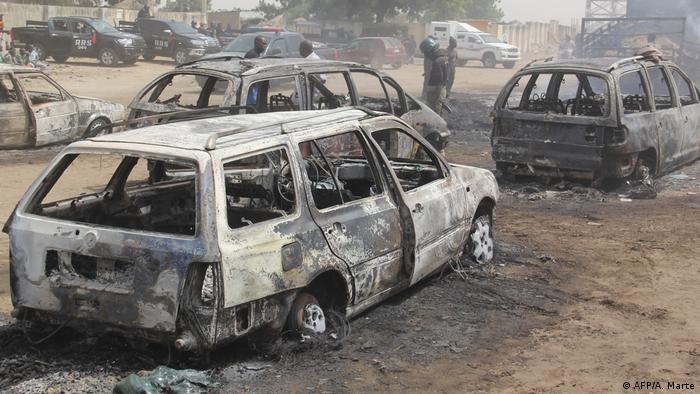
Drivers in Nigeria decried the current security challenges bedevilling particularly the northwestern part of the country, saying the situation is gradually killing their business.
The Daily Reality report that bandits activity has claimed thousands of lives, destroyed property worth millions of naira and sacked many villages.
Some analysts believe that the incessant security challenges are politically motivated.
The recent Abuja-Kaduna train attack is one of many bloody attacks by bandits that forced the citizens to remain deeply pessimistic, not to mention commercial drivers plying roads in the restive region.
Our correspondent gathered that those abducted during the infamous train attack were taken to nearby bushes by the notorious, heartless bandits.
Twenty-four hours later, bandits blocked the Kaduna-Abuja highway and abducted dozens of travellers.
Drivers who spoke to The Daily Realty said the situation had done significant damage to their business, saying they are still in the business because they do not have an option.
A driver, Haruna Lawan Ahmad, recounted his bitter experience in dismay, saying sometimes they had to descend and run for their dear life on sighting the bandits.
Ahmad said, “We used to see terrible things on our way. Sometimes we have to alight and run away to save our lives after sighting bandits and come back later to take our vehicles after they finished their operations and abducted the ill-fated individuals.”
“There are roads that we can no longer follow, such as Birni Gwari of Kaduna State. Before, the drivers used to team up with the security personnel escorting them.”
“But sadly enough, even the security personnel stranded and accelerated their vehicle at high speed and run away from bandits.”
“Many of my colleagues and I remain in the business not because we are still passionate about it, but because we don’t have anything to do other than this driving,” he recounted.
Another driver, Idris Bamba, urged the government to come to their aid as the situation was getting out of hand.
He said, “Insecurity in the country is worsening day by day. We usually drive with uneasiness of mind. Before, I used to leave Abuja for Kano by 5 am and arrived around 11 am. But due to security issues, I no longer do that. Some of my friends have even moved to other businesses.”
‘Insecurity sponsored’
A lecturer at the Department of Business Administration and Entrepreneurship, Bayero University, Kano, Dr Mu’az Hassan Mu’az, said the incessant security challenge in Nigeria is quite unfortunate and sponsored by some scrupulous elements.
He said, “It’s quite unfortunate that these things are happening to the most peaceful and hospitable people in this country. Words cannot express how saddened our people are by the recent experience of attacks on innocent Nigerians.”
“The continued insecurity situation in this part of the country, mastered by people who are illiterates (Islamic and Western) and is sponsored by some scrupulous elements in our society who are selfish and never cared about their people, who worship money and have given up on the hereafter.”
“It’s quite unfortunate that the situation is getting worse day by day in spite of the huge investment in security by the federal government.”
“Many people see the train as the last resort and safe haven for the common people. He thought the warning attack on the train was treated with glove hands, and security was beefed up on the train operations to prevent subsequent attacks.”
“But it happened again, in a very terrible manner. Painfully, the minister of transport was quoted to have said he envisaged the attack but Federal Government did nothing to prevent it from happening. Our leaders should come back to their right senses.”
Dr Mu’azu added that the leadership of Nigeria is responsible for every Nigerian’s life. They must come back to their senses to face the problem squarely to the end.
He urged the authority concerned to provide aerial surveillance of the train routes from Kaduna to Abuja, engage every security stakeholder in the discourse of solutions to the menace of banditry n kidnapping, negotiate with the culprits and later deal with them silently, declare war against their residency in Nigeria and kill them all.
He said, “Let the authority concerned track and block their supplies of weapons, send a few security personnel on a secret mission, i.e. to be amongst them for some time, recruit locals to join in the fight against the bandits and block all their food supplies and medications.”
Sacred Sound Emission: Untangling human corruption from divine injunction
By Binyamin Lawal
Researchers often point to the dominance of virtual culture and modes of visual perception that organise everyday life. However, in a place like Nigeria, “public sound is a far greater presence and comes to constitute the ambient environment” (Larkin 2014: 992). Out of these multiple sounds, those disbursed with a glaring presence are those emanating from the sacred spaces. As a focal space for the generation of piety, one wonders whether such disbursement of sounds ‘piety’ is indeed achieved. This is one of the questions we should reflect on as we step into the month of Ramadan.
Ramadan is the ninth month of the Islamic calendar in which fasting (Arabic: saum) is prescribed for Muslims so as to attain the status of Al-Muttaqūn (the pious: those who fear Allah and abstain from sins and evil deeds) (see Q 2: 183). Due to the special position of the month, Muslims live a substantial part of the year attached to it. They either pray to witness the month or pray that Allah accepts their acts of worship during the month.
Now, as the month of Ramadan begins, we need not only to reflect on improving our piety but cultivating attitudes of not inflicting harm to people as well. In other words, while we encourage people to come closer to Allah through good conduct, we should refrain from other actions capable of eating up our good deeds.
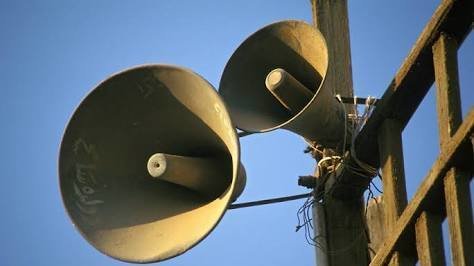
While Ramadan is the season where Muslims come closer to Allah and increase their piety – as stated above, activities that cause inconvenience to others must be avoided since avoiding the infliction of harm to humans is in itself an act of worship (Ibadah). Against this backdrop, the usage of loudspeakers, especially at night, needs to be regulated during the month and particularly the last ten days. In this regard, I would like to recount – from my memory – what I heard from a Kano-based Islamic scholar who responded to a question on the emission of sounds far beyond the sacred space.
In his response, he pointed out that doing that causes a lot of inconvenience to people around. As such, it is ‘unlawful’. He explained that some might want to pray in their houses, and the sound of the recitation dominating the public space will not allow them to have the needed silent atmosphere. Others may just want to sleep. Both are denied the silence and decorum they genuinely deserve.
In this regard, we should also be mindful of those willing to engage in prayers the whole night but cannot due to the kind of work/business they do during the day. After all, in their case, doing the work during the day to keep up their responsibilities is wajib (compulsory), while the prayers are recommended.
The night, as we know, is a special time to seek closeness to Allah, at the same time, a period of rest; “And We have made your sleep as a thing for rest, and We have made the night as a covering (through its darkness)” (Q 78: 9-10). Sleep, which is meant to be a rest, as stated in verse 9, is complemented by the covering provided by the darkness of the night to give us respite from the exertions of the day. That must be respected as we engage in our Qiyāmul-lail.
Furthermore, the Sheikh emphasised that our public spaces are shared between Muslims and Christians who don’t partake in Ramadan activities, so why incommodes them? In addition, one could also think of the sick persons whose sleep may be interrupted. Observing the act closely, one fears the salient intent of presence-making or show-off, an act that is seriously frowned at. “Say: “Will you inform Allah of your religion while Allah knows all that is in the heavens and all that is in the earth, and Allah is All-Knowing of everything” (Q 49:16).
Binyamin Lawan is a PhD student in Islamic Studies and wrote via abinyaminlawal@gmail.com.
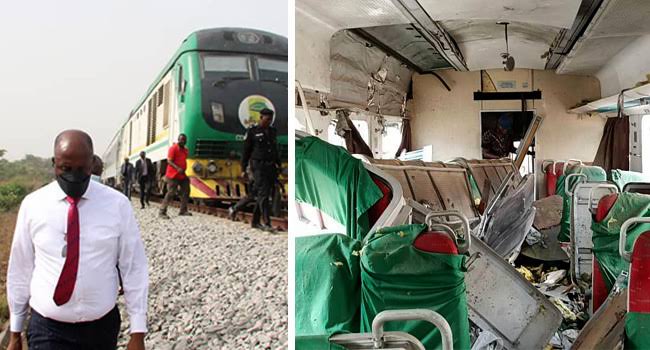
Train blast is not a problem of Kaduna alone
By Aliyu Nuhu
When we criticize this government, some people deride us as Buhari bashers. They complain that we lack patriotism because we run down our country. But look at Nigeria today and say if it is the kind of country you want to live in or it is the kind of country you want your children and grandchildren to inhabit.
What is the fault of the government in matters that concern our security? It is because of the way it neglected police affairs. Banditry and terrorism are, among others, products of poor community policing. Humans are products of communities, good or bad. The police decide the kind of communities we have as far as crimes are concerned. Before they kidnap anyone, criminals emerge from the community and when they kidnap they return to the communities. Good police will ensure that they don’t emerge and if they do, they can’t return to the community. But today’s Nigerian police are going on strike because of poor salaries and delays in payment of even the poor salaries. Police lack all working tools from the basics such as lie detectors, electricity, and computers; to the complex ones such as data banks for fingerprints and DNA.
Whenever there is a bomb blast you see the president holding emergency meetings with service chiefs. That is missing the point. What have navy, airforce and army got to do with attacks on the train? The president should hold his emergency meeting with police high commands, NSCDC and DSS. That is where the missing links lie.
The military ordinarily has no business safeguarding railways, doing the work of police, DSS and NSCDC. They have no budget to safeguard the railway. The military can be called to give additional firepower to the police when there is a need but they have no solution to the problem and cannot prevent future attacks.
The railway is a product of technology and there is technology to protect it. Only Nigeria will invest so much in railway and refuse to deploy the technology to protect it. There are real-time intelligent railway protection systems of various types to deploy. The minister for transportation had made such a request after the first attack which was denied (though the request was later accused of being through a seemingly corrupt process). The second attack has made the president see the reasons and approved of the technology. I hope that with the new measures, future attacks on railways will be prevented.
Who were the attackers?
According to the Daily Trust, a Kaduna security source, who did not want his name in print, said the attack was carried out by Boko Haram elements in collaboration with bandits.
“Two sources; a local with knowledge of bandits’ activities and a senior intelligence officer in Abuja confirmed that a Kaduna-based bandits leader, Boderi, was involved in hatching the attack.
Boderi is notorious for masterminding a number of atrocious attacks in Giwa, Chikun, Igabi and Zaria Local Governments in Kaduna State, including the abduction of students of the Federal College of Forestry Mechanisation, Afaka, in March last year and kidnapping of the Emir of Bungudu, Alhaji Hassan Attahiru in October of the same year.”
Also, victims said they were not the regular Fulani kidnappers that carry out their raids on the highways. They said they were very young boys between the ages of 18 to 25 years and spoke good English. Some of them were pronouncing “Allahu Akbar”. It pointed to either Boko Haram or ISWAP. Deployment of IED technology is Boko and ISWAP franchise. The attackers used buses, unlike the Fulani kidnappers that use motorcycles, an indication that they came from a long distance. How about 200 terrorists came in buses and carried people and disappeared into thin air beat all minds. There was no single casualty on the side of the attackers and no one was captured. We have a long way to go in security matters.

Breaking: Ramadan crescent sighted in Saudi Arabia
By Muhammadu Sabiu
The crescent, which signifies the beginning of the month of Ramadan, has been sighted in Saudi Arabia, Haramain Sharifain confirmed in a statement on its verified Facebook page today.
“Crescent was SEEN in Saudi Arabia today. Subsequently, the month of Sha’ban completes 29 days today and tomorrow, i.e. Saturday, 2nd April 2022, will be the first day of Ramadan 1443,” the statement read.
This marks the beginning of the Muslims’ act of fasting for 29 or 30 days, not only in Saudi Arabia but across the world.
It can be recalled that even in Nigeria, the Sultan of Sokoto, Alhaji Abubakar Sa’ad III, has urged the Muslim faithful to come out today in search of the Ramadan crescent.
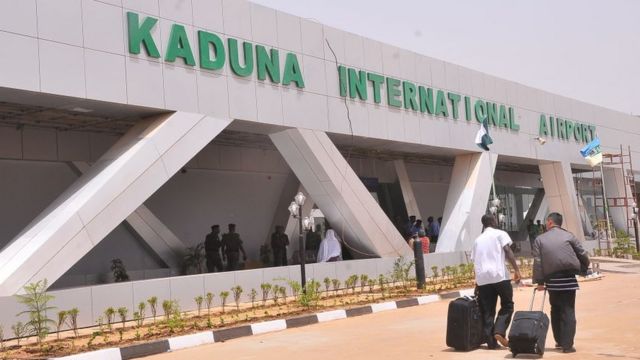
Airspace and aviation security in Nigeria: Matters arising
By Mukhtar Ya’u Madobi
Another national embarrassment almost happened over the weekend. But alas, it wasn’t fated. Reports indicated that a group of bandit-terrorists, about 200 swarmed the Kaduna International Airport located in Igabi Local Government Area of the State.
The incident temporarily led to the disruption of activities, including the grounding of an Azman Air Lagos-bound aircraft. In addition, a security officer attached to the Nigerian Airspace Management Agency (NAMA) also lost his life.
It was learnt that the terrorists were on a revenge mission after some Nigerian military troops neutralized scores of them and equally retrieved some rustled cattle in their possession.
However, this unfortunate development is coming after another security breach had occurred last year, when the same category of criminal elements–bandits–invaded the country’s highest defence and security training hub, the Nigerian Defence Academy, NDA, in Kaduna.
Aside from killing some soldiers, reports claimed that the bandits abducted a senior military officer.
Nevertheless, the level at which these non-state actors are resurging and unleashing violence at will is something that needs to be treated with the adequate attention it deserves. Government and security agencies should live up to their expectations to surmount these lingering security challenges that disturb our nation’s peace.
It has been noted that an efficient transport system is part and parcel of national security as it entails the movement of people and goods from one place to another across the length and breadth of a particular geographical location. But in today’s Nigeria, it is disheartening to learn that people no longer travel comfortably with peace of mind due to uncertainties associated with our entire transport system.
For example, looking at the land transport system, the roads are in bad shape caused by numerous potholes that can easily plunge a motorist into an accident. Apart from that, the roads are also not safe as bandits, kidnappers and armed robbers are always having a field day launching attacks on commuters, robbing them of their hard-earned properties, abducting or even killing them.
Even the trains are no longer safe as terrorists have since devised a means of exploding rail tracks, thereby forcefully bringing them to a halt to pave the way for them to carry out their nefarious activities on passengers.
The recent bombing of the Kaduna-Abuja rail track by bandits is one of the worst attacks on the Nigerian transport system. Several passengers were killed, others got injured, while scores were equally abducted and yet to be accounted for.
Similarly, Nigeria’s waterways are also dangerous because they are swarmed by pirates who rob ships and sometimes abduct the entire crew only to release them upon payment of ransom. With the recent attack on the airport, it is right to deduct that the entire Nigerian transport system is compromised and has lost its calibre to serve the functions it is known to deliver.
The time is long overdue for Nigeria to rise to the challenge of safeguarding airspace and other transport sectors from the menace of criminal elements.
The importance of airspace and aviation security has been captured effectively in Nigeria’s National Security Strategy (NNSS 2019), a document published by the Office of the National Security Adviser (ONSA), Babagana Monguno, a retired Major General.
According to the document, “Efforts to secure the Nigerian airspace will be led by the Nigerian Air Force (NAF) in collaboration with other relevant agencies. Considering the vulnerability of the airspace, the NAF will employ preventive and protective measures to guard against airspace violations through [the] enforcement of international and national air laws.
“In addition, the NAF will deploy its resources to ensure the integrity of Nigerian airspace is maintained at all times. This will include [the] conduct of aerial surveys and delineation of security zones and liaison with appropriate agencies towards the completion of the Total Radar Coverage of Nigeria (TRACON) project to ensure effective monitoring and airspace security.
The primary stakeholders principally concerned with safety and security in the aviation sector include the Nigerian Civil Aviation Authority (NCAA), Nigerian Airspace Management Agency (NAMA), the Federal Airports Authority of Nigeria (FAAN) and the Nigerian Air Force (NAF), among others.
The role of these agencies is expected to be coordinated and enhanced in line with extant legislation and policy on Nigerian Aviation Security.
Nevertheless, another evolving phenomenon in airspace security is the preponderance of drones which constitutes safety challenges such as air misses and mid-air collisions with manned aircraft and security challenges such as air space violation, penetration of prohibited airspaces, a threat to VIP security, terrorism and espionage. Others are law enforcement challenges such as drug trafficking and proliferation, all inimical to national security.
To properly secure airspace and the aviation industry, the government must ensure the continuous provision of modern and up-to-date equipment and the promotion of adequate training and professionalism of various agencies handling different aspects of aviation security.
Additionally, Standard Operation Procedures must be developed to streamline the roles and responsibilities of the various agencies to optimize their performance and enhance the cohesion of their personnel.
Furthermore, it is imperative to ensure the development of standard safety protocols and resilience to protect critical aviation information infrastructure against cyber-attacks to enhance aviation security.
Mukhtar wrote from Kano via ymukhtar944@gmail.com.

The burning train of a burning country
By Khadijah Tijjani
It has been a while since I wrote about issues of national interest. I have decided to steer clear of such conversations because I doubt if it is really worth it. I used to pride myself in being a patriotic Nigerian until about a decade ago when the post-graduation shock shook me to the marrow.
Fresh out of medical school, I was determined to serve my country “with love and strength and faith”, using my knowledge and skills. But I was greeted with a cold welcome into a moribund system – a system that had almost nothing to offer but was ready to suck your sweat and blood and abandon your remains when you’re done with your heroism.
This is not about me and how I lost hope in the fatherland. If I’m still alive, I’ll tell you the whole story some other time. My grouse for today is stimulated by the recent terrorist attacks on the Kaduna-Abuja train. I’m sorry to bore you with this rant; I hope it makes me feel better. I’m just here to let it out and stop pretending to be oblivious.
I despise horror and tragic movies because of some traumatic scenes I watched as a kid. One of such movies is THE BURNING TRAIN, a Bollywood blockbuster that made waves in the early 80s. Vinod, a railway engineer, launched the Super Express, a dream project that was India’s fastest passenger train. Unfortunately, the train went out of control on its maiden journey due to a bomb planted by a rival. Directed by Ravi Chopra, the movie was known to have moved millions of people to tears.
Every time I replay that movie in the part of my brain that stores it for over two decades, I struggle to hold back the tears.
I never imagined something strikingly similar happening in real life, claiming several lives so close to home. The terrorists, having succeeded in stopping the Kaduna-bound train, reportedly shot sporadically and held the stranded passengers hostage for over an hour.
One of the victims was a promising young colleague – Dr Chinelo. This was a brilliant doctor who could have discovered the next best treatment for cancer, HIV or another disease yet unknown. But instead, she was wasted a few days after obtaining her GMC licence to practise in the UK.
Could she have survived if we had quick and effective disaster response teams? Only God knows.
She was lucid enough to tweet a distress call and probably breathed for a couple of hours before kicking the bucket. But what sort of treatment did she get? Welcome to Nigerian hospitals!
The train attack happened less than 24 hours after a similar incident along the same route. This mishap rekindled my memory of that catastrophic movie, The Burning Train. I’ve been trying not to talk or write about it, but my heart can no longer contain the pain.
I am a woman of faith and believe in the power of prayers. However, we’re on a burning train in this country, and faith is not enough to quench the fire.
This train is burning, and the political leaders are going about their rallies, spending millions of naira on branded clothes and live bands.
This inferno is consuming the best amongst us, but the worst amongst us are winning and dining.
This country is burning like wildfire, but there’s no fire truck anywhere.
They say there is light at the end of the tunnel. But the end of this burning tunnel is obscured by thick smoke that can kill faster than the fire itself.
We seek your aid, yaa Allaah!
Khadijah Tijani is a medical doctor. She writes from Ibadan and can be reached through askodoctorkt@gmail.com or @AskDoctorKT.

Is prayer genuinely worthless?
By Usama Abdullahi
I came across a post from a supposedly intelligent person in which he foolishly stated that prayer is worthless and doesn’t count. What surprises me more is that he’s a practising Sufi Muslim. It’s hard to believe that Sufism teaches people to utter things or act contrary to the teachings of Islam. Even though I’m neither a pro-Sufism nor share similar ideologies with any of them, I still don’t think Sufism teaches people to behave and write irrationally as that self-deluded person.
He believes that being realistic or pragmatic is the only solution to the everyday security challenges troubling this country. While I agree with him that being practical is one of the surest ways that could help bring such age-long challenges into a state of discontinuity, yet, on the other hand, I disagree with him that our prayers are usually obsolete and worthless. Perhaps unknown to him, prayer is but a spiritual tool that fends, heals and grants the guided people some peace of mind.
Prayer is a beautiful and easiest way of expressing our deeply felt gratitude to God for his mercies upon our dear lives. It describes how thankful, devoted and religious we are towards our creator. The problem with that person is that he’s shifted his focus on God and thinks that his so-called realistic mind provides him with the answers to all the lingering security threats we are experiencing in this country. Well, that’s the biggest blunder one could ever make.
When we stray or rather deviate from the right course, our minds often tell us things differently. Our minds would make us feel liberal and lure us into acting in the wrong way. Sometimes it makes us view things narrowly, which is not how they seem in reality. It simply corrupts and deceives us. The manner we reason speaks volumes about how we often tend to foresee the future.
As humans, we are capable of being wrong at any time. But it is funnily unrealistic to believe that your ideology is always appropriate and should be followed. Over the years, I have come to terms with the belief that one with higher academic qualifications doesn’t mean they are the most knowledgeable among people. I respect people’s opinions, but only when they appear rational. Abusive and persuasive views are sure to be avoided because they can instigate hostile disagreement among people like this.
I don’t see prayer as a worthless thing. Even if I feel it doesn’t count, I will keep on praying. Indeed, I believe in the miracle of prayers. I know God answers prayer. He has told us in the Holy book that we should supplicate and call on him whenever we get into trouble or need something. My or your prayers might be delayed but not rejected. When this happens, the Holy book always reminds us to be patient because patience pays.
And prayer is also an act of worship. Moreover, it shows the level of one’s faith in God. I know we cannot pray all of our problems away without being pragmatic in confronting and dealing with them. Yet that shouldn’t give us the green light to decidedly underestimate the power of prayer, for it’s a natural remedy on its own.
Prayer saved Prophet Isa (Jesus) from the brink of crucifixion. Prayer protected Prophet Muhammad (S.A.W) and his companions against their ruthless foes. Prayer saved Prophet Abraham when thrown into the fire by his people and prayer attracted God’s sympathy and mercy over Prophet Yunusa (Jonah) when he got drown and swallowed by a whale. Despite going through hell, Yunusa still prayed to God and was happily rescued afterwards. So, how would you expect me to buy into your notion that prayer is worthless?
Usama Abdullahi wrote from Abuja, Nigeria. He can be reached via usamagayyi@gmail.com.