


Nigeria Health Watch trains Kano journalists on ‘solution journalism’
By Uzair Adam Imam
An online media platform, Nigeria Health Watch, has organised a workshop on promoting media adoption on Solutions Journalism (SOJO) in Kano state.
The one-day workshop titled “Integrating Solutions Journalism Practices in Media Production in Kano State” took place Saturday, May 28, 2022, at the GearHub, 45 Lamido Crescent, Nassarawa GRA, in the state.
The intent of the workshop was said to equip participants with the knowledge, skills, and networks they would need to consciously discover and report stories about people’s responses to social issues in their news bulletins and other forms of reporting.
However, solutions journalism is understood to mean investigating and explaining how people try to solve widely shared problems.
The idea was reportedly aimed at adding rigorous coverage of solutions rather than just reporting problems as “responses to problems are also newsworthy”.
Speaking at the event, the convener, Misbahu El-Hamza, stated that there was a need for journalists to embrace solutions journalism (SOJO) instead of the normal way of just reporting issues.
However, El-Hamza lamented that many people resisted patronising news to escape heartbreaking reports that ended in scaring people.
The participants that graced the event included journalists from various media organisations from Kano State.

A.A. Zaura emerges APC candidate for Kano Central
By Muhammad Aminu
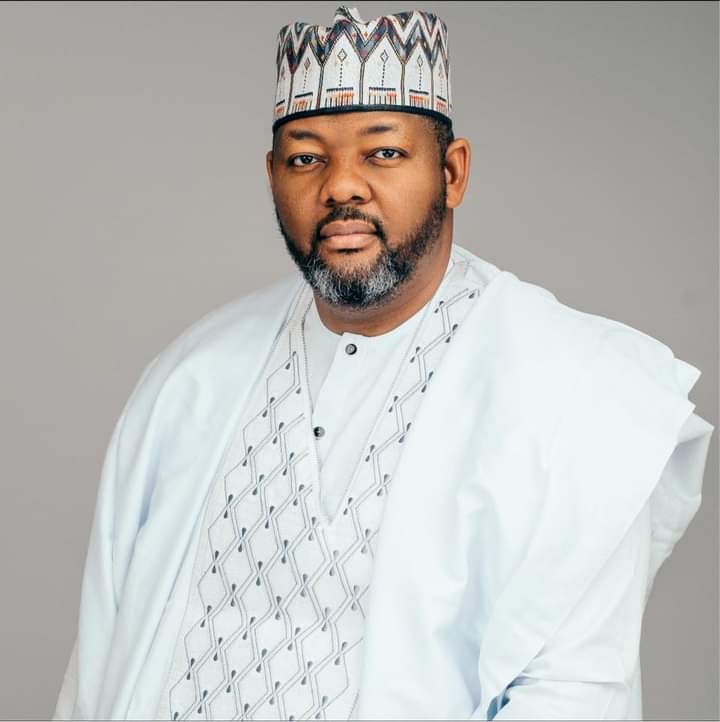
Abdulsalam Abdulkarim Zaura popularly known as A.A. Zaura has emerged as the winner of the All Progressives Congress (APC) Kano Central senatorial district primary election.
A. A. Zaura polled highest number of votes, 758, to defeat his main challenger Senator Bashir Garba Lado who scored 77 votes to become a distant second.
Announcing the result Saturday evening, Senator Tijjani Yahaya Kaura who was the Chairman Electoral committee said A. A. Zaura returned elected after securing the highest number of votes.
The Star earlier reported that Sen. Lado accused Gov. Ganduje of manipulation the election for the benefit of A. A. Zaura, which he called on President Buhari and National leadership of the APC to correct the wrongs.
The other aspirants who would have participated in the process, stepped down from the contest following pressure from Gov. Ganduje.
The other two senatorial districts of Kano North and South are have single APC aspirants each.
Kano Central: Ex-APC Youths leader withdraws as Sen. Lado accuses Ganduje of manipulation
By Muhammad Aminu
Former National Youths Leader of the All Progressives Congress (APC) Barr Ismail Ahmed has withdrawn his aspiration to contest for Kano Central senatorial district.
Barr Ahmed announced his withdrawal on Saturday at the Sani Abacha Indoor Stadium, where the primary election is taking place.
A one-time presidential adviser to Buhari on Youths, Barr Ahmed, said Gov. Abdullahi Ganduje prevailed on him to withdraw from the contest earlier today, to which he obliged in the interest of the APC in the state.
Meanwhile, another aspirant and former senator representing Kano Central, Bashir Garba Lado, has accused Gov. Ganduje of manipulating the process to favour one of the aspirants.
Senator Lado alleged that Gov. Ganduje instructed party delegates and other stakeholders in the primary election to vote for his anointed aspirant, Abdulsalam Abdulkarim Zaura.
He said the conversations and instructions conveyed to delegates and other stakeholders can be retrieved from Gov. Ganduje’s and Kano State APC Chairman’s phone calls made from 11:am Saturday.
He called on President Muhammadu Buhari, APC National Chairman Abdullahi Adamu, Inspector General of Police and other heads of security agencies to intervene to ensure a free and fair primary election is conducted to avert any possible breakdown of law and order as a result of governor’s interfere.
Like other states across Nigeria, APC in Kano is conducting primary elections for the three senatorial districts in the state, but the contest is heated in Kano Central between Gov Ganduje’s ally A. A. Zaura and Senator Lado while Aspirants for Kano South and North senatorial districts are unopposed.

Democracy or “delegatocracy”?
By Simbo Olorunfemi
It might yet turn out that, by some accident or slip on the part of members of the National Assembly, Nigeria might have stumbled upon a system that might yet become useful in retooling the mechanics of the Presidential system as we currently practise it.
Of course, the idea that the template that had been forced upon the political parties for the election of Candidates in this election will outlive this season is unlikely, as letting the Buhari ‘veto’ stay would amount to class suicide, with power of election/selection slipping out of the hands of those who had assumed the status of ‘statutory’ or ‘super’ delegates. The Legislators are unlikely to ever let that happen.
But I wouldn’t let that stop my interrogation of what is accidental, but I see as potentially beneficial intervention in the electoral system.
Whereas the idea of electing candidates through a collegiate system, made up of delegates is not new, what has played out this time around is one in which all the delegates who participated in the election of candidates were elected. Whereas these ones were supposedly ‘ad-hoc’, who were to be add-ons to the supermen and women who are automatic delegates by virtue of the offices they hold/held.
So, as the malfunction in the legislative process led to the omission of super delegates who had been the dominant players in the space, the task of producing candidates was solely left to the adhoc delegates, who suddenly became beautiful brides desperately sought by aspirants.
Whereas there has been a lot of talk about what has become a highly monetised delegates procurement process, my observation does, in fact, suggest that it is the statutory or super delegates who have constituted themselves into ‘cabals’ and pressure groups, taking advantage of their positions to put pressure on aspirants, leading to the monetisation of the process.
First, we have former members of the National Assembly, having formed themselves into groups, waiting for the period of elections to milk aspirants. Then, we have a situation in which the list of delegates tilts heavily in favour of these groups, making the system more susceptible to manipulation.
So, what is wrong with tweaking with this accidental system that we now have and explore the possibility of institutionalising it as a model for electing Candidates?
As we have it now, members of the party go through a process of election which see them emerging as ward, local government and State delegates, to be able to vote for candidates in the different elections.
Whereas the contest within the parties to qualify as a ‘Delegate’ was not one that had the big players contending, having already qualified to participate in the process as statutory delegates, I will argue for the idea of statutory delegates to be scrapped entirely.
I will argue for a system in which all delegates are elected by members of the party. This primary election had 5 delegates per ward (APC) and 3 delegates per ward (PDP) for the State House of Assembly Elections.
I will make a case for the primary election for the office of the President to be one delegate per ward, which would be the total number of delegates eligible to vote to 8, 813, just about what we had with statutory delegates participating in the process. But under this proposed arrangement, anyone who wants to be a delegate, either already elected into office or a political appointee will return to his ward to stand for election, and if qualified will serve as delegate at the Presidential primaries. Local government and states delegates will also emerge through the same process.
This system strengthens the party and returns power to the base, having within it some elements of the parliamentary system which I prefer and advocate a return to.
Simbo can be reached via; simboor@yahoo.com
Covid: CITAD awards Covid-19 champions on enlightening, countering fake news
By Uzair Adam Imam
The Centre for Information Technology and Development (CITAD) has trained 18 covid-19 vaccine champions on identifying, tracking and countering Covid-19 related fake news on social media platforms.
The program tittled “Public Education on COVID-19 Vaccine Project” was aimed at sensitizing the public on the importance of covid19 vaccine and the need to take it with a view to promoting uptake of the vaccine.
Supported by MacArthur Foundation, the centre is reportedly working with 18 partner organizations and social influencers to enlighten the public about the vaccine through various activities and programmes.
However, COVID-19 is a communicable respiratory disease that terrorises the entire wold, leading to the death of number of people and set the nationwide economic back.
The details on the event was in a statement signed Saturday, May 28, 2022, by the coordinator of the campaign, Mal. Hamza Ibrahim.
The statement reads in part: “CITAD received 93 applications from young people who want to be champions and 18 of them were selected from six northern states – Kano, Kaduna, Bauchi, Borno, Plateau and Kogi State and trained for two days.”
“After their training they embarked on daily campaigns on the vaccine on social media. They submit reports of their campaigns at the end of every month and the reports are shared with panel of judges who review and assess and subsequently select the best three.”
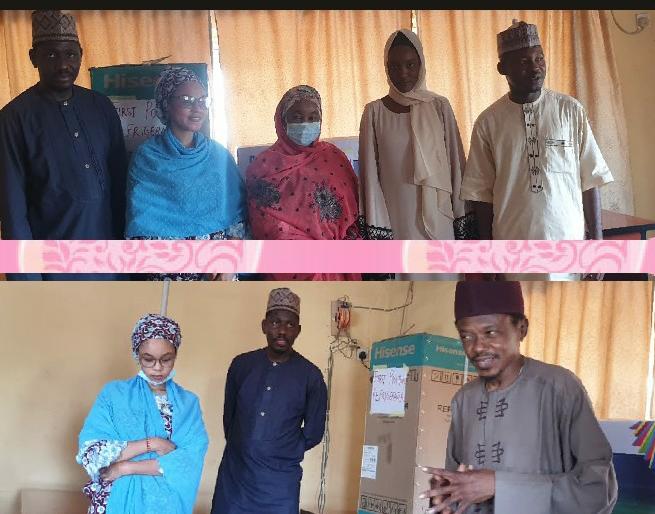
“So, there is competition among the vaccine champions every month and the best three winners are selected and rewarded with gifts. This month, Hadiza Aliyu from Kano emerged in the 1st position and got Hisense refrigerator. Ashafa Abdulkadir from Kaduna and Hauwa Shettima from Bauchi State were the 2nd and 3rd position. They received plasma television and mini laptop.”
It is not known whether there will be another new competition for Covid-19 vaccine champions after this campaign has ended.
How to plan the prosperity of your family through Waqf (I)
By Abdullahi Abubakar Lamido
Introduction
In today’s Nigeria, we experience a rapidly growing population at an average rate of 3% per annum. We currently have about 220 million citizens and still counting. Our population is projected to reach nearly 400 million in the next 28 years. It is factual also that the population growth is much higher in the Muslim communities of Northern Nigeria than in other communities in both the North and the South.
Due to many reasons, foremost among which is the widespread practice of Islamically permissible polygyny, our population grows exponentially. At the same time, little is done to plan the expansion of infrastructure and provide alternative ways of coping with the needs of the expanding population. An average Northern Nigerian man likes and practices polygyny (i.e. marries more than one wife). In addition, family planning and birth control are generally considered taboos. Families are, therefore, mostly large.
While the population is supposed to be a blessing, it can also be a curse if not well managed. It is clear also that most of the Muslim masses and a large chunk of the Muslim leaders, intellectuals and even religious scholars are oblivious of the long term consequences of an ever-growing population that is not matched with a corresponding sharī’ah-compliant solid plan for taking care of the education, health, food and other socioeconomic and religio-spiritual needs of the expanding population.
While few are partly aware of some of the projections related to population growth vis-à-vis the socioeconomic and other realities, we are largely oblivious of the need to develop Islamic oriented ways of building the society and coping with the socioeconomic challenges associated with our growing population and exponentially changing societal dynamics. Therefore, the issue can quickly become controversial during any discussion.
But a society that accepts, based on an interpretation of religious teachings and cultural beliefs, that polygamy – rather polygyny – should be widely practised and even encouraged should also be a society that always goes back to the scripture for proper guidance on how to manage polygamous families. Since, as a religious Ummah, we have accepted what Islam has provided for us of the permissibility of having many children, is it not also Islamically incumbent upon us to go back to the Qur’an and Sunnah to learn how to organise the social, educational, economic and other needs of our families? Within this context, I intend to introduce family waqf, an almost entirely unknown Islamic institution for organising and planning the prosperity of families in Nigeria.
Unpleasant Consequences of Life without Planning
How often have you heard stories that end with statements like: “Allahu Akbar! Late Alhaji Adamu was a wealthy person, a kind, gentle, and successful businessman. But look at how his children are suffering…”; or “Can you remember Alhaji Mai-Turare: the owner of XYZ Business at Tudun Muntsira quarters? Do you know that this hopeless drug addict is his son! He dropped out of school and joined a team of hooligans…Allah ya sa mu gama da duniya lafiya (May we have a good end in this world)”. And similar stories?!
Those are recurrent stories in Northern Nigeria. You have several successful entrepreneurs or accomplished aristocrats and professionals who reached the zenith of fortune in their chosen businesses and professions and lived lives of accomplishment and contribution. However, shortly after their demise, their estates would be shared among their 30 heirs; four wives, over 20 children, etc. After a few years, those inheritors of enormous wealth would fall from the world of prosperity to that of harsh poverty.
Many people would be rich, with an ever-expanding flow of income in the booming years of their careers. Still, they would never think of making a sustainable investment for the future prosperity of their children, not even for their life after retirement. After the family has grown large, inflation has multiplied manifold, and life has become unbearably expensive against their sources of income which have rather contracted due to age and other factors; they turn from affluence to poverty, battling to settle even the most basic of their bills. They neither invested for their retirement nor made an ever-flowing investment for their second life, the eternal life after death.
They have no passive investments that generate income for them at old age, nor a waqf (endowment) that would continue to fetch them rewards even while in their graves. They have no plan for what would sustainably finance their family’s education, health, and other essential needs. And so the worst happens. And the whistle is blown for their final, inevitable transition to the next world, leaving their family in economic and financial confusion, which often spirals into other messes in the spiritual, social and mental spheres. Soon after dearth, history forgets them as they have left nothing that continues to fetch them rewards and people’s prayers, not even for their immediate family.
The Importance of Making a Financial Plan
But why is it essential to make a financial plan for your children’s and family’s future prosperity? Does that have any place in Islam? Sa’d b. Abu Waqqas was an uncle to the Prophet (peace be upon him). He was among the ten topmost companions that received glad tiding of a direct entry ticket to Paradise in one sitting. He was rich. Actually, very rich.
One day, during the farewell pilgrimage, the Prophet visited Sa’d on his sickbed. After exchanging greetings, Sa’d told the Prophet that I am seriously ill, as you can see. He apparently was doubtful of surviving that illness. He said, “And I am a very rich person, but there is no one to inherit my wealth except a single daughter.” He then asked if he could give two-thirds of his wealth to charity, leaving one-thirds for the daughter. The Prophet instantly replied with a quick “No”. “What of half?” The Prophet again said, “NO”! What of one-thirds?” Now, here is where the Prophet reluctantly approved by saying, “One-third! Even one-third is huge and too much”. Anyway, the Prophet followed this with a statement that deserves the attention of parents at all times; “It is better to die leaving your heirs in affluence than to leave them in poverty, so they continue begging people for alms”.
Many lessons abound in the above conversation of great personalities. One, piety and affluence are never mutually exclusive; you can be profoundly pious and superlatively prosperous. Two, connected to this, enjoying worldly opulence does not preclude enjoying everlasting other earthly felicity. In fact, worldly riches are effective instruments for attaining success in the next world. This is clear in the stories of great companions like Abubakar Siddiq, Uthman Bin Affan, Abdurrahman and, of course, Sa’ad.
Significantly also, you can plan all of these for your loved ones beginning with your children and wives. Not only you can; you have to! This is Prophetic advice, if not an order. The Prophet (may peace be upon him) made it impermissible for a person, especially while bidding farewell to the world, having no chance on sight to go to the market and earn more resources from gifting out his fortunes lest he throws them into poverty after him.
In simple terms, what the Prophet wanted from us is to plan for making our children self-reliant, self-sufficient and socio-economically empowered. With this, instead of being dependent, they will be independent. We should try making them givers, not receivers, assets rather than liabilities. Ask yourself, if not for empowering the deceased person’s posterity, why would the Sharī’ah even prescribe the inheritance laws in the first place? And in the Hadith of Sa’d above, the Prophet wants us to understand that the philosophy behind inheritance itself is to plan for the sustainable prosperity and economic independence of the deceased’s heirs; leaving them with sufficient inheritable resources to make them rich (agniya’) as against poor (alah).
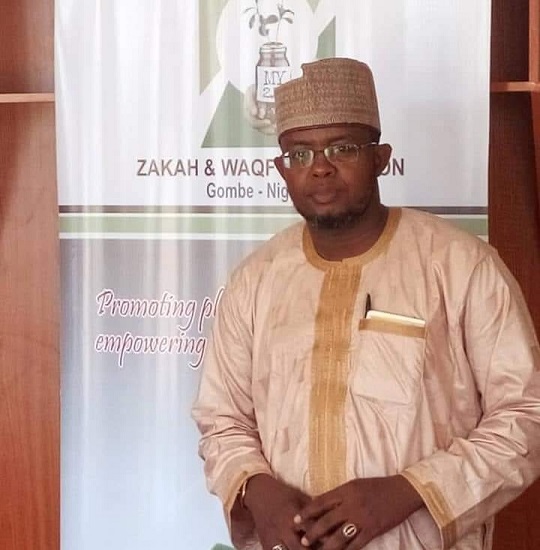
Abdullahi Abubakar Lamido, Chairman, Zakah and Waqf Foundation, Gombe . He can be reached via lamidomabudi@gmail.com.
Bashir Ahmad rejects outcome of primary election
By Ahmad Deedat Zakari
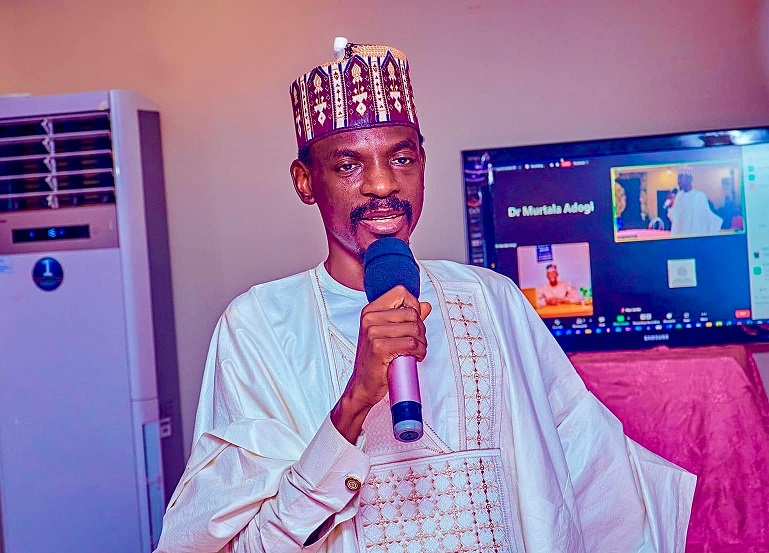
Former media aide of President Muhammadu Buhari, Bashir Ahmad, has rejected the outcome of the primary election, which was conducted on Saturday.
In a press statement on Sunday, May 28, 2022, Ahmad gave reasons for denouncing the outcome.
According to him, the electoral process was marred with irregularities that threatened the election’s credibility.
He alleged that delegates, who were mostly his supporters, were denied entrance to the election venue and consequently could not cast their votes.
“To the best of my knowledge, election at the primaries stage requires delegates to cast their votes, and a winner emerges with the majority votes. It, therefore, implies that there could not have been any voting process that occurred considering majority of the delegates were neither allowed to vote nor even granted access to the venue.” He stated.
Ahmad also said he was denied entrance to the voting area, which almost culminated in violence.
“On my arrival to the venue as an aspirant too, I was denied access to the voting area. My supporters who were around the premises for the primaries resisted the unjust treatment I was given and attempted insisting on my entrance into the voting area.” He said.
Ahmad contested for the APC’s ticket to represent the people of Gaya/Ajingi/Albasu Federal Constituency and lost to the incumbent lawmaker, Mahmud Gaya, in the controversial election.

Crass governance is the bedrock of terror
By Faruk Abdulkadir Waziri
All trouble starts from the most trivial things. Hence the pertinence for instant reaction to even the tiniest disruption to an existing order. When a problem is tagged small and therefore left at the charge of its own amend, without making a move to tug or curtail it solely because it has insignificant effect and consequence, it rides the back of that indulgence and backfires. The minor issue of yesterday, when left unattended or given the least of consideration, becomes the biggest trouble of today and the looming disaster of tomorrow.
A case study in Nigeria’s incessant security ordeal. From the preventable event that led to the birth of Boko Haram in the North East to incompetence that saw the renaissance of kidnapping in the North West and the impassive nonchalance that underpins the thrive of murderous IPOB/ESN in the South East. All these menaces besetting this country today started as problems that could be averted. But the authority charged with this onus chose to go with the approach of levity and lackadaisical confrontation in eradicating them.
Despite the warnings of the impending doom and peril signalled by the early threats of these instabilities, the government was acting with careless flippancy. And this allowed the yield and spread of these acts of terrorism and abetted their growth in a fashion that the thrive of one led to the birth of the other. The lasting of Boko Haram against the effort to wipe them off added fillip to the resurgence of kidnappings, with the added incentive of unaccustomed plight— Banditry. The outlawed IPOB found the stimulus that motivated their cause to unleash terror in the South East from the inability of the government to find a lasting solution to the insurgency of Boko Haram.
Harira, her unborn child, and four children were unfortunate victims of the country’s crass governance with no regard for human life. The perpetrators of their deaths were barbaric and bloodthirsty IPOB, but the government that allowed the monstrous operations of these savage beasts to prevail is of the bigger fault. Just days ago, a state legislature was decapitated within the same region Harira, and her kids were murdered. Before that, the ruthless mutilation of the military couple was perpetrated within the same area by the same group of demons.
Now, imagine if swift action was taken after those two extrajudicial killings and the savages IPOB had met their waterloo. Poor Harira and her kids would have been alive today. This is just one to show you how the callous insouciance of the government has been the bedrock of the long-lasting terror in this country.
While we mourn the cruel murder of Harira and her family, bandits on the other end shot and killed 12 farmers in Katsina yesterday. An example that proves not only the northerners in the South are in the face of apparent danger and risk losing their lives, but also the many northerners in the comfort of their respective abode (North). There is no way to limit the killings and other strikes of the instability to tribal tensions alone. Of course, some were informed by groundless hatred and bigotry towards particular ethnicity. But look at the cause that sustains the frequent happening of these calamities. It is the disregard and unreadiness of the government to lay down proactive measures that will prevent the recurrence of these ordeals.
Crimes capitalize on the bloom of lawlessness, lawlessness prevails where there is rife injustice, and it remains the hallmark of bad governance.
May the killers of Harira and her kids never now peace in this life and the one hereafter, ameen.
Faruk Abdulkadir Waziri wrote via farukakwaziri019@gmail.com.
I left primary election venue because of thugs – Bashir Ahmad
By Ahmad Deedat Zakari
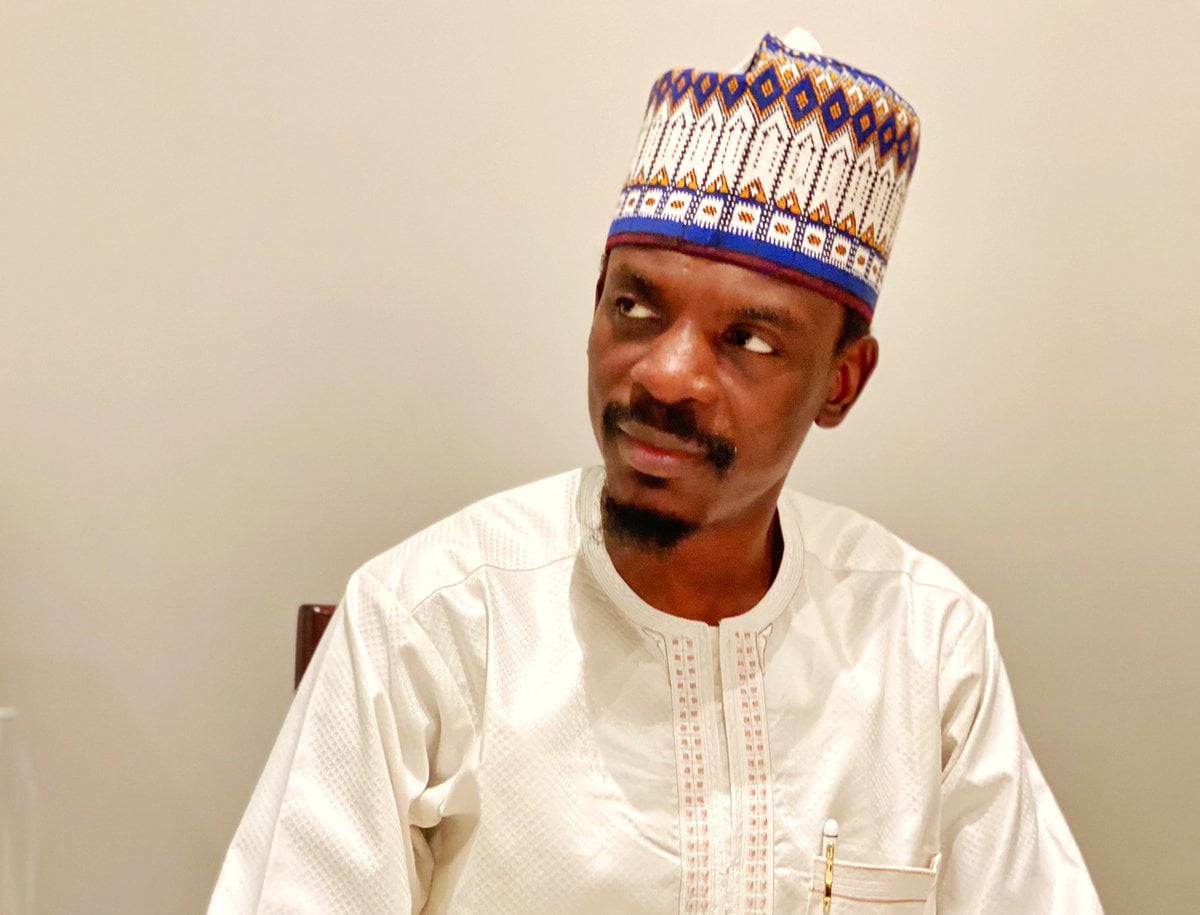
President Muhammadu Buhari’s former media aide, Bashir Ahmad, has disclosed why he had to leave the venue of the ruling party’s primary election.
According to him, he left the venue because of the security of the majority of delegates, which was being compromised by the presence of thugs.
Ahmad stated this on his verified Facebook account on Friday, May 27, 2022.
“As an aspirant, I left the venue of [the] primary election for Gaya, Ajingi and Albasu Federal Constituency because of the security of our majority delegates, if want to compete with the best, thugs shouldn’t be part of any election. A dakace mu [Wait for us]! “He posted
Ahmad had earlier resigned from the president’s media team to vie for the position of member in the Green Chamber, the country’s House of Representatives.
As at the time of fielding this report, the election result has not been announced.
Kannywood/Nollywood film preview: Nanjala
The “Hausa films in English” have, since their debut, been as much praised as they have been criticised. However, while a large section of spectators welcomes the films, many others regard them as a threat to the development of the indigenous language. Others go further to describe them as “non-Kannywood” productions.
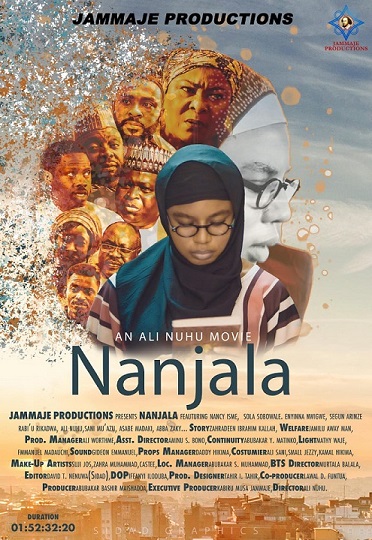
However, their initiator and promoter, Malam Kabiru Musa Jammaje, remains undaunted. He is all set to enthral the audience with another Kannywood film in English after the remarkable success of There is a way (2016), This is the way (2017), Light and darkness (2018) and In search of the king (2019).
The soon-to-be-released movie, entitled Nanjala, is the first of its kind in Kannywood. It features the industry’s heavyweights alongside top Nollywood actors like Enyinna Nwigwe, Nancy Isime, Segun Arinze, Sola Sabowale, among others. Moreover, it’s reportedly the most expensive Kannywood movie with a budget worth over N35 million.
The movie was directed by “whizkid” Ali Nuhu, co-produced by Abubakar Bashir Mai-Shadda and titled after its main character, Nanjala. I have only watched its two-minute-long teaser, but I could grasp that the eponymous heroine, Nanjala, is a journalist whose investigative reports would lead to the main conflicts. The film’s themes may include corruption, honesty, women empowerment, the menace of drug abuse, moral decadence, etc. The cinematography is terrific, and the cast seems to give an outstanding performance.
To be right is to describe the film as ‘pan-Nigerian’ due to its production quality, cast, English medium, and the resonance of its message in the country. It’s, of course, promising and will surely appeal to moviegoers from a wide range of backgrounds.
I, therefore, commend the trio of Jammaje, Ali Nuhu and Mai-Shadda for making a Kannywood film with the potential to catapult the overlooked film industry to the international stage. I do hope that it will not disappoint.
Habibu Maaruf Abdu
Kano, Nigeria
27.5.2022