

The Harvard University Professor who worked as a bus ‘conductor’ in Lagos
By Muhammad Jameel Yusha’u, PhD
At 2:45 am every day, the first email at HKS comes to your inbox. HKS Daily is a catalogue of information about activities at Harvard Kennedy School. If you miss it for a day, you could miss countless opportunities about conferences, breakfast with guests, working groups, and lectures by presidents, governors, mayors and other leading policymakers from different parts of the world.
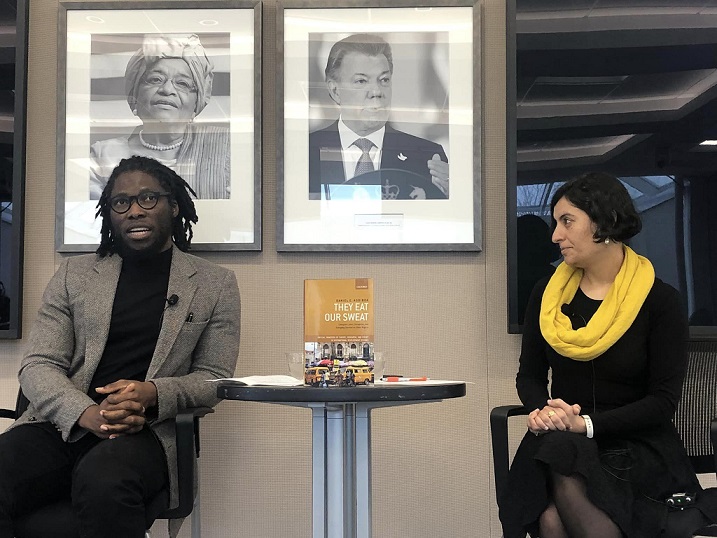
When I checked this morning, I saw an event posted by the Building State Capability Project. It was a book talk entitled “They eat our sweat: Transport labour, corruption and survival in urban Nigeria.” The theme was from the title of a book by Daniel Agbiboa, an Assistant Professor of African and African American Studies at Harvard University Center for African Studies. I registered immediately.
I love original research. Daniel’s work is an excellent example of that. The book, which I look forward to reading, was based on his research work at the University of Oxford, where he worked with the late pan-African scholar, Professor Abdulra’uf Mustapha. It was a research project that used participant observation to study the informal transport sector in #Lagos. As a student of public policy, this attracted my attention even more. Many policies are designed without an in-depth understanding of the social, cultural and even political implications of such policies.
A governor or minister might see the informal transport sector as a nuisance to a modern city. He might bring consultants to hurriedly analyse the problem and come up with a solution. Every person would like to see his city looking like San Francisco, Paris or Dubai. What we tend to forget is that there are thousands of lives that could suffer in our attempt to look modern. Where do we put those people who work as drivers and ‘conductors’ if we don’t have an alternative industry that will absorb them?
To understand this, Professor Daniel went to the field. He became a bus ‘conductor’ for two months, working with a driver, starting early in the morning and absorbing the difficulty that comes with such endeavour. He used his research to understand the difficulty of survival within the informal transportation sector.
He provided a critique to those who use CPI to evaluate countries as corrupt when ordinary people in those countries have completely different realities. “Informal transport not only provides a sector for examining corruption, but also a prism through which to interrogate the binary framing of formality/informality and understandings of the borders (or lack thereof) between the two.” Says Daniela Schofield in a review of the book published on the blog of The London School of Economics and Political Science (LSE).
Takeaway: Developing public policy needs in-depth thinking and proper planning. Building infrastructure is only one part of the story. Managing the effect of policies on people is a much harder task.
Muhammad Jameel Yusha’u, PhD, is a candidate for a Mid-Career Master’s in Public Administration at Harvard University, John F Kennedy School of Government. He can be reached via mjyushau@yahoo.com.
Language and the specific gravity of identity
By Prof. Abdalla Uba Adamu
Muhsin Ibrahim had started a very interesting thread on his Facebook wall about language usage in northern Nigeria. Basically, the argument is about whether predominantly Hausa (his publics) should intensify their use of English in public discourse, especially now that things are getting more virtual. There has been a lot of resistance in using English among the Hausa because of the belief that using English (or other languages, except Arabic) leads to the erosion of identity. Muhsin urges the Hausa to embrace or at least immerse themselves as much as they can in the English language to gain a competitive advantage. I agree with him.
The arguments against the use of English are predicated upon language and identity. Generally, language symbolizes our identity and conveys identities to those who speak them. But how true is this in an interconnected world? I have a friend whose children were born in Hong Kong. They are adults now. They hardly speak Hausa. Does that make them Chinese? Imagine an Urdu-speaking Pakistani immigrant whose children were born in Wales and do not speak Urdu. Does that make the children Welsh?
In South Africa, the apartheid regime used language as one of the yardsticks, besides skin colour, to develop its divide-and-rule ideology against the black population. If a Black South African somehow was able to speak fluent Afrikaans, does that shifts his identity and make him White? I have encountered Hausa merchants in the Deira section of Dubai’s textile market speaking fluent Hindi – are they then Indians?
I once encountered a Yoruba mechanic in Gusau – born and bred there, but could only speak the Sokoto dialect of Hausa, not my absolutely wonderful Kano dialect, and informed me that although his parents were Yoruba, he does not speak the language. So, what was he? Bayarabe or Bazamfare? The Kano Hausa even created sociolinguistic categories for his situation: ‘Ɗan Kasa’ (‘son of the soil’), ‘Muna Kano’ (immigrant non-Hausa, Hausa-speaking), ‘Muna Hausa’ (immigrant, non-Hausa, retaining immigrant language identity). The two ‘outsider’ categories are easily recognized by Kanawa, who describe their Hausa as ‘wata iri’/strange. Oh, they will interact freely with you – until you come to marry one of their daughters!
So, does merely speaking a particular language confer on the speaker the identity of the originators of the language? We learn English and Arabic. Become fluent in them. Does that make us English or Arabs? Thus, if we speak other languages besides our mother tongue, does that shift the specific gravity of our identity? I have three adult children (an oxymoron, I know, but there you are!). We always address each other in Hausa, but we always write to each other in English! Does that alter our identity?
Then the big one. Any DNA test on me will reveal that I am genetically Fulbe (Silsilɓe/Torodbe mix). I don’t speak Pulaar. I tried to convince myself that I should speak Pulaar as a form of anchor to an identity. When I asked Aliyu U. Tilde about the easiest way to learn the language of my genetic ancestors, he suggested marrying a Fulɓe woman! Not on the cards – I am a single-wife person for life.
So, I moved into the anthropology of cultural preservation. At one stage, I was even the Grand Patron of the Fulani Development Association of Nigeria (FULDAN) Kano Branch. During one or two erratic meetings, I was the only one who could not speak Pulaar – and I was the Chairman! We set up an evening class school at Gidan Makama school in Kano to teach Pulaar. Not many people came – despite the usual posturing of many Kanawa that they are Fulɓe.
Next, with some funding from Maison des Cultures du Monde in Paris, I produced two CDs of Pulaar children’s songs (Surbajo, Short Round Crew), and with the help of the British Council in Kano, held a Pulaar music festival, Voices from the Desert, and included a Pulaar rap song (Wazobia Waru). I have no clue what the artists were singing! I next personally sponsored a series of video lessons on how to speak the language and paid lots to make the finished product sleek and professional. I planned to upload the lot on YouTube. That was four years ago. I never got around to it. If I could, somehow, learn Pulaar, what, exactly, would I do with it – none of my publics speaks it; so, with whom will I converse this new form of lost-and-found language identity?
I stopped all that and quit deceiving myself on the issue. Not even my great-grandparents from both sides of the genetic pool spoke it. At all. Only lovely, glorious, wonderful Hausa. In this, I stand with The Nigerian Bahaushe, where I belong. Gregor Mendel, the father of the modern study of Genetics, rest in peace.
So where do I find the intersection of my identity – at the junction of Hausa and Pulaar languages? And please, don’t say ‘Hausa Fulani’. There is absolutely nothing like that. The fact that the ‘Hausa’ was written before the ‘Fulani’ suggests a linguistic dominance, at the very least, not a genetic chiasma.
Yes, there is often a particularly strong link between language and a sense of belonging to a national group, a sense of national identity. Further, although fears are voiced in some countries about the loss of national identity caused by learning foreign languages, especially English, there is little, if any, research evidence to justify this fear. Studies of language and identity have traditionally focused on how individuals or groups maintain, construct, project or negotiate their social identities in and through linguistic practices. Speaking English, however, does not make you English (not to talk of being Welsh, Irish, or Scottish), even if you are British.
It is believed that languages become endangered when they are not passed on to children or when a metropolitan language dominates over others. The tenacity of the Hausa language and its speakers will only endanger those who come in contact with Hausa, not the other way around. No matter how much immersion in English the Hausa have, I doubt if they are in danger of losing their language and identity. After all, what is identity?
Broken down to the interpersonal level, identity is a person’s sense of self, established by their unique characteristics, affiliations, and social roles. We must therefore see identity as a shifting focus on multiple planes – cultural identity, professional identity, ethnic and national identity, religious identity, gender identity, etc. Language can bind but not suppress them.
Thus, acquiring the English language gives the Hausa a competitive advantage in any international communication while, at the same time, tenaciously retaining their identity. I know. I am one of them!
Prof. Adamu can be contacted via auadamu@yahoo.com.

Why men flirt with waitresses in hotels?
By Hamid Al-hassan Hamid
I read a post this morning by one of our sisters, where she was asking if it is a “written rule” that men would flirt with waitresses at hotels and restaurants.
Well… the main reason why hotels and restaurants employ females as waitresses is for the undeniable fact that we all know, which is to attract and hook men’s attention. PERIOD!!!
And if you are a woman, with such kind of job, put it at the back of your mind that your qualification is likely the last thing that was considered. Your ability to attract men to the business and enchant them to spend more money is top on the list. The only exception where your qualification will be put into consideration is in the educational and health sector. Other than that, almost all banks, hotels, restaurants, law firms, offices, and businesses employ women to attract men.
It is a wise business strategy too, because men are the top earners in societies, and women hate women. Only men love women. This is one of the reasons why female patients prefer male gynaecologists to female gynaecologists. The female patients in various literatures made it clear that female gynaecologists are usually rude and roughly handle their boxes during examinations, unlike the men who are more caring. And why wouldn’t a man be so, there!
I always tell women to never get comfortable with any man, including myself. I had to protect myself, I do not even chat with women unless it is totally necessary because if I chat with you for at least two days in a row, I am going to start preaching the gospel before I even know it and speaking in tongues. This is what we are built for and why we exist.
I also don’t attend functions, or even so-called tech and business meetups, I do not show up in public unless it is totally necessary. Ask anyone in Sudan if they know my girlfriend. Even the Nigerian community in Sudan have approached and begged me to at least date one girl.
Anyways, at functions, or so-called tech meetups, even when I attend, I try to mind my business, ignore women and just do my things. But the thing is that ignoring women attracts women. Yes. I have had women in Niqaab approaching me and asking why I am not talking and moving around like the rest of the people around me. Let alone women wearing jeans and skirts, those ones will straight up come over, close my laptop and ask why I am being too serious.
Women are very funny. Stay at home, they will not stay at home, they go out and they complain that men are looking at them. Before nko, who or wetin you wan make dem look?
Lowering your gaze will only work for a few seconds in public, especially if you meetup frequently, she will eventually approach you and ask if you have a pencil that needs sharpening.
Some of us go to school, but we find it difficult to research basic human behaviour. I mention research at least to those of us stupid to not understand reality but would at least respect scientific research.

Naira Scarcity: Ignore calls for protests, El-Rufa’i begs Kaduna people
By Sumayyah Auwal Ishaq
Kaduna State Governor Nasir Ahmad El- Rufai on Tuesday called on the people of Kaduna to ignore calls for massive protests amidst currency swap debacle.
In a statement signed by the Commissioner Ministry of Internal Security and Home Affairs, Kaduna State, Mr. Samuel Aruwan, Gov. El-Rufa’i said “the government is aware that certain individuals and groups have made plans to organize massive protests, seizing on the acute shortage of cash and attendant hardships faced by citizens”.
He further said “The Kaduna State Government wishes to appeal for caution and vigilance by all citizens, amidst the prevailing situation arising from the ongoing cash swap and currency redesign policy.
“Citizens are reminded that care must be taken not to play into the plans of devious elements seeking to create crisis in this crucial period. Citizens are thus advised to ignore these calls for massive protests in the interest of public security”.

Body shaming, self-loathing and the quest for validation
By Maimuna Abubakar
People’s opinions of others have always psychologically impacted their social relationships and behaviours without considering an individual’s mental state and capacities. Many people say things to each other that are more painful than some physical injuries. Often that has detrimental effects on the psychological well-being of the parties involved. The issue of body shaming often results in self-loathing and even compels people to yearn for people’s validation.
Body Shaming is the act of humiliating a person by mocking, making jest, or making critical comments about their physical appearance in the form of the person’s body size, shape or weight.
Often, those who body-shame others claim to be just joking. However, the negative impacts of body shaming are numerous; it makes victims self-conscious, brings about issues of low self-esteem and poor self-confidence, and makes victims question their self-worth. Mentally, it creates the feeling of self-disgust or shame in the victims, while some feel like they have some biological defects like something is wrong with their biological makeup.
The media, especially social media and some product marketers, have succeeded in projecting what an “ideal body type” should look like, which is where most body type critics derive their inspiration. They believe that one has to be at least close to those “ideal body types” or that such a person is lacking in their physical structure.
Although fat shaming is the most common form of body shaming, people must understand that ‘skinny shaming’ is just as hurtful as fat shaming. Because some people are naturally thin or fat, it is in their genetics. Therefore, they can’t just gain weight or lose it simply because people say they should.
Body shaming has led many people to develop eating disorders that can be fatal to their general health, such as Bulimia Nervosa and Anorexia Nervosa.
Bulimia or Bulimia Nervosa is a serious disorder that occurs chiefly in females, characterised by compulsive overeating usually followed by self-induced vomiting and is often accompanied by guilt and depression.
Anorexia or Anorexia Nervosa, on the other hand, is another serious disorder in eating behaviour characterised by a pathological fear of weight gain leading to faulty eating patterns such as prolonged starvation.
Eating disorders are currently the mental conditions with the highest mortality rates, as research statistics show in Japan, the USA and other cities worldwide (BMC Psychiatry: 2020).
Body shaming has led to so many attempted suicide. Victims of body shaming, over time, begin to hate themselves as they view themselves through the lenses their critics see them. So many potentials are not discovered because victims of body shaming dread people’s criticism about their physique and, as a result, prefer to keep themselves hidden.
When I opened up a discussion about body shaming with some of my friends and classmates, it surprised me how many of us have, at one point in life, suffered at the hands of body type critics, and some are still suffering.
One of such friends, who is chubby, told me that when she was in her second year at the university, her roommate pleaded with her not to conceal her beauty by putting on the hijab over her well-tailored dress. When she refused to oblige, her roommate accused her of being insecure about her body weight and diagnosed her with an inferiority complex. She said that comment made her see herself differently and that throughout that academic session, she questioned her every action, constantly assessing herself until she deliberately learned to love herself for who she is.
Another close friend recounted how her close friends, immediate and extended relatives, would say things like: “Ina zaki kai wannan jiki haka?”, “Da dai kin rage cin abinci ya fi ye maki saboda maza bã sã son mace mai qiba“, “Wacce ko kyau ba ki yi ba. Wannan qiba haka wazai kwasa?” Her friends will joke about her body size, “me kike ci ne haka, muma a san ma na mu ci mu yi qiba“.
They possibly may not intend to hurt her feelings, but little did they know that such comments shatter their friends’ and families’ self-esteem.
Another said that her professor kept addressing her as a married woman, always asking her about her husband and children in class. Her classmates would laugh about it, and she would laugh too. Still, it hurt her every time he made such comments because she believed he assumed she was married simply due to her plus size.
A very close friend said that when she was a teenager, she hated herself so much that she always had suicidal thoughts because people kept telling her that she was too thin, too skinny, too bonny, shapeless etc. “Don’t put on tight-fitting jeans; it’ll expose your thinness”, “Put on baggy dresses to conceal your shapelessness”, “You look more like a boy than a girl”, “You’re ugly and unattractive, please eat some fatty foods to help you gain weight so that you’ll look presentable”, etc.
Although females get more body shamed, men, too, are victims on several occasions. A cousin has refused meals several times because anytime he sits to eat, his parents remind him how fat he is growing and how he needs to watch his weight. They will always compare his size to his friends and other cousins. These are his very own parents!
Another 20-year-old I met recently told me she wished God hadn’t created her because when she was in secondary school, some of her classmates and neighbours always complained about how thin and unattractive she was. It made making friends difficult for her because she couldn’t discern who liked her for real and who was just tolerating her. She, therefore, grew up in solitude, always alone. But now she finds herself in the university and realises she can’t continue her solitary life, yet she doesn’t know how to approach people. She was literally scared of even talking to me.
So, to the parents who see fault in their children’s biologically inherited physical structure, I hope you remember your role in bringing such a child to life. If you find their body size, shape or weight repulsive, remember that your genetics created them.
To friends ( or so-called), relatives ( immediate and extended ) and other members of society, please DO NOT verbally abuse people with your judgemental, unsolicited opinions of them. There’s no nice way of body shaming; “I was just joking” is only an excuse to humiliate people whose daily struggles your feeble mind may not be able to contain.
Finally and most importantly, to the victims of people’s insensitive, inhumane criticism about how you look and why you look that way, know that YOU DO NOT need anyone’s validation to be whom you want to be. Work on yourself, eat healthy, exercise to avoid illness, and keep a healthy head space.
Maimuna Abubakar is a Sociology student at Ahmadu Bello University, Zaria. She sent this article via maimunaabubakar200@gmail.com.
On political indoctrination of the Nigerian masses
By Zaharaddeen Muhammad Azare
Being that political leadership share some characteristics with business partnerships where many shareholders come together to own and run a business, politicians, especially in developing worlds like Nigeria, connive with the prominent and respected members of societies for the maximum profitability of their business of maintaining themselves in power for their personal benefits.
In Nigeria, politicians use poverty and ignorance as instruments of achieving; loyalty, support and even votes during elections from the masses, this is regardless of how they treated these masses while in power or before the declaration of interest in political leadership. It’s a belief that “The strong is never strong enough to maintain himself in power unless he utilises trusted and well-respected members of the lower class.”
It’s apparent in Nigeria that whenever elections draw nearer, politicians recruit trusted members of societies to manipulate people’s beliefs and perceptions about politics, and sadly, this time around, the recruited personalities include; journalists, religious scholars, traditional rulers and even the hungry educated class who teach in higher institutions of learning.
Mass quality education being a core instrument of achieving progressive Democratic leadership as it gives citizens insight as regards whom to vote for or not and also empowers citizens to say no to anti-people policies of the government, is neglected and often considered valueless.
Everyone is aware of how politicians these days inject nonpartisan and impartial journalists who are known for doing justice to their profession of finding out facts and communicating them to the public and as well as holding politicians accountable into politics by appointing them as; Media aids, members of campaign committees or their social media forums’ handlers.
Religious scholars also, instead of guiding people on how to strengthen their relationship with the Almighty God, engage in advertising some politicians while criticising others in their public gatherings, which is an embezzlement of trust people bestowed to them.
The worse part of it is when these politicians get into power; they develop authoritarian and oppressive tactics to subjugate and antagonise all and sundry irrespective of whether one supported them during an election or not, and even advice, their arrogance will not allow them even to seek not to think of utilising them from the categories of people that worked for their success.
To conclude, I suggest that we have knowledge and experience about how these politicians ruled before and their capacities, let’s use it as a barometer for choosing whom to vote for, not on the basis of other people’s opinions.
Zaharaddeen Muhammad Azare writes from Bauchi state and can be reached at zahmuhaza@gmail.com.

StarLink and Nigeria’s telcos competition
By Ibrahym El-Caleel
StarLink is a distant competitor to our telcos. The product price edges it out of immediate competition with MTN, Airtel and co. However, it is good that it is already here. In fact it will definitely gain a fair share from some businesses who have been looking for an alternative to the existing telcos.
Setting up StarLink costs more than N400,000. Personally I think it will be a better buy for businesses who spend about 60-75% of this amount for internet access. They will be bidding farewell to the periodic disappointments we experience from the contemporary telcos.
Market is dynamic. As StarLink takes some time in Nigeria, it will be ambitious about increasing its market share. It will be innovative about coming up with something that will be relatively affordable for the teeming internet subscribers. This is when the true competition will begin. For now, the penetration will be low because at the moment a lot of Nigerians are quite very rich. The consumer conversion will be minimal.
MTN began in Nigeria with N1,500 airtime card only. And it expires in 7 days. If you don’t use the airtime after 7 days, you have to buy another one. This was the case c.2001. Fast forward to 2021, you can have a N100 airtime and keep it for one year if you so wish. StarLink might have to develop something cheaper to get more subscribers onboard. If your things are expensive, you can sell it and make money in Nigeria. If they are affordable to many, you make quicker turnover, bigger sales, (arguably) more profit. This is Nigerian market.

Naira Scarcity: Sterling Bank lifts charges on fund transfers
By Muhammadu Sabiu
A commercial bank in Nigeria, Sterling Bank, has announced that all bank fund transfer services will be offered for free for seventeen days.
This is coming amidst the tough time customers are passing through when withdrawing and depositing money, using online banking, and other financial activities due to the CBN’s new naira note policy that placed many restrictions.
In an email Sterling Bank sent to its customers, it says, “We at Sterling understand the difficult times many of our customers are facing. In light of this, all our fund transfer services will be offered Free of Charge to all personal account customers from February 6, 2023, till February 18, 2023.
“Additionally, we are also pleased to announce that we will be issuing free Debit Cards to all interested customers. This will provide you with a convenient and secure way to make purchases and carry out transactions. You can order your cards directly on OneBank (Download the latest version on your phone’s App Store or simply go to sterling/OneBank)”.
Turkey-Syria earthquake kills 1,200 people, injures 3,000 others
By Muhammadu Sabiu
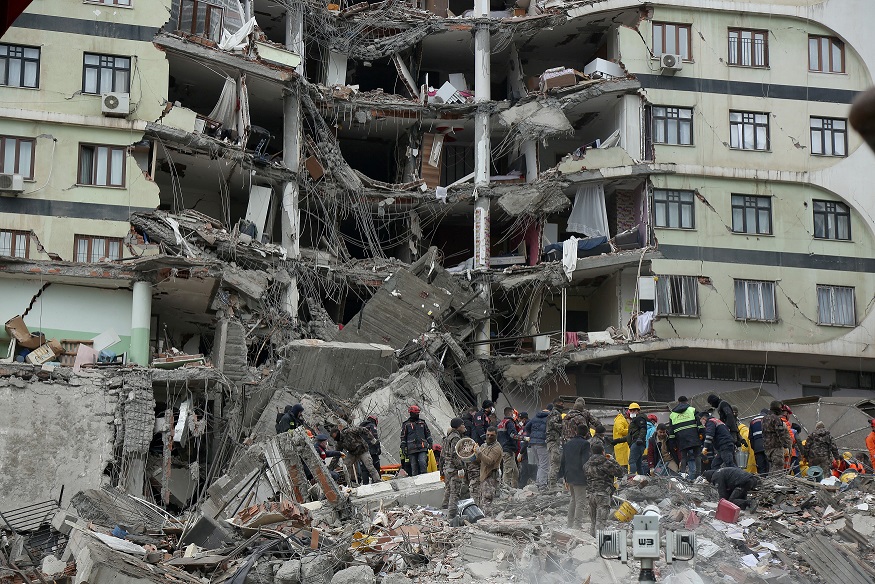
Over 1,200 people were killed, and nearly 3,000 were injured when an earthquake measuring 7.8 on the Richter scale rocked Turkey and Syria.
Local media stated that the earthquake occurred close to the border between the two countries.
Millions of people in the two affected countries, including Israel and Lebanon, were startled from their beds, according to a Monday report by the New York Times.
The Aleppo, Hama, Tartus, and Latakia districts have so far reported 237 casualties, according to the Syrian Health Ministry.
Lebanon and Cyprus were also affected by the strong earthquake that struck at 4:17 a.m. near the Turkish city of Gaziantep at a depth of 17.9 km.
The 10 cities of Gaziantep, Kahramanmaras, Hatay, Osmaniye, Adiyaman, Malatya, Sanliurfa, Adana, Diyarbakir, and Kilis were reportedly damaged, according to a statement to the media by Turkish Interior Minister Suleyman Soylu.
The Minister said at least 23 fatalities were recorded in the Malatya province, which is northeast of Gaziantep, while 17 fatalities were reported in Sanliurfa, which is in the east, and the remaining fatalities were reported in Diyarbakir and Osmaniye.
According to Xinhua news agency Ahmad Damiriyeh, Syria’s Deputy Minister of Health, general emergency preparations have been implemented for the affected districts, and private institutions have been instructed to accept all injured patients.
Dutse gets new Emir
By Ahmad Deedat Zakari
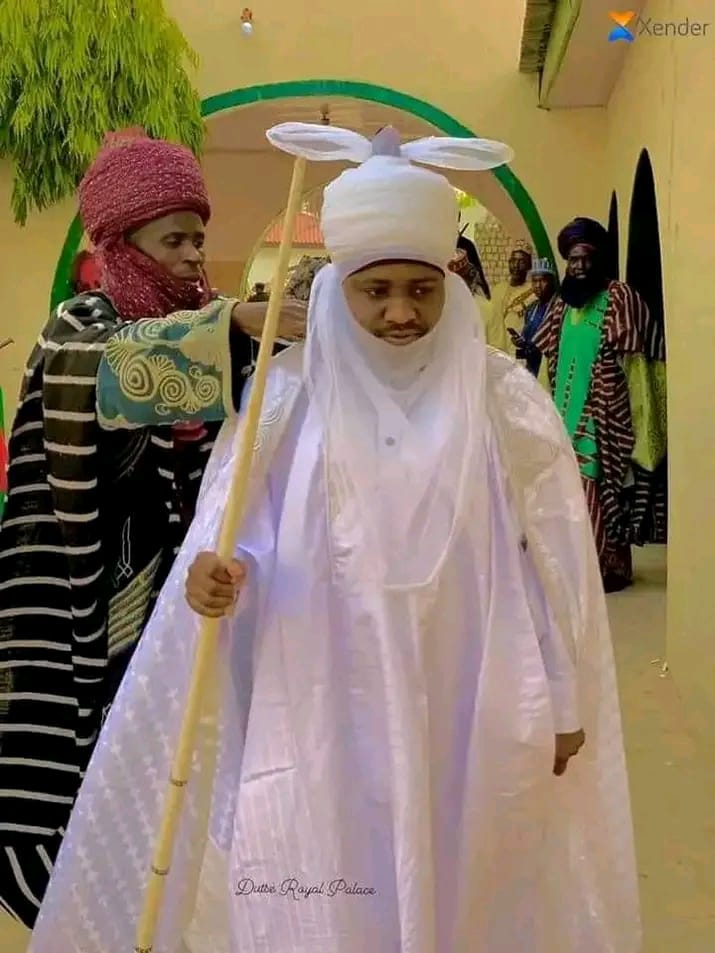
The Governor of Jigawa State, Muhammad Badaru Abubakar, has approved the appointment of Haneem Muhammad Sanusi as the new Emir of Dutse.
Governor Badaru’s approval was sequel to the recommendation of the Dutse Emirates kingmakers.
According to a statement made available to journalists on Sunday, three persons contested for the royal seat. However, the seven kingmakers had unanimously voted for Sanusi’s emergence.
The new Emir succeeded his father, Nuhu Muhammad Sunusi who passed away in an Abuja hospital last week.