

Dangote refinery and the leadership question in Nigeria
By Aisar Fagge
On Monday, 22nd May, 2023 President Muhammadu Buhari inaugurated the Dangote oil refinery in Ibeju-Lekki, Lagos State, Nigeria. Many African leaders, envoys and dignitaries from various parts of the world attended the event.
As the Vanguard newspaper reported, the essence of building the refinery is to “help Nigeria achieve self-sufficiency in refined products and even have surplus for export.” This is a huge win for Dangote as a businessman, Lagos State for its revenue and perhaps Africa for its image at international stage.
However, many Nigerians are asking, didn’t Nigerian leaders feel any shame to attend an event of an entrepreneur who built a refinery but a whole government of the leading economy in Africa cannot?
Historically, Nigeria has four refineries: Old Port Harcourt refinery commissioned in 1965, Warri refinery established in1978, Kaduna Refinery commissioned in 1980 and New Port Harcourt refinery commissioned in 1989. However, for the past 20 years, these refineries had a poor record of operation before they ran out of steam.
Nowadays, none of the refineries works because we institutionalise corruption. Every new govt will come with the promise that Kaduna or Port-Harcourt, or Warri refinery will soon commence production, but no drop of oil will be refined. And yet, government continue paying these ghost workers who produce nothing.
The question Nigerians keep asking is, if one man can build a refinery from scratch, why does a government with all its resources fail to rehabilitate its four refineries, sack all those ghost workers, appoint new MDs, stabilise them, refine our crude oil, use the trillions of the so-called subsidy to develop education, health, agric, security, infrastructure, etc.?
Some people would argue that in today’s world, the government has no business in businesses; it should only provide an enabling environment for such private investors to thrive through competition. So, they say the government should only focus on governance, policies and regulation of private investment.
Those people will cite the US and other developed countries without public refineries. But what of the Saudi ARAMCO and other Gulf countries like UAE, Kuwait, Qatar, etc? They all own and control their refineries. Look at their development index and look at where we are languishing. Even this Dangote’s refinery is greeted with mixed reactions. Some people argue that his refinery will make little or no difference at all since it is not ours. But only time will tell about that.
Though I’m not an economist, I think transforming Nigeria into an entirely capital state will not produce the desired result, considering our current development and peculiarities. A country with weak institutions should first believe in strengthening those institutions before thinking of borrowing a Western economic model.
So, I believe the Nigerian government must provide and guarantee its citizens’ basic needs – education, security, electricity, and health before anything else. Citizens of an oil-rich country, such as Nigeria, don’t deserve this suffering we’re in. We deserve more.
We pray for the success of Alhaji Aliko Dangote. He achieved this feat against many odds. However, for Nigeria to attract more investors, more must be done at all levels.
Aisar Fagge wrote from Kano. He can be contacted via aisarsalihu86@gmail.com.
Why you should read the “Kano Ƙwaryar Ƙira Matattarar Alheri” book series
By Dr Shamsuddeen Sani
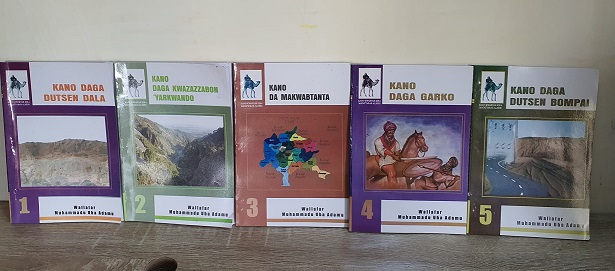
In my opinion, as a student of knowledge, there might be three reasons why I think everyone interested in Kano should read the 5-volume book Kano Ƙwaryar Ƙira Matattarar Alheri by the late Muhammadu Uba Adamu. May Allah bless his soul, amin.
1. Uncovers hidden narratives: the book offers a treasure trove of untold stories and forgotten or rarely told narratives of Kano history. The author masterfully explored the archives and conducted meticulous research allowing us to have a glimpse of the subtle Kano historical junctures, bringing to light stories of critical contributions, struggles, and resilience.
It is this very academic inclination to the Kano historiography that helps us challenge traditional historical narratives and gain a more inclusive understanding of our community’s past. By infusing creativity and academic rigour into the study of local history, the books unlock their transformative potential, fostering critical thinking, empathy, and an appreciation for the complexities of our community’s past and present.
2. The volume examines the microcosms of Kano’s ancient history: the author skilfully delves into the intricacies of our community’s past, helping us discern the impact of broader historical events, such as religious and economic shifts, social movements, or political changes. This very nuanced perspective enables us to grasp how global temporal processes shaped local realities, fostering a more comprehensive understanding of our interconnected world.
3. Analysis of spatial dynamics: in these volumes, it is discernible how the author uses the Kano history to analyse the spatial dynamics of our community’s development. Each volume uses an important geographical pivot point to relay historical milestones. This analysis provides insights into the social, economic, and cultural factors that have shaped the physical environment and spatial organization of our locality and our overall architectural heritage.
Dr Shamsuddeen Sani wrote from Kano, Nigeria.
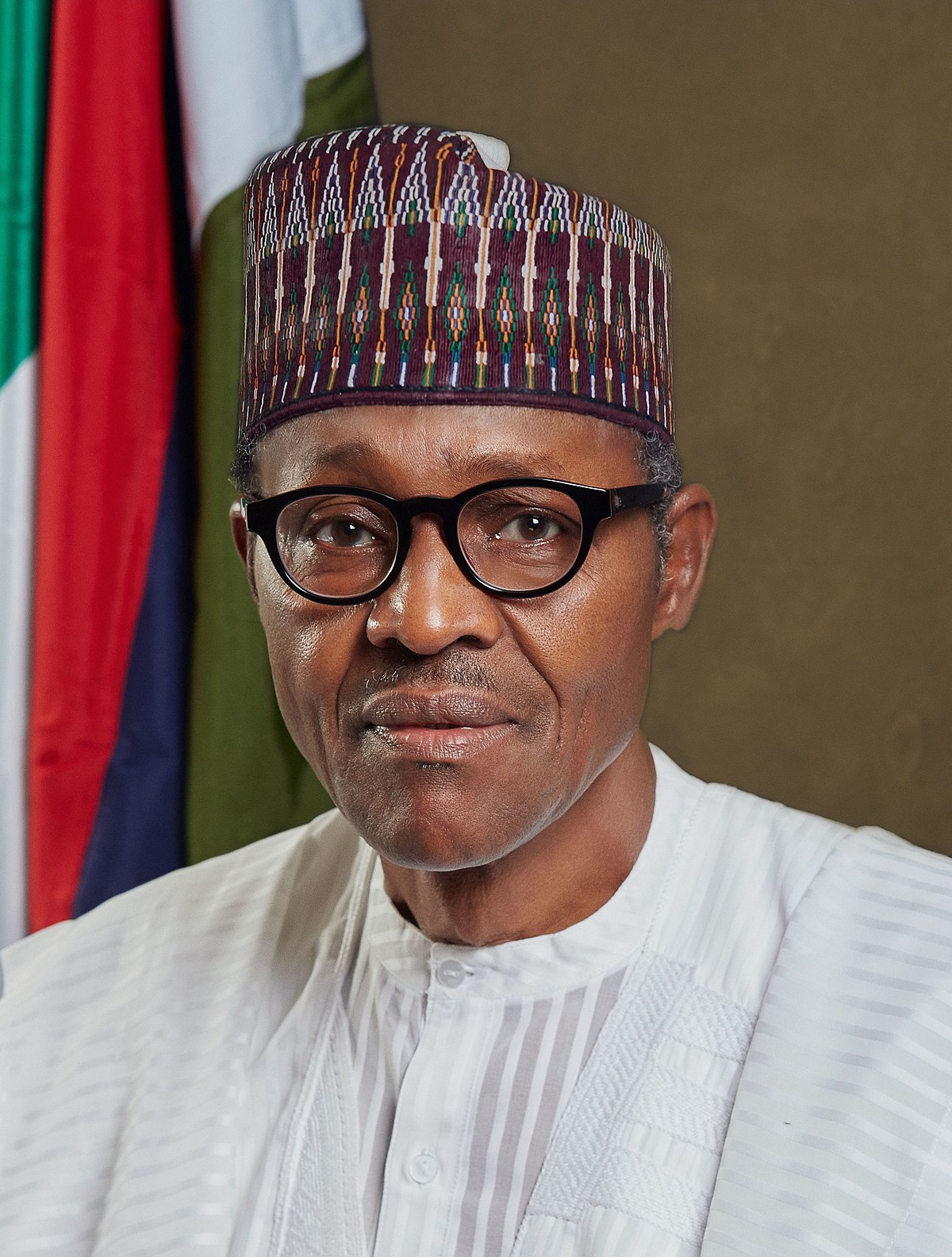
The truth we owe President Muhammadu Buhari (2015 – 2023)
By Abubakar Suleiman
In a few days, President Muhammadu Buhari will be vacating the coveted seat of the president and will retire to his hometown Daura or Kaduna state. William Shakespeare reminded us in one of his sonnets that “like as the waves make towards the pebbled shore, so do our minutes hasten to their end.” It was like yesterday; Buhari defeated the then-incumbent president, Mr Goodluck Jonathan.
The sending of Jonathan back to his hometown, Otuoke, after his defeat in the March 2015 presidential elections was greeted with happiness, unbridled hope and unmatched optimism. Even lives were lost, and limbs were severed in the cause of celebrating the emergence of a ‘Messiah’ with the name President Muhammadu Buhari.
People were tired of ‘common stealing is not corruption,’ insecurity, the roadblocks by security forces and many other socioeconomic issues. However, the demeanour of President Buhari started manifesting after taking some months to form his cabinet. The long time taken to form the cabinet did not match the citizens’ expectations as the list was not majorly peopled by experienced and competent technocrats. And this signalled that the country is probably far from being an Eldorado.
However, the masses gave President Buhari the benefit of the doubt that he would rally the cabinet towards building a more secure, economically sustainable, prosperous country.
One of the pressing issues in 2015 was Boko Haram, which he faced headlong. Virtually all the local governments under their control were retrieved, and the insurgents became less organised, with cracks emerging among its ranks. ‘Tactical manoeuvres’ by Nigerian soldiers became a thing of the past, indicating that they have been more motivated with incentives and new armoury than what was obtainable under former President Jonathan. Checkpoints on many major roads disappeared, and there was seemingly no more stop-and-search at religious centres or places of worship.
When we are trying to have a deep sigh of relief, another type of insecurity – kidnapping and banditry – surfaced or upsurged in northern Nigeria. The insecurity reached a crescendo that a soldier was kidnapped within the perimeters of the Nigerian Defence Academy (NDA) in Kaduna state, and banditry became pervasive in Katsina, Zamfara and Niger states. The kidnapping of secondary school students also resurfaced. Travelling by road for socioeconomic activities became a life-threatening matter.
Furthermore, parts of Southwest and North Central states are not excluded from this kidnapping menace. Southeast also became a haven for a terrorist group – the Indigenous People of Biafra (IPOB). Just as many people deserted the Abuja-Kaduna road for the safety of their dear lives and to enjoy the goodies of the railway infrastructure, the big boys in town, the Boko Haramites, once again reminded us that they are still much around. They halted a moving train with a bomb; exchanged fire with the police officers onboard the train; killed many passengers, and shepherded dozens of persons into a thick forest.
True to his leadership style, President Buhari never deemed it necessary to address the nation on television. At best, his media foot soldiers only regurgitate or rehash previous press releases to console the masses and ‘assure’ them of Mr President’s commitment to solving the menace. Public perception of optics was never given a damn in most parts of his administration. He understands the power of silence amidst rancour or agitations, but sometimes this silence is not golden.
If one is to carry out a comparative assessment and scientifically conduct analysis of data, taking into consideration variables like the number of people killed resulting from insecurity, number of people kidnapped, number of people injured and number of people displaced from their homes and living in camps, it will be difficult to conclude that President Buhari is leaving a safer and more united country than he met it.
Furthermore, the major reasons for these drawbacks are the lack of taking the country’s diversity into consideration during appointments and the lack of synergy among the service chiefs and the officers in charge of other security apparatus.
A fair-minded person on infrastructure will give President Buhari a pass mark because he invested heavily in critical infrastructure. He continued projects he inherited and initiated spectacularly new ones. He built new railway networks and world-class airports, and dualised and expanded major roads.
In addition, bridges were built strategically to ease the movement of goods and services. The Ajaokuta-Kaduna-Kano natural gas pipeline was also a unique and futuristic project the administration initiated. There is indeed no diversification without investments in infrastructure. Plus, the Dangote refinery has also been strategically commissioned.
The administration recorded significant Executive Orders and signed many Bills into Act, especially the nagging Petroleum Industry Bill. It also gave local governments, states judiciary and legislature financial autonomy except for the greediness and arm-twisting of the Nigerian Governors.
Unfortunately, we did not get the “Nigeria Air” promised by the Minister of Aviation, Hadi Sirika. Agriculture was also given good attention and interventions from the Central Bank of Nigeria (CBN) and other financial institutions, thereby increasing rice production locally and making many farmers smile at the bank. But insecurity suppressed these achievements at some intervals.
Without making excuses for President Buhari, he inherited a not-so-impressive economy. Former president Jonathan’s subordinates literally stole and squandered monies meant for procuring arms; the insecurity necessitated by the Boko Haram insurgency is already biting the country’s meagre resources, displacing people and their economic activities, then oil prices in the global market nosedived from above $100 per barrel to as low as $38 per barrel. With oil being the primary source of forex, that was a big blow, and recession became imminent.
The country was trying to recover from these economic shocks, but the COVID-19 pandemic rare its ugly head and the global supply chain was distorted. Honestly, even the best team of sincere and brilliant economists will find it difficult to recover this economy amidst corrupt and weak institutions like ours.
However, Buhari missed some opportunities. He failed to deregulate the oil sector when the oil in the international markets was low. And a country recovering from economic shocks ought not to have closed its borders, no matter how noble the intention is. Local rice factories and production increased, but inflation took plates of food off people’s tables and crippled many legitimate businesses.
President Muhammadu Buhari gave Emefiele unfettered power in currency crisis management, but Emefiele enabled round-tripping between Naira and Dollar. And the conservative nature of the CBN’s fiscal and monetary policies was thrown into the gutters. There was no economic adviser to advise Mr President, as he doesn’t easily sack incompetent subordinates. Ultimately, he gave us a parting but bile gift – a cashless policy and cash crunch. This singular ill-thought-out and insensitive policy perished many small and medium enterprises and rendered many people poor.
The President enjoyed goodwill and was not painted with the corruption brush by his political friends and transducers. Still, it would be difficult if corruption charges were not placed at the doorsteps of some of his cabinet members, aides, and probably his family members post-May 29. After May 29, when Economic Financial Crimes Commission (EFCC) begins knocking and revealing the corruption under his watch, Mr President will realise how he must have been scammed or manipulated. Many aides would have taken to their heels due to corruption charges, while the clever thieves would be enjoying the spoils of the wars.
The incoming administration has much to learn from the successes and, most significantly, the failures of President Buhari’s administration. The Renewed Hope by President-elect Tinubu must hit the ground running by May 29th because hope is the only thing most Nigerians are holding onto, just like a drowning man clutching a straw.
Abubakar Suleiman writes from Kaduna and can be reached via abusuleiman06@gmail.com.
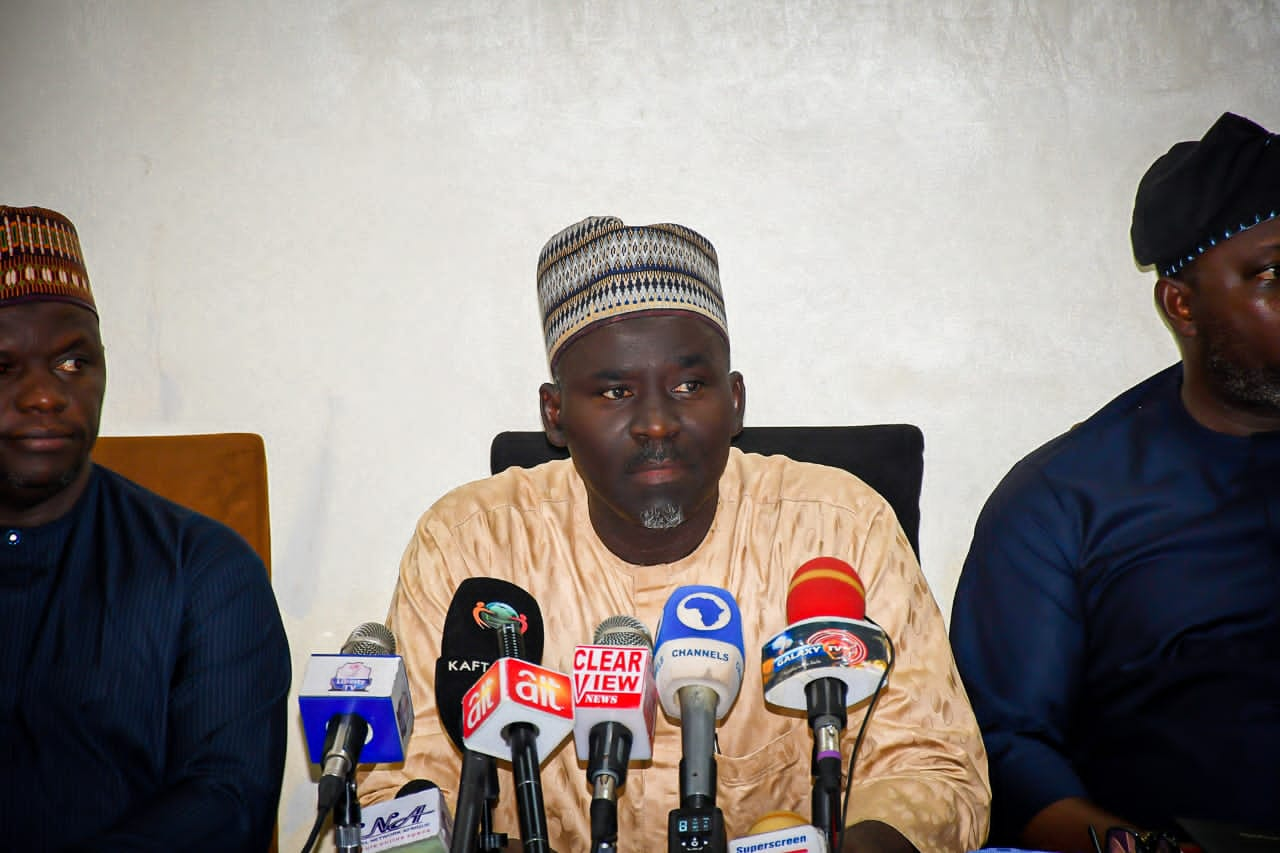
10th NASS: Allow democracy to take charge, group writes Tinubu
By UUzair Adam Imam
A Northern Nigerian group, Democratic Watch Initiative, has written a letter to the president-elect, Asiwaju Bola Ahmed Tinubu demanding his immediate intervention in the process of selecting leadership of the 10th National Assembly, saying that he should allow democracy to take charge in the process.
The group in a letter addressed to the president-elect and signed by its National Coordinator, Dr. Sunusi Umar, said they write the letter to forestall the drift toward greater regional distrust in Nigeria, breach of constitutional democracy, due process of leadership succession through elections and rancor in the 10th Assembly.
They alerted the president-elect to the consequences of falling for the trap of a brewing cabal out to reverse the populist tendencies of his government by whatever means and tactics, saying that his administration should disregard the cabal as they are there to destroy his chances of working perfectly for the country.
The full text of the letter reads below:
His Excellency,
President-elect,
Asiwaju Bola Ahmed Tinubu
Sir,
FALL-OUT OF AREWA HOUSE, KADUNA COLLOQUIUM
We humbly write you with a heart full of praises to the Almighty God for seeing us through a hectic journey to the dawn of a new era promised by your emergence as Nigeria’s next President.
Compelled by the emerging trends in the polity arising from the intervention of the National Working Committee of the All Progressives Congress regarding the leadership of the 10th National Assembly, we convened a one-day colloquium of critical stakeholders at the Arewa House, Kaduna.
After deeply analyzing the situation and assessing cost of the potential complications and unforeseen consequences of the intended intervention of the NWC, the colloquium decided to take the bold but necessary step to address this letter to you in decent patriotism and love of our country, fellow citizens and sustainable democracy.
The letter, Your Excellency, aims to forestall the drift toward greater regional distrust in Nigeria, breach of constitutional democracy, due process of leadership succession through elections and rancor in the 10th Assembly.
This representation is also to alert you to the consequences of falling for the trap of a brewing cabal out to reverse the populist tendencies of your government by whatever means and tactics.
Firstly, we wish to invite your attention, as a renowned committed democrat, to the necessity for inclusive participation, respect for statutory autonomy of such organs of government as the legislature as the only basis for sustainable constitutional democracy.
Constitutional democracy as the antithesis of arbitrary rule, allows all citizens, rather than favored individuals or groups, have the right and opportunity to participate.
This informs our conviction that only a leadership of the National Assembly independently and willingly produced by the members themselves, for themselves, can douse the rising regional tensions and foster strong understanding and cooperation among the elected members.
We are of the view therefore, that the current attempt to impose leaders on people of undoubtful maturity, and proven experience, elected to represent their various constituencies in the incoming 10th National Assembly, amounts to an encroachment on the sanctity of the legislature, subversion of popular will and a negation of the democratic principle of separation of powers between executive, the legislature and the Judiciary.
We find it curious that the leadership of the All Progressives Congress, itself a product of democratic election and which subjected its presidential ticket contest to elections, should now be the same party attempting to manipulate the system to one of selection and imposition.
Having come this far Sir, we feel duty-bound to call your attention to be vigilant as to the political opportunists that are bound to swarm around you with the intent of forming another cabal who are behind this scheme aiming to pitch you against your traditional political friends and sections of the country.
Everyone must be aware by now that those pursuing this undemocratic, unconstitutional and unrealistic agenda are not your friends; they are people who did not vote for you nor in anyway supported your emergence as APC candidate nor your eventual victory at the February polls.
What they are doing about the National Assembly leadership is to test the ground for a wider political agenda that aims to diminish your personal populist tendencies and those anticipated in your government.
Your Excellency may recall the incredible promises he made to the North during electioneering at the Arewa House talk show organized by the Northern leaders and elders. No one expects however that you will give to the North what it does not deserve, what we are demanding is a free environment for the exercise of franchise as the only solution to the pervasive communal distrust that is more accentuated in the North.
We believe a free election of leaders of the National Assembly by its own members would put to end the already brewing concerns of marginalization and fear of domination of other geopolitical zones in the North by others.
We submit therefore that if North despite the immense contribution it made towards the victory of the APC at the Presidential election at the expense of fellow candidates from the region does not deserve to be rewarded with the position it rightly demands in the National Assembly, there should be no justification to deny the the right to stand election to the same post.
We finally call Your Excellency to reclaim the people’s confidence in your untainted democratic credentials and commitment to entrenching sustainable democracy, restoring the glory of governance, reclaiming the sanctity of constitutionalism and respect for rule of law by maintaining the balanced and matured neutrality you are famous for.
We are confident that Your Excellency is endowed with ample experience and diplomatic wherewithal to cope with whatever National Assembly leadership may emerge through due democratic process.
Finally Sir, while we repose an enduring faith in your ability and will to change the situation in the country for the better, we pray the Almighty God to increase you in wisdom to be able to accomplish your good intentions for the country.
We pray God to bestow you improved health, protect and guide you as you embark on the task of transforming a country and repositioning the people’s life around security, the economy and social safety.
Yours Faithfully,
Sunusi Umar PhD
National Coordinator
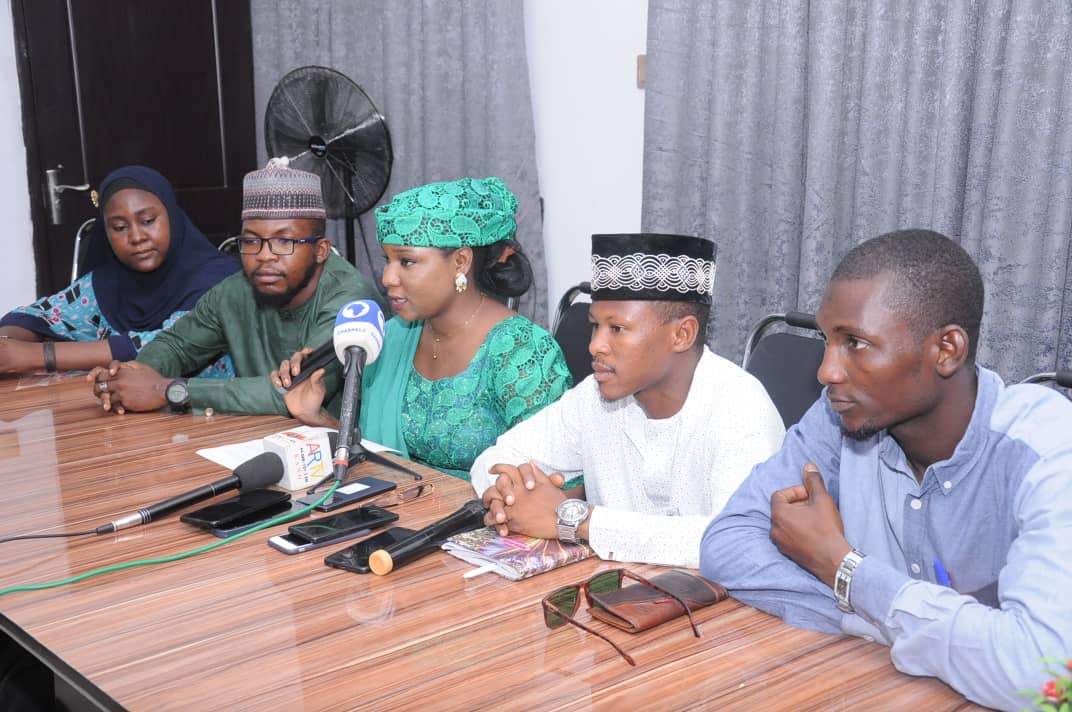
YOSPIS seeks state of emergency on phone-snatching in Kano
By Uzair Adam Imam
The Youths Society for the Prevention of Infectious Deseases and Social Vices (YOSPIS) has urged the relevant stakeholders in Kano state to declare a state of emergency over a lingering issue of phone-snatching that has been taking the lives of people in Kano on a daily basis.
Zainab Nasir Ahamd, The YOSPIS Executive Director, stated this passionate plea on behalf of the Kano state people in a press conference by the organization on Tuesday.
Phone snatching has become a major security threat in the state. The armed thugs involved in the practice have murdered several innocent people and left hundred others with minor or major injuries.
An increase in the number of the cases recorded has continued to strike terror in the mind of the residents as the intoxicated thugs spare no one during their “phone or soul” operation.
Ahmad lamented that, “Phone snatching has become a major security concern among Kano residents of the state as nobody escapes it, over the past few months, the issue has become increasingly prevalent, causing a serious insecurity situation in the state.
“The problem has reached an alarming stage, with reports of armed thugs mostly on Keke Napep especially attacking innocent individuals and snatching their phones daily.
“The phone snatchers are now alleging turning to armed robbers and vampires using dangerous weapons to attack innocent souls inform of robbing and stealing their phones and other valuable items.
“However, countless people were stabbed to death by the phone snatchers. The situation has recently grown to the level that the snatchers operate in the daytime invading houses in various communities. This is said to be alarming and pathetic to the history of the Kano state.
“The youth of Kano State recognizes the critical roles security plays in ensuring peace and stability within our communities. We acknowledge the importance of youth engagement in security matters and commit ourselves to promote security and peaceful coexistence within communities,” she stated.
According to her, an effective communication and coordination between the police, traffic police, and other security agencies are crucial in combating phone snatching in Kano State.
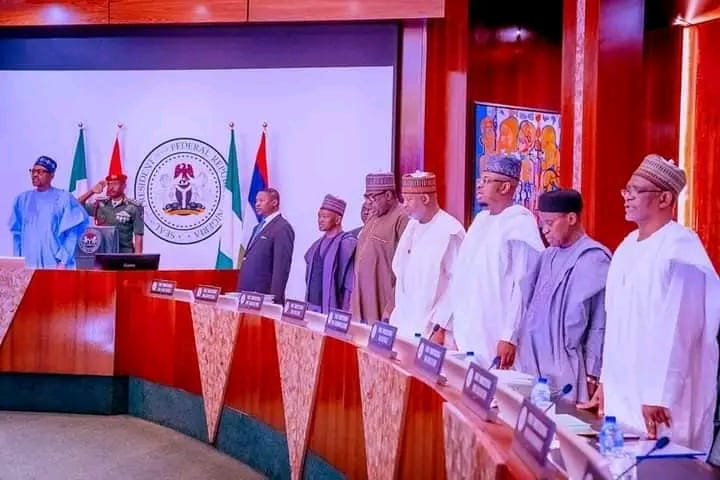
Buhari presides over his final FEC Meeting
By Ahmad Deedat Zakari
As the presidency of Nigeria outgoing President, Muhammadu Buhari is gradually coming to an end, the president is seemingly busy with constitutional functions he would be performing for the last time.
The President, who was elected for the first time in 2015 was re-elected for a second term in 2019. Due to the two terms limit set by the Nigerian constitution, the president will hand over to his successor on May 29, 2023.
On Wednesday, he presided over the Valedictory Federal Executive Council Meeting. It is the last one he would be presiding over as president of the world’s most populous black nation.
His media aide, Buhari Sallau, made this known on his Facebook page as he shared photos from the meeting.
During the FEC meeting, Buhari also swore in the Revenue Mobilisation Allocation and Fiscal Commission Board and Vice President Yemi Osinbajo presented the Health Care Reform Committee Report to Buhari and the FEC at the Statehouse, Abuja.

Of football, racism and hypocrisy
By Aliyu Yakubu Yusuf
Racism in football has been a problem that refuses to go away. Football is often rightly described as the beautiful game. However, the persistent problem of racism has been a blight on this enduring beauty. Despite the fact that numerous campaigns (such as “Say No To Racism” and “Black Lives Matter” etc.) sponsored by FIFA and other regional football associations, racism has seemingly been kryptonite for the footballing establishments.
I firmly believe that FIFA, UEFA, the media and most fans in Europe and America are not sincere about fighting racism. All these campaigns against racism are merely lip service that will never bring an end to this menace. Vinicius Junior is just the latest case that opens a fresh can of worms in a long list of racism storms that rocked the football world.
When the trio of Saka, Sancho and Rashford missed crucial penalties in England’s Euro 2020 final defeat to Italy, they were racially abused online by their own fans. Even Real Madrid fans are also guilty of racism towards black players from other clubs and their players. When FIFA released the votes for the last Ballon d’Or, and it appeared that Real Madrid’s Austria captain, David Alaba, had voted for Lionel Messi as his first pick ahead of his teammate Karim Benzema, Real Madrid fans racially abused him online. And he was forced to apologise. And these are the same people that are up in arms “protecting” Vinicius. If this is not hypocrisy, I don’t know what is.
Heck! Even fans at various French clubs were reported to have racially abused black players. And this is a country whose national team is simply an amalgam of players from their former African colonies. Imagine!
Racism is here to stay as long as the powers that be are not serious about tackling it. FIFA has a three-step process for dealing with racism during matches. First, the referee should stop the game and announces that racist chants are going on and should stop. Then, if the chants continue, the referee should apply the second stage, which is to instruct the players to go back to the dressing room and wait. After a while, the referee should ask the players to resume on the pitch and restart the game. Finally, if the chants continue, the referee should apply the third process, which is to stop the game entirely and award the three points to the opponents.
However, instead of making it mandatory for all regional football unions to adopt this process, FIFA only “recommend” it. Everyone knows that the only way to stop racism once and for all is to enforce this law. When clubs realise that some unscrupulous elements within their fanbase are making them lose points unnecessarily, they will fish out these “fans” and give them lifetime bans from stadiums.
The question is, ‘Do black lives really matter’?
Aliyu Yakubu Yusuf wrote from Bayero University, Kano. He can be reached via aliyuyy@gmail.com.
UK rolls out plans to deny entry for students’ dependents
By Muhammadu Sabiu
The United Kingdom is planning to ban foreign postgraduate students from coming to the country with their relatives except under certain circumstances.
This is part of the government’s effort to reduce the number of immigrants entering the country. Last year, 135,788 visas were issued under the sponsorship of foreign students, almost nine times the number issued in 2019.
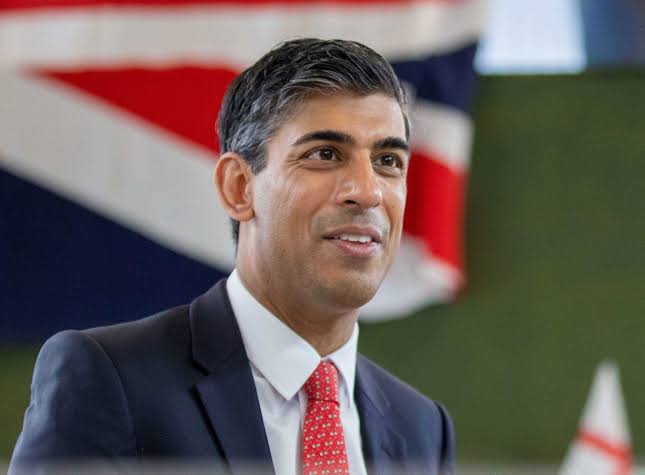
Prime Minister Rishi Sunak told UK ministers that the move would help reduce the number of migrants trooping into the country. He told the ministers that the policy, which will come into effect in January 2024, will help reduce the number of people entering the country.
In the past, the Conservative Party promised to reduce the number of people migrating to the UK to less than 100,000 in total. However, this plan was abandoned before the 2019 election.

Please, hide my identity
By Abubakar Suleiman
If you are conversant with the Arewa cyberspace, it will be surprising if you are unaware of the cliché, “Please, hide my identity.” It has gained so much currency (or notoriety) on Instagram, Facebook and Twitter. And it is mainly followed up with bad news, especially related to relationships and marriages – cases of incest, infidelity, marriage battery, heartbreaks and others.
People usually send their relationship or marital problems to popular social media pages or handles managed by self-styled marriage counsellors. These counsellors or opinion shapers then subject the problems to the public for solutions while hiding the identity of the sender of these problems.
Surprisingly, these people who found themselves in a toxic relationship or abusive marriage have parents or guardians who married them off to their spouses. Still, they many times seem to bypass them for advice or counselling.
They also rarely approach certified marriage counsellors or therapists for solutions. Therefore, the problem is thrown to the public, and with too many disjointed ideas or solutions, sieving the best solution to the peculiar problem becomes complicated.
Not so fast; how are we even sure these stories or problems are true? What if someone sits in the comfort of their room or basement and concocts these unfounded narratives to make the stories trend? Many people don’t check the logical validity or fallacy of these stories.
Social media gave everyone a platform to air or voice out their views. The problem with the advent of these platforms is not the access to information but rather the processing of information. Many people find it uneasy to check the authenticity of stories or the validity of statistics.
The blowback or unintended consequence of this ‘hide my identity’ trend is that it has made many young people consume many negative stories, thereby fuelling suspicion between both genders. Moreover, stories of successful and happy marriages have been in short supply. Therefore, some young people no longer see marriage as a worthwhile endeavour wherein you invest your patience, energy and prayers.
On the one hand, love movies from Nollywood, Bollywood or Kannywood made young people see marriage or relationship as a perfect bed of roses or land of Eldorado instead of the cocktail of happiness, sadness, compromises and sacrifices that it is.
On the other hand, ‘hide my identity’ stories have increasingly made partners or lovers dine with each other with a very long spoon. Each sees the other as a veiled threat or a potentially dangerous person. These trends have created overnight feminists and misogynists.
The above backdrop does not downplay the effects of abusive or toxic marriages or relationships that appropriate authorities could reasonably address – parents, guardians, certified counsellors or the court. However, young people must be guided on what marriage entails, its prospects and its challenges. They need a direction or triangulation amidst a plethora of negative information and scary marital or relationship stories.
They should also be fed with successful marital examples or stories and the possibility of a happy marriage. And this makes parenting a more difficult task in our contemporary world.
The last time I checked around, we still had more good homes than broken ones. But, unfortunately, the familiar stories of abusive marriages or relationships are just the case of bad news flying more than the good ones.
Check out families around you, your pairs, neighbours, colleagues at the workplace or married classmates. You’ll understand that except for the usual day-to-day challenges in marriage, they are relatively not bad as it is being portrayed. However, we can canvass for improvements, coping mechanisms or detailed exit plans for worst scenarios. Therefore, ‘hide my identity’ stories are many times fabricated stories or isolated cases than the whole.
Abubakar Suleiman wrote from Kaduna and can be contacted via abusuleiman06@gmail.com.

Embracing Perseverance: A journey of triumph in English
By Abdurrazak Mukhtar
Introduction:
In the face of adversity, some individuals find the strength to rise above their challenges and achieve greatness. Such is the remarkable story of one individual who refused to let failure define them. Despite enduring twelve failed attempts at obtaining credit in English for their SSCE, they persevered, eventually mastering the language and becoming a mentor for HND and degree students. This story is a powerful reminder of the transformative power of perseverance and the unyielding spirit that can lead to incredible accomplishments.
The Will to Succeed:
Life has a way of testing our determination; for this individual, the English language became their ultimate hurdle. Year after year, they faced disappointment as the elusive credit seemed just out of reach. But instead of succumbing to despair, they summoned the courage to keep trying. Their unyielding will to succeed became a driving force that fuelled their journey towards mastery.
The Turning Point:
After numerous setbacks, the individual refused to let failure define them. Instead, they embraced the challenge head-on, recognising that actual growth often arises from struggle. So, rather than giving up, they embarked on a relentless pursuit of knowledge and skill, dedicating countless hours to studying and honing their command of the English language.
The Power of Education:
With each setback came a valuable lesson. The individual began to understand that learning is a lifelong journey and that education extends far beyond the walls of a classroom. They sought guidance from mentors, devoured books and resources, and immersed themselves in the intricacies of the English language. Slowly but steadily, their proficiency began to improve.
From Struggle to Mentorship:
The incredible twist in this story lies in the individual’s transformation from a struggling learner to a mentor for others. First, through their perseverance and hard work, they developed a unique insight into the challenges faced by students grappling with English. Then, armed with their own experiences, they became an inspiring guide, supporting and motivating HND and degree students in their pursuit of linguistic excellence.
Inspiring Others:
As this individual continued to impact the lives of others, their story became a beacon of hope for those who had lost faith in their abilities. They showed that failure does not define one’s potential but serves as a catalyst for growth. Furthermore, their remarkable journey instilled in others the belief that success is attainable with unwavering dedication and an unrelenting spirit.
Conclusion:
The story of this extraordinary individual serves as a testament to the power of perseverance. Despite repeated failures, their unwavering determination to conquer the English language transformed their lives and inspired countless others. Furthermore, it teaches us that setbacks are not roadblocks but stepping stones to success. With the right mindset and an unyielding spirit, anyone can triumph over adversity and achieve their goals.
So, let this story remind you never to give up, no matter how challenging the journey may seem. Instead, embrace each failure as an opportunity for growth and keep moving forward. Your struggles today may become the source of inspiration for others tomorrow. Remember, the key to success lies within you.