
Nigeria: The road to new minimum wage…
By Prof. Abdelghaffar Amoka
In 2011, the exchange rate was 1 USD to 155 naira, and in 2024, it is about 1 USD to 1,550 naira. That is a ratio of 1: 10 for 2011 and 2024.
In 2011, a loaf of bread cost 150 naira, and in 2024, it is about 1,500 naira. That is a ratio of 1: 10 for 2011 and 2024.
In 2011, a bag of maize cost about 5,000 naira. In 2024, it is about 55,000 naira. That is a ratio of 1: 10 for 2011 and 2024.
The price of most basic needs has increased ten times between 2011 and now. That is still a ratio of about 1: 10 for 2011 and 2024.
Then, the price of fuel in 2011 was 65 naira per litre, and the current price in 2024 is about 690 naira. That is still a ratio of about 1: 10 for 2011 and 2024.
If the exchange rate and fuel price remain the same, if the minimum wage was 18,000 naira in 2011, it should be 180,000 naira in 2024.
Abdelghaffar Amoka Abdelmalik, PhD, wrote from Ahmadu Bello University, Zaria. He can be reached via aaabdelmalik@gmail.com.
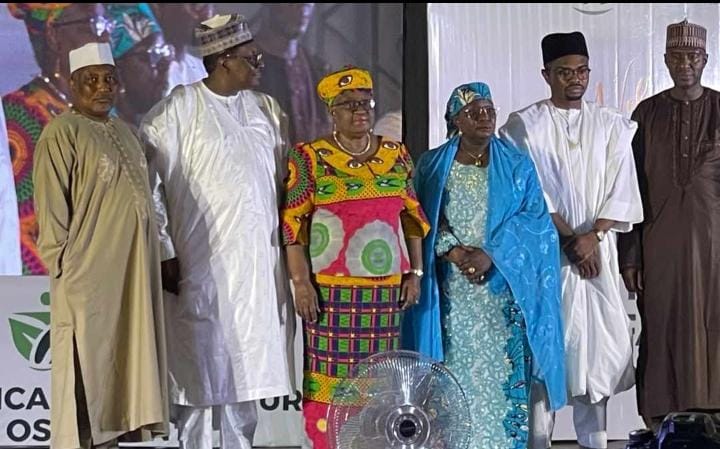
AMA Medical Manufacturing: A turning point for the Nigerian of Medical Industry
By Muhammad Muzdaleefa
The groundbreaking ceremony for the AMA Medical Manufacturing OSD Plant marks a turning point for the Nigerian medical industry.
The new plant, which will produce oral solid dosage (OSD) medications, will not only boost the local economy but also improve access to high-quality healthcare for the Nigerian people.
It is a testament to the company’s commitment to investing in the future of healthcare in Nigeria.
The ceremony was conducted by the Director General of the World Trade Organization, Dr. Ngozi Okonjo Iweala, and attended by a number of dignitaries, including the Governor of Kaduna State, Senator Uba Sani, Deputy Governor of Kaduna State, Dr. Hadiza Sabuwa Balarabe, Minister of Health, Prof. Ali Pate, the Permanent Secretary of the Ministry of Trade and Industry, the Vice President’s representative, Emir of Zazzau, Amb. Ahmad Nuhu Bamalli among others.
A number of medical experts from UK, US, Germany and representatives from numerous health organizations were also in attendance, including the ambassador of Indonesia in Nigeria, partners from Korea, and representatives from the National Agency for Food and Drug Administration and Control (NAFDAC).
Also, a number of memorandums of understanding (MoUs) were signed during the ceremony, reflecting the commitment of various stakeholders to supporting the new plant and its mission to improve healthcare in Nigeria.
The event was a clear sign of the importance of the new plant to the future of healthcare in the country. It is imperative to note that prior to the establishment of the AMA Medical Manufacturing plant, there is virtually no medical companies operating in northern Nigeria.
This meant that many people in the region had limited access to high-quality, affordable medical products and services.
The AMA Medical Manufacturing plant aims to address this issue by providing a reliable source of quality medical products for the people of northern Nigeria.
In addition, the plant’s location in Kaduna State, which is central to the region, makes it accessible to a large population and well-positioned to serve as a hub for medical products distribution.
The founder of AMA Medical Manufacturing, Alhaji Musa Bello Abdullahi, chose Kaduna as the location for the new plant because of its strategic location and rich history.
Kaduna is a major transportation hub, with good road, rail, and air links, making it easy to get medical products from the plant to people across the region.
In addition, Kaduna has a long history as a center of industry and commerce, and the founder hopes that the plant will help to revitalize the local economy.
During her address, the DG of the WTO stated that she is pleased to see the establishment of the AMA Medical Manufacturing plant in Kaduna, and believes that it has the potential to become a global leader in medical equipment production.
She has expressed her commitment to providing the company with the necessary support and assistance to help it achieve this goal.
This includes helping the company to access international markets and comply with international standards.
The Minister of Health has also voiced the federal government’s support for the AMA Medical Manufacturing plant, stating that the government is committed to assisting the company in any way possible.
This includes providing regulatory and policy support, as well as assistance with accessing capital and markets. The Minister has expressed confidence that the plant will help to address some of the healthcare challenges facing Nigeria, and will contribute to the overall development of the country.
The establishment of the AMA Medical Manufacturing plant in Kaduna is a significant development for both the state and Nigeria as a whole.
The company has the support of both the federal government and the WTO, and has the potential to become a global leader in the medical equipment industry.
With the right support and commitment, the plant can play a major role in improving healthcare in Nigeria and making the country a more competitive player in the global economy.
The future of medical equipment manufacturing in Nigeria looks bright, thanks to the efforts of AMA Medical Manufacturing.
Muhammad Muzdaleefa writes from Kaduna and can be reached via mohammedadamu736@gmail.
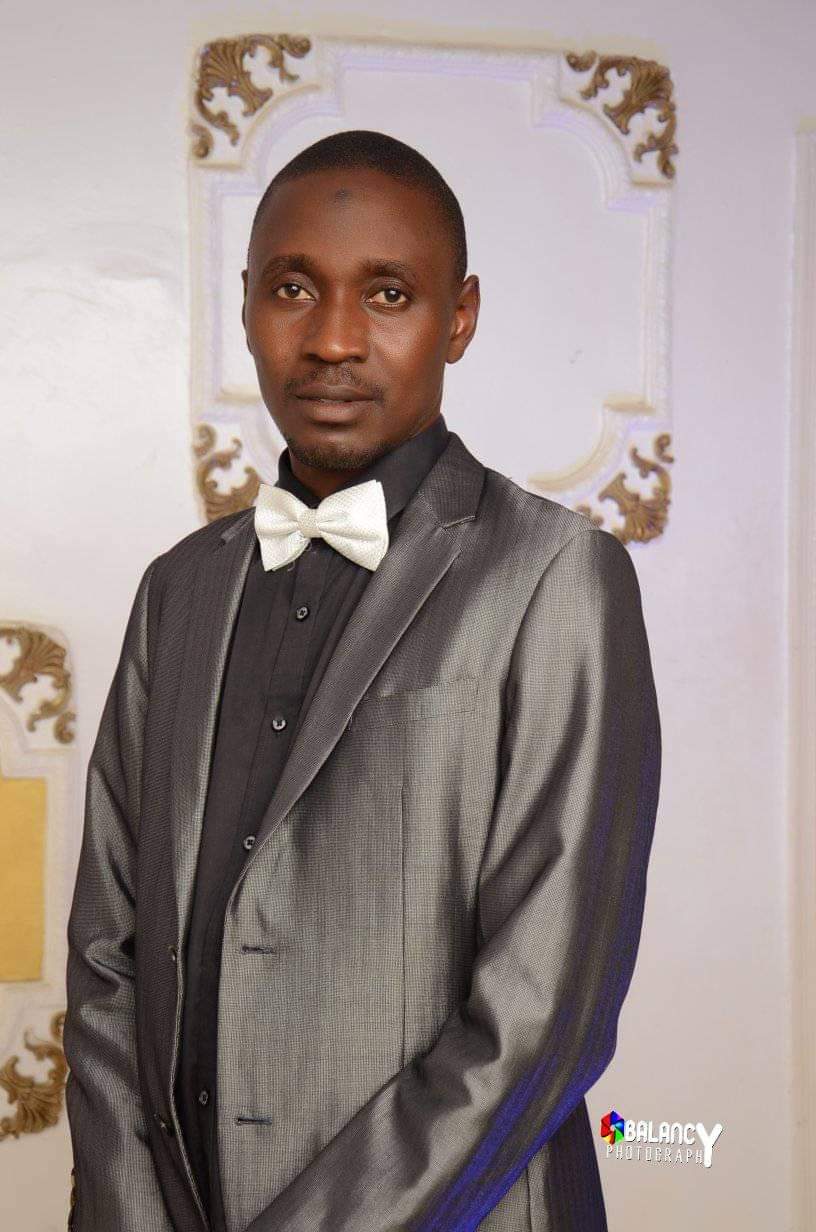
Celebrating World Speech Day 2024
By Bello Sagir
Today is World Speech Day (WSD), 2024! This year’s theme is “Speech for a Better World.” WSD is a day of celebration for all Nigerians and people around the world.
In 2015, Simon Gibson founded WSD at the Athens Democracy Forum to celebrate free speech, public speaking, and public speakers. In 2016, WSD was inaugurated and first celebrated in Athens and Singapore. By 2020, over one hundred countries celebrated WSD. As a result of this milestone, Facebookers and YouTubers began live-streaming the event.
World Speech Day is a celebration day for all Nigerians because, prior to 1960, when we officially became an independent nation from Britain, there were a series of speeches by Sir Abubakar Tafawa Balewa, Herbert Macaulay, Nnamdi Azikiwe, etc., in Britain, some African countries, and, above all, in Nigerian media and during processions and campaigns, all in a bid to free Nigeria from the shackles of the colonial masters.
Sheikh Uthman Danfodio reformed Islam in northern Nigeria, not because he was the most pious or educated person nor because he was the most fearless warrior, but largely, if not solely, because he was a very persuasive speaker.
The same is true of Malam Aminu Kano, who won the Kano East constituency in the federal legislature during the Second Republic. Similarly, in 1979, his party, the PRP, won the Kano and Kaduna gubernatorial seats in a landslide victory.
As we are Black and African, so is Barack Obama, whose father went to the United States from Kenya. Therefore, his political victory affects us. According to analysts, Obama became the first Black African American President because he could speak persuasively to the audience.
Teaching is a form of speech that falls under informative public speaking. That is to say, all educated people are educated because teachers have taught them. Imagine the world without teachers! Would there be medical doctors who take care of our health, engineers who design and make cars for us, pilots who fly us, military and other security personnel who secure us, bankers who keep and manage our money, or even journalists who hunt for news professionally and inform us? Would there be all these personalities and many more?
Regardless of the religion you follow, it reached you through public speakers who are God’s agents. They used largely informative and persuasive public speaking to extend the religion to people. Also, you learn how to worship God through public speakers who teach you at schools the performance of the religion, as prescribed by God and his messenger.
See how public speaking has been instrumental in Nigeria’s independence, the reformation of Islam in Northern Nigeria, educating Northerners (of that time), resisting bad governance, and a person of African descent becoming president of the powerful United States of America.
Additionally, considering how public speaking is responsible for the creature comforts and peace we enjoy, among other things, it is not amiss to conclude that World Speech Day is worth celebrating every year by all of us in our various capacities because, in a way, celebrating the day is celebrating all the public speakers responsible for the civilized world we are all proud of today.
Bello Sagir Imam
Public Speaking Coach
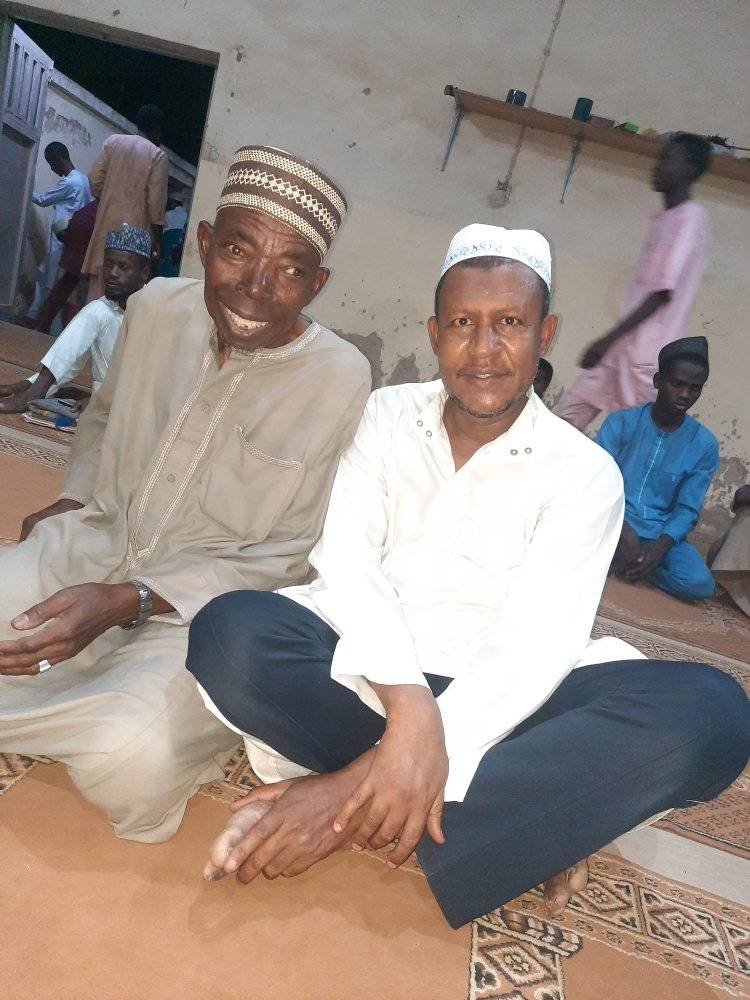
Malam Ahmad the Muezzin: As Constant as the Northern Star!
By Malam Mahmud Zukogi
Those who did one program or the other at the Bayero University, Kano (BUK) new campus may know Malam Ahmad in two places: the university library and the now-old new campus mosque.
For students who frequent the library for the serious business of “acada,” the likelihood of you not meeting Malam Ahmad every other day is zero. At any of his bits in the Reserve, Circulation, Serials, and Nigeriana sections, you are certain to meet a man who is calm, gentle, welcoming, and professional in his disposition.
Malam Ahmad listens to you, guides you, and directs you where to get the books and materials you seek. Such is the man Malam Ahmad, who recently retired from the services of Bayero University, Kano, as a Principal Librarian in 2019.
Malam Ahmad obtained his Diploma in Library Science in the early eighties and was absorbed into the university’s services. He went on to do his bachelor of Arts Education in Library Science at Ahmadu Bello University (ABU) Zaria and capped it off with a master’s degree in BUK.
However, his professional duty has not made Malam Ahmad renowned at the university. For over 40 years, his heart has been devoted to the mosque. Starting as an assistant Muezzin, he rose to become the substantive Muezzin, a role he held steadfastly.
At the onset of time for prayers, you will hear Malam Ahmad’s voice waxing through the air, calling faithful to prayer. He’s as constant as the northern star. Whether sun or rain, he will be on top of time to open the mosque, clean up the spaces and hit the mic with his signature voice. Let the rains tear through the skies with intensity at dawn; his voice calling to prayer and success will wow the fierce nature into the homes and ears of adherents in the quarters. Subhanallah.
He looks frail in his mid-seventies, but his heart is still strong and firm. As a testimony to this, even after packing out of the university quarters, Malam Ahmad will still be in the mosque at the appointed time. The only time you won’t find him is when he is challenged healthwise. He is a very peaceful man, never engaging in any squabbles or quarrels. You will find him engrossed in zikr and recitation of the Holy Qur’an between prayers.
Ya Allah, grant this your servant good health and endow him with sufficient means to live his remaining life in peace and harmony. Ya Allah, grant him a beautiful ending and enlist him into Jannat ul Firdaus.
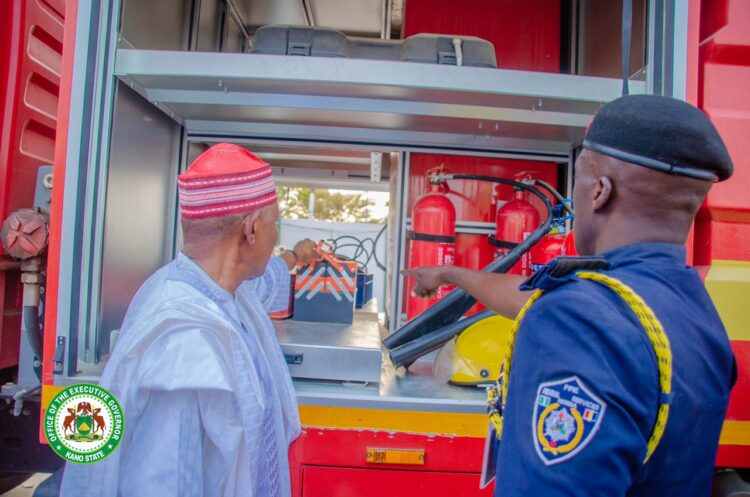
Disaster management: FG donates firefighting trucks to Kano government
By Sabiu Abdullahi
The federal government has stepped in to offer support by donating two cutting-edge digital firefighting trucks to the Kano State government.
The unveiling ceremony, graced by Kano State Governor Abba Kabir Yusuf, was marked by expressions of gratitude towards the Federal Government for its crucial assistance.
Governor Yusuf, acknowledging the donation, expressed profound appreciation for the gesture, highlighting the substantial impact these firefighting trucks would have on bolstering safety and security within the state.
He assured the public that the resources would be utilised judiciously for the benefit of all citizens.
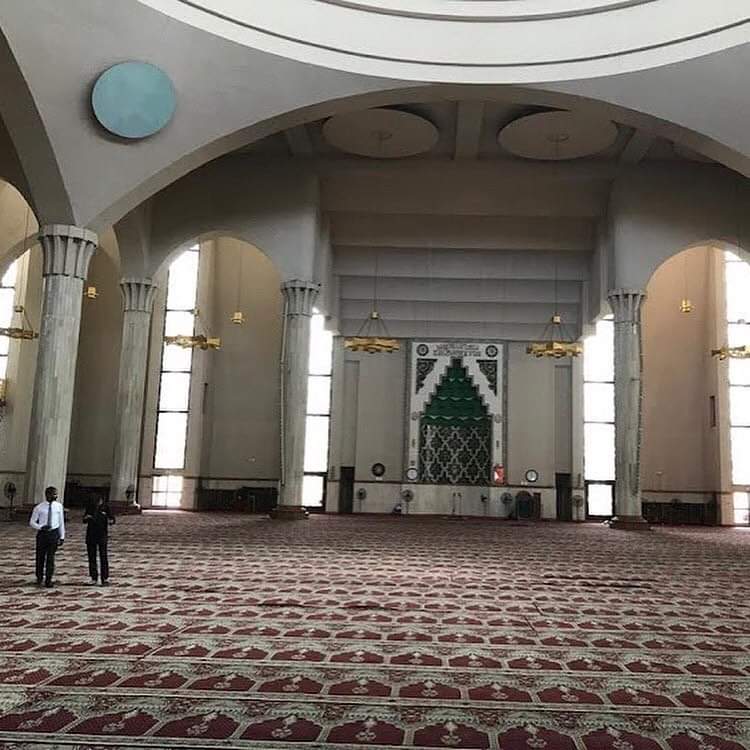
Time to return to the masjid
By Bello Hussein Adoto
When COVID-19 came, we switched from receiving exegeses of the Qur’an and Hadith from masājid and physical gatherings of knowledge to virtual ones. We attended Facebook Live and Zoom sessions to listen to our favourite scholars. We followed their tafsirs on Mixlr, Google Meet, and Telegram.
These were supposed to be temporary solutions to the social-distancing mandates that COVID-19 imposed, but they have become the norm. It is about time we returned to the masājid to restore their beauty and secure the blessings of learning physically from scholars.
This Ramadan is a great time to start.
Allāh says in the glorious Qur’an, “I did not create mankind and the jinn except to worship Me.” The masjid is central to this worship. We observe the congregational ṣalāt at the masjid, perform iʿtikāf there, distribute the zakāh, and listen to explanations from our scholars.
Beyond worship, the masjid unites us as a community by bringing us together with our Muslim brothers and sisters as members of a shared community, united by faith. In preserving this faith and community, we must find a way to restore the essence of our masajid, even in the age of online communities.
Why should we return to the masjid?
Islam is not against technological innovations that would benefit Muslims. Indeed, we use microphones to project the adhan, telescopes to observe the moon, and smartphones and other devices to spread the message of Islam beyond the masajid. Therefore, we are free to seek and adopt goodness from any source.
However, attending virtual lectures or learning at online madrasahs or Islamic institutes should complement, not substitute, listening to lectures in the masjid or learning physically at the feet of scholars.
The masjid creates a veritable platform for teachers, scholars, and students to connect physically and leverage the elements of the surroundings—the sound, the sights, the mannerisms, and the divine blessings—to achieve maximum benefit from the engagement. Besides, it is the most common place to connect as brothers and sisters and focus solely on learning and worship without distractions.
So, how can we return to the masjid?
Start small
Returning to lectures at the mosque or taking in-person classes would be challenging in the first few days. You are changing a routine and need time to adjust.
So, start small. Instead of joining Twitter Spaces for morning reminders, stay back for three to five minutes to listen to short tafsirs of the Quran and Hadith. If that is unavailable at your masjid, introduce the idea to the masjid committee. Then, you can listen to your virtual sessions on your way home.
Commit to optimizing Jum’ah sessions
The Jum’ah prayer is our weekly chance to gather in our numbers to worship Allah. Thankfully, Imams deliver khutbahs on salient issues that can provide us with much to ponder for the week. We can optimize our schedules to prioritize the Jum’ah sessions.
Set out early to secure convenient spots. Those of us who sleep through the khutbah can nap before going for Jum’ah. That way, we are more likely to stay sharp until the end of the service and earn the full reward.
Leverage your local masjid
The scholars at the mosque you pray at may not compare with the exotic collection of scholars you can listen to online, but they offer a great platform to keep you grounded in your community’s realities.
They speak your language, use local examples to explain Islamic concepts, and are easier to reach than those you listen to online. Physical sessions with these scholars and teachers also provide a social presence unmatched by virtual ones.
The mere fact that they are live before you strengthens your connection and primes you to appreciate better the content and context of the lecture or discussion. So, start with your local masjid and see how a virtual platform can help you improve.
Remember, the masjid offers more than learning
Think back to the last time you were at the masjid. Perhaps you met a brother you hadn’t seen in a while or made a new acquaintance. Whatever the case, you must have said tasleem, shaken a hand or two, or even felt the warm embrace of your brother in the Deen. Such is the richness that comes with the masjid, the one that strengthens our brotherliness and fetches Allah’s mercies.
We can listen to podcasts for hours and join Mixlr, Zoom, Google Meet, Facebook, or YouTube live sessions to follow our favourite scholars. Still, they cannot and should not replace our intimate experience of physical sessions.
If anything, their many limitations—the distractions, the weaker connection between scholars and students, speakers and listeners, the transient sense of community that virtual platforms foster, and even the difficulties that come with setting up virtual sessions and following them—show that we need our masājid and our ḥalaqah now more than ever.
Ramadan is here. It’s time to return to the masjid.
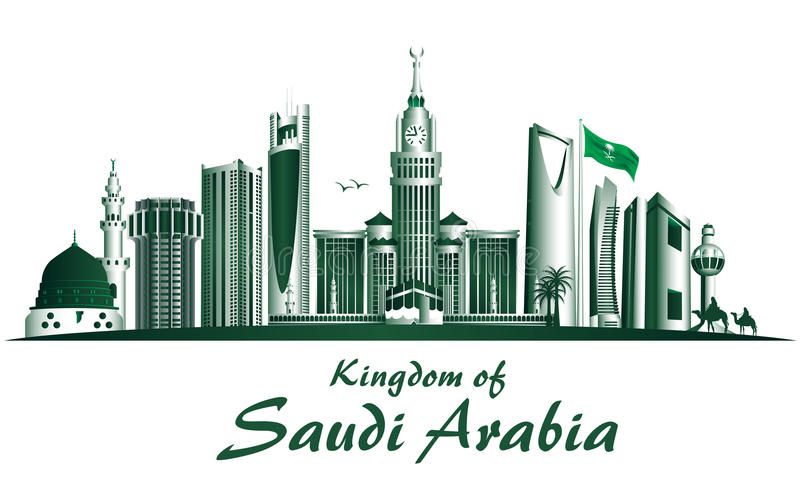
The Kingdom of Saudi Arabia does not represent Muslims
By Abba Abdullahi Garba
There is an apparent misunderstanding of what a kingdom in the Arabian Peninsula (Saudi), Islam, and Muslims mean and what they represent, especially when it comes to the point of view of some Nigerians.
This short, precise, and well-clarified article, under 700 words, will differentiate these things and conclude with the reason why the Saudi Kingdom does not represent Muslims or Islam but Saudi Arabians.
Saudi Arabia Kingdom
The Saudi Kingdom rules Saudi Arabia and represents it worldwide. It acts as the president, prime minister, and legislative body of Saudi Arabia.
Anything that is outside Saudi land is outside the control of the Saudi Kingdom [from religion, spirituality, international politics, et cetera], except what directly relates to it or its citizens.
The Kingdom, just like its counterparts in Qatar, the UAE, and others, has the authority to allow things [like entertainment, sports, et cetera] to take place within their land. And that is their business, not Muslims!
Islam
Islam is a non-modifiable religion practised by over one billion people all over the globe. And those people come from all walks of life and different races.
However, what makes it the perfect choice for many people is the fact that there is no racism, discrimination, indecency, or so many other leftist things. It is a religion that uses over 1,400 years of old scripture, which, to date, no one has modified, and it will remain like that till the end of the world.
Islam does not have a representative country, kingdom, or race. Its representatives are the teachers who taught it appropriately, and even if they cannot modify its teachings, they must teach it the way it is.
Islam promotes peace, tolerance, love for each other, good manners, truthfulness, and honesty, among other things.
I can’t tell you everything about Islam right now because this article is supposed to be short. But, sincerely speaking, Islam is a way of life!
Muslims
Muslims are the people who accept and practice the teachings of Islam regardless of their race, country, or region. And when I say Muslims, I mean all Muslims.
And it is impossible to say this: all Muslims are good people, or all are bad! Some are good people, and some are bad people. Everywhere and in every religion, there are those kinds of people, good and bad.
And the behaviour of one Muslim does not represent Islam if it is against Islamic teachings. It represents that person, not his religion.
And the behaviour of a kingdom that rules a country of people who follow and practice Islam does not represent Islam; rather, it represents that country and its leaders.
Any Islamic preacher or ordinary Muslim whose actions or words are out of Islamic context does not represent Islam but rather his person.
Conclusion
Islam is a religion. Muslims are those who practice it. And the Saudi Kingdom does not represent Muslims or Islam. It represents the people of Saudi Arabia. And Muslims all over the world have no say in what the Kingdom of Saudi Arabia decides for its people in any aspect of life.
So, for those who think the Saudi Kingdom represents Islam, then it is time to change your perception on this topic, for Islam is a religion with no authoritative body that can speak or act on its behalf. And Muslims are those who practice it.
And you can be one too!
Abba Abdullahi Garba wrote from Zugachi, Kano, Nigeria. He can be reached via abbaabdullahigarba@outlook.com.
Nigeria reopens borders with Niger Republic, lifts sanctions
By Sabiu Abdullahi
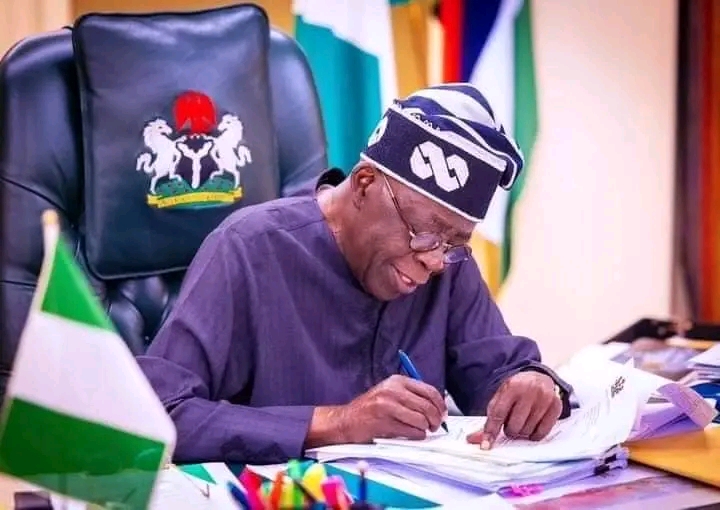
President Bola Tinubu has taken a significant step towards enhancing regional relations by ordering the reopening of Nigeria’s land and air borders with the Republic of Niger.
Additionally, President Tinubu has instructed the lifting of various sanctions imposed on Niger, further strengthening diplomatic ties between the two nations.
In a statement released by his Special Adviser on Media and Publicity, Ajuri Ngelale, titled ‘Nigeria opens land and air borders with Republic of Niger, lifts other sanctions,’ President Tinubu’s directive shows his government’s commitment to the course.
Consequently, the President has directed that the following sanctions imposed on the Republic of Niger be lifted immediately: “Closure of land and air borders between Nigeria and Niger Republic, as well as ECOWAS no-fly zone on all commercial flights to and from Niger Republic.
“Suspension of all commercial and financial transactions between Nigeria and Niger, as well as a freeze of all service transactions, including utility services and electricity to the Niger Republic.
“Freeze of assets of the Republic of Niger in ECOWAS Central Banks and freeze of assets of the Republic of Niger, state enterprises, and parastatals in commercial banks.
“Suspension of Niger from all financial assistance and transactions with all financial institutions, particularly EBID and BOAD.
“Travel bans on government officials and their family members,” the statement read.
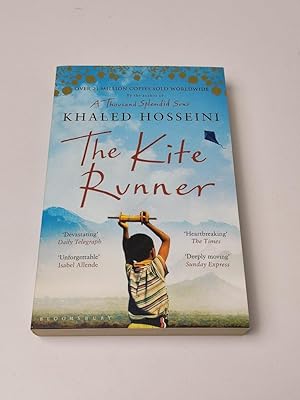
Beyond fiction: A short review of Khaled Hosseini’s The Kite Runner
By Muhammad Sani Usman
If you are an introvert and, worst of all, you don’t want to go out and meet strangers, or you are not financially stable enough to explore the world you romanticise in your head, then you should read fictional books.
Consider The Kite Runner by Khaled Hosseini for a unique perspective on Afghanistan. Unlike the war-torn image often portrayed in American movies, Hossien’s narrative paints a different picture. He depicts a flowing country, with small boys flying kites in the streets of Kabul and the vibrant Afghan holidays like Nowruz.
You will learn about friends and kinship. There is Amir, the privileged son of a wealthy businessman, and Hassan, the son of their family servant, who grew up together in Kabul. Despite their different social statuses, they are inseparable as children. They spend their days flying kites, with Hassan being the best kite runner, always ready to retrieve the kite Amir cuts down.
If you don’t know what betrayal is by a friend, then you should look at how Amir witnesses Hassan being sexually assaulted but chooses to do nothing out of fear and selfishness. This event haunts Amir, leading to guilt and a sense of betrayal that defines much of his life.
If you are still wondering about the lengths people go to with the ones they love, you will see how Amir chooses to marry Soraya (his girlfriend), accepting her past and the societal judgment that comes with it. In essence, you will see matured and refined love between Hassan and Soraya.
You will only get all this information from creative writers pushing the world close to you.
Muhammad Sani Usman wrote muhdusman1999@gmail.com.

Sardaunan Samarin Gombe: A portrait of excellence
By Usman Muhammad Salihu
Usman Umar, also known as Sardaunan Samarin Gombe, is a figure whose name resonates not only within his community but also among his peers and colleagues. His persona is one of remarkable achievement, characterised by a relentless pursuit of excellence in every endeavour he undertakes.
From his formative years, Usman Umar has displayed an unwavering commitment to academic and personal growth. His journey as an exemplary student in secondary school paved the way for a trajectory marked by consistent success and distinction.
What sets Usman Umar apart is his academic prowess and innate ability to inspire and uplift those around him. Whether it’s through his words of encouragement or his actions that speak volumes, he has a way of leaving a lasting impact on everyone he encounters.
Beyond his academic achievements, Usman Umar is a shining example of resilience and determination. His unwavering dedication to his goals, coupled with his ability to overcome obstacles, serves as a source of inspiration for aspiring individuals.
Usman Umar’s commitment to service and community development is another defining aspect of his personality. He understands the importance of giving back to society and actively seeks opportunities to make a positive difference in the lives of others.
In essence, Usman Umar embodies the qualities of a true leader – someone who leads by example, empowers those around him, and remains steadfast in his pursuit of excellence. His story serves as a testament to the power of determination, resilience, and service in shaping a life of significance and impact.
Usman Muhammad Salihu writes via usmande5363@gmail.com.