
X Sets to End Revenue Sharing, Launches New Rewards Programme for Creators
By Sabiu Abdullahi
Social media platform X has announced plans to discontinue its current revenue-sharing programme and replace it with a new scheme designed to reward creators for producing original content.
The company, formerly known as Twitter, announced the change through its X Creators Team on Friday.
According to the platform, the new “Original Content Rewards Program” will focus on creators whose posts contribute meaningfully to discussions and engagement on X.
“Today, we’re introducing the Original Content Rewards Program — a new way for creators to earn on X by sharing original content and contributing meaningfully to the conversation,” the company said.
X said its existing Revenue Sharing programme will officially end on September 7, 2026. Creators who are currently enrolled will continue to receive earnings until the programme ends.
“If you’re currently enrolled in Revenue Sharing, you’ll continue earning through September 7, 2026, and your final Revenue Sharing payout will be issued on September 11, 2026.”
The platform said applications for the new rewards programme would open on September 8 for creators who satisfy the required eligibility conditions.
Creators can determine whether they qualify through the Creator Studio section dedicated to the Original Content Rewards programme.
X also said creators who have already completed identity verification and linked an approved payment method would not need to undergo the process again.
“Once approved, you’ll continue earning under the Original Content Rewards Program and its Terms and Conditions,” it said.
Explaining the reason for the new programme, the company said creators remain central to the platform’s appeal because of the range of content and perspectives they bring.
“X has always been powered by people who share something only they can: breaking news, expert insights, unique experiences, creativity, and commentary that moves culture forward.
“We want to reward the people who make X worth opening every day, so we’re evolving how creators earn here.”
The change is expected to affect creators who currently depend on X’s revenue-sharing system as part of their earnings from content posted on the platform.
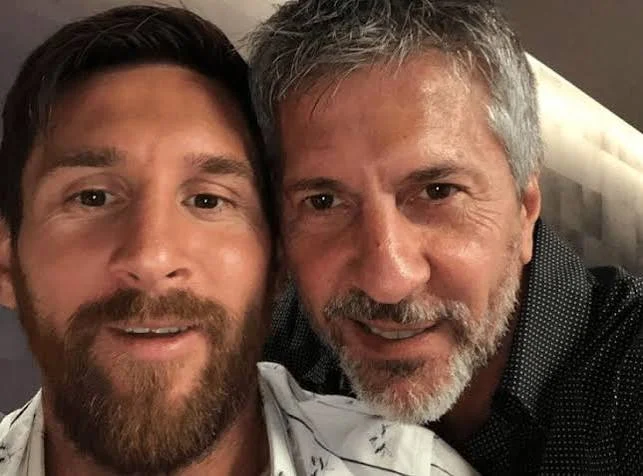
Lionel Messi’s Father, Jorge, Dies At 68
By Sabiu Abdullahi
Jorge Messi, the father and long-time representative of Argentina captain Lionel Messi, has died at the age of 68.
According to reports by MARCA and Argentine news outlet Infobae, Jorge died at about 10pm on Friday at a sanatorium in Rosario, Argentina, after a prolonged illness.
Jorge was married to Celia Cuccittini, and the couple had four children: Lionel, Rodrigo, Matias and Maria Sol.
He played an important role in Lionel’s journey from a young footballer at Newell’s Old Boys to an internationally celebrated player.
One of his major contributions came when Lionel needed growth hormone treatment as a youngster. After attempts to obtain the required treatment in Argentina failed, Jorge helped facilitate his son’s move to Barcelona when Lionel was 13.
Jorge later stayed with Lionel in Spain during the early stages of his career, while other members of the family remained in Rosario.
In a 2007 interview, Messi recalled the difficult period and said his father gave him the choice of continuing his football dream in Spain or returning to Argentina.
“My old man was always by my side. We lived through many bad moments,” Messi recalled.
He added, “My old man asked me, what do you want to do, do you want to continue or shall we go back? I wanted to continue and he stayed with me.”
Lionel eventually went on to become one of the most decorated footballers in history after establishing himself at Barcelona and later achieving success with Argentina.
Beyond his role as his son’s father, Jorge also handled several aspects of Lionel’s professional affairs, including negotiations involving major international brands.
Although he was an influential figure in Messi’s career, Jorge generally kept away from public attention and rarely granted interviews.
During one of his interviews, he spoke about the difficult experiences he and his son had shared as Lionel’s career developed.
“You know very well that we have gone through many good and not-so-good moments,” Jorge said.
He also praised Lionel’s character and said the challenges they faced as a family had strengthened them. He described his son as “an excellent person”.
Jorge’s health became a matter of public interest during the 2026 World Cup after Messi appeared emotional following Argentina’s opening game.
After scoring a hat-trick, Messi explained his emotional state when asked about it, saying, “It is for a reason completely unrelated to sport. I had some difficult, complicated days.”
When he was later asked about the family situation, he said, “The truth is, more than anything, because of the family.”
The Messi family later disclosed that Jorge was “under medical supervision, recovering and progressing favourably within the condition he presents”.
Jorge, who trained as a chemical technician, started his career at Acindar, an Argentine steel company, in the 1980s. He eventually rose to a managerial position at the firm.
He also had an early connection with football. Jorge played as a midfielder in Newell’s youth system before leaving the sport after he was called up for military service.
His death represents the loss of a key figure in Lionel Messi’s life and career. Although he largely remained away from the spotlight, Jorge played a major role in supporting and managing his son’s journey to football stardom.

Lagos Arrests Suspect Over Alleged Vandalism of Road Barrier
By Sabiu Abdullahi
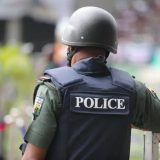
The Lagos State Government has arrested a man accused of vandalising a concrete road barrier at Kosofe Bus Stop, Mile 12, along the Ikorodu Road.
The barrier was installed to stop pedestrians from crossing the expressway through unauthorised points.
The state Commissioner for the Environment and Water Resources, Tokunbo Wahab, disclosed the arrest in a post on X on Saturday.
Wahab said the suspect was apprehended during monitoring and enforcement operations conducted at the location.
“During monitoring and enforcement operations yesterday, our team apprehended a suspect at Kosofe Bus Stop, Mile 12, along the Ikorodu Road, for vandalising a concrete barrier installed to prevent pedestrians from crossing the expressway at unauthorised points,” he wrote.
He said the suspect was caught removing components of the structure that are essential to its stability.
“The suspect was found deliberately removing iron rods, cables, steel reinforcements, and other critical structural components that contribute to the stability and effectiveness of the concrete barrier.
“The suspect has been arrested and will be prosecuted in accordance with the law. This enforcement action underscores the Lagos State Government’s commitment to protecting public infrastructure and ensuring the safety of all road users and residents”
The commissioner said the arrest was part of the state government’s continued efforts to protect public infrastructure from vandalism.
The development comes amid concerns over the persistent removal of metal components from public structures across Lagos. Authorities have warned that such acts could weaken infrastructure, endanger road users and result in losses of public funds.
The latest arrest also follows the recent apprehension of 27 suspected hoodlums over the alleged vandalism of a bridge linking Festac Town with Alakija.
Governor Babajide Sanwo-Olu had ordered the arrest and prosecution of persons suspected of vandalising the bridge.
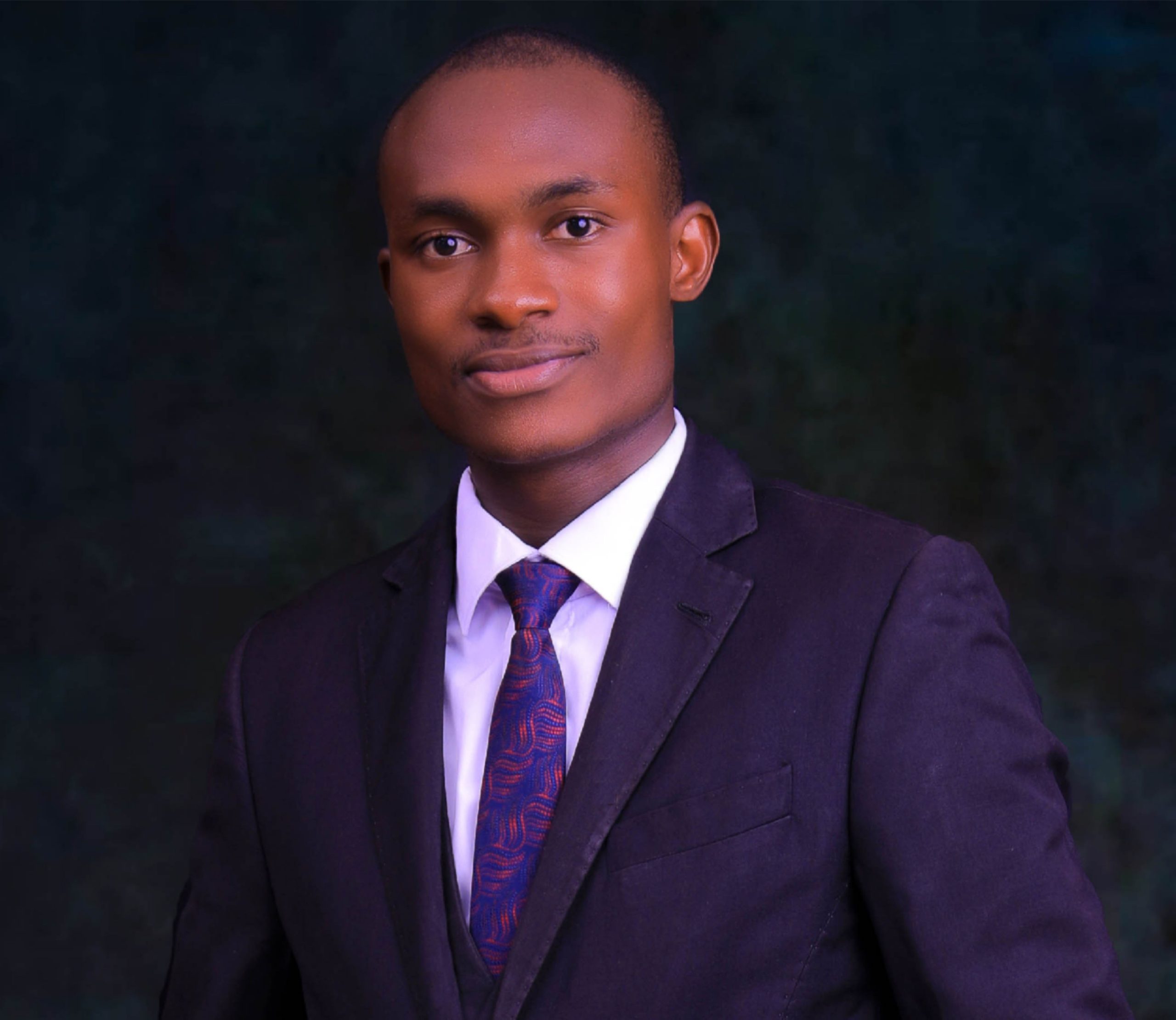
Perhaps Preventive Health is a Strategy for Health Financing
By Oladoja M.O
I won’t even sugar coat. There really is a quiet arithmetic we seem to forget whenever we speak about financing health, and that is; “money not spent is money saved”. It sounds almost too simple to be taken seriously in policy circles, yet it is perhaps a foundational principle of any sustainable system, economic or otherwise.
In recent years, the conversation around health financing has become so popular yet increasingly narrow, that whenever it’s being discussed, the theme of bigger budgets, expanded insurance schemes, increased donor flows, and new funding mechanisms is the only thing in lens. Though all of these are unarguably important, they are only one side of the equation, as financing health is not merely about how much money enters the system, but also about how much unnecessary expenditure we can prevent from ever occurring. And this is where preventive health quietly stands as one of the most underutilized financing strategies.
Often preached, prevention is prevalently taken as some moral or clinical responsibility, something good to do for public health, but not worth framing as a fiscal strategy. Yet, at its core, prevention is economic discipline.
I don’t think it should be difficult to interpret that a well-prevented illness is not just a life improved; it is a cost avoided, a drug regimen that was never needed, and in many cases, a financial burden that never fell on a household.
In a country where out-of-pocket expenditure still defines access to care for many citizens, this distinction matters deeply. Because when people stay healthier for longer, they spend less on treatment. When communities adopt preventive behaviors, the strain on health facilities reduces. When systems prioritize early detection and risk reduction, the cost curve bends—not because we spent more, but because we needed to spend less.
This is not an argument against mobilizing more funds for health. On the contrary, it is a call to think more intelligently about what “financing health” truly means. Generating revenue is one part. Structuring systems efficiently is another. And, crucially, reducing avoidable expenditure must sit at the center of that conversation.
Interestingly, this broader view aligns with deeper conversations around governance and federal structure. True federalism, as many have argued, is not just about distributing resources but about enabling systems to function efficiently at all levels. The recent legislative developments in that direction are, for once, a step that deserves cautious commendation. It suggests that perhaps we are beginning to think beyond surface-level reforms and towards more grounded, structural solutions.
But policy frameworks alone will not carry this shift. Preventive health requires something more subtle: a cultural and systemic reorientation. It asks us to value the absence of disease as much as the treatment of it. It asks governments to invest in awareness, early screening, community-based interventions, and primary care, not as afterthoughts, but as core financing strategies.
It also demands that we confront an uncomfortable truth that reactive healthcare is expensive. A system that waits for illness to occur before acting will always spend more than one that works to prevent it. Hospitals will remain congested, costs will continue to rise, and households will keep absorbing financial shocks that could have been avoided.
On the other hand, a preventive-focused system redistributes that burden, spreading cost-saving across individuals, communities, and institutions. It is quieter, less dramatic, and often less politically celebrated, but far more sustainable.
A bit further to that is the human dimension that cannot be ignored. Financial protection in health should not just be about insurance coverage or subsidies; it is about reducing the likelihood that people will need to spend in the first place. Every avoided illness is, in a real sense, a preserved livelihood.
So, perhaps it is time we expanded our definition of health financing. Beyond budgets and allocations, beyond policies and programs, we must begin to recognize prevention as a financial instrument in its own right.
Because in the end, the most efficient health system is not the one that spends the most, but the one that needs to spend the least.
And that is an arithmetic we can no longer afford to ignore.
Oladoja M.O (Oladoja Mark Olamilekan) writes from Abuja and can be reached at: mayokunmark@gmail.com.
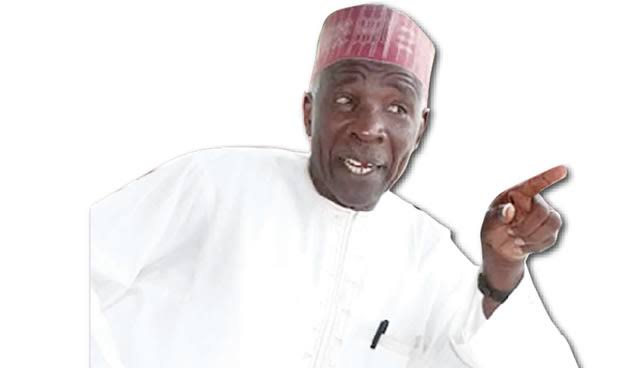
Buba Galadima Claims 34 And Half Governors Back Tinubu For 2027
By Sabiu Abdullahi
Buba Galadima, a chieftain of the Nigeria Democratic Congress (NDC), has claimed that “34 and a half” state governors are supporting President Bola Tinubu’s bid for another term in office.
Galadima made the claim at the inauguration of the NDC’s national reconciliation committee, where he discussed the political alignments ahead of the 2027 general election.
According to him, Oyo State Governor Seyi Makinde has kept his distance from both Tinubu’s political camp and the opposition coalition.
He, however, described Bauchi State Governor Bala Mohammed as being undecided over which side to support.
Galadima said Mohammed had attended a meeting with NDC stakeholders but later reconsidered his position after receiving advice against joining a political party that has a strong presidential candidate.
“There are thirty-four and a half governors. The one who is not with him, visibly shown, is Seyi Makinde. The half is Bala Mohammed,” Galadima said.
He explained why he classified the Bauchi governor as “half” among the governors he said were not firmly aligned with Tinubu.
“Mohammed is half, because Bala Mohammed met with us after the wee hours of the night, 3:00 a.m. We parted; we were both at the NDC together. Just for him in the morning to call that he has rescinded his decision, that he was advised not to go into any party with a strong presidential candidate,” Galadima said.
The NDC chieftain said Mohammed’s current political position remained uncertain, as he could still choose to work with either the opposition coalition or the ruling party.
“So, it means Bala Mohammed is on the fence. He may work with us; he may work with them. That’s why he’s half, as far as I’m concerned.
Galadima also contrasted the resources available to political parties in power with those available to opposition groups when negotiating with politicians.
“So if you are in power, you have the authority to say, look, we are only fielding this man; all of you step down. Or they can compensate you. We have nothing to compensate anybody, except we reason, except patriotism, that we need to salvage this country.”
The comments come as political parties and opposition groups intensify consultations ahead of the 2027 elections, with the question of possible alliances among governors expected to remain a major issue.
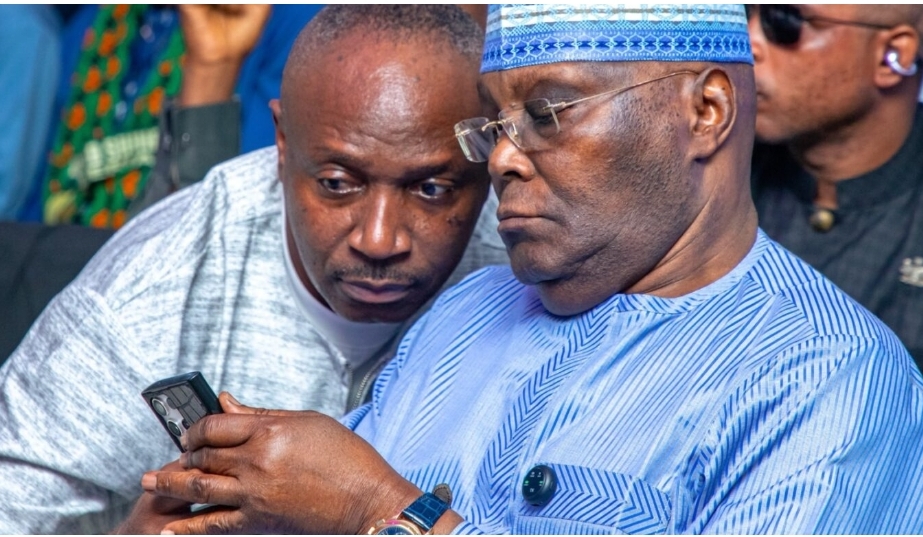
Atiku Raises Alarm Over Unauthorised Payment Into Private Bank Account
By Sabiu Abdullahi
Former Vice-President Atiku Abubakar has raised concerns over an unauthorised payment made into one of his private bank accounts by an unidentified person.
Atiku, the presidential candidate of the African Democratic Congress (ADC), said the transaction was described as a “Contribution Electioneering Campaign” but was neither requested nor approved by him or his campaign organisation.
His Senior Special Assistant on Public Communication, Phrank Shaibu, disclosed this in a statement issued on Friday.
The statement described the circumstances surrounding the transaction as “deeply troubling” and questioned how an unknown person obtained details of an account whose information is not publicly available.
“The transfer originated from a person totally unknown to His Excellency,” the statement reads.
“Neither His Excellency nor his campaign solicited, authorised or has any knowledge of the individual or entity behind the unauthorised payment.”
Atiku questioned the source of the information used to make the payment, particularly because the affected account is a private one.
“The account is a strictly private one whose details are not in the public domain. This raises a fundamental question: How did unknown persons obtain the confidential banking details of a private citizen?” he asked.
‘NO NIGERIAN’S FINANCIAL PRIVACY IS SAFE’
The former vice-president said the incident raised concerns that could extend beyond his personal circumstances.
He argued that unauthorised access to the banking information of a former vice-president and presidential candidate could indicate a broader threat to the financial privacy of Nigerians.
“If the private banking information of a former Vice President and a leading presidential candidate can be accessed and deployed for reasons yet unknown, then no Nigerian’s financial privacy is safe,” he said.
Atiku also warned about the potential consequences if the information had been obtained through people with privileged access to banking records.
“If established, this would amount to a grave abuse of power capable of exposing the account holder to kidnappers, terrorists, bandits, fraudsters and other criminal elements,” the statement added.
The ADC presidential candidate linked the development to what he described as a series of “suspicious activities” ahead of the 2027 general election.
Despite the incident, Atiku said he would remain focused on his political objectives and would not allow the development to distract him.
“As political activities gather momentum, Nigerians should not be distracted by these tired tactics that smack of character assassination,” he added.
“Such desperate antics have failed before and will fail again. The Waziri Adamawa remains focused on offering Nigerians credible leadership and practical solutions to the nation’s challenges.”
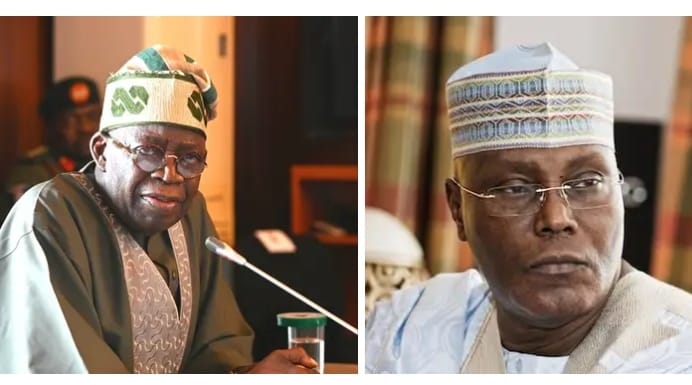
Atiku Challenges Tinubu To Order El-Rufai’s Release From ICPC Custody
By Sabiu Abdullahi
Former Vice-President Atiku Abubakar has challenged President Bola Tinubu to direct the Independent Corrupt Practices and Other Related Offences Commission (ICPC) to release former Kaduna State Governor Nasir el-Rufai if the President has operational authority over anti-corruption agencies.
Atiku, who is the presidential candidate of the African Democratic Congress (ADC), made the demand after Tinubu directed the Economic and Financial Crimes Commission (EFCC) to return to court and withdraw an order freezing the bank accounts of the Osun State Government.
El-Rufai has remained in ICPC custody since February 19 over allegations of financial impropriety linked to his eight-year tenure as Kaduna governor between 2015 and 2023.
The former governor was arraigned before the Kaduna High Court on April 13 on an amended nine-count charge that included allegations of fraud and abuse of office.
Atiku, in a statement issued by his Senior Special Assistant on Public Communication, Phrank Shaibu, questioned the claim that the EFCC acted independently in the Osun case.
Tinubu had on Thursday ordered the anti-graft agency to seek the withdrawal of the freezing order. The President said the EFCC had acted within its legal powers but considered the timing of the action inappropriate because it came shortly before the August 15 governorship election.
Atiku argued that the presidential intervention had raised doubts about repeated claims that the EFCC operates independently.
He also questioned the President’s reference to a court order, saying the EFCC did not mention such an order in its explanation for freezing the accounts.
“President Tinubu’s statement has raised more questions than it has answered,” Atiku said.
“While the EFCC’s official statement painstakingly explained why it froze the Osun State Government’s account, it made no mention whatsoever of obtaining a court order.
“Yet the President’s intervention is predicated entirely on the existence of such a court order, which he claims to have directed the EFCC to vacate.
“If indeed there was a court order, why did the EFCC omit such a fundamental fact from its official account? If there was none, then the President has introduced into the public discourse a legal process that exists nowhere in the EFCC’s own narrative.”
‘TINUBU CAN’T HAVE IT BOTH WAYS’
Atiku said the President could not maintain that he does not interfere in the EFCC’s activities while also issuing a directive that affects an ongoing action by the commission.
“He cannot claim that he neither knew of nor interferes in the operations of the EFCC and, in the very next breath, announce that he has directed the commission to discontinue its action and return to court,” he said.
“If the EFCC promptly complies with that directive, then Nigerians have before them undeniable proof that the commission is not as operationally independent as the President wants the country to believe.”
Atiku Demands Same Intervention For El-Rufai
The ADC presidential candidate said Tinubu’s intervention in the Osun matter should apply equally to the case involving El-Rufai.
“Having now demonstrated that he can issue direct operational directives to anti-corruption agencies whenever he considers it expedient, President Tinubu owes Nigerians an explanation as to why he cannot exercise the same authority in the case of Mallam Nasir El-Rufai,” he said.
“If he can direct the EFCC to discontinue its action today, then he cannot pretend to be powerless over the actions of the ICPC tomorrow.
“Executive power cannot be invoked selectively for political convenience while institutional independence is cited only when it suits the Presidency.”
Atiku said the controversy had implications for public confidence in Nigeria’s anti-corruption bodies and the rule of law.
He acknowledged that reversing the freezing of the Osun government’s accounts could ease political tension ahead of the governorship election but said the decision did not resolve questions surrounding the original action.
“The unanswered questions remain: who authorised the freezing of the account of an opposition-controlled state just days before a governorship election, and why was such an extraordinary action taken at such a politically sensitive moment?” he said.
Customs Seizes 140 Rifles, Cannabis-Infused Products Worth N373.8m At Lagos Port
By Sabiu Abdullahi
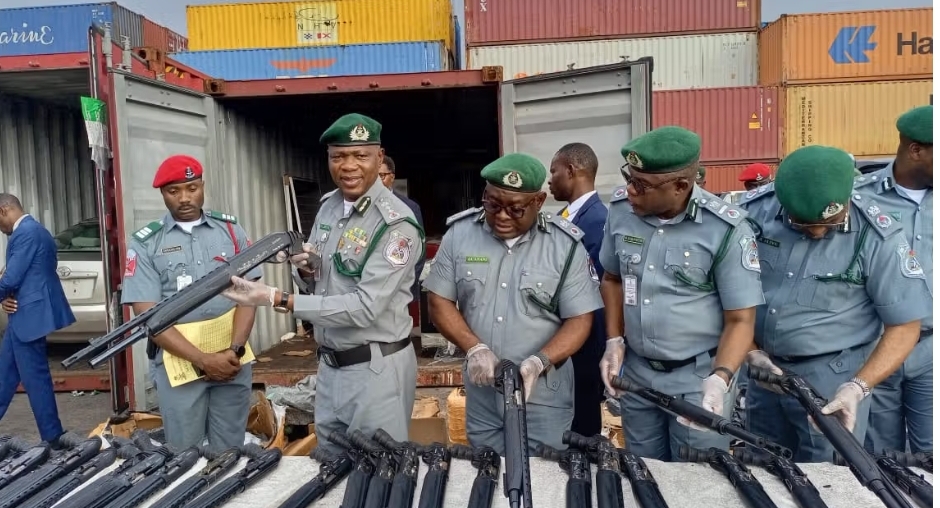
The Nigeria Customs Service (NCS) has announced the seizure of 140 pump-action rifles and cannabis-infused food products with a combined street value of N373.8 million at the TinCan Island Port in Lagos.
The seizures were recorded during recent anti-smuggling operations carried out by the TinCan Island Port Command, according to the Comptroller-General of Customs, Bashir Adeniyi.
Adeniyi disclosed this on Thursday at a press briefing, where he explained that customs officers discovered concealed components of pump-action rifles inside a container on July 8.
He said officers had so far assembled 140 rifles from the recovered components, while work was still underway to put together the remaining parts.
The customs chief also disclosed that a principal suspect was arrested on July 31 at a bonded terminal while trying to facilitate the release of the container.
According to Adeniyi, financial and telecommunications records obtained during the investigation established links between the suspect and the shipment.
He said two suspects were in custody and assisting investigators, while another principal suspect remained at large and was being pursued by security agencies.
Customs Intercepts Cannabis-Infused Food
The NCS also announced the interception of two 40-foot containers containing cannabis-infused products concealed among imported goods such as vehicles, generators, batteries and fabrics.
According to Adeniyi, the items included 8,720 Delta-8 cannabis pre-roll cookies weighing 17.44 kilogrammes and valued at N308.7 million.
Customs officers also recovered 740 packs of cannabis-infused gummies weighing 515.2 kilogrammes and worth N40.7 million.
Another seizure involved 873 cartons containing 442 packs of cannabis-infused cookies. The products weighed 309.4 kilogrammes and were valued at N24.3 million.
Adeniyi put the total street value of the cannabis-infused products at N373.8 million.
He said the products were packaged in ways that made them appear like regular snacks. Some carried flavours such as citrus, vanilla, pine and peach pie.
According to him, the presentation could make the products particularly appealing to children, students and other young people, with unsuspecting consumers at risk of taking cannabis without knowing it.
Adeniyi commended Joseph Anani, the TinCan Island Port area controller, as well as officers of the command’s enforcement unit for their vigilance and professionalism.
He also reaffirmed the customs service’s determination to protect Nigeria’s borders and ensure that people involved in the movement of illicit firearms and dangerous drugs face prosecution.
The CGC acknowledged the cooperation of the National Drug Law Enforcement Agency (NDLEA) and called on Nigerians to provide credible information that could assist authorities in tackling smuggling.
NDLEA Raises Public Safety Concern
Receiving the seized products, Augustine Adewunmi, commander of narcotics at the NDLEA TinCan Strategic Command, described cannabis-infused cookies, gummies and smoothies as an emerging public safety concern.
Adewunmi said the products were imported from the United States and presented as vegan snacks with flavours such as citrus, vanilla and peach to disguise their true nature.
He warned that their packaging and presentation appeared designed to attract children, students and clubgoers, which could increase the possibility of accidental consumption.
The NDLEA commander said two suspects had been arrested and that investigations were continuing.
He urged parents, schools and members of the public to exercise caution, noting that consumption of the products could introduce concentrated cannabis into the body.
Residents Hail Tinubu’s Infrastructure Drive as Media Team Inspects Projects
By Abdullahi Mukhtar Algasgaini
Residents of Benue State have expressed strong support for President Bola Ahmed Tinubu’s infrastructure development agenda as a presidential media team concluded an inspection tour of key federal and state projects across the region on Thursday.
The delegation, led by the Special Adviser to the President on Information and Strategy, Mr. Bayo Onanuga, inspected several ongoing and completed infrastructure projects, including the Buruku-Logo Bridge, the Wurukum Overhead Bridge in Makurdi, and the 22-kilometre Makurdi-Gboko Road, which forms part of the Phase II Abuja-Keffi-Akwanga-Lafia-Makurdi Expressway.
The tour, organised by the Renewed Hope Ambassadors with over 40 editors and journalists in attendance, aims to independently assess and document the implementation of key projects under President Tinubu’s administration.
Speaking during the inspection, Onanuga emphasised that the Buruku-Logo Bridge is one of five federal bridges under construction in Benue State, demonstrating the administration’s commitment to utilising borrowed funds for productive infrastructure development.
“This bridge in particular is the fifth bridge the Federal Government is building in Benue State. I think as Nigerians you see that the government has been accused of so many things including taking loans. You can now see where the money is going,” Onanuga stated.
He noted that the 1,754-metre bridge, expected to be completed by December 2027, would reconnect previously isolated communities, reduce travel time, and improve market access for farmers across Benue, Taraba, and Adamawa states.
Residents of the host communities expressed appreciation for the projects, describing the bridge as a “life-saving intervention” that would end years of dangerous river crossings and reduce frequent boat accidents during rainy seasons.
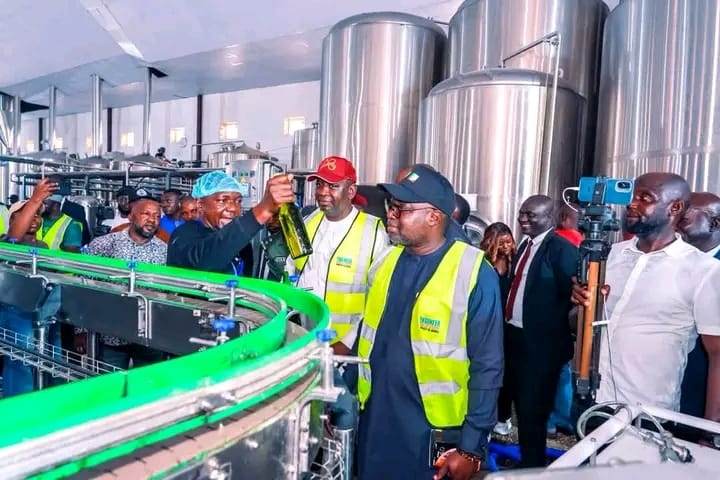
The inspection also covered the 25.6-kilometre Captain Dan Road to the Tor Tiv Palace, the Food Basket Brewery Limited, and the federally-funded rehabilitation of the Buruku-Gboko Water Treatment Plant at Ameladu Headworks.
Benue State Deputy Governor, Dr Samuel Ode, who accompanied the team, commended the Federal Government’s investments and expressed confidence that residents would support President Tinubu’s re-election bid in 2027.
“Actually, this road serves as the gateway between the north of the country and the south. Before now we used to have a heavy gridlock here especially during festivities, so the governor of Benue State approached Mr. President for us to have an overhead bridge here,” Ode said regarding the Wurukum Overhead Bridge project.
“The President in his magnanimity, graciously approved the construction of this overhead bridge. So work has commenced, moving at a very high speed and the people of Benue are happy.”
The tour showcased projects financed through the Renewed Hope Infrastructure Development Fund, with officials assuring that funding remains adequate for timely completion.
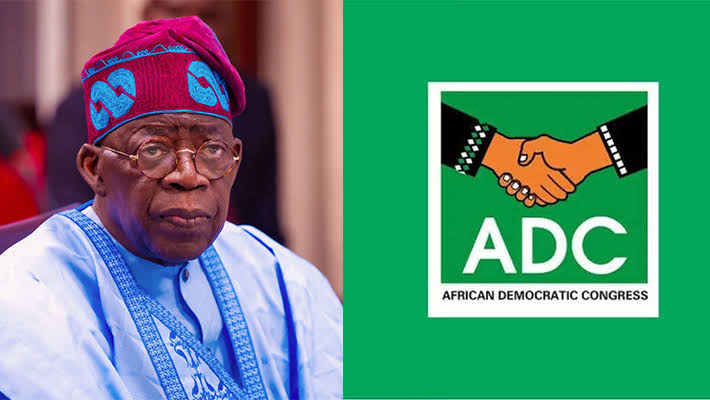
ADC Questions EFCC’s Independence After Tinubu Orders Review Of Osun Account Freeze
By Sabiu Abdullahi
The African Democratic Congress has questioned the independence of the Economic and Financial Crimes Commission after President Bola Tinubu directed the agency to return to court and withdraw its order freezing the bank accounts of the Osun State Government.
The opposition party said the President’s directive had raised concerns about the extent of executive influence over the anti-corruption agency.
Tinubu had on Thursday ordered the EFCC to immediately return to court to vacate the order freezing the state government’s accounts.
The President said the commission acted within its legal powers but faulted the timing of the action, which came days before the August 15 governorship election in Osun State.
Tinubu said he felt “deeply embarrassed” by the development because actions taken by federal agencies are often associated with the presidency. He also said no action should create an impression that the Federal Government was attempting to influence the outcome of the election.
The EFCC had earlier defended the freezing of the accounts. The commission said it was investigating alleged mismanagement of ecological and intervention funds by the Osun State Government and had detected suspicious transfers during the investigation.
The commission’s Director of Public Affairs, Wilson Uwujaren, also described the action as a routine measure and rejected claims that it was politically motivated. He cited a similar restriction placed on the accounts of the Edo State Government before its 2024 governorship election.
Reacting to the President’s directive in a statement on Thursday, ADC National Publicity Secretary, Bolaji Abdullahi, welcomed the decision but said Tinubu’s explanation had created additional questions.
“What we find most curious about the statement is the President’s repeated reference to an alleged court order authorising the freezing of the Osun State Government’s accounts,” he said.
“In all of its public statements on this matter, the EFCC never once claimed that it had obtained a court order. The commission consistently defended its actions on the basis of its statutory powers and what it described as its ‘preventive mandate’.
“At no point did it inform Nigerians that a court had authorised its actions. The obvious question, therefore, is: where did the President obtain the information that a court order existed? If such an order exists, why was it never mentioned by the EFCC in its statement while defending one of the most controversial actions it has taken in recent times?
“If no such order exists, why would the president introduce one into the public narrative? It is either the president was misinformed or he had chosen to misrepresent the facts. Either possibility is deeply disturbing.”
The ADC also said the President’s admission that he directed the EFCC to withdraw the matter from court appeared inconsistent with claims that anti-corruption agencies operate independently.
“The President also insists that he does not interfere in the operational activities of anti-corruption agencies, yet in the same statement he publicly announces that he has directed the EFCC to approach the court, vacate the alleged order, and discontinue its case,” Abdullahi said.
“If the President possesses the authority to direct the EFCC to withdraw from court proceedings because the political consequences may affect an election, then it follows that he possesses the authority to direct the commission in other operational matters as well.
“The net implication is that the carefully cultivated argument that these agencies operate entirely independently collapses under the weight of the President’s own statement.”
The dispute comes less than two weeks before the August 15 Osun State governorship election, which has heightened political attention around actions involving the state government and federal institutions.
The ADC said the circumstances surrounding the account freeze and the subsequent presidential directive required further clarification from the Federal Government and the EFCC.