

Fueling social media firestorm: How a national tragedy turns into national hate
By Kabir Fagge Ali
As the country mourns the unfortunate and catastrophic tanker explosion that claimed over a hundred lives in Majia town, Taura local government, Jigawa State. The circumstances leading to this devastating event, and its unfolding discourse on digital space leave a bitter taste.
If past events of such nature didn’t serve as a pointer, one would have been forced to argue that the deleterious economic hardship Nigerians are currently undergoing played a significant factor in the circumstance warranting people to desperately attempt to scoop up fuel from a fallen tanker that is highly flammable. However, one cannot, in all honesty, overlook the impact of economic hardship instigated by the “so-called reform” of this administration.
While the explosion was a profound tragedy, what followed on social media turned a devastating accident into a platform for spreading hate. Netizens took to various platforms to condole, analyze, obfuscate, sympathize, and attack the dead in a typical Nigerian fashion of ethnicizing, religionizing, politicizing and regionalizing events. What should have been a space for empathy, turned into a hub for anger, with users blaming specific ethnic groups for what they called “ignorance” and “greed.”
The horrific event became weaponized by those seeking to stoke division and deepen the fractures within Nigerian society. One @AdemolaSola38048 on X wrote, “E no go better for their dead body”, another, @Peterojueromi posted “Well, I no pity them sha, na their stupidity kill dem”. How does a tragedy of this magnitude turn into an avenue for deriding others?
Instead of offering sympathy or proposing solutions, many used the incident as an opportunity to fuel long-standing ethnic, regional, and religious tensions. Blame was cast on entire communities for the reckless actions of a few, with harsh, derogatory terms being used to describe those who were simply trying to survive in an environment where economic opportunities are scarce.
Speaking on this incident, the former Head of the Department of Mass Communication at Skyline University, Nigeria, and an expert on hate speech and digital media, Mr. Abdulhameed Olaitan Ridwanullah noted that “social media is like a two-edged sword. It can draw the attention of relevant rescue teams and government agencies to the event and at the same time serves as an accelerant for the societal divide”.
He warns:
“From the Nigerian experience, one shouldn’t be surprised that even in tragedy, some Nigerians cannot conceal the hate in their hearts. With social media in the hands of some of the worst among us, and the anonymity and herd mentality that comes with it, it is not surprising to read comments on social media space that shouldn’t have made it out of the thought process of whoever posted them.”
Mr. Ridwanullah added that “in the wake of national disasters like this, it is not surprising that some elements of division will weaponize such a tragedy”. He emphasized that it is important for Nigeria to look into legislation on digital media that will not only guarantee freedoms provided by digital platforms but ensure the sanity of the digital space.
“At this critical time in our digital journey, scholars should start looking beyond the usability of these platforms but understanding how their affordance reflects on our society. This kind of event and the rhetoric we saw on X underscores the importance of my research on nexus between online hate speech and offline hate crime” he surmised.
It is time for social media platforms to step up and recognize their role in monitoring and curbing the spread of hate speech. At the same time, it is also up to users to approach these platforms with responsibility and empathy. While frustrations with governance, inequality, and resource scarcity are real, targeting those who suffer the most with hateful rhetoric is not the solution.
The Jigawa tanker explosion should serve as a reminder of the fragility of life and the dangers of living in a world where safety nets are often nonexistent. But more importantly, it should remind us that in moments of tragedy, we should seek to uplift each other rather than tear each other down.
As Nigeria continues to navigate complex social, ethnic, and economic challenges, we must remember that unity, empathy, and constructive dialogue are far more powerful than any message of hate.
Kabir Fagge Ali, is a Writer with PRNigeria center and write via faggekabir29@gmail.com.

Police refute allegations of officer involvement in robbery incident
By Uzair Adam
The Yobe State Police Command has dismissed a report published by an online media outlet alleging that two of its officers were involved in a recent robbery in Potiskum.
According to a statement from DSP Dungus Abdulkarim, the police spokesperson, the Command also denied accusations of obstructing court proceedings or protecting the accused officers.
The report, titled “Police disrupt court proceeding, take out colleagues accused of robbery in Yobe,” was described by Abdulkarim as “misleading and malicious.”
He clarified that no police personnel invaded a magistrate’s court to secure the release of any accused.
“There is no record of any robbery incident involving police personnel in Potiskum or elsewhere in the state,” Abdulkarim emphasized.
Setting the record straight, Abdulkarim stated that on February 23, a collision occurred between a truck and a motorcycle in Potiskum.
ASC Abubakar Umar from the Nigerian Correctional Service sought bail for the driver, which was granted, but the police retained the vehicle due to an ongoing investigation and the victim’s treatment. When Umar intervened, he was detained for obstruction.
The Area Commander subsequently ordered police personnel to return to their station, as the case involved a Fundamental Human Rights issue beyond the magistrate’s jurisdiction.
The Yobe Police Command has demanded that the media outlet retract the report and issue an apology or face legal action.
Meanwhile, the Nigerian Bar Association (NBA) Yobe Chapter has called on the Commissioner of Police to investigate the case and ensure adherence to court orders.

Governor Muftwang flags off school feeding program initiated by Hello International
By Abdullahi Mukhtar Algasgaini
The Plateau State Governor, Barr. Caleb Manasseh Mutfwang has officially flagged off the campaign for a School Feeding Program by HELLO INTERNATIONAL with the support of the office of the Senior Special Assistant to the President on school feeding, for the pupils of LEA Ngwak, in Bokkos LGA and LEA Kwaghas Bungha in Mangu LGA.
The event which was held at Lamond Hotel Banquet Hall Jos, aimed at improving nutrition among school children, boosting school enrollment, and enhancing learning outcomes.
Barr. Mutfwang who spoke through the Chief of Staff, Government House, Jeremiah Satmak reiterated his administration’s commitment to prioritizing the education sector in the State, stating that addressing childhood hunger was a means to promoting education and securing the children’s future.
He acknowledged the efforts being made so far and challenged all to support the initiative for sustainability.
Plateau State Commissioner of Budget and Economic Planning, Hon. Chrysantus Dawam in his remarks, said the initiative was not just about providing meals, but rather nurturing the future, empowering education and ensuring that no child goes hungry as they pursue their dreams.
He said HELLO INTERNATIONAL, a Non Governmental Organization had also generously donated shade of three classrooms and new set of desks for LEA Ngwak, and essential items for both schools such as school uniforms, sandals, bags and writing materials to ensure that the pupils had the resources they need to succeed.
He commended their vision and noted the significance of education, being a key to a brighter future, adding that a child needed to focus on learning and not to be worried about where their next meal was coming from.
Founder and CEO of HELLO International, Dr. Nkiruka Agbazue said they had a shared commitment to a brighter future for the children of Plateau State, in fostering hope, equality and opportunity for all.
She stated the organization’s dedication to providing essential resources, creating programs that uplift communities, and empowering individuals to build sustainable futures, and that it also aimed at creating an environment where every child would not worry about hunger, poverty, and lack of basic resources.
While appreciating the commitment of all in this cause, Nkiruka assured of the Organization’s willingness to continue to work hand in hand with the Senior Special Assistant to the President and the Plateau State Government to expand and improve the initiative, and enlisted the support of all in order to ensure that every child, regardless of background, has the opportunity to learn, grow and thrive.
Also speaking was the Senior Special Assistant to the President on School Feeding, Dr. Yetunde Adeniji, represented by Mrs. Kyenpia Best who commended HELLO INTERNATIONAL and the Plateau State Government for the step taken toward ensuring that no child in Plateau State faces the burden of hunger while striving for an education.
She added that the combined effort was an inspiring example, showing what is possible when the people come together for the future of their children, and expressed hoped that this initiative would not only continue but would expand to touch more areas of Plateau State and indeed, across the nation.
On his part, the Chairman, Plateau State Universal Basic Education Board Hon. Sunday S. Amuna, represented by the SUBEB Permanent Member II, Hon. Kassam Goodwin Dul also commended the intervention and assured that as an agency overseeing the Universal Basic Education sector, it would remain committed to supporting the vision by prioritizing the well being and the education of Plateau pupils.
Earlier in her welcome remarks, the Plateau State School Feeding Program Manager, Mrs Tongdyen Tajan Moltok said the program was initiated to address the issue of malnutrition, particularly among vulnerable children.
And as a step toward improving the lives of the children, she added that it would also strengthen the communities to build a brighter future for their children and urged all to work tirelessly to ensure the success of the program.

Gov Yusuf reaffirms loyalty to Kwankwaso amid pressure for independence
By Uzair Adam
Kano State Governor Abba Kabir Yusuf has dismissed rumors of tension with his political mentor, Senator Rabiu Musa Kwankwaso, asserting his unwavering loyalty and respect for the leader of the Kwankwasiyya movement.
Speaking to journalists in Kano, Yusuf addressed speculations suggesting that Kwankwaso exerts excessive influence over his administration. The governor noted that their 40-year relationship remains strong, refuting claims of a rift or of being controlled by Kwankwaso.
Rumors within the Kwankwasiyya movement and the New Nigeria People’s Party (NNPP) allege that Kwankwaso has considerable sway in the state’s leadership, with some suggesting he effectively runs a “third term by proxy.”
Aliyu Sani Madakin-Gini, a House of Representatives member for Dala Federal Constituency who recently distanced himself from Kwankwaso, attributed the tension to disagreements over a drug contract and a state-funded scholarship program.
Yusuf, however, brushed aside these allegations, highlighting his independence and underscoring his loyalty to Kwankwaso.
“In my 40 years of knowing him, we have never had a rift,” Yusuf affirmed, adding, “The idea that I am somehow chained by Kwankwaso is simply unfair.”A faction within the NNPP known as “Abba Tsaya da Kafarka” (meaning “Abba, stand on your own”) has been urging Yusuf to make decisions autonomously from Kwankwaso’s influence.
The movement has gained traction, with party members and political figures calling for Yusuf’s independence.In response, Yusuf labeled the calls for autonomy as disrespectful to his loyalty.
“This ‘stand on your own’ slogan is the greatest insult I have faced as governor. It suggests that I should repay good with bad,” he remarked, reaffirming his gratitude for Kwankwaso’s long-standing support.
The NNPP’s state leadership recently suspended Secretary to the State Government Abdullahi Baffa Bichi and Commissioner of Transportation Muhammad Diggol, accusing them of disloyalty and alleged involvement in the independence movement.
Both officials denied the allegations and are currently under investigation.
Two House of Representatives members, Aliyu Sani Madakin-Gini and Alhassan Rurum, have also publicly exited the Kwankwasiyya movement, urging Yusuf to assert his independence.
Addressing these defections, Yusuf reiterated the significant role Kwankwaso has played in his career and denounced those who seek to undermine their relationship.Yusuf also voiced frustration with the media’s portrayal of the situation, describing reports of Kwankwaso frequently contacting him as unfounded.
“They said Kwankwaso called me over 30 times, and I didn’t answer. Where did they get this from?” Yusuf questioned. “If not for my respect for journalists, I would have taken the person who wrote that to court,” he added.
The governor concluded by appealing to supporters to avoid divisive slogans, and reiterated his commitment to respecting elders and rejecting any rhetoric that encourages division.

NLC backs NUPENG’s nationwide strike threat over military involvement at oil rig
By Uzair Adam
The Nigeria Labour Congress (NLC) has expressed strong support for the Nigeria Union of Petroleum and Natural Gas Workers (NUPENG) in its decision to initiate a nationwide strike.
The strike threat follows allegations that military personnel were deployed to remove workers from the Oritsetimeyin oil rig, a move that has drawn widespread criticism.
In a statement issued on Friday, NLC President Joe Ajaero condemned the alleged military intervention, affirming the congress’s solidarity with NUPENG.
Ajaero warned of escalated actions from NLC if breaches of agreements and the use of security forces in industrial disputes persist.
This stance arises from a protracted dispute between NUPENG and the oil rig’s management, where agreements on employment terms reportedly remain unfulfilled.
Earlier in the week, NUPENG alerted the Federal Government, cautioning against military involvement and urging respect for previously established agreements.
On Thursday, however, a special naval unit allegedly arrived at the Oritsetimeyin rig to forcibly evict workers, prompting NUPENG’s strike warning.
Ajaero decried this development as an affront to worker rights, urging military and government officials to address the issue immediately.
“This unacceptable use of state security forces to intimidate workers undermines democratic values and workplace freedoms,” Ajaero’s statement read.
“The militarization of workplaces only harms our economy and violates the principles of industrial relations.”
NUPENG maintains that the eviction followed workers’ calls for adherence to agreements, including severance benefits discussed during prior meetings mediated by the Nigeria Upstream Petroleum Regulatory Commission (NUPRC) and the Department of State Services (DSS).
The NLC’s statement specifically called out companies Dutchford E&P and Selective Marine Services for failing to honor these commitments.
The NLC is urging the Nigerian military, the National Security Adviser, and other key government figures to intervene and prevent further confrontations.
NLC backs NUPENG’s strike threat over military involvement at oil rig
By Uzair Adam
The Nigeria Labour Congress (NLC) has expressed strong support for the Nigeria Union of Petroleum and Natural Gas Workers (NUPENG) in its decision to initiate a nationwide strike.
The strike threat follows allegations that military personnel were deployed to remove workers from the Oritsetimeyin oil rig, a move that has drawn widespread criticism.
In a statement issued on Friday, NLC President Joe Ajaero condemned the alleged military intervention, affirming the congress’s solidarity with NUPENG.
Ajaero warned of escalated actions from NLC if breaches of agreements and the use of security forces in industrial disputes persist.
This stance arises from a protracted dispute between NUPENG and the oil rig’s management, where agreements on employment terms reportedly remain unfulfilled.
Earlier in the week, NUPENG alerted the Federal Government, cautioning against military involvement and urging respect for previously established agreements.
On Thursday, however, a special naval unit allegedly arrived at the Oritsetimeyin rig to forcibly evict workers, prompting NUPENG’s strike warning.
Ajaero decried this development as an affront to worker rights, urging military and government officials to address the issue immediately.
“This unacceptable use of state security forces to intimidate workers undermines democratic values and workplace freedoms,” Ajaero’s statement read.
“The militarization of workplaces only harms our economy and violates the principles of industrial relations.”
NUPENG maintains that the eviction followed workers’ calls for adherence to agreements, including severance benefits discussed during prior meetings mediated by the Nigeria Upstream Petroleum Regulatory Commission (NUPRC) and the Department of State Services (DSS).
The NLC’s statement specifically called out companies Dutchford E&P and Selective Marine Services for failing to honor these commitments.
The NLC is urging the Nigerian military, the National Security Adviser, and other key government figures to intervene and prevent further confrontations, emphasizing that industrial issues should not involve the military.
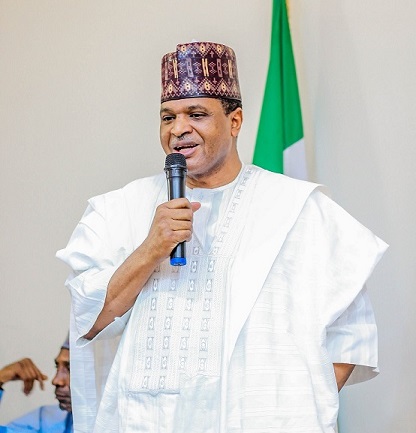
Sadique Baba Abubakar’s politics of principle
By Mukhtar Jarmajo
Certainly, a democratic system of governance is predicated on the idea that, as long as the people can elect their leaders in the three strata of government and representatives in the legislatures, society will be better, given that government policies and programmes will reflect the people’s yearnings and aspirations. While this is true, to fully realize this ambition, the full participation of the citizenry in the entire democratic process cannot be overemphasized.
Citizens must uphold their responsibilities in the name of nation-building by electing only leaders who genuinely understand society’s challenges and are sincerely willing to address them. This crop of politicians can be identified through their campaign manifestos. The issues raised, ideas discussed, and points made during campaign rallies, discussions, and interviews by aspirants tell significantly how they feel about their society and their burning desire to work towards raising the people’s living standards to a higher threshold.
Therefore, it is essential for voters to consider the backgrounds of political candidates and their plans when choosing at the polls. For Nigeria’s democracy to thrive, everyone must work to educate the public about the importance of active participation in the democratic process and making informed choices at the ballot box.
This, most probably, is retired Air Marshal Sadique Baba Abubakar’s school of thought, which is why he has remained steadfast in talking to the people, especially in Bauchi State, on the need to engage in the politics of principles while prioritising the general development of the society.
Notably, Abubakar contested for the governorship position in Bauchi State in the 2023 elections under the All Progressives Congress (APC) platform. This has been his call since the 2023 election campaigns.
At every forum, he praises the politics of principles, noting that it is the only path to a better society. Through the politics of principles, the nation will get the right leaders who can work hard to deliver democratic dividends to the people. When the right leaders are in place, the children of ordinary citizens will gain access to quality public education and enjoy the same advantages as everyone else, enabling them to attain their full potential and realise their ambitions.
More so, there will be access to affordable quality healthcare services; food will be sufficient and available on every home’s table; there will be more jobs for the teeming youth; affordable housing will be made available so everyone can live in decent shelter; and, most importantly, the security of lives and properties can be assured.
Jarmajo wrote from Kukadi/Gundari Ward, Misau Local Government, Bauchi state.

Australia to enforce minimum age limit for social media use
By Uzair Adam
Australian Prime Minister Anthony Albanese announced on Thursday a proposed law that would bar children under 16 from accessing social media platforms.
Joined by Communications Minister Michelle Rowland, Albanese pledged to implement a 16-year minimum age restriction, citing the need to curb social media’s potential harm to young users.
The proposed legislation aims to place the burden of enforcement on social media companies, holding them accountable if they fail to restrict minors’ access.
However, it would not impose penalties on children or their parents if they manage to circumvent the rules.
“This is a significant concern, as we are well aware of the social harm that these platforms can cause. It’s time to step in and protect our kids,” Albanese said at a press briefing in Canberra.
The law, expected to take effect a year after parliamentary approval, would be enforced by the government’s Safety Commissioner.
Albanese added that while some exemptions might be considered, the intent is to ensure that the legislation achieves its protective goals.
The proposal will be discussed with state leaders at a meeting on Friday.
The federal budget for 2024-25 has also allocated funds for a trial of age-verification technology to determine the most effective means of enforcing the limit.
The opposition Coalition, which proposed a similar age restriction earlier in the year, has indicated its support for the measure, giving Albanese’s Labor Party the votes needed to pass it through parliament.

Infantile immunisation
By Ofemile Blessing Afeghese
Infantile immunisation is the process of making babies or toddlers resistant or immune to certain infections or diseases. It is vaccinating babies and young children to protect their health from serious and potentially life-threatening diseases. Immunisation gives infants the immunity to fight diseases that can cause long-term health issues or even death.
According to the United Nations Children’s Fund (UNICEF) in 2019, Vaccines are products usually given in childhood to protect against serious, often deadly diseases. By stimulating the body’s natural defences, they prepare the body to fight the disease faster and more effectively.
Infantile immunisation is important because infants are vulnerable to infections, and their immune systems are not fully developed. Immunisation provides them with protection during this critical period of their lives. Vaccines are given to babies to protect them against serious illnesses like polio, which can cause paralysis; measles, which can cause brain swelling and blindness; whooping cough (pertussis); and tetanus, which can cause painful muscle contractions and difficulty eating and breathing, especially in newborns.
Abdullah Sani, a 39-year-old survivor of polio, said, “Growing up, I realised I couldn’t do what children my age could do with their legs. I wanted to run, jump, play with my friends and do everything my peers were doing, but I couldn’t. I felt terrible.
At the age of three, doctors told my parents that I would never walk again. My mum cried profusely as she resolved with my dad to fight the disease that had disabled me. I was taken to many hospitals and traditional healers in search of a cure, but the search was fruitless as there was no cure for polio. The disease took my ability to walk.”
World Health Organisation (WHO) stated in 2024 that vaccines and immunisation currently prevent 3.5 million to 5 million deaths yearly from diseases like diphtheria, tetanus, pertussis, influenza, and measles globally.
In Nigeria, the National Programme on Immunization (NPI) in the year 2014 stated that routine immunisation of children in Nigeria is carried out using the following vaccines: BCG ( Bacilli Calmette Guerin) at birth or as soon as possible after birth; OPV (Oral Polio Vaccine) at birth and 6, 10, and 14 weeks of age; DPT (Diphtheria, pertussis, tetanus) at 6, 10, and 14 weeks of age; Hepatitis B at birth, 6 and 14 weeks; Measles at 9 months of age; Yellow Fever at 9 months of age and Vitamin A at 9 months and 15 months of age.
Nigerian Federal Ministry of Health states that a child is considered fully vaccinated if they have received a BCG vaccination against tuberculosis; three doses of DPT to prevent diphtheria; pertussis (whooping cough); tetanus and at least three doses of polio vaccine; and one dose of measles vaccine. All these vaccinations should be received for five visits during the first year of life, including the doses delivered at birth. According to this schedule, children between 12–23 months would have completed their immunisations and be fully immunised.
According to UNICEF, in 2019, infantile immunisation was one of the most effective ways to protect babies from preventable diseases. Health experts say that vaccinating your child not only safeguards their health but also contributes to the overall well-being of the community.
Vaccines are safe and effective and have played a crucial role in reducing and eradicating dangerous diseases. By following the recommended immunisation schedule, parents can protect their babies from the serious risks of infectious diseases, giving them the best possible start in life.
Ofemile Blessing Afeghese wrote from Bayero University, Kano.

DisCos implement 28% hike in meter prices in four months
By Uzair Adam
Electricity Distribution Companies (DisCos) have announced another increase in the cost of various electricity meters, marking the second price adjustment in four months.
The new rates, which became effective on November 5, reveal a 28.03% rise in prices.
The Daily Reality learned that the cost of a single-phase meter has jumped from N117,000 to N149,800, depending on the specific distribution company and meter vendor.
The revised prices, disclosed on the DisCos’ official X (formerly Twitter) accounts, reflect the effects of a recent deregulation initiative by the Nigerian Electricity Regulatory Commission (NERC).
This deregulation, aimed at enhancing competition among meter providers, allows Meter Asset Providers (MAPs) to offer services across all electricity distribution companies, hoping to streamline prices and improve access.
An analysis of DisCos’ updated pricing shows a range based on different vendors and meter models.
Several reports indicate that Eko DisCo now charges between N135,987.50 and N161,035 for single-phase meters, while Abuja DisCo’s prices range from N123,130.53 to N147,812.50.
Kano DisCo customers are set to pay between N127,925 and N129,999 for similar meters. Additionally, three-phase meters show equally significant price hikes across the various DisCos.
This increase has raised concerns about affordability among electricity consumers, especially since a prior adjustment was made in August 2024.
NERC’s recent policy change, which now allows prices under the MAP scheme to be set through competitive bidding rather than central control, is expected to encourage competition and improve service quality.
However, customers have voiced worries about the mounting costs.Before the recent deregulation, meter prices were regulated and often subsidized across DisCos to keep costs manageable for consumers.
With the new policy, NERC aims for a more competitive landscape, where customers and DisCos may negotiate favorable deals with meter providers, improving both transparency and efficiency within the sector.