
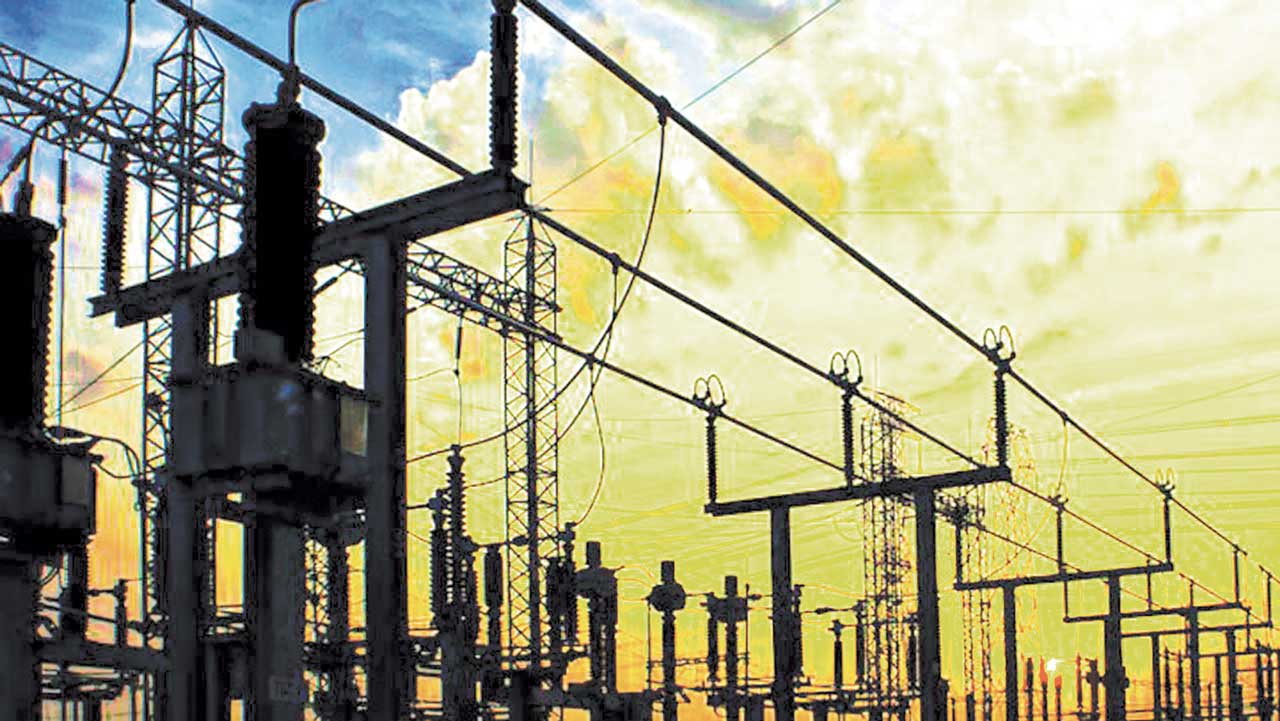
Vandals strike again, damaging Lokoja–Gwagwalada transmission line
By Uzair Adam
The Transmission Company of Nigeria (TCN) has reported another act of vandalism, this time targeting its 330kV Lokoja–Gwagwalada transmission line.
This attack comes as Nigerians await the restoration of power following the recent sabotage of the 330kV Shiroro-Kaduna lines.
In a statement issued on Sunday by TCN’s General Manager of Public Affairs, Ndidi Mbah, the company revealed that the incident occurred in the early hours of Saturday, November 9, 2024.
Vandals destroyed transmission towers T306, T307, and T308, disrupting power transmission along the affected route.
Efforts by TCN engineers to restore the line earlier on Saturday were unsuccessful when the line tripped.
A subsequent inspection by TCN’s patrol team confirmed the vandalism, which included the theft of two spans of aluminium conductors.
Although the double-circuit transmission line remains operational through line two, the company is working to replace the stolen components.
This incident is part of a worrying pattern of increasing vandalism targeting Nigeria’s power infrastructure, particularly in the Gwagwalada area.
Previous attacks include the Gwagwalada–Kukuwaba–Apo transmission line on December 10, 2023, and the Gwagwalada–Katampe line on February 26, 2024.
Such ongoing disruptions are severely hindering the stability and expansion of the national power grid.
TCN has once again called for cooperation from local communities and security agencies to address the rising threat of vandalism.
The company stressed that these criminal activities undermine efforts to strengthen Nigeria’s transmission system and serve as a disservice to all citizens.

Niger State allocates N1.2 billion to celebrations despite security, developmental challenges
By Uzair Adam
A review of Niger State’s budget performance report has revealed that the state government allocated N1.2 billion to celebrations and special occasions in the first nine months of 2024.
This expenditure represents about 4% of the state’s internally generated revenue (IGR), which totalled N29.2 billion from January to September.
The spending has raised concerns, particularly as the state grapples with severe developmental and security issues.
Recently, Niger State has faced violent attacks by bandits, resulting in the deaths of ten residents and the destruction of homes.
Additionally, widespread flooding has devastated over 300 communities, with reports indicating eleven lives lost and 245 schools damaged.
Despite these challenges, the budget shows zero allocation for capital expenditures within the Ministry of Rural Development and the Rural Water and Sanitation Agency.
This lack of investment comes at a time when a cholera outbreak has claimed sixteen lives and left 165 others infected.
Due to the absence of potable water, many residents have resorted to using stagnant water sources shared with livestock.
In contrast, the Ministry of Basic and Secondary Education received only N196 million in capital funds, while the state’s basic healthcare sector saw no allocation for critical infrastructure improvements.
Reports indicate that 71% of households in Niger lack adequate sanitary facilities, and half the population lacks access to clean drinking water, underscoring the pressing need for investment in essential services.
Amid claims of limited resources, Niger State’s spending priorities have sparked concern.
The state currently has 1.6 million people living in poverty and an unemployment rate of 38.8%.

A work template for the new minister of livestock development
By Zayyad I. Muhammad
Nigeria boasts one of the largest cattle populations in Africa, ranking among the top on the continent. Over 20 million cattle are primarily concentrated in the northern regions, including states such as Adamawa, Borno, Kaduna, and Kano.
The new Minister of Livestock Development, Idi Mukhtar Maiha, faces a complex and tasking job in three key ways.
First, the newly established Ministry of Livestock Development has high expectations from Nigerians. The ministry oversees and develops livestock policies, manages animal health and disease, improves breeds and genetic resources, enhances farming and production systems, supports rural livelihoods, and modernises livestock marketing and trade.
From an informal perspective, expectations will focus on how the minister will transform the lives of nomadic cattle herders from uneducated and nomadic to more settled, everyday lives while also addressing the farmer-herder conflict and the notorious practices of cattle rustling, banditry, and kidnapping for ransom, which are prevalent among some cattle herders.
Mukhtar’s second challenge lies in his background; he has spent most of his career as a technocrat at NNPC. Whether he knows it or not, he will inevitably experience the bittersweet realities of politics. Once appointed as a minister, one automatically assumes a political role. Mukhtar must navigate this transition, deciding whether to embrace full-time politics or attempt to balance his technocratic expertise with his political responsibilities.
Furthermore, few people in Adamawa know him despite his former role as Managing Director of the Kaduna Refinery, a Petrochemical Company (KPRC). As a result, many may perceive him as elitist and aloof, particularly in an inherently people-centred position.
Mukhtar’s third challenge stems from the performances of his two predecessors from Adamawa, Mohammed Musa Bello and Prof Mamman Tahir, which many Adamawa people view as less than stellar. Their tenures have left a mixed legacy, leading to scepticism about Mukhtar’s ability to bring about something new and different.
To distinguish himself, Mukhtar must work diligently to establish his identity and a positive track record. This task is particularly crucial, as he shares several traits with both former ministers, which could lead to assumptions about his capabilities and approach. By demonstrating effective leadership and addressing the needs of the people, Mukhtar can overcome this challenge and build a reputation that sets him apart.
With an impressive CV as a technocrat and practical knowledge of livestock management, Mukhtar’s Zaidi Farm stands out as a well-integrated enterprise that applies world-class best practices in animal husbandry. Given this background, we expect him to introduce innovative approaches to livestock management by benchmarking against countries renowned for their success in this field, such as New Zealand, Australia, the Netherlands, Denmark, Brazil, Ireland, and the United States. These nations have excelled in implementing efficient and sustainable livestock practices, utilising advanced genetic research and technology to enhance productivity. However, Mukhtar’s journey will be sweet and bitter, mainlydepending on his approach to leadership, public relationships and policy implementation. By embracing collaboration and leveraging global best practices, he has the potential to make significant strides in transforming the livestock sector.
Zayyad I. Muhammad writes from Abuja, zaymohd@yahoo.com

In his place, many more Sinwars would rise
By Ismail Obansa Nimah
The Israeli military killed Yahya Sinwar. A picture of Sinwar in a military vest, with a sniper shot at his forehead, with one arm cut off and the other holding an AK-47 riffle, his body under enormous concrete from a collapsed building, circulated online.
Hamas confirmed the news of Sinwar’s death, fighting alongside his comrades for his people, his land, his home and the liberation of Palestine. Until his death, Israel had tagged Yahyah Sinwar as the most wanted man in Gaza and, by extension, the whole of Palestine. The Israeli military has been on the hunt for him for years.
Born in Khan Younis refugee camp in 1962, after the infamous massacre and Nakbah that saw the newly formed state of Israel exile more than 750,000 Palestinians from their homes and livelihood, Yahya Sinwar spent his life as a refugee in Gaza and was quick to join the Palestinian resistance forces, after being a witness to the miserable treatments and denial of the rights and freedom of Palestinians by Israel.
He lived through the 1967 Arab-Israeli war and was a bedrock in the Hamas resistance movement founded 20 years later, in 1987.
In 1989, he was arrested by Israel on the accusation of orchestrating the killing of two Israeli soldiers and was given four life sentences. Sinwar went on to spend 22 years under brutal conditions in an Israeli prison. He maximised his stay in prison by becoming fluent in Hebrew and acquiring various diplomas aimed at understanding the Israeli colonial entity, Jewish history and Zionism. He was subsequently released following a prisoner swap in 2011 and was elected the leader of Gaza following Hamas’s political win in the 2007 Gaza elections.
Until Ismail Haniyeh’s death, Yahyah Anwar was the de-facto ruler of Gaza and was second in command regarding Hamas after late Hamas Chief Ismail Haniyeh. Following the assassination of Ismail Haniyeh in Tehran in August of this year, he became the ultimate leader of Hamas and has, since October 2023, led a principled and steadfast fight against Israel in its war in Gaza.
In the last year, the Israeli government has manufactured countless falsehoods and made widespread propaganda about its war on Gaza, Hamas and the leadership of Hamas, particularly Yahyah Sinwar. Israel, through numerous outlets, claimed that Sinwar was hiding in tunnels, surrounding himself with wealth and using hostages and Palestinian civilians as human shields. And even though these claims have been debunked countless times, the Israeli military became the ultimate belier of itself when it released a droned footage of Sinwar’s last moments.
The intent behind the footage release was to mock Sinwar and the entire Palestinian resistance, but the footage did the opposite. Instead, it propelled Sinwar to become a legendary figure. It showed Sinwar, sitting honourably on a couch, putting on a keffiyeh, debris around with his comrades down; after being fired on by a tank, a missile and sniped on the forehead, he used his remaining arm, in one last act of defiance to throw a stick at the filming drone. He was side by side with his comrades on the front lines, defending his lands and fighting for the liberation of Palestine and every Palestinian.
Sinwar’s entire life has been an inspiration and a huge source of strength for the resistance axis against the apartheid state of Israel. His story bears many sacrifices and losses for the Palestinian front. He was born a refugee and brutally raised as a refugee in his land amidst an unwavering magnitude of oppression and apartheid.
Regardless of what the U.S.-led West and Israel wanted the world to believe about Sinwar, he died a hero, one that his greatest adversary inadvertently publicised. Even in his death, he continued to inspire the many more Sinwars who would ultimately rise in his place.
Ismail Obansa Nimah wrote via nimah013@gmail.com.
The suspended Ɓagwai Irrigation Project debacle
By Muhammad Ahmad Iliasu
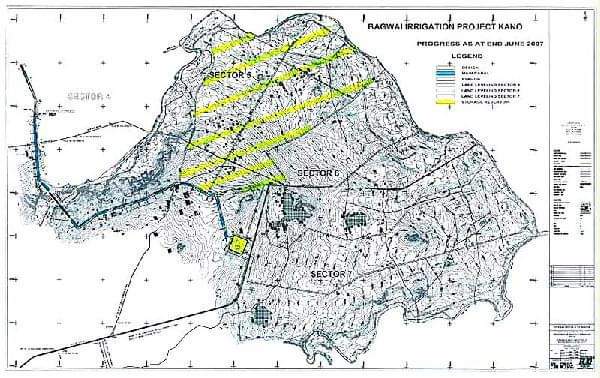
In May 2021, the Federal Executive Council (FEC) approved a sum of ₦3.76 billion as augmentation for the existing and ongoing expansion and completion of the Ɓagwai Irrigation Project on Watari Dam in the Ɓagwai local government area of Kano state.
The project was awarded to Messrs Ɗantata and Sawoe Construction Company Limited, mobilised in 2006 for an initial period of two years. The scope of work was a special irrigation scheme involving 872 hectares. The contract had been ongoing but ran into many problems and was suspended at some points due to lack of funding. Thus, the audit and seeking ₦3.76 billion augmentation bring the new contract sum to ₦9.2 billion from ₦5.4 billion, inclusive of 7.5 per cent VAT, with an additional completion period of 24 months plus another 12 months liability period.
Additionally, the then Minister of Water Resources, Hon. Sulaiman Adamu, told State House correspondents after the virtual FEC meeting presided over by Vice President Yemi Osinbajo at the Presidential Villa, Abuja, “We hope that these projects will be implemented in earnest and hopefully, we will be able to get them completed by 2023 for the overall benefit of the people.’’
Unfortunately, as of today, November 10, 2024, the project has not progressed further and has been declared suspended by those who have close contact with the contractors, despite the open revelations made by the former Minister of Water Resources in 2021.
Revealed in a WhatsApp conversation between a stakeholder in the Ɗantata and Sawoe company and one of the farmers desperately praying for when the project will be revisited and completed, the reason for the suspension of the irrigation project in Ɓagwai is the unprecedented instability in exchange rates.
In a fresh setback encountered by the Ɓagwai irrigation project once again, the augmentation, the stakeholder said, was approved when ₦398 was approximately exchanged for $1. But since then, the rate has astronomically risen to ₦448 for $1 in 2022, ₦638 for $1 in 2023, and ₦1,724 for $1 in 2024, respectively. The worsening of the local currency is the single most determining factor between the project and any identifiable progress. If any activity were to resume, the federal government had to revise the audit and account for the unprecedented change in the project cost.
Meanwhile, as the project hits another roadblock, the hardworking farmers, who might not understand the causes frustrating their industry, have grown severely disturbed by their inability to use their farmlands, which are the construction site of a long-suspended project. Many are subsistence farmers who rely on the place to feed their families. Another massive number of farmers rely on the place to make a living.
The anticipation of the continuation of the project hindered most of the farmers from cultivating the farmlands because they didn’t know when the project would resume, and they feared having their season interrupted. The condition of the farmlands, as caused by the start of the suspended canalisation, has rendered most of it uncultivable.
Most farmers have grown confused and fear that the Watari Dam Renovation project in Ɓagwai by the Kano State Government in collaboration with the Islamic Development Bank, has taken the spotlight away from the Federal Government’s expansion of the irrigation sectors. The project has also misled stakeholders into thinking it is ongoing,when indeed it is far from being so. And they’re right to be concerned.
The euphoria surrounding the Watari Dam Renovation was overflogged during the 2023 election campaigns and gubernatorial debates. Unintentionally, this distracted the public from the real ghost in the machine: very few people knew that the projects were separate and dissimilar.
The Kano State’s collaboration with Islamic Development Bank targets renovation of the Watari Dam, servicing the canals, and taking water to the farmlands. The Federal Government’s expansion targets increasing the irrigation sectors from six to eight: Sector One has 160 hectares, Sector Two has 168 hectares, Sector Three has 217 hectares, Sector Four has 72 hectares, Sector Five has 273 hectares, and Sector Eight has 73 hectares have all been completed.
It is Sector Six, which has 257 hectares, and Sector Seven, which has 343, whose work has sadly been suspended. These are scattered into meters owned by beleaguered subsistence farmers and small-scale producers. A group of people are so determined and hardworking that they get out of their skin to produce an incredible quantity of agricultural output.
Each hectare is estimated to produce 2.2 tons of maize or 3 tons of rice per farming season, and the irrigation system allows for four farming seasons annually. The monetary value of the agricultural output, assuming each hectare produces maize throughout the year, stands at ₦3.168 billion. And if all the hectares produce rice throughout the year, the estimate stands at ₦4.3 billion — which is a yield that’s far higher than what’s required to complete the project, all of which is being lost because the project hasn’t been completed, and worse yet, suspended.
When completed, the project’s multiplier effect will cut across revenue generation, job creation, stimulation of the rural economy, food production, poultry and cattle herding, stimulation of rural infrastructure, and discouraging the rampant rural-urban migration.
In the end, it certainly aligns with President Bola Ahmed Tinubu’s Renewed Hope agenda that is focused on diversification of the economy and revenue generation, among others, through domestic production and self-sufficiency in food production, to revise, revisit, and ensure spinal projects like the suspended Ɓagwai Irrigation Project are completed. Failure to do that will not only leave beleaguered farmers in a desperate state but also mean a project of national importance is left to rot away without remorse for the massive taxpayer resources invested in it already.
I’m very confident that such can never be the wish of the government under the watch of the president, Bola Ahmed Tinubu, the Governor of Kano State, Engr Abba Kabir Yusuf, the Minister of Agriculture and Rural Development, Hon. Abubakar Kyari, the Minister of Water Resources, Hon. Joseph Utsev, the Minister of Budget and Economic Planning, Hon. Atiku Bagudu, and the senator representing Kano North in the Red Chamber, who doubles as the Deputy Senate President, Hon. Barau I. Jibrin CFR, the member representing Ɓagwai and Shanono in the Green Chamber, Hon. Yusuf Badau, and the member representing Ɓagwai and Shanono in State House of Assembly, Hon. Halilu Ibrahim Kundila.
MA Iliasu is an economist writing from Kano. He can be reached via muhada102@gmail.com.

Father arrested for alleged murder of newborn in Adamawa
By Uzair Adam
Police in Adamawa State have detained a 19-year-old man for allegedly killing his newborn son in Mubi North Local Government Area.
SP Suleiman Nguroje, spokesperson for the Police Command, announced the arrest in Yola on Saturday.
The Daily Reality learned that the suspect, whose identity has not been disclosed, was taken into custody on November 8 after the baby’s mother, who is reportedly his girlfriend, filed a complaint.
She alleged that the suspect came to her residence to see the newborn but later took the baby, under the pretense of an errand, and killed him.
Nguroje reported that the suspect is accused of burying the infant’s body in the Girpata area of Mubi.
Following the arrest, Commissioner of Police Morris Dankombo has ordered the case to be escalated to the Criminal Investigation Department (CID) for further investigation.

Jigawa declares war on sexual harassment in schools with new tough policy
By Uzair Adam
The Jigawa State government has pledged its commitment to preventing sexual harassment in its higher education institutions.
The Daily Reality reports that that the Commissioner for Higher Education, Scince and Technology, Professor Isa Yusuf Chamo, disclosed this during a meeting with officials from the state’s educational institutions.
Prof. Chamo stated that the government’s stance is directed at creating a safer and more supportive learning environment for female students.
“The state will not tolerate any form of sexual harassment in our institutions,” he asserted, adding that while Jigawa has reported relatively few harassment cases, the government is committed to proactive prevention and strict enforcement.
The state has recently adopted the Model Anti-Sexual Harassment Policy developed by the Gender Mobile Initiative, designed to create a secure framework for students across educational settings in Nigeria.
Prof. Chamo noted that the policy will foster an atmosphere in which students can focus on their studies without fear, which in turn will enhance their confidence and academic performance.
He revealed plans to establish a dedicated committee to monitor the policy’s implementation across institutions, ensuring compliance and accountability.
The Commissioner also highlighted that workshops and seminars would be organized to educate students, staff, and faculty about the policy and their roles in supporting its implementation.
The Permanent Secretary, Alhaji Lawan Muhammad Haruna, also expressed gratitude to the Gender Mobile Initiative, noting that the policy positions Jigawa as a model for proactive change in Nigeria’s educational sector.

Frequent grid collapse: Kano to establish own power generation plant to combat energy deficit
By Uzair Adam
Kano State Governor, Abba Kabir Yusuf, announced plans for the state to independently generate and distribute electricity, while leveraging the National Electricity Act to alleviate the current power shortfall.
The governor explained that the Act empowers states to address their energy needs, which has prompted Kano to establish its own power generation and distribution agency.
The Daily Reality reports that in response to concerns about power shortages, Yusuf highlighted that Kano has around 20 dams that could be transformed into Independent Hydro Power Plants (IHPPs) to supply electricity across the state.
Currently, the state-owned 10-megawatt Tiga Hydro Independent Power Plant supplies energy to industrial areas and the Kwankwasiyya residential city.Governor Yusuf also mentioned that the Challawa-Gorge Hydro Power Plant, which is 65% complete, will contribute an additional six megawatts of power upon completion, reinforcing the state’s efforts to meet energy demands.
He called on the federal government to expedite projects crucial for Kano’s energy infrastructure, including the second Kaduna-Kano 330KV line, the Daura-Jogana-Kura 330KV line, and the solar initiative approved for 19 northern states.

Indonesian varsity revokes about dozen professorships over alleged academic fraud
By Sabiu Abdullahi
Lambung Mangkurat University (ULM) in Indonesia has stripped 11 academics of their professorships due to alleged academic fraud.
The Education, Culture, Research, and Technology Ministry launched an investigation after receiving a whistleblower report that the professors published papers in “predatory journals,” which prioritise payment over peer review.
The investigation revealed that the professors paid approximately $4,500 to $8,640 to have their articles published. While they remain employed at the university, they have lost their professorial titles.
An additional 20 ULM professors are under investigation for similar allegations.
Arief Anshory, a senior lecturer at Padjadjaran University, described the case as “the tip of the iceberg” in a systemic problem plaguing Indonesian universities.
“If we review all professors in Indonesia, half of them might be disqualified,” he stated. University rectors are often accused of encouraging lecturers to expedite their professorship applications to enhance the university’s reputation and attract funding.
“Every university wants to be among the top 10 or top 20,” Anshory noted.
ULM Rector Ahmad Alim Bahri downplayed the incident, citing the university’s goal to become one of Indonesia’s top 20 universities by 2025.
“The case of the 11 professors does not prevent us from achieving that target,” he said.
Experts warn that the emphasis on professor-student ratios and publication quantities has led to unethical practices.
Asep Saeful Muhtadi, professor at the State Islamic University Sunan Gunung Djati Bandung, described the race for professorships as “out of control,” and urged swift measures to reinforce regulations and procedures.
The Bandung Institute of Technology Professors’ Forum highlighted a loophole in the Higher Education Law allowing non-permanent lecturers to receive professorships without proper quality control.
This has resulted in individuals obtaining professorships despite lacking full-time university employment.

The state of Nigeria’s public health sector
By Fatima Dauda Salihu
Health is a fundamental priority that any government should address. When citizens are healthy, the entire state benefits. However, it is disheartening when the government neglects its health sector.
The Federal Government of Nigeria has increased its expenditure on public health over the years to enhance public health outcomes, but much still needs to be done. Public health requires ongoing efforts, and continuous improvement remains a crucial goal. The numerous and serious healthcare challenges in the country arise from poor health infrastructure, inadequate education, hygiene and sanitation issues, and extreme poverty and hunger.
The Health department plays a critical role in educating people about unforeseen infectious diseases and interventions for alleviation.
Public health infrastructure provides communities, states and the nation as a whole with the ability to prevent diseases, promote health and respond to both ongoing and emerging challenges to health.
Since its independence, Nigeria’s health sector has been named one of the worst in Africa. Issues include lack of coordination, fragmentation of services, scarcity of medical resources, including drugs and supplies, inadequate and decaying infrastructure, inequity in resource distribution, and access to care.
According to the National Institute of Health, the Nigerian healthcare system is poorly developed and has suffered several setbacks, especially at the local government level. No adequate and functional surveillance systems have been created;hence, there is no tracking system to monitor the outbreak of infectious diseases, bioterrorism, chemical poisoning, etc.
Nigeria’s hospitals and emergency services do not meet world standards. The availability of healthcare institutions and professionals is limited, while long distances travelling for healthcare are not affordable. The healthcare costs and expenditures related to the prevention and treatment of diseases are rising.
Many primary healthcare centres across Nigeria are dilapidated, have low staff, have poor electricity, and have unclean water, and they cannot efficiently serve people in rural areas. Many pregnant women still seek the services of traditional birth attendants for delivery, and even many children in rural areas miss out on routine immunisations, which are meant to be one of the responsibilities of effective primary healthcare centres.
Due to the poor state of the health sector, there has been a constant mass migration of doctors and health professionals out of the country. This relates to ongoing strikes and poor working conditions in healthcare delivery centres. The challenges faced by Nigeria’s healthcare system include inadequate hygiene and sanitation, insufficient financial investments, and alimited workforce and facilities.
Establishing healthcare institutions and insurance schemes, increasing the workforce, and improving hygiene and treatment conditions can help address these challenges. Implementing policies for maternal health and healthcare reforms can lead to better health outcomes.
Fatima Dauda Salihu wrote from Bayero University, Kano.