



FUD abolishes 60, 40 percent part-payment for undergraduate registration
By Ibrahim Yunusa
The governing council of Federal University Dutse through its secretary as well as registrar of the varsity, Alhaji Abubakar Mijinyawa, has announced the abolishment of the part-payment of 60 and 40 percent for first and second semester registration of undergraduate students.
The statement said that the fourth governing council of FUD has received in its third meeting the report and recommendations from the finance and general purposes committee on the management’s request for abolishing the 60 and 40 percent of registration fees for undergraduates with effect from 2024/2025 academic session.
Giving the reason of annulling the part-payment, the registrar said that, “the 60% and 40% adversely affect the functionality of the university’s portal and after due consideration of the proposal the governing council directed the school management to abolish the part-payment to maintain the stability in the university’s financial record and portal “.
The statement added that the introduction of NELFUND Student Loan Scheme by the federal government reduces the burden of payment of registration fees of the students in which the fund offers 100% payment of registration to the beneficiaries of the scheme.
MMIA customs exceeds 2024 target, generate N71.6bn — Comptroller
By Anwar Usman
The Murtala Muhammed International Airport Command of the Nigeria Customs Service has announced that it exceeded its revenue target for 2024, generating a total of N71.6 billion.
The Customs Area Controller, Comptroller Effiong Harrison, made this known in a statement on Friday that its target for 2024 was N56.861 billion.
Harrison expressed delight over the record-breaking revenue achieved by the command.He described the 2024 revenue as remarkable, noting that it was the highest-ever generated in the history of the command.
NAN reports that, During a meeting with the management team, the area controller revealed that the command had exceeded its annual revenue target of N56,861,094,269.07 by generating ₦71,633,687,108.84.
“This represents a 20 per cent increase, amounting to N14,772,592,839.27,” he said.
While comparing the command’s performance in 2023 and 2024, Comptroller Harrison noted a significant revenue increase of N41.1 billion in 2024 when compared to the N30.5 billion generated in 2023, reflecting a 135 per cent growth.
“I attribute this exceptional performance to the dedication, commitment, and adherence to high operational standards by the officers and men of the command.
“I commend the officers and men of the command for their relentless efforts. It was instrumental in achieving this milestone.
“I want to urge the officers to intensify their efforts to maintain these standards in order to generate more revenue into the government coffers in 2025,” Harrison said.
The MMIA customs boss expressed profound gratitude to the Comptroller-General of Customs, Bashir Adeniyi, and his management team for their unwavering support to the command.

Navy seeks media collaboration to combat disinformation
By Anwar Usman
The Flag Officer Commanding Western Naval Command, Rear Adm. Michael Oamen, has called on the media to help mitigate disinformation capable of misleading the public.
Oamen made the request during an end-of-year media engagement held at the Western Naval Command in Lagos.
According to him, the speed at which information is generated and transmitted today is such that you must keep pace with it to manage it and ensure national security.
“Misinformation and all forms of hindrances that will make just a simple incident become out of proportion must be managed.” He further added that “The Western Naval Command is aware of such reality and we have decided that we must engage with the media within our sphere to have a platform to close that gap”.
The FOC said that once there was such a gap, it would be exploited; therefore, having a platform to constantly engage with the media would help iron out issues.
“Such a platform will help to reinvigorate any misconception or misinformation and that way we all will be contributing our quota to the attainment of our national security objective,” according to him.
He reiterated that “We try as much as possible to let every stakeholder in the society play their part in ensuring national security” “Nobody really gained from strategies that were attributable to disinformation or wrong use of the information spectrum” Oamen said.The FOC said that the year 2024 was quite eventful for the command and appreciated the role that the media played in informing the public of all its activities.
“As we look forward to 2025, the Western Naval Command, being the premier operational command of the Navy. we will be engaging in so many exercises and activities.
“Therefore, we are going to count on your support to inform the public of all our efforts, so that at the end of the day, the nation, is better for it,” Oamen said

Ex-Kano commissioner Abbas Sani joins APC after leaving NNPP
By Uzair Adam
A former Commissioner for Rural and Community Development in Kano State, Abbas Sani Abbas, has officially left the New Nigeria Peoples Party (NNPP) and joined the All Progressives Congress (APC).
The Daily Reality reports that Abbas Sani Abbas was dismissed from his role last month during a cabinet reshuffle by Governor Abba Kabir Yusuf. Announcing his defection during a visit to the Deputy President of the Senate, Senator Barau I. Jibrin, in Kano, Abbas expressed his commitment to the APC.
Senator Barau shared the news on his verified social media account on Friday night, stating, “Joined by the Chairman of our party in Kano State, Prince Abdullahi Abbas (Ɗan Sarki, Jikan Sarki), and other party leaders, we proudly embraced Hon. Abbas, a dedicated grassroots mobiliser, to our party.”
He added, “I assured him of our unwavering support as we work together to build a better future for the people of Kano State and, indeed, all Nigerians. Together, we will continue to promote the values of good governance, inclusivity, and service to humanity.”

Calls for Governor Abba Yusuf to prioritise local scholarships
By Bilal Muhammad Bello (BMB)
The Kano State Government, under the leadership of Governor Abba Kabir Yusuf, has made commendable strides in supporting education. Among these initiatives is the foreign scholarship program for postgraduate studies, a legacy dating back to the second tenure of former Governor Engr. Rabiu Musa Kwankwaso. While this policy has benefited many, addressing the growing need to prioritise local scholarships for Kano State students studying in Nigerian institutions is crucial.
Since the 2019/2020 academic year, there has been a noticeable gap in the distribution of local scholarships in Kano State. Regrettably, since Governor Yusuf assumed office, no official scholarships have been disbursed to students in tertiary institutions nationwide.
While it is laudable that the state government recently paid the fees of students affected by tuition hikes at federal universities such as Bayero University Kano, Federal University Dutse, Federal University Dutsin-Ma, and the University of Maiduguri, this initiative has excluded students from state universities, polytechnics, and colleges of education. Many of these students face severe financial hardships, and some even drop out due to a lack of support.
With utmost respect, I urge His Excellency Governor Abba Kabir Yusuf to reconsider the state’s scholarship policy. The government must prioritise local students struggling to fund their education amidst the country’s economic challenges. Local scholarships would provide a lifeline to these students, ensuring they complete their education and contribute meaningfully to the state’s development.
Similarly, states like Katsina, Jigawa, Borno, and Kaduna support students with local scholarships every year for those studying at various institutions in the country. These local scholarships provided by respective state governments help alleviate the challenges students face on campuses.
During your 2019 and 2023 campaigns, Sir, you pledged to prioritise education. While the foreign scholarship program for postgraduate studies is admirable, the pressing needs of local students studying on Nigerian campuses cannot be overlooked. I respectfully call on His Excellency to direct the State Scholarship Board to open its portal and ensure that students in Kano benefit from the state government’s scholarship program.
Investing in local scholarships is not just a fulfilment of campaign promises but a commitment to building a brighter future for Kano State. Students are the backbone of any society, and supporting their education is an investment in the prosperity of the state. Governor Yusuf, this is an opportunity to cement your legacy as a leader who prioritises education for all Kano students at home and abroad.
Bilal Muhammad Bello Department of Mass Communication Bayero University, Kano.

ABU to honour Okonjo-Iweala, Sheikh Al-Hussain with honorary degrees
By Sulaiman Abdullahi
Ahmadu Bello University (ABU), Zaria, will confer honorary degrees on the President of the World Trade Organisation, Dr. Ngozi Okonjo-Iweala, and renowned Islamic scholar Sheikh Sharif Al-Hussain.
The decision was approved during the university’s 544th (Special) Senate meeting, held on Tuesday, January 7, following the recommendation of the Honorary Degrees Committee.
The recognition highlights the university’s acknowledgment of the recipients’ outstanding contributions to global trade, governance, and Islamic scholarship.
Details of the conferment ceremony will be announced in due course.

In defence of Sule Lamido and Nasir El-Rufa’i
By Saifullahi Attahir
In 1984, during the second term of former US President Bill Clinton as Governor of Arkansas, he was alarmed by a damning report on the decline in educational standards in the state. He, therefore, constituted a committee headed by his wife, Hillary Clinton, to go around the state and come up with resolutions on how to rescue the State Educational sector.
He introduced robust proposals, including more time for academic work, mobilising more funds, increasing the school year, special opportunities for gifted children, a maximum class size of twenty pupils up to third grade, and more recruitment of Mathematics, History, and Science teachers.
The most controversial proposal required all teachers and administrators to take and pass the National Teacher Examination. Even in the US, this proposal was met with backlash from interest groups and misinformed teachers that the governor was trying to hijack their means of livelihood. But in reality, there is no way that a reform in education can be successfully achieved without looking at the guardians of that knowledge.
Teachers are the backbone of any school. No matter how beautiful the school building, how few students per class, or how good the curriculum, if the person imparting the knowledge is not well-prepared, problems will continue to arise.
In President Bill Clinton’s case, he recommended that teachers who failed be given free tuition to take regular courses and be able to take the test as many times as possible until certified to be able to teach.
This same scenario occurred during the tenure of two visionary governors in northern Nigeria. Former Jigawa State Governor Alhaji Sule Lamido used the same strategy to improve the state’s education, which was then on life support. I can count the number of primary school teachers I knew who were allowed to return to the College of Education (COE) Gumel to obtain an NCE Certificate fully funded by the state.
In the case of former Kaduna State Governor Mallam Nasir Elrufa’i, we can remember the giant effort he tried to impose to rescue the educational sector in Kaduna. This included a massive purge of school teachers who could not pass their Aptitude test. The former governor was met with a heavy force of resentment and protest, including a mass media campaign in which he was simply trying to retrench workers from their source of livelihood.
These three cases were almost similar, although different States, different personalities, at different times, and nearly different approaches. But history will judge…
Saifullahi Attahir wrote via saifullahiattahir93@gmail.com.

FG receives $52m Diezani loot from U.S.
By Sabiu Abdullahi
The Nigerian government has received $52.88 million in recovered assets linked to Diezani Alison-Madueke, a former Minister of Petroleum Resources.
The funds were handed over by the United States government, as announced by the Attorney-General of the Federation (AGF) and Minister of Justice, Lateef Fagbemi, during a formal agreement signing ceremony in Abuja on Friday.
In his remarks, Fagbemi explained that $50 million of the recovered assets would be allocated through the World Bank to support rural electrification projects.
The remaining $2 million is to be directed to the International Institute of Justice to enhance the justice system and combat corruption.
Stating the benefits of this development, Fagbemi described it as a milestone in the collaboration between Nigeria and the United States in fighting corruption and promoting the rule of law.
He also emphasized that this recovery reflects President Bola Tinubu’s commitment to addressing corruption.
United States Ambassador to Nigeria, Richard Mills, stressed the need for transparency and accountability in using the recovered funds to benefit the Nigerian populace.
This asset recovery represents a continued effort by both nations to strengthen their partnership in ensuring good governance and accountability.
Empowering the future: The critical importance of educating girls
By Khadijat Ogido
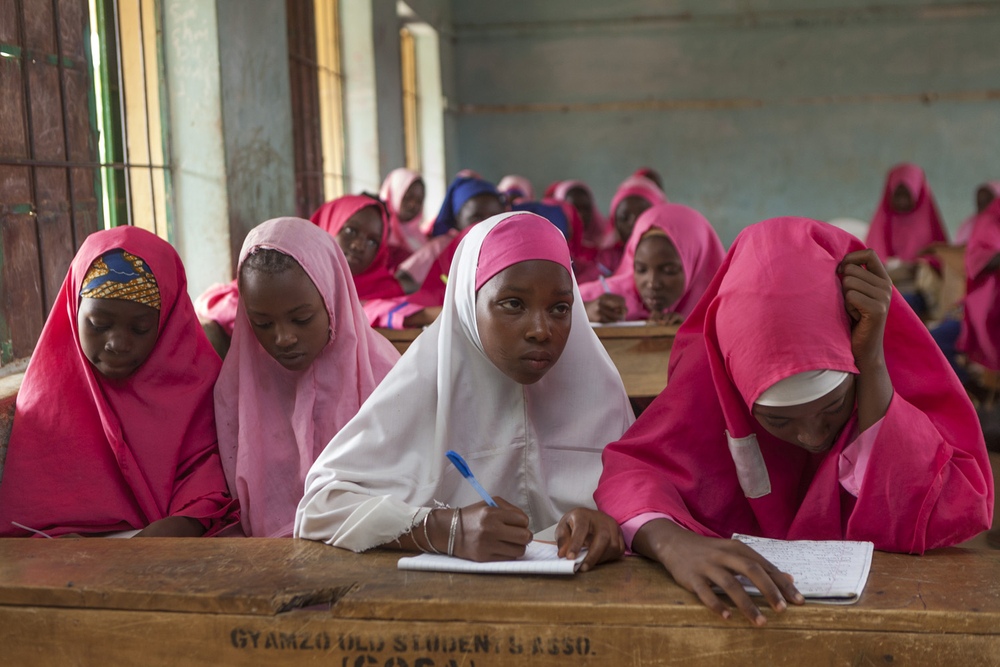
Educating girls is one of the most powerful tools for creating a sustainable, equitable, and prosperous society. Girls are provided with diverse basic knowledge, skills, and training contributing to national development. An educated child can only grow through a literate woman who has a greater chance of breaking the cycle of social vices by passing good knowledge to her daughter.
There is an adage that says, “Educate a man, you educate an individual, but educate a woman, you educate a Nation.”This adage summarises the essence of education to the girl child.
Investing in girls’ education transforms communities, countries, and the world. Girls who receive an education are less likely to marry young and more likely to lead healthy, productive lives. They earn higher incomes, participate in the decisions that most affect them, and build better futures for themselves and their families.
Girls’ education strengthens economies and reduces inequality. It contributes to more stable, resilient societies that allow all individuals – including boys and men –to fulfil their potential.
However, education for girls is about more than having access to school. It’s also about girls feeling safe in classrooms and supported in the subjects and careers they pursue—including those in which they are often underrepresented.
A girl is described as a female child between infancy and early adulthood. During this period of the development of the girl child, she is under the custody and supervision of adults who may be her parents or guardians and siblings who are older and more mature than she is.
According to the United Nations International Children’s Fund (UNICEF), Research has shown that millions of girls do not have access to school despite concerted efforts to promote the cause. Okeke, Nzewi, and Njoku (2008) identified child labour, poverty and lack of sponsorship, the quest for wealth, bereavement, truancy, broken homes, and engagement of children as househelps as factors that clog the wheel of children’s access to education.
According to UNESCO estimates, 129 million girls worldwide are out of school, including 32 million of primary school age, 30 million of lower-secondary school age, and 67 million of upper-secondary school age. In countries affected by conflict, girls are more than twice as likely to be out of school as girls living in non-affected countries.
Most factors that militate against the girl-child access to education are socio-cultural. Many countries on the African continent rank among the poorest in the world. The ongoing HIV/AIDS epidemics, over-crowding in cities, tribal warfare and despotic governments have contributed to the degeneration of the beautiful African land into a human rights catastrophe. At the centre of the devastating situation is the girl-child.
The girl-children appear to be the most vulnerable and most undervalued members of the society. In a region where many are struggling to get enough food and to stay alive, remain out of reach of the various violent rebel armies, and care for those stricken with various diseases, a basic education, especially for girl children, is low on the list of priorities. The right to education, which is a fundamental human right, is frequently denied to girls in some African countries.
The then United Nations Secretary-General, Kofi Annan, stated that in Africa when families have to choose between educating a girl and a boy due to limited resources, the boy is always selected to attend school.
In Africa, many girls are prevented from getting the education they are entitled to because families often send their daughters to work at a young age to earn additional income beyond the subsistence level and finance the education of their sons.
It has been reported in BBC News (2006) that the African patriarchal societal viewpoint favours boys over girls because boys maintain the family lineage. Additional reasons why girls do not have adequate access to education in Africa include the fact that many have to stay home to nurse relatives with HIV/AIDS. Their mothers were uneducated, which is another reason they feel their daughters do not need education. Furthermore, some families do not believe in the education of girls.
Many women who made it in life today also contributed immensely to the country’s growth and served as role models to the girl-child. Women like Funmilayo Ransome Kuti, Margaret Ekpo, Grace Alele Williams, Ngozi Okonjo Iweala, Flora Nwanpa, Onyeka Onwenu, etc. These women couldn’t have achieved it without a good education and were given the opportunity because it’s their right.
Malala Yousafzai, a Pakistani activist, said, “Let us remember: one book, one pen, one child, and one teacher can change the world.”
Educating the girl child is not just about attending school to acquire knowledge. It also serves as a weapon and a guide on how to shape her life and to break the barrier of a girl child not having the right to education.
Michelle Obama said, “When women are educated, their countries become stronger and more prosperous. Investing in a girl child’s education is not just a moral imperative; it is an essential strategy for achieving sustainable development and a better world for everyone.
Khadijat Ogido wrote via ogidokhadijat82@gmail.com.
Breaking through: A PhD holder’s rise from Third-Class to lecturer
By Ishaka Mohammed
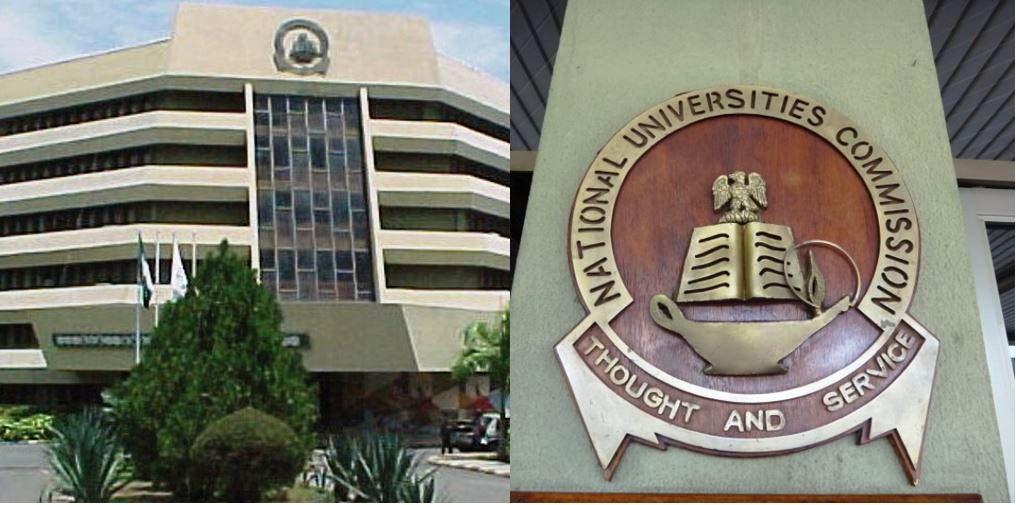
Sometime in 2023, I wrote about a PhD holder who couldn’t get a lecturing job because of his third-class bachelor’s degree. Neither his postgraduate qualifications and a significant number of journal articles nor his vast experience in education could override his weak first degree, thanks to supposed standards set by the National Universities Commission (NUC).
A few years after obtaining a third-class Bachelor of Science in Geography, this man started teaching in a government secondary school and, with his diligence, experience, and additional qualification (a postgraduate diploma in education: PGDE), he became a vice-principal.
He later obtained a postgraduate diploma (PDE) as part of the requirements for a master’s degree (due to his weak first degree), successfully completed an MSc, and was a short while into his PhD program when he lost his job.
It was a big test, especially for a family man, but he faced everything head-on and acquired his PhD in 2020.
Dr Ali Ameh Danbaba had always wanted to be a university lecturer, so he submitted applications despite having heard of the obstacle (his third-class bachelor’s degree) before him. Two universities had almost employed him when they noticed the class of his bachelor’s degree. I saw the situation as a case of someone being denied admission to tertiary institutions because of their poor primary school results.
However, Dr Ali Ameh Danbaba is perseverance-personified. At the time of his last rejection, he was already doing another bachelor’s degree (though as a part-time student). He spent four more academic sessions and obtained a first-class Bachelor of Science in Geography.
One amazing aspect of his doggedness was the uncertainty of his financial sources. Despite living with his wife and children and being mostly unemployed during his PhD program, Doctor (as he’s fondly called) persisted, majorly freelancing with his academic prowess.
Outside his academic life, he’s famous for his joviality and frequent calls to prayers. His humility could be easily mistaken for timidity. Despite his qualifications and age (with his first child already at university), he is never condescending. He takes my relationship with him like that between age-mates.
I was away from town and on the phone with him when he broke the heart-warming news of his employment to me. This job was his target for years. I’m delighted that he finally got it.
Success has multiple meanings, one of which is the magnitude of one’s wealth, but the meaning I often refer to is the achievement of one’s goal(s). Dr Ali Ameh Danbaba wanted to become a university lecturer, and now he is. I see him as a successful man, and, among other things, I’ve learned much from his life, especially his perseverance and humility.
Until his latest employment, he was the Chairman of the District Education Committee, Kaduna North Local Government Area of Kaduna State.