


Corruption Allegation: An open letter to BUK VC
Dear Prof. Sagir Adamu Abbas,
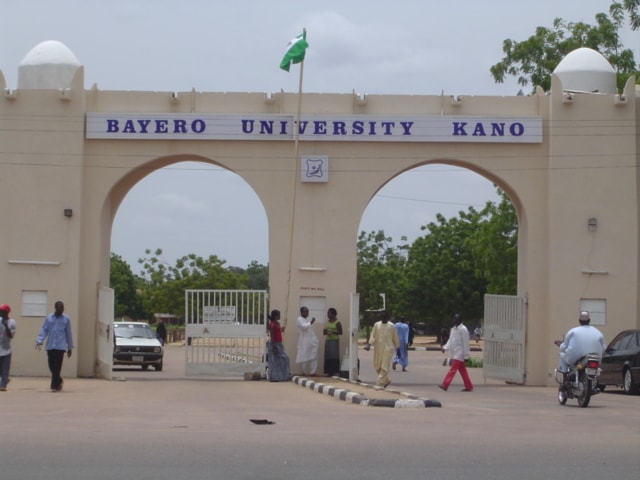
Although I doubt you could access this letter, I consider it necessary after two failed attempts to obtain relevant information from the office of the registrar of Bayero University, Kano (BUK).
After following this issue for over six months, expecting the school to do the needful, I am disappointed that this great institution continues to give the public room to question its integrity, especially when such involves deceiving a newly established institution by inflating figures and withholding surplus money belonging to students.
It has been alleged that the management of BUK inflated the figures of students’ school fees in the data shared with the National Education Loan Fund (NELFund). As a result, students applying for loans to pay their registration fees met higher amounts already pre-entered on their dashboards and submitted their applications since there was no option of altering the figures. Consequently, NELFund sent the pre-entered amounts to BUK to cover the students’ registration fees and expects each applicant to repay the same after graduation.
I know a student who needed N95,500 to pay his registration fees, but when he wanted to borrow from NELFund, he met N110,000 on his application dashboard. He submitted it like that, and his application was approved in June 2024. However, owing to pressure from BUK, he sought money and paid his registration fees, believing in the school to do the needful once it received money from NELFund.
Fast-forward to January 2025. The school refunded him N95,500 (the exact amount he paid as registration fees) without explaining the N14,500 surplus it received from NELFund.
Another student who needed N101,500 was forced to borrow N105,000 from NELFund, with BUK keeping the extra N3,500.
In addition to contacting these two students, I have read dozens of posts and comments by BUK students on social media (concerning this issue) between August 2024 and now, with no single student mentioning having information about their missing money. However, some students are afraid of victimisation, hence warning their mates to be careful with their expressions regarding the issue.
Sir, each of these poor students is expected to repay the exact amount BUK received on their behalf. As a consequence, it is absolutely wrong for the school management to keep the money.
I must mention that the BUK’s singular act of providing wrong data to NELFund could jeopardise the chances of a lot of other potential beneficiaries because the Fund could distrust other institutions henceforth.
I considered this letter necessary after taking some steps, notable of which are as follows:
On June 30, 2024, NELFund responded to my questions via X (formerly Twitter) as follows:
“All institutional fees on the portal were provided by the institution who (sic) themselves are autonomous under the law and not by NELFUND. Should you have any questions regarding your institution fees, kindly contact the competent authorities of your institution.
“According to the Establishment Act, NELFUND reserves the right to determine the interest payable on every loan. In this case, NELFUND have (sic) determined that the interest rate is zero.”
Also, on January 16, 2025, I emailed the registrar of BUK to seek clarification regarding the missing funds belonging to students. Fortunately, I received the following response about an hour later.
“Good morning Ishaka,
Thank you for your email. I will review the issue you’ve raised and respond accordingly.
Kind regards
Haruna Aliyu
Registrar”
Nonetheless, after waiting for six days without receiving any feedback, I sent a reminder. However, at the time of writing this letter, I have still not received any relevant information.
An institution like BUK is supposed to be the epitome of accountability and transparency, so I humbly request that you consider doing the following as soon as possible.
Consider sending the surplus money to the rightful owners—the affected students.
After that, explain the reasons for the wrong figures and the delay in disbursing the surplus to them.
Lastly, explain to NELFund why the school sent the wrong figures to represent the value of students’ school fees.
It is worth stressing that all of the above actions are necessary damage control strategies, so each should be carried out and openly communicated. In addition to helping BUK improve its public image, these strategies could help the authorities of the institution to avoid probable consequences of their unethical and illegal actions.
Yours sincerely,
Ishaka Mohammed

Student leaders reject Tinubu’s rice palliatives, demand focus on educational reform
By Abdullahi Mukhtar Algasgaini
Student union leaders from Obafemi Awolowo University (OAU) in Ile-Ife and Ahmadu Bello University (ABU) in Zaria strongly disapprove of President Bola Tinubu’s distribution of rice palliatives to student leaders across Nigerian tertiary institutions. They call for more substantive reforms in the education sector.
In separate statements, the Student Union Government (SUG) Presidents of both universities criticised the gesture, highlighting that the rice distribution fails to address the deeper challenges Nigerian students face, particularly tuition costs and poor university infrastructure.
Damilola Isaac, the SUG President at OAU, emphasised that he had not received any rice palliatives and made it clear that he would not accept them, even if offered. Isaac stressed that his administration focuses on advocating for systemic change in the education sector rather than accepting temporary handouts that do not address the root causes of student hardship. He called on the government to prioritise measures that would reduce tuition burdens, improve university infrastructure, and generally enhance the quality of education across the country.
“While the government may have good intentions, it is crucial that efforts are directed toward addressing the real issues in education,” Isaac said. “We are committed to fighting for the interests of students and ensuring accountability in the education sector.”
Similarly, Ibrahim Nazeer, the President of the Students’ Representative Council at ABU, voiced his rejection of the rice palliatives. Nazeer, through his media advisor Abdulrazak Shuaibu, said he would not accept the rice unless it were ensured that all students at ABU received their fair share. He urged the government to focus on creating an environment where students can afford necessities like food without relying on sporadic palliative distributions.
Instead of periodic rice handouts, Nazeer suggested that the government focus on long-term solutions that ensure students have access to basic necessities year-round.
While some student leaders, including Fahad Abdullahi, the SUG President of Abubakar Tafawa Balewa University (ATBU), confirmed receiving the palliatives, several other institutions, including Usmanu Danfodiyo University, Sokoto (UDUS), and Moshood Abiola Polytechnic (MAPOLY), reported being unaware of the distribution.
The rice palliative, which allocated two 25kg bags of rice to each SUG President, has been criticized for being limited to student leaders rather than the entire student body. Many students expressed concerns over the perceived unfairness of the selective distribution, noting that all students, not just those in leadership positions, are affected by the country’s economic challenges.
Anas Abdulrahman, a student from UDUS, questioned why only student leaders received the palliative. He stressed that all students should benefit from government initiatives, as they are all citizens of Nigeria. “We all voted for this government, and we should all be considered for such palliatives,” he remarked.
The rice distribution is part of the government’s repeated efforts to alleviate the economic hardship exacerbated by the removal of the petrol subsidy and the floating of the naira, leading to high inflation and food price increases. Despite these measures, inflation has reached 34.8%, with food inflation soaring to 38.94%, according to the National Bureau of Statistics (NBS).
Many students and citizens are questioning the effectiveness of distributing rice as a response to the economic crisis, with some suggesting that more meaningful policy changes are needed to address the underlying economic issues facing Nigerians.
As Nigeria grapples with economic instability, student leaders are calling for a shift in focus toward lasting educational reforms, improved infrastructure, and sustainable solutions to the challenges faced by students.

Truecaller launches real-time caller ID for iPhone users
By Sabiu Abdullahi
Truecaller, the caller identification and spam-blocking application, has unveiled a new real-time caller ID feature specifically for iPhone users.
In a statement released on Wednesday, the company explained that this feature leverages Apple’s ‘Live Caller ID Lookup’ framework, which was introduced with iOS 18, to securely deliver real-time caller identification services.
The update, according to Truecaller, is a response to persistent user demands for the iOS version of the app to match the functionality of its Android counterpart, while maintaining a strong commitment to user privacy.
Rishit Jhunjhunwala, the CEO of Truecaller, emphasized the significance of the update, stating, “We are excited to bring the full power of Truecaller to iPhone. We see tremendous potential and growth in our iPhone user base, and parity with Truecaller’s Android experience has been top of their wishlist. This update does that and more while preserving privacy for all calling activity.”
Apple also highlighted the innovation in its release notes, stating, “New APIs allow developers like Truecaller to fetch information from their servers and provide live caller ID for incoming calls, in a privacy-preserving way.”
The feature, which became available on January 22, is currently exclusive to premium subscribers. Users can activate it by navigating to settings, selecting the phone option, and enabling call blocking and identification.
Free users, however, can still access specific features such as ad-supported number searches and verified business caller IDs.Truecaller added that the update includes a redesigned interface, with caller names prominently displayed above phone numbers.
The company also disclosed plans to incorporate caller images in future updates to further enhance user experience.
This development marks Truecaller’s first major release since its co-founders, Alan Mamedi and Nami Zarringhalam, stepped down from daily operations in November 2024.

3 suspected Lassa fever deaths reported in Benue State
By Sabiu Abdullahi
The Benue State Government has disclosed that three individuals have died in the past week due to suspected cases of Lassa fever, with 12 suspected cases currently under investigation.
Dr. Yanmar Ortese, the state’s Commissioner for Health and Human Services, made this known on Wednesday.
According to Dr. Ortese, all the incidents were recorded in Okpokwu Local Government Area within a one-week period.
He stated, “No confirmed cases yet,” explaining that 12 samples had been collected from individuals who had close contact with the deceased.
He further added that the results of the tests would determine the nature of the cases.
The Commissioner assured the public that the ministry’s emergency operations unit promptly took action by isolating those affected as a precautionary measure.
The situation remains under close monitoring while awaiting test results to confirm whether the deaths and suspected cases are indeed due to Lassa fever.

The politics of Qur’anic Festival and the predicament of almajirai
By Ibrahim Ado Kurawa
Nigeria is consistently one of the most successful countries in the annual international Qur’anic recitation competitions. It is blessed with many learned Ulama and pious populace but unfortunately it is also notorious for neglecting Almajirai (Qur’anic school pupils). Therefore the prestige of the Glorious Qur’an is relegated to optics not inculcating the true teachings of Islam of honoring its pupils and their teachers.
Recently, the Ulama closely associated with the president Ahmad Bola Tinubu propagandists and cronies have come under scathing criticisms because of their planned “Qur’anic Festival”. Dan Bello, the popular social media influencer, was the first to bring public attention to the project [contract] though negatively depicted. He exploited the prevalent anti-Tinubu sentiments. This is because, Tinubu is widely perceived as having betrayed the Ulama who supported the Muslim-Muslim ticket.
Shaykh Abdullah Bala Lau, the leader and National Chairman of Jama’atu Izalatul Bidi’ah wa Ikamatus Sunnah is the promoter or convener of the Festival. The Shaykh made a video clip that has become viral in support of the initiative. His most important reason for initiating the Festival is to promote the unity of the Ummah, which is laudable. He has been engaged in such efforts of bringing together leaders of various sects and factions in the past especially during national crises.For example, his most recent effort was in public diplomacy and it culminated in his leading the Ulama mediation team that visited Niger Republic to meet its military president on the tension between Niger and Nigeria over ECOWAS feud. That has immensely enhanced his image. In addition, he is widely respected within the Salafi circle as a man of compassion and friendliness. He has also been able to win some Sufi leaders who are also battling with their factional crises just like him. This is a major political asset, which could translate to votes hence politicians always visualize and exploit it.
Unfortunately, the Shaykh and many other Ulama and activists are not treated fairly by the politicians who are only concerned with exploiting the social capital of the Ulama. This is because, there are states where president Tinubu lost the election, but their politicians are now the major beneficiaries of his government more than the promoters of the Muslim-Muslim ticket – the most important strategy that brought him to power.
Tinubu’s handlers are only interested in using the Ulama for political gains. Hence Dan Bello’s insinuations always resonate with the poor masses no matter how hard the Ulama try to distance themselves from the ineptitude of the Tinubu’s administration.
The big questions people are now asking is, is the Qur’anic Festival going to be financed by Tinubu, his propagandists or cronies? Is the Qur’anic Festival for the benefit of the Muslim Ummah and at what cost? Shaykh Bala Lau must be careful in his dealings with politicians. Because he didn’t clarify the sponsors of the Qur’an Festival.
Though, in a widely circulated video clip, one of the Shaykh’s lieutenants alluded that the Shaykh and a senior official of the government initiated the idea. So, who’ll bankroll the exercise?
The Ulama must resist temptation of taking money from government officials past or present, without knowing the source of the money, otherwise, they will suffer the same fate of loss of integrity as clerics of other faiths. Although, the Shaykh’s followers never doubt his integrity, however, dining with politicians is a dangerous gamble.
Most politicians pretend to work for national interest but in reality it is subordinated to their interests. When did our politicians ever consult any religious leader before implementing unpopular policies? They only do so when things get bad and are in desperate need of public support. This is not acceptable more especially because Muslim organizations made responses to the Presidential Advisory Committee (PAC) Policy Document with diligence and expertise probably more than any other politicians who are now the darlings of Tinubu’s administration.
Moreover, the Tinubu team never respected and honoured the contributions of the Ulama and Muslim intellectuals to the policy proposals of the PAC. Therefore, Shaykh Bala Lau has no reason to use the Qur’anic Festival for the benefit of Tinubu administration unless it changes its course because they will use and dump him.
Presently, there are video clips of some Salafiyya clerics drawing the attention of Shaykh Bala Lau that he’s now compromising his doctrinal position by “inventing” a new “bidi’ah” which his organisation claims to be eradicating. Of course, the unity of the Ummah is sacrosanct and yes, the Qur’an unites the Ummah. But focusing our attention and finding solutions to the issues of almajirai who are neglected by the society are more important than a convention or festival.
According to the Shaykh, 30,000 Qur’anic reciters from across the country will assemble at Moshood Abiola Stadium to promote Qur’anic recitation. How much is the cost? Conservatively it could reach N3 billion at N100,000:00 per head. There is no need for this, because every year there is a National Qur’anic Recitation Competition or Musabaqa with representatives from all over the country. So why spending billions on a similar competition?
Finally, Shaykh Bala Lau and supporters of this Festival should use their influence to mobilize resources for the Almajirai through the National Commission for Almajiri and Out of School Children which has not received up to N3 billion from the Government since its inception. And if the Shaykh and his team do not support the Commission, they should channel their resources and energy to confronting the challenges of the Almajirai through whatever means they believe in, rather than festivities or jamboree. No strategy has so far succeeded in alleviating the predicament of the Almajirai since 1960 when Sir Ahmadu Bello (Premier of Northern Region) initiated the process with the Committee of 100 Mallams. Is this not a shame for Muslims of Nigeria?
Ibrahim Ado-Kurawa is a renowned historian who lives and writes from Kano. He’s the editor of Nigeria Year Book and Who is Who. He can be reached via ibrahimado@yahoo.com

BUK alumni celebrate lecturer for achieving PhD milestone
By Uzair Adam
The 2022 graduates of the Mass Communication Department, Bayero University Kano (BUK), have celebrated their former level coordinator, Dr. Ummi Muhammad Hassan, in recognition of her recent PhD achievement.
The event, held on Tuesday at BUK’s new site, was attended by family members, alumni, and lecturers from the Faculty of Communication and related departments.
It featured a cake-cutting ceremony, an award presentation to Dr. Ummi, and speeches from invited guests.
Dr. Ummi’s PhD research focuses on the Challenges and Perceptions of Muslim Hausa Female Rap Artists in Kano and Kaduna States.
Speaking at the event, the students said the celebration was a way to honor Dr. Ummi as their “academic mother” and acknowledge her dedication to their success.
“We wanted to express our gratitude to Dr. Ummi for all she did for us during our time at BUK,” said Umar Isa Dandago, one of the event organizers.
He added, “She treated us as family, and this celebration is our way of giving back.”
In her response, Dr. Ummi expressed heartfelt appreciation. “When one of my students, Uzair Adam, informed me about this, I was speechless.
“I consider my students as my second family, and seeing them organize this for me melts my heart,” she said.
The Head of the Mass Communication Department, Dr. Gambo Nababa, lauded the students for their thoughtfulness.
He also encouraged Dr. Ummi to continue her academic journey and expressed optimism about her attaining the rank of professor soon.
Dr. Ummi’s husband, Dr. Musa Labaran, who also serves as the department’s examination officer, shared his pride and gratitude.
He noted that the gesture reflected Dr. Ummi’s devotion to her students.
Other notable attendees included the Head of the Information and Media Studies Department, Dr. Nura Ibrahim, as well as Dr. Hadiza J. Ibrahim, Dr. Ibrahim Siraj, and Dr. Muhammad Danja.
They described Dr. Ummi as a remarkable academic who has left an indelible mark on her students.
The celebration underscored the enduring bond between Dr. Ummi and her students and highlighted her contributions as an educator and mentor.
FCT doctors declare three-day warning strike over unpaid salaries, welfare issues
By Uzair Adam
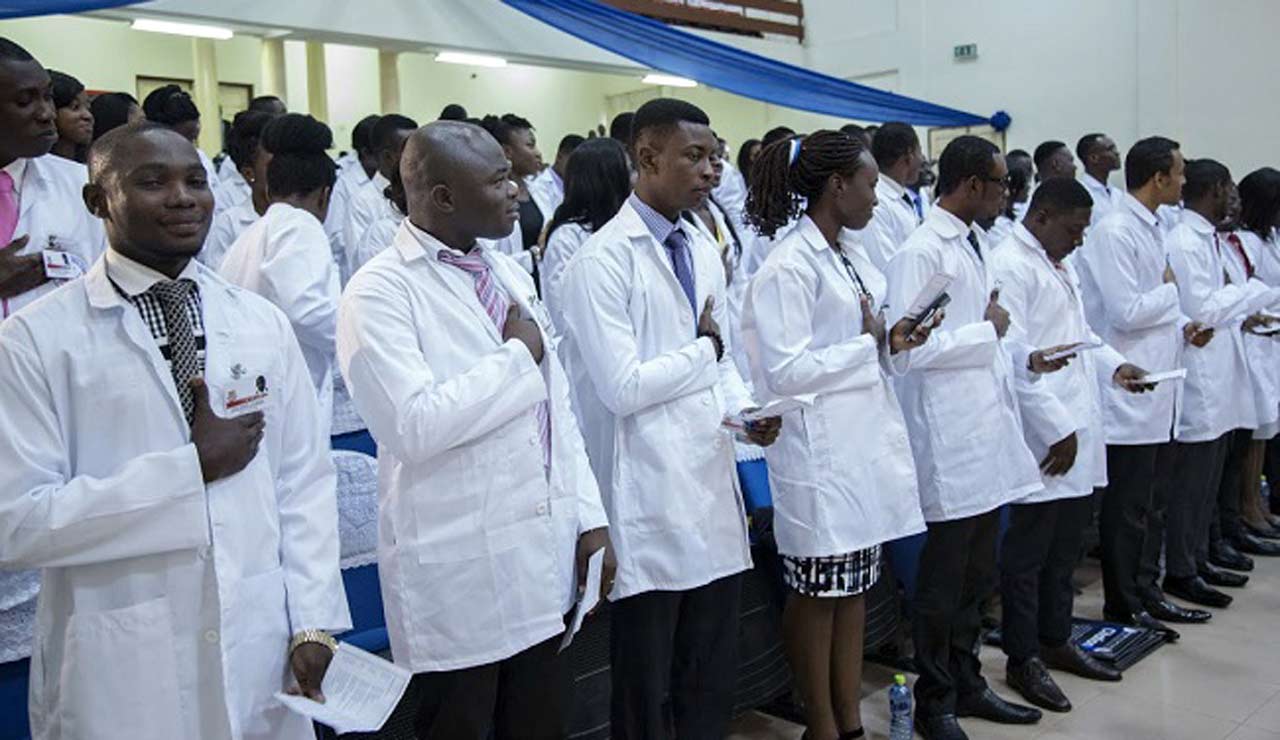
The Association of Resident Doctors (ARD), Federal Capital Territory Administration (FCTA), has initiated a three-day warning strike in protest of unpaid salaries, allowances, and other unresolved issues.
The Daily Reality leaned that the strike has disrupted services at government hospitals across Abuja.
In a press briefing held on Wednesday in Abuja, Dr. George Ebong, President of ARD FCTA, explained that the strike followed the expiration of a three-week ultimatum issued last year.
He lamented the neglect of healthcare workers’ welfare and hospitals in the nation’s capital.
Ebong called for urgent intervention from the Minister of the Federal Capital Territory, Nyesom Wike, to prevent an indefinite closure of hospitals in the region.
He emphasized that the decision to go on strike was reached after a Congress held by ARD FCTA members on Tuesday.
The strike, which covers all government hospitals in Abuja, from Wuse to Asokoro, Maitama, Kubwa, Zuba, Kwali, Abaji, Nyanya, and others, follows months of unresolved demands.
The doctors had earlier engaged in multiple dialogues with the authorities but saw no meaningful action, even after the government requested two additional weeks to address their grievances.
“We gave the government a three-week ultimatum to meet our demands, and after meeting them and discussing several times, nothing was done. Not even the minimum things. We expected the government to pay for the six months of unpaid arrears,” Ebong stated.
He criticized the neglect faced by doctors in Abuja, referring to them as “abandoned projects” and highlighting the urgent need for action to prevent the collapse of the healthcare system.
In December, ARD FCTA had warned of a possible shutdown if their demands were not met, with the current strike representing a call for immediate resolution.
The association has warned that if their issues remain unaddressed after the three-day strike, they will consider an indefinite strike.
The full communique, also released at the press briefing, detailed the various concerns of the association, including unpaid salaries, delays in the Medical Residency Training Fund (MRTF), unfulfilled accoutrement allowances, unpaid hazard allowances, and the lack of necessary hospital equipment.
The communiqué also stressed the shortage of manpower in the healthcare sector, with many doctors leaving the country due to poor working conditions and lack of support.
It concluded with a plea for the government to act swiftly to avoid further deterioration of the healthcare system in Abuja.

Emirates, chiefdoms, kingdoms, and the changing times
By Zayyad I. Muhammad
“Change is the only constant in life,” -ancient Greek philosopher Heraclitus.
The Danfodio Jihad, led by Sheikh Usman Dan Fodio in the early 19th century, had several prominent flag bearers. These individuals were given flags by Usman Dan Fodio as symbols of authority to lead the jihad in different regions. The most notable flag bearers include:
1. Muhammad Moyijo – Kebbi
2. Abu Hamid – Zamfara
3. Ummaru Dallaji – Katsina
4. Mallam Musa – Zauzau
5. Mallam Isiyaka – Daura
6. Mallam Suleiman – Kano
7. Buba Yaro – Gombe
8. Mallam Alimi – Ilorin
9. Mallam Dendu – Nupe
10. Mallam Yakubu – Bauchi
11. Modibbo Adama – Adamawa
12. Mallam Zaki – Katagun
13. Mallam Sambo – Hadejia
14. Mallam Dantunku – Kazaure
15. Muhammad Manga – Misau
16. Muhammad Wabi – Jama’are
17. Muhammadu Namoda – Kauran Namoda
18. Sambo Dan Ashafa – Yan’Doto
Over time, these scholars and leaders and their territories evolved from jihad leaders and scholars to traditional authorities—‘The Native Authority’—which the British later integrated into their indirect rule system. Emirs in the northern emirates wielded substantial power over their territories, overseeing local administration, tax collection, law enforcement, judicial authority, and maintaining order.
In 1976, during local government reforms under General Yakubu Gowon’s administration, the Native Authority system was formally replaced with a standardized, democratic local government structure across Nigeria.
Initially, emirates and chiefdoms in Nigeria had no graded ranks—only First Class Emirs, Chiefs, and Hakimis or Dakacis. Over time, a grading system (First, Second, and Third Class) was introduced, which the emirates, chiefdoms, and their people adapted to.
These territories witnessed the creation of states and local governments and the emergence of new emirates and chiefdoms. For instance, Gombe State now has nine first-class emirs:
1. Abubakar Shehu-Abubakar: Emir of Gombe and Chairman of the State Council of Emirs and Chiefs
2. HRH Alh. Abdulkadir Haruna Rasheed: Emir of Dukku
3. Muhammad Kwairanga Abubakar: Emir of Funakaye
4. HRH Ahmad Usman Mohammed: Emir of Deba
5. Umar Muhammad Atiku: Emir of Akko
6. HRH Alh. Adamu Haruna Yakubu: Emir of Pindiga
7. HRH Alh. Umar Abdulsalam: Emir of Gona
8. HRH Alh. Muhammed Dadum-Hamza: Emir of Nafada
9. HRH Alh. Abubakar Ali: Emir of Yamaltu
Gombe State also has five chiefdoms: Mai Tangale, Folo Dadiya, Mai Kaltungo, Mai Tula, and Dala Waja. The Tula Chiefdom carved out of the Kaltungo Chiefdom, was created in 2001 by the Gombe State House of Assembly.
Similarly, Bauchi State has six first-class emirs: Bauchi, Katagum, Misau, Jama’are, Ningi, and Dass.
Borno, not part of the Danfodio Jihad, has eight emirates: Borno, Bama, Damboa, Dikwa, Biu, Askira, Gwoza, Shani, and Uba. The Uba Emirate was created in 1976.
The Kano Emirate has experienced the creation and abolition of emirates by successive governments. Governor Abubakar Rimi established new emirates in 1979, which Governor Sabo Bakin Zuwo reversed in 1983. Governor Abdullahi Ganduje recreated them, but only Governor Kabir Yusuf reversed the decision. On June 16, 2024, Kabir Yusuf signed the bill, creating Gaya, Rano, and Karaye as second-class emirates within Kano State. The Kano Emirate has navigated these changing times, which is inevitable!
As of April 25, 2023, there are 28 first-class traditional rulers in Nasarawa State. In April 2023, Governor Abdullahi Sule announced the elevation of the status of 22 traditional rulers in the state.
Taraba State has 56 graded chiefs: 6 first-class, nine second-class, and 40 third-class. Former Governor Darius Ishaku created 9 of the traditional chiefs.
Emirates and chiefdoms have transformed, their people have evolved, and their geography has been altered. Some were established during the Danfodio Jihad, others through historical processes, and some by administrative laws.
The Sardauna Province, with its emirates and chiefdoms in both Adamawa and Taraba states, is a product of recent history, created after the United Nations referendum of February 11, 1961, in which 59.97% voted to join Nigeria. Sir Ahmadu Bello promised that those who joined Nigeria would be granted a separate province with benefits similar to those of Northern Nigerians- thus, the present emirates and chiefdoms in the province.
Leaders with foresight accept change and encourage and push for it. It was reported that when the administration of former Governor Boni Haruna of Adamawa State considered upgrading the Hama Bachama, Gangwari Ganye, Emir of Mubi, Amna Shelleng, Murum Mbula, and Kwandi Nunguraya (Chief of Lunguda Kingdom) to first-class status, the late Lamido Aliyu Mustapha also advised and encouraged the upgrading of the Hama Bata. Surprisingly, the late Lamido Aliyu Mustapha was the only first-class Emir in Adamawa State at the time, and his emirate was one of the largest in the Danfodio Dynasty, spanning parts of Cameroon, Chad, including Central Africa.
When Governor Ahmadu Umaru Fintiri announced the appointments of emirs and chiefs for two newly created emirates and four chiefdoms, some people questioned the appointment of His Royal Highness Sani Ribadu as the new Emir of Fufore Emirate. They overlooked and forgotten the fact that emirates and chiefdoms have evolved.
Individuals without royal lineage have become kings, emirs, and chiefs. Traditional titles are now more accessible, and the role of kingmakers has also evolved, with emirates and chiefdoms determining their kingmakers. Emirates, chiefdoms and kingdoms have evolved, their territories have transformed, and their people have embraced the inevitable changes of time.
Zayyad I. Muhammad writes from Abuja zaymohd@yahoo.com.

Governor Yusuf empowers women with 7,158 goats worth 2.3 billion
By Uzair Adam
The Kano State Government has distributed 7,158 goats to 2,386 women as part of the second phase of its Livestock Fattening Programme, with each goat costing approximately N321,319.
Governor Abba Yusuf launched the initiative, valued at N2.3 billion, to reduce poverty and promote economic self-reliance among vulnerable groups.
Each beneficiary received three goats, amounting to a total allocation of around N963,957 per person.
Sanusi Dawakin-Tofa, the governor’s spokesperson, explained that the program is designed to foster livestock entrepreneurship among women in all 44 local government areas of the state.
Future phases of the scheme will include the distribution of 1,342 cows and 1,822 rams to women and youths.
Governor Yusuf emphasized that beneficiaries should utilize the livestock responsibly, urging accountability to ensure the program achieves its objectives.
“This is more than just a livestock distribution; it’s about empowering communities and building a sustainable economic model that uplifts people and reduces reliance on government support,” the governor stated.
The initiative underscores the administration’s commitment to grassroots development, empowering women and youths while integrating them into the agricultural value chain to enhance household income and drive sustainable growth.

Sacked JAMB official alleges threats, challenges dismissal in court
By Uzair Adam
A former deputy director of the Joint Admissions and Matriculation Board (JAMB), Mr. Yisa Usman, has alleged that his life is under threat due to his efforts to expose corruption within the board.
Usman made the claim during cross-examination before Justice Osatohanmwen Obaseki-Osaghae at the National Industrial Court in Abuja, where he is challenging his dismissal from JAMB, which he claims was unlawful.
Responding to questions from JAMB’s counsel, A. A. Owonikoko, Usman admitted writing petitions to various government agencies, including the National Assembly, the Attorney-General of the Federation, and anti-corruption bodies, alleging financial mismanagement under the current registrar, Prof. Ishaq Oloyede.
Usman also acknowledged receiving queries from the board and an invitation to appear before a disciplinary committee prior to his dismissal.
While admitting to responding to the queries, he stated that he rejected the composition of the committee due to alleged bias.
“My Lord, I informed the committee that I could not trust its fairness as it comprised individuals implicated in the infractions I reported,” he said, denying claims that he refused to appear before the committee.
He further testified that he informed JAMB’s directors of his concerns through an email message dated May 18, 2023, in which he reiterated his resolve to fight corruption within the organization.
“The fight against corruption and abuse of authority is a responsibility of every Nigerian. My determination remains unshaken, despite the threats and attempts to intimidate me,” he told the court.
Usman also alleged that he had reported threats to his life to the Department of State Services (DSS) and the Inspector General of Police, claiming that if anything happened to him, the registrar, Prof. Ishaq Oloyede, and the Director of Finance and Accounts, Mr. Mufutau Bello, should be held responsible.
During the proceedings, Usman denied accusations that the criminal charges filed against him at the Federal High Court in Abuja were related to investigations into his allegations, stating that the charges were unrelated to the audit of JAMB’s finances conducted by the current registrar.
Justice Obaseki-Osaghae admitted several documents submitted by Usman’s counsel, Mohammed Shuaibu, as evidence, while reserving JAMB’s right to challenge their admissibility.
The court adjourned the case to February 27 for JAMB to present its defense.
It would be recalled that Usman has filed a N150 million lawsuit against JAMB, seeking reinstatement, full entitlements, and the nullification of his dismissal.
He has also requested a declaration that the disciplinary committee was improperly constituted and unable to guarantee him a fair hearing.
The case, marked NICN/ABJ/266/2023, remains ongoing.