



Gov. Yusuf accepts Kano commissioner’s resignation
By Hadiza Abdulkadir
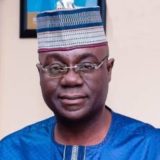
Kano State Governor Alhaji Abba Kabir Yusuf has accepted the resignation of Maj. Gen. Muhammad Inuwa Idris (Rtd) as Commissioner for the newly formed Ministry of Internal Security and Special Services.
In a statement by spokesperson Sunusi Bature Dawakin Tofa, the governor expressed his gratitude for General Idris’s contributions in laying the groundwork for the ministry’s operations.
“Major General Muhammad Inuwa Idris (Rtd) has shown unwavering commitment to Kano State, and we wish him a peaceful and fulfilling retirement,” Governor Yusuf stated.
Idris’s brief tenure is recognized for establishing a solid foundation that will enable his successor to advance the ministry’s crucial work in internal security.

The hidden cost of underpaying Nigeria’s security personnel
By Habib Sani Galadima
In January, during a journey from Abuja to Kano, I found myself drifting into a light sleep, only to be abruptly awakened by the sudden braking of our vehicle. The driver had encountered a security checkpoint. As we approached, a masked soldier, armed and vigilant, greeted us with the customary, “Sannu da zuwa. Allah ya kiyaye hanya,” translating to, “Welcome. Safe travels.”
What struck me profoundly was his outstretched hand, reminiscent of the almajirai—the child beggars who populate our streets at traffic stops. Each approaching driver handed him ₦100 or ₦50, a scene that repeated with the next four cars.
This incident highlighted a troubling reality: beyond the visible street beggars, we have uniformed personnel resorting to similar means.
It’s unsurprising that some security officers resort to such measures when considering their remuneration. Reports indicate that junior security officers in Nigeria earn between ₦41,000 to ₦65,000 monthly.
Reflecting on my childhood in 2005, I recall my father’s method of distributing ƙosai (bean cakes) as charity. He’d always give two pieces to my elder brother, the distributor, while the rest of us received one. I resented this until I became the distributor and received two pieces myself. Curious, I inquired about this practice.
The explanation was simple: “The distributor gets extra to prevent dishonesty or feelings of being shortchanged.” At the time, I didn’t grasp the wisdom behind this. As I matured, I understood that by acknowledging the distributor’s efforts with a little extra, the temptation to pilfer is mitigated.
Research supports the notion that satisfied employees are less inclined toward fraudulent behavior. A study focusing on financial companies in Semarang City, Indonesia, found a positive correlation between job satisfaction and reduced fraud intentions among employees.
Additionally, the Fraud Triangle Theory, developed by criminologist Donald Cressey, identifies three drivers of fraudulent behavior: pressure, opportunity, and rationalization. By offering competitive salaries, employers can alleviate financial pressures, thereby reducing the risk of unethical conduct.
In Nigeria, however, such proactive measures are often overlooked. Even if other sectors face inadequate compensation, underpaying security personnel is particularly perilous. Entrusting individuals with firearms while they endure financial hardships is a recipe for compromised integrity.
This systemic flaw in our national security framework essentially grants security officers implicit permission to exploit their positions for survival, undermining the very essence of their duty.
Addressing this issue requires immediate reform. Ensuring fair compensation for our security personnel is not just a matter of equity but a crucial step toward national stability and integrity.
The ramifications of underpaying security personnel extend beyond individual misconduct; they permeate the entire fabric of national security and public trust. When those entrusted with safeguarding citizens are compelled to seek supplementary income through unethical means, the consequences are far-reaching.
Public perception of law enforcement is significantly influenced by daily interactions. When citizens frequently encounter security personnel soliciting bribes or engaging in corrupt practices, trust in these institutions erodes. This mistrust hampers effective policing, as community cooperation—a cornerstone of effective law enforcement—diminishes. Citizens become reluctant to report crimes or assist in investigations, fearing exploitation or inaction.
A demoralized and financially strained security force is ill-equipped to tackle the myriad security challenges facing Nigeria, from insurgencies to organized crime. Low morale, stemming from inadequate remuneration, leads to diminished vigilance and commitment. This vulnerability can be exploited by criminal elements, further destabilizing regions and emboldening adversaries.
Corruption within security agencies imposes a hidden tax on the economy. Businesses incur additional costs due to bribery demands, leading to increased operational expenses that are often passed on to consumers. Moreover, foreign investors may be deterred by a perceived lack of security and the prevalence of corrupt practices, stymieing economic growth and development.
The normalization of corruption within security forces sets a detrimental precedent for society. It fosters a culture where unethical behavior becomes acceptable, permeating various sectors and hindering efforts to instill integrity and accountability in public service.Addressing the issue of undercompensated security personnel necessitates a multifaceted approach. Implementing a comprehensive salary review is essential to ensure that remuneration packages for security personnel accurately reflect the demands and risks associated with their duties.
Additionally, establishing robust internal and external oversight bodies is crucial for monitoring conduct, investigating allegations of corruption, and enforcing accountability. Investing in continuous training and development programs equips security personnel with the skills and knowledge necessary for ethical decision-making and effective service delivery.
Moreover, fostering stronger relationships between security agencies and the communities they serve helps rebuild trust and encourages collaborative efforts in maintaining public safety. Lastly, enacting and enforcing policies that deter corrupt practices, including stringent penalties for misconduct and protections for whistleblowers, are vital steps toward reform.
By addressing the root causes of corruption within the security sector, Nigeria can pave the way for a more stable, secure, and prosperous future. Ensuring that those who protect and serve are themselves protected from the pitfalls of inadequate compensation is a critical step toward national rejuvenation.
Habib Sani Galadima writes from Kano and he can be reached via habibmsani46@gmail.com

Mai Martaba director debunks claims of Nollywood, Kannywood rejection
By Uzair Adam
Nigerian filmmaker Prince Daniel, popularly known as Aboki, has dismissed reports claiming he was rejected by Kannywood due to his religion and by Nollywood because of his regional background.
Aboki, the director of Mai Martaba, a film that has gained widespread recognition within and beyond Nigeria, described the reports as a misinterpretation of his remarks during a recent event in Los Angeles, California.
The epic Hausa film was among the entries at the just-concluded 97th Academy Awards, having been meritoriously selected by the Nigerian Official Selection Committee for the Best International Feature Film category.
In a statement issued on Tuesday, Aboki clarified that he never granted any interview making such claims.
“My attention has been drawn to publications suggesting that Kannywood rejected me because of my religion and Nollywood because of my region. First and foremost, I never made such statements in any interview,” he said.
He explained that while speaking during a question-and-answer session at Nollywood in Hollywood earlier this month, he discussed the challenges encountered while producing Mai Martaba and the journey to the Oscars.
Among the challenges he highlighted were security concerns while filming in the Northwest and financial constraints, particularly as a new director working with emerging actors.
He noted that during this discussion, he mentioned how the industry at times seemed divided in its perception of him and his work.
“At some point, the Kannywood segment of the industry seemed to view us as Nollywood, while Nollywood also saw us as Kannywood, simply because I am from the North,” he said.
However, he emphasized that this was misinterpreted and reaffirmed his deep connection with Kannywood.
“For clarity, Kannywood has never rejected me on the basis of ethnicity or religion. In fact, it has been my greatest pillar of support as a filmmaker,” he stated.
He further expressed gratitude for the overwhelming support he received from audiences during the film’s cinema release, as well as from industry professionals, both veterans and newcomers.
“I say with every sense of responsibility that I am a Nigerian filmmaker, though of northern extraction. I reside in Kano, where I practice my craft, springboarding from Kannywood. I have enjoyed immense support here, with no prejudice whatsoever,” he affirmed.
Aboki also reiterated his commitment to the growth of the industry and changing narratives about the North.
“I remain dedicated to working with my colleagues and the founding fathers of Kannywood to elevate our industry—telling our stories to the world and creating employment opportunities for our youth, far from the stereotypical portrayal of the North as a region of conflict and banditry,” he added.

We are bringing corruption to its knees—EFCC
By Uzair Adam
The Executive Chairman of the Economic and Financial Crimes Commission (EFCC), Ola Olukoyede, has stated that corruption poses a significant threat to Nigeria’s development.
He reaffirmed the commission’s commitment to tackling the menace and urged all stakeholders to support the anti-corruption campaign.
Speaking at the launch of the EFCC’s “Integrity Club” in primary and secondary schools across the Federal Capital Territory (FCT) on Tuesday, Olukoyede, represented by the Director of Public Affairs, Wilson Uwujaren, said the initiative aims to instill values of integrity, honesty, and diligence in young Nigerians.
“The EFCC is determined to bring corruption to its knees in Nigeria, and together we can achieve this goal,” he said.
He explained that the Integrity Clubs serve as platforms for interaction, enlightenment, and empowerment, helping students cultivate ethical values.
He noted that children at this stage are still receptive to guidance and can be molded into responsible leaders through proper mentorship.
“Our children can only become the leaders we desire if we equip, mentor, and guide them with the right values. Integrity Clubs will provide them with the foundation to resist corruption,” he added.
Olukoyede urged schools to actively engage students in discussions on ethical conduct and regularly provide feedback to the EFCC on the club’s activities.
In his remarks, the acting Executive Chairman of the FCT Universal Basic Education Board, Hassan Sule, commended the EFCC for the initiative, stating that prevention is the best approach to tackling corruption.
“This initiative will shape children’s character and influence their peers positively. If we can implement it effectively, we will have responsible adults in the future,” he said.
He assured that the board would institutionalize Integrity Clubs in at least 30 schools within the FCT, emphasizing that education remains the most effective tool in the fight against corruption.

Samsung Electronics executive Han Jong-hee dies at 63
By Hadiza Abdulkadir
Han Jong-hee, the joint chief executive officer of Samsung Electronics, has died of a heart attack at the age of 63, the company announced.
Han had led Samsung’s consumer electronics and mobile devices division since 2021, navigating the tech giant through an increasingly competitive market dominated by Chinese rivals.
His sudden passing leaves Jun Young Hyun, who oversees Samsung’s semiconductor business, in sole charge of the company until a successor is appointed.
Samsung, the world’s largest producer of memory chips, smartphones, and displays, is yet to announce details of Han’s funeral or succession plans.

EFCC arrests 133 suspects in Abuja over alleged ponzi scheme
By Uzair Adam
The Economic and Financial Crimes Commission (EFCC) has arrested no fewer than 133 individuals in connection with an alleged Ponzi scheme operating under the name Q University, also known as Q-Net, in Gwagwalada, Abuja.
According to the anti-graft agency, the institution was running a scheme that recruited young Nigerians, promising them unrealistic financial gains.
The suspects were reportedly enrolled in a program dubbed “Special Training for New Generation Billionaires,” where they were allegedly brainwashed into believing they would become wealthy by recruiting others into the system.
EFCC spokesperson Dele Oyewale stated that the suspects were required to obtain an “Independent Representative Application Form” with motivational slogans such as “I’m a Champion,” “I’m Unstoppable,” and “I’m Infinity.”
The operation was conducted in collaboration with the 176 Guards Battalion of the Nigerian Army. Items recovered from the suspects include mobile phones, computers, and other electronic devices.
The EFCC confirmed that investigations are ongoing and that the suspects will be charged in court upon completion of inquiries.

Oscar winner Yuval Abraham says Israeli settlers attacked co-director Hamdan Ballal
By Maryam Ahmad
Oscar-winning filmmaker Yuval Abraham has revealed that his co-director, Hamdan Ballal, was beaten and attacked by Israeli settlers. Abraham, who co-directed No Other Land with Ballal, shared the news following their recent Academy Award win.
According to Abraham, Ballal was assaulted by a group of Israeli settlers amid escalating violence in the region. The attack has sparked outrage, with calls for accountability and protection for journalists and filmmakers working in conflict zones.
No Other Land, which won Best Documentary at the 2024 Oscars, highlights the impact of Israel’s occupation through a deeply personal perspective. The film’s success has drawn global attention to the Palestinian struggle, but its creators now face increasing threats.
Ballal’s condition remains unclear, and further details about the attack are yet to be confirmed. Human rights groups have condemned the incident and demanded an independent investigation.

Not all that glitters is gold
By Isyaka Laminu Badamasi
As the wave of politicians leaving various political parties, especially the ruling party, to join the SDP gains momentum, remember that not everything that glitters is gold.
During the buildup to the 2015 general elections, some politicians capitalized on the failures of the PDP administration at that time. They formed what is now known as the All Progressives Congress (APC), a decision we all regret in unison.
As observers, and considering the caliber and number of individuals joining the Social Democratic Party (SDP), I must confess that the county’s political landscape leading up to 2027 will be fascinating in the days, months, and years ahead.
Before then, we should not fold our arms while watching the gullibility of our people and how it has led us to where theAPC administration has brought us today. It is crucial that we examine the actors involved in this process of decamping, reminding ourselves not to be swept away by the razzmatazz of this drama and to avoid making another unforgivable mistake, as not all that glitters is gold.
We should be very observant of who joined SDP from our states and from which political party. What are their contributions to the development of the state? Are they relevant to the party they left? Are they capable of changing the narratives in the scheme of things, or is it just to make headlines?
While they have the right to make whatever political decisions regarding 2027, we shouldn’t be naive enough to believe that the ongoing alignments and realignments are unrelated to us. Remember the pervasive nature of politics.
Isyaka Laminu Badamasi wrote from Bauchi State via makwalla82@gmail.com.

United States’ withdrawal from WHO and Africa’s looming health crisis
By Lawal Dahiru Mamman
Some Nigerians with the wrong intention to mock believe that sick individuals, particularly those living with Human Immunodeficiency Virus (HIV) in Africa, especially Nigeria, are now an “endangered species” due to the United States’ withdrawal from the World Health Organization (WHO).
On January 20, 2025, Donald Trump was sworn in as the 47th President of the United States, marking his return to the White House after defeating the Democratic candidate in a fierce election battle. As the world looked on to see how he would start fulfilling his promise to make “America great again,” he wasted no time signing executive orders that sent shockwaves around the globe.
One of his most controversial directives came just days into his presidency: the announcement of the U.S. withdrawal from the WHO, an organization of which it had been a founding member since 1948. This move was not entirely unexpected, as Trump had previously attempted to exit the WHO in 2020 before his decision was overturned by President Joe Biden in 2021.
To the delight of his supporters and the disappointment of his critics, Trump successfully achieved the withdrawal in early 2025. In February, he made further decisions, including cutting funding to certain organizations such as the United States Agency for International Development (USAID).
WHO leadership bemoaned the decision for obvious reasons. According to financing data, the U.S. contributed an estimated $988 million between January and November 2024, marking approximately 14% of WHO’s $6.9 billion budget. The organization further noted that U.S. funding provides the backbone for many large-scale emergency operations to combat diseases globally.
Citing an example, the WHO stated, “U.S. funding covers 95% of the WHO’s tuberculosis program in Europe, along with 60% of the agency’s TB efforts in Africa, the Western Pacific, and headquarters in Geneva.”
The African Union (AU) also expressed deep concern over the development as events continued to unfold. In a statement, AU Commission Chairperson Moussa Faki Mahamat emphasized the crucial role the U.S. has played in shaping global health standards over the past seven decades. He noted that the U.S. was a key supporter in establishing the Africa Centers for Disease Control and Prevention (Africa CDC), which works closely with WHO to tackle global health challenges, including those on the African continent.
This concern, coupled with comments such as those in the opening paragraph of this piece, should not be taken at face value or dismissed as mere press statements. It warrants careful consideration. Although the latter’s comment may be seen as a reaction to unfolding events or an attempt to mock Nigeria and Africa jokingly, more is at stake if the lives of millions of Africans solely depend on that funding.
Dead Aid: Why Aid Is Not Working and How There Is a Better Way for Africa, a 2009 book written by Zambian economist Dambisa Moyo, comes to mind. It earnestly challenged the traditional approach to foreign aid in Africa.
Moyo argues that foreign aid has failed to lift Africa out of poverty and has instead fostered a culture of dependency, corruption, and stagnation. She claims that aid has weakened Africa’s incentive to develop its own economic and political systems. Consequently, it has hindered the growth of Africa’s health sector.
It is a universal truth that no nation can survive in isolation; however, countries should be able to provide for their basic survival needs. The concern raised by the AU may validate Moyo’s hypothesis, as Africa remains dependent on aid from foreign entities like the WHO, despite having a continent-wide centre for disease control.
In 2001, African leaders signed the Abuja Declaration, promising to increase budgetary allocation for health, eradicate HIV/AIDS, and strengthen the health sector through improved infrastructure, human resources, and access to essential medicines.
Two decades later, we are lamenting a single nation’s withdrawal from the WHO because we have failed to uphold the promises we made to ourselves. What will happen if other “powerful” countries choose to leave? Will our already poor health metrics deteriorate? This should serve as a wake-up call.
All hope is not lost, as some progress has been made. In Nigeria, there was a breakthrough in November 2024. Doctors at Lagos University Teaching Hospital (LUTH), in collaboration with the Sickle Cell Foundation, successfully carried out a bone marrow transplant on two patients. This procedure once thought impossible in Nigeria, was described as “a significant step forward in the treatment of sickle cell disease—the first of its kind in West Africa.”
Also, in February 2025, Usmanu Danfodiyo University Teaching Hospital (UDUTH) joined the ranks of medical facilities that have successfully performed kidney transplants.
Nigeria can build upon and enhance these developments, attracting patients from other regions for treatment. This influx will generate revenue and may elevate us to a point where we no longer depend on funding from external organizations.
Nigeria and other African nations can leverage their existing resources to generate revenue while investing further in research to discover cures or treatments for diseases for which we have traditionally relied on palliatives.
Lawal Dahiru Mamman writes from Abuja and can be reached at dahirulawal90@gmail.com.

Al Jazeera journalist Hossam Shabat killed in Israeli airstrike in Gaza
By Muhammad Sulaiman
Al Jazeera journalist Hossam Shabat was killed in an Israeli airstrike in northern Gaza shortly after reporting on the death of his colleague, Mohammed Mansour.
Shabat’s car was bombed on Sunday, marking yet another fatal attack on media workers in the besieged Palestinian territory.
Shabat had just posted about Mansour’s killing when he himself became a victim of Israeli bombardment. His death adds to the growing toll on journalists in Gaza, where at least 208 media workers have been killed since Israel launched its military offensive on October 7, 2023.
The targeting of journalists has drawn widespread condemnation, with press freedom organizations calling for accountability and urgent protection for reporters covering the war.
Al Jazeera has repeatedly accused Israel of deliberately targeting its journalists, a charge Israel denies.
The ongoing war in Gaza has led to unprecedented casualties among civilians and media professionals, raising concerns over press freedom and the safety of journalists in conflict zones.