




The birth of performance-based politics in Jega
By Bilyamin Abdulmumin, PhD
There is much to learn from the politics currently unfolding between the Jega community, their constituency representative, and the Kebbi State government.
It all began with rising criticism directed at the state government over the glaring lack of infrastructure development in the community. What made the criticism particularly serious was the surprise and visible projects by Hon. Mansur Musa Jega, the National Assembly member representing Jega, Gwandu, and Aliero. Unarguably, since the return of democracy, this constituency has never witnessed such a scale of project delivery. So, unsurprisingly, prayers and praise were poured in from all quarters.
With Senator Muhammad Adamu Aliero of Kebbi Central also delivering notable developments, public frustration quickly turned toward the state government—the governor, the state assembly member, and the local government chairman. During the latest Eid prayer, one fierce Imam echoed the sentiment in his sermon before thousands of faithful.
In a bold rhetorical salvo, the Imam asked: “Where are the capital projects from the state governor? Or from the local government chairman? Has governance been reduced to merely paying salaries?”
On the other hand, the Imam turns to the constituency member to invoke Allah’s blessings on him for conspicuous township developments. These prayers were the straw that broke the camel’s back. The video went viral, sending shockwaves through the state government and its supporters.
But then, almost immediately, something interesting happened. Based on the advice, the government mobilised contractors to immediately mark for dualisation one of the busiest roads (leading to the house of the town chief). Behold, performance-based politics (which should have been the case) has given birth.
One interesting lesson from this development is that a politician’s performance speaks louder and travels faster than any political campaign: A politician’s performance becomes an automatic means of political campaigning. Imagine an Imam on Eid grounds before thousands campaigning for one candidate. That’s the power of visible performance.
Another interesting piece revealed by the saga was the political influence of the population. Jega is among the few local governments in Kebbi State with the highest population, hence one of the most influential politically. The old town forms what would be called a swing state in America for its political dynamism or K states in Nigeria for its sheer number of electorates, so winning it is a sign of success in Kebbi State. A reason why the state governor didn’t joke with the Imam and the electorate’s outcry. This shows that a large population, when strategically mobilised, can become a political asset.
While delivering constituency projects also depends on what committees a representative belongs to, Mansur still deserves credit because there are allegations of constructors conniving with constituency members to divert billions of naira from constituency projects.
We criticise politicians when they fail; we should also encourage them when they try.
Before your next Umrah…build a Waqf
By Abdullahi Abubakar Lamido
The dusty path to Al-Ma’arif Islamiyyah School was unusually quiet that Wednesday afternoon, except for the gentle crunch of sandals on gravel and the animated voices of two young girls wrapped in flowing white hijabs.
Unknown to many passersby, the conversation between these two girls wasn’t just about school or homework. It was about something deeper—something that could transform communities: the power of Waqf. As they walked, they debated a topic that many adults still struggle with: Should we prioritise spending on annual Umrah trips or invest in sustainable Waqf projects that empower girls through education and skill-building?
“Ameena, wait for me!” called out Hafsah, adjusting the corner of her veil.
Ameena slowed down and turned with a grin. “Wallahi, you’re always dragging your legs like an old lady.”
They both laughed.
But as they turned the bend, Hafsah lowered her voice and leaned in. “By the way, my aunt and her entire family are travelling for Umrah again this Ramadan. That’s like the fifth time in a row! Imagine the reward, subhanallah!”
Ameena nodded with a smile, but her eyes said more. “Masha Allah. No doubt, Umrah is virtuous. The Prophet SAW said in Sahih al-Bukhari, ‘Umrah to Umrah is expiation for the sins committed between them.’ And in another Hadith, ‘The performance of Hajj and Umrah removes poverty and sins just as a furnace removes the impurities from iron.’ So yes, it is beautiful.”
Hafsah beamed. “Exactly! That’s why they go every year. My aunt says you can never get enough of Makkah. The barakah there is like no other.”
Ameena stopped, picked a tiny stone, and tossed it thoughtfully. “I agree. But I can’t help thinking… what if, just what if, they did something different this year? Take the entire amount they usually spend—tickets, hotel, feeding, shopping—and invest it in a Waqf. A sustainable, income-generating waqf specifically for girls’ education and skills development.”
Hafsah blinked. “A waqf? Instead of Umrah?”
“Not instead of,” Ameena corrected gently, “but perhaps before another one. Let’s say they make a solid waqf just once. From then on, the proceeds can fund multiple Umrahs and sponsor tens—maybe hundreds—of girls like us. Wouldn’t that multiply the rewards?”
Hafsah frowned slightly. “Hmm. But that’s not the same spiritual feeling as being in Makkah.”
“True. But listen to this Hadith,” Ameena said, eyes lighting up. “The Prophet SAW said: ‘Whoever goes out to seek knowledge is in the path of Allah until he returns.’ That’s in Sunan al-Tirmidhi. And in Sahih Muslim, the Prophet said that feeding the hungry, helping the poor, or removing a harm from the road are all Sadaqah. These actions have also been likened in reward to Umrah.”
She continued, “In fact, Imam Ibn Rajab said some charitable actions—because of their benefit to society—can surpass voluntary Hajj and Umrah in reward!”
Hafsah looked unconvinced. “But those are small things. Can they compare to walking between Safa and Marwa?”
Ameena smiled knowingly. “Let me share a story about our Islamic heritage, as reported by Ibn Kathir—one of the great scholars and righteous predecessors, Abdullah ibn al-Mubarak, once set out for Hajj. Along the way, he passed through a town where a young girl was seen taking a dead bird from a garbage heap.
Curious, he followed her and learned that she and her brother had nothing to eat, surviving off scraps and carrion due to poverty and oppression. Ibn al-Mubarak was so moved that he cancelled his pilgrimage, gave her all the money he had set aside for Hajj—except a small portion for their return—and said: ‘This is better than our Hajj this year!’
Can you imagine? A scholar of his stature suspended the journey of a lifetime because he saw a greater reward in feeding the poor.”
Hafsah bit her lip, thoughtful.
“And what of the Hadith in Sahih al-Bukhari,” Ameena continued, “where the Prophet SAW said: ‘He is not a believer whose stomach is filled while his neighbour goes hungry.’ Don’t you think our people—who travel yearly for Umrah with their entire household—should ask themselves if their neighbors are fed, educated, and safe first?”
There was silence for a while. Then Hafsah asked, “But maybe they feel their own worship is more important.”
Ameena didn’t flinch. “Worship is important. But Islam is both ‘ibadah and mu’amalat—personal devotion and social responsibility. A society where girls are unskilled, uneducated, and poor is a society in crisis. Allah says in Surah Al-Balad, ‘But he has not attempted the Ascent. And what will make you know what the Ascent is? It is freeing a slave. Or feeding on a day of severe hunger, an orphan of near relationship, or a needy person in misery.’ That’s the real struggle.”
She paused, then added, “And here’s a shocking stat: According to UNICEF, more than 50% of girls in Northern Nigeria are out of school. Many of them end up as child housemaids or hawkers. Imagine if we had waqfs in every state—centres for literacy, vocational skills, business mentorship. Wouldn’t that be more pleasing to Allah than redundant luxuries?”
Hafsah exhaled slowly. “You’re making too much sense. But some people say they don’t have the time or knowledge to create a waqf.”
“They can partner with existing foundations,” said Ameena. “Or even just dedicate a part of their wealth to it. Start with a shop, a farm, or a borehole project. Let it generate income. Let it teach a girl to write, to code, to recite Qur’an beautifully, to become a teacher, to stand tall.”
By now, they were at the gate of the Islamiyyah school.
Hafsah turned and looked at her friend. “You know, Ameena, if your words were a waqf, they’d be multiplying rewards already.”
Ameena chuckled. “Then let’s start the first one—with our pens, our voices, and our footsteps.”
They both stepped in, side by side, into a class that taught not just religion, but purpose.
Inside the classroom, the discussion continued to swirl in Hafsah’s mind. That evening, as they sat under the neem tree during Qur’an revision, she whispered to Ameena, “You know what? I’m going to talk to my parents tonight. I’ll share everything you said—every Hadith, every idea. Maybe they can be the first to try this new way: build a waqf before the next Umrah.”
Ameena smiled, eyes glowing. “And I’ll talk to mine too. If they see how serious we are, and how much it could benefit the Ummah, I believe they’ll listen.”
The next day, during break time, the girls called a mini gathering under the school’s mango tree. A handful of curious classmates sat cross-legged in the dust, munching on groundnuts and zobo. Hafsah stood up and declared, “We want to tell you about something that can reward you even after you die. Something more powerful than a yearly trip to Makkah…”
She spoke. Ameena backed her up. Together, they planted a seed.
Later that afternoon, they approached their teacher, Ustaz Sani, known for his stern look but soft heart. A little nervously, they explained their idea.
To their surprise, Ustaz Sani leaned back, eyes shining. “Ameen! This is the spirit of Islam! The Prophet SAW once said, ‘The most beloved of deeds to Allah are the most consistent, even if they are small.’
But let me add more,” he said, reaching for a worn book on his desk. “Imam Al-Ghazali wrote that a waqf is a shield for society, a way to preserve faith, knowledge, and dignity. Some waqfs in history lasted over 700 years, sponsoring scholars, doctors, and imams! Even the famous Al-Azhar University in Egypt started as a waqf.”
The girls’ faces lit up.
“Keep spreading the message,” he urged. “You are not too young. Let your classmates know. Let your family hear. Let the whole Ummah remember:
Before your next Umrah… build a Waqf.”
Amir Lamido wrote from Gombe and can be contacted via lamidomabudi@gmail.com.

Police say Jigawa man who fatally attacked brother’s wife may be mentally unstable
The Jigawa State Police Command has confirmed the arrest of a 25-year-old man, Buhari Sule, who allegedly killed his younger brother’s wife, Ummi Saleh, with a pestle and injured another young woman during the same incident.
The police adde that the suspected might be mentally unstable when he carried out the act.
The suspect was apprehended after the violent attack that occurred in Gunka village, Jahun Local Government Area.
This was made known on Thursday by the spokesperson of the state police command, SP Shi’isu Adam.
The police stated that while attacking his brother’s wife, Sule also hit a neighbour’s daughter, Hauwa Alkassim, causing her serious injuries.
According to SP Adam, “Upon arrival, the victims were rushed to General Hospital, Jahun, for medical attention. Unfortunately, Ummi Saleh died while receiving treatment, while Hauwa Alkassim is still undergoing treatment.”
The police noted that the tragic incident took place on April 23 around 5:30 pm. Officers from the Jahun Division responded promptly after receiving the distress report.
Following medical efforts, the body of Ummi Saleh was released to her family for burial after the police concluded necessary procedures.
The statement added that initial information gathered points to possible mental health concerns.
“Preliminary findings indicate that the suspect may be experiencing mental health issues,” SP Adam said.
He also disclosed plans for a detailed medical assessment.
“A thorough medical evaluation will be performed to determine the suspect’s mental state. This evaluation will help the police understand the extent of the suspect’s mental health issues and how it may have contributed to the incident.”
He further called for cooperation from the public, stressing that investigations remain active.
“The police investigation is ongoing, and the public is urged to cooperate with the police and provide any relevant information that may aid the investigation,” he stated.
The suspect remains in custody as authorities continue their inquiry.

Is the PDP dead?
By Kabiru Danladi Lawanti, PhD
By every objective measure, the People’s Democratic Party (PDP) has ceased functioning as a viable political entity in Nigeria. Its carcass continues to move but without pulse, purpose, or coherence. As a ruling party, the PDP had its moments, but its legacy is weighed down by monumental abuses of power, systemic electoral malpractice, and industrial-scale corruption.
From the open manipulation of election results mid-process to the weaponisation of state institutions for partisan gain, the party leadership helped normalise impunity at the highest level. Two decades on, many of these cases—alleging theft of billions—are still unresolved.
But the party’s death didn’t happen overnight. It began in 2007, when President Olusegun Obasanjo imposed a sick candidate on Nigerians, followed by Goodluck Jonathan’s directionless presidency. In 2014, a mass defection gutted its internal cohesion, when five of its governors established the new PDP to challenge what they called a lack of internal democracy within the party.
Losing power in 2015 should have been a moment for self-correction. Instead, the PDP lost its ideological compass. It abandoned the one role opposition parties must play in democracies: the duty to provide clarity, contrast, and credible alternatives.
Even as the All Progressives Congress (APC) drifted into policy incoherence from 2017 onward and the confusion that followed – petroleum prices increase, ASUU and other university union strikes, economic recession, open stealing never seen before in the nation’s history, fuel subsidy removal, minimum wage controversy, etc.- the PDP remained inert—leaderless, rudderless, and largely invisible.
Today, what remains of the PDP is a loosely held patchwork of political actors in retreat. Governors are defecting. Its 2023 vice-presidential candidate has walked away. State-level structures are hollowed out. Internal leadership is fractured, and there is no unifying idea or strategic doctrine to rally around. What does this tell us? The PDP is not in decline. It is defunct.
Nigeria is experiencing a vacuum of governance across federal, state, and local levels. What is needed is a credible alternative with intellectual spine, strategic clarity, and moral authority. The PDP has forfeited that opportunity. Nigerians are now confronted with two bleak options: to stick with a failing ruling party or scavenge among opportunistic startups branded with catchy acronyms and no ideological soul.
The PDP’s collapse is more than a party’s fall—it is a signal of deeper systemic decay in Nigeria’s political architecture. But in every collapse lies an opening: for principled political entrepreneurship, grounded in values, competence, and execution. Who will offer that? The people that landed us in this mess in the first place or new faces?
We need new faces in the political arena. These people parading themselves as opposition are no different from the PDP or APC; they are the same. Our youth need to return to their senses, and most people we see in leadership positions started showing their ability to lead in their early 20s. We must step forward if we want to see a Nigeria of our dreams. The time for lamentations is over.
The future belongs to those who can build systems, not just win elections.

Kano govt to establish SMEs agency, three others
By Anwar Usman
The Kano State Governor, Abba Kabir Yusuf, has signed into law four landmark bills that establish new agencies designed to strengthen institutional frameworks and accelerate sustainable development across the state.
This was made known in a statement issued on Thursday by the governor’s spokesman, Sunusi Bature Dawakin Tofa.
The new laws provide for the establishment of the Kano State Protection Agency, the Signage and Advertisement Agency, the Information and Communication Technologies Development Agency, and the Small and Medium Enterprises Development Agency.
According to the statement, these laws, which are now part of the Kano State legal framework, are expected to stimulate innovation, support small businesses, regulate signage and advertising, and enhance public protection and service delivery.
The governor described the signing as a significant step toward realising his administration’s vision of a modern, inclusive, and economically vibrant Kano.
He reiterated that the new agencies will play a vital role in job creation, investment attraction, and the efficient implementation of government initiatives.
“Our mission is to lay a solid foundation for a greater Kano. These laws go beyond policy — they are key instruments of transformation that will help drive our development agenda,” the governor stated.
The governor further warns that, violations of the provisions of these laws would attract strict penalties, reaffirming his administration’s commitment to upholding the rule of law and ensuring compliance.
The establishment of these agencies reflects Yusuf’s continued efforts to reform public institutions, improve governance, and position Kano as a leading centre for innovation, entrepreneurship and sustainable growth.

The unfinished battle for local government autonomy
By Lawal Dahiru Mamman
In countries where governance works in favour of the people, citizens always look forward to progress and innovation. In contrast, Nigeria often clings to nostalgia, with many, including those who never lived through certain eras, romanticising what they fondly call the “good old days.”
Believing that the past was always better than the present, some advocate for a return to free education and overseas scholarships. Others yearn for the days of kobo coins, arguing that Nigeria’s economy thrived when they were in circulation and the naira held strong against the almighty dollar.
The era of Native Authorities, which largely financed itself through poll taxes and prioritised education, is also missed. Back then, local administrators ensured students were transported to and from school dormitories at the beginning and end of each term, reinforcing a system that valued structured governance and community welfare.
These administrative units, established under British colonial rule, eventually led to local governments (LGs). Initially, the LGs performed well, maintaining orderly markets, paying teachers’ salaries, and addressing essential grassroots needs.
However, over time, they lost autonomy and are now seen as mere appendages of state governments. Recognised as the most crucial level of governance due to their proximity to the people, successive administrations have made efforts to grant LGs full autonomy.
Yet, these efforts have consistently faced resistance. In 2012, former President Goodluck Jonathan declared his commitment to local government autonomy, emphasising that meaningful national development was impossible without functional local councils.
He argued that empowering LGs would have mitigated the rising insecurity. Jonathan also opposed the state-local government joint account, insisting that councils had a pivotal role in his administration’s “Transformation Agenda.”
At one point, he took legal steps to actualise this vision, but the dream of LG autonomy remained unrealised. Former President Muhammadu Buhari also pursued this goal. In May 2020, he signed an Executive Order granting financial autonomy to the judiciary, legislature, and local government councils.
Experts hailed this as a landmark move toward a more people-centred governance structure. Buhari’s rationale was grounded in Section 7 of the 1999 Constitution, which mandates LGs to oversee primary, adult, and vocational education, develop agriculture and natural resources (excluding mineral exploitation), and maintain key public services.
Their responsibilities also include street naming, house numbering, waste disposal, public convenience maintenance, and the registration of births, deaths, and marriages—basic yet crucial civic functions that remain poorly executed in today’s Nigeria.
Additionally, LGs are tasked with assessing and collecting tenement rates, regulating outdoor advertising, and overseeing public health and alcohol control. However, despite Buhari’s efforts, his administration’s push for LG autonomy, much like Jonathan’s, ultimately failed.
Now, President Bola Ahmed Tinubu finds himself at the center of this enduring struggle. He successfully secured a Supreme Court victory affirming LGs’ constitutional rights and their role in advancing grassroots governance.
He hailed the judgment as a win for democracy. However, what initially appeared to be an achievement began to feel like a setback. Many believe that state governors, who have long controlled local government resources, are deliberately frustrating the implementation of this autonomy for personal gain.
The requirement that LGs must conduct elections to receive direct allocations has further complicated the issue, as state governments continue to manipulate the process to maintain dominance.
By its very nature, local government should be the most accessible level of governance, open to all—from the ordinary citizen who walks barefoot to the community leader who mobilises residents for communal projects.
Yet, it has become a political chessboard where governors install their loyalists as council chairmen or caretakers, reducing them to mere appendages rather than independent administrators. Governors have historically played a decisive role in shaping Nigeria’s presidential politics.
With the 2027 elections casting a long shadow, party defections and quiet coalition-building are underway. This leaves Tinubu in a precarious position: will he stand firm on his commitment to full LG autonomy for sustainable economic development, or will he yield to political pressures and look the other way as 2027 approaches?
The battle for local government autonomy remains unfinished. The question now is whether Tinubu will see it through or let history repeat itself.
Lawal Dahiru Mamman writes from Abuja and can be reached via dahirulawal90@gmail.com.
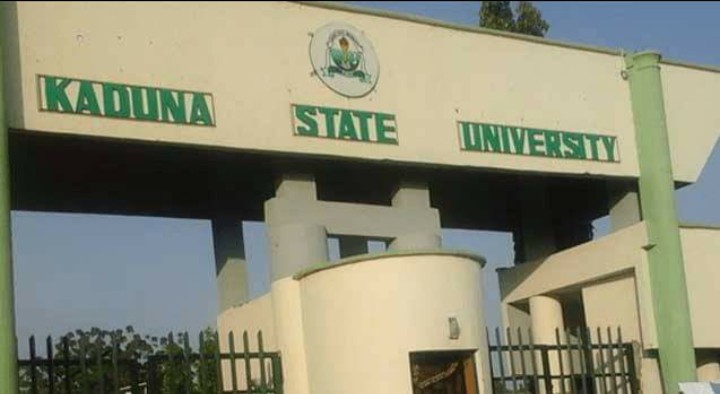
ASUU-KASU embarks on total, indefinite strike
By Anas Abbas
The Academic Staff Union of Universities, Kaduna State University (ASUU-KASU), has officially commenced an industrial action today, marking the beginning of a total, comprehensive, and indefinite strike.
In a statement released by the Publicity Committee of ASUU-KASU, the union outlined a series of actions that must be observed during the strike. These include the suspension of all Senate, Faculty, and Department meetings, as well as the cessation of project supervision and both physical and online lectures.
Additionally, the Students Industrial Work Experience Scheme (SIWES) will not be subject to project defences, field studies, or supervision.
The union has also prohibited online meetings and mandated that no Continuous Assessment (C.A.) or examination scripts be marked. The processing and submission of results are also on hold, alongside any standing committee meetings.
ASUU-KASU has urged all members to adhere strictly to these directives. The union emphasised that any non-compliance or attempts to infringe upon the strike actions should be reported immediately to the Strike Monitoring Committee (SMC) at the ASUU-KASU Secretariat on the Main Campus.

Mahmoud Abbas urges Hamas to release hostages, relinquish Gaza control
By Muhammad Abubakar
Palestinian Authority President Mahmoud Abbas has called on Hamas to release all remaining hostages and relinquish control of the Gaza Strip, in a rare and direct rebuke of the group.
Speaking at a press conference on Tuesday, Abbas said that Hamas’s actions had not only deepened the suffering of Palestinians but also provided Israel with “excuses to commit its crimes.”
“Hamas must take responsibility for its decisions and the consequences they have brought upon our people,” Abbas said. “They must release all hostages and step aside to allow for national unity and reconstruction.”
The statement comes amid ongoing violence in Gaza and heightened international pressure to reach a ceasefire and address the humanitarian crisis. Abbas’s remarks reflect growing tensions between the Palestinian Authority and Hamas, which has governed Gaza since 2007.
There was no immediate response from Hamas to the comments.

Nigerian police officer emerges best graduating student in Chinese university
By Hadiza Abdulkadir
In a moment of pride for the Nigeria Police Force and the nation at large, Inspector-General of Police (IGP) Olukayode Egbetokun on Tuesday received Sergeant Peter Theophilus Tanko at the Force Headquarters, Abuja, in recognition of his outstanding academic achievement in China.
Sergeant Tanko, who is attached to the INTERPOL Section of the Force Criminal Investigations Department (FCID), recently completed a five-year law degree in the People’s Republic of China, emerging as the best graduating student at Jiangsu Police Institute. His journey began with a year-long Chinese language course at Nanjing Normal University.
As a result of his academic excellence, Tanko was selected to deliver the valedictory speech for all international students at the convocation ceremony held in June 2023.
The IGP commended Tanko’s dedication and discipline, describing his success as a testament to the potential within the Force. He reiterated his administration’s commitment to supporting officers in the pursuit of education and professional development.
Egbetokun also urged police personnel across the country to emulate Sergeant Tanko’s example by embracing self-development, adding that intellectual growth is key to the Force’s overall success.

Nigeria customs exceeds Q1 2025 revenue target with ₦1.75 trillion collection
By Sabiu Abdullahi
The Nigeria Customs Service (NCS) has reported a revenue collection of ₦1.75 trillion for the first quarter of 2025, surpassing its target of ₦1.645 trillion by ₦106.5 billion.
This marks a performance rate of 106.47%.
Speaking in Abuja on the agency’s performance, Comptroller General of Customs, Bashir Adewale Adeniyi, reaffirmed the NCS’s commitment to achieving its annual revenue target of ₦6.58 trillion.
“Let me summarize where we stand after Q1: We’ve collected ₦1.75 trillion despite economic headwinds, intercepted ₦7.7 billion worth of smuggled goods, and rolled out practical solutions like the B’Odogwu platform. The numbers show we’re delivering,” he stated.
He noted that this revenue represents a 29.96% increase compared to the ₦1.34 trillion recorded in the same period of 2024.
A month-by-month analysis revealed steady growth, with January generating ₦647.88 billion—18.12% above its target and a 65.77% rise year-on-year.
In February, revenue totaled ₦540.1 billion, exceeding projections by 1.3% and showing a 19.97% increase from the previous year.
March continued the upward trend with ₦563.52 billion, surpassing its target by 2.7% and reflecting an 11.22% growth over March 2024.
“The 29.96% annual increase and steady monthly collections confirm our strategy is working. We’ll maintain this momentum through rigorous enforcement and strengthened partnerships,” Adeniyi added.
On anti-smuggling efforts, he revealed that NCS recorded 298 seizures in the first quarter, with a total Duty Paid Value (DPV) of ₦7.69 billion.
This represents a 78.41% increase from the ₦4.31 billion recorded in Q4 2024, though it remains 19.70% lower than Q1 2024’s ₦9.58 billion.
Adeniyi acknowledged exchange rate fluctuations as a major challenge during the quarter.
“During Q1 2025, we recorded 62 changes in the exchange rate, ranging from a minimum of ₦1,477.72 to a maximum of ₦1,569.53 per USD, with an average rate of ₦1,521.59,” he explained.
He expressed appreciation for the dedication of NCS officers, emphasizing their role in the agency’s success.
“Your commitment continues to drive our achievements and reinforces our position as a critical institution in Nigeria’s economic and security architecture.
“We also acknowledge the support of the Federal Government, particularly His Excellency, President Bola Ahmed Tinubu, GCFR, and the Honourable Minister of Finance and Coordinating Minister of the Economy, Mr. Olawale Edun, for their guidance and enabling environment that have facilitated our operations.
“To our stakeholders – the trading community, partner government agencies, and international partners – we appreciate your cooperation and constructive engagement. We remain committed to fostering these relationships as we work together to advance Nigeria’s trade interests and economic development.”