


Morocco shuts livestock markets for Eid; king to sacrifice on citizens’ behalf
By Abdullahi Mukhtar Algasgaini
In an unprecedented move, Moroccan authorities have ordered the closure of livestock markets nationwide ahead of Eid al-Adha following a royal directive from King Mohammed VI.
The decision aims to mitigate the impact of severe drought and economic strain, which have drastically reduced livestock numbers and left many families unable to afford traditional sacrifices.
Local officials have been instructed to enforce the ban on all public and seasonal animal markets, with some provinces also suspending municipal slaughterhouses and restricting sales of sacrificial tools.
The measures seek to preserve Morocco’s dwindling herds and ease financial burdens on households grappling with rising meat prices.
In a gesture of solidarity, King Mohammed VI announced he would perform the Eid sacrifice on behalf of all citizens, echoing a tradition of the Prophet Muhammad (PBUH).
The move has drawn widespread praise, with many Moroccans viewing it as a compassionate response to the country’s challenges.
While the restrictions may disrupt customary celebrations, they highlight Morocco’s emphasis on unity and shared resilience during hardship.
2027: A gale of defections, eroding opposition and quest for power
By Emeka Blaise Okpara
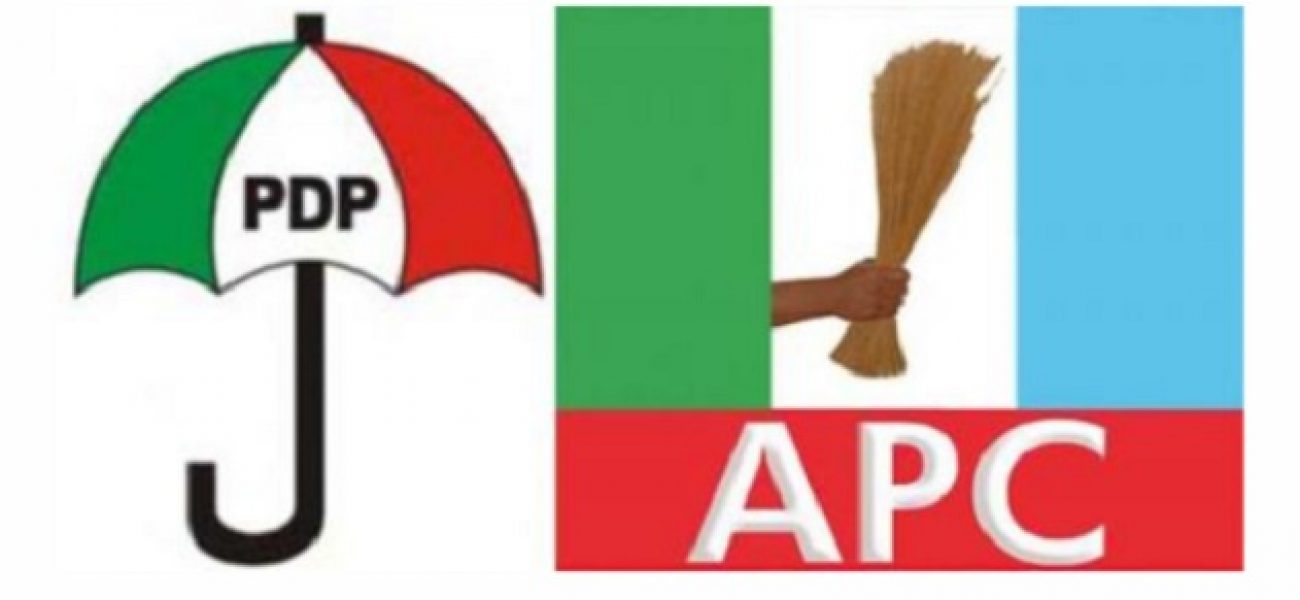
As the 2027 general elections draw closer, the gale of defections that has rocked the People’s Democratic Party in recent times has thrown those in the current ruling All Progressives Congress (APC) into wild ecstasy. Once the largest political party in Africa, the PDP ran out of luck in 2015 when it lost the presidency to the APC. Before then, the party held power for sixteen years.
In fact, at the peak of the party’s stronghold in power, the national chairman, Chief Vincent Ogbulafor, boasted in 2008 that the PDP would rule Nigeria for another sixty years. Perhaps lost in the effervescent aplomb of public office, he forgot that the future cannot always be assured. His boisterous vituperation was perceived as the height of braggadocio, a trait synonymous with most Nigerian political elites.
Many were not surprised when, a few years after this declaration was made, the party started witnessing some implosion within its ranks. The fall of the PDP was masterminded by members of the party who formed an alliance with the opposition, which eventually led to its calamitous loss in the 2015 general elections.
Sadly, the party that once reigned monstrously in Africa’s most populous black nation has become a shadow of itself. Unfortunately for the PDP, since they found themselves out of power, they have not been able to play the role of the opposition because it is not in their DNA to do so, unlike the APC, which was birthed through opposition.
In fact, it would not be out of place to say that the APC has so mastered the art of opposition that it has even devised means of creating its own opposition within and outside the party to keep any real opposition party at bay through controlled opposition.
With the open declaration of support for Tinubu’s presidency from governors of supposed opposition parties, and the defection of notable figures like the current Governor of Delta State, Mr. Sheriff Oborevwori, and Senator Ifeanyi Okowa, the immediate past governor of Delta State and running mate to Alhaji Atiku Abubakar in the 2023 presidential elections, many in the President’s camp have picked up a trumpet to sound it to whoever cares to listen that President Tinubu is a master political strategist.
As far as those in the President’s camp are concerned, the 2027 presidential election is already in the bag, awaiting to be transported home. In their assessment and assertiveness, nobody can defeat the chief political strategist of our time in the forthcoming elections.
It would be simplistic for anybody to assume that the mere fact that opposition members are trooping into the President’s camp is enough reason to believe that he will have an easy ride into his second term – far from it! If anything, Nigerians should be worried, as such actions only indicate state capture.
Nigerians are well aware of the politics their political office holders play. With the nature of politics played in Nigeria,where stomach infrastructure and personal interest supersede national interest, this junketing shouldn’t be a surprise. What do you expect from politicians in a land where political parties lack ideologies apart from grabbing power?
Interestingly, these massive defections should teach Nigerians that there is obviously no difference between the APC and the PDP. These political elites only care about themselves and not the welfare of Nigerians! At a time when Nigerians’ living standards are at an all-time low due to ill-thought-out policies by the Tinubu-led administration, politicians are falling over themselves to dance owambe in the APC.
To keen observers of the Nigerian political landscape, these mass defections to the APC are nothing short of a defense mechanism employed by the party to give the impression that it is in total control, and for the defectors – whose priority should be governing and serving the people – to have a haven when the chips are down. Unless on paper, there is no clear evidence that this administration has performed well enough to warrant admiration from the supposed opposition,who now join them in troops.
Moreover, the only reason political elites are decamping is that Nigeria has a flawed electoral process where the votes of the electorate do not count. If the so-called independent electoral umpire, INEC, were living up to its mandate, political office holders would learn to be disciplined and understand that only performance can guarantee their election or re-election.
While those who believe that the President is a political strategist continue to bask in his political mastery, one is compelled to ask why he has not been able to apply his strategy effectively in governance. Politics, according to Plato, should be for the common good. Nigerians would love to see and benefit from President Tinubu’s acclaimed strategy.
Political strategy should not begin and end with seizing power. Where is his strategy for overhauling the economy since he assumed the presidency? Are Nigerians better off today than they were three years ago? Why hasn’t he employed his renowned strategy to tackle the nation’s insecurity? Or has the security of lives and property ceased to be the government’s primary responsibility? Where is his plan for reliable power, and why must Nigerians pay excessively for unstable electricity? Don’t we need his strategy for quality healthcare facilities? These vital sectors urgently require his strategic attention!
It would be ludicrous for anyone to believe that the future of Nigeria is solely in the hands of the political officeholders. Whether or not anyone wants to believe it, 2027 is still a long time off. Though Nigerian politicians are always thinking of the next elections, and not how to better the lives of their citizens, they must realise that the political dynamics can change anytime.
General Sani Abacha was almost certain of becoming a civilian president in 1996. He had convinced all the key political actors of the time to endorse his presidency, and everything was working for his good, but fate had other plans.
The only thing that will guarantee any political office holder a re-election in a constitutional democracy like ours is performance! A second term in office is like a referendum on an individual’s first term. The power to elect still rests with the people and not with politicians, except that we are no longer a democracy.
If President Bola Ahmed Tinubu is keen on his second term, he should up his game. If he is unaware, someone should inform the President that Nigerians are not having it easy. Instead of focusing on the 2027 reelection in 2025, he should take advantage of the remaining two years of his first term in office to show his work. PR without performance is pure propaganda!
A working Nigeria benefits all, irrespective of religion or tribe. Nigerians are groaning under his knee-jerk policies, which have plunged a vast majority of citizens into penury. More than ever, this is when Nigerians expect to feel the impact of his much-trumpeted strategy. Nigerians want to see evidence beyond the rhetoric.
Blaise Emeka Okpara, a student at the International Institute of Journalism, writes from Abuja and can be contacted at: emyokparaoo1@gmail.com

Wike vows to lead PDP campaign in 2027, denies sabotaging party
By Abdullahi Mukhtar Algasgaini
The Minister of the Federal Capital Territory (FCT), Nyesom Wike, has declared his intention to lead the Peoples Democratic Party (PDP) campaign in the 2027 general elections. He made the statement on Monday during a media interaction in Abuja, dismissing claims that he was undermining the PDP while serving in President Bola Tinubu’s cabinet.
“I am still in PDP. I worked hard for the party,” Wike said. “No one can question my membership because nobody has contributed more than I. I will lead the PDP campaign in Rivers in 2027.”
Wike, a former Rivers State governor, has faced criticism from PDP members for his role in the All Progressives Congress (APC)-led government. However, he defended his actions, stating that he takes pride in making tough decisions, even if they upset powerful figures.
“I step on the toes of big men, and it makes me happy,” he said. “If you don’t do the right thing, too bad. I don’t care.”
On the political crisis in Rivers State, Wike denied any personal rift with Governor Siminalayi Fubara and stated that he would have opposed a state of emergency if consulted by the president.
“I don’t have any crisis with Fubara,” he said. “If Mr. President had asked me, I wouldn’t have agreed to a state of emergency.”
Wike’s remarks come amid growing tensions within the PDP, with his loyalty remaining a contentious issue among party members.

Matthew Miller: Israel has ‘without doubt’ committed war crimes in Gaza
By Muhammad Abubakar
Matthew Miller, former spokesperson for the U.S. State Department under President Joe Biden, has said Israel has “without doubt” committed war crimes in Gaza.
In a recent interview, Miller pointed to the targeting of civilian infrastructure, the high civilian death toll, and the ongoing blockade as clear violations of international law. His remarks mark a significant departure from the official U.S. position, which has largely avoided directly accusing Israel of war crimes.
Miller’s comments come as independent investigations into alleged violations by Israeli forces continue. He also criticized the Biden administration’s support for Israel, warning it risks enabling serious breaches of humanitarian law.

Crashing food prices the wrong way
By Zayyad I. Muhammad
In 2024, President Bola Ahmed Tinubu granted duty waivers for the importation of key food items such as rice, maize, wheat, sorghum, and others. This decision was intended to tackle soaring food prices and has indeed led to a significant drop in the prices of food commodities.
Yesterday, Friday May 15th 2025, the Chairman of BUA Group, Abdul Samad Rabiu, announced that his company is intensifying efforts to further reduce the prices of rice and other essential commodities. While this gesture may appear patriotic and commendable, it raises critical questions: Is Abdul Samad a farmer? Shouldn’t such statements about food pricing and availability come from actual farmers and those directly involved in food production?
To be fair, the massive and often irrational hoarding of food items by middlemen has created artificial scarcity and price hikes, which may have prompted the government intervention and Abdul Samad’s statement . However, these efforts, though well-intentioned, highlight a deeper, systemic problem that cannot be solved by importation alone.
The government’s current approach, focused on crashing food prices through imports, is hurting local farmers and ultimately unsustainable.
While reducing food prices is essential for national food security and the wellbeing of ordinary Nigerians, the pathway to achieving this goal must be rooted in empowering local producers. Farmers are the real drivers of food affordability. Without supporting them, any temporary relief brought by food imports will ‘collapse’ the local economy under the weight of neglected domestic agriculture.
President Tinubu should prioritize policies that strengthen local agricultural capacity. This includes granting duty waivers not just for imported food, but more importantly for farm inputs, such as seeds, fertilizers, equipment, and agrochemicals. Supporting local agrochemical manufacturers and agromerchant firms will boost productivity and reduce dependence on foreign inputs.
Moreover, providing farmers with easy access to affordable loans is critical. Many smallholder farmers lack the capital to invest in modern tools or expand their operations. Through targeted financing and robust extension services, the government can unleash the full potential of Nigeria’s agricultural sector. Though many farmers and officials have abused several well-intentioned government incentives for agribusinesses.
If current policies continue to favor food importation over local production, the consequences could be dire. The economy may suffer, and Nigeria’s food security will become dangerously dependent on foreign nations. This dependency not only undermines national sovereignty but also exposes the country to global agricultural market shocks.
Agriculture remains an important sector of Nigeria’s economy. Farmers contribute roughly 25% to the nation’s GDP. It is also the largest employer of labor, with over 25 million people, about 30.1% of the total workforce engaged in the sector. According to the Food and Agriculture Organization (FAO), more than 70% of Nigerians participate in agriculture in some form.
Clearly, supporting local farming is not just about food, it is about livelihoods, national development, and economic stability.
Cheaper food prices are indeed crucial for Nigeria’s survival, but they must be achieved the right way, through robust, self-reliant, and locally-driven food production. Supporting and scaling small, medium large-scale farming across the country will naturally lead to lower prices, eliminate hoarding, increase food exports, and align with the Tinubu administration’s stated “Nigeria First” policy.
Food imports is a short-term fixes, now is the time to shift from to long-term solutions,
by putting farmers at the center of President Tinubu’s government food policies and programs
Zayyad I. Muhammad writes from Abuja via zaymohd@yahoo.com.
The growth Nigerians can’t taste: Behind the numbers lies hardship
By Nasiru Ibrahim
If the economy grows by 4% in Q1 2025, people expect to feel it through affordable food, reasonable wages, more job opportunities, an improvement in the standard of living, and quality education. I agreed with Dr. Usman Isyaku’s recent claim that “Economics is the new rocket science in Nigeria,” because economists are busy presenting abstract models, charts, graphs, GDP growth, and the economic policy debate is centred only on economic jargon and indicators that appear technical and confusing to the layman. The economic policy debate is supposed to be centred on what people earn, what they buy, how the cost of living rises, and what happens to inequality and poverty.
People often ask: if the economy is growing, why is our life getting harder? The answer to all this is the Nigerian economy’s economic growth and inflation paradox, which refers to the presence of economic growth and high inflation at the expense of people’s purchasing power and standard of living. Inflation erodes people’s purchasing power and repeatedly makes them poorer as prices rise.
The economic growth and inflation paradox is the reality of the Nigerian economy, considering that the economy experienced its fastest growth in about a decade in 2024, as pointed out by the World Bank’s lead economist for Nigeria, Sir Alex Sienant, yesterday in Abuja. He said the Nigerian economy grew by 4.6% year-on-year in Q4 2024. This means that in the last three months of 2024, the Nigerian economy produced 4.6% more goods and services than in the same period in 2023. However, even though the country produces more, many people don’t feel any benefit because prices are still rising, and daily life is becoming harder.
Growth figures like GDP are averages and do not address poverty, high inequality, a poor standard of living, or food affordability.
What caused this paradox? President Tinubu’s economic reforms — removing fuel subsidies, electricity subsidies, and naira devaluation cuts —resulted in fiscal improvement. Government revenue grew by 4.5% of GDP in 2024, the fiscal deficit decreased, and external debt declined. On paper, these achievements are impressive, but they feel different to the common man on the street, as the prices of food, transport, and rent continue to rise.
The immediate cause is the lack of inclusive growth, with a few sectors like oil and banking dominating the GDP. Secondly, weak institutions refer to government agencies and public bodies that are supposed to ensure fairness, transparency, and accountability but fail to do so. When institutions are weak, they allow corruption, inefficiency, and poor management of public funds. This means money meant for roads, healthcare, education, or farming support gets wasted or stolen, and policies that should help everyone only benefit a few elites. This worsens inequality and keeps essential services underdeveloped.
Thirdly, agriculture and supply chain disruptions caused inefficiency in the sector. Insecurity and poor infrastructure, plus the issue of import waivers, contributed to cheap food imports, making it hard for local farmers to compete and causing them to incur losses.
I do not view economics as rocket science dominated by charts, models, and jargon. I see economics in everyday life—prices, wages, job opportunities, choices, affordable food for all, happiness, and a better life for all and sundry.
Economists should explain how policies affect people’s daily lives — not just in GDP numbers, but in real terms like food prices, wages, and employment opportunities. Economists need to engage with the public more directly, explaining key concepts like inflation or interest rates in simple terms. In 2022, the Nigerian government reported economic growth in the oil sector. Yet, unemployment was at a 20% high, and poverty was increasing, with more than 40% of Nigerians living below the poverty line.
Economists and policymakers often discuss GDP growth, real income, or inflation rates—terms that many Nigerians don’t fully understand. Most people are focused on practical issues like food prices, rent, and transportation costs, not abstract economic concepts.
Governments often use economic data to justify their policies, sometimes highlighting growth figures that don’t fully reflect the real situation. In Nigeria, governments usually focus on growth rates in sectors like oil and telecoms, which don’t directly impact most people’s daily lives, while ignoring issues like rising poverty and growing inequality.
What Should Be Done?
Firstly, fuel subsidy reform must be done to protect ordinary Nigerians. The sudden removal of fuel subsidy in 2023 made life harder—transport became expensive, food prices shot up, and suffering increased. Even big economies like the U.S. still subsidise farmers, energy, and housing. But in Nigeria, our subsidy system was full of corruption and waste. Instead of removing it overnight, the government should have planned a gradual withdrawal and used the savings to support school feeding, health insurance, and public transport. State governors, like those in Lagos and Borno, should use their share of subsidy savings to support poor families. Local government chairmen can help by identifying struggling households and ensuring the help gets to them.
Secondly, we must secure our farms and support agriculture to fight food inflation. Insecurity in places like Benue, Zamfara, and Niger has chased farmers off their land. No farming means no food, and no food means higher prices. The government should send security teams to protect farmers and work with local vigilantes. State governors must invest in irrigation, storage facilities, and feeder roads, like Ebonyi’s rice project or Cross River’s cocoa plan. Local governments should help distribute seeds and fertilisers, and organise markets in villages so that food can move easily and become cheaper.
Thirdly, Nigeria must stop mismanaging foreign exchange and support local production. The constant rise and fall of the naira, unfair access to cheap dollars, and heavy import dependence have worsened things. The CBN must be open and fair in its forex policy and prioritise local manufacturers. State governments should build industrial hubs and support processing industries, as Ogun State is doing. Local governments can help small producers in things like leather, cassava, and shea butter—so we can reduce imports, create jobs, and lower prices.
Fourthly, state governors and LG chairmen must stop blaming the federal government for everything. Many things affecting people—bad roads, dirty water, expensive local markets—are within their power. Governors should form regional plans, invest in infrastructure, and support small businesses. Local governments should fix boreholes, maintain primary health centres, and organise rural markets. These small actions reduce the daily cost of living and improve lives.
Fifthly, we need proper social protection, not random handouts. Inflation is eating deep into people’s pockets. The government should use verified data (linked to NIN and BVN) to send digital cash transfers to the poor. Local governments must identify real households that need support. States should create public works programs—like road maintenance, tree planting, or waste collection—so people earn a living while helping their communities. That’s how India’s rural job scheme helped millions.
Lastly, no reform will work without fighting corruption and fixing our broken institutions. We can’t keep discussing change while money disappears, budgets are padded, and governors pocket LG funds. The government must pass audit laws, publish how money is spent, and punish corruption. State and local governments should meet transparency targets before receiving federal funds. We must also return full independence to local governments so they can serve people directly. Without these changes, even the best economic plans will fail.

NDLEA seizes ₦9.3 billion opioids in Rivers, foils fake dollar deal in Kano
By Muhammad Abubakar
NDLEA operatives have seized illicit opioids worth ₦9.3 billion during a joint inspection at the Port Harcourt Ports Complex, Onne, Rivers State.
Between May 28 and 30, seven flagged containers were searched, yielding 825,200 bottles of codeine-based syrup and trodol (valued at ₦5.77 billion), and 5.1 million tapentadol tablets (valued at ₦3.57 billion).
In Kano, NDLEA officers intercepted two men—Abubakar Hussein, 42, and Sahabi Adamu, 53—on May 30 with $900,000 in suspected counterfeit currency along the Kano-Maiduguri road.
Meanwhile, NDLEA’s War Against Drug Abuse (WADA) continued with sensitisation programs across secondary schools in Katsina, Enugu, Anambra, Kano, and Cross River.
NDLEA Chairman, Brig. Gen. Mohamed Buba Marwa (Rtd) praised officers for reducing the drug supply and promoting public awareness nationwide.

Does “live” matter more than lives?
By Firdausi Abubakar
On Friday, May 10th, 2025, Abuja witnessed a tragic accident involving a fire truck and a car carrying four young boys. The scene was devastating, bodies sprawled, metal crushed, and flames smouldering. But even more disturbing was the crowd that quickly gathered, not with medical kits or a sense of urgency to save the lives of the victims, but with phones raised, recording, streaming, and snapping pictures. “Live on the scene”, some captioned, while actual lives slipped away.
This isn’t just an Abuja problem. It’s a moral crisis growing across Nigeria. From Lagos to Kano, Enugu to Port Harcourt, and others, a familiar sight follows whenever an accident or violent incident occurs: dozens, sometimes hundreds of people filming rather than helping.
In March 2025, during a brutal fight between cult groups at a university in the South-West, students stood around with their phones in hand. No one intervened. No one called for help. But the footage of the fight went to TikTok, Instagram, and X within minutes.
The question is haunting: has going live become more important than saving lives?
Moreover, it’s easy to point fingers at bystanders. But Nigeria’s systemic failures have created a dangerous environment where compassion is punished and apathy is rewarded.
In most parts of the country, there’s no reliable emergency line. Calling for help is often futile, lines don’t go through, operators are untrained, or help arrives late. Even the trauma centres, where they exist, are few, underfunded, and poorly equipped. Worst of all, those who try to assist victims often find themselves entangled with law enforcement.
In Nigeria, it’s a common habit for a Good Samaritan to be detained as a suspect, harassed, or extorted by the police. This fear is compounded by a lack of trust in the justice system and has led many to do nothing. Or worse, to choose content creation over human compassion.
We now live in a time where everything is content. People rush to be the first to post, the first to trend, the first to go viral. But this obsession with clout has come at the cost of our humanity.
The Abuja fire truck accident is a painful example. Witnesses say the four young men may have survived had they been pulled from the wreckage sooner. But instead of taking action, people stood by, filming, posting and watching. Their final moments were broadcast to the world while help was delayed.
Nigeria urgently needs to fix its broken emergency response system. We need working, responsive hotlines, trained emergency responders, and functioning trauma centres. The government must also create and enforce laws that protect those who help, so citizens won’t be afraid to do the right thing.
But beyond policy, we must confront a cultural shift. We must remind ourselves and our communities that no number of likes, shares, or views is worth more than a human life. Helping someone in need shouldn’t be optional; rather, it should be instinct.
Before you press record, ask yourself: Would I rather save a life or capture a moment?
Firdausi Abubakar, is a student of Information and Media Studies, Bayero University Kano. She can be reached via fizzyabubakar@gmail.com.

NDLEA uncovers Hajj cocaine syndicate, arrests three in Kano
By Hadiza Abdulkadir
The National Drug Law Enforcement Agency (NDLEA) has dismantled a drug trafficking syndicate exploiting hajj pilgrims as cocaine couriers to Saudi Arabia.
Two intending pilgrims, Ibrahim Umar Mustapha and Muhammad Siraj Shifado, were arrested on Monday, May 26, at Mallam Aminu Kano International Airport during screening for an Ethiopian Airlines flight to Jeddah. They were found to have ingested 90 wraps of cocaine between them, weighing a total of 1.04 kilograms.
Following intelligence gathered from their arrest, NDLEA operatives apprehended three alleged sponsors of the operation: Abubakar Muhammad, Abdulhakeem Muhammed Tijjani, and Muhammad Aji Shugaba, on May 27 and 28 in Kano.
In a related operation, a 60-year-old businessman, Chinedu Leonard Okigbo, was arrested on May 28 at the same airport while boarding a Qatar Airways flight to Iran. He excreted 65 wraps of cocaine, weighing 1.41kg.
NDLEA Chairman, Brig. Gen. Mohamed Buba Marwa (Rtd), commended the agency’s Kano command for its swift action and called for continued vigilance during the hajj season.
“This bust shows how far traffickers are willing to go. We will not let religious pilgrimage be used as a cover for criminal activity,” Marwa stated.

FEATURE: How small businesses in Northern Nigeria struggle amid economic pressures, seasonal shifts
By Sabiu Abdullahi, Uzair Adam, Anwar Usman, Anas Abbas, Abdullahi Algasgaini, and Ibrahim Yunusa
As the summer season deepens across northern Nigeria, small business owners in various communities—from Kano to Kaduna, Jigawa to Bauchi—are raising the alarm over dwindling customer patronage.
The Daily Reality reports that the convergence of economic hardship, seasonal farming priorities, and insecurity is squeezing their operations, with many struggling to stay afloat.
Traditionally, the onset of summer in the Northern Hemisphere, beginning in May, signals a shift in consumer behavior.
For many local residents, it marks a transition from marketplace spending to full-scale agricultural engagement.
As people move into planting and harvesting, businesses dependent on daily and seasonal purchases are increasingly left behind. This year, that impact appears to be more pronounced than usual.
Hussain Ibrahim, a businessman at Kano’s Kofar Ruwa market, told The Daily Reality that while there is interest from customers, purchasing power has significantly weakened due to inflation and soaring prices.
He stated, “Although people want to patronize us, goods have become too expensive. The money you’d use to buy a ton of rod two years ago has doubled. Most people can’t keep up with the situation.”
He also attributed the crisis to the federal government’s removal of the fuel subsidy, which has drastically increased transportation costs.
Ibrahim added that, “Before, transporting goods from Lagos to Kano used to cost N800,000. Now, it’s N1.7 million. That alone inflates prices, and customers suffer for it.”
In Jigawa State, Umar Muhammad, a foodstuff dealer in Limawa, Dutse, highlighted another unique challenge: the irregularity of local civil servant salaries.
Muhammad said, “Our peak sales occur in the first and second weeks of the month when civil servants receive their pay. By the middle of the month, we might drop from N1 million in sales to just N200,000,” he revealed.
This pattern underscores how fragile small businesses are, relying heavily on public sector salary cycles for survival.
In Kaduna’s Zaria town, fertilizer dealer Yakubu Hussaini painted a bleak picture. According to him, the price hikes from suppliers—triggered by high import costs of raw materials—have slowed down the market significantly.
“The government’s decision to import maize, wheat, and rice discouraged many farmers. Coupled with the insecurity in rural areas, farmers are abandoning their lands. All of this has crushed demand for fertilizer,” he said.
As the rainy season approaches, and started in some areas, farming activities become top priority for most residents, further reducing commercial traffic in markets. This has hit businesses that depend on footfall the hardest.
Isah Mucika, a butcher at the Kwanar Ungogo abattoir in Kano, observed, “People are more focused on clearing their farms. I had to sell my motorcycle to invest in my farmland.”
He added that goods are seen as increasingly unaffordable, leading many to limit spending to farming essentials.
The story is the same in Bauchi, where a cosmetics seller said her weekly sales have been reduced to what she used to make in just two days.
“Now, people mostly buy only what they eat. Luxuries like cosmetics are no longer a priority,” she lamented.
A mobile phone dealer echoed her frustration. “Even fairly used phones are hard to sell. People come, ask for the price, and walk away. They’d rather fix their old phones than buy new ones.”
As small businesses continue to suffer under the weight of these intersecting challenges, local chambers of commerce and community leaders are calling for increased support for local enterprises.
There is a growing campaign urging residents to buy local, highlighting the social and economic ripple effects of every purchase.
“Supporting local businesses now is more important than ever. There is a strong connection between low patronage and the coming rainy season—but our collective choices can help cushion the impact.”
According to economic expert Abdulmalik Ibrahim, the low purchasing power of residents in northern Nigeria is a major factor behind the struggles faced by small businesses during this period.
Ibrahim pointed to a range of factors fueling the situation: high inflation, devaluation of the naira, and ongoing economic challenges that have shrunk household incomes.
He noted that Nigeria’s inflation rate reached 33.20% in March 2024, making it increasingly difficult for people to afford even basic necessities.
“The devaluation of the naira has pushed up the cost of imported goods, while economic instability and high unemployment have further reduced disposable incomes,” he explained.
Ibrahim added that rising prices for essentials like food, transport, and utilities have hit low-income households the hardest, reducing their spending power and affecting small businesses.
“Insecurity in farming communities and disruptions to supply chains have also driven up food prices, making the situation even worse,” he said.
He stressed that government borrowing from the Central Bank of Nigeria has contributed to inflation, further straining people’s ability to purchase goods and services.
“The combined impact of these factors is creating a harsh environment for small businesses across the region,” Ibrahim concluded.