


Amaechi fires back at Wike: ‘I don’t join issues with children’
By Sabiu Abdullahi
Former Minister of Transportation, Rotimi Amaechi, has revealed the reason behind appointing Nyesom Wike as his Chief of Staff during his tenure as Governor of Rivers State.
According to Amaechi, he deliberately chose Wike for the position instead of making him Commissioner for Finance so he could keep a close eye on him.
His comments came in response to Wike’s recent jibe at him following Amaechi’s statement, “We’re all hungry,” made during his 60th birthday celebration.
Wike had dismissed the remark, claiming the former governor was not hungry for food, but for political recognition.
Appearing on Arise Television’s Prime Time on Tuesday, Amaechi said he had no interest in exchanging words with Wike.
“God, Peter Odili, the judiciary and the Rivers state people made me governor,” he said.
Challenging Wike’s claim of playing a role in his political rise, Amaechi asked, “Ask him how he made me governor. I’m saying this because I don’t want to join issues with children.”
He stated further: “I wanted him as chief of staff so I could supervise him. I didn’t offer him commissioner for finance. You see, I’m saying this because I don’t want to join issues with children.”
In another veiled swipe, he added, “You know, he made himself chief of staff. He made himself governor. He made himself minister. He made himself local government chairman.”
Amaechi’s remarks are the latest in an ongoing war of words between the two political figures who were once allies in Rivers State but have since become bitter rivals.

Saudi Arabia bans political, sectarian activities at Hajj sites
By Uzair Adam S
audi Arabia’s Ministry of Interior has declared a comprehensive ban on taking photographs, recording videos, and displaying political or sectarian expressions at all key Hajj sites.
According to a statement released by the ministry, pilgrims are forbidden from engaging in such activities within Masjid al-Haram in Makkah, Masjid an-Nabawi in Madinah, and at significant Hajj locations such as Mina, Arafat, and Muzdalifah.
Authorities noted that these actions could disrupt the spiritual sanctity of the pilgrimage and potentially sow division among pilgrims gathered from around the world.
The ministry stressed that Hajj is a time for worship, humility, and unity, and any acts that contradict these principles will not be allowed.
Pilgrims are urged to respect these directives and work closely with officials to ensure that Hajj 2025 unfolds in a peaceful, organized, and spiritually fulfilling manner.
“Security personnel will be stationed throughout the pilgrimage to monitor and enforce these regulations,” the statement added.

Bawa unveils explosive book on Nigeria’s fuel subsidy scandal
By Muhammad Sulaiman
Abdulrasheed Bawa, former chairman of the Economic and Financial Crimes Commission (EFCC), has released a revealing new book that exposes the depth of corruption in Nigeria’s petroleum subsidy regime.
Titled The Shadow of Loot & Losses: Uncovering Nigeria’s Petroleum Subsidy Fraud, the book offers a detailed, insider account of one of the country’s most expensive financial scandals. Drawing from his experience as a lead investigator in the 2012 probe into fuel subsidy fraud, Bawa unveils how trillions of naira were siphoned through fraudulent schemes.
According to the book, corrupt practices ranged from ghost importing and over-invoicing to manipulating shipping documents and round-tripping—all of which were aimed at exploiting the subsidy payment system.
Bawa also highlights the roles played by both complicit officials and private sector actors, citing systemic weaknesses and widespread collusion.
“This is not just a chronicle of fraud,” Bawa said. “It is a call to action — a demand for transparency, accountability, and reform in Nigeria’s public finance management, especially in the oil sector.”
Published by CableBooks, an imprint of Cable Media & Publishing Ltd, the book is now available nationwide through RovingHeights Bookstore. It is already being hailed as essential reading for policymakers, journalists, and anyone concerned with governance and accountability in Nigeria.

The government needs to repair the damaged Kano-Maiduguri Road
By Tajuddeen Ahmad Tijjani
Last year, the Kano-Maiduguri Road suffered severe damage from flooding. The disaster caused immense hardship for ordinary citizens, displaced several communities along the route, and inflicted economic losses in hundreds of millions of naira. It also disrupted access to Maiduguri from key states such as Abuja, Kano, Jigawa, and Yobe, effectively cutting off the northeast from the rest of the country.
It will be recalled that on 15th August 2024, a Federal Government delegation led by the Honourable Minister of Works, Engr. David Umahi and the Governor of Bauchi State visited the affected site. They assessed the extent of the damage and promised urgent intervention, recognising the road’s economic significance not just for the northeast, but for the country as a whole. Unfortunately, to the dismay of the affected communities, no tangible action has been taken since that visit, only temporary fixes that have had little to no impact.
Residents are now growing concerned that if urgent intervention is not undertaken before the rains intensify, the road could suffer even more extensive damage than last year. This poses a serious threat to lives and property, as was previously experienced.
The rehabilitation of the Kano-Maiduguri Road is not merely about filling potholes or patching the surface – it is a vital aspect of regional and national development. The benefits of well-maintained roads are immense: improved safety and reduced accidents, enhanced economic activities, better quality of life, strengthened social integration, and even environmental advantages.
Beyond the infrastructural failure, there are concerns about the federal government’s perceived neglect of certain regions. This is especially disheartening considering that this region gave the current administration some of its highest votes.
As an optimist and a believer in equitable governance, I hold firmly that all six geopolitical zones of Nigeria deserve equal attention and investment. Every part of this country matters. Mr. President must lead with sincerity of purpose and see all Nigerians as his constituency.
It is worth noting that during his visit, the Minister of Works acknowledged this imbalance, stating: “Let me make it clear that the shortfall in road distribution was not the doing of President Tinubu, nor mine. However, the President is addressing it. That is why the fourth legacy project has been initiated, stretching from Akwanga to Jos to Bauchi State. We are pleased that work is progressing significantly on major portions of the road in Bauchi State.”
The Minister further pledged that the President is determined to provide adequate funding for legacy projects through various intervention mechanisms. We hope that the government will act swiftly and treat this as a matter of national urgency by repairing the damaged sections of the Kano-Maiduguri Road, particularly within the Jama’are and Azare-Potiskum axes.
As an engineer, the Minister of Works should set a precedent prioritising action over rhetoric. When entrusted with responsibility, those in positions of power must demonstrate competence and a genuine commitment to service.
This is a humble but firm appeal to the federal government to urgently address the long-standing issue of the Kano-Maiduguri Road, which has been in disrepair since last year’s devastating floods.
Tajuddeen Ahmad Tijjani writes from Azare, Bauchi State.

Tinubu holds private talks with Fubara in Lagos amid Rivers crisis
By Uzair Adam
President Bola Ahmed Tinubu on Tuesday held a closed-door meeting with Rivers State Governor Siminalayi Fubara at his Bourdillon residence in Ikoyi, Lagos.
The meeting, which was not previously announced, comes amid ongoing political turbulence in Rivers State.
Neither the presidency nor Fubara’s camp has released an official statement on the meeting, but it is widely seen as part of efforts to resolve the deepening crisis in the state.
The Daily Reality reports that Governor Fubara has faced relentless opposition since assuming office in 2023.
His dispute with his predecessor, Nyesom Wike, led to Tinubu’s declaration of a state of emergency in Rivers on May 18, 2025.
In his announcement, Tinubu cited the collapse of democratic structures in the state, pointing to the December 2023 demolition of the House of Assembly and the prolonged deadlock that followed.
The Supreme Court also weighed in on February 28, 2025, stating that there was effectively no government in Rivers due to the absence of a functioning legislature.
As political watchers await an official update, Tinubu’s meeting with Fubara has heightened expectations for a breakthrough in the lingering crisis.

Bill Gates receives Nigeria’s prestigious CFR honour
By Abdullahi Mukhtar Algasgaini
President Bola Ahmed Tinubu on Tuesday night awarded Microsoft co-founder and philanthropist Bill Gates the prestigious Commander of the Order of the Federal Republic (CFR), Nigeria’s second-highest national honour.
The ceremony took place in Lagos in recognition of Gates’ contributions to global health and development through the Bill & Melinda Gates Foundation.
The CFR is reserved for individuals who have made exceptional contributions to Nigeria and humanity at large.
Gates has long supported initiatives in Nigeria, particularly in healthcare, polio eradication, and economic development.
President Tinubu praised Gates for his dedication to improving lives worldwide and reaffirmed Nigeria’s commitment to partnering with global leaders in advancing sustainable development.

NCC directs banks to shift USSD charges to customers’ airtime
By Anas Abbas
Nigerian Communications Commission (NCC) has mandated that deposit money banks (DMBs) cease the direct deduction of charges from customers’ accounts.
Instead, these fees will now be deducted from users’ mobile airtime.This change, effective June 3, 2025, was communicated to customers via an email from the United Bank for Africa (UBA) on Tuesday.
The bank outlined that, in compliance with the NCC’s directive, charges for USSD banking services will no longer be taken from bank accounts but will instead be billed directly to mobile airtime.
According to the UBA’s statement, each USSD session will incur a fee of ₦6.98 for every 120 seconds, a charge that will be processed by the user’s mobile network operator.
Customers will receive a consent prompt at the beginning of each session, and airtime will only be deducted after they confirm their willingness to proceed, provided the bank is available to complete the transaction.
For those who prefer not to use USSD banking under this new billing structure, UBA has indicated that customers can opt out of this service.
Additionally, they can continue to utilize other digital banking options and internet banking platforms for their transactions.
This latest directive appears to be a strategic effort by the NCC to address the long-standing conflict surrounding USSD payments between commercial banks and mobile network operators (MNOs).
In December 2024, the Central Bank of Nigeria (CBN) and NCC had instructed MNOs and DMBs to settle an outstanding USSD debt estimated at ₦250 billion.
The situation escalated in January when telecommunications companies threatened to withdraw USSD services due to unpaid debts owed by banks.
In response, the NCC warned it would suspend USSD services and publish a list of banks that were still in arrears.
On January 15, the regulator ordered telcos to disconnect USSD codes assigned to nine banks by January 27 due to these outstanding debts.
On February 28, MTN Nigeria reported receiving ₦32 billion of the ₦72 billion owed by banks as part of the resolution of this USSD debt issue.
This recent directive marks a pivotal shift in how USSD banking services will operate in Nigeria, potentially benefiting both consumers and service providers in the long run.

Despite injecting billions into education, Kwakwaci, other Kano schools remain in ruins
By Anwar Usman
Government Secondary School Kwakwaci, Kano, has a rich history of academic excellence spanning decades. Over the years, the school has produced thousands of graduates who have gone on to achieve greater things.
The Daily Reality reliably gathered that despite these notable achievements, the school is now facing significant challenges.
Many fear that Kwakwaci will be among the schools in Kano State that may cease to exist due to severe environmental and managerial problems that have plagued the institution.
These unresolved issues threaten to ultimately force the school to close its doors.
Part of the problems bedevilling the school include dilapidated classrooms, abandoned laboratories, and other infrastructural decay, further exacerbated by rampant theft of school facilities by hooligans living in the vicinity.
Neglect despite huge education allocations
The Daily Reality also gathered that this menace persists despite the state’s declaration of an emergency in the education sector and the allocation of massive funds to improve education in the state.
This persistent neglect raises uncomfortable questions about the priorities of the Kano State Government, which allocated a staggering ₦95 billion to the education sector in its 2024 budget and an additional ₦168,350,802,346.19 (representing 31.00% of the budget) in 2025, making education one of the most heavily funded sectors in the state.
Current state of the school
The once-proud institution has no gate to protect its infrastructure, giving people of all kinds unrestricted access to the premises.
A staffer of the school, who spoke under the condition of anonymity during an interview with our reporter, lamented how the school has been grappling with issues that threaten its very existence.
“At night or after school hours, people enter the school and steal whatever they want due to the absence of security personnel at the gate,” he said.
He added that, “That’s what makes it easy for people to engage in criminal activities like smoking, drug abuse, and other illegal acts.”
He further noted, “The school is located very close to a market, and people have taken advantage of that proximity to carry out illegal activities.”
Other schools suffering a similar fate
Kwakwaci is not the only school in this dire situation. Several other schools are either on the verge of collapse or desperately need renovation to continue operating.
Schools like Mai Kwatashi, GSS Tudun Bojuwa and many others in the rural communities have suffered from over a decade of neglect.
In the case of GSS Tudun Bojuwa, the school has no gate, students sit on the floor, and the classrooms lack doors and windows, among other distressing conditions.
It is evident that while the state government’s declaration of an emergency in education is a vital step, these persistent problems continue to undermine teaching and learning.
Response from the principal
When contacted, the principal of Government Secondary School Kwakwaci said he was not fully aware of the situation.
“The only thing I know is that the school has no junior secondary students because they are under the supervision of the State Universal Basic Education Board (SUBEB), and they don’t send junior secondary students here anymore,” he said.
He attributed the lack of students to the high cost of living. “Most of the students come from areas like Kurna, Rijiyar Lemo, and Bachirawa.
“Many parents cannot afford the transport fare for their children, and that’s why the school has no junior classes.”
He added, “We only have SS2 and SS3 classes, and we have already appealed to stakeholders to reconsider the situation and send fresh students for junior secondary education.”
Government response
TDR also contacted the Kano State Ministry of Education through its Public Relations Officer, Usman Abdullahi, who referred us to the Executive Secretary of the Kano State Secondary Schools Management Board (KSSMB) for a comprehensive report on the condition of the school.
However, the Executive Secretary’s phone could not be reached.
Efforts to contact the PRO of the KSSMB also proved futile as there was no response to the calls and messages we sent to him at the time of compiling this report.
Many people believe that it is high time the government took decisive action to address the plight of these schools, especially Kwakwaci.
They also believe that that would help not only in revitalising education but also in curbing illegal activities by individuals who exploit the school’s deteriorating facilities.

Professor Roko’s healing hand: Governor Yusuf’s generosity
By Lamara Garba
In a world where leadership often wears the heavy cloak of command, Governor Abba Kabir Yusuf of Kano State walks a different path—one marked not by spectacle, but by quiet grace. His recent donation of N5 million to support the health of Professor Abubakar Roko, a senior lecturer at Usmanu Danfodiyo University Sokoto, shines like a candle in a stormy night—a gesture simple in form, yet profound in meaning.
This act of compassion stirred a ripple through the academic community, reaching hearts far beyond Sokoto. The family of Professor Roko, alongside the Academic Staff Union of Universities (ASUU) UDUS branch, offered their deep thanks. For them, the governor’s support was not just financial—it was a lifeline, a moment of humanity in an often indifferent world.
Professor Roko’s struggle for access to medical care echoes a troubling truth: that even those who nurture the minds of generations can find themselves abandoned in times of need. When society allows a scholar—one who has dedicated his life to the service of knowledge—to fall through the cracks, it begs the question: who among us is truly safe?
Indeed, Governor Yusuf’s gesture is more than an act of charity; it is a quiet protest against this injustice. It is a reminder that governance, at its best, is an extension of empathy. That leadership is not just about steering the ship, but about seeing those who have fallen overboard—and reaching out a hand.
Beyond the naira and kobo, what Governor Yusuf has given is dignity. His kindness says, “You matter.” It is a message sorely needed in times where those who build the foundations of our future—our teachers, our thinkers, our guides—are too often overlooked.
The ASUU Zonal Coordinator Professor Abubakar Sabo in terse verbal message of appreciation who, himself a staff of UDUS described Governor Abba as a “Messiah.” Saying, forever we shall not forget you, in our hearts. While titles are fleeting, the sentiment behind the praise is enduring. Governor Yusuf’s empathy has breathed life into the belief that leadership can still be rooted in service, not self.
In a letter penned by Professor Aminu Muhammad Bui, Head of the Department of Computer Science at UDUS, heartfelt gratitude poured forth: “This act of kindness and compassion from your esteemed office has brought immense joy and relief to Professor Roko and his loved ones.” These are not just words of thanks—they are testaments to the healing power of compassion.
Meanwhile, Professor Ibrahim Tajo Siraj, Chairman of ASUU BUK, illuminated the grim landscape of public education: dwindling morale, poor working conditions, and an exodus of talent—each one a symptom of a system that has long been neglected. His call for reform is a plea to rescue the very soul of the nation’s development engine.
Indeed, a society that does not cherish its educators weakens the roots from which all progress grows. The conditions endured by those in the education sector are not just unfortunate—they are unacceptable. Their resolution demands more than words; it requires will, vision, and urgent action.
Therefore, Governor Yusuf’s act is a glimmer in this long night, a sign that compassion can still guide power, and that true leadership is not found in titles, but in the quiet decisions that uplift lives.
It calls us to imagine a new dawn—where educators are honored, not merely with words, but with systems that support them; where acts of kindness are not rare exceptions, but a culture of care. Governor Yusuf’s compassion is a seed—may it find fertile ground in the hearts of other leaders.
And so, as the dust of this singular act settles, may it not fade into memory, but grow into a movement—a call to conscience. For in Governor Yusuf’s gesture, we find a lesson not just in leadership, but in humanity. And may that lesson echo far beyond Kano, beyond Sokoto—into every corner where hope waits to be awakened.
Perhaps, Governor Abba Kabir Yusuf’s donation to Professor Abubakar Roko is more than just a gesture of kindness; it is a reflection of his character as a leader. It shows that he is a man of compassion, empathy, and enduring humanity—one who listens not just with his ears, but with his heart.
It is worthy to note that in a time when many cry out for leaders who truly understand the burdens of everyday people, Governor Yusuf’s act stands as a quiet yet powerful answer.
It reminds us that leadership is not measured by grand speeches or lofty titles, but by the courage to care and the grace to act. His benevolence has not only lifted a man in need, but also rekindled faith in the idea that public service can still serve the public. May this gesture inspire others in power to lead not from above, but from among—and to remember that the true strength of leadership lies in the strength it gives to others.
Lamara Garba writes from Bayero University, Kano
FG declares June 6 and 9 public holidays for Eid-el-Kabir
By Maryam Ahmad
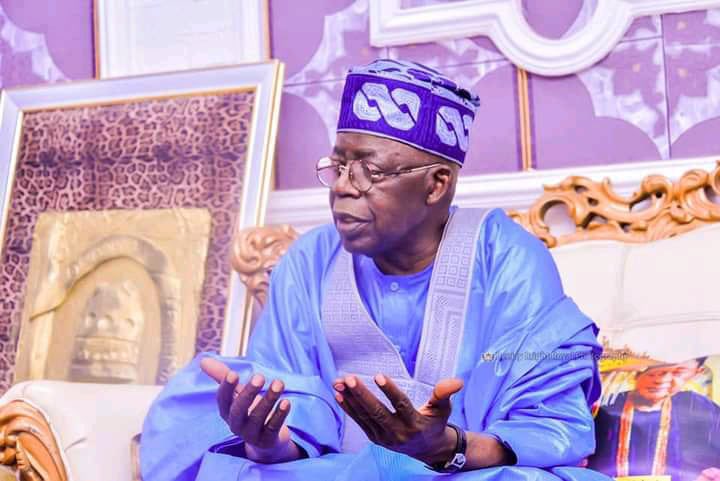
The Federal Government of Nigeria has declared Friday, June 6, and Monday, June 9, 2025, as public holidays to commemorate this year’s Eid-el-Kabir celebration.
Announcing the holidays on behalf of the government, Minister of Interior Dr. Olubunmi Tunji-Ojo extended congratulations to the Muslim Ummah both within Nigeria and in the diaspora.
Dr Tunji-Ojo urged Muslims to embody the spirit of sacrifice and faith exemplified by Prophet Ibrahim (Peace be upon Him) and to use the period to pray for a peaceful and prosperous Nigeria.
In a statement signed by the ministry’s Permanent Secretary, Dr. Magdalene Ajani, the minister assured Nigerians that the people-oriented reforms and initiatives carried out under President Bola Tinubu’s administration’s Renewed Hope Agendaare aimed at restoring Nigeria to progress.
Eid-el-Kabir, also known as Eid al-Adha, is one of the most significant festivals in Islam. It commemorates Prophet Ibrahim’s willingness to sacrifice his son in obedience to Allah’s command. In Nigeria, the festival is marked by prayers, animal sacrifices, and sharing meals with family, friends, and the less privileged.
The declaration of these public holidays allows Muslims across the country to observe the religious rites and festivities associated with Eid al-Kabir.