

PETROAN backs NUPENG, issues strike notice over Dangote CNG trucks
By Anwar Usman
The Petroleum Products Retail Outlets Owners Association of Nigeria has announced a three-day forewarning of suspension of lifting and dispensing of petroleum products commencing from the early hours of Tuesday.
The National President of PETROAN, Billy Gillis-Harry, in a statement issued on Sunday, said the forewarning on suspension of dispensing petroleum products was in advocacy for healthy competition as against any form of monopoly in the sector.
The News Agency of Nigeria reports that the Nigeria Union of Petroleum and Natural Gas Workers had announced that its members would commence a nationwide strike from Monday, September 8.
The strike is in protest against what it described as anti-union labour practices, linked to the deployment of newly imported Compressed Natural Gas trucks by the Dangote Refinery, for direct distribution of petroleum products.
Dangote’s programme on direct distribution of petroleum products to end users aimed at eliminating logistics costs, enhancing energy efficiency, promoting sustainability, and supporting Nigeria’s economic development.
The president reiterated that the action of NUPENG would be both lawful and peaceful, highlighting the association’s commitment to promoting workers’ rights and benefits through constructive engagement.
He added that, “PETROAN underscores its commitment to advancing the interests of Nigerian citizens in the pricing stability of the petroleum sector and promoting a stable and productive industry”.
He called on President Bola Tinubu, Minister of State for Petroleum (Oil), and the Authority Chief Executive, Nigerian Midstream and Downstream Petroleum Regulatory Authority, to intervene in the proposed actions of NUPENG and PETROAN.
He also urged the Group CEO of Nigerian National Petroleum Company Limited, the Director-General of DSS, and the Inspector General of Police to intervene urgently in the actions.
The intervention, he said, would avert potential hardship and pain on citizens arising from the suspension of lifting and dispensing of petroleum products.He appealed to the president to find a solution to the crisis and ensure the smooth operation of the oil and gas sector to minimise disruptions to the nation’s economy.
Gillis-Harry further said that pump attendants at PETROAN-member filling stations were equally registered members of NUPENG, hence, the strike by NUPENG would mean these attendants would be absent from duty.
He warned filling station owners not to discipline or sack any pump attendant who would be absent from duty until the end of the strike.

Silent tragedy in Kumbotso: Diphtheria and the cost of delay
By Ibrahim Aisha
In the Chiranci ward of Kumbotso Local Government Area in Kano, the term “sore throat” has taken on a chilling significance. For Iya Yani, a mother of eight, it was the phrase that cost her daughter her life.
“She only said her throat was hurting,” Iya Yani recalled with tears. “Neighbours told me it was nothing, just harmattan. By the time I took her to the hospital, she could no longer breathe. She died before they could help her, and the doctor blamed my ignorance “.
Iya Yani’s heartbreaking loss is part of a broader tragedy unfolding far and wide in the Kumbotso Local Government Area, a tragedy that statistics and government reports can hardly mitigate.
Diphtheria, a disease preventable by vaccine, continues to claim the lives of children in this community, some due to financial constraints, misleading rumours and even Ignorance.
Diphtheria is a highly contagious, vaccine-preventable disease caused by the exotoxin-producing bacterium Corynebacterium diphtheriae. While the disease can affect individuals of all age groups, Unimmunised children are particularly at risk. There is no World Health Organisation (WHO) region that is completely free of diphtheria globally.
The Facts Behind the Grief
According to the Nigeria Centre for Disease Control’s (CDC) situation report from May 2025, Nigeria recorded 30 confirmed cases and three deaths in the first few months of the year. By July 2025, Premium Times reported that Kano State alone had logged 18,284 confirmed infections and 860 deaths, making it the most affected state in Nigeria.
According to the World Health Organisation, from 9th May 2022 to 25 October 2023, 15,569 suspected diphtheria cases have been reported across Nigeria, 547 of whom have died.
As of October 2023, the World Health Organisation disbursed US$1.3 million for the response to enhance key outbreak control measures, including disease surveillance, laboratory testing, contact tracing, case investigation and treatment, training, as well as collaborating with communities to support the response efforts.
With support from the WHO and the United Nations Children’s Fund, Kano State carried out three phases of reactive routine immunisation campaigns in February, April, and August 2023, using the combination tetanus-diphtheria and pentavalent vaccines.
Almost 75,000 zero-dose children under the age of two received the first dose of the pentavalent vaccine, while around 670,000 eligible children (4‒14 years) were vaccinated with the tetanus-diphtheria vaccine in 18 high-burden local government areas in Kano state.
Health Reporters revealed in July 2025 that Chiranci of Kumbotso local government is one of the wards with the highest number of “zero-dose” children – those who have never received a single vaccine. In such a setting, diphtheria spreads rapidly, and misinformation intensifies the situation. According to the National Bureau of Statistics, Patients who were not vaccinated had more than double the likelihood of death compared to fully vaccinated individuals.
When rumours mislead and ignorance lies
Many parents from different areas of Kumbotso Local Government Area admit they delayed immunisation due to prevalent rumours.
When his seven-year-old brother, Jubrin, was diagnosed with diphtheria in July 2023, Aminu had never heard of the disease, the outbreak of which had claimed more than 500 lives in Nigeria.
Safiya Mohammed, a mother of two, residing in the Kumbotso Local Government Area, a hotspot for diphtheria in Kano State, ensured her children were vaccinated.
“I had never heard of diphtheria,” Safiya said. “I don’t want my children or those in the neighbourhood to fall sick or die from the disease. To protect my children, I also need to make sure the children they play with are protected.”
Fatima Umar, a resident of Dan Maliki and a nursing mother, confessed, “I heard the injection would make my baby sick, so I waited. Then he fell ill. The hospital told us it was diphtheria. He died before I even understood what that word meant.”
Usman Sani, a husband and resident of Taku Mashi, shared a similar regret: “My wife complained of her throat and her not being able to swallow food properly. I thought it was just a sore throat”.He added that by the time his wife was taken to the hospital, it was already too late.
For Zainab Ibrahim, a mother at Chiranci Primary, the battle against diphtheria has been both long and personal. In early 2025, her daughter, Halima, nearly lost her life to the disease. “She could not breathe,” Zainab recalled.
My daughter said she finds it difficult to yawn properly, and her throat hurts a lot when she swallows saliva. My neighbours kept saying I should use garlic to make tea for her. I started, but noticed there was no progress, as my daughter could not breathe one night. My husband was away, so I called him in the morning and told him I was going to the hospital. As soon as I arrived at the hospital, she was diagnosed and a file was opened for her. The doctor administered drugs and told us to return after two weeks for an operation.
Zainab further mentioned that her daughter survived. “But the scar on her neck serves as a constant reminder of how close I came to burying her.”
At a local Islamic school at Dorayi Chiranci primary, the head of the school, Malam Andullahi Abubakar Jabbi,informed that many of his students died during the outbreak of diphtheria. It started small, then it became alarming when 3 siblings died within the interval of not less than a week.
” Many students stopped coming, and parents phoned to know what was happening. We had to close down the school for some period of time to avoid the spread of the disease,” said Malam Abdullahi.
Bala Dahiru, a resident of Dorayi Yan Lalle, narrated that it was due to financial constraints that he almost lost his only daughter’s life to diphtheria.
What Kumbotso teaches Nigeria
Diphtheria is preventable. The World Health Organisation affirms that vaccination offers nearly complete protection against the disease. Yet in many areas of Kumbotso, many mothers continue to rely on neighbours’ advice rather than the guidance of health officials. Health workers, such as Lawan Ibrahim Ahmad, the Primary Health Care Coordinator for Chiranchi Primary Health Care, have repeatedly stated that without a steady supply and consistent funding, “it is impossible to reach every child in every home.”
The tragedy of Kumbotso illustrates that diphtheria is not merely a medical issue; it reflects broken trust, inadequate systems, and misinformation that can kill as swiftly as the bacteria themselves.
A Call to Protect Children
The stories emerging serve as a dire warning. Unless vaccination coverage improves, more families will mourn children lost to a disease that the world already knows how to prevent.
Iya Yani’s daughter should not have died from what she thought was a mere sore throat. Halima should not bear the scar on her neck just to breathe. Fatima should not have lost her son to a disease that belongs in the past.
This grief mirrors our collective failure. Until we take action, every cough in this community will reverberate with fear: Could this be the next case of diphtheria?

The state of emergency in education in Kano also needs an emergency response
By Ukasha Kofarnassarawa
Basic education in public schools in Kano State is approaching its graveyard, where it will be laid to rest sooner than expected. This is why a larger portion of the population manages to enrol their children in private schools. Only those who are economically gasping for breath can barely afford to send their kids to the rotten public school system.
It has reached a stage where teachers and principals of public schools also send their children to private schools. Just as medical doctors who own private hospitals, many academics who earn a salary from the Ministry of Education also own private schools. The recent whistleblowing, led by Dan Bello, to expose the dysfunction of our public schools, is not surprising to those who have invested heavily in the state of our public schools.
However, Dan Bello is only addressing one aspect of the problem, which is infrastructural decay. There are many other problems, including incompetent teachers, a lack of proper supervision, and the anti-intellectual behaviour of teachers who attend school at their convenience. You will hear a school teacher who is supposed to be in school from 7:30 am to 2 pm every working day say that he only comes to school twice a week.
Whatever Dan Bello’s intention is in exposing the situation, I believe it’s for the betterment of the state, especially since the governor has started responding to the problem.
We acknowledge how the previous administration abandoned public schools, sold their land to develop houses and build corner shops, and shut down many. However, this is not the time for blame games; it’s time to revive the state of our education. And that’s one of the reasons why the state indigenes voted them out and gave this administration the chance to govern.
As I extracted this from the Facebook page of the Director-General of the Kano Bureau of Statistics, he wrote: “The attached chart presents estimated statistics on the total number of public primary and secondary schools in Kano, excluding new ones currently under construction. There are approximately 9,136 public primary and secondary schools across the state.
Based on assessments, if 70 per cent of these schools are dilapidated and require renovation, that would mean about 6,395 schools need repair. At a rate of 100 schools renovated per month, it would take approximately 64 months, or 5 years and 4 months, to fully address the problem. So, it is unrealistic to expect that all dilapidated schools can be fixed within such a short timeframe of two years.”
This chilled my blood and set me thinking about the quickest and most realistic way to revive our education. I arrived at the following conclusions:
Since it will take us approximately 5 years to address the infrastructural decay alone, how many years would it take us to address the human capital problem? To improve the situation, I propose the following:
1. The government should establish six mega schools (3 secondary schools and three primary schools) that are fully equipped. This can be developed within a one-year calendar (the NWU senate building was built in less than a year, so it’s feasible). Each school should accommodate at least 1,000 students and make it the standard, as Day Science, Dawakin Tofa, and Dawakin Kudu used to be. These schools have produced some of the best medical doctors, engineers, and teachers, who have made us proud, even on the international stage.
2. Employ well-trained teachers and develop a system that can measure their performance. Why do public school teachers who earn at least ₦70,000 (considering the minimum wage) fail to teach their students effectively, while those in private schools who earn ₦30,000 or less perform far better? It’s a supervisory issue. In private schools, teachers are monitored and appraised. Let’s inculcate this culture in the newly established schools.
3. There’s no such thing as free education in those schools! Let parents/guardians pay. At least the school can earn an income for maintenance.
If this idea is fully implemented, by 2031, when we expect to have addressed the infrastructural decay as stated above, the state would have produced at least 5,000 high-quality graduates who can compete with their private counterparts.

Zulum condemns killing of 63 in Bama attack, calls for deployment of forest guards
By Anas Abbas
Governor Babagana Umara Zulum of Borno State has condemned the killing of 58 civilians and five soldiers by Boko Haram insurgents in Darajamal, a community in Bama Local Government Area.
Zulum, who visited the community on Saturday, expressed deep grief over the attack, which occurred on Friday night.
He sympathized with the families of the victims and assured residents of government’s commitment to strengthening security.
“We are here to commiserate with the people of Darajamal over what happened last night that claimed the lives of many people. It is very sad,” the governor told journalists.
“This community was resettled only a few months ago, and people had returned to their normal activities. Unfortunately, they have now suffered another Boko Haram attack.”
Confirming the casualty figures, the governor disclosed that 63 persons were killed, including nearly 60 civilians and five soldiers. He stressed the urgent need to complement the efforts of the military with the newly trained Forest Guards.
“The numerical strength of the military is not enough to cover everywhere,” Zulum noted. “So far, two sets of Forest Guards have been trained. Deploying them to vulnerable communities and forests will go a long way in preventing further attacks.”
Also reacting, Senator Kaka Lawan of Borno Central, whose constituency covers Darajamal, condemned the killings, describing the attack as a crime against humanity.
He pledged legislative support to Governor Zulum’s efforts to restore lasting peace in the state.

Kaduna: Christian, Muslim leaders celebrate maulud in display of unity
By Abdullahi Mukhtar Algasgaini
In an act of interfaith solidarity, prominent Christian leaders joined tens of thousands of Muslims in Kaduna to celebrate Maulud, marking the birth of the Prophet Muhammad (Peace Be Upon Him).
The General Overseer of Christ Evangelical and Life Intervention Ministry, Pastor Yohanna Buru, and church elders were special guests at the main event held at the Murtala Mohammed Square.
Pastor Buru used the platform to extend congratulations to major Islamic leaders across Nigeria and to deliver a lecture on peace.
He emphasized that his participation was a key part of ongoing efforts to strengthen relations between the two faiths and foster national unity.
“Maulud celebrations offer a golden opportunity for Christians and Muslims to meet, interact, dialogue, and exchange goodwill messages,” Buru stated.
“It’s a platform to promote religious tolerance and peaceful coexistence.”
He noted that his church reciprocates by welcoming Muslims during Christmas celebrations for the birth of Jesus Christ, adding that Prophet Muhammad is a messenger for all humanity.
Highlighting practical acts of unity, Pastor Buru recalled a Muslim woman, Hajiya Ramatu Tijjani, who donated 100 Bibles to his church and supports his humanitarian efforts for widows and orphans.
In response, Muslim scholars praised the gesture. Sheikh Iliyasu Husaine, representing Jama’atul Nasrul Islam (JNI) in Kaduna, emphasized the importance of forgiveness and love, noting he had also attended Christmas services at Pastor Buru’s church.
The event saw a massive turnout, with thousands of Muslims from all 23 local government areas of Kaduna participating in parades and Qur’anic recitations.
Officials expressed hope that such collaboration would continue to pave the way for lasting peace in the region.

NNPP expels lawmaker Abdulmumin Jibrin over alleged anti-party activities
By Sabiu Abdullahi
The Kano State chapter of the New Nigeria People’s Party (NNPP) has expelled Abdulmumin Jibrin Kofa, the lawmaker representing Kiru/Bebeji federal constituency, accusing him of working against the party’s interest and failing to fulfill his financial commitments.
The announcement was made on Saturday in Kano by the state chairman of the party, Hashim Sulaiman Dungurawa, during a press briefing. He explained that the decision followed Jibrin’s frequent public criticism of the NNPP and its leadership.
“This is coming barely 24 hours after the member said it shouldn’t come as a surprise if he dumps the party,” Dungurawa stated.
Earlier, Jibrin had hinted at the possibility of leaving the party.
According to him, “he is old enough to take a stand independently what is best for him politically.”

Usmanu Danfodiyo University, Sokoto, awards honorary doctorate to renowned Islamic scholar Sheikh Aminu Daurawa
By Khadija Muhammad
In a momentous ceremony steeped in academic tradition and spiritual reverence, Usmanu Danfodiyo University, Sokoto (UDUS), has conferred an honorary Doctor of Letters (D.Litt.) degree on one of Nigeria’s most influential Islamic scholars and peace advocates, Sheikh Muhammad Aminu Ibrahim Daurawa.
The prestigious honour was bestowed on Saturday during the university’s 40th Combined Convocation Ceremony, held at its main campus in Sokoto. The event, attended by dignitaries from across the academic, traditional, and religious spheres, recognised Sheikh Daurawa’s monumental contributions to Islamic education, moral rejuvenation, and national cohesion.
The Vice-Chancellor of the university, Professor Lawal Suleiman Bilbis, in his address, stated that the decision to honour Sheikh Daurawa was a unanimous one by the Senate and Council of the institution. He described the renowned cleric as a “beacon of knowledge and a pillar of moral rectitude,” whose work has profoundly impacted the lives of millions across Nigeria and beyond.
“Today, we are not just honouring a man; we are honouring a lifetime of dedication to the pursuit of knowledge and the betterment of society,” Professor Bilbis said. “Sheikh Daurawa’s efforts through the Hisbah and his countless sermons promote peace, discipline, and ethical living, which align perfectly with the core values this university stands for.”
Sheikh Aminu Daurawa is widely celebrated for his leadership of the Kano State Hisbah Board, where he championed initiatives aimed at promoting social welfare and moral ethics. As the founder of the popular Daurah Islamic Institute and through his extensive preaching tours and online lectures, he has educated a generation of Muslims, advocating for a message of moderation, tolerance, and community service.
Dressed in the university’s signature academic gown, a visibly humbled Sheikh Daurawa expressed his profound gratitude to the university community for the recognition. He dedicated the honour to all his teachers, students, and supporters who have been part of his decades-long journey in dawah (Islamic propagation).
“This doctorate is a challenge to do more,” Sheikh Daurawa stated in his acceptance speech. “It is a call to further dedicate myself to the service of knowledge and humanity. I accept this not as a culmination, but as a catalyst to intensify our collective efforts towards building a more peaceful, virtuous, and educated society, in line with the teachings of Islam.”
The Daily Reality gathered that the ceremony was hailed by a wide range of attendees, all of whom were happy, smiling, jubilant, and chanting “Allahu akbar” (Allah is the greatest), especially when the Sheikh stood while the University orator read his citation.
Many consider Sheikh Daurawa as a significant bridge between the academic and religious communities. Prominent Sultanate Council members, led by the revered Sultan and fellow scholars, praised UDUS for acknowledging the critical role of traditional Islamic scholarship in national development.
The conferment solidifies Sheikh Daurawa’s legacy as a key figure who harmonises deep traditional scholarship with contemporary societal challenges, earning him a place of honour within the hallowed halls of one of Nigeria’s premier institutions of learning.

Egypt arrests teenage TikTokkers over indecency and money laundering
By Hadiza Abdulkadir
Egyptian police have arrested dozens of teenage TikTok creators on charges ranging from indecency to money laundering, in what critics say is a crackdown on free expression.
Authorities have confiscated the influencers’ devices, frozen their assets, and imposed travel bans. Among those detained is 19-year-old Mariam Ayman, known online as “Suzy El Ordonia,” who has more than nine million followers. She is accused of posting indecent content and laundering millions of pounds.
Rights groups warn that vague morality provisions in Egypt’s cybercrime law are being used to silence young voices online, while traditional media remains tightly controlled by the state.
So far, none of the detained creators have been released, and the government has not indicated any change in its approach.
Authorities ordered TikTok to delete content it described as inappropriate or face a ban.
According to reports, TikTok had removed more than 2.9 million videos, some of them even before being reported or flagged by users.

Let the oil exports breathe
By Hanniel Sebatie Noboh
On the morning of July 30, Vanguard newspaper published an editorial titled “30% Processing of Export Raw Materials”, offering its perspective on the recently passed Senate bill mandating that all raw materials exported from Nigeria must be processed locally by at least 30 per cent. This long-overdue legislation is a welcome development in Nigeria’s quest for economic diversification.
Nigeria remains one of the most naturally endowed nations in the world. With abundant resources such as limestone, gold, natural gas, and the globally coveted crude oil, our country boasts mineral wealth that many developed nations lack. In agriculture too, from rice and groundnuts in the North to cassava and palm oil in the South, Nigeria’s fertile soil continues to bless us with variety and abundance.
Yet, successive governments have, for decades, focused disproportionately on crude oil, neglecting other sectors, such as agriculture and manufacturing. As the Vanguard editorial rightly observed, even during economic downturns—when necessity should inspire reform—there has been little effort to diversify our export base.
This is why the passage of this bill marks a significant shift. By requiring at least 30 per cent local processing of all export-bound raw materials, Nigeria takes a substantial step towards value addition and economic transformation.
The advantages are manifold. First, processed goods typically command higher prices in global markets. Take cocoa, for instance—a ton of raw beans sells for far less than the same quantity processed into cocoa butter. This principle applies to most commodities: the more value added, the greater the earnings.
Second, enforcing the 30 per cent processing threshold will spur the development of local industries. More processing facilities will mean more jobs, improved infrastructure, and Nigeria’s transition from an exporter of raw materials to a player in the global manufacturing and semi-processed goods market. Even for domestic buyers, the availability of semi-processed inputs will reduce dependency on fully imported goods, lowering costs and supporting local production.
Additionally, the bill aligns with President Bola Tinubu’s vision of making agriculture more attractive to Nigerian youth. Many young people may not be drawn to traditional farming, but with the emergence of new processing plants, opportunities will abound in machine operations, logistics, quality control, and related fields.
However, as Vanguard also warned, the real challenge lies in implementation. Nigeria has no shortage of well-intentioned policies, but history shows that many fail at the execution stage. A lack of infrastructure, regulatory oversight, and transparency could undermine the promise of this bill. The risk of corruption—particularly in granting exemptions or failing to enforce compliance—must be proactively addressed.
The responsibility for enforcement rests with the Raw Materials Research and Development Council (RMRDC), which must ensure compliance with the 30 per cent benchmark and uphold quality standards. Any exporter who fails to meet the requirement will face a 15% surcharge on the export value of their raw materials. This is a strong disincentive, but only if enforced fairly and transparently.
In conclusion, while the bill is commendable, its success depends on rigorous implementation, strong political will, and effective institutional accountability. If executed effectively, it could be a game-changer for Nigeria’s economy. Like many Nigerians, I remain hopeful that this won’t become another forgotten policy but the beginning of a new era of industrial growth and self-reliance.
Hanniel Sebatie Noboh is a Mass Communication student at Nile University and an intern at PRNigeria. She can be reached via nobohhanniel@gmail.com.
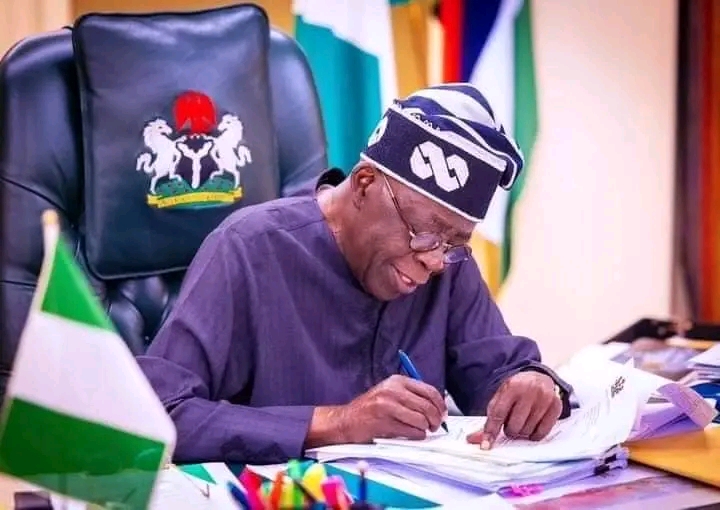
FG seeks fresh $1.75bn World Bank loan
By Muhammad Abubakar
The Federal Government of Nigeria has approached the World Bank for a fresh loan of $1.75 billion to support its economic reform agenda.
Minister of Finance and Coordinating Minister of the Economy, Wale Edun, disclosed that the facility would help cushion the impact of recent policy adjustments, including the removal of fuel subsidy and the unification of the exchange rate, which have placed significant strain on households and businesses.
He explained that the request, if approved, would provide critical budgetary support, strengthen fiscal sustainability, and help address the nation’s infrastructural and developmental challenges.
Nigeria’s President, Bola Ahmed Tinubu, has repeatedly defended his administration’s reforms, insisting they are necessary to revive the economy and attract foreign investment.
World Bank Country Director for Nigeria, Shubham Chaudhuri, confirmed that discussions are ongoing, although no official approval has been given yet.
Nigeria, Africa’s largest economy, has in recent years relied on multilateral loans to bridge financing gaps amid rising debt obligations and dwindling revenues.