

Military airstrikes hit ISWAP, Boko Haram hideouts in Sambisa, Mandara mountains
By Sabiu Abdullahi
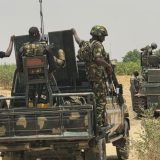
The Nigerian military has recorded significant victories against Islamic State of West Africa Province (ISWAP) and Boko Haram fighters in recent coordinated operations in Borno State.
The raids, carried out through combined air and ground assaults in Sambisa Forest and the Mandara Mountains, forced the insurgents into confusion and led to the emergency burial of dozens of their fighters.
The offensive followed last Friday’s attack by ISWAP gunmen on Darajamal village in Bama Local Government Area, where about 60 civilians were killed.Residents reported to Zagazola Makama that the terrorists stormed the community, shooting indiscriminately before retreating toward the forest.
Their movements, however, were detected by military Intelligence, Surveillance and Reconnaissance (ISR) aircraft, which guided airstrikes against them.
“The ISR platforms picked up multiple terrorist movements. The Air Component swiftly engaged them with devastating precision, instantly neutralising more than 30 fighters,” a senior security source told Zagazola.
Following the air bombardments, ground troops from nearby Forward Operating Bases entered Darajamal to restore calm and provide support to survivors.In another phase of the operation, armed drones targeted terrorist hideouts and movement routes within the Mandara Mountains.
At least four locations were struck, leading to the deaths of several commanders and fighters. Survivors fled in disorder, leaving behind both weapons and corpses of their colleagues.
Intelligence further revealed that the Ali Ngulde faction of Boko Haram, which has been weakened by sustained military pressure in the Sambisa axis, buried not less than 47 bodies of slain members in hurried ceremonies at scattered sites.

Spain withdraws ambassador from Israel after genocide accusation
By Muhammad Sulaiman
Spain has pulled its ambassador from Israel in a dramatic escalation of tensions. Foreign Minister José Manuel Albares said the move came after “false and calumnious” accusations from Israel against Madrid.
The step follows Prime Minister Pedro Sánchez’s hard line on Gaza, including a permanent arms embargo and bans on Israeli-linked ships and aircraft. He has accused Israel of committing genocide, sparking Israeli claims of antisemitism and entry bans on Spanish ministers.
Madrid insists its stance is rooted in human rights and international law, marking its toughest diplomatic challenge to Israel yet.

Federal University Birnin Kebbi conducts literacy campaign in Kalgo for 2025 International Literacy Day
By Muhammad Abubakar
The Federal University Birnin Kebbi (FUBK) held a Literacy Awareness Campaign on Monday at Government Day Secondary School (GDSS), Kalgo Local Government, Kebbi State, to mark the 2025 International Literacy Day. Tagged “FUBK Literacy Awareness Campaign,” the programme was part of the University’s corporate social responsibility to the host community.
The event showcased a colourful joint rally by staff and students from FUBK and GDSS, holding banners with literacy messages in English and Hausa to promote reading, writing, and digital inclusion. They marched through Kalgo town from Kalgo Junction to the Local Government Secretariat and GDSS, where a lecture on “Promoting Literacy in the Digital Era” was given.
In his address, Vice Chancellor FUBK, Prof. Muhammad Zaiyan Umar, represented by his Deputy, Prof. Aliyu Abdullahi Turaki, said, “The campaign is part of the University’s commitment to promoting literacy and empowering the host community, especially young people, to thrive in the digital era.”
“This School has a proximity advantage of being the closest school to the University. We are committed to identifying areas of intervention for the benefit of our host community,” he revealed
“We have seasoned academics in the Faculty of Education and other departments. We have been holding seminars and workshops for the capacity building of staff. I advise the school administrators and teachers to tap into these opportunities by identifying areas of need where we could key in,” he added
In his remarks, Registrar of FUBK Abdulkadir Abubakar, noted that “the fundamental objectives of establishing a university are teaching, research and community service. The University, in its modest effort, came up with this initiative with a view to giving back to society,” he said
Meanwhile, the guest speaker, Prof. Bello Bala Usman of the Department of Nigerian Languages at Usmanu Danfodiyo University, Sokoto, highlighted that literacy is not just about reading and writing in today’s world. He said, “Literacy is also about acquiring digital skills that open doors to opportunities. FUBK is proud to champion this cause.”
“Digital literacy is now a survival skill. We must encourage our students to see technology not as a distraction, but as a tool for learning, creativity and problem-solving,” he added.
In a goodwill message, the District Head of Kalgo, represented by Dangaladiman Sarkin Gobir Mal. Abubakar Arzika Kalgo commended and urged the University to sustain the momentum.
The University also donated 12 collections of 120 literary books to GDSS Kalgo, which were handed over to the Principal.

FG releases approved list of subjects for basic, senior secondary schools
By Sabiu Abdullahi
The Federal Ministry of Education has unveiled the official list of approved subjects for Basic and Senior Secondary Education in Nigeria, cautioning schools and the public against unauthorized lists currently circulating.
In a statement signed by the Executive Secretary of the Nigerian Educational Research and Development Council (NERDC), Prof. Salisu Shehu, the ministry explained that the new curriculum reforms were introduced under the National Education Sector Reform Initiatives (NESRI) to reposition learning and reduce overload on pupils.
The reforms, according to NERDC, are designed to provide a balanced education while equipping learners with critical skills for national development. Prof. Shehu stressed that “different versions of fake and unauthentic subject listings and offerings are in circulation causing serious confusion and apprehension,” urging stakeholders to disregard such lists.
Under the revised curriculum, Primary 1–3 pupils are expected to offer between 9 and 10 subjects, including English Studies, Mathematics, one Nigerian Language, Basic Science, Physical & Health Education, Nigerian History, Social and Citizenship Studies, Cultural & Creative Arts, and either Christian Religious Studies (for Christian pupils) or Islamic Studies (for Muslim pupils). Arabic Language is optional.
For Primary 4–6, the minimum number of subjects is 11 and the maximum is 13. The subjects include English Studies, Mathematics, one Nigerian Language, Basic Science and Technology, Physical & Health Education, Basic Digital Literacy, Nigerian History, Social and Citizenship Studies, Cultural & Creative Arts, Pre-vocational Studies, CRS or IS depending on the pupil’s faith, and optional French and Arabic.
At the Junior Secondary level (JSS 1–3), students are required to offer a minimum of 12 and a maximum of 14 subjects. These include English, Mathematics, one Nigerian Language, Intermediate Science, Physical & Health Education, Digital Technologies, Nigerian History, Social and Citizenship Studies, Cultural & Creative Arts, Business Studies, as well as Religious Studies. Pupils are also required to select one trade subject from options such as Solar Photovoltaic Installation, Fashion Design, Livestock Farming, Beauty and Cosmetology, Computer Hardware and GSM Repairs, or Horticulture and Crop Production. French and Arabic remain optional.
For Senior Secondary School, five core subjects—English Language, General Mathematics, Citizenship and Heritage Studies, Digital Technologies, and one Trade Subject—are compulsory. Students may then specialize in Science, Humanities, or Business fields, with subject offerings such as Biology, Chemistry, Physics, Government, Literature in English, Accounting, Economics, among others.
Prof. Shehu emphasized that nationwide sensitization and teacher training will begin immediately to ensure smooth implementation. He noted that the new structure will be rolled out from the beginning of each three-year education cycle, covering Primary 1, Primary 4, JSS 1, and SS 1.

Give honour to whom honour is due: Reflections on the conferment of an honorary doctorate on Sheikh Daurawa
By Murtala Uba Mohammed
Just last Saturday, September 6, 2025 (equivalent to 13th Rabi’ul Awwal, 1447 AH), the prestigious Usmanu Danfodiyo University, located in Sokoto—the historic seat of the Sokoto Caliphate—took the bold step of awarding an Honorary Doctorate Degree to Malam Aminu Ibrahim Daurawa, a renowned erudite Muslim scholar. Indeed, there could be no better place in sub-Saharan Africa to honour such a distinguished scholar than the city that once served as the headquarters of the Muslim Caliphate and home of the revered Shehu Usmanu bn Fodio.
Malam Daurawa, the current Commander General of the Kano State Hisbah Board, was born some 56 years ago in the ancient city of Kano. His birthplace, Daurawa, lies just east of the Kano City Wall near Kofar Mazugal. He studied Islamic sciences under many teachers, including his father, Malam Ibrahim Maitafsiri, who was celebrated in his lifetime for his expertise in Qur’anic exegesis. Malam Daurawa’s depth of Islamic scholarship is remarkable. In addition, he pursued formal education up to the college level.
Through his teaching and preaching, Malam Daurawa has commanded great influence among Hausa-speaking Muslims across Nigeria, Niger, Cameroon, Chad, and Ghana. His reach also extends to countries with sizeable Muslim populations, such as Saudi Arabia, Sudan, and Egypt.
Right from his childhood, Malam Daurawa has been known as a person of truth, honesty, forthrightness, humility, and impeccable integrity. This was evident during his early involvement in the Islamic Tajdīd Islamy (JTI), known for challenging Ibrahim Zakzaky’s then-concealed Shi’ite identity. While JTI exposed the deception of Zakzaky’s movement, Daurawa eventually disagreed with some members due to his conviction that Islamic scholarship should embrace a wider horizon of jurisprudential schools and perspectives. His zeal for knowledge led him to step away from the group in pursuit of deep and extensive Islamic knowledge—a commitment that has contributed greatly to his current status as one of the leading voices in Islamic learning.
Even before the dawn of Nigeria’s Fourth Republic and the spread of private radio stations, Malam Daurawa has already established himself as a dedicated teacher of Islamic knowledge, nurturing countless study circles. My first encounter with him dated back to 1999, when he commenced lessons on Imam an-Nawawī’s Riyāḍ al-Ṣāliḥīn at our mosque, Sa’ad bin Abī Waqqās Masjid, in Zango, within the historic city of Kano. That experience left an indelible mark on me.
I vividly recall the year 2002, when, as a student at CAS Kano, I listened to him delivering a lecture on Islamic history and the Sokoto Caliphate. It was then that my admiration for him deepened. The ease with which he narrated history; so fluent and effortless, as if reading directly from an unseen manuscript,was nothing short of remarkable.
His scholarship reminds me of the words once spoken about Ibn Taymiyya by one of his contemporaries thus: “I saw Ahmad ibn Taymiyya as if he had a calabash filled with knowledge before him; he would give what he wished and withhold what he wished.” Truly, Malam Daurawa is a fountain of knowledge, a wellspring of wisdom that flows generously to all who care to listen. His presence is not merely that of a preacher but of a guide whose words illuminate minds and inspire hearts.
By 2003, Malam Aminu’s gift became even more evident, particularly through his teaching sessions in various study circles within Kano city. Among the most famous of these were Triumph Mosque in Fagge, where he taught Zād al-Ma‘ād by Ibn Qayyim al-Jawziyyah, later adding al-Shifā’ bi Ta‘rīf Huqūq al-Musṭafā by Qādī ‘Iyād. He also taught at Kawu Iliya Mosque at the Brigade area. I cannot forget his short-lived teaching of Imam Mālik’s al-Muwatta at Abdurrahman bin ‘Auf Mosque in Kofar Wambai. Unfortunately, that circle of al-Muwatta was disrupted by hired miscreants who came and attacked disciples. Despite the commotion and fitnah stirred against him, Malam Aminu was willing to continue teaching. However, as we later learnt that the elder patron of the mosques, Alhaji Yusuf Abdullahi, advised that the lessons be suspended. Even so, Malam once introduced teaching of Sharh al-Sunnah by Imam al-Barbahārī at Sa’ad Mosque in Zango.
With the proliferation of private radio stations, especially from 2000s onwards, Malam Daurawa rose to greater prominence through his program Kundin Tarihi aired on Freedom Radio in Kano. The program quickly became immensely popular because it introduced a unique style of narrating the history of the Prophet Muhammad (SAW), his family and companions and Islam. With a distinct approach, Malam Daurawa presented history with clear references to its sources and explained the lessons to be drawn from it. He also responded to questions in an engaging and captivating manner. This style of teaching and narrativity of Islamic history won admiration across doctrinal—even from those who did not always identify with his Salafi creed. Before long, people across the city eagerly tuned in to his lectures. As a testimony to this impact, I recalled that the Bayero University-based double Professor, Abdalla Uba Adamu, on more than one occasion, mentioned that two scholars stood out to him: Sheikh Ibrahim Khalil and Malam Daurawa. He explained that Sheikh Khalil impressed him with his fatwa (legal verdict) and cordial relationship with the university community, while Malam Daurawa captivated him with his Kundin Tarihi program.
Usmanu Danfodiyo University, Sokoto, made it clear that it was Malam Daurawa’s lifelong service and dedication to the community that earned him the honorary doctorate degree. Anyone familiar with the revival of the Hisbah Board under his leadership can readily attest to his commitment. At various times, when the institution became comatose, Malam Daurawa was always there to resuscitate it. He has served three separate terms as Commander General of the Hisbah: 2011–2015, 2015–2019, and from 2023 to date; the longest cumulative leadership in the board’s history. A clear sign of his competence is the way he successfully served under three different governors namely: Senator Rabi’u Musa Kwankwaso, Dr. Abdullahi Umar Ganduje, and Engineer Abba Kabir Yusuf.
Beyond the Hisbah, Malam Daurawa’s leadership qualities are reflected in his service as Imam of Friday mosques, most notably the Ansarussunnah Mosque in Fagge. During the month of Ramadan, for many years, he traveled to Gombe to conduct Qur’anic tafsir. He has also established schools where children learn Qur’anic memorization and Islamic studies. Those who know him affirm that wherever Malam Daurawa resides, he establishes circles of learning for children, women, and youth. Always innovative in his pedagogy and propagation, he once advanced the idea of translating Islamic teachings and recording them in Hausa, Fulfulde, and English in an attempt to extend Islamic propagation to the far and extreme ends of Nigeria and beyond. The blessings of his knowledge have touched not only the wider community but also his home and family.
Furthermore, Malam Daurawa is an accomplished author, with more than thirteen publications in different areas of Islamic studies. One of his works, Sa‘ādatul Muslim fī mattafaqa ‘alayhi Bukhārī wa Muslim, has become a widely used teaching text in Islamiyya schools. His concern with social reform also inspired him to author books such as Kimiyyar Aure (The Science of Marriage) and Sirrin Maza (The Secret of Men).
Anyone who reflects on the life of Malam Daurawa will recognize that he is a divine trust for the community; tireless, unyielding, and sincere in every responsibility he undertakes. Indeed, Usmanu Danfodiyo University has made a wise and deserving choice in honoring him. While I congratulate Malam Daurawa on this recognition, I also congratulate the University for seizing the opportunity to bestow honor where it is truly due. Malam Daurawa is not a man of wealth who dispenses riches, nor a man of political power who grants favors. What he possesses is his time and his knowledge, and the community has long been reaping the benefits of this priceless treasure. God willing, he stands among the very best of people—khayr al-nās man yanfa‘u al-nās (the best of people are those who benefit others). May Allah reward him abundantly, elevate Usmanu Danfodiyo University, and bless all centers of learning across our nation.
Dr. Murtala is a bilingual writer who holds a PhD in geography and teaches at Bayero University Kano

TUC gives FG 14-day ultimatum over proposed 5% petroleum tax
By Uzair Adam
The Trade Union Congress (TUC) has rejected the Federal Government’s plan to impose a 5% tax on petroleum products, describing the move as a “reckless act of economic wickedness.”
In a joint statement, TUC President Festus Osifo and Secretary General Nuhu Toro warned that the proposal would worsen the hardships already faced by Nigerians, many of whom are still grappling with the impact of fuel subsidy removal, soaring inflation, and the weakening naira.
They accused the government of deliberately compounding the suffering of citizens instead of providing relief, jobs, and economic stability.“Introducing another levy on petroleum products is to cripple businesses and push millions of Nigerians deeper into poverty.”
“Government cannot continue to use Nigerians as sacrificial lambs for its economic experiments. This is unacceptable,” the statement read.
The Federal Government had earlier defended the proposed tax, explaining that it would provide sustainable funding for road projects and help close the country’s infrastructure gaps.
Chairman of the Presidential Committee on Fiscal Policy and Tax Reforms, Taiwo Oyedele, noted that similar measures are already in place in more than 150 countries.
But the TUC has issued a 14-day ultimatum to the government to withdraw the plan or face nationwide industrial action.
“The TUC urges the Federal Government to immediately stop this anti-people’s plan in its entirety. “Failure to do so will leave us with no option but to mobilize Nigerian workers and the masses for total nationwide resistance,” the union warned.

El-Rufai petitions police commission, accuses Kaduna CP of misconduct
By Abdullahi Mukhtar Algasgaini
A formal complaint has been lodged with the Police Service Commission (PSC) against the Commissioner of Police and other officers of the Kaduna State Command, alleging widespread unprofessional conduct and abuse of office.
The petition, authored by the former Governor of Kaduna State, Malam Nasir El-Rufai, calls for an “immediate, impartial, and exhaustive investigation” into the officers’ activities. It alleges serial violations of the Nigeria Police Act 2020 and its regulations.
In the letter addressed to the Chairman of the PSC, El-Rufai stated he was motivated by a sense of duty as a citizen and former public servant. He highlighted his eight-year tenure as governor and expressed concern for the integrity of the Nigeria Police Force.
The former governor urged the Commission to exercise its constitutional and statutory powers to enforce discipline and promote ethical conduct within the force. The specific details of the alleged misconduct were not immediately disclosed in the petition’s introductory section.
The petition is expected to trigger a formal inquiry by the PSC into the operations of the Kaduna State Police Command under its current leadership.

BAROTA and the necessity for a special team at crucial junctions
By Isyaka Laminu Badamasi
A few months ago, I wrote about the popular one-way routes in Bauchi metropolis, where I drew the attention of the relevant authorities to the need to address the unethical behaviours of some motorists and other road users who openly violate traffic regulations on our major roads and streets in the metropolis. To my dismay, the situation is worsening by the day.
On my way to and from the office every day, I usually encounter frightening experiences at this junction, which has become a theatre for traffic violators, accidents, and altercations. People openly, without considering their safety or that of other road users, cross the road, either through a U-turn or a median. This is not peculiar to Keke Napep and Achaba riders, but also applies to cars, lorries, and trucks.
For months, I never witnessed the traffic warders or staff of the Bauchi Road Traffic Agency (BAROTA) working to avert the routine occurrences of road accidents at the junction. I’m not sure if this is another ‘new normal’ in our way of doing things.
An Achaba rider once informed me that all these were a result of the ongoing flyover construction at the central market roundabout. He added that, “as soon as the project is completed, the traffic violation will be history”. Others believe that a roundabout should be constructed at the junction, as it is for the Bakaro-Shagari and Karofi junctions behind the Bauchi correctional facility. I’m not sure if this is possible.
Whatever the solution may be, I am appealing to the BAROTA, as a matter of public interest, to deploy a special team at the junction for 24-hour surveillance to ensure the safety of people’s lives and properties. Officers of the agency were always seen at the newly constructed Muda Lawal market road and/or under the Wunti flyover, arresting those who parked their vehicles incorrectly and Achaba riders; why is this junction neglected?
Recently, the Chairman, House Committee of Roads and Transport of the Bauchi State House of Assembly, Hon Engr. Garba Adamu engaged officials of the agency to discuss some important issues. I’m not sure if this particular case is part of their discussion.
The media houses should also embark on rigorous sensitisation, thanks to Albarka Radio for taking the lead in this regard. Religious and traditional institutions, as well as youth groups, should also utilise their respective domains in preaching good morals, which include abiding by traffic rules and regulations. All the other places I mentioned in my earlier write-up are still dangerous. The Tashan Babiye and Bayam Bata communities should form a volunteer team to address this lingering issue.
The picture is from the internet.
Isyaka Laminu Badamasi is the Team Lead, Initiatives for Sustainable Development (I4SD).

NNPP declares Abdulmumin Jibrin’s expulsion invalid
By Sabiu Abdullahi
The New Nigeria People’s Party (NNPP) has dismissed the purported expulsion of Abdulmumin Jibrin, the lawmaker representing Kiru/Bebeji Federal Constituency of Kano State, describing the decision as null and void.
In a statement issued on Saturday, the party’s National Secretary, Oginni Sunday, said the announcement had no basis and was unauthorised.
He explained that the expulsion was announced by Hashim Dungurawa, a former state chairman who had earlier been removed from the party.
Describing the action as a “joke taken too far,” Sunday questioned how someone who is no longer a member could claim authority to expel a sitting legislator.
Citing an April 2, 2025 judgment of the Federal Capital Territory High Court and a ruling from an Abia State High Court, Sunday maintained that Senator Rabiu Kwankwaso, along with others including Dungurawa, had already been expelled from the NNPP and therefore lacked the legal standing to act on the party’s affairs.
According to him, Jibrin’s decision not to align with Kwankwaso’s faction provoked the Kwankwasiyya movement, which allegedly tried to weaken his political relevance in retaliation.
Sunday also cautioned that Governor Abba Yusuf’s loyalty to Kwankwaso could endanger the NNPP’s control of Kano State in the 2027 governorship election.
He said, “One of the smartest ways for Yusuf to secure a win in Kano in 2027 is to travel to Lagos and tender an apology to the party’s founder and leadership.”
Jibrin, who previously served as the Director-General of the Tinubu Support Group and played a significant role in fostering ties between the APC and the NNPP, was accused by the Kano State chapter of engaging in anti-party activities and defaulting on financial obligations.
Reacting in a statement on Saturday, Jibrin said he received the news of his removal as “a rude shock,” insisting that the interview he granted in English and Hausa, which the party cited as evidence, was in line with NNPP’s principles.
He added, “I strongly believe the contents of the interview should not warrant such a heavy penalty.
“No invitation was extended to me to defend myself before any organ of the party. Even under a military dictatorship, an accused is subjected to a court-martial.”
On the allegation that he had not paid his dues, the lawmaker rejected the claim and challenged the party to issue him an invoice, promising to pay once it is presented.
He further criticised the NNPP’s leadership, saying, “The party does not believe anybody has political value or deserves respect at various levels.”
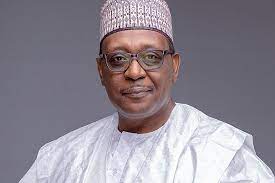
Politics is the plague
By Oladoja M.O
“A dive into the political paralysis killing public health”
In the long and winding corridors of Nigeria’s national challenges, the health sector stands as one of the most visibly bruised, chronically neglected, and systemically under-prioritised. Yet, beyond the crumbling hospitals and overworked health workers lies a more insidious diagnosis: politics. Not politics in its ideal form, the noble art of governance, but the brand that manifests in distraction, dereliction, and dead ends. It is this politicisation, or rather, the wrong kind of political influence, that has become the biggest ailment afflicting Nigeria’s health system today. And until it is addressed, no number of policies, international partnerships, or ministerial press briefings will revive the sector to its full potential.
Let’s begin with a case study, a hopeful one that has slowly started to mirror the very problem it tried to solve.
When Dr. Muhammad Ali Pate was appointed Nigeria’s Coordinating Minister of Health and Social Welfare in August 2023, many saw a breath of fresh air. He came armed with credentials, experience, and, perhaps most importantly, energy. Within months, the sector began to stir with renewed ambition.
Under his leadership, Nigeria launched its first Health Sector Renewal Investment Initiative, signed a landmark Sector-Wide Approach (SWAp) compact with states and partners, and injected ₦50 billion into the Basic Healthcare Provision Fund (BHCPF), which was double the amount released in the previous year. Over 2,400 health workers were recruited and deployed across underserved areas. Primary healthcare facilities that had long been mere consulting rooms began to see improvements in personnel and reach. Vaccination efforts soared.
A nationwide HPV rollout vaccinated nearly 5 million girls, and the long-awaited Oxford R21 malaria vaccine arrived on Nigerian soil. The government pursued a policy to unlock the healthcare value chain, drafting executive orders to encourage local pharmaceutical manufacturing and reduce import dependency. Even the National Health Insurance Authority (NHIA) was repositioned, expanding coverage through the Vulnerable Group Fund, while a national patient safety strategy was launched to bring quality and accountability into focus. All signs pointed to a government that was, finally, taking health seriously. But then, as quickly as the fire had been lit, it began to dim.
But from early 2025, a silence began to creep over the very desk that once signed reforms with urgency. Policy announcements grew fewer. Major rollouts dried up. The energy that had defined Pate’s first year slowly receded into a void of political undertones. And then came the whispers, and then confirmations of a new ambition: governorship in Bauchi State. Pate, by his own words in March 2025, declared himself “ready to serve” in his home state come 2027. From that moment on, what had been a robust health sector agenda began to take a back seat to the shifting winds of political alignment.
The problem isn’t ambition. It’s a distraction. A Coordinating Minister of Health in a country where maternal mortality is one of the highest in the world, where millions still pay out-of-pocket for even the most basic care, and where health infrastructure is crumbling under the weight of neglect, simply cannot afford to be half-present. This is the heart of the issue: politics has become both the gatekeeper and the grave-digger of Nigeria’s health potential.
For decades, well-meaning reforms have died at the altar of “lack of political will.” Budgets are approved, but rarely fully released. Policies are launched, but implementation fizzles out under new administrations. Health is often treated as a social service, rather than a critical pillar of economic development. Politicians are quicker to commission a white elephant hospital in a state capital than to strengthen the rural primary health centres where lives are quietly and daily lost.
And when leadership does finally begin to show some will, as Pate briefly did, the ever-thirsty machinery of Nigerian politics lures it away. This, perhaps, is the cruellest irony: politics that should drive public health, instead devours it.
The Nigerian public, meanwhile, remains largely unaware of how deeply entangled their health is with political decisions. Health issues are often viewed as isolated, with a bad hospital here and an unavailable drug there, rather than as symptoms of a larger systemic failure driven by poor governance, poor prioritisation, and a lack of sustained leadership.
We cannot continue to treat the health sector as an afterthought or a public relations prop. Health is not a photo opportunity. It is not a campaign gift or a once-in-a-quarter press release. It is a right, and more than that, it is the foundation for national development. No country has risen out of poverty, no economy has truly grown, without first investing heavily in the health of its people.
So, here’s the truth we must face: until Nigerian politics stops viewing health as just another item on a manifesto’s checklist and starts seeing it as a cornerstone of national survival, we will continue to spin our wheels. Ministers will come and go. Budgets will be announced and unspent. And the average Nigerian will continue to suffer preventable deaths, unaffordable care, and unattended illness.
The solution lies not only in leadership, but also in the voice of citizens, civil society, professionals, the media, and everyday people, who demand more than shallow commitments. We must demand that health be taken seriously, institutionally. That it be enshrined not just in words but in political action, protected from the cycles of campaign season, ego projects, and elective distractions. In this moment, we are witnessing a perfect case study of how even a promising leader can be lost to the lure of political pursuits.
If Dr. Ali Pate, arguably one of Nigeria’s most qualified health minds, could be drawn away from a national assignment to a regional ambition, it speaks volumes about the fragility of reform when politics remains unchecked.
This article, then, is not just a critique. It is a call to consciousness. A call for the government to return to the trenches of national responsibility. A call for health to be declared not just a service, but a strategic national priority. A call for the public to realise that the decaying hospital they see is not just a facility issue, but a political problem. And it demands a political solution.
Let us stop treating the symptoms. Let us diagnose the root. And let us finally begin to treat politics as the virus silently killing Nigeria’s health system.
Oladoja M.O writes from Abuja and can be reached at mayokunmark@gmail.com.